
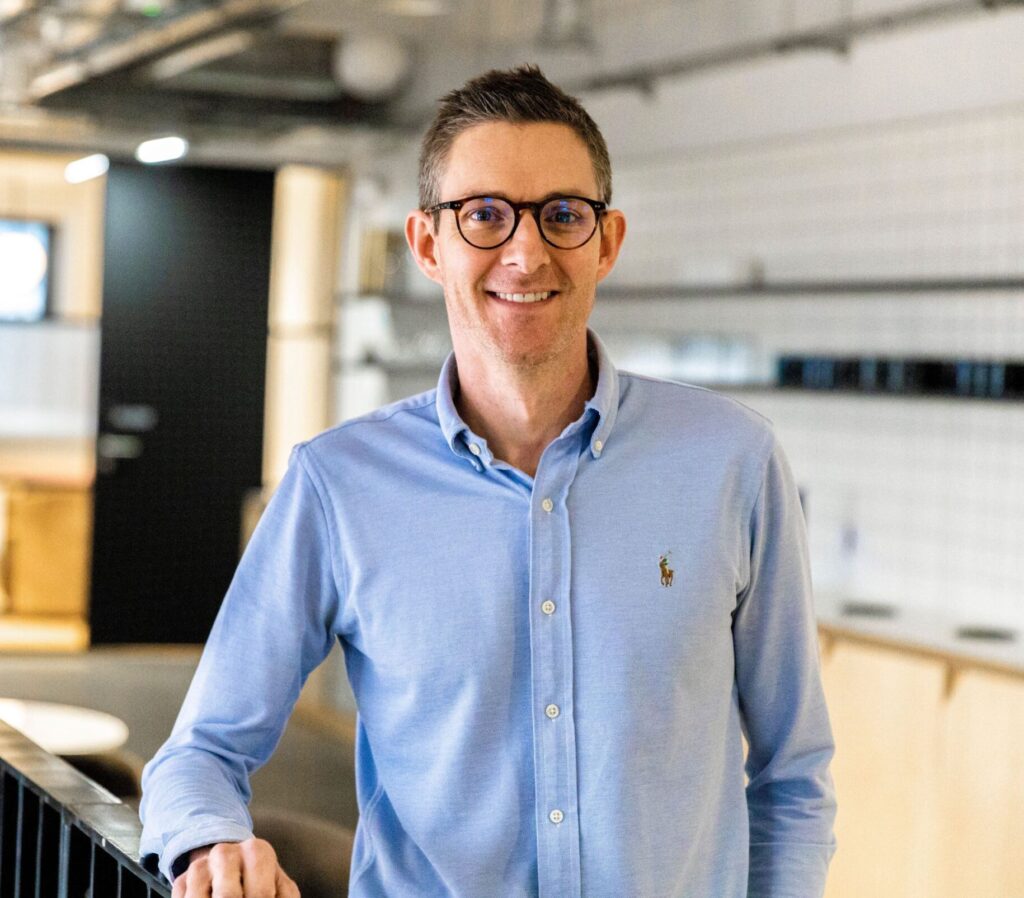
I recently went one-on-one with Pete Harris, President of Pipedrive.
Adam: Thanks again for taking the time to share your advice. First things first, though, I am sure readers would love to learn more about you. How did you get here? What experiences, failures, setbacks, or challenges have been most instrumental to your growth?
Pete: Thank you for the opportunity to share more with your audience.
There’s one aspect to my career that’s for certain: it’s not been a linear path. In fact, most of my growth has come from the moments where things didn’t go according to plan. Early in my career, I worked at Deloitte for 12 years across Audit, Strategy and Special Projects. This meant that I worked with hundreds of different companies, each with their own unique challenges. Often, I took on projects and roles that pushed me outside my comfort zone. Sometimes because I was ambitious, sometimes because I was naïve, and sometimes because I didn’t fully know what I was getting myself into. Either way, those experiences taught me quickly how to learn on the fly, ask for help, and stay resilient when the pressure was high.
One of the biggest turning points came from an epiphany. I was being interviewed for the Partnership at Deloitte, and ended up not continuing with the process. Looking back, it taught me more than any of my successes. I learned my purpose, really looking deep inside of myself to understand what I wanted – I’m forever grateful for that moment.
I then found my path and had clarity on where I wanted to go to deliver my purpose in the most impactful ways. Once you’ve got that clarity, it’s then about building the inventory of experiences, curiosity, and learning to constantly develop and evolve.
Adam: In your experience, what are the key steps to growing and scaling your business?
Pete: Long-term growth and scaling don’t just happen by luck – they come from understanding your business inside out and making decisions grounded in data. This is actually why I loved auditing so much: knowing everything about a business helps to develop robustness. For small and medium-sized companies, the most important step is to treat data as your crystal ball. It’s not about collecting numbers for the sake of it, but about using insights to forecast, plan, and adapt to change.
Data is also the benchmark for understanding whether past business decisions were right. The last few years have taught us that uncertainty is the only constant, but good data and analytical skills give you confidence to act. Combine that with cross-functional leadership. I like to call it “multilingual” leadership, where sales, product, strategy, and marketing teams speak the same language. This helps create a foundation for smarter, more predictable growth and ensures everyone is rowing in the same direction (with the same definitions).
Adam: What is your best advice on building, leading, and managing teams?
Pete: Leadership today is about balance between clarity and compassion, and performance and people. My advice is to build teams that are empowered, not micromanaged. Leaders who trust their people and give them ownership create cultures where independence, collaboration, and creativity thrive.
Especially in times of uncertainty, resiliency doesn’t come only from the top. It’s built by equipping everyone with the right tools, the right information, and the autonomy to act. After all, people are in their roles for a reason: they’re specialists who know their craft. My job as a leader is to provide strategy and direction at the right time in the right amount, so they can do their best work.
New technologies, including AI, can help remove many of the repetitive or time-consuming parts of work, giving people more space to focus on what truly drives growth. Typically, it’s about having the capacity to connect with people, innovate without borders, and creative problem-solving. When leaders delegate more and communicate openly, they not only reduce their own stress but also inspire their teams to grow. The best teams aren’t just well-managed; they’re trusted, motivated, and supported to do their best work.
Adam: What are the most important trends in technology that leaders should be aware of and understand? What should they understand about them?
Pete: It’s less about technology and technological trends and moreso about how quickly technology is becoming an inseparable part of every decision, team, and business model. We don’t yet know what technology will come after AI to shape and shake businesses, but we know it will come, and we’ll have to adapt, continuously finding smarter ways to make things work. For now, AI, automation, and data analytics are transforming how companies operate, but the real difference lies in how leaders use them. It’s not about chasing every new tool, but about understanding how technology supports people, freeing them from repetitive and perhaps even boring work, giving them better insights, and creating space for creativity and strategic thinking.
AI is an obvious force shaping the future, but its impact depends on how responsibly and thoughtfully it’s implemented. Leaders don’t need to be data scientists, but they do need to understand enough to ask the right questions: Where is AI adding value? What are its limits? And how do we ensure data is used ethically and transparently?
Another key trend is the democratization of technology, building cultures where digital tools enhance (not replace) human connection and judgment. Additionally, new technology has no value when employees don’t know how to use it. So businesses that combine technical curiosity with the right training and empathy have an advantage of not just scaling the business, but building workplaces where people feel informed and motivated.
Adam: What do you believe are the defining qualities of an effective leader?
Pete: For me, a good leader is someone who combines strategic vision with empathy – someone who sets direction but also understands people’s motivations, fears, and strengths. They lead by example, communicate openly, and help others become the best version of themselves.
At Pipedrive, this also means embracing our feedback culture that encourages people to reflect on what works well and what could be improved, and openly share it in the team. Feedback here isn’t just top-down; it’s a genuine back-and-forth that helps people and the business to grow. As a bonus, it strengthens trust and encourages us all to learn from one another.
Adam: How can leaders and aspiring leaders take their leadership skills to the next level?
Pete: The best leaders never stop learning. Leadership isn’t a title; it’s a mindset of curiosity, humility, and growth. Staying humble is essential because it keeps you open to new ideas and different perspectives. The moment you believe you know it all, you stop evolving. Great leaders also trust experts they’ve hired, empowering them to do what they do best, rather than trying to control every decision.
Adam: What are your three best tips applicable to entrepreneurs, executives, and civic leaders?
Pete: First, make decisions based on facts, not gut feelings. Data is every leader’s best ally as it helps you see patterns, anticipate challenges, and plan for sustainable growth.
Second, surround yourself with great people and trust them. Hire experts, encourage them to take ownership, and give them the context and confidence to make smart decisions.
And third, embrace technology as an enabler, not a replacement. The right tools can remove the noise and free up time for creative and strategic work. Used thoughtfully, technology helps leaders stay agile and focus on what really matters: people, purpose, and progress.
Adam: What are your best tips on the topics of sales, marketing, and branding?
Pete: Whether it’s sales, marketing, or branding, everything starts with understanding people. You can have the most advanced tools or data, but if you don’t understand your customers’ real challenges, you’ll struggle to build meaningful relationships. My first tip is to listen, really listen, to what customers are saying and use that insight to shape your product, message, and service.
Second, keep it simple and consistent. Great brands don’t overcomplicate things; they communicate clearly and deliver on their promises. Consistency builds trust, and trust drives loyalty.
Finally, authenticity is your biggest differentiator. People buy from people and connect with brands that feel real. Marketing that comes from a genuine place and is grounded in purpose, values, and real results will always stand out above clever slogans or trends.
Adam: What is the single best piece of advice you have ever received?
Pete: I once led a complex, high-profile project for one of the world’s largest banks. After months of work, my team and I produced a single strategic document for the bank’s senior leadership – and it felt like a huge moment. When I sent the draft to the Senior Partner overseeing the engagement, he returned it covered in red-pen edits. I was crushed.
He then pulled me aside and shared advice I still live by: “Talk to me like you would in the pub.” He meant: drop the consultant jargon, skip the complicated phrasing, and focus on simple, meaningful words arranged in a clear, straightforward structure. That guidance fundamentally changed how I communicate.
Adam: Is there anything else you would like to share?
Pete: I’m deeply passionate about the intersection of sport and business, especially through the lens of the “Corporate Athlete.” As an endurance athlete, competing in Ironman triathlons, ultramarathons, and soon representing Great Britain at the European Triathlon Championships, I’ve learned that high performance in sport and high performance in leadership draw from the same core principles.
What started as a personal experiment to understand myself better quickly became a framework for how I think about resilience, discipline, and sustained excellence. Training for an Ironman forces you to master goal-setting, consistency, recovery, and the ability to stay composed under pressure. Those same mental models translate directly into how we lead teams, make decisions, and navigate ambiguity in business.
In many ways, endurance sport has become my laboratory for testing the habits, mindset, and emotional discipline that define effective leadership. It’s shown me that success, whether crossing a finish line or leading an organisation, comes from balancing ambition with preparation, intensity with recovery, and focus with adaptability.