

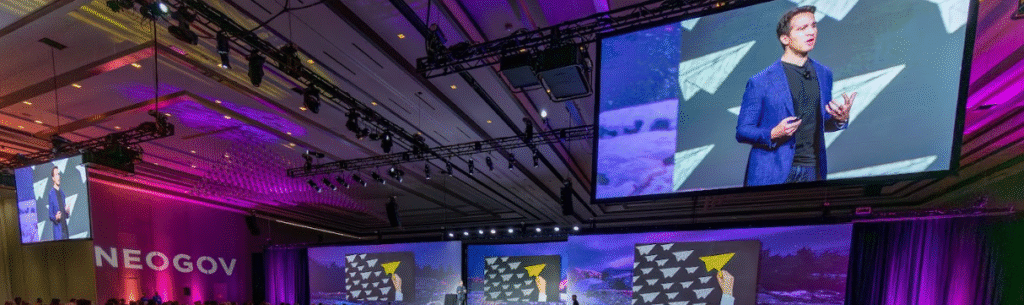
Research on learning and retention consistently shows that people forget up to 70 percent of new information within 24 hours if it is not reinforced or made actionable. Leadership events are not immune to this. Most talks are remembered for how they felt in the moment, not for what actually changed afterward.
Organizations book leadership speakers, pay thousands of dollars, coordinate logistics, and gather their teams in one room. Then the keynote starts. Thirty minutes in, people are checking email. By the end, applause is polite but perfunctory. By Tuesday, no one remembers what was said.
The problem is not that companies hire bad keynote speakers. The problem is they ask the wrong questions. They check availability, negotiate a fee, confirm AV requirements, and call it done. Then the day arrives, the motivational speaker delivers a polished talk that could have been given to any audience in any industry, and people walk away entertained but unchanged.
The best leadership events do not happen by accident. They happen because someone asked better questions before signing the contract. Not questions about logistics. Questions about preparation, relevance, and whether the speaker actually has something worth saying.
Most speakers rely on personal experience, which means their insights are limited to what they have lived through.
I take a different approach. Being a creator and host of Thirty Minute Mentors, I’ve interviewed more than 500 of America’s most successful leaders; Fortune 500 CEOs, founders of household-name companies, Hall of Fame and Olympic gold medalists, four-star generals, and major political leaders. That library of conversations means my keynotes are not built on theory or motivational hype. They are built on strategies that are working right now at the highest levels of leadership.
This article walks through the questions that separate transformational keynotes from forgettable ones. These are not the questions most event planners ask. They are the questions that predict whether your audience will leave motivated to act or just glad the session is over.
If you are planning a leadership event and want to work with a speaker who prepares as seriously as the leaders he interviews, you can reach out to me at connect@adammendler.com .
“The difference between a leadership event that changes thinking and one that fades quickly is rarely the speaker’s charisma. It is whether the right questions were asked before the speaker was ever booked.” – Adam Mendler
Planning An Event And Don’t Want It To Be Forgotten?
The right leadership speaker can shape how your team thinks and leads long after the event ends. If you are booking a keynote speaker and want practical leadership insight grounded in real-world conversations with CEOs, founders, military leaders, and elite performers, let’s connect.
Book Adam For Your EventWhy Booking A Leadership Speaker Is A High-Stakes Decision Today
Leadership events rarely fail in obvious ways. They fail quietly.
The speaker delivers. The room listens. The feedback forms look fine. And yet, when people return to work, very little actually changes. Not because the message was bad, but because it never translated into how people think and act under pressure.
This matters more today because attention is no longer the main challenge. Application is.
Audiences are experienced. They have heard leadership language before. What they lack is insight that helps them make better decisions when it counts.
There is strong evidence behind this shift. Data from Gallup’s Q12 Employee Engagement Survey shows that teams with higher engagement report 14 percent higher productivity than those with low engagement. Engagement, in other words, is not about energy in the room. It is about what people do afterward.
That gap explains the real risk in booking the wrong leadership speaker.
- Insight without engagement fades quickly
- Inspiration without relevance rarely changes behavior
- Motivation without direction creates noise, not progress
The cost is not the speaking fee. The cost is the opportunity to shape how people lead when the stakes are real.
As they say, “The real cost of booking the wrong leadership speaker isn’t the fee, it’s the missed impact.”
This is why booking a keynote speaker has become a leadership decision in itself. It influences how people interpret responsibility, pressure, and expectations long after the event ends. And that outcome is shaped less by charisma on stage and more by the quality of thinking behind the booking decision.
Pre-Booking Essentials: What to Consider Before You Start Evaluating Speakers
Before you start vetting speakers, step back and get clear on what you actually need.
Most organizations skip this part. They jump straight to browsing speaker bureaus or asking for recommendations. Then they end up booking someone impressive who is completely wrong for the moment.
The best hiring decisions start with honest internal questions. Here are the ones that matter.
“What Do We Actually Want Our Audience to Walk Away With?”
This sounds obvious. It is not.
Get specific:
- Do you want your team to adopt new strategies for managing conflict?
- Are you trying to shift mindset around taking ownership during uncertainty?
- Do you need practical frameworks for better decision-making under pressure?
- Is this about building resilience after a difficult quarter?
“Is This Speaker’s Expertise Aligned With Our Current Challenges?”
Relevance beats reputation. The best corporate event speakers understand the nuances of different environments.
Consider context carefully:
- A startup founder’s advice on agility does not always translate to enterprise organizations navigating bureaucracy
- A sales-focused speaker might miss the mark for engineering teams dealing with technical leadership challenges
- Corporate leadership strategies often fall flat in nonprofit settings where resources and incentives work differently
“Are We Prepared to Support What Happens After the Event?”
Even the best leadership keynote will not create lasting change if there is no follow-through.
Plan for reinforcement:
- Will you schedule follow-up discussions where teams apply what they learned?
- Can you create accountability structures around new strategies introduced in the keynote?
- Do you have leadership support to implement changes the speaker recommends?
“What Is Our Realistic Budget for This Investment?”
Leadership speaker fees vary widely.
Budget considerations beyond the keynote fee:
- Travel and accommodation costs
- AV and technical requirements
- Pre-event customization time
- Post-event resources or follow-up sessions
“How Will We Measure Whether This Was Worth It?”
Before booking a keynote speaker, decide how you will evaluate success.
Possible metrics:
- Post-event survey scores on relevance and actionability
- Percentage of attendees who implement at least one strategy within 30 days
- Changes in team engagement or leadership effectiveness scores over the following quarter
- Qualitative feedback from managers on whether the session influenced behavior
Set expectations upfront. Share your measurement criteria with the speaker during the vetting process. See how they respond. Leadership speakers confident in their value will engage with your metrics. Those who deflect or dismiss measurement are worth questioning.
Top 10 Questions To Ask Before Booking A Leadership Speaker
The difference between a keynote that reshapes how your team thinks and one they forget by Tuesday often comes down to the questions asked before the contract is signed.
These are not logistical questions about timing or travel.
They are judgment questions.
The kind that reveals whether a leadership speaker is committed to creating impact or simply delivering another polished talk.
Ask these questions, and you will quickly understand what you are actually paying for.
1. How Will You Customize Your Talk For Our Specific Audience?
This is the most important question you can ask when booking a leadership speaker.
Generic talks land like spam emails. Everyone receives the message. No one feels it was meant for them.
What to listen for:
- Specific questions about your industry, challenges, and audience makeup
- A commitment to real preparation, not surface-level research
- Clear examples of how content has been adapted for similar organizations
Green flag: The speaker asks about recent company developments, leadership changes, or market pressures your team is facing.
Red flag: “I’ll just swap your company name into my standard deck.”
True customization means the speaker sources examples, insights, and leadership lessons that match your context. A technology company should hear from technology leaders. A healthcare organization should hear from leaders who understand regulation and complexity.
If a speaker cannot clearly explain how they will tailor the content to your reality, they are planning to deliver the same talk they gave to a completely different audience last week.
2. What Research Will You Do Before Our Event?
Preparation separates professionals from performers.
Some keynote speakers skim a website the night before. Others treat preparation as part of the work, not an afterthought.
What to listen for:
- Plans to review annual reports, recent press, or industry trends
- Willingness to speak with leadership or key stakeholders in advance
- Understanding of your competitive or organizational landscape
Green flag: “I’ll spend time understanding your strategic priorities and the challenges your leaders are dealing with right now.”
Red flag: “I’ve worked with companies before. I know what resonates.”
The best leadership speakers do not assume. They investigate. They ask questions. They arrive informed, not improvising.
3. Can You Share Examples Of How You’ve Adapted Content For Similar Organizations?
Anyone can claim they customize their talks. Evidence shows whether they actually do.
What to listen for:
- Specific examples of what was changed and why
- Context around the organization’s challenges
- Clear outcomes from those adaptations
Green flag: “For a pharmaceutical company facing regulatory uncertainty, I focused on leadership decision-making using insights from executives who navigated FDA approvals.”
Red flag: Vague statements about “tailoring the message.”
Ask for real examples. Not testimonials. Proof of how the speaker adjusted their approach when the situation demanded it.
4. Where Do Your Leadership Insights Come From?
This question reveals whether a speaker brings depth or just delivery.
Strong leadership speakers draw insight from real decision-making environments, not recycled quotes or outdated case studies.
What to listen for:
- Direct exposure to executive-level leadership
- Current examples, not stories frozen in time
- Evidence they stay close to how leadership is practiced today
Green flag: “I recently spoke with senior leaders facing this exact challenge.”
Red flag: Insights drawn only from personal anecdotes or secondhand material.
Leadership conference speakers who regularly engage with top leaders bring a broader, more grounded perspective than those relying on a single story.
5. How Do You Measure The Success Of Your Keynotes?
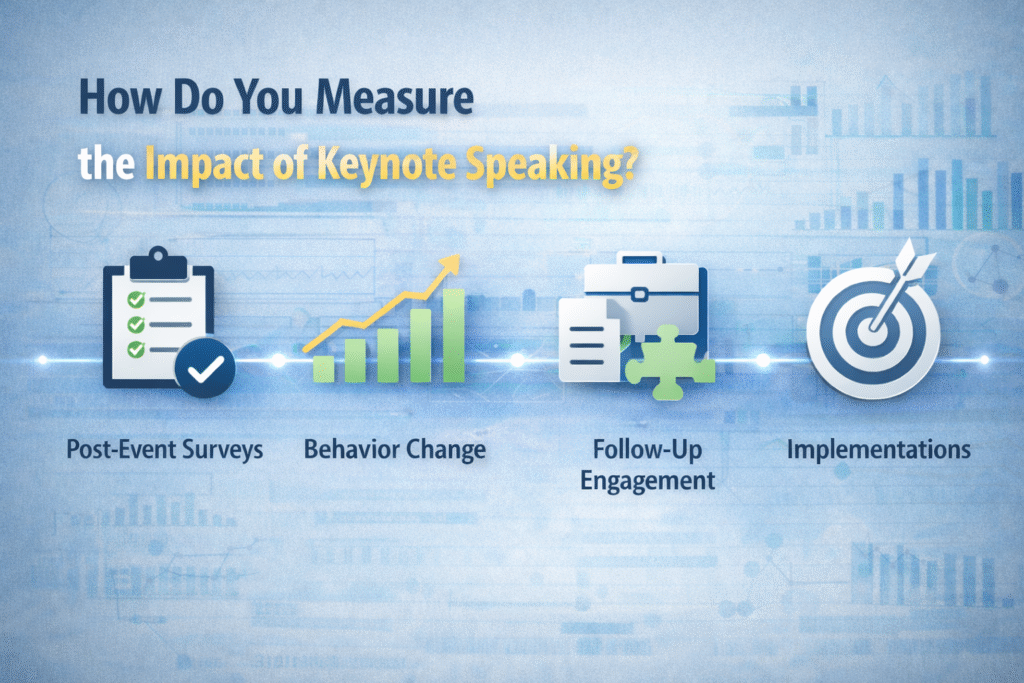
Applause is not a metric. Behavior change is.
What to listen for:
- Clear definitions of success beyond audience reaction
- Interest in whether attendees apply what they learn
- Post-event feedback or follow-up processes
Green flag: “We look at whether people are using the ideas weeks after the session.”
Red flag: “People love my energy.”
If a leadership speaker cannot articulate how they think about impact, they are not thinking beyond the moment.
6. What Resources Will You Provide After The Event?
The keynote ends. The work begins.
Speakers who care about long-term impact do not disappear once the session is over.
What to listen for:
- Practical tools, guides, or reflection prompts
- Opportunities for follow-up discussion
- Continued access for questions or clarification
Green flag: “I stay accessible after the event for follow-up conversations.”
Red flag: “You can check my website.”
Resources help teams translate insight into action. Without them, momentum fades fast.
7. How Will You Support Pre-Event Engagement?
Engagement starts before the event, not when the speaker walks on stage.
A leadership speaker who contributes to promotion understands that attendance and attention matter.
What to listen for:
- Short videos, messages, or previews
- Willingness to support internal communication
- Collaboration with your event team
Green flag: “I can share short clips or prompts to help build interest.”
Red flag: “Just use my bio.”
Speakers invested in the outcome show up early.
8. How Do You Engage Skeptical Or Distracted Audiences?
Not every audience is eager. Good speakers plan for that.
What to listen for:
- Techniques for earning attention early
- Interactive elements that invite participation
- Real strategies, not generic confidence
Green flag: “I start by addressing the tension people are already feeling.”
Red flag: “I’ve never had a bad audience.”
Resistance is normal. The best leadership speakers know how to work with it.
9. Can You Provide References From Organizations Similar To Ours?
Testimonials persuade. References verify.
What to listen for:
- Real contacts you can speak with
- Recent, relevant engagements
- Openness to direct conversations
Green flag: “Here are a few organizations you can contact directly.”
Red flag: Anonymous praise with no way to follow up.
A five-minute reference call often reveals more than a page of quotes.
10. What Happens If We Need To Adjust The Topic Closer To The Event?
Priorities change. Markets shift. Speakers should be able to adapt.
What to listen for:
- Flexibility as the event approaches
- Ongoing communication
- Willingness to refine content if context changes
Green flag: “If things shift, we adjust together.”
Red flag: “My content is locked months in advance.”
The best leadership speakers treat events as partnerships. Not transactions.
Want To See The Real Results Before Booking?
Seeing a leadership speaker in action reveals far more than a resume ever will. Watch how Adam delivers practical leadership insight, engages skeptical audiences, and creates clarity that lasts long after the keynote ends.
Watch Adam SpeakChoosing The Right Leadership Speaker Starts With Better Questions
Booking a leadership speaker is a decision about impact, not presentation. The difference is rarely talent. It is clarity. The clarity to ask the right questions before committing and to choose someone who understands the audience, the moment, and the responsibility that comes with the stage.
That approach reflects how I’ve worked with organizations. My leadership keynotes are shaped by conversations with hundreds of CEOs, founders, military leaders, and elite performers, and grounded in how leadership decisions are made in real conditions.
That perspective is reflected in how audiences experience my work.
“Adam went above and beyond to understand our organization’s needs and delivered insights that were both practical and impactful. His session resonated well beyond the event.” – Yvonne Adekale, Program Manager, Debo Oil and Gas Services
Let’s Connect
If your organization is ready for a leadership experience grounded in real strategies from real leaders, not motivational generalizations, you can reach me directly below.
FAQs About Booking A Leadership Speaker
1. How far in advance should you book a leadership speaker?
There’s no wrong time to reach out. I’ve had conversations with organizations that were planning events years in advance, and I’ve also worked with teams who reached out just weeks before their event. Both can work.
That said, earlier is always better. My speaking schedule tends to fill up well in advance, and reaching out early gives us more flexibility to shape the right experience for your audience. Even if your event is still taking shape, it’s worth starting the conversation to explore availability and fit.
2. What is the difference between a motivational speaker and a leadership speaker?
Both should be motivating and inspiring. If a speaker can’t do that, they’re not doing their job. The difference is what happens next.
Motivational speakers are often focused on how people feel in the moment. Leadership speakers focus on how people think, decide, and lead after the event is over. The goal isn’t just energy in the room, but clarity that lasts when people are back in their roles, facing real pressure and real decisions.
The strongest leadership experiences combine inspiration with substance. People should leave feeling energized and equipped with insights they can apply long after the applause fades.
3. How do you know if a leadership speaker is worth the investment?
For me, it comes down to results, not just reactions. A strong keynote should absolutely engage people. Energy and emotion matter because they create openness. But they’re only the starting point. The real measure is what changes afterward: stronger leadership, clearer alignment, better communication, a healthier culture, and performance that improves because people show up differently.
A leadership speaker is worth the investment when they can clearly articulate what outcomes the keynote is designed to produce, how it connects to the organization’s real challenges, and how success is defined beyond applause.
4. Should leadership speakers tailor their talks for virtual or hybrid events?
Yes, virtual and hybrid audiences require a different approach. Attention spans, interaction, and pacing all change when people are not in the same room. A strong leadership speaker understands these differences and adapts their delivery to keep audiences engaged, whether the session is in person, online, or a mix of both.
5. Can one leadership speaker work for different teams or leadership levels?
Yes, one leadership speaker can work across different teams and leadership levels when the message is anchored in how leadership actually shows up at each level. The ideas are then delivered through the realities of the decisions, responsibility, and pressure people carry in their roles, so each audience experiences the conversation as relevant to them, not abstract or theoretical.