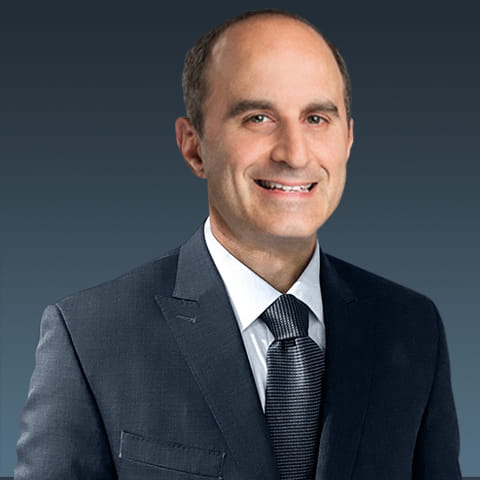


I recently went one-on-one with Reid Zeising, Founder and CEO of Gain.
Adam: Thanks again for taking the time to share your advice. First things first, though, I am sure readers would love to learn more about you. How did you get here? What experiences, failures, setbacks, or challenges have been most instrumental to your growth?
Reid: I got here through a long series of failures, lessons, resets, and a few opportunities I was fortunate enough to recognize. I started in investment banking, which taught me a tremendous amount about capital markets, financial statements, and how businesses succeed and fail. It also taught me one of my earliest leadership lessons: I was too focused on self. I believed, wrongly, that life was a zero-sum game, that if I won, someone else had to lose. That mindset made me effective in some ways, but it also made me isolated. I did not build enough consensus, did not invest enough in relationships, and acted too often like a lone wolf.
Later, I ran a hedge fund and then acquired Backyard Burgers in a complex takeover. On paper, it looked like a win. In reality, even at closing, it felt empty. Then the Great Recession hit. The business experienced downside far beyond what I had modeled, I was overleveraged, and I went from real equity value to $22 million in contingent liabilities. I was exhausted, drinking too much, and not taking care of myself.
That period was both the most painful and important of my life. In January 2009, I walked into Alcoholics Anonymous. That process forced me to get brutally honest with myself, make amends, and let go of the belief that I was in control of everything. It changed how I lead and how I live. It also taught me to plan much harder for downside. I learned to spend more time asking what happens if things do not go right. Ironically, two investors asked me to build a company to serve a new market need. That became the genesis of what ultimately led to Gain. So, my biggest career failure sparked a new beginning.
Adam: How did you come up with your business idea and know it was worth pursuing? What advice do you have for others on how to come up with and test business ideas?
Reid: Entrepreneurs often convince themselves their idea is a good one before the market ever weighs in. But that’s not reliable. In our case, we did not assume anything. We tested, responded, adjusted, and let customers validate what we were building. That feedback mattered far more than any internal conviction. In my case, two trial lawyers I trusted needed my help in the plaintiff funding business. I did not have some grand vision this career transition would succeed. I was just responding to a real need from people I knew, based on the following logic: If we could underwrite cash advances tied to settlements, we could also underwrite medical receivables tied to those same settlements. Later, when we built systems to manage our own portfolio better, it became clear those systems solved a broader market problem. Our logic was proving scalable. The formula was conviction plus experience plus listening to customers about whether our idea had value. My advice:
- Chase that big market.
- Solve that real problem.
- Ask questions from a customer’s lens.
- Identify what friction you’re removing.
- Don’t over-romanticize certainty.
The bottom line? Until customers sign up, you do not know nearly as much as you think you do.
Adam: What are the key steps you have taken to grow your business? What advice do you have for others on how to take their businesses to the next level?
Reid: One of the biggest growth levers for us has been a willingness to adapt quickly, especially around technology. We started doing quantitative work years ago to understand case values more precisely. That foundation made it easier for us to adopt AI tools in a practical way. Now, it’s about can we use better tools to make better decisions, move faster, and remove bottlenecks? We use AI agents and related tools to increase leverage inside marketing, operations, and service. The point is not novelty, but productivity. We can now run more campaigns, shorten turnaround times, and identify process friction faster than before.
The majority of roles are going to look different over the next several years, and most professionals will need at least a working level of AI literacy. Not everyone needs to be an expert, but ignoring it is not an option. For leaders trying to take a business to the next level, my advice is to look honestly at where time is being wasted, where manual work is slowing growth, and where your team is frustrated. Then, drive a speak-up culture where opinions at work count. Encourage them to raise their hands. Most organizations know where the friction is. They just have not built the discipline to attack it.
Adam: What are your best sales and marketing tips?
Reid: My biggest sales lesson is that you still cannot automate the last mile. When it comes time to close important business, human trust still matters. Senior buyers want to know who they are working with. General counsels want to talk to lawyers. Operators want confidence critical relationships will not be mishandled. That part still depends on people. Get your leads as hot as possible before your sales team engages. Move them from cold to warm to hot. Find the shared connection. Find the referral path. Find the prior relationship. Find the reason the conversation should happen now. Marketing should create leverage. Sales should convert trust.
Adam: What are the most important trends in technology that leaders should be aware of and understand? What should they understand about them?
Reid: The biggest technology trend leaders need to understand is not a specific tool. It is the urgency of direct engagement. Too many leaders are still deflecting. They are hoping the perfect product will arrive, or waiting for a vendor to customize something for their company, or assuming someone will handle it behind the scenes. That is a mistake. Roll up your sleeves. Build something. Use the tools. Make mistakes. Watch it fail. Improve it. If you are leading a function, division, or company, you need a firsthand understanding of what these technologies can and cannot do. The gap is widening quickly between leaders who are actively learning and leaders who are waiting. Waiting feels safe, but it is expensive. The people who are getting value are the ones in the work, not the ones watching from a distance.
Adam: In your experience, what are the defining qualities of an effective leader? How can leaders and aspiring leaders take their leadership skills to the next level?
Reid: The hardest balance in leadership is empowering people without abandoning standards. You have to give capable people the freedom to act, to experiment, to make changes, and sometimes to fail. If people are only allowed to fail in small, safe ways, they are not really empowered. At the same time, that only works if you hire very well. If you give wide latitude to the wrong people, you create chaos. If you give it to strong people, they will often see things and solve things faster than you will.
The other quality that matters is example. I do not believe in asking teams to embrace tools, disciplines, or changes that I am unwilling to engage with myself. Leaders need to be in the work enough to understand it. And finally, great leaders keep learning. Curiosity is not optional. It is fuel.
Adam: What is your best advice on building, leading, and managing teams?
Reid: Keep teams manageable. My direct reports are in a range I can actually lead well. For me, six to eight is a very workable number. Beyond that, communication and accountability usually suffer. Hire extremely well. Hiring is one of the hardest things in business and one of the most important. I want people who are better than I am at the things they run. I am not threatened by that. I depend on it. Then set clear expectations, clear metrics, and clear accountability, and let people run. That is not micromanagement. It is management. People should know what success looks like and have room to pursue it.
Adam: What are your three best tips applicable to executives and entrepreneurs?
Reid: For entrepreneurs: allow yourself to think the thoughts other people dismiss too quickly. Real entrepreneurship requires the freedom to imagine something that does not yet exist and the willingness to pursue it anyway. For leaders: set a clear vision, then attach metrics to it. A vision without measurable progress is just talk.
For executives: build teams of strong people and do not be afraid to hire people better than you. Insecure hiring creates mediocrity.
Adam: What is the single best piece of advice you have ever received?
Reid: The best advice I have ever received is to be of service. That lesson became real for me through recovery, through the 12 steps, and through a much broader shift in how I see the world. Earlier in my life, I thought success was about winning. Now I think much more about contribution, honesty, accountability, and creating abundance with other people rather than trying to beat them.
A more tactical phrase I have carried for years is: “Yes is the answer, just tell me the question.” Early in my career, I said yes to an opportunity to move overseas and help open an office. I was told no a hundred times while trying to get things done, but that experience taught me initiative, resilience, and resourcefulness. Say yes to growth, and use that growth in service of others.
Adam: Is there anything else you would like to share?
Reid: Fear and faith are both beliefs in the unknown. If I do not know what is coming anyway, I would rather move forward with faith.