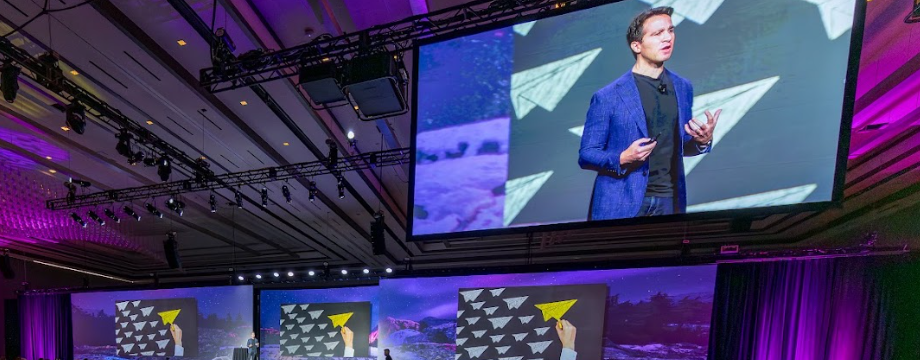


I recently went one-on-one with Rob Craven. Rob was the CEO of Garden of Life and the CEO of MegaFood and is the author of Scale Passion: A Blueprint for Building a Purpose-Driven Business.
Adam: How do you define a purpose-driven business, and in your experience, what are the keys to building a purpose-driven business?
Rob: Purpose-driven business, to me, is a business that is doing more in the world than just trying to make money. I talk a lot about capitalism 2.0, unbridled left-brain capitalism that is all about money, and we have been convinced that the Milton Friedman way of building a business, where it is all about the shareholders, is the law. There is a capitalism 3.0 that might be even more fulfilling. It is about making money and having an impact in the world. I believe business is the hope for the world. If we rely on government or nonprofits, we are not getting very far. So, trying to bring capitalism 3.0 to bear, where a company can not only make money and be economically successful, but also impact big issues in the world, is what I would call a purpose-driven business.
Adam: How do you do that?
Rob: Wow, it is a great question. I think what it comes down to is connecting the personal purpose of the leader, especially founders, but also CEOs. Understand the personal purpose of the leader in charge and make sure that the leader can see themselves in the business. For founders, that is very easy, because a lot of times they start their business with the objective of doing something big in the world, and then they bring on investors, and over time, they start to lose some of that steam, which I see with a lot of clients. In other instances, I work with clients that are divisions of very large multinational corporations. When the leader of those divisions brings their own purpose to work and connects the dots between their purpose and their energy, mindset, and focus, it starts to trickle down to the organization. I spend a lot of time helping people make their unconscious purpose conscious. A lot of times, we know we are on this planet to do something big and unique, but we do not make it conscious. The first step is to make it conscious and make sure you are in the right spot from a business standpoint. For founders, that is straightforward. For CEOs, sometimes not. When we get there, it is easier to bring your team along. So it starts with the people. It is connecting not only the head part, the left brain job that pays me, but connecting the dots to the right brain, the emotional aspect of business. Bringing that to bear starts to light the spark of purpose. In my book, I talk about stage one, harnessing your personal purpose. Stage two, scaling the business purpose. Stage three, radiating purpose, where the business does big things in the world and affects employees, stakeholders, customers, and the communities they are in. But it starts with harnessing your personal purpose.
Mission, vision, and values are very important. The mission is what we are doing and how we are approaching what we are doing. The vision is where we are going. The values are how we behave in and among all of that. I would add that a lot of businesses do not spend enough time on the why, and to me that is purpose. The why we exist is the question that really drives purpose. Mission, vision, and values almost always get hit in the strategy piece, but the why is a deeper aspect.
Adam: How do you get to the why?
Rob: Personally, you ask some questions. I am a big believer that everything in our life has set us up for this moment. I work with a lot of founders and leaders who have had significant, impactful events in their life. For me, it was my dad. He was given a death sentence when I was six. He was given a year or two left to live with cancer. I was the only child. He started pouring into me a lot of lessons that I live by to this day. That very impactful event for my family drove me toward what I am doing today. Many folks have stories inside that make us who we are. Some even look at those stories as negative. I would say, take a deep breath, back up, and dig into those stories. One way is to ask: what are the stories in my life that led me to where I am today? Another way is to ask, what do I care about. If I am watching TV, what makes me teary eyed. What am I giving my time to. There are several ways, but the last one I will mention is zone of genius. Gay Hendricks wrote The Big Leap. He talks about zone of incompetence, zone of competence, zone of excellence, and zone of genius. Zone of genius is that thing you do better than anyone else, and it is flow. It is ease. What are those things? All these point you toward your purpose. Why do I exist on this earth? Why did we start this business? What problems were we trying to solve in the world? You might have heard of a big hairy audacious goal. If we were to solve something big in the world with this business, what would we be solving? These are the kinds of conversations you have with leadership and even all employees. When they can bring their own purpose to work, it makes that conversation more compelling.
Adam: What advice do you have for leaders on mission, vision, and value setting?
Rob: To me, the number one question is: why do we exist as a company? If we had to do one thing in the world or solve one big problem in the world, what are we solving? That is the why. Then the what we do is how we are going about solving that issue. Values are how we behave. When you add a lot of employees, you want to get specific about the characteristics of those employees and the team norms. How do we go to market? Vision is where this is headed. What is the North Star? There are left-brain approaches to vision, like a revenue target in three years. There is also right-brain vision. What problems do we want to be solving in our community. What do we want to be to our employees? How do we want to affect our stakeholders, including investors? There is a right-brain side and a left-brain side. The bigger the company, the less risk they want, so things become more about processes and policy, which is left-brain. Other questions include what is going on out there, who is our ideal customer, what do they want, and what is most important right now.
Adam: What do you find are the most significant pitfalls that leaders make when it comes to mission, vision, and value setting, whether it is defining those terms or living those terms?
Rob: The biggest pitfall is that it is not connected to your personal energy, purpose, or passion. If you really want to build a business that does big things in the world, and I think most folks feel that pull, you should connect the dots to purpose. If you see it just as a job to get a paycheck, you miss the opportunity to connect to something you are passionate about, which you should be able to do at work, from the top through everyone in the organization. People disconnect right brain and left brain. They disconnect purpose, passion, and personal fulfillment from the business goals. There are many exceptions to this. B Corps, Patagonia, and other businesses that are changing the world attract the best talent. Often, they are not paying as much, because people want to support the mission. When leaders fall back into the business is just here to make money, they lose that. Leaders must make purpose intentional and hold pressure on it. We use one-page strategies or business flight plans. The top reason is: why are we doing this? It should bring energy that leaders and everyone in the organization can plug into and see themselves in. My personal purpose of scaling impact connects to my business purpose of evolving capitalism. Others on my team have different purposes, like elevating leadership, and they can see how that connects. The purpose is broad enough to connect with everyone’s personal purpose. When you organize that, the energy is unstoppable. The result is revenue, not the goal. You start a movement. Many small purpose-driven companies bring in investors who focus only on financials, and the purpose gets squeezed out, and so does their energy. The work is to relight that fire and convince investors and shareholders that being on purpose is accretive. It leads to results with less drama and attracts the best talent. I am all for making money and everyone being wealthy, and we can do it in a way that is easier, has less drama, does better things in the world, and lets everybody plug in.
Adam: Rob, what do you believe are the keys to effective leadership, and what can anyone do to become a better leader?
Rob: To be a great leader, I want leaders I trust, and the kind of leader I want to be is one who is in integrity. One definition of integrity is wholeness. I am whole. I am not in dissonance. There are a few ways to express integrity. One is saying what needs to be said with love, which does not happen in most businesses. There is politics. I cannot say that because Adam will get mad at me; he is my boss, he signs my checks. People make up stories about what others will think, and we do not talk to each other. Another is feeling what needs to be felt. In the organizations I have led and the ones I am coaching, feelings are a common part of meetings. I am feeling scared right now. That feeling is wisdom. Fear says something wants to be faced. If I feel that fear, even if my brain does not know why, I can say it, and the team can explore it. Another way to be in integrity is keeping your commitments. If I say I will show up at 2:30 Eastern time, I show up at 2:30 Eastern time. I keep my commitments, or I make good agreements. If I will break an agreement, I clean it up or renegotiate. When leaders practice integrity and organizations practice integrity, you lower the drama. When you lower the drama and get on purpose, now everyone is rowing in the same direction, and it is flow and ease. If people are working too hard to build their business, something is not right. There is usually drama, a lack of clarity and alignment, and a lack of purpose. The businesses I have built that were successful have been in flow. It has not felt hard. It has felt easy, and the revenue came. We grew one company ten times in ten years. The first company I grew went from around 10 or 11 million to 65 million in two and a half years. I credit clarity, alignment, and purpose alignment. Give people the space and security to bring their personal passion and purpose, and that drives flow. Then it is easier to get from 10 to 65 million in two and a half years. It is not so much about the revenue growth, though that is good. It is about doing something big in the world that people can plug into and bring their best selves to.
Alignment takes work. The smaller the company, the lack of alignment can be okay because people sign up to work with you since you have a vision. In the infancy into the go-go phase, when the company is shooting up, the founder makes a lot of the decisions. They have the vision and strategy in their head. There is a group of doers. As soon as you hit the adolescent transition, the company needs to grow up. You have to hire vice presidents who are better doers than you at that function. When you hire people who are smarter than you, the founder must delegate and extend trust. Now, alignment means something different. You need experts to give input into the strategy. In larger companies, the strategy process is part of it and cascades down. In that adolescent transition, I believe in two-day retreats every 90 days. By the third or fourth retreat, the purpose and vision should be solid. Core values should be solid. Then we spend more time on, here is our purpose, here is where we want to go, here is where we are, here are the challenges right now, what is most important. That becomes a group of OKRs to execute. It has to happen every 90 days for two days. Then you learn how to communicate and run the business from that plan with monthly strategics and weeklies. It trickles down to the departments. We call it a narrative or a flight plan, and everyone on the executive leadership team commits to using the narrative as they lead. We are saying the same things. We are aligned because we gave ourselves time to talk about it. Sometimes an executive cannot align, and by the end of the two days, we ask: Can you commit to support this with the team? We get commitment and alignment and go forward for the next 90 days. Larger companies tend to have their strategy process nailed down. Some are driven more by the financial budget. I think that is the tail wagging the dog. I would bring more purpose and right-brain energy, which speaks to younger generations. They want to work for companies that are on purpose. Bringing more purpose, more right brain, and reducing drama creates better strategy and better outcomes on the financials. Financials should not drive strategy. Larger companies have more layers, so strategy cascades. At Procter and Gamble, we had objectives, goals, strategies, and measures. Strategies at the top become an objective at the next level. Bigger companies have more infrastructure. Smaller companies can use OKRs. Either way, you drive clarity and alignment, and it all ladders back up to the purpose, vision, mission, and values.
Adam: What are your best tips on the topic of coaching?
Rob: The biggest thing is active listening. Most clients should not separate work from personal situations. Bring the whole brain. If at work you are just in the left brain and there is right brain stuff going on at home, you cannot separate those. As the leader goes, so goes the business. As the spouse goes, so goes the marriage. The energy you bring to anything is the energy that will be in that thing. I have learned that every client does not necessarily want a solution. I had to learn conscious listening. Truly hear the other person. If they are feeling sadness, fear, or anger, allow room for that, acknowledge it, and then ask what they want. We are taught to listen the way we were listened to. My instinct is to solve it and tell you a book or an approach. We also listen to debate or to correct. We almost always listen for our own needs versus what that person is saying. So truly hear the person and then ask how you can best support them. You might just want to be heard right now. The best coaches thread that needle. I can hear you, see you, and be what you need in the moment. A quick example. I have a client who inherited a company with his brother. They had personal issues to work through, but the business was a mess. They could not work on personal issues until we got the business right. So I helped get the strategy right, get clarity and alignment with the executive team, and make sure the company was solid. We did a two-day retreat to get that solid so the founders could relax their nervous system and lean in to their own personal work. I would not have known that had I not listened.
Adam: What are your best tips on conflict resolution?
Rob: Two things. First, interpersonal skills start with the personal. I am different than you. I see the world a certain way. You see it a certain way. They can be very different. The first level of discipline is to recognize they are not you. Unconsciously, we see others through our own lens and project. I am a big fan of the Enneagram. It is an old personality tool. There are nine types with subtypes. At a high level, I know I am a Seven, and someone else might be a Five. Fives like detail and to go away and think. Sevens are the cruise directors; we do not need a lot of data, we are visionary. Sevens do not act like Fives. I have a Five on my team. Instead of throwing things at him, I know he needs time to think. Ones are very detailed. There is a right way, and they want more detail. Sevens hate detail. Eights love conflict. Sevens hate conflict. I use these tools to know the team. As a leader, I show the team it matters by bringing it up in every meeting. We have an icebreaker for a few minutes meant to help us understand that others are different from us and how we can show up to help the relationship. There is also a conscious leadership tool called issue clearing. We teach people to lay out the facts, the story, the feelings, and what they want, and for the other person to actively listen and mirror it back. That helps manage specific conflict. Much of it is low-level drama handled by knowing yourself and being more conscious.
Adam: How do you deal with someone who loves conflict, embraces conflict, and in some ways lives for conflict?
Rob: Usually, that is a superpower. It does not have to come from anger. If you aim that superpower toward purpose, whether personal or business, it becomes a plus. They are motivators. They are inspiring. They take the hill and push for the right reason. If the conflict is for conflict’s sake, then you have a conversation about how that affects me. That is hard if the person is the boss. We teach giving feedback by speaking unarguably. If you are my boss, and every time I bring something, you speak with a loud voice and say certain words, the facts are unarguable if a video camera recorded it. Share your feelings. I felt fear. I am afraid for my job. The story in my head is that if I give you feedback, you will fire me. Facts, feelings, and the story are unarguable. When a whole team speaks and acts this way, you create safety. Not everyone will get it. If a leader refuses that, I would say that is an unconscious leader I do not want to work for. The aim is to bring the drama down and the integrity up.
Adam: What are your best tips on the topics of sales, marketing, and branding?
Rob: Marketing sits on top of brand strategy, and brand strategy sits on top of corporate strategy. The best marketing campaigns come from a brand that is really clear, and the best brands sit on top of a clear corporate plan. Two or three key questions drive brand strategy. Purpose and how strident we can be on the purpose. What we offer. Who is our ideal customer? Small companies get in trouble when they go too broad on the ideal customer. Founders should talk to customers just like them, the center of the bullseye. The smaller the company, the tighter the ideal customer needs to be, because resources cannot go far. A multibillion-dollar company can market broadly. The smaller the company, the tighter the customer. Make sure the ideal customer connects with your purpose. Think about Ben and Jerry’s. They do not speak to everyone because of the political aspect of their purpose, but the people who connect will buy nothing else. They built a billion-dollar brand that way. There is fear around tightening the consumer, but the tighter the consumer, the better you can speak to them. If you speak from personal purpose and passion, and the corporation lines up with that, you resonate. You start to radiate impact to consumers who love you, would not buy anything else, and talk about you because you care about something. Corporate, brand, and marketing sit on top of each other. The cleaner the corporate strategy, purpose, and vision, and the clearer the ideal customer, the easier the brand strategy. Where do they hang out? That is brand strategy. Marketing is the campaign. How do we say what we need to say to get them to connect? The tighter the market, the more clearly I can speak about my purpose and even be controversial, the bigger my movement will grow. I like brands as movements, not brands as campaigns.
Adam: What can anyone do to become more successful, personally and professionally?
Rob: Stop pushing. There is a mindset, especially in the United States, that we must have goals and reach them. In larger companies, financial goals can become all-encompassing, and nothing else matters. When you push against something, it pushes back. What I have learned is that being present and on purpose, and allowing the purpose to come to you, matters. Do the right things in the moment. If the whole company is scared but we have a three-million-dollar objective to hit, and we just push through the scare, that is less exciting to me than understanding what we are trying to accomplish and how the marketplace is reacting. There is a flow and a presence. I do not think leaders practice presence enough. I am not saying financial goals are not important, but to me, financial goals are here to learn. We have assumptions that say we will hit those goals. If we blow them away, I want to learn why. If we do not hit them, I want to learn why. That is different than the goal for the goal’s sake. Presence matters. When I first started meditating, I told my coach I could not meditate because I could not quiet my mind. He said that is not the goal. It is about recognizing when your mind is not quiet and bringing it back to your breath. That is one rep, like going to the gym for your mind. The better you get at being in the moment, the more you can catch fear in the room, see a customer’s smile, and connect things in the business that keep you on purpose. Bring the right brain to the left brain. We are not getting rid of goals or budgets. We are bringing more awareness, integrity, flow, purpose, and what wants to be in the world. That takes practice. Self-improvement starts with you, and it is probably working that presence muscle a little more, because it is easy to be in the past or the future and hard to be in the present.