
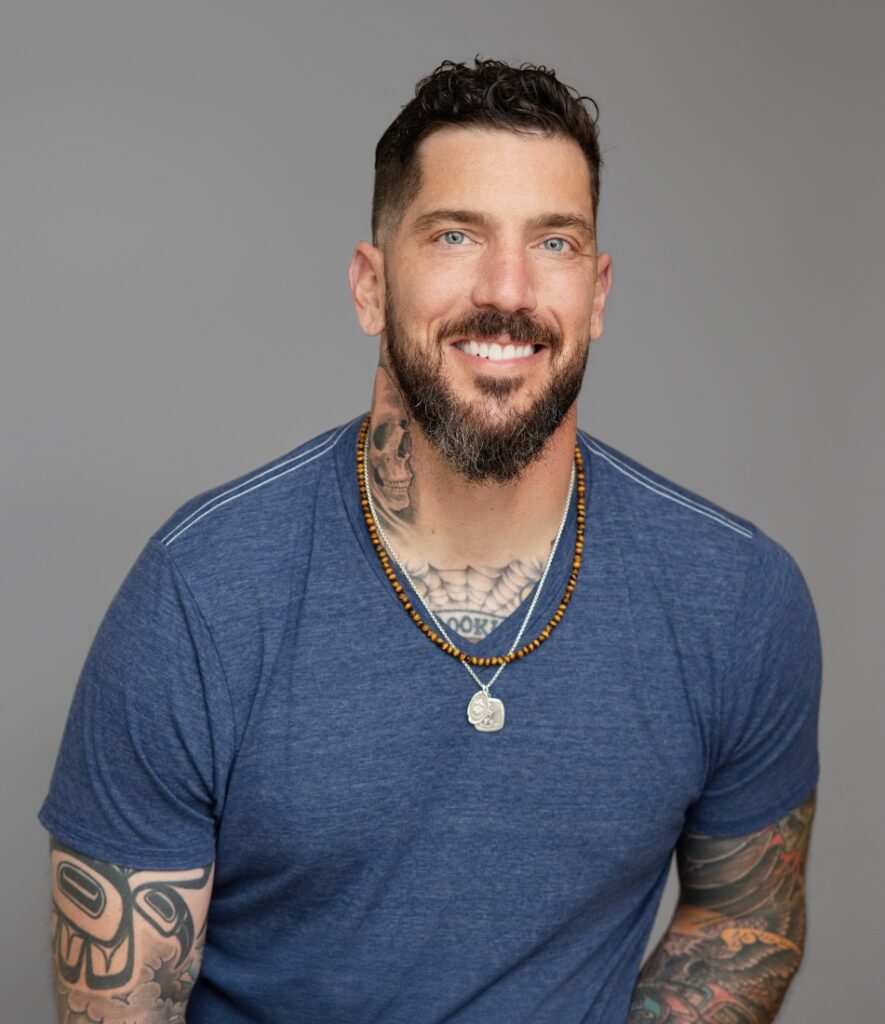
I recently went one-on-one with College Football Hall of Famer and former NFL lineman Robert Gallery.
Adam: Thanks again for taking the time to share your advice. First things first, though, I am sure readers would love to learn more about you. How did you get here? What experiences, failures, setbacks, or challenges have been most instrumental to your growth?
Robert: I grew up on a farm outside Masonville, Iowa — population wasn’t much. My childhood was spent picking up rocks, baling hay, and driving tractors. All my siblings played college sports, so that’s what I wanted to do. I got to the University of Iowa in 1999 to play football as a nobody. Just a small-town kid recruited as an “athlete,” which basically means they had no idea what to do with me. Four games in, they moved me from tight end to offensive tackle, and that changed everything.
By my senior year, I’d won the Outland Trophy, and after college, I was the second overall pick in the 2004 NFL Draft. I played eight seasons with the Raiders and Seahawks. On paper, that looks great. But I never played on a winning team and never made the playoffs. We had coaching turnover every year, constant chaos. And then the physical toll of hundreds of hits to the head that I thought were just “getting my bell rung.” Those blows were destroying my brain.
When football ended, I struggled. Depression, anxiety, rage that I couldn’t control. I’d flip from a great mood to the darkest place in seconds over nothing. I couldn’t sleep. I was drinking to numb it all. I had suicidal thoughts. The turning point came when I broke down in our driveway and told my wife I needed help.
I tried everything from therapy, brain scans, and hormone treatments, but nothing worked. Then I heard Navy SEAL Marcus Capone on a podcast describing the exact symptoms I was experiencing. He’d found healing through ibogaine treatment. Three weeks later, I was in Mexico with Marcus Luttrell and a group of veterans, going through the most intense experience of my life. That ibogaine treatment saved me and gave me a purpose.
I co-founded Athletes for Care to help other athletes who are suffering. Now we’re a growing network of athletes advancing mental health through emerging treatments, advocating for research, and making sure guys know they’re not alone. We were part of the movement that helped Texas approve $50 million for ibogaine research, which is the largest publicly funded psychedelic research initiative in history.
Adam: What is the most surprising thing about life in football? What is something that would shock fans?
Robert: I would say the most surprising thing about life in football is the amount of hours in a day and week that you dedicate to your job. I used to get the feeling that a lot of fans thought we just showed up on Sundays and played the games. Once training camp starts, and then you get into the season, football takes up the majority of your day.
Schedules vary by franchise, but I was up and out the door around 5 a.m., depending on the day. I would go in to get my weight training finished before we met as an offensive line to watch film. All of this would happen before the “official” workday started. From there on, the rest of the work day was scheduled to the minute on what we were doing while in the building: multiple hours of meetings (each week was a different game plan, so every week we installed and reviewed what we would be doing versus that team), walk-throughs, film review of the walk-through, two-hour-plus practice, more meetings and review of practice film, etc. Then, when all of this was done, you would get treatment and bodywork because of the toll on your body and injuries. Some days you were home in time for dinner with your family, sometimes not. Even at home, you continued to study and prepare for that week.
This took place most weeks, and if we were playing an away game on the East Coast, we would fly there on Friday after the workday. You would then return home late Sunday. When we had our first child, I would leave before they were awake, and a lot of times, come home when they were already in bed for the night.
Adam: What are the best lessons you have learned through your career in football that are applicable to those of us who will never earn a living playing sports?
Robert: As an offensive lineman, your job is to protect others, even when it costs you something. I was never going to get the glory. My job was to make sure the quarterback didn’t get hit and that the running back had a hole. You do the hard work so someone else can succeed. I think that applies everywhere, whether in business, leadership, or families. The best leaders protect their people.
I also learned that showing up when you’re hurting separates people. In football, you play hurt. That mental toughness carried me through my darkest days after football. When I wanted to give up, I’d remember to just show up. Do the next thing. That’s how you get through.
The offensive line taught me the value of doing essential work without needing recognition. Nobody’s calling out the left guard’s name. But if you mess up once, everybody notices. A lot of life is like that — doing important work that doesn’t get attention.
Most important, you can’t do it alone. Five offensive linemen have to work in perfect sync, or the whole play falls apart. When I was struggling after football, I tried to handle everything myself. That almost killed me. Asking for help was the hardest and most important thing I ever did.
Adam: Who is the best teammate you ever had and why? What are the characteristics of a great teammate?
Robert: The greatest teammates I ever had were veteran guys who were on my team when I was drafted. Guys like Jerry Rice, Tim Brown, and Tyrone Wheatley. These were guys who had been playing at a very high level for a very long time and were welcoming and helpful to a rookie coming in the door. Watching the way they worked and prepared all week showed me how professionals do it. Most importantly, watching how they treated people in their daily interactions showed the type of people they were.
Adam: Who are the greatest leaders you have played for and with and why?
Robert: The greatest leaders I ever played for were Kirk Ferentz (head coach, University of Iowa) and Chris Doyle (head strength and conditioning coach, University of Iowa). Both men played a pivotal role in my development as a football player. The culture they created for our football team at the University of Iowa took a down program and developed it into a consistent winner.
Kirk was not only a phenomenal teacher, but you genuinely knew that he cared about you as a person. His no-nonsense approach got our team to buy in and trust the process. Chris knew how to motivate us individually and push us beyond what we thought was possible, without driving us into a hole we couldn’t get out of. Because of his knowledge of training speed and power, and the standard he held you to, I would have run through a brick wall if he asked me to!
Adam: What do you believe are the defining qualities of an effective leader? How can leaders and aspiring leaders take their leadership skills to the next level?
Robert: The best leaders are willing to be vulnerable. That sounds soft, but it takes real strength to admit when you’re struggling or need help. Kirk Ferentz and Chris Doyle created an environment where you could push yourself to the edge because you trusted them. They saw you as a person, not just a player.
People watch how you handle adversity more than how you handle success. Anyone can lead when things are going well. The real test is when everything’s falling apart. In Oakland, we went 2-14 one season. The leaders were the guys who kept showing up with intensity every day, even when it felt pointless.
If you want to take your leadership to the next level, lead with lived experience. When I speak to athletes about mental health, they listen because I lived it. I was in the darkest place, and that authenticity creates trust. People can tell the difference between someone who’s been through it and someone who’s just talking.
And, it took me too long to learn that sometimes the best way to lead is to create space for others. With Athletes for Care, my job isn’t to be the loudest voice in every room. It’s to build a community where athletes feel safe sharing their stories. That’s how you create a movement.
Adam: What are your three best tips applicable to entrepreneurs, executives, and civic leaders?
Robert: First, build solutions for problems you’ve actually experienced. Don’t try to solve something you’ve read about secondhand. Athletes for Care exists because I went through hell and found a way out. That authenticity is what makes it work. People can tell when you’re genuinely trying to help versus being opportunistic.
Second, don’t wait for permission or for systems to change. We knew athletes were suffering, and existing resources weren’t built for the specific challenges retired players face. We could have waited for someone else to fix it. Instead, we built something ourselves. We worked with people like former governor Rick Perry and testified in Texas to help secure $50 million in state research funding. Sometimes you have to force the door open.
Third, measure success by the people you help, not the attention you get. Athletes for Care has connected guys with treatment that saved their lives. That matters more to me than any media coverage. If you’re building something just to build your brand, people will see through it. If you’re building it to genuinely serve others, the right people will find you.
Adam: What is the single best piece of advice you have ever received?
Robert: The best piece of advice I ever received is so simple but so true. A very close friend and mentor once stated, “Why would you put any thought into what someone says about you if they are not someone that you would invite over to have dinner?” In this day and age, there are lots of people out there playing “armchair quarterback” who have an opinion about who you are or what you have or haven’t done. Why would you ever think for two seconds about what they say? Easier said than done, but the soundest advice I’ve ever received.
Adam: What can anyone do to pay it forward?
Robert: I see it as my responsibility to be a lighthouse. When you’ve been through something dark and found your way out, you have an obligation to help others find their way too. That doesn’t mean you need to start a foundation. It means being willing to share your story when it might help someone else.
When I started talking openly about my depression, suicidal thoughts, and the treatment that helped me, other guys started reaching out. Now we’ve got athletes across every major sport in our network sharing their stories, too. You don’t have to wait until you’ve figured everything out. Sometimes the most powerful thing you can do is tell someone, “I’ve been there. You’re not alone.” That simple acknowledgment can change everything for someone who thinks they’re the only one suffering.