

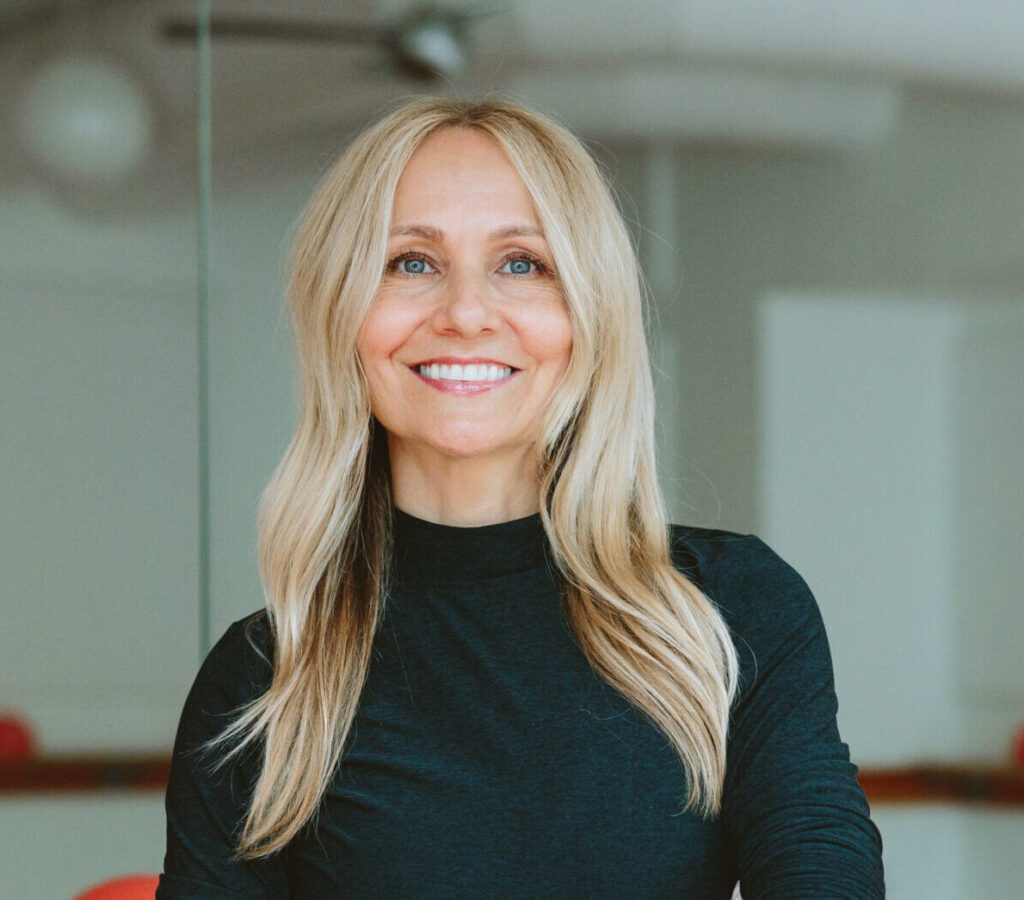
I recently interviewed barre3 co-founder and CEO Sadie Lincoln on my podcast, Thirty Minute Mentors. Here is a transcript of our interview:
Adam: Our guest today is the founder of a leading fitness company that has impacted millions of people around the world. Sadie Lincoln is the co-founder and CEO of Barre3. Sadie, thank you for joining us.
Sadie: Thanks for having me.
Adam: You grew up in a highly unconventional setting, spending time in Taos, New Mexico, among many stops before making your way to LA and ultimately to UCLA before breaking into the fitness industry. Can you take listeners back to those days, those early days? What early experiences and lessons shaped your worldview and the trajectory of your success?
Sadie: I spent close to five years in Taos, so I don’t remember those years as vividly as my mother does, but she tells me it was a beautiful era for her to reevaluate what a nuclear family is, what her role as a woman was at the time, and specifically how to raise me as a single mother. And she and her dear friends decided to come together as single moms and raise their children in a collaborative way as a chosen family of sorts. And we all ended up moving to Eugene, Oregon. That is where I spent most of my formative years. And I was raised in a kind of collective of these cool women, trying to figure out how to work together to raise our kids in our values-based home. So I think that has certainly informed my decisions as a leader, whether it was conscious or unconscious. I developed a company that’s this huge, basically, a network of women supporting each other, questioning the norms of fitness, and if they really fit women’s lives. Women’s bodies, women’s emotional health and needs, and really designing fitness, designing communities around women and what we really need in fitness and wellness. So I do think those early years certainly informed who I am and how I approach fitness in the world.
Adam: Questioning the norms, not taking things at face value, but going beneath the surface and asking questions essential to success as an entrepreneur, essential to success as a leader.
Sadie: Yeah, I think in my opinion, you can never underestimate the value of scratching your own itch. Most amazing entrepreneurs and products and services, and innovations started with someone with a problem or a need that they personally wanted to fix. And that is a data point of one. And that data point of one often leads to many. And the reason why you’re scratching your own itch or trying to solve your own problem is that no one else has done it. And in my case, I had this disconnect with I was seeking fitness to look a certain way. And that approach to fitness was really, honestly driven by shame, and that I wasn’t enough as I was. And a lot of the conditioning and the narrative out in the world and the advertising to get me in as a consumer really preyed on that side of myself that wanted to belong. So I developed a relationship with fitness that was counter to being healthy and counter to feeling confident in my body as it was. And that was a real disconnect for me because isn’t fitness supposed to make me feel amazing? I also had been in the fitness industry. I had an education in running group exercise training. I was working for a large fitness company. And so I felt uniquely positioned to solve my own problem because I had the business acumen, I had the research on the industry, and how to scale the industry and to solve a unique problem in a way that I thought I was uniquely suited to solve. And so that combination can be really magical for a lot of people. It certainly was for me.
Adam: You mentioned fleetingly that you worked for a large fitness company. That company was 24-Hour Fitness, and you worked for Mark Mastrov, who is a great guy and was an early guest on Thirty Minute Mentors. How did that experience ultimately shape your success? What did you learn from working for Mark? What do you take away from your time at 24-Hour Fitness?
Sadie: Well, Mark really amplified the entrepreneur in me because he’s an entrepreneur. So just being around him, and I think he saw in me my entrepreneurial spirit and my desire to lead and innovate. And I ended up working for him for many of the years. I was there for 11 years. And one of the things he had me do was, in fact, I think my title was Special Projects Director, and he would send me on special projects. So I got to dive into all the different aspects of the business of fitness, scaling fitness, marketing fitness, selling fitness, and designing fitness. And I really, I mean, I got a full-blown front seat in education in that world of fitness because of it. So I’m deeply grateful for him. And that experience that I was able to receive working for him along the way, what I learned is also the current landscape of fitness, how it wasn’t serving me in a way that I really wanted it to serve me. I wanted something that was. Designed for women and led by women. And I wanted a smaller boutique community feel versus the big, dim. And so I learned the business from him. I learned the entrepreneurial spirit from him. And I also learned where maybe I could fill in where the industry was missing. And I think all three of those things are really important.
Adam: Finding the white space, you identified that there was this open road for you to drive through, and you drove through it. How did you come up with the idea for Barre3, and how did you actualize it?
Sadie: Well, I wasn’t the one to invent boutique fitness. It was already proven in the marketplace, which is also important. I really researched yoga studios, other bar studios, and Pilates concepts, and I loved the community aspect of a lot of those. And so from a boutique side, I also saw White Space, though, because I wanted to combine elements of my favorite disciplines. I wanted to combine the wisdom of yoga, and this idea that you can practice fitness as a practice of being present in your body versus being attached to an ideal or to a result. But I didn’t want to start a yoga company because I didn’t want to be attached to an ancient heritage. I wanted to be attached to exercise science, which is more traditional fitness. So I wanted to infuse the wisdom and mindfulness of yoga into traditional fitness. And I didn’t see that in any boutique concept. Most boutique concepts at the time were very much attached to a heritage, which is beautiful in its own right. I just wanted a concept of boutique fitness that evolved over time based on science, and also allowed every client to have agency in their body and to be their own best teacher, versus conforming to a methodology that was already set. And so all of that combined really gave me the confidence to know that I was on to something both in the boutique fitness space and in the traditional fitness space.
Adam: And once you had that confidence and belief in your idea, you were full force, you built this business with your husband. How were you ultimately able to grow and scale Barre3? You’re now the second-largest bar company in the world. How did you get there?
Sadie: And I think we’re the largest women-owned and operated boutique fitness concept that’s omnichannel in the world, which I’m really proud of. It started with absolute optimism and confidence in myself because of my inner knowing and what I knew I needed, like that scratch your own itch concept, combined with a business plan. Chris and I did our research. We wrote an extensive business plan. We knew we were going to scale Barre3 from the very beginning. Even opening that very first studio, we knew we were going to franchise. We had a plan around that ahead of time. And again, I think that’s because I had that unique experience of working for 24Hour Fitness. And Chris and I actually ran a franchise concept within the 24-Hour Fitness parent company, Umbrella. We were able to test and run a brand-new franchise concept. We really did have that experience together, and knew we could work together as partners. I get asked a lot, like, How do you work with your husband? We had a trial run, and we realized we really work well together, and we really do. So as soon as we opened that first studio, we put a tab up on our website at the time, Grow with Us, and started to collect leads immediately. And I, like most small business owners, did everything. I taught 19 classes a week, which I don’t recommend, but I did it in the beginning because I needed to. As I was building my instructor manual, as I was recruiting my first group of instructors, as we were building out the operations and the build out of the studio, we had a play lounge. We had a little play area for kids. Moms could drop off their babies, really figuring out the pieces of it, while also figuring out how we were going to scale it. And we really did start, one woman at a time, based on an inside-out approach. We didn’t go out and advertise beyond our website. It really was our first franchisee. In fact, our first team was the clients. Who walked in the door, directly experienced the product, resonated deeply with what we were building, and wanted to become part of this vision with us so much that they’re willing to invest their own money to open their own studio. And to this day, that is how most of our business is still generated, including new clients walking in the door, all the way to new owners opening their studio. It really is an inside-out approach.
Adam: I love that. It starts with finding the right partner. In your case, you had an advantage in that you were married to that person, but oftentimes you could be married to someone who you absolutely love, but they’re not the right business partner for you. But you had the trial run, it worked, you went in, and it worked in this entrepreneurial setting. You had the industry experience, which was enormous for you. Starting with scale in mind, most successful businesses are successful as small businesses. Very, very few are able to scale. And to scale, a big part of it is starting the right way.
Sadie: First of all, let’s get honest here. I did not do it right all the time. So I love sharing what I did wrong. Please learn from my mistakes. Even though on paper, I knew I wanted to scale emotionally as a founder and a creator, I fell into the trap of thinking my brand was so precious that I needed to control it. That is the number one worst thing you can do as a leader if you want to scale is get in your own way. All along the way and at different iterations of our growth, we’re at 207 locations now. I just hired a president to be at the helm of this organization versus me. So I can take this company to the next era of scale, the next era of growth. And all along the way has been a process of me letting go. And how I’ve done it iteratively is figuring out in the moment of business that I’m in, where do I best serve this organization, Barre3? What does Barre3 need from me? And where do I need to hire? People around me who are better than me in those areas that I’m not as good at, that Barre3 doesn’t need me anymore for. And being able to have a little dance with my ego, but then set it aside and find better people who are suited to scale this organization in a way that I cannot. There are two parts to that. Number one is becoming self-aware over and over again. It’s not that you can just learn about yourself and then be done. For me, it’s been a process of always leaning into good business books, to excellent executive coaches, to taking StrengthsFinder or different tools to learn about where my strengths are and where they’re not, to therapy, to being open to criticism, to asking for help. That practice of being self-aware has been really freeing for me because it validates where my strengths are and how to double down on those and then not exhaust myself trying to be things I’m not. And then believe in myself enough and believe in the vision of this company, Barre3, enough that it deserves to have better folks than me to take it to that next place. I haven’t always nailed that, but I have certainly learned that when I do, I’m happier and the organization is happier because of it.
Adam: You shared a lot of really important information there. The importance of self-awareness is essential to successful leadership. The importance of knowing your strengths, knowing your weaknesses, and surrounding yourself with people who are going to be able to complement you and are going to be able to help you take your business to the next level. None of us can do anything alone. Success requires great people, great teams. In your first year, you’re going to have to teach 19 classes a week. That’s what it takes. You are your business in those early days, but as you grow in scale, it’s not about you doing all the work. It’s about you bringing in the right people and empowering them, helping them, positioning them, so that you can create the ecosystem that ultimately fuels sustainable success.
Sadie: When your tank is the fullest and when things are going swimmingly well in your business, that’s the time to figure out, okay, who’s next? Who’s next on my team, and what can I let go of now? It’s a lot harder to have that mindset when things start going south and when you feel like things are uncertain or you’re not on your A game. A-game moments are the time to get uncomfortable and to drive new people into your business, new eyes on the business, and new innovation. And it’s an art and a science to figure out when those moments are and to be able to look ahead a little bit. Like we’re crushing it right now. Why would I want anything to change? That’s the moment to change. I think I’ve gotten better and better at that. And it’s saved a lot of heartache, if nothing else, but also has allowed a healthier culture internally to take on the next challenge.
Adam: Sadie, something that you shared, which I really love, key to your success has been really understanding who your customers are, who your audience is, and ultimately converting many of them from clients to partners, going into business with them. For any business to be successful, you have to cultivate a customer-centric culture, but you’ve taken it to the next level by taking those customers and turning them into franchisees.
Sadie: We have made a conscious choice as an organization to franchise as our growth modality and to franchise with an owner-operated model, meaning my investors, in fact, today, we don’t have any private equity or institutional money yet. But how we’ve grown is by having a franchise partner invest her own money into a bar-free studio and then run it, be a part of it, a real part of change. And we are 100% owned and operated by women. We have 207 locations, like I mentioned. And I can confidently tell you that all of those locations have someone behind it who is driven by our vision, by our mission, and our core values, and a real deep desire to take care of every single client who walks in the door. And because of that, it’s just a natural thing that those clients are being taken care of so well. If they move and they move into a new area where there’s not a Barre3, they know they’ve seen it. Like, wow, you know, maybe I could open the studio like Amy just did in Wisconsin, the studio I’m going to Middleton, Wisconsin. She just opened a studio, and it’s like, wow, she did it. That’s pretty inspiring. Maybe I can do it too. And that’s a flywheel for us of growing with purpose and having all of our investors be real stakeholders in the product, and taking care of our clients.
Adam: In your experience, what are the keys to successful leadership, and what can anyone do to become a better leader?
Sadie: Well, first of all, it’s not a one-size-fits-all. All leaders are different. There are quiet leaders. There are really loud, extroverted leaders. And there are entrepreneurial inventors who become leaders, but there are also people who have really studied the art of leadership and then hire the entrepreneurs and the innovators around them. So I think there are just so many different ways to lead. Not to sound like a broken record, but the best leaders I’ve ever been around are the ones who are self-aware, who are accountable. And those who listen, who seek to understand before being understood, are driven by insight, but also a commitment to helping other people grow and have a clear succession plan. Those are some of the elements of leadership that I think cross all leaders, no matter what style of leader you are.
Adam: It’s a great list. You mentioned self-awareness. You mentioned commitment to the people you’re leading. You mentioned accountability. How, as a leader, do you keep the people you lead accountable? How, as a leader, do you keep the teams that you lead accountable?
Sadie: Number one is I walk the talk. I practice walking the talk because it is a practice. None of us probably operates perfectly all the time, but I really do consciously practice being accountable. The only thing I can control is how I show up in the world. When there’s conflict, when there are tough decisions, when I’m pushed or in a place of discomfort, or uncertainty, the only thing I can be certain of is how I’m showing up and being accountable for my piece of that and my accountability in that and how I can be part of the solution. And you can never, ever underestimate the power of showing up and influencing people just by your own behavior. I think that is the most influential thing any great leader does, and with core values. Really practicing them authentically. That’s one of our core values at Barre3 is practice authenticity. We talk about it all the time. That is a way that we infuse accountability throughout our organization is through that core value. It is a daily practice to show up authentically based on your core values, based on how you want to be treated. How would it feel not to be listened to, to be interrupted, to be dismissed? Have you ever felt that way? Well, show up in a way that is more how you want to feel. And that’s something that is really infused in our culture. It’s also infused in our product. It’s how we teach exercise. It’s how we teach fitness. Every client has agency in their own body. An invitation to modify moves based on how she’s feeling in that very moment. And I say she, because it’s the vast majority of women we have men in too. But how you’re feeling in your body, and then showing up authentically based on what you’re bringing in that day. And we invite that in our language and our cueing, but you’ll see that our instructors all show up that way in class as well, and as instructors. We really model that in both the product and in leadership.
Adam: Leadership starts with leading by example. You mentioned that there are all different types of leaders, and there are all different ways you can lead. What’s the common denominator? One of them is authenticity. Be you. There is only one you, and there is no substitute for showing up as your authentic self every day.
Sadie: And you are deeply deserving of surrounding yourself with people who respect that authenticity. And it goes both ways. Showing up authentic and then with deep respect for others who show up differently, because we do. They’ll have different strengths in you, different communication styles. Things will matter differently depending on whether you’re more data-based or you’re more emotionally based, for example. Both are good. Both are important. And that mutual respect is essential. And I found that it really does go both ways.
Adam: Sadie, I love that. And in keynotes that I give, I talk about the golden rule versus the platinum rule. And I ask audiences, does anyone here know what the golden rule is? And just about everyone knows what the golden rule is. And we all think of the golden rule as a great rule. Treat people the way that you want to be treated. But as a leader, the Golden Rule is actually a terrible rule. Because what happens if the people you lead don’t want to be treated the way that you want to be treated? I’m a believer in the Platinum Rule. Treat people the way that they want to be treated. We’re all different. We’re all unique. We all come from different places. And it starts with understanding, respect, and a sense of care for one another.
Sadie: I think back to the StrengthsFinder, I think that’s a really tactical thing you can do. Like it’s something you could actually go out tomorrow and do with your team, is to do the StrengthsFinder test or some kind of common thing that allows everybody to see their differences. What I like about them is that it’s something external versus trying to understand it yourself. I’ve learned things about my team. I think they learned as well about themselves that neither of us knew. By doing some of these tests, we’ve done the Colby Index, we’ve done so many, but I am a fan of bringing in experts and doing an exercise like that because it sort of levels the playing field and creates a mutual respect within your teams.
Adam: A key aspect of your journey has been that you are not only so successful in your industry, but you are so successful as a woman in an industry that has been historically dominated by men. And I want to ask you what advice you have for any women on how to excel in male-dominated industries, and what advice you have for men on how to be great allies.
Sadie: For women, I think it’s really important to be discerning around who you surround yourself with and to design your own board of directors without even having a board of directors. I remember someone a long time ago saying, Sadie, you should develop your own spiritual board of directors. Meaning, who do you look to when it comes to your health? Who do you look to when it comes to your executive functioning? Who do you look to when it comes to being a present mother? Who do you look to when it comes to developing as a founder and CEO? Like really surrounding yourself consciously with people who lift you up as a woman in your respective roles as a woman. Versus trying to fit yourself into a male-dominated industry or a male-dominated role. Because I think when you surround yourself with people who lift you up as you are as a woman, and if you’re honest with yourself about all your values and all the different roles that you have in your life, you will be more successful because you’re back to your authenticity. You’re designing your life based on your truth. And you’re surrounding yourself with people who are validating that truth. Some of my greatest supporters have been men. My co-founder and husband is the co-founder of Barre3, but when you see most of the media or a lot of our outward-facing messaging, and also how we lead, it’s almost all women, including me. He’s a huge part of our leadership. But he also really creates platforms for women to grow, to be seen, but also how we design our workouts around women’s physiology and our psychology and emotional health, to how we design leadership development. He is a part of. So I think there is a misnomer that in order to be successful as a woman, you have to be surrounded just by women. I think it’s actually even more important to find the men in your life who can really support you. We’re all in this together. I know that if we support more women at all levels of leadership, from investors to board members, to CEOs, C-suite people, all the way through to innovation and designing products for women, that our economy will only boom. There is so much room for growth. There is so much room for all of us. And we’ll all benefit from supporting more women in all those different areas.
Adam: At the beginning of our conversation, something that you shared was foundational to your journey, which drove you to start Barre3 and create Barre3 in a way that has led to such enormous success. Recognizing the need to develop self-confidence and develop self-confidence in a way that is meaningful and lasting. What can anyone do to cultivate self-confidence?
Sadie: It is about cultivating. That’s a great word. Because for the rest of our lives as humans, it’s a daily practice to cultivate confidence. There’s so much imagery out there, messaging out there, narratives out there that create this environment where a lot of us unlearn self-love. I think we’re born these beautiful, loving beings and confident beings. And then it’s unlearned over time because we compare ourselves to things. We’re told we’re not enough, or that’s how we interpret what we see. You know, social media, as an example, I think, has really amplified this. And I think it’s a practice to remember that we’re enough as we are. We always have been that that’s not the truth, that the truth is that you are loved. Everybody has different ways of doing that. Some people through prayer, some people through meditation, some people through journaling, or surrounding themselves with people who remind them of that. But I think it is extremely important that we all know that we all need to practice that, and that needs to be a cultivated experience throughout our entire lives.
Adam: Sadie, what can anyone listening to this conversation do to become more successful personally and professionally?
Sadie: Define success clearly with measurable goals and keep redefining it all along the way. Your definition of success is uniquely suited for you. You don’t need to follow someone else’s definition of success. You get to create your own definition of success. And if success for you is getting out of bed 30 minutes earlier than that day, you’ve succeeded. You get to define your own success and measure it your own way every single day.
Adam: Sadie, thank you for all the great advice, and thank you for being a part of Thirty Minute Mentors.
Sadie: Thanks for having me.