I recently interviewed Vistage CEO Sam Reese on my podcast, Thirty Minute Mentors. Here is a transcript of our interview:
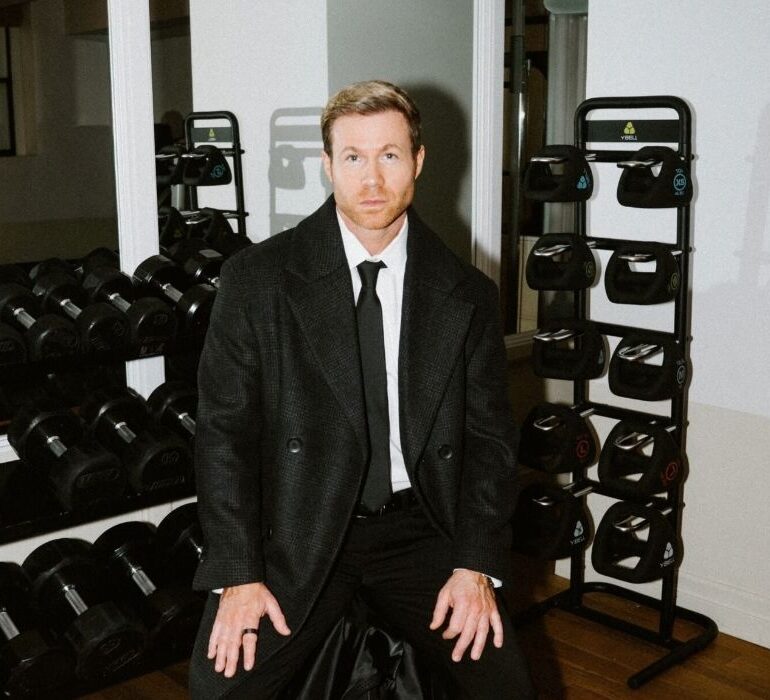
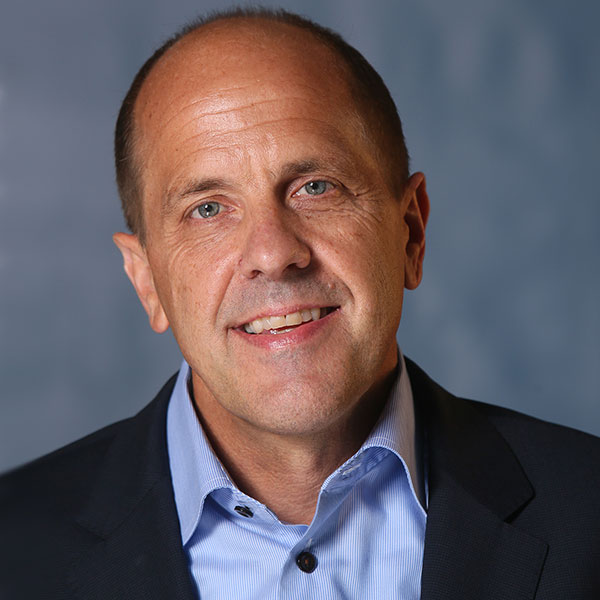
Adam: Our guest today is the leader of the largest CEO coaching and peer advisory organization for small and medium-sized businesses. Sam Reese is the CEO of Vistage. Sam, thank you for joining us.
Sam: Thanks, Adam. I am looking forward to the conversation. I really appreciate it.
Adam: I am looking forward to it. You grew up in Denver and ran track and cross country, not too far away at the University of Colorado, where you were an All-American. Can you take listeners back to those early days? What early experiences and lessons shaped your worldview and shaped the trajectory of your success?
Sam: You were a baseball player. Like so many people, athletics helped shape a lot of who you become and a lot of the experiences I had. That was my dream from the time I was in eighth or ninth grade. Well, first I wanted to be an NBA player, then I realized that was not going to happen, even though I played high school basketball. My dream was to be an Olympic champion, and I was a distance runner. I had a legendary coach. That changed it all for me, a legendary coach in high school. He was the first real motivator I had ever met in my life, and he changed the way I looked at life and what hard work could do. I went on this course and had a fun ride.
I do not tell people, because most people do not believe it, but I have three other brothers who were also runners. People do not believe it when I say there were three of us who were first-team All-Americans at the University of Colorado, but all three of us were. My older brother ran for a different school. Setting a big goal and going after it was where you can feel, in a small place like Wheat Ridge, Colorado, in a situation that was not great economically, that you can have big dreams. I had a coach who had me think that way, and he propelled me and my brothers to have really good careers in track, and I think it still propelled us in business as well. He is an amazing person. His name was Bob Brown. He was an amazing human being.
Adam: I love that you talk about the impact of your coach, Coach Bob Brown. Fast forward, you are the CEO of the largest coaching organization for small and medium-sized businesses across America with a presence in 35 countries. What were the keys to rising within your career? What can anyone do to rise within their career?
Sam: Most leaders who have been lucky enough to have success feel like it is a lot of luck. There is no question about it. One of the biggest keys was to be really clear and specific about goals that I set. That is what I learned in sport that a lot of people do. I tell a story about my first state championship, the first time I won one. I had been hurt for most of the year. I asked the coach, this legendary guy, Bob Brown, before the meet. I said, I have been hurt most of the year, what place should I be going for at state? He was confused and said, What are you talking about? Did you not set a goal to win it? I said, Yes, but I have been hurt this season. He said, Then do not run that. I thought we came to win. Then he told me, This is where I want you to take the lead and do not look back. I will be damned, it worked.
His point afterward, when I said, How did you know I would win, was, The power was in the goal that you set. All you thought about every single day was that goal. That is a big part. Sometimes I am too myopic about that. I have learned over the years that I can get too focused on goals, but I have tracked all of those, whether it is family goals, business goals, fitness goals, faith goals. I make sure I have an easy way to track my progress and evaluate, then be honest about whether I am doing well or not doing well. That has been a big piece. I always believe that even when you are way behind, there is always a shot that you can get a breakthrough. I do not believe in incremental performance that just gets a little better. I see performance where you can be struggling, then big leaps happen, then you battle to hold on, then more big leaps happen. That is how I have seen my career go as well, with some lucky interventions.
Adam: How do those big leaps happen, and how can you position yourself to optimize your chances for those big leaps happening?
Sam: It starts with making sure you keep your dreams big and do not get pushed back to what seems safe. Make sure that as you go along in life, you have a trail of good relationships with people. There is no trail of people saying that dealing with you is difficult or that you were disrespectful. You need that trail, because people start to talk, and when you have a conversation, they often know other people who then check on you. That is how it has been lucky for me.
I remember my first job. I was a salesman for Xerox. After a college career that went well, I got hurt. I had knee surgery. Back then, if you tore your patellar tendon, you were done. That is what I ended up doing with two years left of college, believe it or not. I had risen pretty fast to the top, so it was really disappointing. I had to get a real job. I wanted to work for the best. I went to interview at Xerox. There were all these people. There was no chance I would get the job. The third guy who came in to interview said, Hey, are you that runner guy. I said yes. He said, I have a friend who knows you. He pulled me aside and said, Here is how you are going to get the job. The key was, when they told you that you did not want the job, because they would say, You do not want this job, it is too hard, you had to come back hard and say, Of course I do. That was one break where I happened to know some of the same people, and I had a good reputation.
Always believe that you can get out of your comfort zone, even if you are not ready for something. The first CEO position I took, there was no way I was ready for it. I went hard at it and believed I could do it. Once I got in, I knew the learning curve was gigantic. Know that you have a shot to figure it out without figuring it all out ahead of time. I have learned from a lot of leaders who got there by not having it all figured out ahead of time.
Adam: I love that. Going back to the example you shared of showing up at Xerox, you mentioned that you saw someone, he recognized you, and you happened to know some of the same people. One way of looking at that is, look at how lucky I was, right place, right time. Another way of looking at it is, you put yourself out there, you did big things at an early age, you dedicated yourself to excellence, you achieved greatness on the track, people knew who you were, and next thing you know, you are at a job interview and you are recognized because you put yourself out there.
Sam: There is truth behind that. What is also true, and you would find it interesting, and I often counsel former athletes, is that it can help, and then you have to put it behind you too. What happens sometimes for those of us who built our persona off sports is that we keep going back to that and think it will help us be excellent in something else. It is not necessarily going to do anything. I tell people, some of the most competitive people I have ever met never played sports in their life. I used to believe, I am an athlete and I am competitive. There are all sorts of competitive people.
I have learned from good mentors that whatever I did in the past is not enough to propel me in the future. Anytime I go back to thinking I can rely on that, I am not challenging myself. I have to keep pushing. Before I got the job at Xerox, after I graduated, I was trying to figure out what I would do. I was working at a bank. It was the worst job. I remember when I knew I was moving on. I liked that everybody knew who I was. One day, a person came in and said, Are you that runner guy. Are you going to make it to the Olympics? I said, I am injured, I am not doing that anymore. She asked a few more questions. I said, I work at this bank now, what can I do to assist you. I was done. That was not who I was anymore. I had to move on. I have struggled with that sometimes, and so have many people I know in their careers, struggling with who they used to be. You have to keep moving forward.
Adam: I never had that problem because I was the captain of probably the worst baseball team in the history of baseball.
Sam: So you were the captain. That is still a big deal when you are the captain.
Adam: Not only were we forgotten very fast, but I tried to forget about us as quickly as I possibly could.
Sam: It is not as easy for me.
Adam: It was not easy for me either. I had a lot of nightmares and still occasionally do. The line you shared that really jumped out at me, whatever I did in the past is not enough to propel me in the future. That is what it is all about. The most successful people, the most successful leaders, are continually trying to get better, continually trying to take that next step, even if from the perspective of everyone else around them they are at the very top. That is not how they view their positioning. They are continually trying to get to that next level. How do they do that. By not looking back, by not focusing on the past, by not spending one minute thinking that what they did yesterday is good enough. Instead, by thinking about what they need to do today and tomorrow to get to where they want to be.
Sam: Those are great lessons from people I have been around. I get to benefit from that perspective every day. John Wooden used to say, Make each day your masterpiece, the famous basketball coach. I think about that each day. Start over. When you are really honest with yourself and you laugh at yourself, you realize we are all screw ups. I used to say that when I was in sales. When I was moving up the ladder, whenever a salesperson would be frustrated that they would get a deal and then the operations team would screw it up, I would say, Can you imagine if they followed us around in a day, how many screw ups we have. We screw up all day. They just do not see it. Then we finally get an order and we are mad they do not make it perfect.
I worry about this, Adam. I worry about retirement. My wife keeps saying, What will you do. I do not know, because I have to keep getting better and improving. If I can do that in retirement, I would do it, but I do not know how to do that.
Adam: You mentioned John Wooden, the great John Wooden, and his quote about mistakes. If you are not making mistakes, then you are not doing anything. Richard Riordan, former mayor of Los Angeles, used to tell us, Only a mediocre person never makes a mistake. May he rest in peace. If you are too afraid to try, you are never going to get anywhere. Do not be afraid. It is about taking that step and recognizing that often you are not going to get there. You are going to fail along the way, but you are never going to get to where you want to be if you are afraid of making a mistake, if you are afraid of failure.
Sam: You are fortunate if you have people who can teach you those lessons. I had a great college coach as well. In my freshman year at the NCAA championships, he knew I was going to blow up. He told me before the race. This will not bore you, but back then there were no rules in college sports, so you would be running against a world record holder from Kenya who would be a freshman at the University of Oklahoma, 28 or 30 years old. That is how it was. In my conference I was the only American in the top 10.
He told me before the race, You cannot win this race. Do not think you can. When he said that, I thought he meant maybe you can. I completely blew up, right up in the front. Then I blew up. I had a disastrous race. Afterwards, I was disappointed in myself. He came up and said, That went great. I said, What do you mean, that went great. He said, You were there for five miles. Now you know you can run with the best in the world. He would say the same thing, Now we failed. Is that not great? Now we know where we stand. I think about that. Sometimes it can be frustrating to work with me, because when I make a mistake, and I make them all the time, you think you got me. I do not really care. You say, You screwed that up. I say, Yes, I did. What is next? I had to learn that early because if we try to be perfectionists, and when I find myself going that way, it slows me down.
Adam: It really speaks to the power of perspective and how shifting your perspective can change everything. That is at the heart of Vistage, at the heart of what you do as an organization, at the heart of your work. You lead an organization with more than 45,000 CEOs, business owners, and executives. What are the most interesting things you have learned by being around so many CEOs, business owners, and executives?
Sam: It is an amazing community of leaders. They are really similar whether you are in the United States, Argentina, China, Australia, or the UK. I was in Denmark a few weeks ago. They are similar, our members, because they believe they are trying to get better, and they try to be stewards for their companies, their families, and their communities.
A couple of things, and my own experience. I came to Vistage when I was a CEO of another company over 25 years ago. I was failing dramatically. I had been head of sales for a Fortune 500 company. They hired me as CEO of a sales training company. I was failing dramatically. I went to resign. One of the board members said, Do not resign. You need help. They put me in Vistage. It still feels fresh. I still sit in my Vistage group with the same chair. We have a chair, the head coach for each group, and all the members sit in a group of about 12 to 15. I still go every month, even though now I run the company.
What hit me from the start still hits me today. I was nervous for that first meeting with other CEOs. I felt out of place, like a pretender among successful CEOs. The humility every one of them has is what we preach. The transparency in how people talk about their challenges and problems. The vulnerability. They are whole people. That is how I have learned to define our brand, by learning that myself. They are the same person everywhere. Those were things I did not have as a CEO. I had a lot of dissonance. I was a pretender trying to put on a personality that made me look competent and effective, a different person at home, a different person in the community. I did not have that. That is what you get.
You would be surprised. A consultant once said Vistage is the secret millionaires’ club of good guys and gals. Not exactly, but close. If you meet a Vistage member and say, Tell me about your success, they will have a tough time getting there. Then you will say, She is running an incredible business. We start with all the things we screwed up, to level set and not think we are omniscient.
When you hang out with these CEOs, you see grit to keep coming no matter what. Earl Nightingale said, You become what you think about. I find that with our members. They know what they want to accomplish and stay focused. They can have the biggest setbacks, personally and professionally, but they have resilience to keep moving forward.
The biggest one that took me a long time to learn is that if you believe you know more than the group, you could never be a Vistage member. You come to the meeting knowing you have ideas, but the better answer is going to be everyone’s perspective combined. The better answer will always be everybody thinking through it, if you can be honest with your issue.
Adam: At the heart of your work is cultivating trust. Members share their deepest, darkest secrets about their businesses and, in some cases, their lives. How can leaders cultivate trust and create an environment of trust?
Sam: That is a great question. We think about it every day. As a leader, ask more questions. Create the space for your people. I have had to develop this. I worked hard on it. I used to be the answer man. I thought I had to be the quick answer to prove I am the CEO. I have learned from the best CEOs that you really understand situations by asking more questions. Give your people space to answer those questions. Ask even more questions. Keep going until you really understand the issue. When you think you have an answer, bring everybody along to see if they might have an answer as well, or something better you do not see. Do not see yourself as the center of the world, the master decision maker, because you are the leader. You have to listen to everybody. As a leader, you will let them know when the decision is final, but you have to grab everyone’s perspective.
At all levels, you hear that the best leaders manage by walking around. Yes, because they get to the front lines, to the people who really know what is going on. Ask them questions. How can we make customers happier? What is the hardest thing about your job. When you do those things, it is almost an unfair advantage as a CEO, because you get all the information you need to make decisions, rather than insulating yourself with just your executive leadership team. You have to be all over that as well.
Adam: As you described how to cultivate trust, you also broke down how to give and receive feedback. Ask questions. Do not dive straight into the feedback you want to give. Build rapport. Before you can deliver feedback that will be received effectively, you have to build trust. It has to be in that order.
Sam: I do not know if you have been in a situation where a new leader had a meeting with you and tried to give you feedback without knowing anything about you. I have. The feedback went nowhere. He tried to be a mentor. He did not know anything. You have to invest in knowing people. Ask questions about people. When they tell you what they think you should do, ask, Why do you think that? How did you come to that situation? Tell me about other options you considered before you got there. If this does not work, what might you consider to rescue the initiative if it goes sideways? Is there anything you need me to do or want my opinion on. That is an example of going through it. Say, Fantastic, that sounds like a great initiative. I might have a couple of questions. Make sure you trust how they think and, as a leader, provide discipline so things do not happen in a willy-nilly way. That is what is powerful about questions. You keep asking questions, and they will get ahead of you. By the time they prepare the initiative, they have thought through those things.
Nobody really says, even though people say feedback is a gift, that they cannot wait to hear your feedback. If someone says, Adam, I want to give you a little feedback on your podcast, you bristle. We have to be careful with that. We can do the same thing by saying, Tell me how you came up with this concept on your podcast. If I had some critique, how did you come up with it and how does that work for you? Did you think about this? That is a different way of getting there, where I do not feel like you are attacking my credibility. You are exploring how I thought about it. I am trying to get better at that. I see the best do it, because they learn so much in the process.
Adam: The message and the messenger. If you are receiving feedback from a stranger who has no credibility with you, you might be less receptive to the feedback. You might be open because you might believe feedback is a gift, which many of us do. I believe feedback is a gift. When I give talks, I usually do not know the people I am speaking to, but in every talk, I have a QR code at the end where I invite and incentivize audiences to give me feedback.
Sam: The best speakers always do that.
Adam: I want to know what you think. Was I great, was I good? Even if you thought I was great, what did you like? What resonated. What could have been better? Tell me what is on your mind. That is invaluable to me. There is so much value in the messenger. A friend gave me an example I will steal. Think about LeBron James playing basketball and a fan yelling at him, Why are you not doing this. He will blow that off. If Michael Jordan calls LeBron and says, I noticed your form was off, he will listen. If a Hall of Fame coach calls and says, I noticed you were doing this, he will listen. He will take it more seriously than if someone from the nosebleed seats is yelling feedback at him.
Sam: I agree, and as a leader, you have to be careful. You are a professional speaker, so you know how to take feedback and discern what makes sense. I see people who aspire to be in a CEO role think that getting feedback means you act on it. If you do that you can never reconcile it. There is so much different feedback coming at you as a leader. If everybody feels that when they give you feedback or an idea, you are supposed to execute on it, it would be impossible. What I used to do was limit the feedback, because too much was coming and I could not keep track of it. You do not want to do that.
You have to get good at being okay with all the feedback, then discern it and figure out what makes sense. Professional speakers are better at this because it is your trade. When I travel and meet members and coworkers all over the world, they say, You probably do not want to hear from me, too many people come at you. I say, I want to hear everything, but do not follow up to see if I did your idea, because I am not going to do that. There will not be a direct follow-up on whether I did it, but I want to hear your ideas. That is a hard shift to make, especially for leaders who are pleasers. They want to help everybody one at a time and think that will make them a great leader. It does not work. People have different ideas and different feedback, and you cannot reconcile it.
Adam: You hit the magic word, discern. That is a key step that is often overlooked. You either do not want feedback, do not like feedback, or are allergic to feedback, or you want to get better and say, Give me feedback, that sounds good, I will do it. The most successful people are eager to receive feedback but understand how to discern it. Using the LeBron example, it is easy to discern between someone yelling from the nosebleeds and Michael Jordan telling you your form is off. An easy way for you and me to discern feedback is to ask whether it is constructive. Can it help me improve? Does it resonate? Take it, digest it, listen, absorb it, and use your best judgment, because ultimately that is what got you to where you are, to decide whether to act on it.
Sam: I agree. The challenge I see great leaders handle well, whether in a Vistage group or with a support system of peers, is that you have to be who you really are. If you are faking it and you get feedback on your fake person, if you are trying to be somebody different every day and then taking feedback on that, it is hard to discern. You have to be transparent about who you really are and vulnerable about your weaknesses so the feedback makes sense and you can improve.
I understand how to pretend. Early on as a CEO, that is what I did. I said, Here is the image. I am, give me feedback. It took me years to learn from other CEOs to be okay with those vulnerabilities. Then the feedback becomes real. It is not me playing a pretend story in my head. For instance, I now make sure that when there is an executive who might not make it here, I am more patient. I used to make up my mind and then build a story around why I had to get rid of them. Everything fit. I learned that once I make up my mind I start building a story. I had to change that, to know that is who I am, and be open and continue to get feedback. It changed how I made decisions. Thank God, because I would have made bad decisions had I not developed there.
Adam: Another important point. Any feedback you receive and anything you decide to do has to be within the context of you being yourself. You cannot compromise that.
Sam: No, but it happens a lot. People do that and then have dissonance between who they want to be and who they are. I feel bad when people struggle with that. I think of one great person who built his whole legacy around being an incredible athlete. I knew him. He was incredible. He built his company culture around it. Every day, he worried someone would find out he was a fraud. You have to get over that. Nobody cares whether you were on varsity or not in college. Get over that and start talking about what you believe in. That can be hard.
Adam: How can anyone get to a place where they are fully comfortable in their own skin?
Sam: I do not know. I have not figured it out myself. You can be fully comfortable in your own skin around people you trust, who have shown you their vulnerabilities and have been transparent. You can find an environment where you can be yourself so you can really improve. I do not know if anyone can be fully comfortable in their own skin in every situation. We have to be smart. There are times when we do not want to be vulnerable, times when we do not want to ask questions. We have to be able to handle different situations. Find those venues where you can be yourself. Some people can do it with their families. Some have to do it with friends or business advisors. We all have to strive for that to improve as leaders.
Adam: What would you encourage people to look for when determining who to surround themselves with?
Sam: One thing I have noticed is it seems popular to find a mentor. I always hear young people say, Could you be my mentor. If I said yes, then I am already disqualified, because anybody who thinks they are good enough to mentor somebody, if I define myself as a mentor, you should say, I do not want to work with you. Look for people who do not want to give you advice on what to do, but who want to share experiences that might be applicable, and who always leave the decision to you.
I have three boys. I tell them, When you come to me I will give you the most conservative advice. Know that it will always be the most conservative. Do not make that the advice. Go talk to other people who might have different views. Get multiple perspectives. The other thing I look for is that any time someone, especially when I was young, would advise and then push me to action, You should go do this right now, I learned to push that away. You and I do not necessarily think the same way. Tell me what you think, and I will make the decisions.
Adam: You would be a great mentor, because that is at the heart of great mentorship. A great mentor does not tell you what to do. A great mentor teaches you how to think. A great mentor gives you tools so you can make your own decision.
Sam: Those are my best days. If there is any gauge of success that feels good as you get older, it is that I get more calls from people who used to work for me or people I coached. I coached a traveling AAU basketball team for many years. When I get a call, Coach, or, I am thinking about a job change, I want to run it by you; those are the best days. What I love about those is that people switching jobs will package it as one job is bad, one is good. You say, I guess take the good one. If you ask the right questions, first of all, they might both be good. You do not have to package one bad and one good. If you want my advice, let me ask questions, then I will tell you some ideas to think about. That is a great day when I get those calls.
Adam: What makes a great coach? What can anyone do to be a great coach?
Sam: From great mentors, I learned it sounds trite, but it is not about you. It is about them. If you make it about them, you get the success, but it starts with them. As a coach, the term people use now is servant leader. Back when I was in sales management, that term did not exist. Now I hear it all the time. All it means is you focus on them and have the humility to believe they probably have the answer. In fact, almost every time they do. You have to help them get to it. You are not the wisdom person who says, Go do this. You ask questions and they will get to it.
One of our best chairs, who coached our members at Vistage, recently passed. He used to tell me that when he listened to someone who wanted advice, he would push out everything he knew about the topic, even if he was an expert. Push it out so he could focus on them, see how they are feeling, see how they will make the decision, then ask questions. He asked me once, Tell me if this is not a powerful question. I had a tough decision and said, I do not know what to do. He said, If you did know what to do, what would you do. If you did know what to do, what would you do? That is a real coach and real leader saying, I trust you have it. Then he questioned me on that, which was great.
Second, everybody can have a different approach, but you have to bring energy so people know you believe in them. Be able to catalog that in your brain so it is not trite, but specific. When it is tough, and they know you believe in them, talk about things specific to them so they know you know them and believe in them. You have to be able to do that.
Adam: Sam, what can anyone listening to this conversation do to become more successful, personally and professionally?
Sam: This may sound tactical, but you will love it. From a book called The Greatest Salesman in the World, Og Mandino. He said, Strong is he who lets his actions control his thoughts. Weak is he who lets his thoughts control his actions. I have never had it verified, but I am sure this is where Nike got their Just Do It campaign thinking. You have to take action. When you take action, you do not stare at a lake and say, How many times can I skip a rock. You start throwing the rock. The first time I skip it once, by the end, I am skipping it ten times. You have to take action and not worry that you might fail, as long as you keep improving and keep going. If you overthink it, that is what I have seen with people who struggle to get where they want in their career. They overthink rather than go and trust they will figure it out. Action determines value.
Adam: Sam, thank you for all the great advice, and thank you for being part of Thirty Minute Mentors.
Sam: Thanks for your great questions. It was a pleasure spending time with you, and thanks for taking me down memory row. You sparked some good emotions in me, thinking back on things that happened. I do appreciate that.