
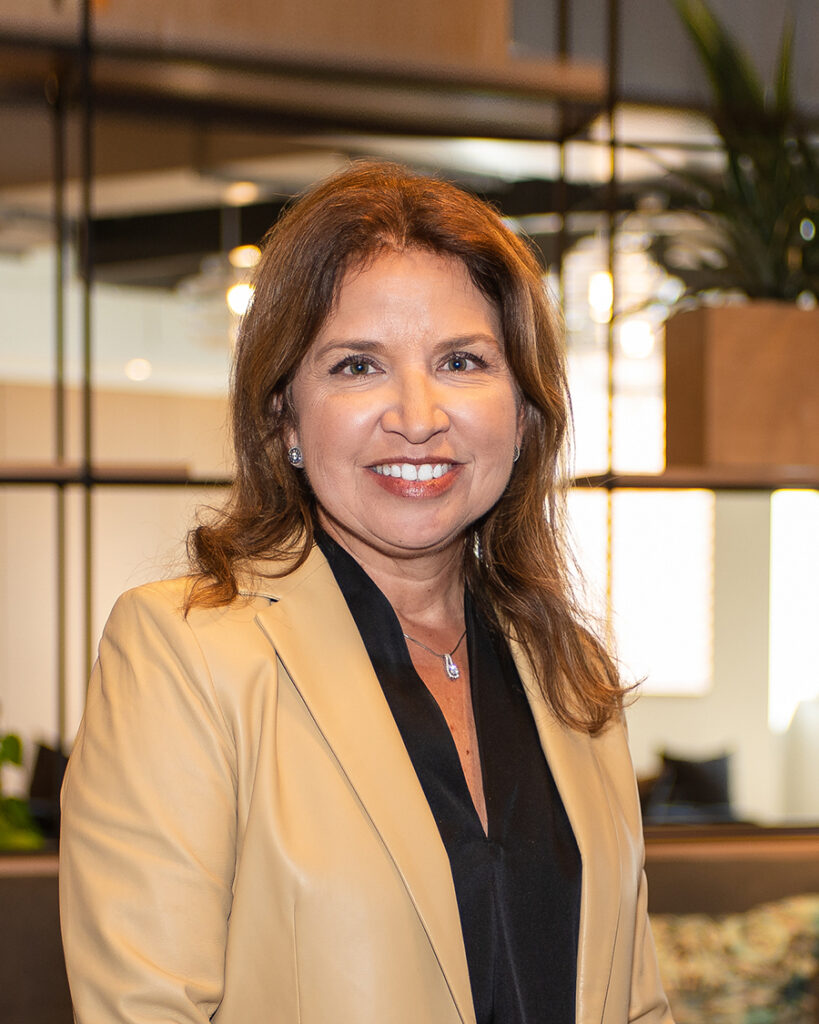
I recently went one-on-one with Sandra Oliver, EY Global Assurance Talent Leader. Sandra oversees the assurance talent agenda for EY’s 130,000 professionals.
Adam: What sparked your interest in accounting, and what compelled you to pursue a career in it?
Sandra: Well, if I’m going to be completely honest, it’s not a very glamorous answer, actually. So you know, and I’ve shared this since I’ve shared this story with my college boys, I feel I can share it more broadly, but in all seriousness, you know, I didn’t wake up one day and say, I’m going to be an accountant. It kind of came upon me as I was figuring my way through college, trying to figure out what I wanted to be, balancing that with what I was actually good at. I was good at math. I was kind of good at problem-solving. Accounting kind of came easier for me, I guess, from the sense of business topics, and it was, you know, certain, you know, of course, the original goal was to be a singer, but I had no musical talent, so I had to go with something that I was actually good at, which was fine after I took on that disappointment, but, you know, in reality, it was something I was good at. And the stereotype back then was kind of like, I didn’t feel like I was, you know, they use the term bean counter, or somebody that was just super technical, but I figured I would kind of follow what I was good at where I could get a job at, and started working in internal audit, actually, before I went to public accounting. And I remember kind of when I started with EY, I was probably five years out of school, figuring my journey out. And remember thinking, I’ll stay here at EY until I figure out what I want to do next. It’ll be a great way to learn, and it, you know, beyond my expectations. Here I am, and it’s funny to hear you say my title, because I don’t focus on titles, but I’ve come a long way back from that time and have continued to learn a lot. And I think what was the most exciting about the accounting profession that I learned and didn’t know in school was just how much I would learn every day, and how the job consistently changed throughout my career, and there was no client that was the same, not even working on the client year after year. Things were different and dynamic. And if you would have, you know, even though people would have told me that in school, it wouldn’t have been what I expected the profession to be like. So, certainly, a dynamic learning environment was what drew me here, and really what, more importantly, has kept me in the profession.
Adam: What were the keys to rising within your career, and what advice do you have for anyone working within the field of accounting on how to rise within their career?
Sandra: I mean, look, I was probably a beneficiary of having a lot of people, a lot of great mentors, and people giving me advice, and they probably saw, in all honesty, more in me than I saw in myself originally. But what did I do? I worked really hard. I think that’s a key. Having grit or just kind of determination. I come from a, you know, my mom, neither my mom or dad graduated high school. My dad was a butcher. My mom stayed home. So I was very, you know, I didn’t mind hard work. I worked all the time. In high school, multiple jobs. In college, I had three jobs to kind of be able to be at school. So I didn’t mind hard work. I said yes a lot to things. When people said, Would you like to do this? Or would you like to try that? I really focused on saying yes and trying new things, which was probably more out of my comfort zone than in it. Really just trying to learn as much as possible, as much as I could. And I had a desire to really see things, see the world outside of where I grew up. In all of our vacations, we would kind of joke that we’re in the state of Texas, which is where I’m from, in San Antonio. So if there was a town two to three hours away, we would have visited it on a vacation. So the opportunity to experience different clients, which meant getting on a plane or going somewhere interesting, was a huge motivation for me. So really, just saying yes, trying new things, and constantly being up for learning would be some pieces of advice.
I remember originally, growing up at EY, or, you know, I was looking for, starting to, I had just married my husband Mark a few years into my career, and was starting to have children. We have three boys together. And I was looking around at the time for mentors that were working moms, because it was really important for me to figure that path out. How do you balance a demanding career with managing children at home? And you know, it was funny, because I was looking for that perfect working mom, and that doesn’t really exist. It’s hard. It’s hard for everybody. And what I found is the people, you know, I had, of course, great female mentors, but the most important mentors I had were the people I worked with every day, which were male partners, and they had such a vested interest in my career success that even though they didn’t look like me, or they weren’t dealing with the same challenges, they ended up being my biggest supporters, my biggest fans, the people that signed my partner form when I promoted to partner, the people that encouraged me to continue on. And you know, I was a little bit of an untraditional path back in my day, which after my second son, I decided to go on what we call a reduced workload, or kind of a flexible work arrangement, so that I could have more time at home and at work. And I remember at the time thinking, Oh my gosh, how am I going to ask Steve, who was the partner? How am I going to tell him I’m going to go on this reduced workload? He’s got four kids. He’s married. His wife stays at home. He has a nanny. His life looks nothing like mine. And someone I worked with coached me, just talk to him. And I did, and he said, I’d rather have four days of you than no days of you. We’ll figure it out.
So it was just a reminder that you don’t need to find mentors that grew up like you did from a Hispanic family, or are dealing with the same challenges. It’s really about finding people you trust, that care about you, that are looking to see you succeed. And those people come in a variety of shapes, sizes, backgrounds. So it was an important learning. And there are a lot of people that continue to this day to be my mentors 20 years later.
At EY in particular, we’re very focused on our people development relationships, and there’s a lot of things that we do to help support our folks, like assign formal counselors and assign formal mentors, and those can often lead to the right kind of connection and sponsor mentorship. But I think when you share common values or share stories, some of it is just about being a little bit vulnerable and being honest about the situation that you’re dealing with or sharing about yourself. And I think I’ve learned that, particularly as I’ve grown in the firm, that people really want to know you, you being whoever you’re working with. You spend a lot of time at work, and building friendships at work, relationships at work, really start with sharing what’s going on personally, sharing what challenges you are having at work. And I think naturally when people start to share, others share, and you start to find those connections that are a little bit more natural than what might be arranged or assigned or formalized. So I would just say, be open to it. You never know where common interests lie, or where you might need help, or where you see someone that succeeded in something, and you look for advice. I certainly find in our culture people wanting to help others. It’s kind of like why you have this podcast, right? I mean, who couldn’t benefit from mentorship and sponsorship? So I would just say, be open to it. And you might be surprised where you find it.
Adam: What were the most important skills that you developed that allowed you to rise within your career and ultimately excel in a leadership role? And what do you believe are the most important skills that anyone within the field of accounting needs to develop?
Sandra: Yeah, it’s funny, because I get asked that question at different times, and I might have different views at different times in my life, but I would say one in particular, confidence. You know, it’s always important to be confident in who you are and what you’re capable of. I think that’s very important for any leader. Focusing on relationships. We are a people business, and I probably didn’t appreciate how important relationships were early in my career, whether it’s with clients that you have, or people in an organization, people at EY, or people at whatever company you work with. Relationships matter, and when you develop a strong relationship, when you help somebody or work through a challenging business issue, people remember. So five years later, you’re going out to a client, and it’s like, Oh, yeah, I know Sandra Oliver. She did this for me. It’s a small business community. It’s a small world. And so, in addition to having confidence, being very focused on relationships is super key. And then maybe lastly, being both vulnerable and willing to learn. I used to kind of joke with my boys and say, I learn something every day. And that sounds like a cliche, but we’re constantly learning, whether it’s learning about different businesses, learning about new cultures, how people work, learning how to not be too American, and not just always talk, but listen, learning new technical standards, learning to upskill myself. So I would say, be open to learning new things, and it’s okay to not know something, but work at trying to get better.
Adam: I’m with you 110%. The most successful people are lifelong learners. The most successful people have that growth mindset, aren’t focused on how much they know, but are focused on how much more they need to know. And it doesn’t matter how successful you are, it doesn’t matter how much knowledge you have. What does matter is how curious you are, how eager you are to learn more.
Sandra: Yeah, and it’s funny because if you asked me when I started EY, like I shared, I didn’t have this goal to say, Oh my gosh, I’m going to come to EY, I’m going to be a partner, I’m going to be a leader, I’m going to have this title or that title. I really just was like, this is going to be a great place for me to learn, work on great clients. And so I think at least for me, being less focused on titles and what you’re going to become, versus being really focused on how you can make a difference, impact the day, what your assignments are, and I think what you learn and how you progress, that work gets seen, and those opportunities come because of the work, because of what you do every day, without it being like, I must be this or I need this title. Certainly, those things have been wonderful, and I’ve loved all the opportunities. But I don’t think it needs to be the reason that you show up at work every day.
Adam: What do you believe are the keys to successful leadership, and what can anyone do to become a better leader?
Sandra: So that’s a great question. I would say I think a big part of my success is that even though I have this wonderful title, I work with a great team of a lot of great leaders, which helps me drive our strategy. But I think a big key to that success has been that I have also been a, has been all my career serving clients, which is the most important thing I think we do. So that means that I practice what we preach. Most importantly, I’ve been serving clients my whole career. So how does that help me, or what does that mean when I’m driving a talent agenda right now? It means that I very much experience with our people every day, what it’s like, what the business issues our clients are dealing with are, what the talent issues that our people are dealing with are, what skills they need to be able to do their job successfully. So I’m not just kind of preaching it from a, one might say, ivory tower. I’m living it. I’ve been experiencing it with our teams. So when you think about that, the big aspects of what is impacting the talent agenda today for our assurance professionals is certainly the role of accountants in this evolving world. You don’t have a company out there, you can’t pick up the news or Instagram without seeing that most companies right now are going through transformations, technology transformation. There’s technology disruption. And so they’re really looking at us as accounting professionals to be their trusted advisors. We know their business, to really guide them through this transformation. So as we look ahead, which is a big part of the talent agenda right now, it’s like, how are we readying our professionals to be prepared for the transformation that’s coming? How do we upskill them? How do we continue to evolve our talent model in this evolving world? Are we driving enough learning, which we’re very focused on, how we teach our people in this disruptive technology environment?
Those are the big agenda topics that we’re focused on from a talent perspective. How do we do that? Well, I mean, look, I’m very excited about the future for accounting. And it’s funny, because it sounds very selfish, but, and I say that with three college-age boys, none of them sadly are accountants, no matter how much I push that. I haven’t given up. But I’m really excited about it, because I see it really transforming the way we work. If I looked five years ago, how many of the accountants we hired out of college were very tech savvy? Not only are they accountants, but the colleges have evolved, and so many of them have IT backgrounds or MIS courses, because if you look at the complexity of companies, they’ve really changed with how technology has transformed their financial statement systems. So in five years, that skill has changed modestly. We didn’t focus on it. We didn’t talk about it. Now we’re saying, okay, you can’t pick up the news or look at Instagram and not see AI transforming the profession. We see that change super quickly, not in years, but in months. And so when you think about the accounting profession, some of the things that may have been less desirable about the profession have been some of the mundane or more objective work, and I see the opportunity for that to be automated, which is really going to allow accounting professionals to focus on the critical thinking, the judgments and risks, the things that really matter, the relationship building, the insights to our clients, the problem solving, allowing them to elevate themselves and focus on the things that really matter. So for me, that is very exciting, because it’s going to raise the attractiveness of the accounting profession and allow accountants to rise to the occasion and be true business advisors.
Adam: What technology should anyone in the field of accounting understand in order to be successful?
Sandra: Yeah, I mean, look, technology is super critical, as well as being comfortable with using AI and having agents that they are working with. We are talking to professors. I know they’re trying to get their arms around it and start to teach that to young professionals. We are teaching all of our professionals, all 130,000 of them, how to prompt AI, how to be comfortable with AI. We announced, EY did, our release, our technology release, our Canvas tool, which is our audit technology, will have agentic AI in it this spring. So we are training all our professionals to be comfortable with AI, prompting, overseeing agents, and really working with them. And so it’s going to be very critical. We are very focused on that from a firm perspective. So, saying technology is very broad, but it’s about accounting professionals being agile, being agile to learn. It’s not like you can say, I’m going to learn this one technology. It’s about being willing to upskill yourself, willing to experiment and work in areas where you may have been uncomfortable, particularly for us that have been out of school for a longer period of time. So it’s really about the agility that comes with learning new things.
Adam: How, as a leader, can you create a culture of agility?
Sandra: You need to talk about being uncomfortable. You need to talk about being honest with the amount of change that’s coming, how important it is to learn, to experiment. First thing, I didn’t want to think about what Copilot 365 or what was coming, how it was going to impact or disrupt. Every time I got prompted to say, Do you want to use Copilot? I was like, no, no, no. Wrong answer. I went to a leadership session in February. It was a two or three-day session, and we had someone who was leading in AI talk about how to lead in this time of transformation. And I remember writing down one thing. He said, If you’re not talking to your teams about AI, you’re failing. And I wrote down, I’m failing. Because I was like, I’ve got to talk about it. I’ve got to lean in on it. I’ve got to learn it. I’ve got to put it on my phone. I’ve got to use it personally. I’ve got to use it at work. I can’t keep saying no to it when it’s prompting me. I’ve got to get comfortable with the uncomfortable and talk about it with our teams so that they’re not scared to use it or unsure. And so that’s the biggest advice, and that’s what we’ve been doing culturally, getting our leaders to lean in, use the tools, talk about it, and get our younger professionals comfortable with the uncomfortable.
I think it’s important too to be honest and transparent about your success with trying it and your failures. It is learning. It is different. It is new. It’s evolving. And I think sharing every aspect of how you’re learning is important too.
Adam: That’s a really important point: transparency. When you think about not only leadership, but about building a successful organizational culture, transparency is right at the center of it. You want to work for a company you can trust, a company where you walk in understanding what’s going on. You want to know how the work you do connects with the broader vision and broader mission. And a big part of what a leader does is help connect the dots for every person in the organization so that clarity exists and understanding exists. A a big part of it is having very clear and open communication.
Sandra: 100%. And what’s great about that, when we think about our young people in particular, we are a people business. So much of what we do is about recruiting. We’re either recruiting new people off campus, or we’re re-recruiting our people to stay and not want to leave. And what’s exciting about what’s coming in the future, when I talk about our AI-powered platform that we’re launching, is that it’s a great value proposition for our people. You’re going to be asked to engage every day with AI and to learn, and we are investing in you as a professional, because we’re counting on you. We’re going to help you upskill, and we’re counting on you to upskill yourself as we continue to work through this transformative technology period. We have a short-term vision for what the impact of AI is going to be, but long-term term there’s a lot to be discovered. Things change quickly. But what a great value proposition to those coming out of school. Life is uncertain. Computer science, I thought that was a great degree five years ago. Now they’re saying coders are no longer needed. What can I do? Accountants are a solid career. Business advisors are needed, particularly in transformational times. And where can you go and learn about businesses, take your degree, continue to upskill yourself? It’s a great career value proposition. So I think it’s super exciting for our young professionals and for people in the field today.
Adam: What are the keys to adapting to today’s environment? How can anyone stay relevant and valuable?
Sandra: Those are the great million-dollar questions. So I’ll give you Sandra’s prediction today. I’ve thought a lot about this because in my career, for sure, as well as advising my children. But when we think about the accounting profession, first of all, we like to use the term, and it’s not an EY term, but human in the loop. When we think about the future and how AI and technology is going to impact the work we do, it’s going to make it better. As I shared, I don’t think there’s a situation where it means accountants aren’t needed. It means that we’re needed to do our jobs differently. And that part is exciting and dynamic and will be what’s changing. It’s kind of funny. If you think about when Excel came out, everybody thought, Oh my gosh, it’s taking our jobs away. No, it’s just adding and making it better. I heard the founder of LinkedIn talk about when LinkedIn came out. Experienced recruiters thought they wouldn’t have a job anymore. They do have a job, it’s just a better job because LinkedIn does a lot of the stuff they would have done before. So if I think about it from that mindset, I think accountants will absolutely be in demand. They’re going to be more tech savvy, more sophisticated, maybe doing more sophisticated, higher risk jobs. The things taken by AI are the more objective, less complex jobs. And again, human in the loop, focusing on the relationship aspect. The CFO is going to call an accountant for advice. They’re still going to call a human. How they got that advice, or what they had to read, maybe AI summarized some key issues, but we’re still going to be doing the most complex relationship building, advising. So that’s how I think about the future of accounting, and why I’m bullish on the profession and it still being around for a long time.
Upskill yourself, whether you are entry-level or more senior. Take AI literacy classes, experiment with it, focus on upskilling yourself as much as possible. The second thing is really focus on those softer skills. Because AI and technology are going to do the objective routine things, it’s going to put a heightened focus on the interpersonal skills we need to be successful. Conversations, communication skills, presence, developing relationships, people skills, personal skills. All of those things are going to be heightened. Having confidence, being business-minded, thinking about business perspectives. It’s going to shift the pendulum on the skills we are focused on, and make the job more exciting because of the focus on those types of skills. Does that answer your question?
From a hard skills perspective, accounting technical expertise is always going to be important. When you think about how the transformation and technology are evolving, certain skills are going to be more important. We can’t not talk about things like cyber risk. Think about fraud risks and how those are going to change when you have agentic AI and AI personas impersonating people. It’s going to heighten the business risks that exist, and accountants will need to deal with those. So those skills are harder technical skills that we’re going to see evolve in the workplace, whether it’s at school or in firm training. Forensic accounting, detecting these types of risks with technology advances. Those are harder type skills that I think we’re going to see the profession evolve to.
I’ve always been someone who believed in hard work. And when given opportunities to do certain things, it’s funny how even small opportunities could lead to bigger things. I remember one of our managing partners asking me to take on this role that was never sought after by anybody, which was responsible for scheduling our people. Why is it never sought after? Because people always complain. You’re stuck solving problems, and there’s always somebody not happy. And when I reflect on this, I did it for five or six years. It was one of the best things I ever did for my career. It allowed me to meet every partner in the office and work with them, develop relationships with them, which turned out to be very important when I was being considered for a future role. It taught me problem-solving skills. How do I take this person that both people want and only give them to one, but make the other person feel like they got what they needed? People would say, I can’t believe you’re in charge of scheduling. It’s such a crappy job. And yes, it really is. Because if it gets to me, it means people are upset. But in hindsight, it was probably one of the best things I did, because it gave me visibility to leaders. They saw me as a problem solver. Gave me access to partners and executives, and showed that I could come to solutions people could live with, even if not everyone was happy. And that was the first step to getting exposure to broader leaders in the firm.
Other things I learned were about saying yes versus no. People would ask me, Do you want to be on this committee? Can you lead this committee? And my first thought was, Oh my God, I can’t do that. I’m not prepared. And I’d have a peer who, generally, it was always a guy, who would say, I can do it. I can do it. Always hands up before hearing the full sentence. And I was like, Oh my gosh. My first reaction was always, Can I do that? Versus, Yes, I would love to. It took a lot of mental work to have that attitude, to say, Yeah, of course I can do that. It was not my natural reaction. But that was about confidence. I had to build confidence. If people saw confidence to ask me, I needed to return that and be confident. So those are things that, after practice and repetition, I learned. I had to say yes versus no.
Even to the last few roles I took at the firm, I mentally still had to pause and go, Am I going to be good at this job? Is this the right job? But ultimately, every time I’ve said yes, it’s been amazing, and I’ve succeeded in my career more than I ever aspired to personally and professionally. And it’s not attributed just to what I did, but to the confidence people saw in me. So very grateful for that.
Adam: How did you develop that confidence? And what advice do you have for anyone on how to cultivate self-confidence?
Sandra: So I remember, it’s kind of funny, because I had a great mentor. When I was first going to audit committees or boardrooms as a young partner, most of the time it was a room filled with men. There were not a ton of women, particularly in Houston, in the energy days. And I had a mentor tell me, Sandra, just talk about sports. What works for me is the day before, I watch the news to see what’s going on with sports, and then you can go in the next day super informed. Everybody likes sports. So I tried that in a meeting, and it landed so flat. It was ridiculous. It was wrong. It was embarrassing. And ultimately I learned, then I ended up starting to talk about, I’m sure I was pregnant with my second kid, or talked about my kids, and it turned out one of the audit committee directors was so interested, he had grandchildren. I was like, Just be yourself. Don’t be anybody else. You cannot pretend to be a sports fanatic if you’re not. I can’t pretend to care about cars if I don’t. If you saw my car, you’d know that. But I can be who I am. And I think you’d be surprised with how being your authentic self is the first piece to being confident. If I can talk about things I love, things I know, things I’m passionate about, that makes me confident. When I come into a room trying to be something I’m not or talk about something I don’t know, that’s when I’ll fail. So that’s my biggest advice. Be yourself. Work hard.
Everybody’s dealing with something. Everybody has something in their lives outside of work, whether it’s challenging or complex. Growing up at the firm and trying to balance three young kids, I sometimes would go, Okay, I’m leaving. I talked about this reduced workload, but not want to say that I was leaving because I didn’t want them to know. And people would say, You need to talk about it. I’m like, Yeah, I have three kids. I need to leave because it’s time for me to go home and feed my kids. And everybody wants to do that, whether you have kids or Bible study or you’re training for a marathon. Everybody has things outside of work. And sharing how you make it work or what challenges you face makes it real and makes it safe to say, Yeah, I’m struggling. I need to leave today, or I’ve got this to deal with. Can’t say enough about how important it is to share, show interest in people, and talk about the struggles you’re dealing with, because everybody’s experiencing something.
Adam: How did you balance work and life as you were rising in your career, and what advice do you have for leaders on how to build the kind of environment that allows all kinds of people to succeed within their organization?
Sandra: I mean, happily, I think it’s still hard these days, but it’s gotten better. First, I was very honest about what I needed for myself, for my family, and for my work. I had a spouse who was very supportive of my career. That’s step number one. It’s a team effort. When you’re working in a family dynamic, having your partner support your career is super important. Being vocal about your needs. And I would say it was not just about me balancing family, but getting the work done. I had a lot of pride in taking care of my clients and making sure that I was a leader for the team. I was very honest with my clients about what my work hours were, and they were very respectful and valued that I was still leading the team and accessible to them.
I’ll never forget one of the first years I went on reduced workload. It was an important client in Houston. We do client surveys, and I saved this for a long time. One of the things the CFO said was, I really admire the firm supporting Sandra on her reduced workload. It’s nice to see the firm doing that. So it was noted by him. He knew. I didn’t hide it. At first, I thought I shouldn’t tell anyone what my hours were, because they’d be frustrated. But no, they need to know. And it turned out to be a real positive. They valued that EY thought it was important to have me on the account, and that I could work the hours I needed.
My whole younger career, I was very focused on supporting and mentoring young working mothers. And then one year, a young dad said, Sandra, it’s really important to me too. And I was like, You’re right. Shame on me. It’s not just working moms. Working dads, working parents. And then I broadened it further. It’s not just parents. It’s work life balance, period. Whatever your personal needs are, pets, parents, personal hobbies, everybody has those things. But again, it’s about doing what you need personally and doing what you need for your work, and being honest about your needs.
The benefit of being at EY or an accounting firm is that we are surrounded by smart people, a great team. What I love about this career is that it is a team environment. We are not sole contributors. When there are things I needed, mom moments or things I couldn’t miss, there are a lot of smart people who can do what I do. We’re not easily replaceable, but if there is a meeting or something that can be done by someone else, give that opportunity to them. Let them rise. Mentor them. Teach them. Think of it not as what am I missing, but what can the team do? What can someone else benefit from by getting the opportunity? It becomes positive when you need to make choices that are not the obvious ones.
Adam: How can anyone be a great teammate?
Sandra: Support each other. It’s not about what I can do, it’s what the team can do. It’s not my client, it’s the firm’s client. It’s not how I look at the meeting, it’s how we look. I had a leader tell me a long time ago, I don’t know what I was presenting, and I said I like 20 times. They were like, Oh my gosh. And I’m like, You’re right. I’m like, There is no I. Who am I? It’s we, it’s we, it’s we. So if you think about your team, how does the team look better? What do I need to do to help the team? I finished my project. I could leave and go home, or I can stay and say, How can I help you so everyone can leave at the same time? It’s all about the team and helping others. And those people will rise to the top. Those that look at helping each other before themselves.
Adam: How can leaders create a customer-centric culture? And how, as a service provider, can you deliver great client service?
Sandra: Those are great questions. I would say relationship building is super important. In this day and age where people work virtually, you can be on calls and not turn your video on. You don’t need to be in person anymore. It’s hugely critical that we not lose sight of the importance of building relationships. Think about all the ways to do that. Turn your video on. Start a conversation like you did. Instead of going straight to questions, engage with someone. Show genuine interest in where they’re from, their background, what they did today. It sounds minor, but people are used to working in a way where they don’t have to engage. Texting, emailing. So focus on interpersonal relationships. That’s going to be hugely valuable.
Showing care. Clients are looking to us for advice. The technical question can often get answered easily. But when they’re calling for advice, it’s broader than the technical answer. It’s solutioning, ideation, thinking through complex issues. They want honest answers. Is this the right way? How would you do it? What do you see other companies do? What’s risky? What’s conservative? Perspectives matter more than ever. CFOs and C-suites are dealing with a challenging, diverse, transformative environment. They know we’ve seen a lot. They want our advice and guidance. So building that trusted relationship is super important. And don’t forget today, clients from 10 years ago will be CAOs or CFOs today. Relationships matter. Stay in touch. Keep the Rolodex going. Keep your contacts. Stay in touch with people you’ve met. It’s a small business world. People move on to the next job, and you’ll say, I knew that person, I worked with them at client A, and now they’re a decision maker at client C.