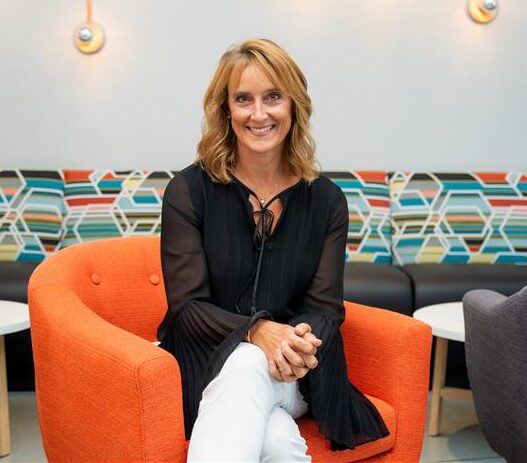


I recently went one-on-one with Sarah Brooks Gabriel, CEO of Beverly Hills Rejuvenation Center.
Adam: You started your career not in the world of business, but in the world of law. What compelled you to pursue a career as a lawyer?
Sarah: I’ll say, I’ll actually back it up before my career as a lawyer. I am the child of a serial entrepreneur, and I grew up always working. We had restaurants and hotels, and so I always had a job, and I very much had my identity tied to my work as part of that. I also think of myself, I’m the oldest of five kids, so I always joke that I’ve been an adult since I was 10 years old. But I think when you grow up in the home of a serial entrepreneur, the ups and downs of that can teach you a lot of lessons, aside from just the hard work and the ability to dream and be brave. But I was very much looking for a sure thing, and so I was smart. I was from a very rural community. I knew I didn’t want to be a doctor, so I thought, okay, law school, that will be my ticket to a certain underwritten level of success for all of my career. I went into law, but I really think of law as a business, and I was so blessed to practice at one of the most elite law firms in the world. I think of that as my first work family. And to be a successful partner at a big global law firm, you really are effectively running your own business with your clients and your team. And the work that I got to see there, the clients that I got to interact with, that is hard work, but I learned so much. That was one of the best decades of my life.
Adam: It probably felt like longer than a decade.
Sarah: Oh, it’s dog years. Yes, for sure, for sure, measured not on the calendar. I think you age presidentially the longer you stay in those roles. But that was a fabulous training ground, not just for how to learn how to work hard and how to be disciplined, but you get to see so many things. People are coming to you with the most novel transactions, with amazing subject matters. The majority of my client base was private equity portfolio companies, so I’m watching businesses be acquired, grow, scale, sell, and getting to see that over and over by people who do it better than anyone. It was just the best you could hope for as a young professional really looking to understand the business world.
Adam: What are the keys to succeeding in the field of law?
Sarah: So I’ll say this as someone who has lived many professional chapters, and this is from my point of view, so I’ll qualify it that way. I think that is the most honest professional relationship you will ever have. You have a very clear picture of what is being asked of you and how to do it successfully. Whether that’s the benefit of the bargain you want to make is a different question. You know what they want from you. You know how to give it to them, and there’s no confusion about the expectations. So for me, as someone whose parents had me as teenagers, I was the first person in my family to go to college. I didn’t know a lawyer before I went to law school. So the idea that I could show up without this web of connections, or really the savvy of having been exposed to that before getting to Kirkland’s door, that I could show up and through hard work, work discipline, and always delivering A plus work product, I could succeed. That’s a system I can win in all day. And I will always love Kirkland for being the meritocracy that it is. That’s who they are to me.
I think there are several. Success is not a one-factor equation. It’s not even a three-factor equation. At a certain level of anything, you have to take raw intelligence as a given, the ability to do the work as a given. You don’t even get to be in the arena if you don’t have those things. The people who have thrived there, and who I’m smiling as I think of because I know the clients that they’re running, they are wonderfully smart. They are very disciplined, and this is the part that people won’t expect: they’re creative. Being a great lawyer is being creative. It’s learning how to problem-solve inside of a framework. It’s learning how to beg, borrow, and steal different pieces of deal structure to create something new and inventive that still works in the bigger framework of law. And it’s also knowing how to manage relationships. You have to manage up, you have to manage down, and you have to manage out. So it’s being able to communicate, be creative, obviously be great at what you do, have a huge command for your subject matter, and have that awareness to say, okay, no one is coming to Kirkland for our run-of-the-mill deal. They won’t pay the fees. So how can I be creative with what I’ve seen and what I know? And the thing we don’t talk about as much in law, but it’s so real, is there’s an intuition that you get through that 10,000-hour rule, deal exposure, work exposure, that says, gosh, I think I can try this. This worked here if I tweaked it. I was a corporate lawyer, not a litigator. So in corporate law, you’re working towards a deal that everyone wants. You might be on different sides of the table, but if you know the end game, how can you arrange the puzzle pieces so that everyone can get to the right end game? And knowing how to leverage different parts of your political capital inside of those discussions when you’re trying to go to the same place. I really loved my time there.
In terms of succeeding inside of big law, yeah. I think, again, this assumption that doing A-plus work will get you where you need to go is a fallacy. You need to be relationship-building. I had a partner mentor who shared with me a decision matrix for every deal she would take. First of all, there were not that many women when we’re talking about partners; hopefully, that has changed. But she would ask, is it a client relationship? Is it a new type of deal? Is it a partner relationship? What is it in your decision matrix that’s making you say yes to that work? Or do you need the hours? Just showing up and chopping wood every day, even if your wood pile is an A-plus at the end, that’s not the path to success. You have to have a strategic rationale, whether it’s creating subject matter expertise, creating the client relationship, making yourself invaluable to a partner. Positioning yourself in the ecosystem in a way that’s going to give you runway for success and make you invaluable to the equation.
Adam: Are there any pitfalls that you would advise people to be aware of and try to avoid, and if so, how can they be avoided?
Sarah: I think it’s an interesting thing, the magnet of big law, who that attracts, and the brains that exist at these elite law schools to be recruited into these environments. You’re surrounded by this brain trust at all points in time that is remarkably inspiring. It can be intoxicating. I think it’s easy to just fall in line and say, this is what I do, and I’m very good at this. You’ve always got to be able to pick your head up and say, to what end? Yes, I might like this partner. They might be so smart. But is this best serving the career I’m trying to create for myself? Because at the end of the day, to be a very successful partner, you’ve created a client relationship and a team to service that client or clients. That’s your business, and you’ve done that without taking on risk or having to do the advertising. You’re given this beautiful system to plug into. The pitfall is thinking that you can just show up and run the channel. You’ve got to be self-directed. You’ve got to be intentional in your why, and you’ve got to have an end game in mind, or you’ll find yourself having spent 10 years doing really interesting work and looking up and thinking, wait, where’s my place? What do you mean I’m not vital to that relationship? Look at all this work I’ve done. Make sure it’s cohesive to a goal.
Adam: Why did you pivot careers, and how did you do so successfully?
Sarah: I made partner and had my first son within a year of making partner. Then my two boys, I have three kids total, are 40 months apart between all three because I didn’t start until after I made partner. I wanted this beautiful family, and when you start in your 30s, you have to move more quickly. I had two kids under two while being a partner at a major law firm, and at the same time, my kids’ dad and I were starting a business. The convergence of all of those factors did not create the lifestyle or availability I wanted for my family. When I left Kirkland, it was when I had my third child, my daughter. At that point, I had three kids under four, and the demands of that work were out of step with how I wanted to be present for my family. I knew that, so it just wasn’t a fit for what I needed at that point in my life.
If we go back to Kirkland or law in general, you’re a very high-end service provider. As someone who grew up being an entrepreneur, there’s this element of being on the sidelines of the decision-making, even when it’s Wall Street Journal cover page decision-making. You’re derivative of that. You’re executing someone else’s vision. Even though you’re a great thought partner, the global conversations are occurring outside of you. For me, there was this pull to be in that discussion. How do I put myself there? My kids’ dad and I were at a point where we were ready to take that leap. We went to law school together and practiced at Kirkland together, and we pivoted into a family office structure where the capital came from retired military PhDs, and we were the business side, commercializing latent military technology. The pivot was using the muscles we built in very disciplined white shoe legal careers, coupled with the hustle that comes from growing up as the child of an entrepreneur. That’s how we approached the entrepreneurial chapter that became our water business.
The biggest key for me was eliminating fear-based decision-making. Why did I go to law school? Because I didn’t want to be poor. I vividly remember telling Kirkland I was leaving, driving in my car, seeing someone waiting for the bus in a waitressing uniform, and just sobbing. I grew up waitressing, and I thought I’d be right back there, counting dollars at the end of the night. That was fear talking. The reality was I had spent years building skills, a network, and experience. I wasn’t going to be financially unstable. Step one is identifying whatever fear is driving your decisions. For me, it was financial fear. Once I removed that, I could ask, how do I define happy and successful? For me, it meant control over my time, my direction, and my destiny.
Entrepreneurship is an adventure, and you have to evaluate it honestly. Capital requirements, whether you bootstrap or take partners, barriers to entry, total addressable market. You can’t control exits or multiples, no matter how carefully you plan. If you don’t have passion underneath it, you’ll recreate the same trap you tried to escape. In our water business, it was incredibly capital-intensive. We bootstrapped longer than was comfortable. In hindsight, we probably should have brought partners in sooner. Picking partners matters. We negotiated hard to maintain operational control and equity. The biggest lesson was organic growth is slow, acquisitive growth is fast. Scale matters, and speed matters. We needed a partner sooner to achieve that.
I’m now a partner in a family office, and we intentionally entered the longevity space as a distribution channel for a regenerative cellular messaging product. We needed control over distribution, so we built both B2B and B2C models. The journey to CEO is public-facing in a way that’s new for me. I’m leaning into that. One shift I’m still working through is releasing perfectionism. In law, mistakes are unacceptable. In entrepreneurship, iteration requires failure. I have to fight the instinct to wait for perfect alignment. Sometimes you just have to leap, responsibly, but decisively.
Adam: What do you look for in the people who you hire?
Sarah: I always want to learn from who I bring in my circle, and I’ll give you an example of that. So I recently hired a growth officer who is young in their professional career, who has had a lot of success in this space. Particularly, I learn from him every day. I learn things about marketing, data collection, different search engine optimization tools. In the scope of his professional life, he’s much younger than me, but I learn from him every day. I want to surround myself with people at all elements of our business that I can look to, who I trust, that they can do their job well because they’ve got pride and personal investment in showing up for their work. Part of that is my job to inspire, but that’s a separate question. So my number one is I want to be able to learn from the people around me, and I want to be able to trust that they can take ownership of the tasks that they’re given.
A huge part of my job [is to inspire]. I had a stint in private equity before joining this family office, and process is such a huge part of successful private equity, particularly when you’re executing roll-up strategies. It’s a very scripted road of scale, and I learned an enormous amount from everyone in that business. I’m so blessed to have had that opportunity. But balancing that against the entrepreneurial passion is this evolution of my professional self. You need process, but you also need passion, because process alone is not compelling, and people need to show up and have energy around what they’re doing, day in and day out.
In a way, our work is very mission-driven. We are in the longevity space. In regenerative aesthetics and longevity right now, I feel like the world is waking up to personal definitions of beauty, personal definitions of health. We get to define what makes us feel good, how we think it is to look good, how we want to interface with the world around us.
At BHRC, we are entrusted with the gift of empowering people in both of those categories. How they interface with the world by how they choose to look, and how they feel on the inside, which we know ultimately exudes out in the way we look and act with those around us. That’s a huge responsibility. It’s a huge trust bridge that we have with our patients that are coming in the door, and it’s my job to make sure that all of our providers and all of our staff feel that they’ve got the training they need to do that well, and feel that they’ve got the tools they need.
It’s empathy, it’s inspiration, it’s education. It’s a culmination of tools in their toolbox, and it’s my job to make sure they have the toolbox, right? And that’s how we best show up for our patients, and that’s how we create a business that is a magnet that draws people in. So the book I’m reading right now is David Brooks ‘ How to Know a Person. Everyone wants to be seen, and our job is to see people and hear what they need to accomplish to feel good on the inside and feel good on the outside, and help them actualize that. That’s an inspiring journey. To lead a team when that is your mission, my job is to make sure people feel inspired day in and day out, and also supported and educated to do that really well.
Adam: What do you believe are the key characteristics of a great leader, and what can anyone do to become a better leader?
Sarah: I think first and foremost, you always have to live your truth, so you have to be genuine in what you expect of others and what you expect of yourself, and you have to show up that way consistently. You have to do what you’re saying you’re going to do. That sounds so trite, but again, in all things, whether it’s deadlines, returned phone calls, email responses, the little things create a bigger picture, and that’s the way people perceive you.
You do have to be a subject matter expert. You’re asking people to trust your vision; you better have a vision, and it better be a thoughtful vision. You’re asking people to trust you with their time, with their paycheck, with the way that they choose to identify professionally. Be worthy of their trust. That requires the work, the research, the investment of my time and energy and expertise into making sure I’m being the leader those people deserve. That’s true for all leaders. That title comes with responsibility. Be worthy of the responsibility.
And then vision casting. Everyone, we’re always balancing two buckets, which is the day-to-day, when you grow up in a farming community, right? The cows got to be milked. Doesn’t matter what day it is. So day to day, everything’s got to be done. But you also have to weigh that against vision casting, which is, what am I excited about? What do I feel inspired towards? So it’s balancing macro and micro on a daily basis, not just in the business and in how I spend my time, but how we’re inspiring those around us, and how we’re making sure that we continue to have group buy-in on where we’re trying to go as a business.
Adam: What are daily practices that anyone can incorporate to become more successful?
Sarah: I love the early morning. Whether you’re a morning person or a night person, it is vital to my mental health and strength of the day that I have quiet time. I have three teenagers, I have a very busy career, and I need that quiet moment. I do it at the beginning of the day because I like the dark, early morning. I turn on my fireplace, I light a candle, I drink a whole pot of coffee, and I read, or I’ll listen to a podcast.
It used to be in my Kirkland days that was when I would crank on turning documents, because it’s quiet, right? No one’s calling you, you don’t have to respond to emails. In this phase of my career, it’s a cerebral moment for me, where I can process and unpack. Things are coming at you all day long, and I need to sit with those, and I need to digest, and I need to be able to see the whole field in front of me, not just the battle of the moment. I need quiet to do that. That quiet space is so important to me.
For me personally, I’m always reading something that is not related to my work, because it helps, whether we talk about neuro pathways, whether we talk about flexing other muscles, the neuroscience of how our brains are wired. Allowing yourself space to think about other topics, I have found, allows me to approach my own problem set with more creativity. So I think that’s important, and I do that in that quiet time.
Then I try and take a walk. In my younger days, my exercise was very high intensity, boxing, spinning, whatever grueling punishment I could think of as the way to move my body. In this chapter of my life, I love being outside. I live in Nashville. We have beautiful hiking here. I hiked this morning. The ability to be in nature, I’ll often listen to something while I’m hiking. I’m moving my body, I’m getting exercise, and I’m also having the stillness, the grounding of nature around me. It’s really important to my well-being.
I think a topic we don’t hit enough as leaders is we’re brand ambassadors, we’re vision casters, we’re also energy carriers. We set tone, we set temperament, we set behavioral expectations, and I have to show up self-regulated and encouraging. To do that, to have that energy for my team, I have to take that time and make sure I’m replenishing it for myself. That is not something I ever would have said a decade ago when I was very much in grind mentality. At this phase, it’s vital to my ability to show up and be present the way I need to lead today.
Adam: And if anyone needs to internalize the advice that you just shared, think about leaders who you have been around, and think about environments that you have worked in. Then think about the impact that a toxic leader makes compared to the impact that a great leader makes. It really does start with how you show up. A toxic leader shows up and immediately wreaks havoc, immediately makes everyone not want to be there, puts everyone on edge, makes everyone uncomfortable, makes everyone just say, “Oh God,” and a great leader does the opposite.
Sarah: I have two analogies to that in my life. So whether you’re a parent or not, but parenting, or whether you’ve been an athlete or not, you can think and reflect on coaches, right? There’s the coach that pulls you if you run the play wrong, and yells at you, and sits you on the bench. Or there’s the coach that says, I know you know the play, I’m going to give you another shot, because I believe in you, run the play, right?
As a parent, my three kids are so, so different. My job is to support them, inspire them, and give them enough structure to flourish and be who they want to be. It’s not that dissimilar from my team. My job is to create a vision and a framework and give them the tools they need to thrive inside of that.
To do that, I’ve got to show up in a way that allows me to have empathy and discipline. Empathy is not confused with weakness, right? You’ve still got boundaries, you’ve still got deliverables. I still have an A-plus expectation. I’ve just got the ability to hear you and see you and understand how you want to get there, and then be able to release the work enough to say your way might not be my way. I’m okay with that, as long as at the end we’re both getting the result that we deem to be the A-plus result.
That’s a point of growth for me as well. There are many ways to get from A to B. We might not pick the same one, but as long as we can agree on where we’re going, and we can agree on the framework of how we’re getting there, I trust you can get there.
Adam: Not only is empathy not a weakness, but empathy is an essential quality for leaders. You can be empathetic, and you can hold people accountable.
Sarah: I think, especially as a female leader, Adam, I always get a little sensitive to empathy being confused with being everyone’s mother. It’s not that. I actually think the greatest kindness in the world is honesty and accountability, because giving you a full, accountable deadline is empowering you to achieve it and have measurable success. Giving you honest feedback is respecting you enough to tell you the truth, right? Those two things are huge points of kindness, but you’ve got to have the strength to do both.
The empathy piece comes in because we have to have had that conversation and connection for you to trust me enough to receive both of those things, right?
Adam: I’m with you. Empathy will help you hold your team accountable because requires care, and caring enough to help people become their best selves requires accountability.
Sarah: They go hand in hand. Agree completely.
Adam: I love the analogy you shared regarding your kids. As a leader, it comes down to meeting people where they are, not trying to turn someone into someone they’re not.
Sarah: And respecting that diversity in thought, and even diversity in execution, can be such a benefit if you create structure around it, you create a clear vision for the end. You can be amazed at the creative ways people will think to accomplish goals that you couldn’t have done because you don’t think that way. That’s the beauty of having a team around you with diversity of perspective.