

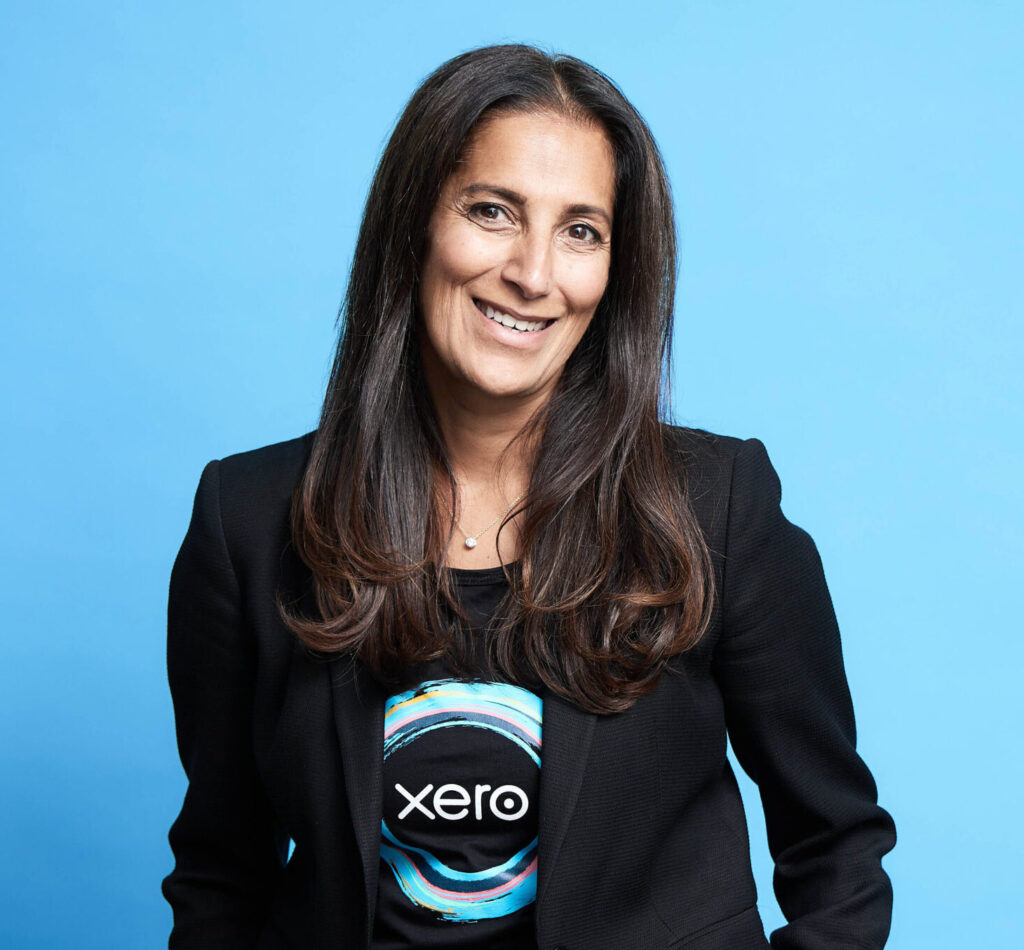
I recently interviewed Xero CEO Sukhinder Singh Cassidy on my podcast, Thirty Minute Mentors. Here is a transcript of our interview:
Adam: Our guest today is the leader of one of the fastest-growing SaaS companies in the world. Sukhinder Singh Cassidy is the CEO of Xero, a leader in cloud accounting with 4.4 million customers and a market cap of roughly $20 billion. Sukhinder, thank you for joining us.
Sukhinder: Thank you for having me. I’m excited to chat.
Adam: I’m excited too. You were born in Tanzania and grew up in Ontario, Canada, in a family of doctors. Can you take listeners back to your early days? What early experiences and lessons shaped your worldview and the trajectory of your success?
Sukhinder: Sure. Well, a couple of things probably come to mind. First of all, I’m an immigrant to Canada, and I’m the daughter of immigrants. Obviously, my parents moved late in life. They ran a joint medical practice in East Africa, as you pointed out, and then they relocated to Canada when my dad was almost 50. My mom was over 40, and they started all over, and they did that to give us a better education. So the first lesson is clearly very much an immigrant lesson. My parents worked exceptionally hard. They did whatever they needed to do. They were savers. My dad had the same clothes when he passed away when I was 30 that he had when I was a teenager. So they were savers, they were thrifty, and they just worked exceptionally hard. And they prioritized family and education, and always being of service because they were doctors. So I’d say that orientation is what I grew up with. So I just think I’m somebody who never takes things for granted. You’re not entitled to anything. You have to work hard for everything. If you start with mission or impact first, it generally leads to better outcomes. So that’s the orientation that my parents gave me, which is important. That’s one. Probably the second kind of seminal thing about my childhood is that my dad loved running a small business. He loved it. So even though he was a doctor, he was also a dreamer. I remember when I was a teenager, he branded his office in the small town of St. Catharines, Ontario, Canada, a healthcare service center. And he branded it that way because he thought it could be a walk-in clinic where people came in at every hour and got service. And my dad was like 15 years ahead of his generation because, for many generations, even though he was an older doctor, he was a dreamer. Stuff like walk-in clinics became a huge phenomenon in medical care. My dad was just before his time. He branded it. He thought about it. He was a one-man show with my mom. That was one thing. He also loved investing in stocks. I remember him buying AOL, calling his broker when I was again a teenager. He made us do his accounting and taxes. That’s how I learned what a small business looks like. But he loved all of it. He loved the branding of it. He loved literally the books of it. He loved investing in the oil business. There’s probably no surprise in hindsight that I ended up with a job on Wall Street as an investment banking analyst. And then I ended up in like mid-twenties wanting to be an entrepreneur, not knowing how, but wanting it. So I credit my dad with all of that. He loved service, but he also loved business and all aspects of it, the analytical, the creative, the investment part of it. So sometimes I look back on that and I think, gosh, that really makes sense. Didn’t make sense at the time, but it makes sense now, maybe how I’m oriented.
Adam: A lot of great early lessons, the value of hard work, the importance of mission in everything you do, the importance of having a vision, having a vision for your own life, having a vision for whatever it is that you’re leading. You had a vision for your career, but that vision shifted along the way.
Sukhinder: Many times, many times, but those North stars didn’t. And so that’s what’s really interesting to me to your point. My dad was clearly a North Star person as a leader, as a doctor, as a business person, and clear on his mission and impact. So was my mom, by the way, my mom was also very mission-oriented, but my dad gave me the triplicate view of the world, like mission, profits, impact, vision, creativity, and analytics. How can you get them all in the same place? Not different places.
Adam: Sounds like you didn’t need to go to business school. You got all that directly from your dad.
Sukhinder: Oh, I don’t know. I also went to an undergraduate business school, and it was very traditional. Well, it wasn’t traditional; it was case method up at the University of Western Ontario, which is, believe it or not, has a business school that’s the second largest producer of case studies in the world behind Harvard. So I did love that case orientation at business school. I did like that business school training, make no mistake, but to your point, I got my first training from my dad, and I value that disproportionately.
Adam: You mentioned that the vision for your career was, on one hand, changing, but on the other hand, was not really changing because you had a core belief system that you followed every step of the way. What were the keys to rising within your career, and what can anyone do to rise within their career?
Sukhinder: I always say things seem to make sense in hindsight. Does that make sense when you’re going through it? It’s never this pretty. It’s always messy. So it’s not like these lessons I had the day I went. It’s just like now, when I look back, I can see some of the through lines. So one big one, obviously, is of impact. Impact before reward is a key thing that has helped me and served me well. Everywhere I’ve gone, I’ve gone in without a sense of entitlement, but with a big sense of hustle. Including the job at Xero. I don’t arrive at Xero and say, like, wow, I’m entitled to 4.4 million customers. I say to our team, like, wake up and be grateful we have 4.4 million customers. If somebody’s been an entrepreneur who had Xero customers and had to build them from scratch, I don’t take that lightly. I think it is a privilege. So I think of entering everything with an orientation. How do you leave this place better than you found it? How do you have the most impact you can with urgency for the time you’re going to spend on it? Not presuming it will come down the road, presuming it has to come now. The impact has to come now. And then the reward typically comes after the impact, if that makes sense, not before. So that’s one that served me really well. The other one is probably to go where your values fit and your strengths are valued. That was a really hard lesson for me, actually. I remember graduating from business school, and I went to a top business school, like I said, but I didn’t get a job out of college. It took me almost 13 months to get a job. And I saw all my friends going places where I thought I should be. I was like, well, I should be there. And I would go interview at some of those places, very prestigious, and not get the job. And ultimately, I remember that after 13 months of job searching, I really wanted to be an investment banker. I want to go from Canada to New York to Wall Street. And Merrill Lynch ended up being the firm that leaped at me when a lot of other, more traditional, I’d say, firms, like blue blood firms, passed on me. And later, I got to Merrill, they gave me a job offer, and I thrived, and I realized I ended up where I fit. It was a very aggressive culture. It was a very meritocratic culture, maybe a little less polished than other cultures, but one in which who I was and what I had to offer authentically seemed to just fit. What others may have seen as maybe unpolished, they saw as drive. I don’t know, but that’s what I surmise now. When I look at the interviews I did well in and the ones I did less well in, and where I ended up. And so I always say, go where your strengths are valued. So if I lean forward, where’s that value? Where does speaking your mind or plain speaking, where’s that value? Where’s hustle value? Where can that be a disproportionately positive ingredient? I’ve gone to those places. And in turn, I thrived in places where those strengths of mine are valued. And I said, and my values fit me. Do I feel like we both have the same worldview of what is a good, fair, just workplace? And you can hear some of the words that resonate with me: transparent, meritocratic, open. And when I’ve ended up in those places, I’ve ended up doing better than places where I felt like I didn’t fit, but maybe it was a force fit.
Adam: I really love that. Go where your values fit and where your strengths are valued. How can anyone understand where their values fit and where their strengths are valued during the interview process? The company you’re interviewing with is always going to try to put its best foot forward. How do you really understand whether there’s a fit?
Sukhinder: Yeah, it’s a good question. So first of all, it’s not a surprise that doing that starts with knowing yourself, which people spend very little time knowing themselves. Interestingly, you need to know what you’re great at. Sometimes when we graduate from college, we don’t know. I didn’t always know what I was strong at, but I had teacher recommendations to college, and I got to read reference letters, and I heard from other people. So if you don’t know, ask. Ask your good friends. Ask your family. Where do you shine? Ask your teachers. Again, when you haven’t had enough time in the workplace, it might not be obvious. And even when you have crystallized what others see as your top three strengths, and what you see as your top three strengths, and finding the resonance of where you shine, that’s one. Your values are maybe a more difficult one to discern. Sometimes it’s about making a list of the things that you prioritize. And I would say less like, I want to be in a place with good hours, more like, what are the types of workplaces you find fair? Ones that give you energy, look at places you’ve had a positive experience, people with whom you’ve had a positive experience, a manager at a job, or a teacher. If you were in college, why did that person make you thrive? What did they have that you had that jived? And that’s a good indication of your values, right? So, for me, I am a pretty direct person, so it’s probably not a surprise that I like workplaces that are more open than closed. Where transparently, maybe the person I’m interviewing with also seems to be quite candid. I’m attracted to that. So, how do you find these things in an interview once you know yourself? First of all, you need to know yourself. Then you need to look for the signals. Signals are really A, in the person you’re going to be working for. I almost always, and I’ve learned this lesson also the hard way as a CEO. As a CEO, I think we build companies with value, and we do. And by the way, that helps you hire thousands of people as Xero has done. And they all come in and add to our culture. But as a CEO, I also know that when every employee survey, the thing that makes people happiest or not is their proximate team, their manager, and their close-in team. So what you want to test it most with is the people you’re going to work with the most. How do you fit with them? How do your strengths complement theirs? Do you see that they have diverse strengths compared to yours, not the same strengths? That’s an indication of maybe a good fit. But when you look for values fit, you say, Okay, how do I figure out if I value candor? What questions can I ask in the interview, and listen to the responses? Where might I go to get a back-channel reference? You probably have heard the fact that as employers, we do backchannel references. When I’m hiring an executive, I don’t just count on the reference they give me. I call my network to find somebody we know in common, and I ask questions about what this person is great at. How do they show up at work in tough times, not just good times? Because I want to know what they’re going to be like to work with if they’re on my team. As an employee, prospective employee, you can do the same backchannel. You can go on LinkedIn and find maybe a dozen people who work at the company that you’re going to work at. So you can ask about the culture, who may have worked with the manager that you might work with. Go figure out what it’s like to work with them. And you can ask the questions in a back channel about what it’s really like, their day-to-day, in addition to relying on the things people say about a company publicly.
Sukhinder: So these are some of the ways you can test for values fit.
Adam: Great advice. And I’ve been on both sides of the table. I’ve been an employee at large companies where people interviewing for jobs have come to me and asked me, well, what is it really like to work here? I’ve looked around and I see this. And during the interview process, they tell me, that What is it really? And been on the other side of the table as well as an employer interviewing and hiring lots of people. And to your point, you can’t take everything at face value. You have to go beneath the surface regardless of whether you’re the person interviewing for the job or whether you’re the person interviewing the candidate.
Sukhinder: Yeah. You know, one of my favorite questions, because I think you can tell from this that I really value self-awareness. I myself feel that if I were a CEO and I hired people who had the same strengths I do, I’m not building the best team I can. So I have to know myself, know my strengths, know my challenges. And then I want to surround myself with people who make me better because they bring complementary skills. And we talked about that, knowing yourself. So, in an interview, my favorite question for people is like, Hey, I was asked about those top three strengths. Some people struggle with those, which is a surprise to me. And then I asked for their areas of development. And there are people who can’t come up with any. And to me, it’s a super big red flag. I’m like, really? You can’t tell me what you’re not great at? I can tell you what I’m not great at. It’s a long list. You’d want to know that if you were coming to work with me, let me tell you. Because if you think you would just say, you can imagine when I’m a CEO and I’m interviewing somebody and I’m selling them, you think I don’t show up as my best self? Of course. But I also, particularly if they’re going to work with me closely, I want them to understand what I’m like on my not great days. Honestly, I don’t want them to be surprised. But I also want them to be able to bolster me, to help me diversify away from those things. So I always ask, I always get those non-fail-fail questions. It really drives me crazy when people don’t know their own weaknesses, when they won’t admit to what they failed at. I’m like, wow, do you know yourself?
Adam: Yes, you can derive the same problem that you have, which is that when I get asked about my weaknesses, my first response is, How much time do we have? And we usually don’t have enough time because the list is endless. And it does speak to one of the most important aspects of not only career success, but successful leadership, which is self-awareness. Know thyself. How can anyone become more self-aware as a person? How can anyone become more self-aware as a leader?
Sukhinder: Well, first of all, it’s the same thing we just talked about. So ask, don’t be afraid to ask. Don’t be afraid of the feedback. Many of us go through company feedback. If you’re somewhere that doesn’t give you a review, ask for one. Literally ask for it. I have to say, I hate cliches like feedback is a gift. I know it is, but like, let’s all admit it sucks to hear what you’re not great at. I will say to people, the only reason it’s less painful for me is because I’ve had it drummed into me for 30-plus years as a leader. Whether I want it or not, I’m getting it. All the time. So now I’ve learned just to not fear it and to own it. So I think first of all, ask for it. Number two, ask for it a few places so you can get the consistent beat on the things that maybe you’re not as great at, including the things you are great at. Ask for both. You just have to ask five different people, and you’re going to hear the themes, and they’re probably going to be similar. And own both sides of it. Nobody is perfect. It all demystifies a little bit when you get more of it. And it’s also less scary when you can just own it. Very relaxed at the moment, as you know, because I just came back from a week’s vacation. But before I went, I was with my leadership team, and we did an off-site, and we were sharing our goals for this year. And also, we had self-assessments, and I offered up the stuff for my self-assessment. And I just said, hey, I know I’ve been a bear the last 60 days. Just so you know, I’m aware. I’m probably going to apply. And I said to the team, I’m going to apologize for the way it’s come out. I’m not actually going to apologize for the underlying reasons, quite frankly, because as a CEO, I saw some stuff happen in the last 60 days that frustrated me. So I can both say the reasons I was frustrated as a business leader are valid. There are some patterns here that were frustrating to me. And on the other hand,d to say, but it got the best of me. I know the way it came out was probably not the most constructive. Does that make sense? And so I’d rather just say it, honestly, get it over with. First, acknowledge it. By the way, that doesn’t mean it’s never going to happen again. But it means like, I own it. I got it. People want to hear you’ve got it, too, at a minimum. Some of these things are really hard to change and fix. I can’t promise I’m going to be perfect. But I’d at least like to just say, even if it’s in hindsight, yeah, I saw it. Not great. I’m going to try and move on from it. But it’s important that leaders not just self-acknowledge it, but kind of acknowledge it to their teams. We all work with smart people. They can see it. You think they don’t? Of course they do.
Adam: And the very best leaders don’t hesitate to do that because it speaks not only to self-awareness, which is essential, but it speaks to the importance of vulnerability, being open, being honest. People will respond to you when you are your authentic self in a much better way than if you’re holding something back.
Sukhinder: Yeah, well, look, you and I probably both come from that school of thought, clearly of leadership wisdom, which is to show up your most authentic, and hopefully you get to do your best work. It’s just important to know that sometimes the most authentic self is not just the best version, it’s the worst version to both show up. I believe you need to own both. If you want to be a leader that is trusted over the longer term, which is certainly my goal, and to be credible, which is also my goal. Those are both very important. To me, even more than being liked, quite frankly, I’d rather be trusted and credible. That if I say something, people know I mean it. If I mean it, I’m going to do it. If something’s not gone great, I want to acknowledge it. So it feeds upon itself a little bit. It’s also fair to say that there are other schools of thought, which are like, show no vulnerability, just show all your strengths all the time. And that’s fine for some people. It hasn’t been a formula that’s worked for me, but clearly, there are multiple schools of thought on how vulnerable or not vulnerable people are at work.
Adam: I don’t think that formula works for most people.
Sukhinder: Well, you’ve interviewed a lot more than I have. I just see now LinkedIn fills us all up, and you see how people all try and show up in their various formats. And me, I just try and do what’s right and what has worked for me.
Adam: Social media is an airbrush version of ourselves, but leadership really is the authentic version of ourselves. And there’s so much power in going to your team and saying, I’m sorry, I had a bad day. I messed up. I shouldn’t have done that. I’m a human being. And you know what? We’re all human beings. And people want to work with human beings. People want to be led by human beings. There’s a lot of automation happening every day at a pace much faster than any of us can imagine, but we’re led by human beings. We’re not led by robots. You try to be a robot, you’re not going to be an effective leader.
Sukhinder: Yeah. Our goal, all of us, should be to make objective decisions at work while holding emotion as a strength. I agree with you. And it really can be pretty powerful if you’re willing to share it.
Adam: What do you believe are the keys to effective leadership, and what can anyone do to become a better leader?
Sukhinder: Well, there’s one other big one I believe in, and it has nothing to do with emotion. It all has to do with perspective, which is that I always talk to leaders at organizations, big and small. One of the things I love most is people who have bifocals on, I call it, or helicopter leadership. They can see 30,000 feet, they can see 3000 feet, they can see 300 feet if needed. So they fly high and low, and they know when to be in each mode. You can call that perspective, but it means this idea that sometimes the most important thing is in the details. Sometimes, the most important thing is in the strategic view. But you have to know when to fly at which altitude. And it’s not enough to be on one plane anymore. I don’t think that’s effective leadership. Now, maybe I learned that at Google. I know I was in early on when Larry and Sergey were still leading the company. I was a leader who was expected to know the details as much as the strategy.As a CEO, I look to my leaders who have a good operating range, understanding of the nuances, and understanding of the strategic vision, and in a way to guide people through both. When a room is maybe lost and lacking clarity, helping people zoom out and see the big picture. When the problem isn’t in the big picture, but something is failing execution wise to go as far down as you need to understand what is really making a very sound vision. Let’s say. unpalpable in the execution levels or failing. Where is the problem? And sometimes you need to go deep, and you need to go as deep as you need to go. If you need to keep prosecuting and asking questions until you get to the issue, the nut of the issue, then that’s how far you go. Recently, a good example of this is a customer who reached out to me personally and said, Oh, when you first joined Xero, I was the first person to send you a congratulatory message. She’s a CEO I knew from YPO 15 years ago. And he said, You know, I’m right now frustrated customer zero. And here’s why. Here are my three issues. Tinder, I’m frustrated. And I’m writing to you, saying like, I’m not happy anymore. And I took that email and forwarded it to my team. I’m like, look, look at these anecdotes. Are these anecdotes things we already know? Then let’s act on them. Particularly if they’re simple to act on, why are we waiting? But yeah, I’m being a pain in the ass, quite frankly, about the anecdotes. Because I read them and they resonate. If this is the tip of the spear, I really, again, you know it’s the tip of the spear. Why aren’t we solving it? So maybe they think I’m a pain in the butt. But for me, I’m like, well, if this is the inkling of a customer sentiment issue that may be gurgling more than we know, like, go take a look at it. My spidey sense is telling me he’s right. So I’m going to now be painting the ass on that tip of the spear issue because maybe it’s a leading indicator of some NPS issue or sentiment issue that we need to be all over at zero. So it’s an example. I go high, I go low. Now, maybe you say that’s not right, but I’ll tell you the leaders I trust do both. And I look for it. I look for it in leaders I hire. And by the way, you don’t just need to be a leader of the enterprise. You can be a leader of the business. You can be an individual contributor and have that key skill. And it is priceless. How can you cultivate that? You can cultivate it pretty actively. I call it like zoom in, zoom out. So I’d say just developing perspective. So let’s say you are in the weeds on something. When I was at one of my startups, a company called Joyous, I had an early video shopping company way, way, way before Instagram and YouTube, and TikTok all thought shoppable video was a thing. I started a company that sold products through video. And my assistant was a Berkeley grad. Literally, my EA was a Berkeley grad, Simon Chen. His first job was working for me. And Simon, you know, was managing my calendar and so on. But he was smart. He’s a Berkeley grad. So he asked to sit in on meetings and just learn. Literally, he would absorb the company strategy by working for me as the CEO. And sure enough, at some point, he transitioned out of that role, and now he has a successful and growing career at Facebook, but he was just curious. So what does it take to cultivate it? Whatever seat you’re sitting in, let’s say you’re sitting in a seat that’s heavily execution oriented. Maybe it’s asking to sit in on a meeting where you can learn or listen to the strategy, or maybe it’s just reading the company strategy docs and trying to understand how they fit with what your day job is. What if your job is strategy? Maybe then you ask to sit in meetings or be involved in a project where you can be on the execution side of it. It’s that simple. It’s about cultivating the perspective maybe you don’t have, and reading documents, sitting in on meetings where you can just see soup to nuts. A process, a project, that’s the way you develop perspective.
Adam: You mentioned your time at Google. You were an executive at Google. You were an executive at Amazon. You were the president of StubHub. You’re now the CEO of one of the fastest-growing SaaS companies in the world. In your experience, what are the keys to building winning organizations and winning cultures?
Sukhinder: Oh man, that’s a big question. First of all, it’s not all about you. People give me a lot of credit. Joining a winning organization or building a winning organization is about having a formula with the customer that works in a space that’s growing. Be a good transpotter and seeker because most of us may not be the engineer who built the original product. Now, of course, I’ve been a founder. So I’ve been in that, too, right? Mode too. But you’re talking about larger organizations that I joined. They had a winning formula in a winning space. So play in spaces that are growing. I say to people, I joined Google in 1997. Think about the number of growth of web pages that needed to be indexed and searched. Just think about the explosion of internet content. And you understand why a search engine whose fundamental business model is about moving over more and more amounts of content at an exponential rate, it’s growing. And you’re trying to help people find stuff on that vast, vast trove of information. Is that a winning business model when you participate in every search? Probably. I underestimated the trajectory of Google, actually, but it was based on a premise where the entire space was exploding, and its business model participated in the explosion. Amazon. I joined Amazon when it was at the beginning of e-commerce. Same thing. Xero. Xero is participating and growing off the back of small business digitization, now AI. These are both trends that we get to ride at Xero across multiple markets. So, having a winning organization, you can say, well, it’s all me. I actually think it’s about choosing the right hands is disproportionately important. And then, of course, we come to that formula of once you have picked a hand that you think has tailwinds in a business that customers resonate with, like customer love. Any ability to monetize it it’s obviously about having your personal stamp on that. So, believe it or not, I don’t give myself credit for building those businesses. I give myself credit for helping accelerate their impact, but trying to choose smartly. That’s an important and underestimated skill, actually, because most people are like, well, I can make anything great. And I’m like, Okay, maybe. I’ve tried that hand too, being a founder, and I have, you know, and do love building companies from scratch, but I also really enjoy accelerating customer impact.
Adam: How can leaders build winning cultures?
Sukhinder: It starts with knowing what you stand for and what you don’t. Try to stand for everything that’s really hard. So you have to say, what are the two or three things in our culture that are disproportionately important? As an example, for some companies, that’s meritocracy, for some companies, that’s transparency, for some companies, that’s inclusivity. There are two or three words that describe how your organization operates on its best day. So at zero, I can say one thing about our culture, and I didn’t build it, but I try to do my best to steward it, it’s like a no assholes culture. It just is people who are entitled and want to show up as jerks. They just don’t do well in the zero culture. Now that doesn’t mean it doesn’t have room to deal, have aggressive sorts of people like myself, but I like to think of myself as I’m Canadian. I joined a Kiwi culture. The company was founded in New Zealand, probably not a surprise that it is collaborative, that it’s inclusive, that people are generally kind and nice at work, and kind of want to do the right thing. And they care about others. That’s the company’s fabric. That’s how it was built. That doesn’t mean it’s not innovative. It doesn’t mean it’s not really smart, but it means we don’t really tolerate assholes. Again, I inherited that culture. I looked for that culture when I was looking to be a CEO. And my job in stewarding that culture is to find the two or three things that the culture is when it’s best and to amplify those things, to keep those things working. Not trying to be 10 things, not trying to be 1,000 things, but knowing the essence of what makes the company work its best day is its culture, if that makes sense, and trying to amplify those things. Now, you also have to adapt your culture. You also have to find the shadow side of that. And I would say most cultures have a shadow side. So what’s the shadow side of being collaborative? It might be that 100 people need to weigh in on a decision. And guess what? When it’s time to go fast, you need to go fast. So maybe you only need 10 people, and you’re going to inform or take input from the other 90, and then say, like, sorry, we’re going to make the decision so we can move faster. So, like a person, you have to know your culture’s shadow and be willing to adapt and transform the culture. I don’t think cultures are stagnant. But you want to find those two or three North Star things that attract people to the company, and it’s the very best day to do that. And then I think you want to find a way to model those things in the tactics. So, not just putting them on the wall. You want to amplify those things in the tactics of what the company does. So Xero is an inclusive and open place. Here’s a good example. I run a Slack channel personally on Xero, and it has everything from my thoughts of the day to how I think we did on earnings to a quote I liked. I just posted family pictures because I was out for a wee, and I want to travel for a month, and I shared my own experience of working, trying to work across all our time zones. Now I was working from Europe for a month, and it was hard. It’s just a place where I share musings. I hope that tactic helps amplify the culture of inclusivity that we already have in openness. So I want to contribute to it. So those are some of the tactics that I might use, or maybe in our global hands. We do live Slido. That’s my way of contributing to a culture of openness or collaboration, or transparency. It’s the thing I value about Xero and the thing I want to help amplify. So look to the tactics.
Adam: I love it. So much great advice and something that you shared which jumped out to me as you were describing your culture, and one of the things that you care a lot about, not having assholes in your organization. You can be aggressive, you can be hungry, you can be driven to excel, driven to win, and you can also be a nice person. They’re not contradictory. They’re not conflicting. Being a high charger, high performer, and highly motivated individual is not an excuse for not being a good person.
Sukhinder: Yeah, though I think there’s one watch out in there. You have to be prepared to make unpopular decisions. So this is what gets conflated in cultures. Does a nice culture mean everybody agrees on everything? That actually can be the death knell of a culture. Think about the risk zero of not moving, let’s say, fast enough in an area like AI, or, quite frankly, any company on the planet not moving fast enough, given the disruptions we’re experiencing. Whether it’s terrorists, whether it’s political turmoil, we see more disruption as leaders every day in any business, legacy or tech. So can you afford to move fast? I’m pretty sure you can’t. So, actually, the real dichotomy is not assholes versus nice. I think it’s nice versus consensus. It’s nice versus unpopular. That’s why I said earlier, it’s a very hard trade, but I made this trade years ago, so that I would rather be trusted than liked. I’d rather be credible than liked. I’d rather be effective than liked. That doesn’t mean I want to be an asshole. It just means I want to do the right thing, even if the right thing is hard and I’m comfortable with being unpopular at times or making an unpopular decision, if I think it’s the right thing for the organization and even for our people long-term. So that is a real rub. It’s that a lot of times it means you have to make decisions that are unpopular for an organization, and that gets conflated with nice. And I don’t think that’s the right trade. Your job is to do the job and to do the job well, and to have e impact at the organizational level, not be nice to one person or two people or all employees as a whole.
Adam: Leadership isn’t about being popular in real time. Leadership is about being popular in the long run. And the only way you’re going to be popular in the long run is if you make really hard decisions in real time.
Sukhinder: Yeah, it’s just about over what period. In hindsight, I guess I hope that everywhere I’ve gone, people will say, Sue Kinder had an overall positive impact. And I’m sure I leave a trail of people who have lots of opinions about how I operate and whether I’m nice enough or too nice, or I’m sure nobody says I’m too nice. I’m sure they probably said I care deeply, and I’m pretty tough and pretty difficult at times. But mostly to your point, it’s about trying to do the best job you can. With a long-term orientation and trust. And this is where that keyword you pointed out earlier, authenticity, matters. The reason I care so much about authenticity is that I want people to believe all the way through that I was operating with the best intentions. That’s actually what I care about. I care that people wake up and say, I’m pretty sure Sue Kinder is waking up every day, trying to do the best thing by our customers, our shareholders, our employees, that there’s some perspective she has that is well-intentioned. So I care a lot more that people see my intention, even if they don’t agree with my decisions.
Adam: Sukhinder, what can anyone listening to this conversation do to become more successful personally and professionally?
Sukhinder: It comes back to the things we started with. Number one, impact before reward. You’re not entitled to anything. Hustle every day. Number two, develop perspective. I can guarantee that if you become a leader who not only focuses on impact, but if you do that thing we talked about, zoom in, zoom out, develop the perspective you don’t have. So you can see the whole of something. Once you understand the context in which you’re operating, your ability to make more effective decisions is huge. And your ability to give that clarity to others is huge. So somebody in the room might be lost in execution, but if you took the time to see the big picture, you can help people steward themselves to what matters. If you’re a big picture thinker and you can understand the execution details, you can help people lead there. So develop perspective because that’s how you understand what’s most important in any given moment to make a good and effective decision.
Adam: Sukhinder, thank you for all the great advice, and thank you for being a part of Thirty Minute Mentors.
Sukhinder: Thanks for having me.