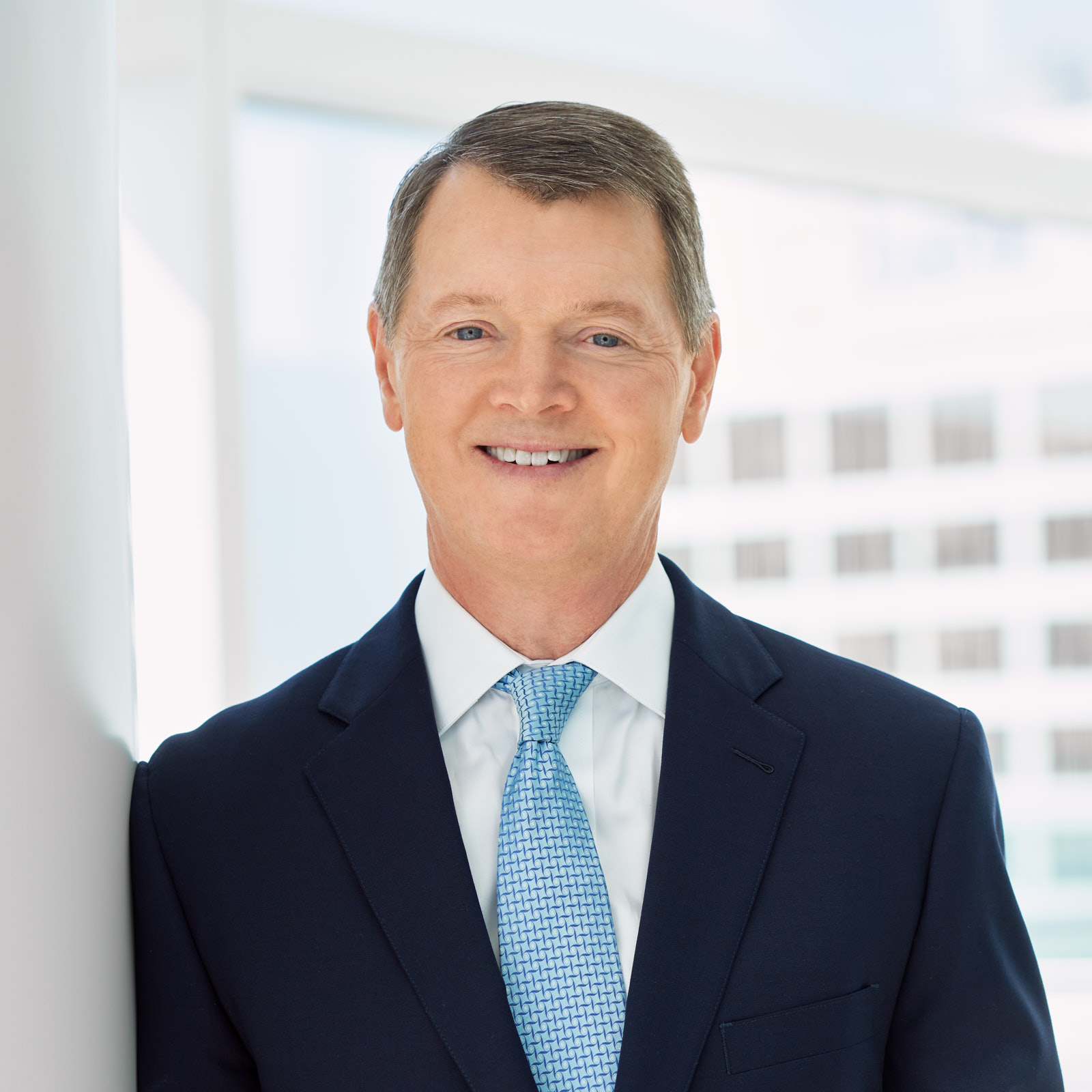


I recently went one-on-one with Stan Moss, CEO of Polen Capital.
Adam: Thanks again for taking the time to share your advice. First things first, though, I am sure readers would love to learn more about you. How did you get here? What experiences, failures, setbacks, or challenges have been most instrumental to your growth?
Stan: I had a circuitous path getting into asset management. I grew up in a small town and worked on a farm doing manual labor. Like many kids around me, I played sports as much as possible. Through playing football, I went to the University of Alabama, where I got an accounting degree and an MBA. After graduating, I went into public accounting with PricewaterhouseCoopers.
From there, I moved to the technology planning division of a large regional bank. I ended up developing a relationship with the CEO of the wealth and asset management arm, which led to being asked, at a young age, to be CFO of a division that employed 1,000 people and did more than $250 million in revenue.
I was thrown right into the deep end. It was sink or swim. I realized I had to know every component of my job, because those with more tenure would put me to the test. The better I handled the work and pressure, the more responsibility I received and the more my voice was appreciated.
During that time, I learned a tremendous amount about the business and the obstacles of being an asset manager within a bank holding company. I helped start three different boutique asset management firms – Sawgrass Asset Management, Oakbrook Investments, and Rockhaven Asset Management – before moving internally to run the institutional asset management division.
During that time, I came across a job opportunity with Polen Capital. They were looking for someone to be the COO, CFO, and CCO. At the time, the firm had fewer than 10 people and $1B under management. I applied and got the job, going from the known to the unknown.
In my new role, I prioritized institutionalizing the business from an infrastructure perspective: talent, systems, processes, and marketing, solidifying the infrastructure quickly and doubling the firm’s assets to more than $2 billion.
The firm was on a positive trajectory. But then came 2008, when we faced a series of unfortunate events that concluded in the Global Financial Crisis. Our total assets under management declined to roughly $230 million. We were down to about 10 employees, we were not able to pay full salaries, and we had to cut bonuses. We needed to build the firm back from scratch. That was the largest setback we’ve had during my time here.
We immediately focused on pricing competitively and expanding our product vehicles (e.g., UMA, Mutual Funds) to increase the total addressable market for our offerings. This was a key moment in our story. We viewed the unfortunate circumstances as an opportunity to implement and embrace change that would unlock the firm’s potential.
We have since implemented, executed, and extended our product set, institutionalizing the firm across the board. We have learned and grown from those days in 2008 and have more than $50 billion in total client assets today.
Adam: In your experience, what are the key steps to growing and scaling your business?
Stan: The asset management business always starts with talent. We need to attract and recruit talented, intellectually inquisitive, and determined individuals to produce competitive investment performance, which is the lifeblood of all asset management firms. That is why we place a concerted emphasis on our culture at Polen. We understand that culture is not something we maintain. It is something that we adapt, nurture, and grow to best position ourselves and the collective firm to compete and thrive in the present while preparing for the future.
To unlock scale, investment performance (alpha) and business talent (operational alpha) are needed. Investment performance without business performance limits scale; business performance without investment performance is battery-operated life support (you are buying time for performance to turn favorable, but the clock is ticking).
We prioritized building an investment platform that will be attractive to investors, clients, and businesspeople who want to join a firm that is built to last. To unlock the potential of our investment offerings and attract clients from across the globe, we invest heavily in infrastructure, client service, distribution, and distribution partnerships.
A lot of people ask: What really enabled the firm’s success? The answer is that when our investment strategy performance aligned with global client demand, we were ready and prepared to handle rapid growth. Our products were researched and available, packaged to meet client needs, and easily assessable. Our operational infrastructure was equipped to handle growth when opportunity knocked.
Adam: What do you believe are the defining qualities of an effective leader?
Stan: Leading by example is a great way to rally the troops. As a leader, you must be willing to roll up your sleeves and do the work. Anything that needs to be done, you should understand and be capable of doing it yourself.
I also believe that as a firm scales and becomes more complex, you can’t be an expert or know how to do everything. Effective leaders need to surround themselves with highly talented people, delegate when appropriate, and be capable of transitioning into a position of guidance, coaching, and communicating. This is vital to driving a firm to the next level.
Additionally, you must be intentional about working on your own self-improvement from an IQ and EQ perspective. I often engage with a coach and conduct a 360 to seek feedback and identify blind spots so I can improve my leadership skills. I also read a lot of non-fiction books and am always looking to fine-tune my current skills and learn new skills.
Communication is key to long-term success. Communicate clear directives, strategic plans, and goals, and hold people and departments accountable for execution. Then measure it repeatedly. If you’re not measuring what matters with KPIs, it is difficult to drive success.
Lastly, embrace change. Change is always present and seems to be accelerating. The more adaptable you are, the more likely you will thrive over the long term.
Adam: How can leaders and aspiring leaders take their leadership skills to the next level?
Stan: First, acknowledge the importance of continuous learning and development. Work with a coach to guide you, call out your blind spots, and identify areas and opportunities for improvement. Then, work on and develop those areas of weakness.
I mentioned earlier that I received an accounting degree and an MBA from the University of Alabama. In the spirit of continuous learning and development, I received a master’s degree in Global Finance from NYU Stern, as well as completed CPA, CFA, and Series 7, 24, and 27 FINRA exams, while in the workforce.
At Polen, we strongly believe in marginal improvements: there’s a big picture that you’re working on, but there are also small improvements that you can make along the way. There is a book I love, Atomic Habits by James Clear, that demonstrates how consistent daily marginal improvements can accumulate massively. If you get 1% better every day for a year, you will end up 37x better than the year before.
Think about what happens if you make two or three marginal personal/professional improvements. Then think about your colleagues also doing it. The sheer math on the compounding impact will lead to positive outcomes.
Adam: What are your three best tips applicable to entrepreneurs, executives, and civic leaders?
Stan: The first tip is that there’s always going to be adversity (obstacles, challenges, setbacks, problems) in any endeavor. Winston Churchill has a great line: “If you’re going through hell, keep going.” I ask my team to work with consistency and discipline, to identify the challenges and the adjustments needed to not just survive, but thrive. How you handle adversity is highly correlated with success or failure.
The second tip is to always be learning. Never stop learning, reading, and challenging yourself. If you hear a word you don’t understand, research the definition. Our industry is full of acronyms, and nobody knows everything. The best thing you can do is push yourself to continue learning.
The third tip is take action. Some organizations and teams value planning over acting and then get stuck in analysis paralysis. Sure, you could plan for a year. Or you could plan for a month and then act, learn from the action and any mistakes, adjust your plan, and be well ahead of the firm that’s still been planning for a year. Take the initiative.
Adam: What is your best advice on building, leading, and managing teams?
Stan: It always starts with talent.
One of the unique aspects of my role as a leader and key to our success has been my business partnership with Polen lead portfolio managers Dan Davidowitz and Damon Ficklin. There is a high level of trust and mutual respect, an understanding and agreement of responsibilities, and aligned interests.
We can’t do it alone, though. We know that the better job we do to identify the best talent possible, the better our outcomes will be. After we bring in the right talent, we support them in their intellectual growth and development. By developing and helping someone improve, you’re naturally leading.
It’s imperative that teams communicate at the highest level possible and that everyone is on the same page, locked in on the same vision, mission, and goals, and understands the objectives. It’s also important to have clear communication between teams, because when you’re managing a team, that team is also interacting with other teams. The more that everyone’s aligned and on the same page with streamlined communication, the more likely you are to accomplish your goals.
Adam: What is your approach to investing, and what are your best tips on the topic of investing?
Stan: The best investment you can make is in yourself and your personal development. Then invest in your team the same way.
Let me give you an analogy. At Polen, we are long-term investors who believe in the power of compounding. On the equity side, we believe that returns follow earnings per share growth over the long term. We target double-digit earnings per share growth, which has historically proven to provide mid-teens returns over the long term. If you’re compounding at a mid-teens rate over time, your money should double every five years. On the credit side, we believe in clipping coupons and targeting high single-digit to low double-digit yields.
We take that same principle and apply it to continuous learning. I believe that knowledge compounds. As one continues to learn and develop, that knowledge on a professional and personal level compounds over time. This process will lead to superior outcomes for whatever endeavor you’re looking to improve upon, for your clients, for your family, and for your life.
After all, smarter, more knowledgeable people make better employees. Better employees make smarter decisions and tend to have stronger relationships with clients. One of my favorite Albert Einstein quotes is, “Compound interest is the eighth wonder of the world. He who understands it, earns it; he who doesn’t, pays it.”
In our investment and human capital philosophies, we’re seeking to drive long-term value and outcomes for our clients and colleagues through compounding.
Adam: What are your best tips on the topics of sales, marketing, and branding?
Stan: Maintain integrity. Be consistent. In asset management, consistency builds trust, which is crucial for success. Consistency in communication, sales, marketing, branding, people management, and products enhances trust. Clients must trust you to allow the privilege of managing their assets.
Adam: What is the single best piece of advice you have ever received?
Stan: Wake up early. We’ve all heard the saying, “Early bird gets the worm.” I get up around 5:00 a.m. every morning. While I didn’t do this through the early part of my career, I feel like it really made a difference once I started.
You can get up and take care of things early in the morning that you might otherwise procrastinate throughout the day—exercise, take care of your body, take care of your mind. You can do work in a quiet space and think strategically before you walk into the office and tackle expected or unexpected challenges.
There are people in the world who are smarter than you, but if you can outwork them, you can keep up or even surpass them. If you make the best use of your hours throughout the day, that knowledge and experience will compound over time and put you in a position to win.
Adam: Is there anything else you would like to share?
Stan: I love the expression, “Don’t be a genius, create geniuses.” It goes to the heart of my leadership.
When I was in my thirties, I thought I knew everything. Then I got into my forties, and I said, “Well, you know, maybe I don’t know everything, but I know a lot.” And then I got into my fifties and realized I didn’t know nearly as much as I thought I did. I realized that when you’re bringing in and educating your team, you want to hire people who are very bright, avid learners who can help the entire ecosystem get better and learn from one another.
From a leadership perspective, that’s a lot easier than trying to learn everything on your own. If you want to be a Jedi Knight, hang out with the Jedis, not the Ewoks.
The other key piece of my leadership philosophy is to always be intentional. If we want to surround ourselves with smart, talented, self-motivated learners, we must build a culture that attracts and retains them. It’s why we dedicate thousands of dollars to every employee each year for learning and self-improvement. It’s also why we created our company-wide book club and host external speakers. We’re being intentional about creating geniuses to set us apart from the competition.
A former employee recently told me upon departure, “When you hired me, you told me your objective was to make me a better human being, investor, and worker. And I can tell you that I am 10 times better than when I started at Polen.”
Our commitment to developing people—making them better personally and professionally—is a big part of the legacy we are creating at Polen.