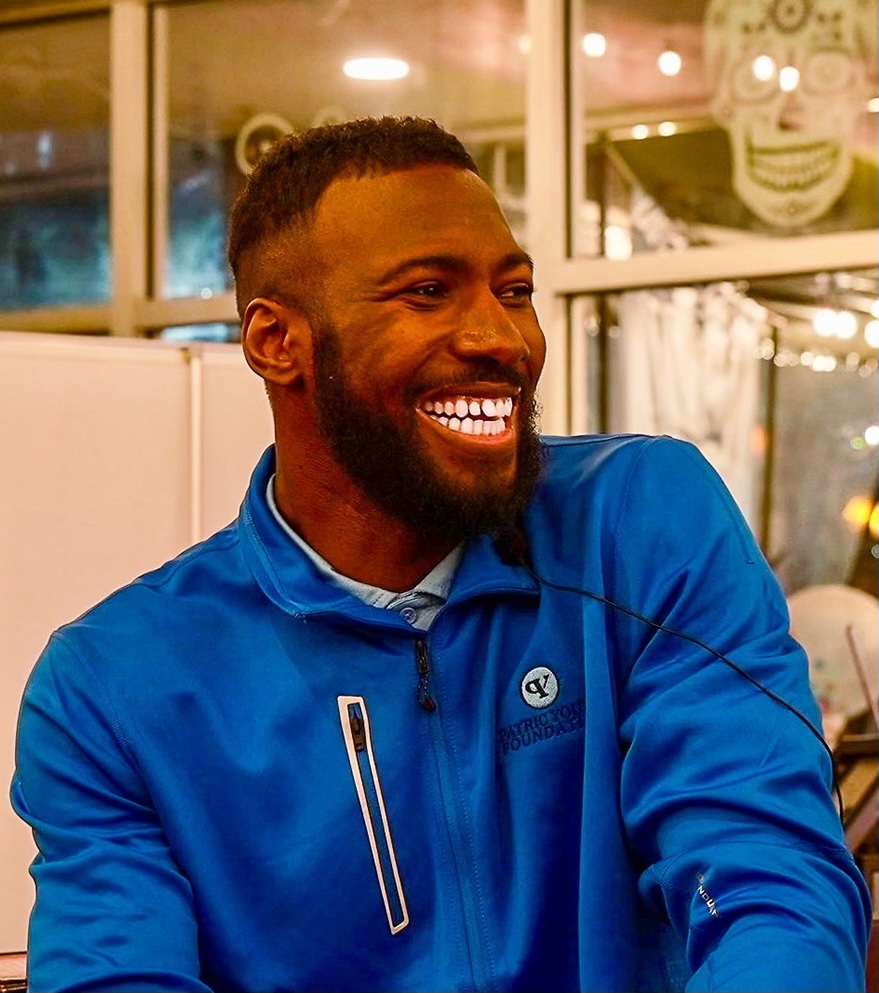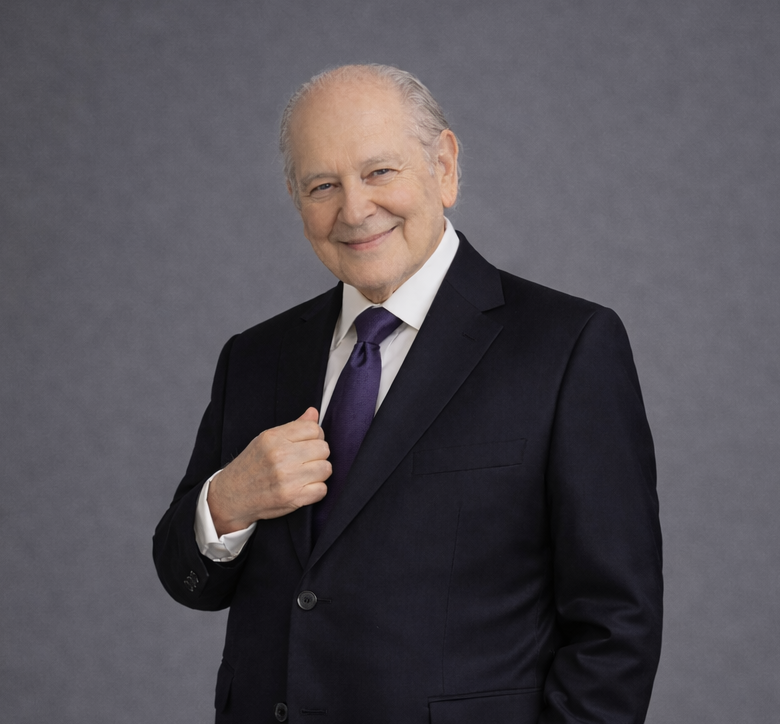


I recently interviewed Goodwill CEO Steve Preston on my podcast, Thirty Minute Mentors. Here is a transcript of our interview:
Adam: Our guest today has led at the highest levels in government, in business, and in the nonprofit sector. Steve Preston is the CEO of Goodwill and was previously the Secretary of Housing and Urban Development and the Administrator of the SBA. Steve, thank you for joining us.
Steve: Yeah, it’s a pleasure to be here with you.
Adam: You grew up in Janesville, Wisconsin. In a humble upbringing, you went to college on scholarship at Northwestern before getting your MBA from the University of Chicago. Can you take listeners back to your early days? What early experiences and lessons shaped your worldview and the trajectory of your success?
Steve: Well, I grew up, as you mentioned, in Janesville, Wisconsin, very much of a blue-collar background. My father never finished high school. He actually grew up in eastern Kentucky. His father was a coal miner. He grew up in a coal mining camp, one of 11 children. And he left after 10th grade and got a job in a foundry, and eventually went into the military. And he met my mother in Germany. He was in the NATO occupation forces, brought her over here, and that’s how the whole thing got started. Growing up in Janesville, we didn’t know a lot of people whose parents had gone to college. Obviously, my teachers did, and other professionals, but it was very much a working-class town. But there was an expectation that we would certainly finish high school, but increasingly, in my case, I began to realize that there was a pathway toward college. At some point, I realized I was a really good student, and I began to build that into my own goals and began to wonder what it would be like if I graduated at the top of my class or near the top of my class and what that would mean for my future, even though I really didn’t have any understanding of what was out there. And lo and behold, one thing led to another, and I got a postcard in the mail from Northwestern. I didn’t even know what it was. Even though it was about a hundred miles away from my house, I knew what the local schools were. I looked it up in a book, and I thought, wow, this looks like a really good school. And so, my dad knew somebody who had gone there and connected me with them. And I went for a weekend, and then I interviewed for the incoming class. And they said, I’m not supposed to tell you this, but you’re going to get in. And then they gave me a lot of money and I got scholarships and really opened up a whole new world for me that I just didn’t even know existed in terms of people from different kinds of families whose parents had a lot of education, had great jobs, who had access to things in the world that I didn’t even really know existed before. And it launched me into a new world pretty quickly. But at the same time, I grew up in a family whose parents were very committed to core principles like character, like honesty. My parents worked very, very hard to provide for a family of five children. And we always knew that. We always knew that they were doing so much for us so that our lives could be better. And we also knew that they had it a lot tougher than we did. And so, we always felt like we were one big step away from the lives that they had experienced and that hopefully, with their support, we would maybe move forward another big step.
Adam: Steve, I love that. And I love those early lessons and those core principles that you took away from your parents, from your upbringing, the importance of character, honesty, hard work, sacrifice, getting the most out of yourself, recognizing that you had potential, you saw it in yourself, you were getting good grades, you realized that you could make something of yourself. You didn’t exactly know what that was going to be, but it required you initially putting in the work academically. And when that opportunity from Northwestern came, You took it, you jumped on it, you made the most of it, and we don’t know when opportunities are going to come our way, but number one, you have to put yourself in a position where when they do come your way, you’re ready, and number two, when those opportunities come knocking on your door, you’ve got to jump on them.
Steve: One of the things I learned pretty early was to really commit to excellence in that place, really commit to honoring what you have at that time and investing yourself fully into it. And even when I got out of college and started my career, I didn’t really know where it was going to go. I didn’t have a long-term vision for my life, really, other than to continue to learn and grow and find out where I flourished professionally and to really lean into those spaces. And I always felt like if I worked hard and did a great job and built good relationships and people trusted me, things would progress. And I’ll never forget when I was at Lehman Brothers, I was there in the 80s and early 90s, which was the go-go time, a go-go time on Wall Street. It was a crazy time. And I was the nice guy from the Midwest, even though in some cases the bar wasn’t terribly high. But I was working for this guy on a deal, and he said to me, Steve, my only concern for you is you just don’t know how to play the game here. You need to be able to get in these situations, and you need to be able to saddle up to these partners. And it was a really uncomfortable conversation for me. And what I realized was that wasn’t really the case at all, because what I was trying to do was be great in the places where I had the opportunity to do good work. I may not have always achieved that, but that was my goal. And to support the people that I worked with. I always wanted to do good work for them. I wanted to do good work for our clients. I wanted to just be somebody whose work was respected. And lo and behold, things went very well for me as a result, because I think it was those instincts that actually helped me build trust among a lot of people. And that was an important lesson to learn early on.
Adam: Steve, you brought up something really interesting when you went back to that conversation that you had with someone more senior to you. You were at a moment in your career where you were not the Steve Preston of today, CEO of one of the largest nonprofit organizations in the world, former cabinet secretary, former two-time Fortune 500 CFO. You were Steve Preston guy trying to rise within his career, and someone tells you, you don’t know how to play the game here. And you’re not really sure how to take that. And that’s something that a lot of people who are trying to rise in their careers are wrestling with, which is What is the game and how do I play it? And what are the politics, and do I need to engage in this game? And if so, how? What advice would you share?
Steve: I would say a few things. Number one is that no matter where you are, you have an opportunity to add value and you have an opportunity to add value to people around you and to the organization, and hopefully to the mission of the organization. For you to be excellent in that place is really important because that is the place where people are typically relying on you. The other thing I think that is really important is to have a sense of freedom to provide advice to people around you, even those people who are very senior to you. Now, it may not feel like, hey, let me tell you what I think you need to do here. But it may sound like this. I’ve been working on this project. I’ve looked at the data. Let me tell you some observations I have that will help you make better decisions, that will help guide you along the way. Or I heard you reach this conclusion, but let me provide you with some additional information I have that may provide a little bit more color to the situation, or that I think you may need to take into account. And when you come around other people who are more senior to you, in a way that is helpful and supportive, and helps them make better decisions. It builds trust in you as a human being. It builds trust in your capabilities. It builds trust in your intent. And it’s easy as a junior person to pull back and feel like, OK, I’ve got this job, and I’m a little nervous about this person. But where I sit today, oh, my goodness, I value that so much. And even a very junior person who’s close to an issue who will come forward and say, let me just lean into this situation and actually speak because I have knowledge that will be helpful to you, to me, is just gold. It’s so valuable. And I think younger people should understand the value that they bring to the table, but also the importance of the spirit with which they bring that value forward.
Adam: Such great advice. You’re there. You have a seat at the table. Take advantage of the seat at the table that you have. And if you want to rise within your career, if you want to be successful at any level, add value. And in your experience, that really has been the silver bullet.
Steve: Yeah, somebody earlier in my career gave me a piece of advice when I was changing jobs and thinking about something different. And this is somebody who’d moved into a couple of different roles. He said, You know, I always feel like when you’re going to move into a new role, a significant percentage of that role has to be in a place where you can add a lot of value right away. But also, a very important percentage of that job needs to be in a place where you can learn and grow into something bigger and where you can develop yourself professionally. And that has always been an interesting framing for me because I have done a lot of different things in life. And I’ve always felt like when I moved into something new, I wanted to be able to go in with enough to bring into that role that I could actually make a real difference in that role. But I also didn’t want to be limited in my growth. I wanted to be able to learn and take on more responsibility and to have a bigger impact in those places. And that balance has always been important to me as I’ve moved into different roles throughout my career.
Adam: I’d love to discuss your experiences in those different roles throughout your career. You led at the highest levels in business; you were the CFO of two different Fortune 500 companies. You became the leader of the SBA before becoming Cabinet Secretary, the Secretary of Housing and Urban Development, and today you’re the CEO of one of the largest, most prominent, most impactful non-profits in the world. What have been the keys to excelling and leading at the highest levels in business, in government, and in the non-profit sector?
Steve: Many of the organizations that I’ve led, and I also ran a couple of companies between the administration and Goodwill, and I mention that because they were very much characteristic of what I’m about to say. Many of the organizations that I’ve led or had senior roles in have been organizations that have been going through very significant change or have been in the middle of a crisis. So, the SBA was one of the key response agencies after Katrina, and I came in about 10 months after Katrina. Unfortunately, a lot of the response had collapsed. The ability to make a particular aspect of that. HUD was during the housing crisis. The first company I ran was really going through an existential crisis. And so, for me, I generally have not had the luxury of coming up in an organization and learning and moving through it. Earlier in my career, I did. I did at Lehman Brothers and ServiceMaster, I did, where I was CFO. And so, what’s been really critical for me is to go into those situations and very quickly grab the wheel, put myself out there as a leader, and move forward in those difficult situations. And that requires a lot of different things. Typically, in a crisis, it’s not unusual for the organization to be experiencing a level of chaos itself. I mean, it may be an internal crisis, it may be external, but usually there are a lot of different factors that are very confusing. So, one of the first things you have to do is go in, grab the wheel, step up to the microphone, and say, I don’t know all the answers right now, but I’ve got this and we’re going to do this together. I’m going to communicate well. We’re going to lead through this together and very quickly build confidence in people that you own it and you’re going to move things forward. Number two is that it’s been absolutely critical, generally in any organization, but especially in an organization in crisis, to go to school to understand really what the issues are. Organizations are big ecosystems. There are a lot of different things going on. And so that is not a one or two-task kind of list. I mean, you have to understand where the organization is failing, what processes and technologies and things, you know, are working or against it. You need to dig deep into the data. You need to understand the culture with the employees and very quickly put together the pieces, which will generally tell a story to help you move forward. It’s very important to engage the team. If the team has been in a chaotic situation or in an untethered situation, they need an anchor. They need to feel like they are part of moving it forward. And what I’ve always done is bring the team in close to get the best thinking. I always say 90 percent of the best ideas are with the team somewhere. And it’s often not the senior team. It’s often the team that is picking up the phone with customers, dealing with the technology, and understanding where there are roadblocks in the organization. So very quickly bringing them together, getting the best ideas, and turning those into execution plans. The other things that have been really important for me, and these were probably especially important in my two federal roles, because one was the Katrina crisis, one was the housing crisis, are being a very open, transparent communicator. Now, it is often the case that leaders choose to maybe sugarcoat things a little bit, maybe not want to show really how difficult the situation is for a lot of reasons. My view has always been to say, no, like, this is the situation. This is the severity. This is what we have to fix. This is our path forward. And come to the party. We can talk about it. But if you diminish or somehow hide the aspects of the severity, two things happen. Number one, you lose the ability to build trust with people who suspect that it’s tougher. The second thing is that your team and your customers know how bad it is, or your team and the citizens know how bad it is. And it’s important to build credibility with them because you can say, I get it. We have to fix these deep issues. We’re going to do this together. And I’m not going to look away from them. We’re all going to look at what it is. We’re all going to come together and we’re going to make this happen. By the way, we’re going to track it all and measure it all and do all the things we’re supposed to. Those are some of the big things. Grabbing the wheel, letting people know you own it, and not having all the answers right away. Going deep dives in all kinds of places to understand really what the full picture is. And then as you execute doggedly to make sure you’re communicating out and reinforcing the good and, of course, correcting where the challenges are.
Adam: As you reflect on your experiences leading very different organizations, what have been the differences in terms of how you have had to approach such different types of organizations? And what advice do you have for leaders who are leading in different areas?
Steve: Well, I think the first thing to do is to do everything you can to understand the current state, what you want the future state to be, and what the pathway to get there is. And as I mentioned before, organizations are very complicated ecosystems. Charting that path forward, depending on the organization, will be different. In the government, it was a very complicated stakeholder situation. I not only had a team of employees that needed to deliver, but we had a tremendous amount of media on us all the time. And my team felt the weight of the media saying that they weren’t delivering, that people were suffering because of their inability to deliver. So that pathway forward needed to not only execute with the team and operationally, but we needed to make sure that the media understood and that I was visible there. We had Congress that we were accountable to. We had people with constituencies locally that we needed to be accountable to. We had the White House because we were part of the administration. And by the way, when you’re dealing in a regulated environment where you’ve got different laws that govern what you do, different regulations, Congress needs to appropriate your money, that pathway needs to take all that stuff into consideration. In a corporate environment, I could act very quickly. So, the two companies I ran were owned by private equity firms. So, my board included the owners, the decision-making was all in one place, and it was a much more efficient process of presenting the issues, presenting the pathways, getting people on board, and executing. Now I lead a federation, Goodwill Industries International, that includes 152 local nonprofits, all going to market by the name Goodwill, but actually independent 501 (c) (3) s. So, leading through that organization involves bringing people together in a way that builds consensus around the direction, builds consensus around the support that people need, and aligning as a collective to move forward based on a shared understanding of what we need to do. And so, it’s much more about leading more through influence, but that influence comes in building collective support. My organization builds support services for those 152 local organizations of any number of kinds, and we try to drive change by providing that kind of support. So, the path from here to there is different based on the kind of organization, and you have to be able to chart, based on the uniqueness of the organization, what it’s going to take to be successful.
Adam: Steve, you shared a lot of great advice, and it starts with understanding your ecosystem. Every organization that you are in is unique. Your set of stakeholders is unique. When you talked about the set of stakeholders that you were accountable to during your time leading the SBA and during your time as HUD Secretary, completely different set of stakeholders than your time as a CEO of two private equity-backed companies, and very different than your time as CEO of Goodwill.
Steve: That’s very true. One of the very important corporate concepts is change management, but change management is very different based on the organization you’re in and the kind of change you’re trying to drive. And understanding how decisions move through organizations and move through networks effectively or ineffectively is very important. Often, when you’re driving big change, failures happen in sneaky places. Maybe there’s a big initiative, and somehow things don’t seem to be working out the way you thought. And then when you dig deep into it, you realize it’s a part of an organization that may just not be adopting it, or the behaviors haven’t been implemented yet. Or people are developing workarounds, or whatever. You have to be able to understand how these ecosystems work, and as you’re driving change through them, what the accelerants are, what the things that give them energy are, and where the things that can really hinder them or block them are.
Adam: Today, as CEO of Goodwill, A big part of your focus is on mission. But as a leader of any organization, any successful organization, you’re going to be mission-driven. And I would love to know if you can share with listeners how you define mission and how you successfully implement mission, regardless of the type of organization that you lead.
Steve: Yeah, I think that is a really important question. And I think one of the most important things for leaders to do is to understand why they’re leading. What within them are they trying to accomplish as a leader? What do they care about? And how does that define in real terms what is important to them in their leadership style? I believe that right away, as a leader, you need to come in and define what the mission of the organization is and how that energizes you to lead that organization. And it’s really important. I think one of the most important things that that implies is that if you are a mission-driven person, it is not about you. It’s about the organization you lead. You are a steward of that organization’s mission, of its people, of its customers, of its stakeholders, of the community in which you operate. And if it becomes about you and you become bigger than the mission or those aspects of the mission, then your effectiveness is diminished. Then, all of a sudden, you become more important than those elements over which you are a steward. And I just think you’re diminished, that your goals are diminished, rather than a situation where you are energized by that, and all of those things flourish. I have found that when I am in a situation where I truly feel driven by the mission, the best in what I have to give comes out of me. I feel like I’m more alert. I’m operating on all cylinders. I’m curious. I’m leaning in. I’m doing what I can to bring people together. I’m leading differently. I think those things fundamentally fuel us as leaders. And it all starts with how we see that mission and how it fuels us to lead.
Adam: Something that you shared early on in our conversation, as you were describing how you were able to successfully rise within your career, you mentioned that you were able to build good relationships. And I would love to know if you can share your best advice on how to build successful relationships and how you were able to cultivate the relationships that allowed you to transition initially from business into the highest levels of government and then back into business serving as CEO of two highly successful companies and now as CEO of Goodwill.
Steve: It’s interesting, a lot of my transitions have been through relationships. When I moved from, I was an investment banker for a number of years, I had to work for one of my firm’s clients. I went there because a former partner of the firm had become the CFO, and he wanted me to lead part of the organization. The next organization I went to was because of a relationship where somebody knew the person who was leading a search and said, This is the person you should talk to. When I went into the government, I knew somebody who was not a terribly senior person in the government, but worked in the White House and came to me and said, Gosh, you’re looking for people who can run Organizations, because so many organizations in the federal government are like big operations. And 1 thing led to another, and I wasn’t really a political person. I didn’t have a lot of political context at all, but it was really a relationship from a prior employer. Where she made the connections and said, This is somebody you should talk to. And then when I left the government, my next role was in outreach to me by a private equity firm who was looking for a CEO, who said, We’ve been calling our network to see who may be the right fit here. And three people have mentioned. And they weren’t people that I networked with in life. These were people that I knew that I had relationships with, that I had worked with, that I had done business with. And long and the short of it is, if we build relationships with people that we work with as a CFO, maybe with bankers or equity analysts or whoever, and people know who you are and they trust who you are on a deeper level, it’s just something fundamentally different. I will tell you, I don’t really know if I’ve ever shared this story publicly, but when I was moving from the SBA role to the HUD role, the housing crisis was mushrooming. And so, I was being moved from one area where the crisis was pretty much behind us to another very significant crisis. And when I sat down with the president to be interviewed by him, all of my qualifications and skills and all that stuff had been vetted. All he wanted to know was who I was. He wanted to know who I was at my core. He wanted to know why I served, why I was in Washington, and what drove me. And it was because he wanted to trust me. He wanted to trust who I was as a human being, and he wanted to trust my motivations. And then when I got nominated for the HUD role, the two most senior Democrats that oversaw the SBA in the Senate were the reasons I got confirmed so quickly, because the head of the Appropriations Committee and the head of my Oversight Committee went to the majority leader in the Senate and said, we want to move this confirmation through quickly. We want him in the job. And these were people with whom I disagreed on many political issues, and were often on the other side of an issue from them. But we worked closely. I worked closely with their teams when I was in the middle of the SBA crisis. I brought them in. I said, I don’t care if you’re on the other side of the aisle. I want you to see what we’re doing. You’ve got constituents. You’ve got a job to do. I want to get your ideas. And it wasn’t about networking. It was about building relationships in a really tough place that ironically accelerated my appointment into the next job, even though these were people who were politically on the other side of the aisle.
Adam: And Steve, a key theme that you’ve been pounding on over the course of this conversation is trust. Trust is essential to relationship building, essential to success as a leader. Any tips for anyone listening on how to successfully build trust?
Steve: There are a few things people want to know who you. They want to know what you’re about. There’s something about being relatively transparent as a human being that’s disarming for people. And so, I would say that people should not shy away from opening themselves up a little bit in terms of who they are, what they care about, and why they do what they do, and not in a promotional way, but just to do that. I think the other thing is, and it gets back to what I said beforehand, when you do good work, when people see that you care about the product that you deliver. When people see you’re really engaged in your work, caring about the issue, solving problems, bringing people together, picking up the phone or sending an email to ask somebody’s advice, making sure the right people are informed, so that you’re building a connection and you’re breaking down silos. When you see those kinds of behaviors, that builds trust. Sometimes when people hear networking or they get involved in corporate politics, that thing takes over. Throw that thing away. That thing is bad. It doesn’t bring out the best in us. What brings out the best in us is bringing other people to the table, sharing with them, pulling them into the middle of a conversation, getting their advice, delivering excellence, caring about them, and our work. And I think it’s so important to understand that those instincts come from a deeper place. And if you feel the smallness of a job or the smallness of a situation or behaviors around you, I think it’s time to just grab yourself and stop and say, wait, there’s something wrong about this. There’s something that just doesn’t feel right. And pull back and say, how can I be part of making this better? People who are petty, how do I bring people together? How do I reach out to them if I feel like that didn’t go very well? And say, I didn’t think that went very well. Can we connect on this? Can we build this to a better place? It is those kinds of behaviors and those kinds of instincts that build trust. Because I will tell you, my saddest places as a leader are when the team fights, when the team doesn’t connect, when the team breaks down. And when that happens, all sorts of bad things happen. And so those other kinds of instincts to bring wholeness to an organization and to relationships are so important. And that’s, I think, who we need to be as people. So, in some ways, it’s not very complicated, but it isn’t always easy.
Adam: You shared a great formula. It starts with caring, being your authentic self, doing your best work, showing up every day, working toward your mission, and leading people toward that mission.
Steve: Yeah, I think if your eye is on the ball and you want everybody to win with you, a lot of great things fall into place.
Adam: Steve, what can anyone listening to this conversation do to become more successful personally and professionally?
Steve: Well, it’s really important to have an honest conversation with yourself to understand maybe the things that hold you back and the things that you’re good at that really accelerate you. It’s different for different people. Sometimes our biggest strengths are also the challenges that we need to overcome. Who is probably listening to this podcast? I was like a hyper type A. You look at my strength profile, the top is achievers, it’s belief, it’s strategy, confidence, all that drives forward. My biggest issue is frustration. My biggest issue is walking past a success and seeing the next one and being frustrated when the next one’s not happening quickly enough. I get that about myself. I need to be in a place where I can lead, where people don’t see that, they see something different. And I also need to understand that that is not about the people I’m living with. It’s about my problem. It’s about something I need to overcome. And so, when we understand who we are and what our accelerants and our inhibitors are, that’s 1 of the biggest things. I’ll tell you 1 story. I grew up as an investment banker professionally, and then I was a CFO, and I led an extremely complicated situation. And that was really my giftedness in that space, and I led many teams and did all sorts of deals and restructurings and all kinds of things. But I remember going to a facility tour with the chief operating officer. And he said, you know what, we should probably tell these people while we’re here, like people see us doing a tour. And he stopped, and he gave an ad hoc speech. And I remember thinking, like, I don’t think I would have known what to say. I hadn’t grown into that space as a leader. And I felt like I didn’t really know how to unlock that. And so, I knew I had this really, really deep lane over here, and that was my strength. But there was a whole other area that I just needed to figure out. And so, I had an executive coach, and I went to the Center for Creative Leadership. And at the end of my time at the Center for Creative Leadership, I was always somebody who was very passionate about what I did and cared a lot. So, at the end of that Center for Creative Leadership, my coach at the session said to me, Steve, you think the strongest arrows in your leadership are your brain, because that’s how you’ve had to operate your whole life. But they’re not. Your strongest arrows are your heart. And unless you understand that, you will never become the leader that you could be. And it was this moment where I said, I’m not really sure what to do with that. I don’t really know what that means. I get it inside. And I needed to figure that out. And when I took that role at the SBA, which was a few years after that, it all made sense to me. I walked in, and the team at the SBA had the lowest morale of any agency in the federal government. I walked in, I said, Oh, my God, these are my people. And I need to lead these people. And they were in the middle of a crisis. And I could see that the people we served and not able to rebuild their homes without the capital that they needed. I could see congressional leaders frustrated because they couldn’t move forward. I could see people in the White House. All of a sudden, it made complete sense to me that my heart needed to be in all those places. And I became a very different kind of leader because I had grappled with the need to unlock this limitation, which actually turned out to be a real gift, but I needed to figure out what to do with it. And what I have consistently found over the years with people I lead, very talented leaders, is they get to a particular place and they hit a ceiling because they haven’t learned to broaden their capabilities, their leadership capabilities, their communication capabilities, their employee engagement capabilities in a way that will take them to the next level. And sometimes to do that, you have to be able to let go of what you’re good at and let somebody else do it, and move into these other areas so that you become a bigger leader on many different levels. That’s it. You need to understand yourself and what the possibilities are, and then invest in those possibilities.
Adam: Steve, thank you for all the great advice, and thank you for being part of Thirty Minute Mentors.