

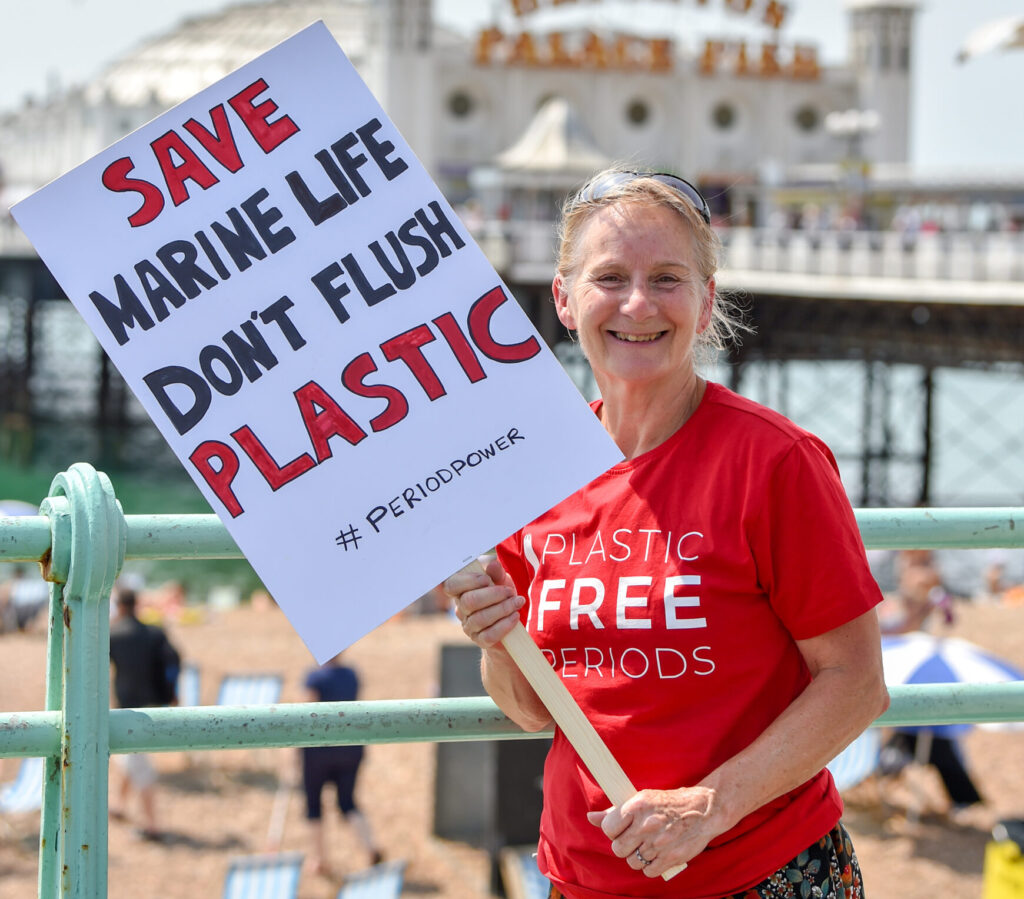
I recently went one-on-one with Susie Hewson, founder of Natracare.
Adam: Thanks again for taking the time to share your advice. First things first, though, I am sure readers would love to learn more about you. How did you get here?
Susie: My father would say, “By attending the school of hard knocks!” As a self-confessed positive disruptor of failed ecological and economical approaches to solving issues impacting women’s health and global habitats, it was a Narnia moment. I took the route signposted “campaigning activist” and ended up standing alone on this platform, reorganizing the rule book for the design and development of organic and sustainable period products, wipes, etc.
Adam: What experiences, failures, setbacks, or challenges have been most instrumental to your growth?
Susie: I identified a serious environmental issue associated with the extraction and production of raw materials used to make menstrual tampons and pads, which also had an impact on the health and well-being of end users and greater global habitats. So I challenged the industry by calling out the issues and by designing and marketing my own solutions.
Over time, my efforts defined a whole new category within period care based on organic, sustainable, plastic-free solutions. This has been a growth category as younger consumers seek solutions to plastic pollution and climate issues through the power of their purses as well as by supporting companies that strongly align with their own values.
Adam: How did you come up with your business idea? What advice do you have for others on how to come up with great ideas?
Susie: I was in college in Sweden when I first became concerned about the period protection industry. I regularly cycled past the river Mölndalsån and noticed how the water would turn different colors due to the pollution from a nearby factory that was processing pulp to create feminine hygiene products. Years later, back in the U.K., I saw a World in Action documentary exposing how the pulping industry was polluting our water, air, and soils with its carcinogenic byproducts of dioxins and furans generated by the commonly used chlorine bleaching processes.
Having been a campaigner for Friends of the Earth and Greenpeace and realizing that nothing was being done in various countries, from Canada to Sweden to the U.K., to protect waterways and women’s bodies from chemical pollution, I decided to work toward establishing my own brand of period products. The motivation for creating Natracare was my anger and concern for the pollution and toxins created by the manufacture and disposal of the conventional brands of tampons and pads, and I was troubled over what state the environment would be in 30 years down the line if I didn’t try to make a difference today.
I launched at the height of discourse around tampons and Toxic Shock Syndrome, and scientists and environmentalists expressing grave concern over dioxin-releasing chlorine gas, which was regularly being dumped at sea. As a person concerned with protecting habitats and resources on this finite planet of ours and as one who had witnessed the impacts of extensive use of pesticides and herbicides in cotton growing, contamination from carcinogenic dioxins from the pulping industry using chlorine gas and chlorine derivatives, and the vast pollution from plastic and microplastic materials, I knew I needed to try to solve the problems I had identified in period care. I did this by designing quality products using better raw materials.
My advice to others is this: Don’t try to force an idea. It’s not so complicated. Look at what problems exist that are crying out for a good solution.
Adam: How did you know your business idea was worth pursuing? What advice do you have on how to best test a business idea?
Susie: I pursued my idea because I knew the extent of the problem and that nobody else was looking to change the status quo! I had to be both campaigner and product developer. As a graduate of art school with a master’s in education, I loved the research I needed to do at the library. As far as the brand development and marketing roles, I had to climb the skills ladder rapidly to manage the sales development and juggle the task of a financier. I produced a product design flow chart and researched suppliers. I also had to create a marketing strategy that could “re-educate” consumers and position my brand amongst the dusty shelf squatters, all pre-internet!
Startups today have so much opportunity with bringing investors on board and working with brand-building teams that can bring products to market quickly. Testing ideas is category-specific, so know your market or learn about it fast. Understand the statistics and identify the growth potential for internal and external markets, i.e., identify the barriers and determine the best options for quick entry. Know what the risks and opportunities are likely to be. Work to a defined budget, and don’t lose your shirt on a lame horse!
Adam: What are the key steps you have taken to grow your business? What advice do you have for others on how to take their businesses to the next level?
Susie: I would be lying if I said I planned growth over 36 years. When you enter a category dominated by large corporations with household brand names, overcoming barriers means bringing all your research, science, and statistics into play. I identified for the category buyer and end consumer that solutions existed in my brand/company that allowed them to change their purchasing habits and address any concerns about impacts. It was an educational approach that needed advocates, informed science, and real-life examples, plus patience, because nobody gets a listing by making one phone call or sending a blind email!
It took seven years of hard slogging and campaigning to get to a position where buyers felt confidently informed, and were able to react to the consumer demand we created in order to get those listings, and keep the products on the shelf for all the years we have done so. Three years after launch, we set up our USA office to manage sales, marketing, and distribution across the USA and Canada. Today, these are our largest markets, with even more growth potential.
My advice to others to grow their own businesses is practical: Learn about your markets and opportunities, and identify your consumers and their interests and concerns. Keep your budgets tightly under control, and surround yourself with people you can trust and respect, people who have the skills needed to help you deliver on your aims and objectives within a realistic timeframe and to budget.
Adam: What are your best sales and marketing tips?
Susie: Identify what it really is that you want to achieve, and plan the route to market using the most appropriate tools for your product category, service, and end user. I am not giving advice about best practices, as that is too specific, but building your story and creating energy and purpose around your product or service is key. Tell a compelling story of how your business resolves issues of concern for consumers. Be truthful, and avoid the pitfalls of overpromising or making hyper claims that become “greenwashing.”
Adam: In your experience, what are the defining qualities of an effective leader? How can leaders and aspiring leaders take their leadership skills to the next level?
Susie: An effective leader has charisma and a practical approach to building forward. Obviously, listening skills are important; you can only lead if your team is willing to follow and support your objectives. To take it to the next level, inform yourself on best practices and set up good teambuilding and communication networks within and outside of your business. And be prepared to reshape your approach if learning shows this isn’t the best way to move forward effectively.
Adam: What is your best advice on building, leading, and managing teams?
Susie: We have evolved over the years from me being the only person in the company, to bringing in staff and organizing internal structures that meet the demands of a growing company with changing needs to deliver on objectives. Interview with care, and choose your staff wisely. The right skills and a personality that gels with your current vibe are key. Organize your management teams and hold regular meetings to allow for flow of information and feedback across departments. Determine and reach the optimum staffing to meet and attain your growth areas.
For the best communication and partnership-building, maybe you need a linguist to reach overseas markets that you’ve identified. In addition to on-the-job training, stretch your staff’s skills by offering development opportunities with appropriate training courses, because that new starter may shine in competencies they weren’t originally recruited for, skills that bring an unexpected opportunity to the company. That English major may well find an unfulfilled role they never knew they wanted to excel in. Allowing team managers to organize their routes and methods means you develop a diversified skillset across your business. Offering rewards and gaining feedback through appraisals are also important areas to impress upon. Build in kindness.
Adam: What are your three best tips applicable to entrepreneurs, executives, and civic leaders?
Susie:
- Choose your problem to solve, and plan for both success and failure.
- Stay within budgets, even if you have a big bankroller supporting you. It’s good to cut your cloth according to its measure.
- Stay relevant and humble. Understand that your role is to serve, not to be served.
Adam: What is the single best piece of advice you have ever received?
Susie: At the very beginning, when I started to develop Natracare in 1989, I was advised by a colleague and friend to not try to take on this corporate-dominated category, as they would eat me alive. I am not implying that I’m bad at taking advice. I am better, however, at seeing where a problem is so severe and critical that inaction is unacceptable, and look where it got me and the organic and natural personal care category I created.
Adam: Is there anything else you would like to share?
Susie: I pioneered brand activism in the feminine hygiene category in the late 1980s, and I have the scars to prove it! Natracare evolved out of my own environmental and health campaigns against the use of toxic chemicals, synthetics, and plastics, as well as their role in menstrual TSS and allergic responses. Activism on all levels – personal, organizations, and brands – encourages people to think more critically about their consumer choices. The joining together of all of these forces is what drives this change.
Brand activism ought not be about style or trend but, rather, focus on directing deliberate change that brings about better outcomes for women and global ecology. Activism is important in effecting a change in standards and the law, if necessary. That kind of work takes more than trendy packaging and a three-word brand slogan.