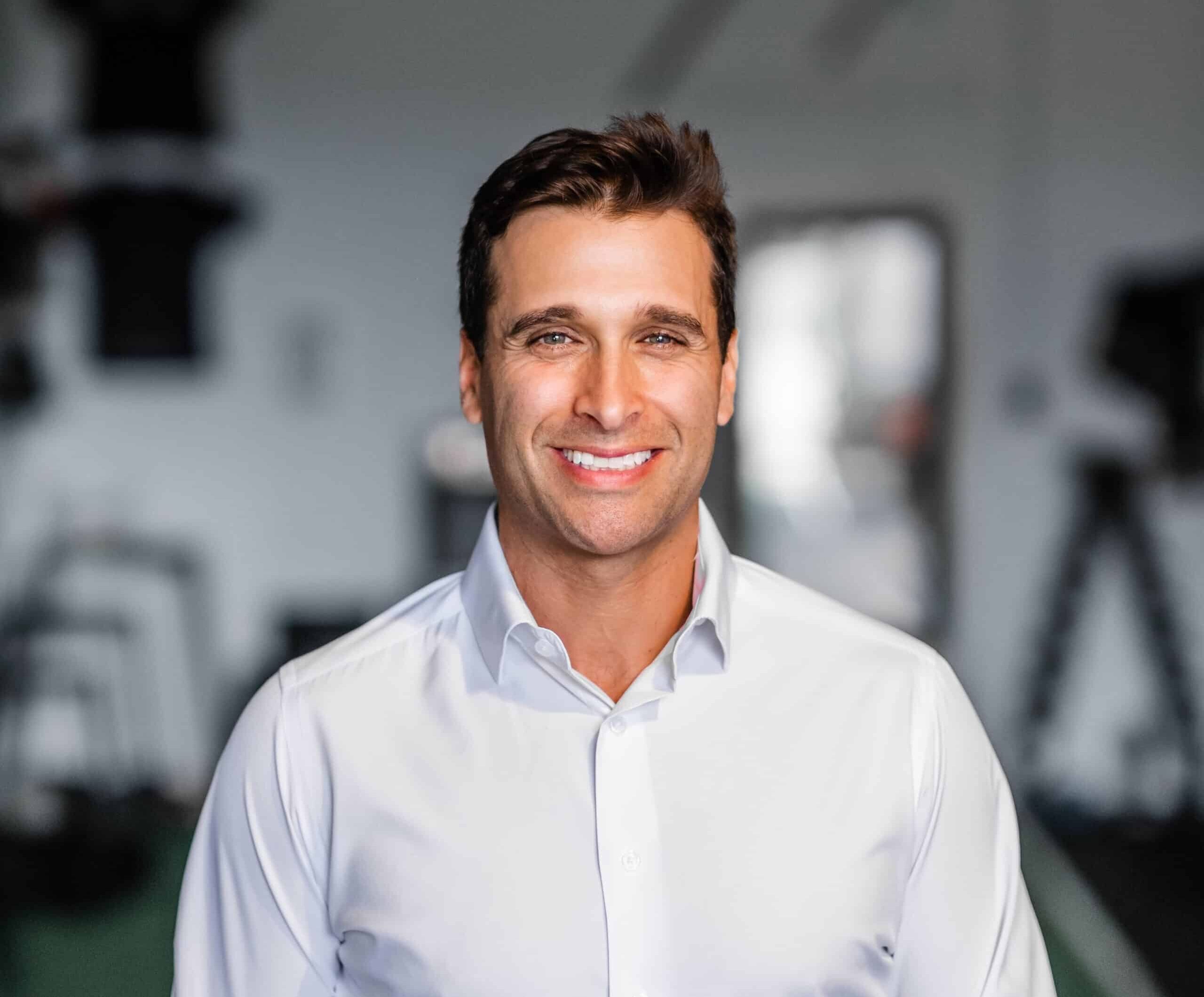

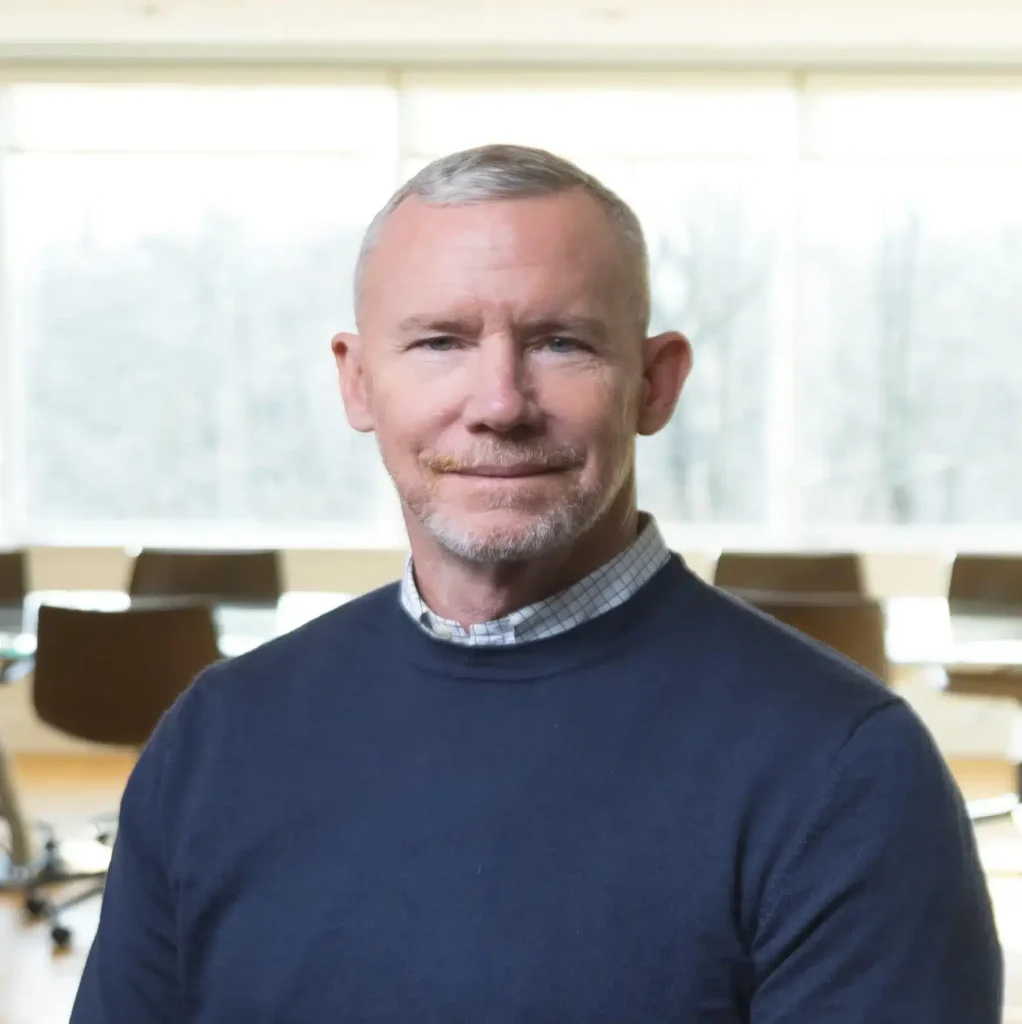
I recently went one-on-one with Tyler Zagurski. Tyler is a retired U.S. Marine Corps Colonel and the Vice President, Talent & Workforce Solutions of r4 Technologies.
Adam: First things first, though, I am sure readers would love to learn more about you. How did you get here? What experiences, failures, setbacks, or challenges have been most instrumental to your growth?
Tyler: I sort of stumbled my way through college with no real idea of what I wanted to do. Then, just weeks before graduating, a Marine Corps recruiter approached me, and I suddenly found myself at boot camp as a newly enlisted recruit. What I found in the Marine Corps was the structure, integrity, and sense of purpose that I had been missing; 31 years later, I hung up the uniform but took with me a lifetime of lessons, triumphs, failures, and friendships. Many of my earliest crucibles of development came through small-unit leadership in the infantry. Setbacks and difficulties are unavoidable, but you have to use them to grow. In more senior roles throughout my career, I really learned through mentors – and by example of really good bosses – to mature my leadership, and to understand how my influence and intent needed to be central features. You eventually reach a point in any large organization where your leadership responsibilities extend far beyond what you can personally touch. At that stage, your influence and intent have to be present even when you aren’t.
Adam: What are the best lessons learned from your time in the Marines?
Tyler: Thirty years distills down to a handful of truths. First, mission clarity is everything. If the people you lead don’t understand the “why” behind what they’re doing, you’ll get compliance at best, and compliance isn’t good enough when things go sideways. The Marines call it “commander’s intent.” Everyone needs to understand the purpose deeply enough to act independently when communication breaks down. I used to say that Marines will follow you through the gates of Hell, you just need to let them know that’s where you’re going! Second, standards are an act of respect. When I commanded Marine Barracks Washington, I held some of the most demanding ceremonial standards in the entire military. Those high standards weren’t punitive. They communicated to every Marine that their role mattered, that excellence was expected because they were excellent people. Lowering the bar is a slow-motion insult to the people you lead. Third, take care of your people before yourself, every time. I used to call it “horse, saddle, cowboy” – that’s the sequence and priority of caring about success. I’ve seen leaders preach this and then act in pure self-interest when it counted. Marines see through that instantly. Credibility is your most valuable asset, and it is extraordinarily fragile. Finally, every day is a competition. In the Marine Corps, and in life, you are ultimately measured by how well you perform over time. Sustained superior performance is the result of competing every day.
Adam: What do you believe are the defining qualities of an effective leader?
Tyler: I’ve thought about this across every level of leadership, from leading a rifle platoon to advising the Chairman of the Joint Chiefs of Staff. A few qualities are non-negotiable. Integrity comes first, full stop. Not just honesty, but the harder version: doing the right thing when no one is watching, when it’s costly, when it’s inconvenient. People follow leaders they trust. Everything else is built on that foundation. Another quality that sits alongside integrity is authenticity. If you’re not a tough guy, don’t pretend to be one. And if you’re not a well-read historian, don’t make that the cornerstone of your leadership. Your people and organizations will see through any disingenuous attempt to “act” like the leader you’re not. Of course, you want to be the best version of yourself, but not a caricature of someone else. Deep investment in people. Whether it’s the military or the private sector, good leaders find talent and surround themselves with it. They invest in developing subordinates and celebrate those who eventually surpass them. And perhaps most importantly: the ability to communicate vision in a way that moves people emotionally, not just intellectually. Logic informs. Story motivates.
Adam: How can leaders and aspiring leaders take their leadership skills to the next level?
Tyler: Get outside your comfort zone deliberately and systematically. Most people develop leadership skills through the same kinds of experiences in the same environments. That produces competence, not mastery. Seek out assignments that scare you a little. Don’t shy away from opportunities that will challenge you and will most certainly produce setbacks or mistakes – that’s how you grow. Know the difference between a boss, a champion, and a mentor. A boss expects results. A champion advocates for your growth. A mentor tells you the truth, even when it’s hard to hear. Not cheerleaders, but truth-tellers. The best mentors I had were the ones who pulled me aside and said the hard thing I needed to hear. Surround yourself with people who challenge your thinking. Become a student of your craft. Read, study, discuss, and keep learning. A good leader should have no problem speaking at length about the domain he or she operates in, and the current state of innovation, execution, challenges, or future vision. Finally – lead something. This sounds obvious, but many aspiring leaders spend years theorizing about leadership without actually taking responsibility for a team, a project, or an outcome. There is no substitute for the accountability of actually being in charge.
Adam: What is your best advice on building, leading, and managing teams?
Tyler: As I stated earlier, find and develop talent. Avoid the temptation to build teams based on conformity or like-mindedness. That feels comfortable and efficient in the short run, but in the long run it’s a disaster. You end up with an echo chamber that has massive blind spots. Establish psychological safety early. Teams do not take risks, surface bad news, or innovate in environments where speaking up feels dangerous. As a leader, you set that tone in the first few weeks — maybe the first few days. If you react to hard truths with defensiveness or punishment, that information stops flowing to you, and you become an increasingly uninformed leader. Something I learned in combat is the power of under-reacting. Your organization needs to know that when all appears to be crumbling around them, their leaders remain calm and decisive in the face of uncertainty. This has the corollary advantage of impact during those times when a leader does need to get excited or show reaction. Your troops know things just got real and they need to respond. Being there is half the battle. Organizations respond well to leaders who make large units feel smaller. Have breakfast with small groups, spend half-days with a subordinate unit, schedule town halls with all of your middle managers, and show up at the softball championship. Your influence is essential to success, but your presence is cherished.
Adam: What are the most important trends in technology that leaders should be aware of and understand? What should they understand about them?
Tyler: Artificial intelligence, particularly predictive AI, is the most consequential technology shift of our era. Leaders need to understand that this is not simply a faster version of tools they already have. It is a genuinely different capability. At r4 Technologies, we’ve trained predictive AI models on more than a million military profiles to identify candidates most likely to succeed in Special Warfare. What used to take months of manual analysis now happens in minutes, and the predictions are better. That’s not incremental improvement; that’s transformation. Leaders need to understand a couple of key things about AI. First, data is the foundation. Our lives, communities, and organizations are drowning in data, but it’s dispersed and siloed across systems and platforms that never connect. Cross-enterprise AI brings that data to life and finds the signals buried within. Whether you’re looking to optimize sustainment and logistics functions or recruit and retain the right humans, the data contains the answer. Second, advancements in AI are accelerating at an unprecedented pace. This is Moore’s Law on steroids. Companies and organizations that are unwilling to unleash the power of enterprise AI will soon find themselves too far behind to catch up. Third, AI augments human judgment; it doesn’t replace it. We believe humans at the helm is the first principle. Ideally, AI frees people to perform higher-value work rather than replacing them. Cybersecurity is the other trend I’d emphasize. We operate in a world where our adversaries are sophisticated, persistent, and patient. Cyber is now a critical pillar of national defense and business continuity. Every leader, regardless of domain, needs baseline literacy in this area.
Adam: What are your three best tips applicable to entrepreneurs, executives, and civic leaders?
Tyler: First: Define success before you start, not after. Entrepreneurs, executives, and civic leaders can fall into the trap of chasing activity: revenue, engagement, votes, media coverage, rather than outcome. Get ruthlessly clear on what “winning” actually looks like before you commit resources. In the military, we call it “end state.” Work backward from there. Second: Build a coalition before you need one. Leaders who only network transactionally are perpetually starting from zero. Every connection, introduction, or conversation could eventually become the partnership, investment, or teammate that unlocks success. Third: Have a story and communicate it often and well. This includes knowing your audience and what will resonate. Your vision and value proposition should sound like poetry to the right audience and needs to address their core values and requirements. Don’t drown in the deep water of overly technical explanations, but be able to align your vision, product, or services with what the market needs.
Adam: What is the single best piece of advice you have ever received?
Tyler: I’ll actually provide the two best pieces of advice I ever received. First: When you’re in charge, be yourself. When you’re not, be what your boss needs you to be. This simple admonition built the scaffolding for how I addressed my many assignments and roles in the Marine Corps. How do I add value every day to make my unit and boss successful? Likewise, when I’m in charge, am I being genuine and leading with integrity? Secondly, account for all of your stuff and take care of your people. I not only received this advice upon taking command, but also provided it to anyone who worked for me. If you’re successful at those two things, most everything else tends to work itself out.
Adam: Is there anything else you would like to share?
Tyler: I’d leave readers with this: we are living in a period of extraordinary disruption: technological, geopolitical, and social. That disruption creates anxiety for a lot of people, understandably. But I have spent thirty years operating in genuinely uncertain, genuinely dangerous environments, and I’ve learned that disruption is where leaders are made. The institutions, companies, and communities that thrive in the next decade will be led by people who run toward complexity rather than away from it. People who invest in their teams, who embrace data and technology without losing their humanity, and who have the courage to make hard calls under pressure. If you’re an aspiring leader reading this: lean into the hard assignments, stay humble, and never stop learning. This work matters more than you know.