

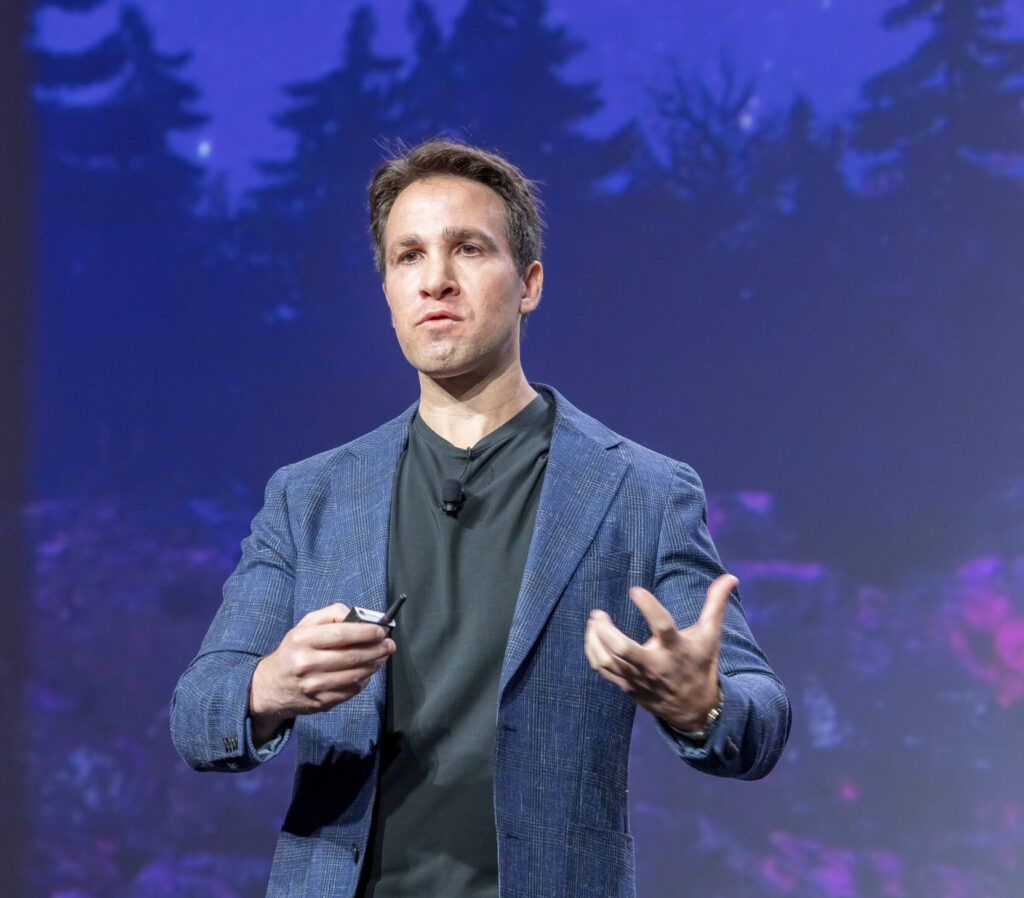
Every event planner wants a leadership keynote speaker who will energize the room, deliver meaningful insight, and leave the audience excited to take action. But what actually makes a keynote truly engaging and effective?

After speaking to leaders across corporate conferences, association summits, and public-sector events, and after interviewing hundreds of extraordinary performers across business, sports, government, and the military, I have a clear perspective on what sets the best speakers apart.
If you are planning a leadership conference or choosing a keynote speaker for your next event, here are the qualities to look for and the deeper insights and practical extensions you’ll want to evaluate.
They Create an Immediate Connection with the Audience
You only have a few seconds to win the audience. An engaging leadership speaker builds trust quickly by showing they understand the people in front of them.
I always take the time to learn about the organization, its mission, and the unique challenges leaders are facing. When people feel seen and understood right away, they listen. Connection drives attention.
Why this matters
- Psychological research shows that people pay attention when they feel personally recognized and valued.
- From the moment the speaker takes the stage, audience attention is fragile; if they sense “this is irrelevant to me,” attention drops fast.
- Acknowledging the organization’s mission, industry context, or current climate (especially if it’s undergoing change or challenge) sends a signal: “I’m with you.”
- Once trust is established, the audience is far more open to new ideas, stories, and action.
How to make this work
- Before your event, the speaker (or the planning team) should gather some basic insights about the audience: their roles, pain points, leadership priorities, and industry context.
- The opening of the keynote should reference one or two specific realities the audience recognizes (“In your division, you’re grappling with…” and “Right now your teams are facing…”).
- Use language that frames the audience as partners, not passive listeners: “We’re in this together,” rather than “You need to learn from me.”
- Build rapport by injecting a mix of humility and authority: the speaker may say, “I’ve worked with teams going through this exact challenge,” rather than “I know what you need.”
They Make Leadership Feel Real and Relatable
Leadership can sometimes sound abstract or lofty. The best speakers translate big ideas into practical, relatable lessons. My goal is to make leadership feel accessible. I share strategies from my conversations with exceptional leaders and relate them to situations that every audience member recognizes. If leaders cannot apply it, they will not remember it.
Why this matters
- Abstract leadership language (“vision,” “mission,” “culture”) can quickly lose people if they do not see how it applies to their day-to-day work.
- When a speaker uses concrete examples, “Here’s how a mid-level manager changed the way her team meets” or “Here’s how a veteran leader responded when trust broke down,” then the audience sees themselves.
- Relatability creates “aha” moments: when someone thinks, “Yes, I’ve been there,” they are far more receptive to change.
How to make this work
- Use stories and case studies of leaders at varying levels, not just C-suite icons but also frontline supervisors, team leads, and emerging leaders.
- Translate key leadership concepts into “what this looks like on Monday morning.” (“If you do X, your team will respond by Y.”)
- Offer analogies or metaphors linked to familiar situations in your audience’s industry or function (“Think of your culture like a net: it holds up your team when shocks come”).
- Using language the audience already uses, mirroring their industry vocabulary, mission statements, or values, helps make the message feel tailored.
They Deliver Powerful Stories with a Human Touch
Stories stay with us. They help us absorb insight without feeling like we are being lectured. Audiences enjoy hearing from someone who has spoken with leaders who have:
- Built companies from the ground up
- Led teams through crisis
- Achieved greatness in sports and service
- Made decisions with major consequences
When the stories are compelling and the lessons are clear, the impact lasts.
Why this matters
- Storytelling is emotionally engaging, which leads to better memory retention.
- Humanizing the speaker, showing their own mistakes, doubts, and growth moments, builds connection and credibility.
- A story that ends in transformation or insight gives the audience a mental “before/after” a mental model they can remember and replicate.
- Stories drawn from multiple domains (sports, military, and business) bring a fresh perspective and widen relevance.
How to make this work
- Structure stories with a clear arc: challenge → decision point → action → result (and reflective insight).
- Use vivid details to make the story come alive (what the leader felt, what the stakes were).
- Then draw out “Here’s what you can apply” to connect it to the audience’s world.
- The speaker should include their own story (or a version of it) so the audience sees the messy reality of leadership, not just polished success.
- Because different audience members will connect to different fields and mix varied sources (business, sports, and public service), so there’s something for everyone.
They Create Learning Through Energy, Pace, and Interaction
Tone, movement, and pacing matter. So does audience involvement. I treat every keynote like an experience. I speak with energy, vary my cadence, and bring the audience into the conversation. The goal is always to make people feel engaged, not passive. Attention rises when leaders feel like they are participating, not just watching.
Why this matters
- Even the most brilliant content will fall flat if the delivery is monotone or lacks connection. Engagement is not just about what is said; it’s about how it’s said.
- Interactive elements (e.g., polls, partner discussions, audience reflections) divert attention back to the stage when it drifts.
- Energy from the stage is contagious: a speaker who moves, changes tone, asks questions, and invites reflection keeps the audience alive.
- A dynamic delivery helps embed the mindset that leadership itself is active and dynamic, not static.
How to make this work
- The speaker should open strong: a provocative question, a surprising statistic, or a short story that jolts the room out of autopilot.
- Use shifts in pace: slower for reflection, faster for high-impact moments, and pause at the right moment to let a thought settle.
- Incorporate audience involvement: ask them to reflect on a recent leadership decision, turn to a neighbor and discuss a challenge, or share in the chat/Q&A if virtual.
- Use visuals and storytelling rhythm: vary content format (story, then data, then group reflection, then action step) to maintain interest.
- Encourage movement or posture changes (if in person) or on-screen prompts (if virtual) to break inertia.
They Deliver Actionable Tools Leaders Can Use Immediately
A keynote should result in better leadership the very next day. I focus on practical guidance leaders can take back to their teams right away:
- Better ways to communicate
- Stronger approaches to culture and trust
- Tools to motivate and empower people
- Strategies to succeed during change
Inspiration fades if it is not supported by action. The true measure of a keynote is behavior change.
Why this matters
- Inspirational anecdotes are great, but without “now what?” they become nice stories that fade by Friday afternoon.
- Leaders and organizations are looking for return on investment (ROI): time away from work needs to translate to tangible improvement.
- Tools: simple frameworks, checklists, and action steps make adoption more likely. When leaders leave with something to use, rather than just something to think about, implementation is higher.
- Actionable tools increase audience buy-in because they feel like they can start small and build momentum.
How to make this work
- Provide a simple framework or model (e.g., “Three Conversations to Have with Your Team” or “Four Trust-Building Habits”) rather than a long list of vague advice.
- Offer a “playbook” slide, handout, or digital resource that participants can download/print and reference.
- Include role-play or scenario examples: “Here’s how you reframe a difficult conversation”; “Here’s how you respond when trust falters.”
- Encourage participants to pick one thing they’ll change starting tomorrow. (Saying “pick one” increases the chance of follow-through.)
- Follow up with the event team: share a summary, action plan, or reminder of the tools introduced so the content lives beyond the keynote.
They Tailor the Experience to the Mission of the Event
A great keynote never feels generic. Before every event, I align with the planning team on themes and desired outcomes. I integrate the organization’s language, values, and goals into the message so the audience sees immediate relevance. Customization shows respect for the audience and commitment to the event.
Why this matters
- Audiences can tell when the presentation was “off-the-shelf”: generic content often fails to resonate.
- Customization signals respect: “You matter, your mission matters, and I’m not just reading my standard script.”
- When the keynote connects directly to the event’s theme, the session becomes part of the larger narrative, rather than a standalone moment.
- Tailoring boosts transfer of learning: the more the content ties back to the audience’s own context, the more likely they will implement it.
How to make this work
- During the planning phase, the speaker or organizer should ask, “What is the key event theme?” What are your specific leadership challenges? What outcomes do you hope to achieve?
- Integrate the organization’s language: use their mission, values, KPIs, and internal phrases; they will feel “this was made for us.”
- Adjust stories and examples to fit the industry, region, size of organization, and type of audience (e.g., public sector vs private, global vs domestic).
- Consider pre-event interviews or surveys with attendees to surface real-life leadership issues the keynote can reference.
- Post-event, provide a tailored follow-up (e.g., an event-specific workbook, access to additional resources) to extend the impact.
They Stay Authentic and Present on Stage
Audiences can tell when a speaker is performing instead of being present. Authenticity is connection. When I share lessons learned, including my own challenges and growth moments, I show leaders that success does not require perfection. It requires courage, clarity, and the willingness to keep improving. People connect with the real.
Why this matters
- Authenticity builds trust and credibility: when the speaker is transparent, the audience believes them.
- If a keynote feels polished but impersonal, the audience may disengage or feel the content is not for them.
- A speaker who demonstrates vulnerability (acknowledging mistakes and learning moments) makes it safe for audience members to reflect on their own leadership gaps.
- Being present (responsive, aware of the room, and interacting naturally) enhances energy and connection.
How to make this work
- Encourage the speaker to share real failures or “lessons learned,” not just triumphs.
- Onstage, avoid over-reliance on slides; the speaker should make eye contact, read the room, and adjust pacing and tone as needed.
- Use conversational language rather than jargon: speak like a human, not a script-reciting machine.
- Incorporate moments of audience acknowledgment: “I see some of you nodding,” or “I know you’ve been there too.”
- After the keynote, encourage the speaker to remain engaged (meet attendees, answer questions) if possible. This extends the authenticity and connection.
They Build Momentum That Carries Into What Happens Next
A powerful keynote leaves the audience wanting to talk about what they learned and to use the ideas right away. A successful speaking engagement leads to:
- Conversations that continue into the hallways
- Leaders taking notes and sharing ideas
- A shift in mindset across the organization
The keynote should feel like the beginning of a transformation, not the end of a session.
Why this matters
- If the keynote is the end of engagement, the energy drops and the lessons fade.
- When leaders take ideas into conversations and begin to experiment, the event becomes a catalyst, not a one-time moment.
- Organizational culture shifts as learners start applying tools with their teams; this is the true ROI of a keynote.
- Momentum drives follow-through and ensures the keynote becomes a springboard for sustainable change.
How to make this work
- At the close of the keynote, the speaker should issue a clear “next step” or challenge (e.g., “Within the next 30 days, commit to doing X with your team”).
- Provide event planners with suggested integration strategies: small-group breakout sessions, peer coaching circles, follow-up sessions, and leadership labs.
- Consider a post-event resource or digital hub where attendees can revisit concepts, share insights, and continue the conversation.
- Align the event agenda so that the keynote leads directly into actionable sessions or workshops; the momentum flows into the next piece rather than dropping off.
- Ask event organizers to measure impact: polls, follow-up surveys, and leadership check-ins to see how attendees are applying the tools.
Related Topics Worth Exploring
To deepen the impact of a leadership keynote and build broader value for your event, consider the following related topics and how your speaker or event design can incorporate them:
A. Creating a Culture of Leadership at All Levels
Leadership isn’t only for the C-Suite. Today’s best organizations enable leadership at all levels: team leads, frontline supervisors, and individual contributors. A keynote can help shift mindsets: everyone is a leader in some capacity. This ties into “leadership as responsibility,” rather than “leadership as title.”
In practice: include examples of micro-leadership (leading yourself, leading peers, leading projects) and invite attendees to identify their sphere of influence.
B. Leading Through Change and Uncertainty
Change is constant, with mergers, digital transformation, remote/hybrid work, and generational shifts. Leaders need composure, clarity, and an adaptive mindset. A speaker who addresses uncertainty, resilience, and change navigation is especially valuable.
In practice: weave in tools for scenario planning, for communicating through ambiguity, and for maintaining trust when things are unclear.
C. Emotional Intelligence and Inclusive Leadership
Modern leadership demands more than operational excellence; it demands relational strength, empathy, trust, and inclusion. A fully engaging keynote speaks to emotional intelligence, psychological safety, and inclusive behaviors.
In practice: include frameworks for building psychological safety, improving listening, managing conflict with empathy, understanding diverse perspectives, and empowering broader talent.
D. Digital Leadership and the Future of Work
In many organizations, the future of work is now: remote/hybrid teams, digital-first collaboration, AI/automation, and globally distributed teams. A leadership keynote can bring in the forward-looking dimension: how leaders must evolve to meet the future.
In practice: cover topics such as virtual presence, leading through algorithmic disruption, data-driven decision-making balanced with human judgment, and trust in distributed teams.
E. Leadership Metrics and Accountability
Often, leadership keynotes focus on inspiration, but to be effective, they also link to metrics and accountability. What leadership behaviors are being measured? How does the organization know the message “took hold”?
In practice: encourage the event planning team to define 1-3 key leadership behaviors (e.g., “team members speaking up,” “cross-functional collaboration,” “leader-led coaching conversations”) and ask the keynote speaker to embed these as part of their message.
F. Reinforcing Leadership Over Time
A keynote is high impact, but without reinforcement, it risks fading. Consider designing the event or speaker package to include follow-up mechanisms: micro-learning modules, coaching circles, leadership peer groups, resource libraries, and newsletters.
In practice: integrate the keynote into a broader leadership development pathway rather than treat it as a standalone event.
Why This Matters for Event Planners and Organizations
When you, as the event planner or steering committee, select a keynote speaker, you’re not simply booking “someone who talks about leadership.” You’re investing in an experience that must serve your organization’s strategy, culture, and people. The right keynote speaker becomes a catalyst for change, not just a break in the agenda.
By selecting a speaker who connects immediately, makes leadership real, tells powerful stories, engages the audience, gives actionable tools, adapts to your context, stays authentic, and builds momentum, you dramatically increase the chance of a meaningful outcome.
From the organization’s perspective, that means stronger leadership behaviors, better team dynamics, improved performance, and a clearer path from inspiration to action.
From the audience’s perspective, that means they leave feeling energized, equipped, and ready, not just entertained.
How to Evaluate and Select a Speaker
Here are practical tips for evaluating a potential keynote speaker and ensuring they deliver against the above criteria:
- Ask for a custom-tailored sample agenda: Does the speaker propose to learn about your organization, tailor the content, and integrate your language and themes?
- Request video clips of live keynotes: Look for audience energy, speaker stage presence, pacing, and storytelling.
- Discuss the pre-event intake process: Does the speaker interview the leadership team, collect attendee intelligence, and align with your outcomes?
- Ensure action-oriented takeaways: Ask for a sample of the tools/frameworks the audience will leave with. Are they specific and usable?
- Probe for post-event reinforcement: Will there be any follow-up materials, resource links, or ways to extend impact?
- Confirm alignment with your theme and mission: Review the speaker’s approach for customizing examples/language to your industry, culture, region, and audience level.
- Validate the speaker’s authenticity and presence: Is their style dynamic? Are they responsive to audiences? Do they have credible leadership experience or stories?
- Ask for references: Talk to previous event planners. Did the audience stay engaged? Did the momentum carry forward?
- Look at diversity of experience: A speaker who can draw from varied sectors (business, sports, military, government) often brings a fresh perspective that captures attention.
- Budget for impact: Recognize that the right speaker is an investment, but when aligned correctly, the return can be significantly higher in terms of engagement and outcomes.
The Extra Edge: Building a Leadership Ecosystem
To maximize the value of a keynote, many organizations now view it as the starting point of a broader leadership ecosystem. This “extra edge” means:
- Pre-work: Provide attendees with a leadership reflection survey or pre-reading so the keynote feels immediately relevant.
- Breakout workshops: After the keynote, run interactive workshops that deepen key themes.
- Coachable moments: Create internal “leadership labs” where participants commit to one behavior change and check in after 30/60/90 days.
- Peer networks: Encourage small groups to continue conversations and hold each other accountable.
- Resource hub: Provide access to digital toolkits (videos, worksheets, podcasts) so the learning continues.
- Follow-up metrics: Use pulse surveys, team leader check-ins, or internal dashboards to track whether leadership behaviors are changing.
- Celebration of success: Showcase early wins from the keynote’s insights to reinforce culture and embed stories.
When a keynote speaker is integrated into all this, not just a single session but as part of a strategic event design, the probability of lasting impact grows significantly.
Final Thought
A leadership keynote speaker should help people become better leaders. That means connecting with the audience, sharing powerful insight, telling meaningful stories, and giving people tools they can use right away. When properly designed and delivered, a keynote becomes much more than “just a talk”; it becomes a moment of connection, transformation, and momentum.
A great keynote does not just entertain. It strengthens the organization.
Frequently Asked Questions
1. What makes a leadership keynote speaker different from a motivational speaker?
A leadership keynote focuses on practical lessons and strategies that help people lead more effectively, while motivational talks often focus on inspiration alone.
2. How long is a typical leadership keynote?
Most range from 45 to 60 minutes, with optional Q&A sessions or breakout discussions afterward.
3. How far in advance should I book a keynote speaker?
It’s best to book at least 3 to 6 months ahead to ensure availability and allow time for customization.
4. Can the keynote be tailored for different industries or leadership levels?
Yes. The best keynotes are customized for your audience’s experience level, organization size, and industry focus.
5. What results should I expect after the event?
Attendees should feel energized, equipped with new tools, and inspired to lead with more clarity, trust, and purpose.