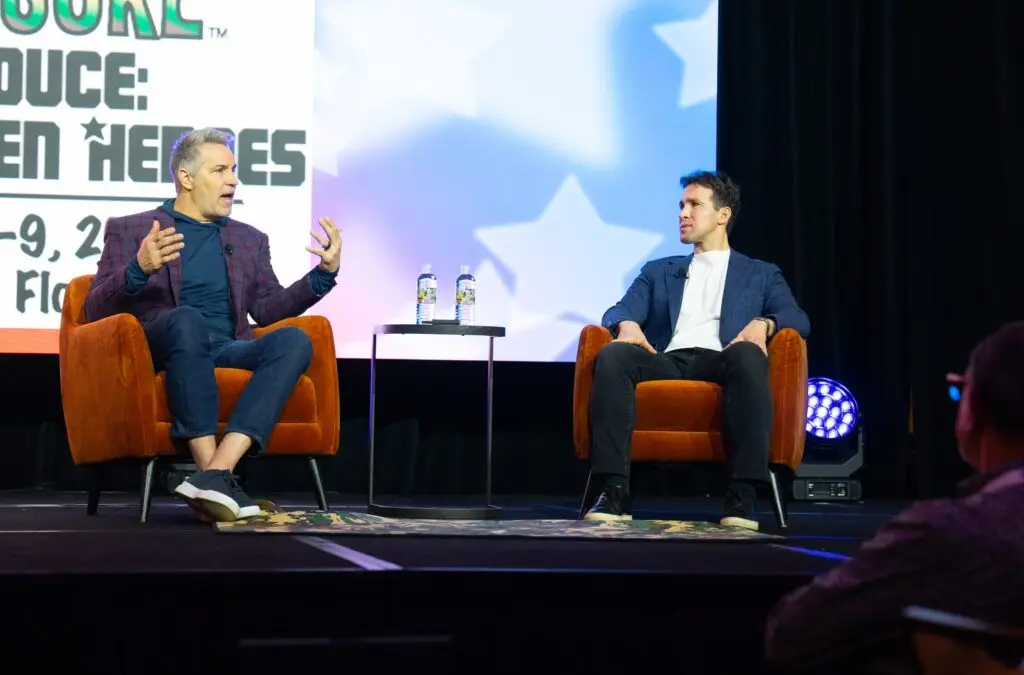

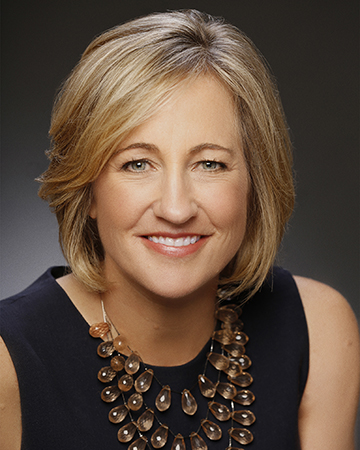
I recently interviewed former White House Press Secretary Dee Dee Myers on my podcast, Thirty Minute Mentors. Here is a transcript of our interview:
Adam: Our guest today is the first woman to serve as White House press secretary. Dee Dee Myers was the first White House press secretary in the Clinton administration and is the director of GO-Biz, the Governor’s Office of Business and Economic Development in the state of California. Dee Dee, thank you for joining us.
Dee Dee: So good to be with you, Adam. Thank you so much for having me.
Adam: You grew up right outside of Los Angeles in Valencia, home of Magic Mountain. You worked at Magic Mountain as a kid, not long after the park opened.
Dee Dee: Absolutely, I worked there. It was my first job as soon as I turned 16. Like many of my friends and other kids growing up in Santa Clarita and even the north part of the San Fernando Valley, I worked there. It was great in the fact there were like 3,000 people there between the ages of 16 and, say, 25, so it was a great place to meet other young kids and learn what it meant to show up to work on time and put up with a sometimes challenging public and do your job. And it was great, actually. Not always easy in 105-degree heat out there, but it was a great first job. That was before they had all the crazy roller coasters. They did have one, Colossus, which was kind of a big deal back in the day. A wooden roller coaster, nothing like the coasters that they have at that park and a lot of theme parks these days. Not my thing. I like to go slow.
Adam: I hear you. I was back there a couple of years ago. I loved Magic Mountain as a kid, but apparently it’s a lot more challenging when you get older. As a kid, I loved roller coasters. Now, keep me away.
Dee Dee: Yeah, yeah, a little dab’ll do you.
Adam: Can you take us back to those days, your early days? What early experiences and lessons shaped your worldview and shaped the trajectory of your success?
Dee Dee: So my dad was in the Navy. I was born in Rhode Island. We moved around a bit. Ended up in California. I very much consider myself a Californian. My dad, when he left the Navy, he went to work at Lockheed and worked there for most of his career. So, aerospace baby and kind of a Navy brat. So always with a lot of respect for the Navy and the aerospace industry that built Southern California, but also as a [unclear] young Democrat, I had a few fights with my dad about what U.S. defense policy should be and what our role in the world should be. And the good news is that we always stayed close, and we’ve come to agree on a lot more than we disagree on always. And then I had a family, and my mom, she had left college early to marry my dad, and then went back and got her degree, and then got a master’s degree and went to work and was quite successful at a lot of different things and really encouraged my sisters and me to chase our dreams. She had no regrets about the choices that she made, but she saw different paths for us. That was really super formative for all of us and for me in thinking that there was no limit to what I could dream. That gave me a lot of freedom, and my family supported me. I always thought the worst thing that could ever happen to me in my early years was to go home and live with my parents, which wasn’t such a bad thing. So I’m very grateful for the family I grew up in, the community that I grew up in. I’m still really close to my high school friends. We have a daily text chat. It centers a lot around the Los Angeles Dodgers. Adam, I know that’s painful for you. It’s just one of those things that we share all across our lives, so that was super formative in so many ways, and really gave me the security, right, the feeling of confidence that I could go out into the world because I had a place to come back to.
Adam: And that’s one of the most important things that a leader can do. In your case, you had the fortune of having great parents, but for anyone out there who’s in a leadership position, giving the people who you lead the confidence to pursue what they want to pursue in a way that they are most capable of pursuing it. That set you up to ultimately enjoy great career success. The job of a leader is to help the people who they lead get set up to be as successful as possible in whatever it is that they’re doing.
Dee Dee: Yeah, I totally agree with that 100%. I think it’s really important to give people the room to make mistakes and the permission to make mistakes. They’ll do a lot of things right. None of us does everything right, and so how do you give people the confidence to take some risks, to make bold decisions when they need to, to make decisions, period, and move forward with confidence that they’re not going to end up in the doghouse or get fired because things didn’t work out the way that they expected? And that’s something I got from my family, and it’s something I’ve always tried to recreate in my work environments because I believe in risk-taking. Thoughtful risk taking and people being able to pursue kind of their own path. And nothing makes me happier than when the people that I work with and for succeed, even when it means they leave, which sometimes is challenging. But they go on to bigger and better things, and I always encourage and support that. It’s really important for leaders to do.
Adam: I love that. And when you were White House press secretary, one of the key moments was the 1994 Northridge earthquake. And the mayor of Los Angeles at the time was Richard Riordan, who went on to become my favorite professor in business school. And one of the things he would tell us over and over and over again. “Only a mediocre person never makes a mistake.” The only people who don’t fail are people who are too afraid to try. We’re all going to make mistakes. That’s inevitable. What’s not inevitable is what happens after the mistake. How do you react? How do you respond? Do you acknowledge the mistake? Do you learn from the mistake? Is it a moment of growth, or do you pretend like the mistake never happened? How you respond to a mistake is a lot more important than the mistake itself.
Dee Dee: Absolutely, they are learning moments and teaching moments. They’re also inevitable, like you said. And anybody that’s doing something that’s interesting, creating something that didn’t exist before, or just making whatever endeavor you’re engaged in work better, do better, achieve more, you’re going to make mistakes. My favorite cliché is, the best decision you can make is the right decision, and the second-best decision you can make is the wrong decision, and the worst decision you can make is no decision. And leaders make decisions. That’s what they do. President Clinton used to say, “I get the 49-51 decisions, the ones that are really difficult, and the pros and cons line up really closely.” Everybody else gets to make the easier decisions, but to lead is to decide. And the more authority that you have, or the more power that you have, the harder the decisions become. Because people in other positions in your organization are going to make the easy decisions if you lead your organization well and don’t try to make every decision yourself. And so decisions have consequences also. And so, learning how to manage the consequences with clarity and with purpose is really essential.
Adam: What’s the toughest decision that you had to make, and what did you learn from that experience?
Dee Dee: That’s funny. There’s a moment that stands out in my young life that I learned so much from. I haven’t thought about this in a while, but when I was working on then-Governor Clinton’s campaign for president, and we had our press office staff, and we won, and then we entered the transition, and transition was really challenging because there’s so much uncertainty, and if you run a marathon, then somebody goes, “Okay, run 10 more miles, full speed.” So you go through this very difficult transition, and everybody’s trying to figure out not only “What’s my daily job in the press office? We need to kind of message the decisions that the president-elect is now making. But what’s going to happen to me?” And then as we got sort of through that, we were given, like, “Here are the people you can hire.” So you only have so many positions. And I had to go through and meet with each of my team from the campaign and tell them which ones were going to get a job in the White House and which ones weren’t. And that was really hard. These were people that I was close to that I had worked with. There just weren’t enough jobs in the White House press office for everybody that had been part of our organization. There were other jobs in the administration, but there weren’t jobs in the White House. And so I called every single person in. I was 31 years old. Told them why they weren’t getting a job, what we could do to help them find another job within the administration, and thanked them for everything that they’d done to get us there. And we weren’t going to leave them by the roadside. So for me, as a young leader, people, even when I gave them bad news, they were really grateful that I took the time to talk them through it and to commit to trying to help them find something else. But that I was just honest with them, and I didn’t know what else to do at that time. But I realized that even when you have bad news, giving it to people straight with compassion makes it so much better for them, and so that was just kind of an early hard decision. I decided who was going to get a job, but then I had to explain to everybody who didn’t get a job. Anyway, that was a very formative experience for me.
Adam: And it’s a similar lesson in that you can’t control the news, but you can control how you react to it. Do you hide under the covers, which is often the most tempting thing to do, or do you show up and do you show up fully present, honest, open, empathetic, doing whatever you can to help the people who need your help?
Dee Dee: Yeah, that was a formative experience for me in how to deliver bad news and make hard decisions about who was coming and who wasn’t for that particular set of jobs.
Adam: As a kid, you felt the freedom to pursue your passion. You were passionate about politics. You rose to the highest levels. You were the White House press secretary. What were the keys to rising in your career? What can anyone do to rise in their career?
Dee Dee: One of the things I liked about politics as a young person was, as somebody once said to me, it’s a sweat-equity business. You get out of it what you put into it. That’s probably true in a lot of businesses, but I mean, as a young person, I worked exclusively in politics, and I loved that because you could take on responsibility appropriately. There were things that needed to be done. You could sort of move into that space and do them if you were willing to maybe take some risks in terms of making decisions and just putting yourself out there. For me, that was a good fit because I liked that environment where, “Oh, let’s try this,” or, “This needs to be done,” or, “Why isn’t anybody looking at that?” And the more you took on, the more you were rewarded for it. And that was a big reason why it was just a good fit for my personality to be in that kind of environment where, again, risk-taking and initiative were rewarded. And I try really hard always to reward initiative when people come to me, not with a problem, with a solution. I reward that. Sure, if you got a problem, I’m happy to help you think it through. If you come to me with a solution, even if it’s not the right solution, I really appreciate that. And that’s kind of what I learned in those early days. And the leaders that I gravitated toward probably taught me that. Yeah, take a chance, propose a solution. I might not like it, it might not be right, but it might be right. And even if it’s not right, appreciate the effort and the thought and the initiative. And then I loved what I was doing. Campaigns are sort of all-consuming. I liked that. Again, it was a good fit for my personality. And then look, there’s always a little bit of luck sometimes involved in these things. But you put yourself in a position, I guess, to be lucky. When I went to work for Bill Clinton in the fall of 1991, nobody thought he was going to be president. But somehow I was attracted to his message, his energy, his kind of repositioning the Democratic Party for a new generation of leadership. So the place that most interested me was that campaign, and he won. So part of it was putting myself in a position to be lucky, but part of it was luck. I mean, there were a lot of candidates in that race, and only one of them won. And a lot of good people ended up on other campaigns and didn’t get to be White House press secretary because they weren’t in the right place at the right time. If Bill Clinton hadn’t won, I probably would have kept working on campaigns until I worked for somebody who won. And whether I would have ended up as White House press secretary, I don’t know. But that’s what I wanted to do, and pursuing it was a privilege and a joy for me.
Adam: You broke down the keys to your career success. Taking initiative, following your instincts, taking chances, having a clear goal, and going after it, luck. One of the other things you mentioned was being around great leaders and learning from them. Who are the best leaders who you have been around, and what have you learned from them?
Dee Dee: One of the first was Tom Bradley, the former mayor of Los Angeles. My first campaign, I worked for Walter Mondale’s presidential campaign in 1984. We lost 49 states, but we did win Minnesota and the District of Columbia for a total of 13 electoral votes. But that got me started, and I loved the campaign world. But I went to work then for a state senator in California, and then for the mayor of Los Angeles. And I was really pretty young, but he was great, and he was really good to me. He didn’t judge people by their age or their gender or the color of their skin. He’d seen all that. Didn’t think it was good. He’d been on the receiving end of a lot of racism throughout his career in the ’40s, ’50s, ’60s, early ’70s, before he became mayor. And he was really thoughtful. He was a good listener. He didn’t rush to judgment. He didn’t judge books by their cover. I just learned a lot from him, and he treated me with respect, and it meant the world to me. And so that was a big part of the lesson. And he was somebody that I really admired and had an incredible impact on my life. And over time, I just in thinking about that question, I’ve learned a lot from people that I have worked for. I’ve had a lot of jobs, but I’ve also learned a lot from good leaders that have worked for me, and that’s a really exciting thing to give people some responsibility and see them really take it and do things. A lot of these people have done things that I don’t think I’m very good at. I worked at Warner Bros.. I ran corporate communications and public affairs. And there’s a man that worked in my group named Barry, and still a great friend. He taught me so much about how to manage a process and the thoroughness with which he did it and the respect with which he treated the stakeholders and just moving the process along every single day. And I just learned from him every day, so that’s always really exciting too. And of course, my current boss, who is Governor Gavin Newsom, he’s fantastic. But it’ll sound too homer if I talk too much on the home team. Bill Clinton is in many ways the most important leader that I’ve ever worked for. I mean, he had an ability to really understand where the country was at a particular point in time and try to move the party and move the campaign in a particular direction. And then, as president, he obviously made some mistakes, but he left office with a 61% approval rating. It wasn’t quite as polarized a world as we’re in now. But in a pretty polarized world, people trusted that he was on their side, which is probably still the most important lesson for politicians. If people don’t think you’re on their side, they aren’t going to vote for you.
Adam: It’s an important lesson for politicians. It’s an important lesson for all leaders. How do you get people to trust that you are on their side?
Dee Dee: That is a great question, and particularly at a time when people increasingly don’t trust institutions. Trust in institutions continues to decline at pretty alarming rates. I mean, I think it’s as simple as it is in a relationship. You do what you say you’re going to do. That you’re transparent, you’re honest about your motives, about sometimes the obstacles to getting where you want to go. Bring them in and trust them to understand. But then do what you say you’re going to do. It’s hard in a country. We’re a very polarized country right now. We’re sort of a 50-50 country. That’s not going to change anytime soon. So, for any leader that wants to win people on both sides of that great divide, hopefully people will believe that you’re going to do what you say you’re going to do, even if they don’t want you to do it. Because not everybody’s going to approve of what you do, and not everyone’s going to vote for you. But if people can believe that you’re going to do what you say you’re going to do, and that you believe what you say, that’s the challenge, and you have to be willing to disappoint people too. That’s a really hard facet of leadership, because when you make decisions, especially hard decisions, inevitably somebody is disappointed or unhappy, or they have something to lose, and that just comes with the territory.
Adam: What do you believe are the key characteristics among the most successful leaders, and what can anyone do to become a better leader?
Dee Dee: You have to have a clear vision of what you’re trying to accomplish. Creating a sense of shared purpose is really important. It’s pretty fundamental, and then communicating what that purpose is, and what do people need to do to get there? How do you get there together? Having the sort of vision, and then the organizational skills to set the compass. Like, how are we going to get there? What are the steps? And then be able to communicate to people in a way that they’ll buy into that mission, feel like it’s important, and be willing to join the work, and hopefully, if you have good people on your team, you’ll do that work together.
Adam: You spoke about purpose. You spoke about the importance of communicating purpose, and the importance of communicating in general, which has been your area of expertise throughout your career. Something that I’ve heard from Fortune 500 CEOs who I’ve interviewed. There is no skill more important in today’s workplace, in tomorrow’s workplace, than the ability to persuade. What are your best tips on the topics of communication and persuasion? How can anyone become a more effective communicator? How can anyone effectively persuade?
Dee Dee: This is kind of a craft, so you can learn it. And the things that you’re not innately good at, you can get people to help you with. But really, be thoughtful about it. Make it a priority, first of all, because as you said, these leaders say that communicating is really one of the most important things that they have to do. So let that be reflected in how you spend your time. Prioritize it. Spend time on it. Spend time on, “What is it we’re trying to accomplish?” How do we want to talk about that? What are the words we use? What are the tools we use? What are the forums we use? And then do it. Does it mean you need to have written communication? Is it town halls with your employees? Is it going out to the various work sites or wherever? What is it that you need to do and then do it? Invest the time to do it. I mean, look, CEOs, leaders are busy people. But if you say communications is a priority, I want to see that on your calendar. I want to see that in the amount of time you spend and what you invest in the resources to do that. You don’t have a tiny communication shop if you’re telling me that internal and external communications is one of the most important things you can do. It’s not as important as manufacturing if you’re a manufacturing business, but it’s damn important, and it is a craft, which means you can learn it. You can get better at it. There’s a lot of information and expertise out there that can help you take advantage of it.
Adam: What are the keys to persuading others? What are your best tips on the topic of persuasion?
Dee Dee: You have to have something good to sell. In the communications business, we’re always like, when things go wrong, a lot of times we blame the communicators. Sometimes the dogs don’t like the dog food. I’m not in the business of selling dog food to the dogs that nobody likes. But when you have a good product or you have a challenging situation, the first thing you need to do is understand what it is you’re trying to sell, and understand what the benefits are and how it’s going to benefit the people that you’re marketing to, your audience. What’s in it for them? And be honest. Good communications is definitely built on, and foundationally is in honesty. It has to be true. And then you need to work hard on how you talk about that. I’ll give you just kind of an example of how you talk about it makes a big difference. I’m a big believer in electric vehicles. The future of our country. We need to transition into renewable energy. Governor Newsom and the state of California have been working really hard at that. One of the things, though, that hasn’t worked so well is talking about clean energy as a climate issue. I believe that it is, but it is an energy independence issue. We make a really good product, really good electric cars. They’re very fun to drive. There’s different messaging that appeals to people for whom maybe climate isn’t their first choice, and they don’t want to pay more money for a product that they don’t think benefits them. It turns out they care a lot about energy independence and national security, particularly in the wake of what’s happening in Russia and Ukraine and in the Middle East and in Iran. That’s a compelling argument. Now you’ve got my attention, right, as somebody who’s not a climate voter or a climate buyer? And so that’s just a good example of make sure your messaging is aligned with the audience that you’re trying to reach. It’s true that moving away from a fossil fuel economy that’s based on imports from parts of the world that aren’t very interested in supporting us is something that appeals to a lot of people. So let’s start with the benefits that people understand.
Adam: You mentioned the importance of not being in a business where you’re selling dog food that dogs don’t like, and in your current job, you’re selling the best state in America. You’re selling our home state, the state of California. You lead GO-Biz, the state of California’s lead agency for economic development, job creation, and business assistance. And a big part of your job is persuading companies to invest and expand in California. What should businesses and leaders weigh most when deciding where to invest and where to expand?
Dee Dee: Yeah, that’s a great question. And first of all, California is a great state. We have incredible assets here that are foundational to good business. We have the best higher education system in the world between the UCs and our private universities. We have a consumer base of 40 million people. We have an incredible, obviously, geography, both in terms of access to the rest of the world through our ports, but also through our incredible natural resources and our variety of locations, and we have this incredible creative history. Like we have a culture of creativity that’s been with us since the Gold Rush, and people were coming across the Great Divide into the Oregon Pass and turning left to come to a place that would welcome them and their ambition and their ideas. So that’s a great place for companies to do business. And then we have the incredible ecosystem of R&D and new technologies, and manufacturing and agriculture. We have an incredibly diverse economy. We dominate in almost every sector, from large to small. So people who want to come here, you need a great workforce. You need an educated workforce. Check. You need access to supply chains. Check. You need to be able to export your products or import the world’s best talent. Check, check. But we’re an economy that runs on small businesses. 99% of our actual businesses are small businesses, and we want to support those businesses too. We want to make sure that they have access to technical assistance, or to capital, or to markets, or to whatever trainings we provide. Trainings on things like AI, how to integrate AI into their businesses in a way that will make them more efficient and more profitable. So we try to support them, big businesses, small businesses. We help them find sites. We help them connect to power. We help them navigate regulation. And we are here for any business that wants to come. And we welcome everybody. Happy to have a conversation and see what we can do to help you site, invest, and grow here.
Adam: What do you believe businesses and leaders should weigh most when deciding where to invest and where to expand?
Dee Dee: Depends on their business. For many, it’s, “Do I have the workforce that I need to make my business successful? Do I have access to the resources, the supply chains? Is there a place that’s suitable for my company? Am I in a cluster, if that’s important, with other businesses where I can get access to buyers and sellers and innovators that are going to help me grow? Is the state supportive? Is the local culture supportive?” So all those things are really important. I think sometimes California gets a bad rap. It’s a little like being a Dodger fan. People like to hate on us in California because we are so big and we have so much going on. And so there’s been a lot of hate directed our way, and it’s become a little politicized. And so we are pushing back. We’ve launched a new campaign called Every Day in CA. You can find it EverydayInCA.com out in the world, and it just basically reminds people that we have more manufacturing, we have more people in higher education, and more venture capital than all the other states combined comes into California. So, if you want to fund a new business, if you want to tap into that ecosystem of innovation, if you want R&D or new technology coming out of that research, there’s no place better. So we just thought it was a good time to remind people of all the assets that people have and things that happen here that don’t happen anyplace else. So that’s why we called it “Just Another Day in CA.” Might be extraordinary someplace else. It’s just another day in CA because so many things go on here all the time.
Adam: Indeed, I want to bring up something really important, which is we need to delineate between hating on the state of California and hating on the Dodgers.
Dee Dee: Yes, yes.
Adam: It’s perfectly acceptable to hate on the Dodgers, but California is a great state.
Dee Dee: Come on.
Adam: It’s the best state.
Dee Dee: Yes. You know, Adam, you and I talked before this broadcast. we’re both big baseball fans. I respect your fandom of the Los Angeles Angels of Anaheim or whatever. No shade on the Angels. But they’re not the Dodgers. But nonetheless, we agree to disagree on that and agree on California. It’s a great place to do business. Everything’s not perfect, right? It can be challenging. It costs more to live here because a lot of people want to live here. It’s a little bit too hard to build here. We’re trying to take on some of those challenges. Sometimes it’s more challenging than it needs to be to site a new facility, a new plant, or to build or to connect to energy. We are definitely working every day to take on those challenges. We understand them, but we also believe wholeheartedly that the advantages of being here and the benefits of being here far outweigh those challenges, and that anybody can come here and start a business and be successful and have a really great quality of life.
Adam: One of the challenges of being an Angel fan is that you’re forced to sell dog food that dogs don’t like. So I’m not going to even try.
Dee Dee: Yeah, yeah, yeah.
Adam: But I do want to ask you about an experience in your career that I believe would be of interest to many people listening to this conversation. You were involved in developing one of the greatest television shows of all time, The West Wing, and you worked on the show for the show’s first six seasons, definitely the best six seasons. One of the main characters, C.J. Cregg, was modeled after you. What did you learn from your time on The West Wing, and what moments from that experience are most impactful to you today?
Dee Dee: Yeah, that was a wonderful experience, and it was a privilege to work on that show. I had met Aaron Sorkin when he wrote the script for the movie The American President, starring Michael Douglas, and he and Rob Reiner, who directed that film, came to Washington for a couple weeks and hung around the Clinton team. And so a few years later, he called me and said he’d written the pilot. Would I take a look at it? And I was then living back in Los Angeles, and so I did. And one thing led to another, and I became a consultant on the show. And so I’d never worked on a TV show, and I was like, in my previous job, if you make stuff up, you can go to jail. In this job, you could sit around all day and make stuff up with the writers. It was a lot of fun, but I learned a lot about what working on TV shows is like. It’s a very low-stakes thing for me, right? I just got to kind of be a fly on the wall all the time, which was so much fun. The cast was great. The writers were great. And we’d come into a room, and Aaron would say something like, “I want to get all of our characters in the White House at midnight in tuxedos,” because he had an idea for a scene, and we go, “Okay, so this could happen, that could happen. It could be a state dinner. It could be this, could be that, and then this happens, and they end up, they’re in the Situation Room at midnight in their tuxedos.” And so he started out with the place he wanted to get to. One day he came in and said, Allison Janney, who played C.J., the press secretary, she’s still such a fantastic actress. But he said, “She’s such a good physical comedian. I want to do a scene where she has a root canal.” He goes, “What would happen if C.J. had a root canal?” Well, she wouldn’t be able to give the briefing because she’d have cotton in her mouth and blah, blah, blah. And then you just kind of work back from there, and it was just a lot of fun to work on and to take things that had happened to me and make them happen to other characters. Usually, the ending was better. The experiences that I had got to end a lot better for C.J. or whoever. And so it was really kind of all based on Aaron Sorkin’s genius, and then a lot of other people. Obviously, a television show like that’s a very collaborative process, and there were many, many people who took Aaron’s vision and helped him turn it into an incredible and resilient show. The show’s still relevant.
Adam: You mentioned that one of the things you really liked about working on the show was going from this high-stakes environment to a low-stakes environment, and you were in the pressure cooker. You were in a high-pressure, high-stakes environment. Every word you said was microanalyzed. It had the ability to move markets, move policy. What are the keys to performing in a high-stakes, high-pressure environment? What are the keys to performing in the highest-stakes, highest-pressure moments?
Dee Dee: Obviously, being prepared is critical because you could predict about 80% of the questions, maybe more, on any given day. You just knew what was in the news cycle, and you were talking to reporters on the phone, or they were coming into your office before your briefing. But there were always some that you didn’t expect or didn’t know were coming, and so you learn to be pretty careful about that. Briefings are a little bit of kabuki theater. A lot of times, it’s like everybody knows what the question is going to be and what the answer is going to be, and sometimes that’s not where the real business gets done between reporters and White House press staff. It’s a very different environment now. It’s not really a press office. It’s kind of a Ministry of Propaganda. I know that’s a political opinion, but that’s mine. So I do think having a good team, being as prepared as you can, being careful in what you say, but not so careful that you sound like a robot. Having relationships with reporters, being able to engage with them, having credibility, never saying things that aren’t true, because the real coin of the realm is your credibility. If people think that they can’t believe what you say, you’re completely ineffective. And treating people that you work with, including the press, with respect is really important. I think, again, a lot of that’s changed in recent years, but having an effective press office that serves the American people by providing reliable, thorough information, as opposed to just political opinions and vitriol, is still super important. So I made a lot of mistakes in that job. I learned a lot from it. Changed my life. I’m forever grateful to President Clinton for giving me that opportunity. It’s not an easy job, but it was super rewarding, and it was just a privilege to serve President Clinton and the American people at that level, at that time. And I made some of the best friends of my life. It’s a little bit of that foxhole mentality. In fact, just a couple months ago, President Clinton had a birthday party in New York, and a huge number of the White House and campaign team came together. And after all these years, we’re still a really tight group.
Adam: Dee Dee, what you’re sharing speaks a lot to the importance of relationships as a press secretary, building relationships with reporters, building and maintaining great relationships with your staff. The relationship that you were able to cultivate with Bill Clinton helped you get into that seat and has allowed you to remain friends with him all these years later. What are the keys to building winning relationships?
Dee Dee: It’s sort of the same thing on every level, right? It’s showing up, understanding the mutual nature of the relationship, whatever that is, being willing to hold up your end of the bargain, do what you say you’re going to do, be honest, be reliable. A shared mission really helps in a professional relationship like that, which becomes personal. On a campaign, you’re together all the time, every single day. But it’s built on that first thing that you’re in this thing together, and that you believe in it together. Being on a sports team, which we talked about a little bit. Being on a political campaign, working in an environment where a lot of people are shooting at you, other people are rooting for you. All those things just create an environment. But then, when you’re in that environment where relationships are quicker to build, then all those same things are important. You show up, you do what you say you’re going to do, you support other people, you are reliable, you’re honest, and over time, the consistency of that is what relationships are built on. That’s true in a workplace. It’s true in personal relationships. It’s true in school. There are no shortcuts to those things. They take time and, you know, empathy because not everybody’s their best self on every single day. Or people have challenges that you might not understand or know about, and so a little grace goes a long way.
Adam: Dee Dee, what can anyone listening to this conversation do to become more successful personally and professionally?
Dee Dee: Do the hard work. That’s another thing I learned from President Clinton, that it’s all about the work. When we won, I thought kind of like that was it. We won, and then I soon realized, and Bill Clinton always knew, that that just got us in the door to start the work. And it’s just about the work every day, sort of understanding what you want to accomplish, showing up, and doing the work. It’s mostly not glamorous, right? It can be hard. It takes time. It takes investment. It takes commitment. But understanding why you’re there, wanting to be there for those reasons, and then every day grinding it out, doing the work. And when you make a mistake, you try to figure out, how do you move forward? How do you fix it or move forward in spite of it? And just keep at it. Because I do think success is kind of like a craft, and nobody has a straight line. There’s no one straight trajectory to success. People have successes, they have setbacks, they have paths that they didn’t expect, and that’s okay. Everybody’s story is the same in that regard. And the other thing is, don’t do what other people expect you to do. Do what you want to do. I’ve seen a lot of people who have some set of expectations of where they’re supposed to be or what they’re supposed to do after. What do you do after you work at the White House? There was a lot of consternation around those kinds of questions, like, “How do I exceed it?” Don’t try to exceed it. Try to find something that you love the way you loved what got you there. What else do you want to do in your life or career? So don’t fall victim to expectations. Decide what it is you want to do. How do you want to spend your time? What do you care about? What do you want to accomplish? And then when you work back from that, that’s a huge factor in success because when you do things you like and you care about and think matter, It’s much easier to be successful because you’re going to like what you do. You’re going to feel like it’s important, and you’re going to want to invest in it.
Adam: Dee Dee, thank you for all the great advice, and thank you for being part of Thirty Minute Mentors.
Dee Dee: Thank you, Adam. It’s been a pleasure being with you.