

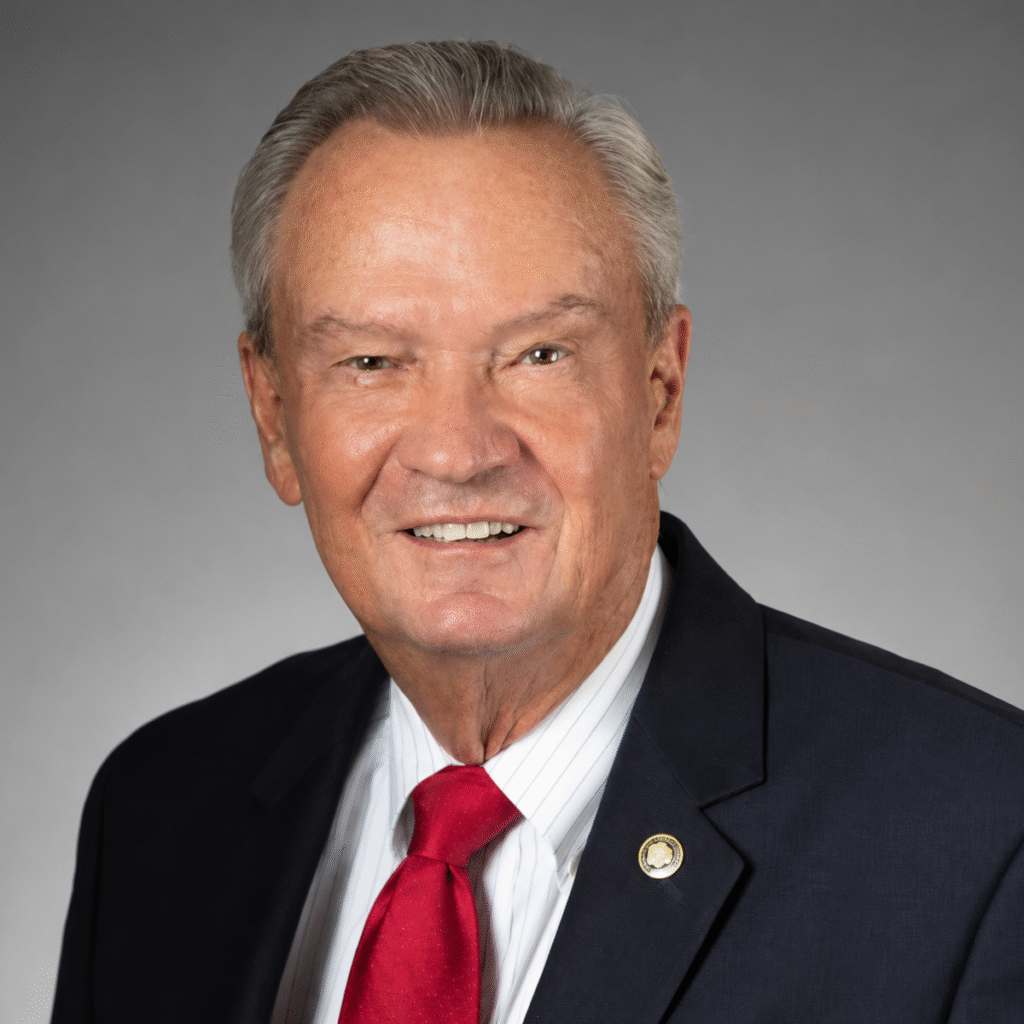
I recently interviewed Senator John Breaux on my podcast, Thirty Minute Mentors. Here is a transcript of our interview:
Adam: Our guest today was one of the top bipartisan dealmakers in the United States Senate. Senator John Breaux spent more than three decades serving in Congress, including three terms in the United States Senate. Senator Breaux, thank you for joining us.
Senator Breaux: Adam, glad to be with you. Look forward to it.
Adam: You grew up in Crowley, Louisiana, a small city right in the heart of Cajun country.
Senator Breaux: Population 12,000. Pretty small little country town.
Adam: A ways away from Washington, D.C., and you stayed in state to go to college at what is now known as Louisiana Lafayette, and you stayed in state to go to law school at LSU. Can you take listeners back to your early days? What early experiences and lessons shaped your worldview and shaped the trajectory of your success?
Senator Breaux: Well, Adam, nobody in my family was really involved in politics. My mom and dad were not. Probably thought that politics was kind of an unholy profession and wouldn’t recommend it for their only son to get into, but I was always trying to run for office in high school and student body president and all those types of things, class president. So I was always interested and involved in politics. It probably was in my bones, but I don’t know where it came from.
In college, I started off trying to be an engineer, but my professors told me that I would never be an engineer because I kept trying to make two plus two equal five or six. They suggested maybe a career in government, so I switched my major and majored in political science and history. And then from there, I was always interested in it. I went to work for the former governor of Louisiana, Edwin Edwards, at one time, basically being a driver. And when he ran for governor, I ran for Congress to replace him.
And when I announced, I was 27 years old. But my slogan in my campaign was “Experience makes the difference,” and everybody I was running against, about 10 candidates, were old enough to be my father or my grandfather. But my slogan was “Experience makes the difference,” and really it was true because I was the only one that had ever worked in a congressional office in the district. I was the only one who had ever worked in a congressional office as a legislative assistant in Washington. So my slogan, “Experience makes the difference,” really was correct, as opposed to others who had not gotten that type of experience. And so I had a runoff, and I won in the runoff and stayed in the House for seven terms before going to the Senate.
Adam: I love that. Experience makes the difference, and it’s never too early or too late to get the requisite experience. You started at an extremely young age. You were a driver for the governor. Doesn’t matter where you get started. All that matters is that you do get started.
Senator Breaux: Absolutely. I mean, for all those young people who maybe, or anybody who may be thinking about running for public office, I think becoming involved at some level is extremely important. Either working for a candidate in a campaign or working in an office of a local politician, you gain experience that you’re not going to get from reading a book. This is actual, in-person, on-the-ground experience working in an office or working for a candidate, and you can take that experience. And if you want to be a candidate, then use it to run, hopefully successfully, for an office.
And I think starting at a local office and working your way up is the right way to do it. Although I was fortunate, I got dumped into a congressional race as my first run for public office, and luckily the stars lined up correctly, and I was elected to Congress when I was 28 years old.
Adam: Going back to that first race, other than having a great slogan and a slogan that you were able to back up, what made the difference? What were you able to do that allowed you to persuade the voters to elect you?
Senator Breaux: Well, I had the help of the incoming governor, and that was very important. But also the fact that I had worked in the congressional office. In the state, I knew the local politicos, the local elected officials, the local county or parish officials in Louisiana, so I could go to them as a candidate because I knew them already. They knew that I was interested in what they did and interested in helping them because I had done that for a couple of years, and so I had a base to start from that was across the district.
And my district was kind of unique. It had two cities, Lake Charles and Lafayette, and I was from right in the middle, so I was able to go to both cities and say, “Don’t vote for the guy from the other town. Vote for the guy from the middle.” And I think that helped because I could get support from both of the two principal cities, plus knowing the local officials was very, very important to any success that we had in that first race.
Adam: What a great early lesson on the power of relationships. Those relationships with local officials who were the kingmakers in helping you get elected, essential, and the power of relationships, central to your success throughout your career.
Senator Breaux: And you can’t get that, Adam, from a book. I majored in political science, but that really didn’t help me in my first election. I mean, knowing the people and trying to bring the people together behind my candidacy was extremely important. I cannot overemphasize the personal contacts in a race, particularly on a relatively local level. If you’re running for president, that’s not the same. But while running even statewide, it’s more difficult. But running in a congressional race, or a local Senate, or House of Representatives race, those personal contacts are incredibly important.
Adam: What are the keys to cultivating those relationships?
Senator Breaux: Oh, just getting out and being among the people. I mean, I can’t tell you how many barbecues in Louisiana that I went to, and local dinners and suppers with local officials. I spent a lot of time doing that, and you get to know the people. They get to know you, and you can emphasize the fact that you’re one of them, that you’re not an outsider, that you’re a local person, and you have strong feelings for what they’re interested in. And that personal relationship ends up equating to votes at election time.
Adam: And it’s a great lesson, not only if you’re running for office, but as a leader at any level: there’s no substitute for being present. In politics, if someone shakes your hand, if someone sees you in person, there’s no substitute for that. And as a leader, there is no substitute for being there face to face, being in the same room, not only being present physically, but 100% being present, not being distracted, but truly being there. You can’t replace that.
Senator Breaux: Now, you know, Adam, now you talk about members that come back to their congressional districts for the August work period. It’s a recess, but it really should be a work period that allows members to come back to their congressional districts and meet with the people. Now it’s interesting that many people now are canceling their public meetings back in their congressional districts, the so-called town hall meetings, because they fear they may get a lot of criticism for a particular vote, and so are people opposing them or harassing them or asking them tough questions at these town halls.
So some members make the mistake, I think, in not doing them at all and just isolating themselves and saying, “You’re going to ask me tough questions. I’m not going to have the public meeting.” And I think that’s a huge mistake. I think it’s more important to go to the public meeting, have the town hall, and face people who disagree with you. That’s part of a democracy. You need to be able to explain yourself, explain your vote. I would argue that if you can give people a good explanation of why you voted the way you did, you’ll gain some of their support back, and I think that’s a good way to do it. But not having the meeting is not the answer.
Adam: I love that. Leaders have to make difficult decisions, and whether you’re a congressman or a senator or leading in any type of organization, you’re going to be faced with decisions, and you have to make them.
Senator Breaux: You can’t be afraid of having somebody question your decision. You ought to look at it as an opportunity to give them a good explanation to encourage their future support.
Adam: One part of it is making the decision. To your point, not being afraid to pull the trigger. But the other part of it is, once you make the decision, communicating your decision because you can make a decision, and your decision is going to be popular with one group, but it’s invariably going to be unpopular with another group, and you’re never going to please everyone with every decision. But how are you able to win people over? By being present, by being communicative, by not being bashful, by being open, by being transparent, by getting out there.
Senator Breaux: I remember one time, it was a senator who will remain anonymous, but had a senator who was struggling on a big vote, so he voted yes, and then he changed his vote to no, and then he came back and changed his vote to present. So he voted all three different ways. He didn’t know what he wanted to do, so he ended up voting yes, then he voted no, then he voted present. That’s not the answer. I mean, you’ve got to take a position and be able to defend it. If you can’t do that, maybe you should suggest being in a different vocation.
Adam: What was your decision-making process? How did you get to a place where you felt like you made the right decision?
Senator Breaux: There’s a bunch of ways members can decide. Number one, people write their members of Congress, send them email messages, “Please vote yes on a particular issue.” They used to do petitions. I used to say, well, you could walk around a Walmart shopping center or in a parking lot and get people to sign just about anything just to get rid of you. And so I think these big petitions with a lot of signatories are less important now.
But when members call personally to the office, when they come to Washington to meet with their members, that’s a big step in convincing them to vote one way or the other. You can take polls and see how people feel on a particular issue, but you’re supposed to take the information you get in hearings in Washington, etc., to be able to have more information than the people back home.
So just taking a poll is indicative of how people feel, but it’s not necessarily the right answer because you have additional information that you’ve gathered from the debate process, from the public hearings that have occurred, to give you the information to make the right decision. Now, if you vote against the polls showing that people want you to vote yes and you vote no, you better be able to defend it. You have to come up and say why you voted no, and hopefully convince enough people that that was the right decision.
Adam: What I’m hearing from you is, number one, the importance of gathering a lot of information. Number two, the importance of gathering really good information. And number three, recognizing that you’re going to have a lot more information as the decision maker than the people who are impacted by your decision. So once you make your decision, you need to be sensitive to that fact, and you need to communicate why you made your decision. Because at the end of the day, the constituents who you represent are not necessarily going to understand why you made your decision because they’re not privy to the same information that you’re privy to.
Senator Breaux: That’s an interesting difference between the House and the Senate. The Senate, all the members have a six-year term. So, in theory, in the first year of your term, you vote a way that your state may not agree with. Well, you’ve got five years left to be able to overcome that opposition. Whereas if you’re in the House of Representatives, you’re running for reelection every 24 months, every two years. So if you have a bad vote the first year, people will probably remember it in the second year.
So you have to be prepared to defend your vote if it’s contrary to the feelings of your congressional district, and then that’s the challenge of being a good political figure. If you can do that, if you can convince the people who thought you should vote yes when you voted no that no was the right vote, then you have succeeded in being a good elected official because you were able to convince them that you cast the right vote. If you can’t, you’re going to be called a former member of Congress. So you have to be able to defend your vote, regardless, even if it’s contrary to the feeling of the majority of the people in the district. That’s a tough position to take. So you have to be able to defend it.
Adam: Is there a vote that stands out to you that you took that was highly unpopular, but you voted that way because you felt like it was the right thing to do?
Senator Breaux: Yeah, I voted against Justice Bork for Supreme Court, and I got editorial after editorial back home saying I should have voted for him. Reagan was for him, etc. So I got a lot of flak for that vote. I still got reelected the next time, but it wasn’t very pleasant during that period of people criticizing me for that particular vote. I’m sure there were a bunch of others. That one sort of stands out in my mind.
Adam: And you were reelected and reelected and reelected. What were the keys to getting reelected every time you were on the ballot? What were the keys to your sustained success?
Senator Breaux: I could pull up a political science book and try and figure that out. But I think one key thing is people have to like you. I mean, that’s a simple thing. But if you’re a politician and they don’t really like you, you’ve got problems. If people think you’re a good person, they relate to you. They relate to your family, your children, your wife, your husband. It comes down to likability.
I think that’s very important. I mean, people liked Ronald Reagan, for instance, even though they didn’t agree with him a lot. He was kind of a likable person. Bill Clinton was a likable person, and that likability came across. I think if people like you, they’ll go a long ways to forgiving some of the votes they may disagree with you on. So I think likability is a key factor that they probably don’t teach you in political science schools.
Adam: Can someone become more likable, and if so, how?
Senator Breaux: That’s tough. I think you’re likable when you’re born, or you’re not. I mean, people have a curmudgeon type of attitude, and we all know people like that who are always down. It’s like that little Li’l Abner guy with a cloud over his head all the time, walking around being unhappy with everything. If you’re like that, it’s hard to change. So, I mean, your personality has a lot to do with likability. If you have a likable personality, you’re in good shape. But if you don’t, it’s hard to change.
Adam: Well, one thing you can change, to your point, is your attitude. And if you show up with a negative attitude, you’re not going to be very likable. If you show up with a positive attitude, there’s a good chance people are going to like you. They’re going to want to be around you. We want to be around positive people, and that you can control.
Senator Breaux: Or not show up at all. That’s the other.
Adam: If you don’t show up at all, you’ve got a real problem.
Senator Breaux: But if you do show up, like you’re pointing out, with a very negative attitude, I mean, my God, turning people off, not turning them on. And the idea is, the best thing you can do with your enemy is make him your friend. I mean, I was always saying, look, I understand where people are coming from.
Back when I was in the House, Bella Abzug, a very liberal congresswoman from New York, Brooklyn area, the Bronx, was always voting different from me, and we’re both Democrats. She was very liberal, and I was more conservative. And so I said that to Bella. I said, “Bella, I don’t understand where you’re coming from.” She said, “Look, in my district, people think I’m too conservative.” So she was representing her people. Then I understood that.
I tried to understand why people voted the way they did. What motivated them? What was the reason they voted yes when I was voting no, or vice versa? And to try and understand people goes a long ways to turning a potential enemy or foe into a friend and supporter.
Adam: And you were an expert at that. You were one of the most successful bipartisan dealmakers over the course of your time in the United States Senate. What were the keys to bringing people together, being right in the center, being able to pull Republicans into the Democratic side, being able to pull Democrats into the Republican side, being able to get deals done?
Senator Breaux: I always felt that there was a middle out there that most people felt that they fit into, neither far left nor far right. And what I would try to do is to wait till one side had their position, and the other side had their position, and that necessarily created a middle between the two. I always said that neither party has a monopoly on good ideas. Both parties have good ideas. The answer was to take the best ideas from both sides and try to blend them together and come up with a middle approach that both sides could eventually support.
And that’s why we did the Chafee-Breaux caucus, and then it became the Breaux-Olympia Snowe caucus, and we had about 10 members, five Democrats and five Republicans, sort of centrist people. We called it the Centrist Coalition that agreed with that type of an approach, and I think that became very effective.
I think we need actually more of that. The middle, I think, in Congress is shrinking, as more people on the far left or the far right, members today are fearful not of a general election as much as they are being opposed in their own parties. Republicans being opposed by someone further to the right, and Democrats being opposed by someone further to the left. And so the middle becomes increasingly smaller and smaller with that type of philosophy.
Adam: And the key skill to be able to bring people to the middle, if they’re on the left or on the right, is the ability to persuade. What are your best tips on the topic of persuasion? How can anyone be more effective at persuading others?
Senator Breaux: If they don’t talk to each other, they can’t persuade each other. First of all, you’ve got to talk to each other. You’ve got to cross the aisle and sit down with someone from the other side and share your views. And that’s true for both sides. We don’t do that. There’s almost an invisible wall down the middle of the Senate and the House where people don’t spend enough time working together, talking together. They don’t travel together as much as they used to.
We used to always say that if you had dinner with someone on a Friday night, it’s pretty difficult to stab them in the back on Monday morning because you got to know the person, you got to know their family, got to share some of the things that we both are fighting for, but just have a different approach. But if you don’t talk to each other, you’re never going to find agreement on anything.
So first of all, making that first step across the aisle to meet with people on the other side is critically important. You’ve got to understand what motivates them. You’ve got to understand where they’re coming from, what their background is, why they’re taking these liberal positions or these conservative positions. Was that how they were raised? Is that their district they’re representing? And you’ve got to understand the person and why they are like they are. Once you get past that point, then you can look for ways to compromise and reach agreement between the two of you.
And I think that personal relationships are just incredibly important. Getting to know each other is the first step towards agreement. Back when Russell Long, my predecessor, was in the Senate, they used to have Tuesday caucus lunches in the Senate, and they used to have them together. Democrats and Republicans used to sit in the same room and talk about issues.
Today, on the same floor at the same time, you have the Republican caucus in one room talking about how bad the Democrats are, and the Democrats in another room having lunch talking about how bad the Republicans are. So let’s try and put them together, put them in the same room, and make them talk to each other in the same room at the same time. I think that would be a real step towards opening the doors. You’re going to leave some of them off the train. Some of the far right and far left won’t even go to the lunch. But the majority, I think, in the middle can do something like that and come up with some real positive results.
Adam: Do you have an example of a person who you found to be particularly difficult to deal with, someone who maybe you didn’t like at all on a personal level, who you were ultimately able to deal with, able to build a personal relationship with, able to do really good things with?
Senator Breaux: Oh boy, I don’t know. I think we had, I mean, the caucus we had was just great. Joe Lieberman on my side, Olympia Snowe, Susan Collins on the other side. There was a whole group of people that actually worked together, and there were some that didn’t want to have any part of it.
The leaderships in the Senate on both sides tend to discourage that type of middle ground because it breaks up the caucus. Their job as a leader is to keep the caucus together, and when you see one member of your caucus talking with the other side, it weakens your caucus’s strength. At least they think so, and that’s true for both sides. They want to keep their members together and don’t like those who try to work things out in the middle so much.
And we had problems with the leadership because they really didn’t want us to do that type of across-the-aisle negotiations. They thought they wanted to keep their caucuses together and win because they had the majority. And I think that’s important. So we had more problems with leadership than anybody else.
If you have someone who can reach across the line, he or she becomes an effective negotiator, particularly when you have a Senate that is 50-50 or 51-49, very, very close numbers, and the House as well. And when you pick up five members from the other side as a Democrat in the House, you have a majority. So if you have the ability to show the leadership that you have five members from the other side willing to join you, you become an effective negotiator. You control the balance of power.
The same as in the Senate. I was in the Senate at one time when it was 50-50, and my partner now in business, Trent Lott, who was a Republican leader, used to always accuse me of meandering over to the Republican side and picking up an Olympia Snowe, or Jim Jeffords, or Susan Collins, and bringing them over to my side, and all of a sudden my side had the majority. So you are an effective negotiator when you can show the leadership that you have a number of votes from the other side that can actually create a majority. Then you are a super negotiator.
Adam: Who are the best leaders you’ve been around? You mentioned Trent Lott, your close friend, former Senate Majority Leader. You earlier mentioned Ronald Reagan, who you clashed with on a big vote. You mentioned Bill Clinton. Who are the best leaders who you’ve been around, and what have you learned from them?
Senator Breaux: I think George Mitchell and Bob Dole were two effective leaders when they were in the leadership. Both of them were very dedicated to the process in the Senate. And then after that, two very effective leaders were Tom Daschle and Trent Lott, because they were in a 50-50 Senate. That could have been chaos, but they were able to make it work effectively.
They talked to each other. Sometimes leaders don’t talk to each other at all for weeks and months. They talked almost every day. A lot of private conversations between Daschle and Lott enabled the Senate to be a functional body in a 50-50 caucus, which could have spelled chaos and doomsday if they weren’t able to do the talking that they did. So I think they were extremely effective.
Adam: Communication, an essential quality among the very best leaders. What do you believe are the keys to effective leadership, and what can anyone do to become a better leader?
Senator Breaux: Bill Clinton used to invite the Republicans over to the White House to meet with him on a regular basis, even when they were, Newt Gingrich and them, trying to impeach him. That was very disarming to them. I’m criticizing the heck out of you on Monday, and then I get an invitation to come over for cocktails and dinner on Tuesday. It just upset them to no end because here was Clinton trying to expand his base and ended up getting a balanced budget for several years, something nobody’s ever been able to do.
He did that kind of stuff because he was able to reach out, had a friendly personality, was willing to talk and meet with anybody, anytime, any place, and that is the success in this business.
Adam: Great leaders are open-minded, adaptive, flexible, are focused on getting the best results, and are willing to work with whoever they possibly can to drive the best outcome possible.
Senator Breaux: Yeah, you see business leaders today that don’t have good relationships, for instance, with their board of directors. And if they don’t have relationships with their board of directors, they’re in trouble. You’ve seen companies where the board is opposing the CEO and the chairman because he hasn’t communicated enough with the board.
And so the successful companies have a relationship between the board and the CEO and the chairman, which is based on an understanding and appreciation of each’s responsibilities. And that’s the same in politics or in business or in life in general.
Adam: And you bring up another really important topic, which is alignment. As a leader, you need to create alignment up and down your organization, alignment between you and all of your stakeholders.
Senator Breaux: That’s true. I mean, I know a number of offices on the Hill that the elected official did not have good relations with their own staff, and they didn’t feel like they were brought into the process. They had the member way off to the side, and they were working for the member, but the member never communicated with them.
And you see some of these offices where they have intensive turnovers on a regular basis. People are fired and moved on or quit because they didn’t have a good relationship at the top, and the top was not understanding of what the responsibilities of the people below them were and didn’t appreciate them. And I think the most successful offices are the ones that had good relationships from the top to the bottom, from the senator or the House member all the way down to the receptionist in the outer office. Then you have teamwork, and if you don’t have teamwork, you’ve got problems.
Adam: You’ve enjoyed an enormous amount of success over the course of your career. What was the biggest failure that you experienced, and what did you learn from it?
Senator Breaux: Some of the big successes were in healthcare and environmental matters, getting programs that helped wetlands in Louisiana restored, Medicare Part D in healthcare. I guess the things that would be failures are not being able to do more in those areas. I’d have liked to have done more in the healthcare area than we were able to do.
Although Medicare Part D was a big success, we could have done more in the general area of healthcare than we were able to do. Another big failure was doing something on Social Security. I chaired a Social Security Reform Commission and a Medicare Reform Commission, which spent a lot of time working on how to reform both of those entitlement programs. But the result was not successful. We still couldn’t get enough people to support our recommendations because they were tough. A gradual increase to age, a limitation for Social Security, calling for people to contribute more at the top on Medicare. Those were failures that we were not able to accomplish. But I think that someday Congress will come to a realization that that has to be done.
Adam: What did you learn from those failures?
Senator Breaux: I guess I learned you’ve just got to keep working at it. I mean, I thought we put a lot of work in there, but sometimes you just have to recognize that the numbers just aren’t there this time. I mean, sort of like what they’re facing with John Thune in the Senate. The president keeps telling him to do away with the filibuster and pass the so-called SAVE election legislation, and Thune keeps telling him, “We don’t have the votes.” And you’ve got to recognize sometimes you don’t have the votes, but you don’t give up. You keep trying. But sometimes the votes just aren’t there, like they were not for me on Social Security and Medicare reform.
Adam: You went into politics because, as a kid, you realized you weren’t an expert at math. But you don’t need to be an expert at math to realize when the numbers are there and when the numbers aren’t there.
Senator Breaux: Yeah, yeah. Two plus two always still equals four.
Adam: Senator Breaux, what can anyone listening to this conversation do to become more successful personally and professionally?
Senator Breaux: I’ll be optimistic. I think, number one, this is a great country. It can be even greater. We’ve got a lot of problems, but we’ve had a lot of successes. It’s a wonderful place to live and to grow up.
And I would encourage young people or anyone that has any interest in how the government is being run to get involved. I mean, just don’t complain, but get involved, either locally or run for office or support a candidate who you think might be able to accomplish what you would like to see done. But just don’t sit on the sideline and complain. That’s not the answer. Getting involved is the answer. So I would encourage people to do more of that.
Adam: Getting involved, stepping up. It starts with you. You have ownership. You have control of your life. There are things that we can’t control, but there are plenty of things that we can control. We can control our attitude. We can control our mindset. We can control how we show up and whether we show up.
Senator Breaux: Yep, that’s it. Show up and do your work and show up every day.
Adam: Senator Breaux, thank you for all the great advice, and thank you for being a part of Thirty Minute Mentors.
Senator Breaux: Adam, thank you for the opportunity.