

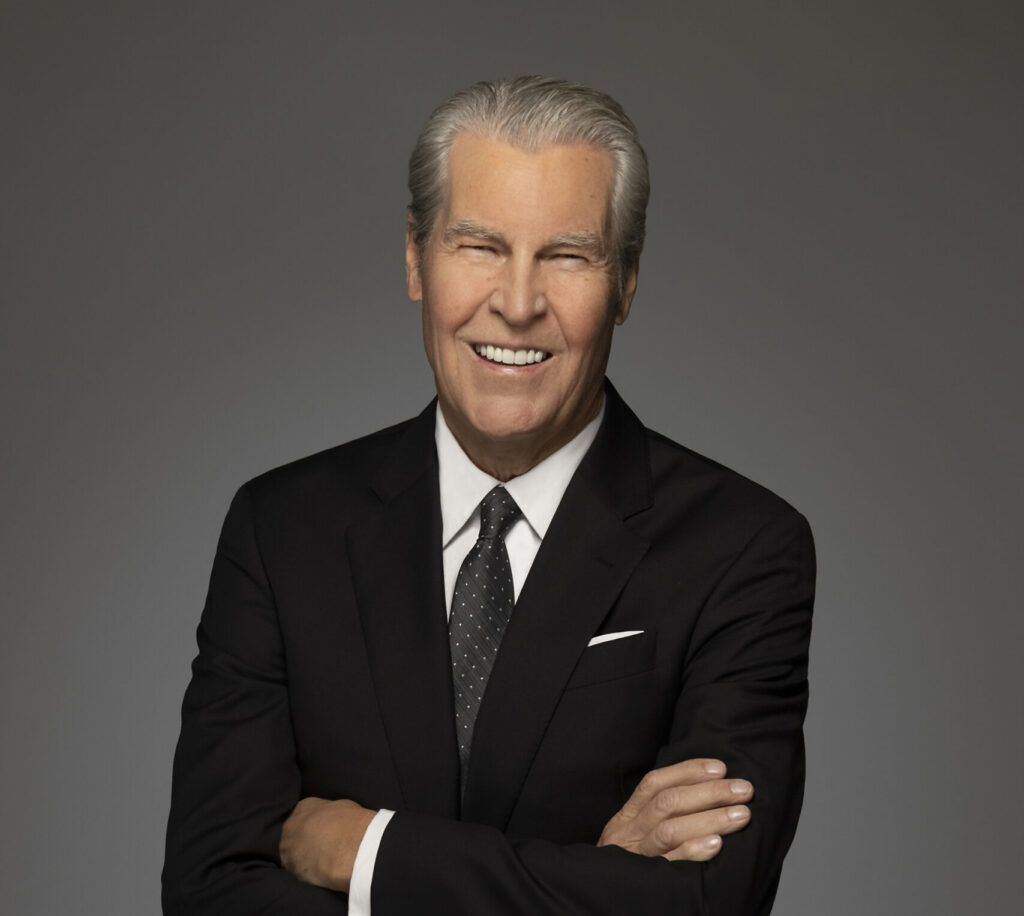
I recently interviewed Former Macy’s CEO Terry Lundgren on my podcast, Thirty Minute Mentors. Here is a transcript of our interview:
Adam: Our guest today is a former Fortune 100 CEO and a legend in the world of retail. Terry Lundgren was the CEO of Macy’s, Inc., the parent company of Macy’s, Bloomingdale’s, and Bluemercury, and was the CEO of Neiman Marcus. Terry, thank you for joining us.
Terry: My pleasure, Adam. Good to talk to you.
Adam: You grew up not too far away in Long Beach, and growing up, you were anything but ticketed to the C-suite of a Fortune 100 company. You were the only one of your siblings who went to college, and while you were in college at the University of Arizona, your parents decided to stop paying tuition because you had bad grades. Today, the Center for Retailing at the University of Arizona is named after you. Can you take listeners back to your early days? What early experiences and lessons shaped your worldview and shaped the trajectory of your success?
Terry: Yeah, there wasn’t any conversation at our dinner table, our family dinners, about going to college or becoming a CEO someday. In fact, no one was going to college either. The reason I went to college is because my friends were going to college, and that sounded like something I should do too. That was where that conversation came from, not from family influence or pressure, for sure. And so I was lucky. My parents helped me for my first year of college and got me there. And what I also learned is that when I was no longer sharing a room with my brother and no longer having four sisters running around, and having the freedom of being on my own in Tucson, Arizona, away from Orange County, California, because we’d moved by then to Orange County, California, well, I just loved that lifestyle so much so that school became secondary for me. I was really a star at the fraternity house. They made me the pledge class president, and obviously partied a little too hard my early years. Tried out for the basketball team, thought I was a good athlete in high school, but realized the game steps up a significant level in college, and I got cut in 10 days from the team. I still say I played basketball for the University of Arizona, but that’s not really true because I didn’t actually get out on the court. But I was practicing with them for 10 days, so I had to change things up and redirect my life plan. And when my parents said, “Listen, got your grades, and they weren’t terrible, but they were very mediocre.” And I was a pretty good student in high school. And my dad said, “Listen, I just can’t afford this. I’m working two jobs.” He worked in a factory assembling speakers, and at night and on weekends he sold real estate, and it was really just to get by, paying for the family needs. And so he said, “We just can’t afford this anymore. So good luck to you.” And I remember saying the words, “Dad, you can’t do this. You’re ruining my life.” And I remember him pausing on the phone and saying, “Well, son, if that’s how you feel, it’s actually you that’s ruining your life, not me. It’s your choice. Hope you finish, but that’s entirely up to you.” And I was like, “Holy crap, man. I better get my act together here.” And so I did. Long story short, I went to work. I got a job, got turned down from a few places, and then I got a job. I almost didn’t get a job cracking oysters. I said, “If I don’t get this job, what’s below this? Where do I go down to find a job lower than cracking oysters at a fish restaurant?” And I got that job. Three years later, I was manager of the restaurant. I worked full-time. I got straight A’s. My grades went up substantially, and I still was participating as vice president of the fraternity house later on too. So I just learned that when my back was to the wall, I could actually perform. And if you gave me a lot of time to screw around and goof off, I would. And so I say this now because I’m quite involved. I co-chair the fundraising campaign for the University of Arizona. In fact, we just finished recently a $3 billion campaign. I’m sure the next one’s going to step up, but I’m very involved with the entire university and fundraising for the school because I always say that’s where I grew up, and that’s my story. I grew up at the University of Arizona, really between my sophomore and senior year.
Adam: I love it, and you shared so much there that I would love to unpack. That moment when your dad said to you, “It’s not me, it’s you.” And it was that moment when you realized I have to take ownership of my life. My parents only have so much influence, only have so much impact, only have so much control, and it’s on me. And the question is, do I want to make something of myself or not? And you started off by cracking oysters. You have to start somewhere. I did an interview with Wolfgang Puck, and Wolfgang Puck started below cracking oysters. He started by peeling potatoes, so you can start even lower. You can start at the very, very bottom and work your way up to the very top, but it starts with you taking ownership, you taking control. It’s your life. It’s on you.
Terry: Yeah, 100%. You just brought that up, Adam, and it made me think of that beginning, because it started with this manager interviewing me to crack oysters, peel shrimp. I mean, that was my big job responsibility. And he said to me after interviewing me like this, “Yeah, yeah, okay.” And he goes, “All right, all right. Well, let me think about it. We’ll call you.” Just really deadpan response. I remember I turned around, I walked out, I grabbed the door, and I thought, “Oh my God, I am not going to get this job. I’m not going to get this job. I can’t believe I can’t even qualify for this job. Where do I go from here?” And I turned around. The guy’s just sitting there, looking at me, and I said, “Please, sir, give me a chance. I can do this job. Give me a shot. I’ll work for free for the first night. I will show you that I can do this job and I can do this well. Just give me a chance. I’m desperate and I need this job.” And he said, “Well, where was that in the interview?” He said, “You’re hired. You’re hired, and I’ll pay you.” He said, “You can’t start tonight, but you can start tomorrow.” I said, “I’ll be here.” But my whole attitude changed. I was desperate, and I had to get that job. And so when I showed him that, he said, “Boom. That’s it. That’s what I was looking for.” I remember too that the servers were great young women, and they made much more money serving cocktails than they made serving shrimp and oysters, and so they dreaded when it was their turn to serve oysters and shrimp. And a lot of times they’d call in sick, but they had to do that. I was out there peeling the shrimp and cracking, but they were the servers. That’s what the restaurant wanted, and they hated it. And they made a fraction of the tips they made as opposed to when they were serving cocktails. And one night, two people, one called in sick, another said, “I can’t make it. I’m feeling under the weather,” and they couldn’t get anybody else. And he said, “I’m really sorry, Terry.” And I said, “Well, don’t worry about it. I’ll serve them. I’ll crack the oysters. I’ll peel the shrimp, and then I’ll go serve them myself.” And he goes, “All right, give it a try.” We never sold more oysters and shrimp than that night, that first night, and then I kept breaking records after that. And eventually, because I was excited about it, I wasn’t getting any tips except for what I was getting shared with by the servers, and I was excited about it. So I was selling like crazy, and at the end of it, they hired somebody to peel shrimp and crack oysters, and then I was just a server. That became a whole new model, and all the women who were serving gave me big hugs, and they were so happy with me that I took that job because they hated it. So everybody won, and it worked out really great. And so I remember that too. Do this job better than anybody’s ever done it before, and you’ll be surprised at how far you can get.
Adam: I love that advice. What can you control? What can’t you control? And I would imagine that when you were interviewing for the role of oyster cracker, you weren’t being interviewed for your technical skills. They weren’t assessing how competent you were at cracking oysters. But what they were evaluating was, what is your attitude? And when you showed up, they said, this guy doesn’t have the right attitude. Why do we want him? And then when you turned that switch, immediately the person who was in charge of filling that role said, “This is the guy I want on my team.” What can we control? We can control our attitude. We can control how we show up. We can control our level of passion, our level of enthusiasm. And Terry, to your point, when you show up passionate, enthusiastic, fired up with that can-do attitude, I’m going to do whatever it is, whatever it takes, not only are you going to excel at your job, but that enthusiasm, that passion, that attitude is contagious. Everyone’s going to want to be around you. You’re going to make everyone around you better.
Terry: 100% agree. It’s all about lifting all boats because you can’t do it yourself. I could do the oyster job by myself, but the bigger the job got, then I couldn’t any longer. I had to have somebody else with me, and then as I got more responsibility, then I really learned, to your point, Adam, that you had to have people that had the same enthusiasm that you did for you to look good, for you to perform well. You had to have everybody else understanding what the goals were and clearly ready to support those goals and objectives, and have the same enthusiasm that you do. And so that’s when it really works. And of course, as I grew over time into bigger, bigger jobs, I was 29 years old and became a store manager at South Coast Plaza in Orange County, California. And I went from supervising an assistant buyer to supervising 400 people all in the store. And most of the people who reported to me were older than I was. I really had to learn about that skill, about listening closely. What do they need? How can I help them become successful? Here’s what I need, and this is how you can help me. And really being clear about that, and explaining to them why they will benefit when I benefit, why we’ll all be in this together, and everything will be much better if we all do this together. And I think that really taught me so much then that I was able to apply it later on in my various roles that I had in my career.
Adam: You mentioned your experience working and leading at South Coast Plaza, not too far from the Big A. How did you go from restaurant manager to Fortune 100 CEO, and what can anyone do to rise within their careers to get to where they want to be?
Terry: A woman that worked for me, who was the founder of Bluemercury, she used to always say, “Hustle. You gotta hustle. You have to outwork the people around you. You have to look at tasks that are out there and say, ‘Yeah, I’m doing those, but what else can I do that can make it even better? What haven’t people thought about that I can do that can maybe make this role work better than it’s worked before?'” I use the term, but I’ve used it for a long time, bloom where you’re planted. So you get assigned a role. Figure out how to do that job. Here’s the job responsibilities. Tick, tick, tick. Do all those, but then say, okay, if I really think about this, they’re asking me to move this product to this location in the most efficient and fast way, but this is how it’s being done, and I’m following instructions. But what if I thought about another way to do it? What if I thought about a better way? What if I thought about a more efficient or less expensive, a faster way? And so I put that to anyone who’s got a role that says, “Gee, I think I should be doing something different than this.” Do that job first really, really well, and do it better than anybody’s ever done it before, and that’s when people will notice you. And then someday I say, you know, and by the way, you might be supervising that job someday, and then you’ll know just how well that job could be done. So I think that hustle and that bloom where you’re planted and take it to the next level beyond what others have ever done that job in the past before is the sort of formula that I think worked for me, and it worked for Marla Beck, who was the founder of Bluemercury.
Adam: It’s not just about doing what’s assigned to you as well as you can, but it’s about thinking creatively, thinking outside the box, challenging the status quo, asking what can I do differently, how can I do what is being assigned to me better, and what are other things that I can potentially do that I could potentially influence while I’m still doing my job as well as possible to help the people around me become even better at what they do.
Terry: Exactly. Absolutely right. You said it well.
Adam: What were the most important skills that you developed that allowed you to ultimately become a Fortune 100 CEO? And what are the most important skills that you utilized as a Fortune 100 CEO?
Terry: That story I told about doing more than what’s expected of you allowed me to stand out among others. I didn’t just take the job description and do that. I went beyond that, and that was part of it. I was a perpetual learner, always trying to figure out who can I learn from, what is a better way of doing the work that I was doing? Is there somebody else who’s better than I am at this and has more experience than I do that I can learn from? I ask questions. I ultimately would bring people in who were senior to me and had a lot more credibility than I had when we would talk, and they would say, “Hey, Terry, I like your plan. I like your strategy.” I’d say, “Would you say that?” I did that with Stanley Marcus when I was 37 years old, and I was the CEO of Neiman Marcus, and everybody was older than me who worked for me. And who is this guy? He’s the first person to run this company who wasn’t named Neiman or Marcus. And who is this guy? And so I was definitely a long shot, and I replaced a guy named Richard Marcus, who was Stanley Marcus’s son. And not many people liked me just because of that and because of the situation. Everybody loved Stanley Marcus in particular. His father and his aunt were the Neiman and Marcus who founded the company. And Stanley built the company. He was a genius. And I remember running into him at a restaurant. And I just moved to Dallas. I’m brand new, and I walked past him, and I thought, “Oh my God, that’s Stanley Marcus. I got to go see him because he’d been out of the company for six, seven years.” And I turn around. I go, “Mr. Marcus, my name is…” And he goes, “I know who you are,” and he doesn’t extend his hand to me. I go, “Oh shit, I’m in trouble.” Excuse me. I said, “I’m in trouble.” And I said, “Sir, I have so many questions. I would love to pick your brain. Would you mind if I called you and came over and had a meeting with you and listened to you because I have so many questions?” And he looked at me and stared at me. “Call my office,” and turned around. He was very rude to me and walked away. But I would say it took me about three months. We were having lunch in the Zodiac Room at Neiman Marcus downtown. People were all saying, “Terry’s having lunch with Stanley Marcus. Whoa, he’s not so bad after all,” because this guy was a legend, man, total legend. And then I told him my speech, just me and him, just in my office. Three months later, I said, “This is the strategy I think we need.” And he said, “I like it.” I am in the door. I said, “Would you do that?” Same story. “Would you do that? Because I got 1,000 of our employees coming to a meeting. Would you say that?” And he said, “I will.” So I have the meeting. I got 1,000 Neiman Marcus employees. I got them for 45 minutes. I’m telling them the whole strategy, and people are like, okay, the company’s not doing well. Obviously, that’s why they brought me in. And I look, okay, this might be all right. I can see the crowd, and then I say, “Now I have someone who needs no introduction that I would like to bring into the room.” Stanley walks in. Standing ovation. People are crying. They’re bowing down to the genius legend of Stanley Marcus. He gets up. I thought he was going to talk for 10 minutes. He speaks for another 45 minutes, and I just let him go. We let him go, and at the end, he says, “And this is the right strategy for Neiman Marcus today, and Terry Lundgren is the right leader, and you need to follow him and follow this strategy.” And everybody starts clapping again and standing up, and we walk out. And we executed that strategy. Took about four or five months to get the inventory in place. We had some of it going, but the rest of it got in place. And our business went hockey stick because then we knew it was the right strategy. He knew it was the right strategy. But just trying to get everybody to move aggressively, it would have taken me two years, maybe longer, to get that done. But I got it done in like four months after Stanley Marcus came and made that endorsement. So I strongly encourage that. Now you got to have the right instincts, got to have the right strategy, you got to have the right knowledge. But that endorsement of someone who’s done it and who’s highly respected, Adam, man, what a huge difference that made in our performance. And we had five straight years of extremely strong performance after that.
Adam: What a great story. And oftentimes you can have the right message, but you’re not the right messenger for it. And as a leader, recognizing when am I the right person to deliver the message, and when is someone else needed to deliver that same message? And in your case, when you met Stanley Marcus, he was incredibly cold to you, didn’t want to have anything to do with you, but you didn’t view that as a deterrent. On the contrary, you did whatever you needed to do to win him over. And when you have that mindset that it doesn’t matter who this person is, I am going to make them an ally. I am going to win them over. You’re going to be a lot more successful with more allies than fewer allies. And when those allies are people who are as powerful as Stanley Marcus, that could be a game changer in your tenure as a leader.
Terry: 100%, and that’s a good way to say it. You’ve got the right message, but you’re not necessarily the right messenger.
Adam: In your experience, what are the keys to successful leadership, and what can anyone do to become a better leader?
Terry: It really comes down to me to having the ability to assess the people that you place around you, to manage them situationally, because I just have learned over time there’s not one formula to manage everybody the same way. I had a CFO who was in my office three times a day, and she was brilliant, but really wanted my endorsement for a lot of these things. And I had other vice chairmen that I had to go find every five days. “Everything okay?” “Yeah, yeah, I’m fine.” “You want to tell me about what you’re doing with the strategy?” So you got to manage people differently, but I think ultimately knowing which ones are going to perform well. And I always said you don’t have to have the best player at every position to make the best team. You have to know how to manage the strengths and weaknesses. Even at the high level, you can put someone underneath that person that can help them. They’re a brilliant merchant and great taste and ability to see around corners in terms of what fashion is going to be desired by consumers in the future. I can surround that person with a financial person behind it to make sure that they don’t get carried away with emotional buy, but they also have some financial and statistical balance to those decisions. And so that, to me, Adam, was always the key. I over time really focused on that. And the other thing is, I made mistakes. I recall, in particular, a case coming rushing through my head at the moment where I had a person that I thought was super intelligent, super highly educated, and great experiences from major companies, Fortune 500 companies, in marketing. And had called confidentially this former CEO who I knew to make sure. Good endorsement. Yes, absolutely. And that person just was wrong. It was just wrong for our culture, and they were a very good marketer, but all they wanted to do was the big stuff. They didn’t want to run the day-to-day business. And Macy’s was a promotional business that had to be run day in, day out, plus have the big personal appearances of whoever, Lady Gaga or Justin Bieber coming through. Those are great. We had to do all those things, and it was a lot of fun. But running the day-to-day business was core, and that was missing. And then the other piece was she wanted to bring in her own people that she’d worked with in the past, and was basically ignoring the talent we had in the organization. So all that took place, and I dealt with it in six months. And I did the same thing with another person I brought in, super highly, all arrows pointed, yeah, go, go, green, super highly endorsed guy in the HR world, and he didn’t last for more than a year. And so I made mistakes. On paper, they looked really good, but made mistakes. But I dealt with those mistakes, and people would clap in my organization. They’re like, “Terry, we knew that. Why didn’t you know?” I said, “You should tell me. I don’t know. I don’t know everything. Tell me.” But sometimes the CEO is the last person to know some of these things, and it’s not because we want to be blocked out, but people don’t feel comfortable sharing all this information with you if they feel like they’re complaining. So I felt like I ended up doing that pretty well, getting the right team in place and then managing them to get the most out of each individual.
Adam: You mentioned that as a CEO, you’re oftentimes in a position where you don’t get the best information because the people around you don’t feel comfortable sharing the best information, and as a result, you have whatever blind spots that you would otherwise have accentuated. We all have blind spots, and if we don’t have the best information around us and the best people around us being as open and honest as possible, those blind spots are just going to get bigger and bigger and bigger. What can you do as a leader to combat that?
Terry: Yeah, it’s a good point because in none of the situations that I had were they being malicious. In every case, I think they were just afraid to share the bad news, and they thought maybe I can solve this. Maybe I can turn this around on my own, and so I won’t have to share bad news. Because when I have to share the news, it will be better news or neutral news instead of bad news. And I think the answer to that, Adam, is that you have to be a leader that lets people know that I respect you for letting me know when we’re headed down a wrong path, and if I’m heading down the wrong path, I need to know that. That’s how we made our best decisions, is when we sit in a room at the end. We’re making a big decision. We’re going to change 400 department stores to the Macy’s name in one day. Is that a good idea? Some of you guys are going to think this is crazy, and let’s talk about it. And we did that. And so I value and respect those who came to me and said, “Hey, I got some very big concerns about that, and here’s what I think could go wrong.” Eventually, I’ll make the decision because at the end of the day, the CEO has to pull the trigger and make it. Worst is indecision. That’s the worst. So you have to make the decision, but only an informed decision after you’ve gotten as much input as you possibly can. And you have to prove to people that they will not be shown any disrespect or treated badly, or their job would be in jeopardy if they give you this bad news. You have to make sure that you have to give examples and do it publicly whenever you can to give people credit, even if they’re on a different page. I had a sign in my office that said, “There’s no limit to what we can accomplish as long as no one cares who gets the credit.” And I really believed that. And I had people, like when we were consolidating multiple divisions and changing the complete structure of our company. It was a big risk. But it was in 2009, and I said, “Guys, gals, what risk? Our business is terrible. It’s the financial crisis. Everybody’s business is terrible. If we’re ever going to make these changes, now’s the time. We got a free pass. Let’s go, and give me all the reasons why we shouldn’t do it.” And I definitely had people very nervous and maybe even not wanting to support this initiative. And when it was done, and it turned out to be incredibly successful. I mean, of course we had some bumps in the road. This is in 2009. We made all these big changes. 2010, we grew by a billion dollars with a double-digit earnings increase. 2011, same thing, another billion in growth on top line. 2012, another billion. 2013, another billion. We grew for five years straight, a billion-plus a year without adding any stores. No additional stores. In fact, we were negative stores because we were closing some and new, but closing more, and killing it, and double-digit earnings increase every year. It’s after those big decisions we made, and so then some of those people who were in the room saying, “I don’t know about this, Terry. It’s not such a good idea.” They would be like, “First, yeah, I’m really glad I had this idea. I really believe this was the right strategy.” And I’m like, “Really?” Well, yeah. I said, “Yes, you did,” and I would give them credit. I would get behind them. I said, “Yeah, absolutely,” because they’d look at me and they’d say, “Oops, I got caught. I got busted.” I said, “No, no, absolutely. You were a big supporter all the way.” And I think they appreciated that when we all shared the success together. And I really mean that. As long as no one cared who got credit for the success, we could accomplish great things, and fortunately, we did.
Adam: You shared a key inflection point for your business, the 2009 financial crisis, and in the course of your leadership, there were a number of significant inflection points. And sometimes you realize when you are at a major moment, and sometimes there can be a major moment, and you don’t realize it’s happening. And one that I want to talk about is the shift from retail to e-commerce. And so many organizations didn’t realize what was going on and got left behind. Some got left behind right away. Some it took a little bit longer, but ultimately got left behind. What are the keys to understanding when to pivot, when to adapt, and ultimately how to lead change and lead transformation?
Terry: That was a good example because we launched our website so early, 1994. It was pre-Google. We were way, way early, and we had a division in San Francisco, Macy’s Northern California, and those were the guys and gals that told me, “Something’s happening in Silicon Valley next to us. You don’t see it in New York City, and we want to show it to you.” And so they brought me out and talked to me all about it, and I said, “Let’s go.” So we stayed with that and actually turned it into macys.com in the late ’90s. And then you remember 2000. We called the dot-gone era because it was a giant collapse of all of these companies, and it made sense that they’d collapse because there were all these young guys and gals who thought they were millionaires because their company was growing like crazy. There was no chance for them to ever make any EBIT. There was no profit vision in their future. But finally, when Wall Street figured that out, they pulled all the funding and pulled the plug, and that happened in 2000, and all of them crashed. So 50% of the websites and online retailers went out of business that year, and we stayed with it. We were losing money, but we stayed with it because I huddled with our team, and I just felt, I mean, I said, “Guys, this is how people are going to want to shop. It’s our problem that we’re not making money. We have to figure that out. This is how people are going to want to shop. We better get on this and find a way to make it profitable.” So we stuck with it, and I really think that gave us a huge advantage. When I retired, we were the fourth-largest online retailer in America, only behind Amazon first, Walmart second, eBay third, and then Macy’s, which was shocking because we were ahead of Costco and Target, all of these much bigger retailers than Macy’s. We were bigger than them online because we were early and we stuck with it. We devoted talent to our infrastructure and to our merchant team, and we left them in San Francisco that wanted to stay close to the action. Eventually, it got moved to New York after I left. But I really felt like the hub of what was happening there was not in New York at that time. It was in San Francisco and in Silicon Valley, and so I wanted to be close to that heartbeat. And I really think that gave us a big edge. So I just think, listen, do things that are not in line necessarily with what your structure calls for or the way you’re normally thinking. If there’s a new idea, I think AI has to be the same mentality. Who understands this the most, and how can you make sure you have that talent inside your organization? If you don’t have that talent inside your organization, go find it, go hire it, maybe as a third party, let them do the development, and we learn from that, and then use their strength and knowledge as opposed to us trying to figure it out ourselves if they’re far ahead of us on that subject. So that’s what we did then, and I think that helped us tremendously stay ahead, and we developed a tremendous online business both at Macy’s and Bloomingdale’s.
Adam: You mentioned that when you retired, Macy’s was the fourth-largest retailer in America. Today, it’s the 24th-largest retailer in America. What have you learned from observing Macy’s go from number four to number 24, and what can any leader learn from it?
Terry: Well, some of that was definitely going to happen because we were ahead, and the other guys had to catch up. I remember the CEO, Doug McMillon of Walmart, asking me to make a speech to his employees about the online business because they were terrible. They were really bad, and we were really strong. I said, “I’m not going to do that. Why would I do that? Why would I come to Walmart and help you guys with that?” And he said, “Oh, Terry, because we only do 10% of our business in your categories. It’s not an issue.” And I said, “Let me see, 10% of $400 billion. Yeah, yeah, yeah, matters to me.” And so anyway, we went back and forth, and I did go. And it’s interesting because the head of HR, we huddled in Doug’s office after I spoke for a while, and it was really, really great, really interactive. And the head of HR said, “We’ve never had so many of our female employees ask questions at any of these open sessions as we did with you, Terry.” And I said, “Well, that’s because they’re shoppers. They shop. They’re interested in it. They shop online. They’re interested in this. They get it.” And listen, the majority of consumers are female. So ask them how they shop, how they want to shop. So it was a great conversation, and I always ask Doug, “Where’s my check?” Because six months after I spoke, you bought Jet.com for $4 billion. People said you paid too much. The market cap went up $10 billion. It was a brilliant move, but more importantly, they bought the talent. They brought all the talent, and then the talent came into Walmart.com, and Walmart.com has become a phenomenal success now. But they had to bring in the talent. They didn’t have that talent, and they brought it in. And I give him a lot of credit. Give Doug a lot of credit. He’s a brilliant CEO, and John Furner there now is a fantastic guy. And so I think they’re a super well-run company, but I’m just saying they didn’t have it. They got it. They figured it out, and now they’re running with it. So people caught up. That was a big, big part of it. And I think the other part, during COVID, we really lost a lot there because I wasn’t at the company at that point. I was gone by then, but Macy’s was closed during COVID, and we couldn’t even sell anything online. We couldn’t do anything because we didn’t sell essentials. We didn’t sell food. So Target and Walmart and Costco, anybody who sold essential products, they ran away with it. I mean, their business was going gangbusters during that time because they had less competition. Because all the people like Macy’s and the specialty stores, they all had to close during COVID, and I think that really hurt. And then people during that time started getting used to buying online because that’s all they were basically doing, is buying online during COVID. So we had two and a half years’ worth of people ramping up buying more products. They weren’t buying food online. They weren’t buying beauty products online, but they were then during COVID because they wanted those products, and so all of a sudden they got used to it. It wasn’t so bad, and then they continued on after that. So those are a couple of the reasons why Macy’s has fallen in its place, but they still have a very strong business. I think it’s over 20% of their sales today at both Macy’s and Bloomingdale’s is online.
Adam: What I’m taking away from what you shared is that when you’re number four in the market, or number one, or number two, or number three, or number five, eventually people are going to catch up to you unless you find a way to stay ahead, unless you continually adapt, unless you reinvent yourself. Because without reinventing yourself over time, you’re going to be the same version of yourself that everyone else has caught up to.
Terry: Yeah, that’s exactly right. They used to have these sessions and say, “Oh God, Terry, what are you going to do now? Every January, you change. You come out with this big announcement. Even though we’re doing really well, you always want to make some changes.” I said, “Exactly, because that worked really well last year. We’re against those numbers. We’ve got to do something different this year to beat last year. So we got to think about what’s next.” It was very funny. I’d always wait till our fiscal year ended on the last Saturday of January, and next week in February there was a meaningful announcement, and they’re like, “Oh.” These guys would come into my office. “What are you going to say?” I said, “Well, it’s the stuff we’ve been talking about.” He goes, “But why? We’re doing really well.” I said, “Yeah, but we got to do better. We got to do better, and the only way to do better is to change. We have to find a way to move forward. And what worked last year is just going to give us the same result as last year. It was great then. How are we going to make it better?”
Adam: Terry, what can anyone listening to this conversation do to become more successful personally and professionally?
Terry: Listen to others. Always learn. Realize that you don’t have all the answers. Surround yourself with smart, talented, hardworking people that have similar goals to you. Be really clear in your communication. I find that some companies have employees that say, “I want to do what the boss wants. I just don’t know what the boss wants.” So really, really clear in communication. I was a passionate believer that we had 140,000 employees at our peak, and I felt that if the guy loading T-shirts on the truck or unloading them in our West Covina, California store didn’t understand the basic fundamentals of what our strategy was, then I had failed in my communication strategy. I felt that I had that responsibility. Everybody had a role, and we called My Macy’s, omnichannel, and magic selling, M.O.M.’s strategy. If somebody’s got a role in one of those letters in that acronym, somebody’s got a role there, and you figure out which of the letters relates to your job, and know that you’re part of this strategy. And without you doing your job, we’re not going to be successful. And when you do it, you’re going to share in this success. And I think that was really key, that communication of getting everybody involved.
Adam: Terry, thank you for all the great advice, and thank you for being a part of Thirty Minute Mentors.
Terry: My pleasure. Enjoyed the conversation.