

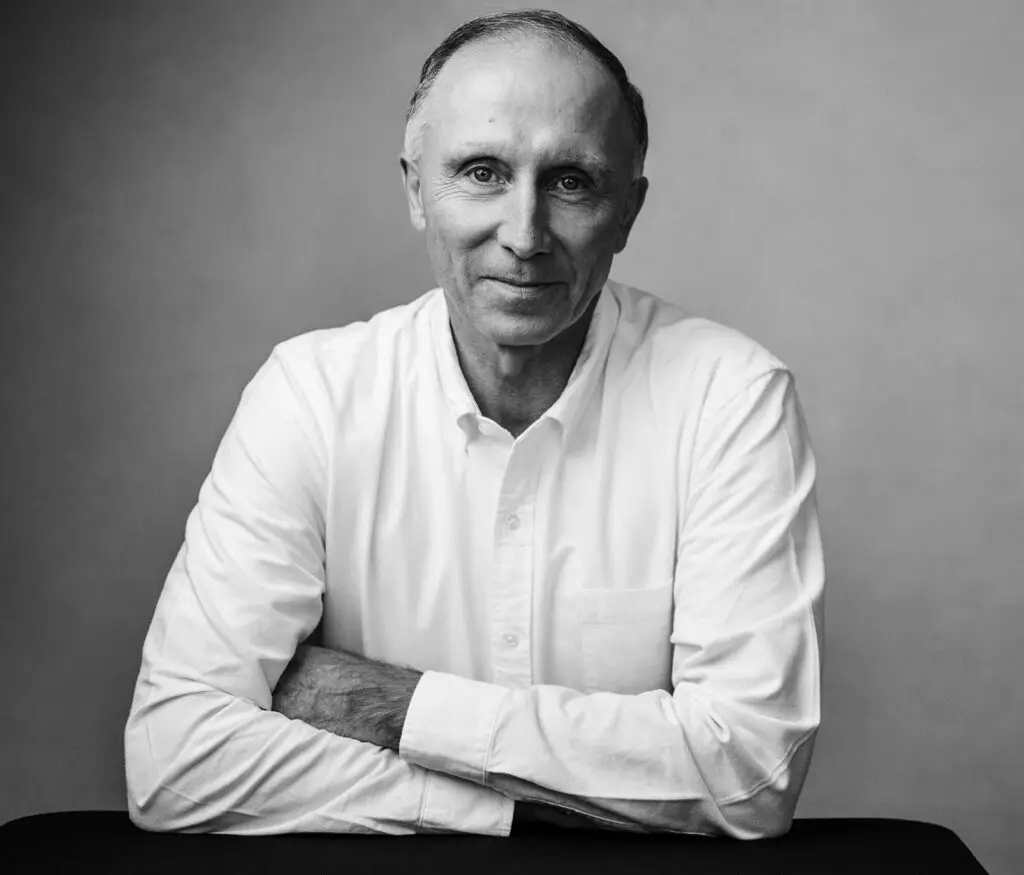
I recently interviewed Lieutenant General Bill Bender on my podcast, Thirty Minute Mentors. Here is a transcript of our interview:
Adam: Our guest today is a retired general who led at the highest levels over the course of his 34 years serving in the United States Air Force. General Bill Bender was the Chief Information Officer of the Air Force, where he oversaw a 17 billion dollar information technology portfolio and a 54,000-person workforce. General Bender, thank you for joining us.
Lieutenant General Bender: It is great to be with you, Adam. Thanks for having me.
Adam: You grew up right outside of Buffalo, New York, and you studied electrical engineering at Manhattan College, where you were an honor student and a part of the ROTC program. Can you take listeners back to your early days? What early experiences and lessons shaped your worldview and shaped the trajectory of your success?
Lieutenant General Bender: When I look back to that time, you are in high school, and it was a different time entirely. You were not inundated with advertisements or even the best of the best in terms of academia. It was more local to home, at least in my family. I had a brother who attended St. Joseph’s Collegiate Institute. They were taught by the Christian Brothers. They gave a good education at a fair price. That was my primary motivation in picking Manhattan College. Secondarily, it was, how am I going to pay for this? Even then, it was a lot of money, so an ROTC scholarship and an interest in flying airplanes for a living. I went off to Manhattan and did get an engineering degree. At the time, I thought, if being a pilot does not work out, I want a marketable skill, so engineering. Manhattan had, and I think still does, a recognized engineering program. Small but personal, with exceptional credentials. Manhattan was regionally recognized among New York schools in the Northeast as a good education. For all those reasons, that is how I ended up there.
Once I got there, I realized I wanted to fly airplanes, so I put my effort into Air Force ROTC and took on leadership roles over time, as I continued as a scholarship student. It was a great experience and certainly served me well. The more I experienced, the more I enjoyed the people I was with and the notion that a mission, something bigger than yourself, is how I always looked at it. You could contribute, be part of a team, make a difference in a way that had little to do with money. It had a lot to do with a higher calling, a profession of arms in this case. More than an education, it was a profession.
Going off to the Air Force, the more I experienced, the more I liked it. I went to undergraduate pilot training in my first year as a second lieutenant and picked up a whole host of experiences. When I walked out of there with a fully rated instrument rating and credentials to fly airplanes, what I really remembered was the people in my squadron and group being close, coming from similar backgrounds, having similar motivations, and celebrating successes while working through failure together. That was formative and in the long run kept me in the Air Force for a full career.
Adam: What were the keys to rising within your career? And how can anyone rise within their career?
Lieutenant General Bender: There are different ways. You can be a technical expert in your chosen field and outshine your peers. As an engineer who became a pilot in a large career field within the Air Force, I made an early determination that this was not all about work and trying to get ahead. It was about broadening. I use the example, you can be an inch wide and a mile deep, or a mile wide and an inch deep. I attempted to thread the needle between those two. Throughout my career, I flew more than 20 different aircraft and moved 23 times in 34 years. That represents a lot of broadening. While broadening, I also picked up recognized skills and credentials. I was not satisfied with just filling a pilot slot. I wanted to be an instructor pilot and an evaluator pilot. So, deeper credentialing, but also very broad experience.
At the end of a career, when you look back, you did not really plan it, but 34 years later, it made me much better and more qualified than I deserve to be for the Chief Information Officer job. Operationally, I had a very good understanding of why it mattered and where the work we were doing as a functional lead, primarily in information technology and cyber, made a difference to the airmen on the front lines.
Adam: You mentioned that we have a choice. We could either go a mile wide and an inch deep or an inch wide and a mile deep, and you decided you were not going to choose between the two. You were going to try to do both. Sometimes we box ourselves in. Sometimes we give ourselves choices. It is either door one or door two, but sometimes there is a third door. Sometimes, there is another option that we might not see until we start looking a little bit deeper, and that can often be the key to attaining success.
Lieutenant General Bender: I would never say that I saw into a crystal ball and knew if I did certain things it would lead to success and promotion. Instead, it was the recognition you are making, Adam. One or the other was not going to be fully satisfying. In early assignment,s I flew with people who had been in the same aircraft for 12 or 14 years. They were the recognized experts on that weapon system, but they had not been across the Air Force in different missions and aircraft. Likewise, you can get too broad and not spend the time it takes to get the qualifications, credibility, and reputation it takes to succeed. I cannot say it was as purposeful as I might like to make it, but it was on my mind that I could not do one or the other. I had to do both.
Adam: You shared that you moved 23 times in 34 years. That is staggering. What did you learn from that experience? What did you take away from that?
Lieutenant General Bender: I learned that my family is resilient. My son flies for Southwest Airlines now, but he went to the Air Force Academy and flew F-16s in the Air Force for about 12 years before separating. He did quite well on his own, even though he had four high schools in four years. My daughter had three high schools in four years. So resilience of family. My wife was always there for the kids and raising the family when I was deployed.
From a professional perspective, I use that number to represent a lot of moving around, which is a proxy for many different experiences and areas of the Air Force. You grow a professional network you can call on as friends and colleagues because you were together over time. It was a lot of moving, new homes, and new communities, but it was a tremendous advantage to see the Air Force, learn what it was doing, and be part of so many missions.
Adam: It really speaks to the importance of adaptability, one of the most important characteristics among the most successful leaders.
Lieutenant General Bender: Adaptability and perseverance. Every time I changed airplanes, I had to go back to the beginning and start anew. It might have been easier to stay the course, but I wanted new experience, which meant I had to start over. There is a lot of transference of skills with stick and rudder, but avionics, procedures, and emergencies are different. Perseverance and adaptability came from living the experience. None of this was scripted. It was go where the opportunities were, throw your name in the hat, see what came your way, and make the best of a good opportunity.
Because I saw so much change and was part of so much change, when I got into a formal senior leadership role, it helped me drive change in a way that could stand the test of time. Not a pendulum going back and forth, but a well-thought-out approach to driving change that stands up over time.
Adam: How, as a leader, can you do that? As a leade,r can you drive transformational change that stands the test of time, that lasts, that endures?
Lieutenant General Bender: I was never change for change’s sake. It was purposeful. By thoughtful, I mean think it through. Get the stakeholders who will have the most to do with making any change successful. They have to believe in the desired outcome and understand why we are doing it. An industry example. A senior leadership team sequestered themselves in a room for eight or nine months, then came out with a manifesto. This is the change, and this is the way we are doing it. That struck me as very different from what I would have done. No one was read in. No one who had to make it successful understood why. You either understand that you face a needed change, or you do not.
How do you do it? Start by diagnosing the problems you are trying to solve, then methodically go after those in a way that addresses the challenges you are trying to make better, without the extraneous. Not, we might as well do this as well, or arbitrary decisions. That was never the case.
Adam: You made a number of important points. There is a clear formula. It starts with identifying the problems you are trying to solve. If you are a leader trying to drive transformation, you are trying to change something that is not working or is not going to work as well as it should. Identify the why. Then be laser-focused on solving that problem and do not get distracted. How do you do all that. You have to get buy-in. If you do not get buy-in from the people you are leading, you are not going to be able to do this.
Lieutenant General Bender: I could think of multiple examples, but to distill them. Open communications, a clear vision of where you are trying to go, and understanding who among your stakeholders has to drive the change and see it through. Bring them in, whether as confidants or in an open, transparent manner. This is why we are driving the change. This is why it is important to the organization. This is what I need from you, and this is how I will hold you accountable. Clear, open communication with those who will help you be successful, then roll up your sleeves and be part of it. Hold people to task for objectives and milestones. Transformational change is not easy. It is not just moving something from here to there. It is overcoming cultural norms and organizational history. Do not take it on lightly. As the formal leader, you have to be a part of making the change, see it through, be a cheerleader when required, or demystify it when required.
Adam: How can you overcome institutional hurdles, leading in an institution like the Air Force, where there is so much tradition and bureaucracy? Many listeners are working in organizations with internal challenges and wonder how to navigate them. What advice would you give? How do you do that?
Lieutenant General Bender: I would give the same advice I got when facing that. When I showed up as CIO, I recognized I did not have the organic workforce. They had not been trained to do what we were being asked to do, which was to transform an Air Force where information technology was ubiquitous to every mission. They were underweight, not in funding, but in skills, aptitudes, and training. They were brought up in a more hardware world and we were living in a software world.
Best advice I got. Put a box around what you can influence and go right up to the edges of that box. Watch the rest of the institution through their own experience and by observing you. Over time, organizations to your near adjacencies will start to adapt because they recognize their organization also needs that change. If I had overreached and tried to solve all of the Air Force’s cultural and institutional challenges, I would have been overwhelmed and ineffective, because those fell into other areas of responsibility. Make decisions and drive meaningful change where you are responsible, then watch as the institution observes and picks up.
I could point to areas where my organization on the Air Staff took actions within my purview. My counterparts recognized we were moving faster or saving money, or doing things differently. They made the same changes in their organizations. I could never have done it for them, nor was it my responsibility.
Adam: What you do is contagious. Your energy is contagious. Your attitude is contagious. If you are winning, that winning is contagious. If you are losing, that losing is contagious. When you put up results and people see the good work you are doing, they are going to want to be part of it. Your advice, focus on what you can control. Take ownership of what you can own. Do it as well as you can. Next thing you know, other people will want to give you more and be part of what you are doing. Regardless of the organization, that is within our purview.
Lieutenant General Bender: While that advice came later in life, by hook or by crook, we did that in earlier assignments. It was effective because I empowered people within my organization to do it. I gave them a shred of vision and enough rope to get out and be dangerous, to get it done without coming back for permission. You know where we are trying to go. We have been clear about it. Then watch them be successful and reward them for that success. You would be surprised how much you can get done if you have the backing of the people working with you and for you, especially when driving large change. That is leadership.
Adam: Having a vision, setting the direction, then empowering your people. Letting them go and do what they can do. Not micromanaging. Not telling them exactly what to do and how to do it. Letting them be, and when they do great work, rewarding them. That is leadership.
Lieutenant General Bender: I think so. It took a long time, many assignments, and a whole career, and now looking back on it, but I agree. Through a whole Air Force career, you have had good leaders and bad leaders. You get just as many examples from bad leaders as from good. You say, I do not want to do that when I get to that position. That is just as important. It is a negative takeaway, but it is part of forming your own leadership abilities and qualities.
Adam: I will not ask you to name names, but I would love for you to share what you took away from the best leaders you spent time with and from the worst leaders you spent time with. How did your time with great leaders and with bad leaders shape your philosophy on what it means to be a successful leader?
Lieutenant General Bender: With 23 assignments and 34 years, I had a lot of leaders come and go. As a group, the positive ones were super authentic. You took them at their word. They were motivational. They were people you believed in and trusted and wanted to succeed for. There is an obligation on the formal leader to be approachable, personable, and authentic. Not every person is blessed with those traits. It is a responsibility to work through self-improvement. I am an introvert by nature, but there were plenty of times I was on a stage, having to motivate 3,000 people to go do something and be successful. The CIO function was the largest functional area within the Air Force. I had a vast organization across the global Air Force. As an introvert that was intimidating, but I learned from previous leaders that regardless of personality type, you can be successful. The extrovert out in front or the authentic introvert. Both can be successful. Know yourself.
On the negative side, trustworthiness and screamers. Screamers never got much from me in terms of motivation. That bordered on toxic leadership. I am the formal leader in charge, and you will follow. That never did much for me, and it was not something I incorporated. Quite the opposite. I worked hard never to hold formal leadership over people. I understood they knew who the formal leader was. More important to me was being approachable so they felt comfortable coming to share a problem or an idea. There have been plenty of great leaders I tried to emulate, and some less than great from whom I took the lesson, do not do that when I get to that position.
Adam: We can learn from good leaders and from bad leaders. The most important thing is that we are learning. There is not only one flavor of leader. There is not only one style of effective leader. You can be an extrovert. You can be an introvert. You are the third general on Thirty Minute Mentors this year who has shared that he is an introvert. There are many highly successful introverted leaders. It comes down to what you shared. Know thyself. Understand your strengths and weaknesses. Authenticity. Be you. Do not try to be someone else. Own what makes you you.
Lieutenant General Bender: That is exactly right. Play to your strengths and weaknesses. I would go as far as to make your weaknesses known. That reinforces authenticity. People benefit from knowing how you see yourself. I flew a lot of airplanes. I was not always the best set of hands in a given weapons system, and I would be transparent. This is my 15th aircraft. I am having a hard time keeping up. Let us hope we do not have an emergency. My captains appreciated that. I was not proposing that because I am more senior, I have all the great skills. I am another person doing my job in my role. I have been in the Air Force a long time. I bring a lot to the organization, but not everything. We all have a role to play.
Adam: Making your weaknesses known speaks to the importance of vulnerability, another essential characteristic among the most successful leaders. Do not be afraid to be self-deprecating. As you described the worst leaders, the first thing you said was that you had the misfortune of spending time with leaders who were not trustworthy, and on the flip side, the best leaders are able to cultivate trust. How, as a leader, can you build trust?
Lieutenant General Bender: There are many ways. In a mission environment, they put together a plan and want to be on the first aircraft going out because they believe in the mission and the people asked to execute it. You trust a formal leader who is willing to roll up their sleeves and put it on the line. I have seen lack of integrity when push came to shove. Everyone knew it was a decision a leader made, and it did not go well. Instead of stepping up and saying, this was my plan, they looked for someone to blame. That is not right for anyone, certainly not a formal leader. When someone raises a voice or acts in a hysterical way not called for, they lose me. I want respect, and I will pay respect in return. I am not interested in a leadership style that berates or holds power over you as if it is an entitlement. I would rather be part of the team, everyone playing a role.
Adam: That is a big misconception many people have about military leaders. They think leaders have to lead by yelling, screaming, fear, and intimidation. That is not how the best generals lead. Another Air Force general told me that in the course of his entire military career, he never raised his voice once. What you are sharing is relatable to anyone who is not only in a leadership position but who has ever been led.
Lieutenant General Bender: When something did not go well, it typically caused a sense of disappointment in the organization or in the individuals involved. They were disappointed to have disappointed me. That is a good example of leading. If those who disappoint you recognize it and feel upset as a result, that is a perfect opportunity to say, that could have happened to anybody. Do not take it too hard. We will get back at it tomorrow. Build them back up. They did not need me screaming at them to tell them they failed. It was their own recognition. That is professional growth. It inspired a better organization and better mission outcomes because people felt a vested interest in making the organization successful.
Adam: When you think about people who yell and scream at the people they manage and lead, why are they doing that? Are they doing that because it helps the people they lead, or because of their own issues? When you have made a mistake, you do not need someone to yell at you to know you did something wrong. All yelling and screaming does is compound the bad feeling and takes you from thinking about how to fix it to thinking in ways that are not productive.
Lieutenant General Bender: Learning from mistakes is essential. If you are a screamer, you make people feel bad and disenfranchise them. Nobody wakes up in the morning and says, I am going to go mess up today. They are attempting to do their best. Respect that. If there is course correction required, work with them. Constructive criticism has its place, but it is best in private and one on one, not in front of a crowd to make a point or reinforce that you are the formal leader. That gets off the mark quickly.
Adam: You shared the formula for building trust. Lead by example. Demonstrate integrity. Take ownership. Treat people with respect and dignity. Protect the people you lead. Do not chew people out publicly. Pull them aside privately when someone makes a mistake and you have constructive criticism to provide. There is a time, a place, and a forum to do it. Know that time, know that place, know that forum.
Lieutenant General Bender: That is absolutely the case. None of this means you do not hold people accountable. You should do both, but you can do it in a civil and respectful way. That is the point.
Adam: What can anyone listening to this conversation do to become more successful, personally and professionally?
Lieutenant General Bender: Leadership roles are developed over a career. There will be stepping stones and intermediate positions. To eventually be a three-star running the largest organization within the Air Force, there were many assignments and opportunities that had to be brought together later. My military career was essential to being successful as an executive in industry on the other side of the relationship, helping government understand what technologies and capabilities were available. That was built on a career in the Air Force first. I now sit on a number of boards and do advisory work. That is the combination of government and industry experience.
Leadership is a journey. Be a relentless learner. Take advantage of both positive and negative leadership experiences. Add them to your quiver. Be yourself. Have confidence in your ability to lead. Until I got to a formal leadership role as a squadron commander 15 years into my career, I did not realize what a difference leading others would make to me. It changed my career in ways I could not have planned. I did not shirk from it. I brought my strengths and weaknesses. Nothing happens overnight. It is a building block approach to formal leadership.
Adam: General Bender, thank you for all the great advice, and thank you for being a part of Thirty Minute Mentors.
Lieutenant General Bender: It is a great honor to talk to you, Adam. Thank you for having me. I appreciate the opportunity to have a great conversation.