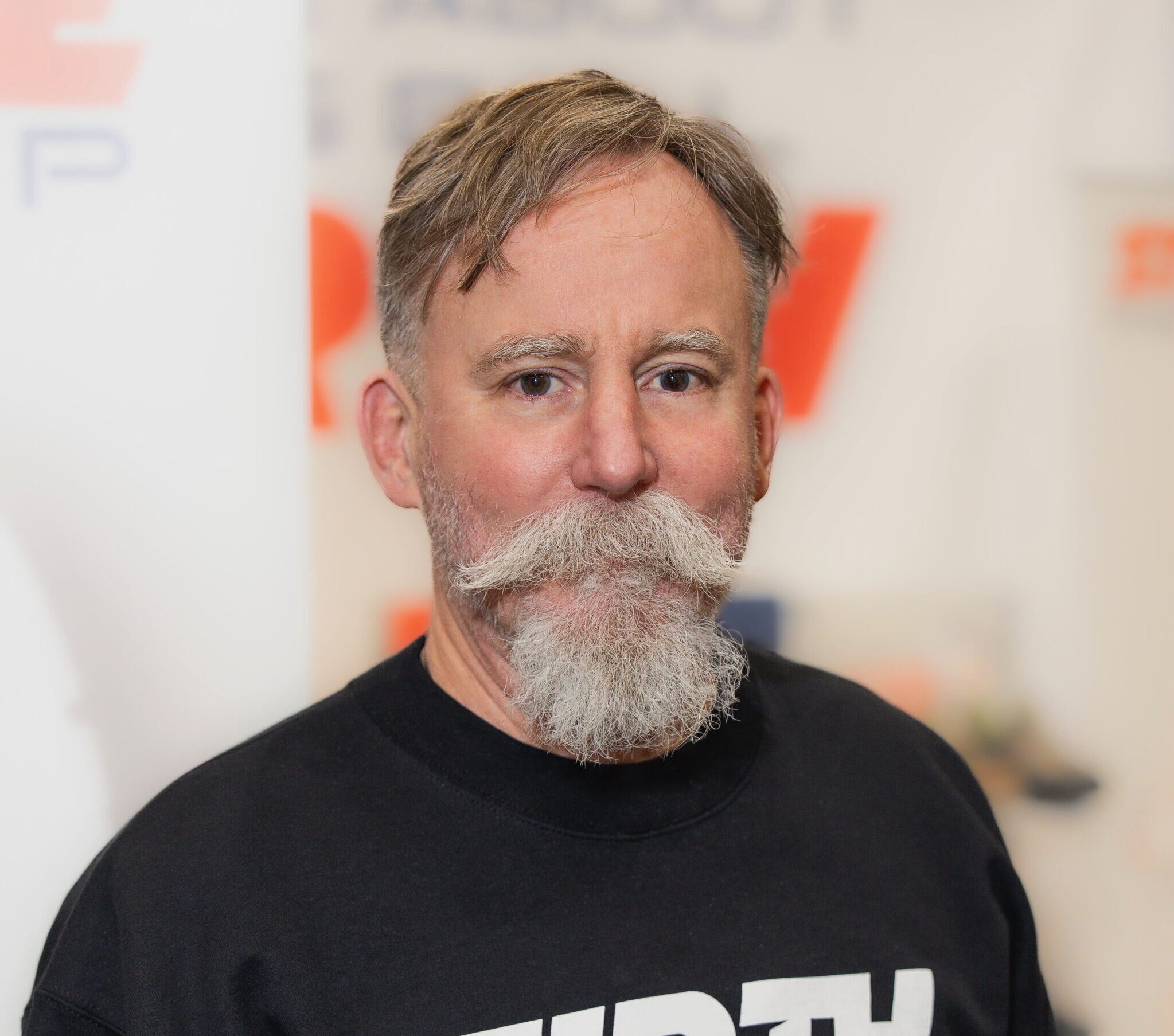

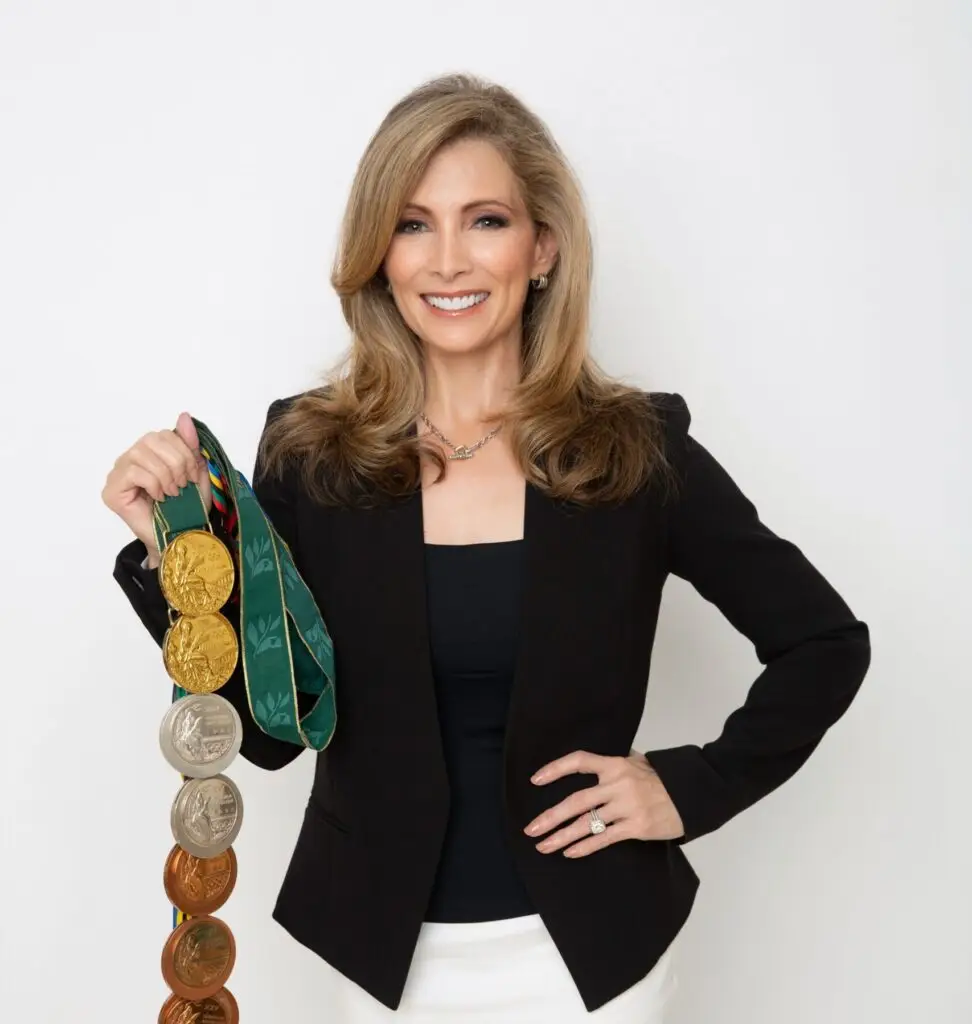
I recently interviewed Olympic gold medalist Shannon Miller on my podcast, Thirty Minute Mentors. Here is a transcript of our interview:
Adam: Our guest today is one of the greatest gymnasts in American history. Shannon Miller competed in two Olympic Games, winning seven medals, including two gold medals. Shannon, thank you for joining us.
Shannon: Thanks so much for having me on.
Adam: You grew up in Edmond, Oklahoma. Your dad was a physics professor, your mom was a bank executive, and you took to gymnastics at an early age. Can you take listeners back to your early days? What early experiences and lessons shaped your worldview and shaped the trajectory of your success?
Shannon: I loved growing up in Oklahoma. It is such an amazing community. And throughout my career, wins, losses, everyone was very supportive, so I love that. But my family didn’t know anything about gymnastics. My parents hadn’t done gymnastics. They knew nothing about the Olympics. So growing up, I was really just following my older sister. She wanted to do dance at a young age, and so I was going to follow her. I was going to do dance. My mom says that I actually had to call my grandmother and cry a little bit just to persuade her, because my parents were not going to pay for the classes. I was too young. It wasn’t worth it. We didn’t have the money, and my grandma actually stepped in and said, no, no, no, she can go. I’ll pay for it. And I loved dance. Ballet was my first love.
Then my sister wanted to stop, so I stopped, and we ended up getting a trampoline one Christmas. It was at a garage sale. No nets, no spring covers. This was the bare minimum. And we started trying to learn to do these flips. And I think my parents thought we were really going to hurt ourselves, and we needed to find some way to channel this energy. And so they thought of gymnastics. We went there, and I absolutely fell in love. I got to go into this gym, jump in a foam pit, tumble, run, swing on bars, try to do flips. I could do everything, and no one told me to stop or get off the furniture.
My sister went on to swimming a few months later, and I couldn’t leave. I just loved it. And really at that point, I was going once a week for an hour at a time. This was not heavy training. But my coach called my parents and asked if I would go more. Oh, she’s showing a little bit of talent. Maybe she can come in a few more days a week. And my parents said, no, nope. One hour a week, that’s plenty. We don’t need to do any more than that. And I begged and begged, and it was actually my father who said, look, I’ll take her for a couple of weeks. As much as she wants to go, she’ll get tired of it, and then we’ll be done. And of course, 10 years later, I was still doing it.
Adam: Shannon, I love that. And what I love most about what you shared is so often we hear stories, and we observe situations where it’s really the parent who is driving the kid’s athletic pursuits. In your case, it was the exact opposite. You developed this passion for gymnastics, and your parents were kind of indifferent, but you, as a little kid, were able to persuade them to allow you to really pursue this.
Shannon: I look back. I’m now a parent of two very active kids, and I look back at how they handled my training, my career, my coaches, and I am just in awe of how they walked that fine line so well of being incredibly supportive of all of my hopes and dreams, of what I wanted to do, but also maintaining that position of, okay, gymnastics is great, but it’s not life. Life is life. And so you’re going to spend time with the family. You’re going to have one week of vacation every year where we’re going to drive to San Antonio and see your grandparents, and that’s going to be okay.
They walked that line very well and pushed me when I needed to be pushed. And when I say that, for example, one of the things that they really helped me understand early on was quitting is different than moving on. And I just remember so clearly in 1993, and I’m asked about this all the time, did you ever want to quit? There was one time after the World Championships in 1993. I had won silver on the all-around at the 1992 Olympics. I had won the World Championships in 1993. It was amazing. This is everything I wanted to achieve. And that summer, my body hurt. I had some back issues and shin splints. Nothing crazy, but it was painful to go in the gym. I was coming home crying every day and just really didn’t want to be there. And I told them I was done. I’ve done what I need to do. I’m quitting.
They really helped me understand during that time that there’s a difference between quitting and moving on. They’d always been very clear that you don’t get to just start something and quit because it got tough. But there’s always going to be a point, especially with gymnastics and how young people are, especially during that time. Nineteen was ancient. So there’s always going to be a point when you’re going to move on, and there’s a difference. I needed to understand that difference.
So that summer, we sat down with my coaches. They sat at our dining room table, and my coach asked me, well, why do you want to quit? I told him about the aches and pains, and really didn’t have much of an answer other than that. He kept pushing me on it. But really, why do you want to quit? Finally, he said, what I’m hearing is if you don’t have any injuries, and then you’re good to go, you don’t really want to quit. I said, I don’t know.
He asked me to come in the gym just a few days a week for a couple of hours at a time, which was basically nothing because I was training almost 40 hours a week. I agreed to that. He said after a couple of weeks, if you still want to quit, no problem. I’ll give you my blessing, and we’re all good.
After a couple of weeks, my injuries were healing up and feeling better. We didn’t do anything that was hurting, and I’d learned a new skill. He got me to buy into one more week, a third week. By the end of that week, I had learned a second new skill on uneven bars, which was basically the only event that I could train. He kept saying things like, well, this competition’s coming up, and that’s so great. I know you know Dominique Dawes, and he name dropped some other athletes that were competitors of mine. That’s great, because you can sit on the couch and watch them and cheer for them. That didn’t sit well with me.
It was really by the fourth week that I was back in the game. It was really that time in my life that I understood what my parents were trying to tell me. There’s a difference between quitting because it got too tough and moving on because it’s just time. I think that’s a really important lesson for parents to instill in their kids as they grow up and as they’re in sports.
Adam: I love that. What an important lesson. Quitting is different than moving on. If you’re running a business, there’s no shame in moving on if it’s time to move on. If you’re in a job that isn’t working for you, there’s no shame in moving on if it’s time to move on.
The other lesson that I love as you’re talking about your coach, who was able to ultimately persuade you to stick with the sport and position you to get to a place where you were able to ultimately achieve the goals that you achieved. Every one of us is wired differently. In order to be a successful coach, in order to be a successful leader, you need to understand every person who you’re coaching, every person who you’re leading. Every one of us has a little bit of a different way of looking at things. We all have different backgrounds, different worldviews. As a coach, as a leader, you need to meet people where they are, and that’s exactly what your coach did with you. The rest is history.
Shannon: Absolutely. It is so important, and I think that’s why we worked so well together. My other coach as well. We worked well as a team because I understood how I became focused and what my mindset was. I’m very competitive, but I’m not necessarily competitive with others as much as I am competitive with myself. Can I learn that new skill? Can I perfect that routine? It’s not necessarily medals and awards and things that drive me. It’s how close to perfection could I come on an individual routine? So they were able to see that and work with it and understand that going into competition, my coach never said, okay, let’s go win. Let’s go get that gold medal, because that would not have helped me. He would say, you’ve done the work. Now go have some fun. And that did it for me. That was what I needed to hear before I went out and competed.
Adam: How did you get to a place where you were able to perform at such a high level? In your experience, what are the keys to attaining peak performance? What are the keys to achieving greatness?
Shannon: Well, we could spend hours on this topic. There’s so much that goes into it. But I really feel it’s important to point out for so many people, whether you’re an athlete or, like you said, if you’re in business or starting a business, I was never the most talented athlete. I was not supposed to be a winner at the Olympic Games. I had to work overtime. I had to work harder than everybody else all along the way. I wasn’t that flexible. I wasn’t that strong. I had these skinny little legs, and to look at a Mary Lou Retton or a Kim Zmeskal, I wasn’t built like that. I was built more like a ballet dancer. So to get that strength and that power, I had to work more.
But there is a great opportunity in not being the most talented or the strongest or the smartest. You do have to work for it, and often you work harder, and it means more. Now it’s great when you have talent combined with that work ethic. That’s what makes such a great athlete or a great business leader. But if you aren’t the strongest or the smartest or the most whatever for your position that you’re going after, it’s okay, because you can learn and you can work. If you have the drive, if you have the work ethic, then you will be successful, regardless of what you’re going after. Success may not be what you thought it was going to look like, but you will be successful.
So that’s what I would tell people. It comes down to grit. I love Angela Duckworth’s book. It does come down to do you have the grit? Do you have the work ethic to get the job done? Not on game day, but every single day. Do you go in and say, I’m just going to give it all I have today? Then tomorrow I’m going to get up and I’m going to give it all I have on that day. You just have to keep doing that.
Adam: What were the little things that you did on a day-to-day basis that added up to the big things?
Shannon: I’m very focused on the little things because they do add up. You think about nutrition or fitness and the things that we try to do in our 30s, 40s, 50s, and beyond. It’s the little things that add up. In gymnastics and training for the Olympics, it was those little things for me.
I look back, and my competitors and my friends who were on the team still laugh at me for a couple of things. One was sleep. Sleep was my secret weapon. Sleep is rejuvenating. It helps your mind and your body and everything. So you cannot discount the importance of sleep. It’s not being in the gym doing a ton of sit-ups, but it is so critical to the outcome. Sleep was a big one. They would laugh at me because I would get my eight hours, maybe nine hours. I would often take an afternoon nap when I could. I would sleep on the bus on the way to the Olympics. There were times they had to wake me up while I was in the splits during warm-ups. But sleep was critical.
The other thing is numbers. It goes back to I looked around and saw all these athletes, talented, talented athletes. I was with them in my own gym in Oklahoma, and I saw them competing across the nation and the world. These were so talented, and I wasn’t. So I figured, okay, I’m just going to outwork everyone. I will outwork every single person. That’s what I set out to do.
That’s the other thing they still laugh about. They would say, oh yeah, we’re busting out six routines on balance beam every day and thinking we’re doing a great job. We look over and Shannon’s like 10, 11, 12. She’s still going. I think it’s important to understand that it comes back to work ethic. Are you doing the job each and every day? Are you paying attention to the little things?
When I talk about a balance beam routine, I am working on not just did I land a skill, did I stay on the beam, but was every finger in the exact position I needed it to be in? Was every angle absolutely correct for the way the judges are going to look at it? Is it exact every single time I do the routine, not just on the day of competition, but every single routine in practice, whether it’s the first or the 15th? Did I give it absolute 100%? And when I messed up, was I willing to calmly listen to corrections and then try again, trying to make those corrections?
Adam: You shared so much there that I would love to dive into. One of the things that you mentioned, the importance of setting micro goals. Micro goals ultimately lead to your ability to achieve macro goals. You can say I want to win an Olympic medal, but how are you going to do that? One way to do it is by saying, if all of my teammates are doing six reps every day, I’m going to do 10 reps every day.
Shannon: Absolutely. Even today, I consistently set those micro goals because I know that it doesn’t matter what I want to achieve three years, five years, 10 years down the road if I don’t do the work today to get me there. It’s just like when you talk to your kids about studying for an exam. Don’t wait until the last minute. You’re not going to cram the night before. You’re not going to cram for an Olympic Games. You have to work steadily, sometimes 10 years at a time, before you get to that end goal.
So the micro goals matter so much more. They also help you have those accomplishments along the way. You can’t just wait for the big win five years down the road or 10 years down the road. You’ve got to have those wins. I like to have a win on a daily basis. I like to go to bed at night knowing I achieved something. Sometimes it’s silly and it’s just meant for me and it’s small, but it’s my win for the day. It helps me go to bed feeling like I accomplished something, and tomorrow I can get up and be energized to do something else.
Adam: I love that perspective. Success takes time. We live in a world where we see overnight success. I’ve interviewed hundreds and hundreds and hundreds of the most successful people, and I haven’t spoken to a single person who has told me that they achieved overnight success. But from the outside looking in, we see overnight success. When we don’t achieve overnight success, it’s very easy to feel dejected and despondent. But it’s important to recognize that success is a process. Success is a journey. Part of that process, part of that journey, is feeling good on a day-to-day basis. Not feeling dejected, not feeling despondent. There are going to be highs. There are going to be lows. There are going to be ups. There are going to be downs. But being able to take a step back and say, you know what, I am achieving. I am accomplishing. Here is something tangible that I can point to that gives me confidence to understand that I am moving forward toward my end goal.
Shannon: You touched on something there as well that’s so important. I feel as an entrepreneur starting another business, I look back at my Olympic career and I think of failure. That’s something we all deal with at different portions of our life and different goals that we have.
I think gymnastics and sport really prepare you to understand that failure is part of the process. It’s not the end game. You’re going to be working on a company, and I’ll hit a roadblock or go to bed thinking this is never going to work. I don’t know how this can possibly work. This isn’t a good idea. Then right before I fall asleep, I’ll think, yeah, but that’s what I thought on that really bad day when I couldn’t hit a beam routine to save my life. I fell 50 times on that skill. I never thought I was going to make it. It took me two years to learn it and finally get it to my feet. I’ve been here before. I know what failure feels like. I know what it looks like. I know that there’s a way forward.
That helps me wake up the next day and go, all right, yesterday wasn’t working, but how can I change things today so we can move forward? How can I find that next forward step after the failure, after the fall, after landing literally on my face 10 times in the gym? How do I pick myself up and take that next forward step?
Adam: That’s so important. You and I are talking because of your success, because you are a historically great athlete, one of the all-time great gymnasts. But you’ve failed way more than you’ve won. How many times have you won? How many times have you not won? Then going one level deeper, in every practice, how many times did you stumble? How many times did you set a micro goal that you didn’t achieve? How many times did you want to do something and not do it the way that you wanted to do it?
If we tracked our failures, that list would be exponentially longer than the list of successes. That is true regardless of how successful you are. In fact, in order to achieve great success, to your point, Shannon, you have to recognize that failure is part of the game. Failure is a gateway to success. If you’re unwilling to fail, that means you’re not willing to try anything that will allow you to attain real greatness.
Shannon: Absolutely. We always learn so much more through our mistakes and our failures than we ever do in our success. Success feels good, but you don’t really learn that much from it. Failure is where you learn if you’re willing to pay attention, if you’re willing to say, okay, let’s examine this. Why did it not work? Then leave it behind and move forward.
Adam: Is there a defining failure in your career that changed you, transformed you, that you look back on and say, I learned more from this moment than I did from anything else?
Shannon: It’s interesting you ask that. When you say that, I think back to this one point. I was nine years old. I was competing at my very first state competition. I was so excited. This was it. This was amazing. I got to compete at state.
I went up on my very first event, which was balance beam, and I fell right off on my first series of skills. I mean just right off the beam. I’m standing there, and you have 30 seconds to get back on the beam or you get a zero. So 30 seconds. I have to collect myself, get back up on the beam, and move on with the routine.
Luckily, my coach had discussed this with me over and over to the point where you can roll your eyes as a kid like, okay, I got it. But he talked about the importance of if you fall, you need to take a breath. You’ll have plenty of time to cry about it later. That’s fine. Have those emotions later. But in that 30 seconds, you need to take a breath, get back on the beam, and minimize deductions. From that point forward, there’s nothing you can do about it, so don’t worry about it. Just think forward.
So I took a breath. I got back up on the beam. I finished the routine. I had the next three events that I competed on. I tried my best to minimize deductions. By the end of the competition, I had actually won the state competition. The win was nice and that’s lovely, but the lesson that I took with me was you can fall and win. You can fall and feel bad about it and be disappointed, but you also have to get back up and keep moving forward in a positive direction.
It’s really interesting because exactly 10 years later, at 19 years old, competing in what was my qualifying competition to try to make the 1996 Olympic Games, I went up on balance beam, my first event, and I fell. I fell on the exact skill that I had fallen on at that state competition. I had the exact same emotion. Okay, I want to be upset. I want to cry. All is lost. But then I took a breath, got back on, minimized the mistakes, and went through the rest of the competition. I ended up winning that competition, solidifying my place on the 1996 Olympic team. I wonder, had I not had that experience at nine years old, had it not made such an impression, would I have handled it as well during such a high-pressure event in 1996?
Adam: I really love that story. There are so many lessons there. It’s critical not to obsess over the mistakes that we make. We all make mistakes. Mistakes are inevitable. They’re a part of life. We have a choice. Can we live in the past or can we live in the future? What your coach taught you at the age of nine, when you screw up, you can’t fix that screw up. All you can do is not compound it. Think forward. Move forward.
At the same time, when we make mistakes, if we view them as learning experiences as you did, that’s what allows us to achieve real greatness. In your case, you made this mistake at the age of nine, and not only did you propel yourself forward in that moment, but you said this is going to be a learning experience for me. You learned from it consciously or subconsciously to the point that it ultimately helped you become an Olympian.
Shannon: The only thing I would add is that maybe just in this day and age, when we’re scrolling on social media and everything just looks so easy for everyone else, it’s important to remember that’s not reality. Reality is failure. Reality is mistakes. There is no overnight success. It’s really important for us to remind ourselves of that. Even with all of my experiences, I still sometimes have to remind myself that success is not going to happen overnight. It is going to happen with steady, consistent work, concentration, and some flexibility. It’s also going to mean working through the mistakes and the challenges and the failures. But if you’re willing to do that, the upside can be so great.
Adam: Your journey to success required you to perform under pressure in the biggest moments. What are the keys to performing under pressure?
Shannon: For me, a lot of prayer. One of the assets that I brought to the table was that I was very shy growing up. What I mean by that is I grew up where I put myself in this little bubble in gymnastics. I didn’t have to look anyone in the eye or talk to anyone. I could just do the sport and do a zillion repetitions, and do the work. I was a workaholic. My coach would mostly handle interviews. I didn’t enjoy doing that.
Allowing myself to learn how to be in a bubble actually helped me because I would go into competition and I wouldn’t see the crowd or hear the crowd unless I really wanted to. I became very good at being able to allow this audience to come in exactly when I needed them to, and then I wouldn’t hear them when I didn’t. They might be cheering for somebody completely different that’s competing on a different event. But if I needed the adrenaline rush at the end of a floor routine, last pass, and my legs were dying and giving out, I let that audience in and believed they were cheering for me. I went for it.
I think for me the ability to tune things in and out, to put my game face on, put that different persona on, and just go out and compete was key. I always say I may not have been the most confident person growing up. I don’t know that I am now the most confident person. But if you can pretend that you’re confident, if you can pretend that you walk out there onto the Olympic floor or onto the stage and you’re ready to go, the more you can pretend that you’re confident, the more you will actually become that confident person.
For me, my confidence had to come from the work that I put in. It’s easy to go into competition and feel nervous. I always tell young athletes, if you’ve done the work, then let those nerves work for you. Let those nerves tell you that you care, that you’re excited, that you want to do well. Those nerves are positive indications that you want to do well. If you’ve done the work, that’s the perfect recipe because you’ve done the work and you want to do well.
I look at 1996. I also look at 1992. 1992 was my first Olympic Games. I remember walking out into the arena in Barcelona and just being awestruck. So many people there. It was incredible. But I was new. I was barely supposed to make the team that year. I had come off a horrific elbow injury where just 10 weeks prior to the Olympic Trials, I had broken and dislocated my left elbow. I was counted out but ended up making the team. So anything I did was going to be great. We hadn’t been on the podium, certainly as a team, so there wasn’t as much pressure.
In 1996, we walked in as home soil athletes that had been on the podium. While we had never gotten gold, expectations were incredibly high. To walk out into that arena, you have to channel the enthusiasm and the media and all of these expectations in a positive way. You can choose to tell yourself, oh my gosh, what happens if we don’t win? Everyone will be disappointed. That can overwhelm you. I had those feelings too. But you have to close the door on those feelings of letting people down and disappointing people and say, nope, they’re here for me. All I’m hearing is cheering. That’s support for us to do well. They’re here to support us.
It’s a small change in your mentality, but it makes a huge difference in the stress and pressure and focus that you’re putting solely on your own performance. I think it allowed me to take a breath and say, okay, I’m here. I’ve done the training. I’m going to do my best. Everyone’s here to support. Let’s go have fun.
Adam: You mentioned the 1996 Olympics, a historic Olympics for women’s gymnastics in the United States. The first-ever US women’s gymnastics team to win an Olympic gold medal. You were the leader of that team. You were the leader of the Magnificent Seven. What do you believe are the keys to successful leadership? What can anyone do to become a better leader?
Shannon: First, I’m just going to say we have our 30th anniversary coming up, and I can’t believe it’s been that long since the 1996 Games. I was a points leader for that team, but I don’t know that I ever felt like a true leader. I was not very vocal. Again, I was very shy growing up.
My position in gymnastics: it’s really not a team event. It’s a very individual sport. Once or twice a year, you come together as a team. It’s not like volleyball or basketball or football where you’re out there together passing a ball and doing those things. For me, my focus was always get the highest score I possibly can on every single event. That’s how I can best help the team. That’s where I put my focus.
I’m a strong believer that when your individual goal aligns with the team goal, that’s when the magic happens. That’s what I tried to do. As a leader during that time, I was much more focused on leading by example. Can I be a good example of practice and work ethic and attention to detail and showing up each day? Also, how I handle myself off the field of play. Am I getting the sleep? Am I getting the rest? Am I focusing on rest and recuperation? Those things are important. I wasn’t much for vocalizing that or telling other people what to do.
I look to teammates like Amanda Borden. Amanda Borden was our team captain, elected unanimously. She was amazing because she had this ability to keep everyone calm and positive and feeling supported throughout the competition. I think it was a great thing for our team to have someone there who was always the positive voice in the back of our minds.
I’ve learned so much more about leadership since the Olympics and since gymnastics, now moving into being a parent. As a parent, you’re a leader every single day whether you like it or not. Often, you’re leading more by example. We’ve always heard people say your kids will do what you do, not necessarily what you say to do. That’s important to acknowledge.
In business, I’ve started multiple businesses. Do I count myself as a good leader? I think I’m getting better at it. I’m understanding the difference between just managing and doing a good job versus truly leading people to do what they do best.
Adam: How can anyone develop a winning mindset?
Shannon: It takes practice, just like everything else. You don’t have to be born with this ability to have a great mindset. You do have to be conscientious. You have to be intentional about that mindset and know that it’s not going to be there every second of every day. That’s okay. We all get to have those days where we’re just off.
When I think about mindset, when I go out and speak across the country, I call it the gold medal mindset. It includes goal setting, positive mindset, teamwork, resilience, and a commitment to excellence. That’s not just during the important times. That’s every single day. Am I committed to doing the best on this paper? Am I going to do the best on this skill or this beam routine even though the competition’s not for a year?
Those things are at the top of my list as far as how to have a really good, positive, winning mindset going into things and understanding that it’s not one thing and it’s not one day. It’s creating a habit of that mindset. Am I thinking about those macro goals and the micro goals every single day? Am I checking something off my list every single day that will move me toward that goal? Am I trying to keep a positive mindset? Not being cheery and smiling every single day, 24, 7. Am I trying to find the joy in something each and every day, no matter how small it will be?
I was diagnosed with ovarian cancer in 2011. Trying to find the positives during that time was difficult. But every day I got to wake up. Some days that’s about it. That was the positive thing. I got to get up today. On days that I got to walk around the table twice, that I felt good enough to get dressed and brush my teeth, and then go back to bed, okay, that’s my plus for today. There is always some little piece of good and joy that we can grasp onto. That is so important to keep us excited and feeling good about moving forward, especially in those really tough times.
Teamwork is a really important one because we’re always part of a team whether we realize it or not. It might be the family team and the family function. It might be your work team. It might be a sports team. But you’re always part of a team. Understanding who the other people on that team are is important.
For me during gymnastics, I didn’t just look at the other athletes on the field of play all wearing the same uniform. I thought of my team as my coaches, my parents, myself, and even people like my teachers who helped me stay up with my education while chasing this Olympic dream. People in the community rallied and raised money so my parents could afford to go to Barcelona and watch me at the Olympic Games. It was incredible support.
You have to acknowledge that you do have a team. That takes some of the burden and weight off your shoulders, especially during tougher times. When you are having good times, you also have the ability to reach out and help someone on that team.
Adam: Shannon, what can anyone listening to this conversation do to become more successful personally and professionally?
Shannon: I think goal setting is such a big one. These don’t have to be crazy, exciting goals. It doesn’t have to be I’m going to win an Olympic gold medal. It can be something you want to achieve. It can be a mid-level goal. It can be a huge goal. It can be just I want to get six loads of laundry done today, and then I’ll feel good about what I accomplished. That’s okay. But you’ve got to have a goal. Then you’ve got to have a plan to accomplish that goal so you always feel that positive forward movement.
On those days when you have negatives, failures, mistakes, and you’re taking a step back, it’s okay because you know how far you’ve come. You’re taking a little step back, but you’re reevaluating, and you know you can move forward again. So those goals are important.
Understanding your team is important because we’re all going to have tough days and tough times in all different facets of life. Don’t ever be afraid to lean on that team. In survivorship, you’ve got to know your team. You’ve got to be willing to reach out and know that you should never go through cancer alone.
In business, you need mentors, whether they’re in your business or not. You need to surround yourself with great mentors who know more than you do, who can talk with you when things go bad, and also when things are going well. So I think those are two important things: goals and teamwork.
Mindset we talked about. I also think understanding the commitment to excellence and combining that with work ethic. It is important to do the work. There’s no way around it. If you want to be successful, you have to do the work. Put it on your list every day. Know exactly what you need to accomplish, what you want to accomplish, and then make sure you’re checking it off.
Adam: Shannon, thank you for all the great advice, and thank you for being a part of Thirty Minute Mentors.
Shannon: Absolutely. Thank you so much.