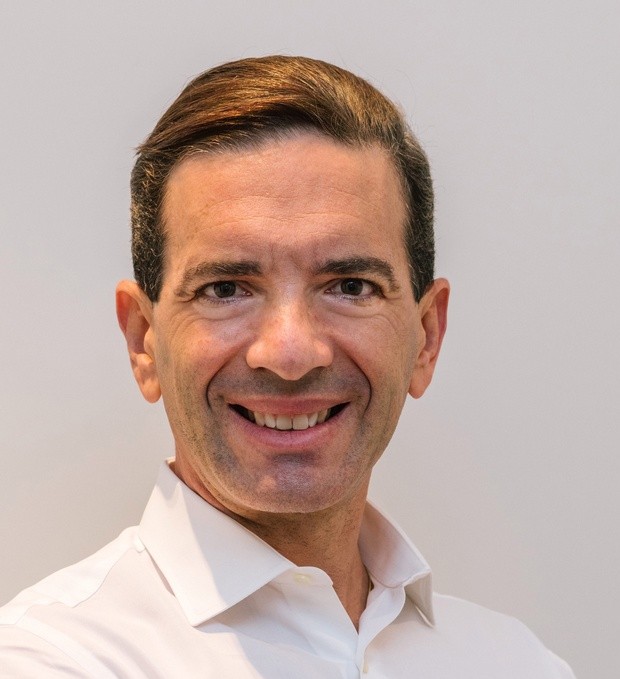

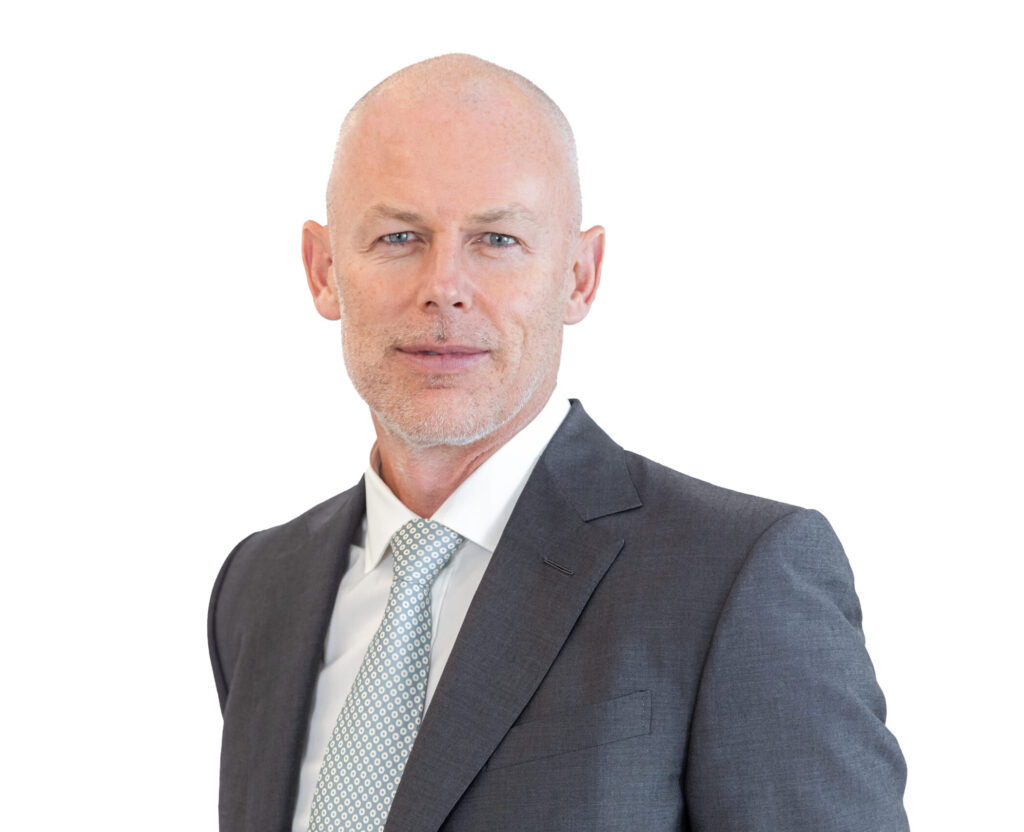
I recently interviewed Stonepeak Co-Founder and CEO Michael Dorrell on my podcast, Thirty Minute Mentors. Here is a transcript of our interview:
Adam: Our guest today is in the top half of the Forbes 400. Michael Durell is the co-founder and CEO of Stonepeak, a leading infrastructure investment firm with more than $80 billion in assets under management. Michael, thank you for joining us.
Michael: Hey, Adam, good morning. Great to be here. Thanks for having me.
Adam: You grew up down under in a small farming city in rural Australia. Can you take listeners back to your early days? What early experiences and lessons shaped your worldview and shaped the trajectory of your success?
Michael: That’s a great question. So I did grow up in a country town, a little town called Griffith, about six or seven hours’ drive southwest of Sydney. Sydney is on the east coast of Australia, a beautiful city. I encourage you to go visit Sydney if you get the chance. I maybe wouldn’t go to Griffith. I love Griffith. It’s very down-to-earth, what you would expect. Rural folks love sport, love the outdoors.
I’m the oldest of five. I had complete freedom of movement from a very young age. I would BMX bike to school from the time I was in third or fourth grade, and it was quite a ride, probably a half-hour ride. But I take it back, maybe it’s two miles to school. We’d go out with my buddies in the national park and just explore, rock climb, and basic stuff. We were little kids, but complete freedom of movement. I think that is incredibly shaping on who I am today.
I’m living in New York City, and you’re over in LA. I think this is true, maybe more of New York City, but it’s true of all big cities. I grew up with four siblings, so five of us all together, but I’ve got five kids. I’ve repeated what I grew up with, I suppose.
So I think a lot about parenting in the city. There’s so many great things to offer in New York City, but it’s a very controlled existence. Everything my little kids do really needs to be organized by the parents, or the parents need to be there. You can’t just roam wild.
So I look back at my childhood, and look, you have some disadvantages being in a little country town. You don’t have the culture and education. You don’t have everything that New York City or LA has to offer. But my goodness, you’ve got complete freedom, and you’re self-directed. And I think that’s a huge shaping of where I am today.
I spent a lot of time thinking about how do I get my kids to be able to get that same experience of self-directing themselves from a young age. But that was really shaping on me.
I’ve had a journey in a job and on Wall Street where no one from Griffith is doing the same thing, or from anywhere near Griffith. I thought that shaped my personality in a more unique way. But the more time I’ve spent around people who grew up in country New South Wales, which is the rural area, the state where I grew up, I just kept trying to realize that’s who I am. That’s where the core of my personality has come from. So anyway, that’s where I started.
Adam: I love that so much of our success is driven by our mindset, driven by our determination. And at a very early age, you realized, I get to control so much of what I do. And you use the phrase self-directing. In life, we get to choose. Are we going to do this? Are we going to do that?
Michael: I think there’s a misnomer that the most important part of our brains is the academic part of our brain. We really intensively, more intensively than ever, put our kids in academic situations. We want them to excel academically as much as we can. And that’s great. I’m a big supporter of traditional academic education, of course.
But there are whole other areas of the brain that I think we maybe don’t pay enough attention to. I think the ability to work outside of structure and to just work it out is maybe the easiest way to put it. I don’t know that traditional schooling does the best job of that.
In my experience, some of the best hires we’ve ever made at my firm are folks who grew up on farms. They’re almost inevitably not as well educated in history or the arts or whatever it happens to be as folks who went through more serious schooling. But I think because at a young age, they were going and collecting the eggs, and they had to round up the sheep and put fences in, and they were just 11, and they’re riding bikes around the farm, et cetera, they’re just used to being on their own and having to work out what to do and how to fill up their time.
And they, I find, have incredible executive function, incredible ability to just go out there and win over all sorts of different people. Because you look at the key driver of success in life, it’s normally not how good you are at math or how good you are at writing or what have you. It’s generally how good you are at winning over people and how good you are at navigating situations to get to the result you want.
I’m not sure that’s training you get in a formal education. To me, that’s more what you pick up along the way, hanging out with your buddies and doing stuff outside of school, without adults maybe hovering over you to tell you what to do all the time.
So that observation has weighed pretty heavily on me over time, and it’s something that I certainly am very aware of in my parenting. And everyone’s got their own parenting style. I’m not saying I’ve got all the answers, but I certainly have observed that there is something in as much unstructured, you might call it unstructured play, maybe it’s the modern term we would use. But the parents are out of there. The kids are out often in nature, doing what they want to do for hours, not get in trouble, obviously, but just be able to make their own decisions for hours.
Anyway, that’s one observation I would make, both from my own childhood, but just from observing folks that we’ve hired over time.
Adam: A really important lesson that you’re sharing is, as a leader, as someone who is in a position to hire people, when you’re trying to figure out who you want to surround yourself with, look beyond the traditional markers. When we put so much emphasis on what school you went to, what company you work for, what your measurables are, we devalue what really matters. We devalue what you just talked about. Your ability to win people over, your ability to navigate the most difficult situations, your ability to get things done. That’s what matters.
Michael: The highest hit rate that you could have in hiring, in what I do, is finding someone who has changed the trajectory of their life.
And just to give you a simple example, if someone went to public school or state school in a poor part of the city somewhere, or a rural town somewhere, and they managed to get themselves in a position where they genuinely are able to come and apply for a job at our place. So somehow, they’ve maneuvered themselves to be a legitimate candidate for a job at a big private equity firm on Wall Street.
That person has a very, very high hit rate of succeeding, because they have shown, just by virtue of what they’ve done, they’ve navigated from somewhere you wouldn’t expect to see them here, and they managed to figure out how to get the right results at school, how to win over the right people. They’ve obviously had incredible internal ability to grind and fight and endure. Not many of their buddies have been on the same path, so they’re doing it on a somewhat lonely path. That is a very, very high success rate.
And I’m not saying you have to do it that way. We’ve got plenty of great people who did it the more traditional way. I’m just saying that when you start out at a disadvantage, you might call it, that absolutely can be turned into a huge, huge asset for you through perseverance and hard work.
Because if you can start at a disadvantaged position and end up in a role where you’re competing with folks who had an easier start than you did, you are so much better equipped to win in that situation.
So I sometimes sit there, and I hear politicians, for example, might talk about those who are disadvantaged and blah, blah, blah. I think there’s a misnomer there. That’s one of the greatest gifts you can have, to start off in a little bit more of a difficult situation, because it gives you the opportunity to fight your way through that and reach levels that, if you didn’t start that way, you can never reach.
So maybe I’m saying that because I feel very fortunate to have started off myself in a slightly tougher situation than maybe others who have ended up in this role. But I look back at it as a huge gift to have been able to start in a little town, go to public schools, do that sort of thing. It just means you got to fight a little bit harder to get to where you got to. And I think that that is a blessing in the end.
Adam: How did you get there? How did you go from a background that is not what anyone expects when you comprise a profile of a candidate for a job at an elite Wall Street firm to where you are now? What were the key steps? What did you learn along the way?
Michael: So it was a series of little steps. It’s fair to say I didn’t have any concept of what Wall Street was when I was a young kid. My dad’s a science teacher. Mum was a social worker who became a psychologist over time. So not a business family at all.
And so as a result of that, you never talked about business, and I’m not around business people in my schooling either. But I always had an underlying pretty strong ambition and very, very strong work ethic.
I candidly didn’t work real hard at school up until 11th grade. And that’s a little bit a product of how Australia, where I’m from, works. In Australia, to get into a great college, all that matters is your last two years at school, 11 and 12. And all that really matters in those two years is how you do in your very final exam. So it’s a little more event-driven, big exams at the end of high school, than here in the US, where it’s measured maybe much more over a longer period and based on grades earned over a longer period.
So in any event, I didn’t do a whole lot of schoolwork, but I was incredibly engaged otherwise, played a lot of sport, spent a lot of time with my buddies, et cetera. I’ve always been very energized. But then I got serious and knuckled down in 11 and 12, did very well in the end in those final exams I talked about, got into a great college, and from there, got into a great company in Australia.
But there were a few pretty big steps along the way. So I went to a public school from seventh grade through 10th grade that I loved. I had great buddies there, and it was a good school for what it was, but it’s fair to say that the ambition there was pretty low. No one was shooting for high grades at that school. I think the teachers were so used to kids not getting high grades that they didn’t really expect or drive for high grades. And so it was pretty clear that I would not do that well academically had I stayed at that public school.
So I sought to change schools for 11th grade, and I ended up getting a scholarship to a boarding school in Sydney. That school was far, far more ambitious, and the kids were far more ambitious, and that was a huge moment for me.
I’m a very social guy, and so if none of my buddies are doing any schoolwork, I’m not going to do that independent. Whereas at boarding school, they just have everybody go off to the classrooms at 6:30 at night, and you study for two hours. You’d have a 15-minute break, then you study for another hour, then you go to bed. And because everyone was doing that, it’s what you do. It feels very normal. You’re sitting with all your buddies in a classroom at night studying.
I love that. And so I worked very hard through that period, but I certainly took away the lesson that it’s much, much easier to do well if you’re surrounded by people who are likewise trying to do well and who are ambitious. It’s very hard to do that on your own.
So boarding school was incredibly important and impactful on me.
And then similarly, when I went to college, I was with the top of the top students in Australia. I did a business and law degree at one of the top universities in Sydney. If you do very well at high school in Australia, you tend to either go into medicine or you go into business law. And so I didn’t do medicine. I went into business law.
And once again, I didn’t work very hard through university academically. I’d go out a lot. I had a part-time job. I spent a bunch of time on other things. But I didn’t work hard academically. But I was with a group of kids who were very ambitious and very attuned to what job opportunities were out there in a way that I wasn’t.
And so because of that, you then start to learn about what a legal career is. You start to learn about what a banking career is, what a private equity career is. So once again, just being around a group of folks who are going places that you want to go, they almost carry you along in the stream.
So if I hadn’t gone to the boarding school and then hadn’t got the grades to go to the top university I went to, I think it’d be very hard to get to where I got to.
So summarizing that, I’ve never said it this way before, but it’s just shifting yourself to a group of folks who are running in the direction you want to run in, because then they become your friends. And then all of a sudden you’re just doing it with your friends, and that’s far easier than your friends going out all the time and doing their work, and you try to do it on your own. I think that’s a hard road to hoe.
So that’d be one lesson from that part of my life.
And then I was fortunate enough from my university to get into an investment bank called Macquarie, and that is a top, top place to work. And again, getting in with a bunch of people who are entrepreneurial, ambitious, et cetera.
Once again, those early days at Macquarie, where I was working straight out of university, they were some of the most thrilling in my life. I loved working with those folks. You’re in a pressure cooker together. We were regularly working 80, 90, 100-hour weeks. Often you have done nothing all day, and then at six o’clock on a Thursday, your boss would come and say, “Hey, I need this presentation tomorrow morning.” And then you’d have to work all night.
And you’d think to yourself, geez, if you gave it to me this morning, I’d have it done by now. So you’d feel a bit hard done by. But that was just life, and it was tough.
But I look back at that and think it’s a little bit like you look at what the Navy SEALs go through to become a Navy SEAL. They beat the hell out of them, and that’s what investment banking was to me. They beat the hell out of me, and they beat the hell out of my peers, and it toughens you up. It gets you very, very good on the detail.
But I also formed wonderful friendships during that time, because you’re in it together. And then we’d all go out on Friday night, and we’d all let loose, and then Saturday and Sunday, we’d be back at it. Usually doing six days a week, sometimes seven days a week. Tough, tough going.
But again, I just think at that age, you should be running so hard, and therefore you should be at a firm and in an environment where they’re challenging you to run that hard.
And again, I’m not saying you can’t do any of these things on your own, but it’s very, very tough. And so if you’re in the right environment with the right people at the right place, it just happens a lot more easily for you.
Adam: How did Stonepeak come together? What gave you the confidence to go out on your own, and how did you build it into what it is today?
Michael: So I really had the opportunity thrust upon me. I had been working in infrastructure for about a decade when it became a hot asset class on Wall Street. So in ’06 and ’07, we went from Macquarie being really the only private equity infrastructure investing firm in the US, to every major Wall Street firm starting an infrastructure fund. Goldman started one. Morgan Stanley started one. Citi, Credit Suisse got together with GE and started a firm called GIP.
So it was a time where I just happened to be expert in an area that was very sought after by investors. And it was one of those moments where I had aspirations to be entrepreneurial for a long time, and it struck me that if I was ever going to exercise those aspirations or pull the trigger, now is the time.
I felt a little bit young. Candidly, at the time, I was in ’06, ’07, I would have been 33, 34. But it was just so obvious that here was a time for me to be able to take advantage of this expertise I had.
So that’s what the trigger was. I teamed up with another person at Macquarie, Trent Vici, who was a fantastic co-founder, and off we went and started a firm together.
For those who are less familiar with infrastructure investing, we go and find assets in really three categories. It’s digital, it’s energy, and it is transportation and logistics. In the early days, it was a lot of airports and toll roads, and over time, it expanded a lot.
So today, within transport, maybe it’s ports and other logistics assets. Within digital, it’s data centers, it’s cell phone towers, it’s fiber assets. And then within energy assets, you’ve got both traditional energy, so gas pipelines, oil pipelines, gas processing plants, power plants, and then you’ve got renewables, wind and solar and batteries.
So that’s a bit of a taste for the spread of the types of businesses and assets that we go and invest in.
And the interesting facet of those businesses is that they tend to have very high barriers to entry. They tend to be assets that will endure well into the future, really, regardless of whether you manage them well or manage them poorly, which is very different from a normal business.
So if you’re running a typical business, you don’t manage it very well, someone will come along, they’ll be more efficient, they’ll run you out of business. But if you’re the management team of an airport, or an important toll road, or the local electric utility, or the local water utility, or the local cell phone tower company, you know what, it doesn’t matter how badly you manage that asset. It’s very, very difficult to compete with that.
And that’s the key touchstone of what we invest in. It’s why investors like it. Relative to a typical business, it is a lower-risk business operationally. It’s just a business that will endure. Therefore people pay more for it. And so that’s really where we spend a lot of time analyzing.
But one of the key risks we analyze is, despite this being a great asset, how much can you pay for it?
Adam: You bring up an interesting and important topic, which is the importance of understanding the barriers to entry to the industry that you’re in. And if you’re in an industry where there are low barriers to entry, you could have a great idea, a great business, and tomorrow someone comes in, and next thing you know, you’re fighting for your life. Whereas if you’re in a high-barrier industry, you have a lot more breathing room.
Michael: A barrier to entry that may be typical in a more competitive business would be, are you the low-cost producer? If you’re the low-cost producer, that’s a really nice moat to your business.
So take Walmart, for example. Walmart’s in a very, very competitive industry, but it’s consistently been the low-cost provider of supermarket and other goods, and that gives it its barrier to entry.
But that’s a very, very tough moat to keep up. You’ve got to be consistently excellent to be the low-cost provider. So that’s one way to go and invest.
Another way is maybe you’ve got some technology that is just superior to anybody else. It’s sometimes difficult to know how long that will endure, however. Technology changes and advances, et cetera. And so what might be a fantastic investment for two or three or four or five years, it may not last forever.
And we can all think of lots of companies whose, the classic example everyone will always talk about is Kodak, which was the leading company of its day. Then we went to a different technology, and Kodak pretty quickly got just about run out of business.
So it’s this almost impossibility of running these infrastructure businesses out of business that makes them so appealing.
Adam: Can you talk a little bit more about your approach to investing? What else do you prioritize? And what other advice do you have for anyone in the investment business?
Michael: I think one of the really key metrics to look at is return on capital. And all I mean by that is, if you go into the financial statements of a business and you look at all of the capital cost to build that business, and then you look at the earnings of that business, what’s that percentage return? That’s a really, really good indicator of the quality of a business.
So if I go and put $100 million building a factory, and that factory produces me $20 million of earnings each year, that would be a 20% return on capital.
And what you find is that for a business that’s been around for some time, if you can maintain a high return on capital, that suggests that you do have nice barriers to entry for that business. Because what will happen if you are in a highly competitive, low barrier-to-entry business, inevitably over time, new competitors will come into that industry. The price you can charge will go down. That return on capital percentage will get a lot lower over time.
And I think a typical return on capital is maybe high single digits or very low double digits. So if you can get a high teens or something in the 20s or higher, that’s an incredibly good indicator. So that’s a metric we would look at, almost the first metric that we would look at. So that’d be one little bit of advice.
But there’s no magic to it. It’s like anything in life. You’ve got to work incredibly hard at something to understand it.
And so I’ve been doing the infrastructure investing game for 25, 26, 27 years or so. It probably took me the better part of 20 of those years to really feel like I knew what I was doing.
Even then, we still come across assets where I’m learning very frequently, with point assets that are just somewhat different from what I’ve looked at before. Now I’ve got a very good construct in my mind as to how to think about a new business, because I’ve been doing it for so long. But I find I’m on a learning curve all the time on new businesses we look at.
So there’s no easy path to it. It’s like anything in life. It’s working incredibly hard at it, incredibly consistently, over a long period of time.
Adam: There’s no substitute for experience. There’s no substitute for going out, doing the work, putting in the time, putting in the hours. In your case, putting in the decades, experience and energy.
Michael: I think energy is a good substitute. I’m a big fan of energized youth. I’ve got to say, you get a lot out of that. If you can combine it with experience, even better. That’s a challenge in everyone’s career.
I think we all start, hopefully we start full of energy and running hard, et cetera. And one of the elements to success is, how long can you keep that up? How long can you keep the passion up for it?
To this day, I’m unbelievably passionate about what I do, almost more passionate today than when I started, perhaps. And I think a little bit of that is because my job has evolved over time, and so I get new challenges and different problems to solve all the time. I’ve never got to a point where I feel I’m repeating the same thing again and again. And that’s probably a little bit of a recipe for boredom.
And I will say this as well, that it’s not like every day, as I was coming through my career, I was banging down the door of the office to get to my desk. Some days I was like that. Other days it was a drag, particularly in the middle part of my career, well before Stonepeak. There were days I just didn’t feel like walking through that door.
And you just do. You just keep going, and you keep slogging at it. And over time, you accumulate so much knowledge, and hopefully you get good at your area of expertise, you start to enjoy it more. That was certainly my experience over time.
It’s common sense, but there’s just something to consistently working hard over time. It just accumulates to a good spot.
Adam: What does a typical day look like for you, and are there little things, little habits that you’ve found add up to make a really big difference?
Michael: For me, personally, I work better with structure in my life. If I go right back to my childhood, I lived an unstructured life, and I spent time living a structured life, and structure just works a lot, lot better for me.
There’s that famous Einstein quote that life was like a bike. You got to keep going forward or you’ll fall over. That’s how I find I need to feel. Like I’m going forward.
Exercise has been a huge thing for me. I’d say life-changing for me. It might not be for everybody, but almost every day, I do find time to go and work out. It changes over time as to what I do. Maybe I ride a bike, sometimes go to the gym. I used to do a lot of running. I don’t do much of that anymore, sadly, but I loved running when I was doing it. I walk quite a bit. But I find exercise incredibly important.
I find getting up early very important. For some reason, I just notice my mindset is different if I get up at 6:00 a.m. versus getting up at 8:00 a.m., to take maybe the two extremes of when I would get up. Again, I know people are programmed differently. Some people are nighttime people, others are morning people. But for me, getting up early is really important.
Eating well is really important. I just need to feel like I’m together. If I feel like I’ve got my fitness and my health and my family life together, I find I’m a lot more effective at work. And that’s something I discovered over time. It’s not like we come with a manual that we read that tells us how we all function better. But over time, for me, it’s those elements that make me function a lot better.
I remember early in my career, I read Lance Armstrong’s book, It’s Not About the Bike, which I look back at that book, and it was full of a lot of bullshit, really, because all the drug stuff came out afterwards. But nevertheless, I still took a bit away from that book.
And two things struck me. I still remember this to this day. One was, if you find yourself feeling sorry for yourself, or down in the dumps, or whatever it is, just pick yourself up. There’s no point in life being that way. Essentially, stop complaining. Stop complaining. And if you find yourself complaining all the time, go and change it. If you’ve got a complaint and keep doing the same thing, then that’s a little bit your own fault. So that struck me, because I was a little bit of a complainer back in the day. I’d find myself complaining about this, complaining about that, and that really struck me and stuck with me.
But the other one, maybe more so, was something like this. We all suffer. You can never escape suffering. We all suffer. So Armstrong said he’d rather suffer on his own terms. And suffering for him was on the bike. He’d go out, and he punished himself on the bike. And that was his suffering.
That really resonated with me, that expression. For me, at least, I found a lot of truth in that. I don’t think you can escape suffering in your life in some form or fashion. And I have found, again talking for me, that there is an ability to do that on your own terms. And I find I do that to a large degree in the gym through my exercise. It’s not the only way to do it, but I’ve found if I suffer in the gym, I don’t find myself suffering very much elsewhere in life.
So that also stuck with me. There’s a couple of little sayings, maybe a dozen or so over time, that have built up in my little repertoire, but those two were maybe the first two and probably been the most impactful on me over time.
Adam: A huge part of your responsibility as a leader, as an investor, revolves around making decisions. Making big decisions, making small decisions, but you’re making a lot of decisions. What is your approach to decision-making? What is your best advice on the topic of decision-making?
Michael: You get the best decisions when you get a group of smart people who have an intellectually honest debate with you. That will get you to the best decision most of the time.
And so that’s what we try and foster here, because we do make a lot of decisions, some more important than others. The most important decisions we make would be investment decisions, and I’d put hiring decisions pretty high on that list as well.
And so from an investment decision perspective, that’s what we do. We have a group of people who go and review all the materials, and then we debate, in a very robust fashion, the merits and risks, et cetera, of the particular investment.
And we’ve been at huge pains to make sure the culture feels supportive, because if you’re in a room of supportive people, you’ll have an honest debate. If you criticize someone’s point or challenge someone’s point, they won’t take it personally. They’ll take that as a legitimate intellectual exercise to debate that out.
Whereas if you’ve got a room full of folks who feel unsupported and there’s heated rivalries and emotion in the room, it won’t be taken as an intellectually honest debate. It’ll be more of a personal attack. And that doesn’t work at all.
So creating a very supportive culture and a culture of very honest debate is very important.
And then there are certain decisions I can’t debate. There are certain decisions that maybe they’re personnel decisions that I just have to make. And for those, I’m a big believer in doing a bunch of research on the decision and thinking about it a lot, but then getting some distance as well.
An awful lot of the thorny problems that I think about are resolved on a run or on a bike ride or in the gym or on the walk home, wherever it happens to be. But they’re resolved at a time where I’ve got a little bit of distance from the office. And generally I’m doing something. For me, it’s generally something that revolves around exercise.
And I’m also a big believer, this one’s from my mom, if you’re tired or you’re down, that’s the worst time to make a decision. Go and sleep on it. Be aware when you’re not in the best frame of mind to make a decision and don’t make it. Go and sleep on it. Wake up in the morning, and often something that was confounding to you the night before is obvious to you the next morning.
Adam: Mike, you shared a lot of great advice. Sometimes, the most important thing to do when you’re tasked with making a decision is to understand that now is not the right time to make the decision. Not because you’re indecisive, not because you’re not capable of making a decision, but because you’re not in the right frame of mind. You’re too tired, you’re too distracted. How do you do your best thinking? For each of us, it’s going to be a little bit different. In your case, Mike, it’s by moving around, doing something physical. For someone else, it could be doing the exact opposite. It could be in a meditative state. But however you do your best thinking,
Michael: I kind of comment on your meditative comment. I would count myself as a huge skeptic, or would have counted myself as a huge skeptic of meditation if we’d had this conversation three months ago. But I was convinced by someone to go and try it, and so I did try it, very skeptically.
And from the very first time I tried it, and this is just 10 minutes, I couldn’t believe the impact it had on me, the calming effect it had on me. I cannot recommend it highly enough if you haven’t tried it before. I strive to do it 10 minutes a day. I don’t always get there. I find for me, it’s best in the morning, when I’m a little bit more alert.
But in any event, I just needed to comment on that, just given the initial skepticism, but any experience I’ve had doing it. So I highly encourage folks to give that a try.
Adam: I appreciate you sharing that, not only because you’re recommending a habit that might be helpful to people, but because of the broader point, which is that there are plenty of things out there that we’re probably not doing that we might think are a waste of time that we’re in some ways repelled by. But if we give them a chance, they could actually be things that we enjoy. They could actually be things that enhance how we perform, enhance our life, enhance our well-being.
Michael: I think so. I also think it’s surprising how many hours in the day you find you can have when you start putting these things in. You think, I haven’t got time for the gym. I haven’t got time for meditation. I haven’t got time for this and that. But once you start it, you realize that, in fact, you’re so much more effective in the other times of your day. It pays for itself with time, in my experience.
Adam: What is your approach to leadership? What do you believe are the keys to effective leadership, and what can anyone do to become a better leader?
Michael: I use a comment from my dad. My dad said any coach can look great when they’ve got great players, and it’s probably not that dissimilar to what I’d say about my leadership. I’ve got the most incredible team here. I don’t think anyone could go wrong with the people I’ve got. So having the right people can make you look like an excellent leader.
I’ve seen lots of different styles. I’ve seen people with styles completely opposite to mine be highly successful. So look, I think lots of different styles work.
But for me, I’m a huge believer in getting very smart people, putting them on the front lines, and putting a lot of decision-making in their hands, so that the folks who are in the fray are able to make decisions based on everything they’re seeing in real time.
A little bit like, you know, they talk about how the US military operates relative to, say, the Russian military. In the Russian military, the folks at the top make calls, and all the troops on the front line, it’s very difficult for them to make quick decisions or change the way they’re doing things, because they’ve got to go back to the bosses, back in headquarters, before they can make a change.
Whereas in the US, it’s a lot more decentralized decision-making, and the people on the front lines are given a lot more leeway to change strategy and change tactics, et cetera.
I’m much more the US military style, decentralized leadership. I think it’s very empowering for the people on the front lines. I think that you get, frankly, better decisions, because these are the folks who are responsible for getting the result, and so you’ve got to empower them with some decision-making ability.
I know when I was coming through the ranks, I didn’t want to be told what to do all the time. I wanted a lot of leeway as to how to buy, run, a transaction, and then you determine which decisions are important enough that they have to be centralized.
And so for us, it’s the big investment decisions and maybe the big hires. Those are the two that are pretty centralized. But everything else, the way you run a transaction, the way you set your model up, the way you communicate with your counterpart, which deals you want to pursue, which industries you want to pursue, there’s a lot of leeway for folks in that.
People should be able to decide where they spend their time, and if they’re getting results, they’ll be successful. If they’re not getting results, that tells you another thing.
So that’s the way I go about it. But look, I’ve seen the reverse work as well. I’ve seen more heavily structured organizations. I prefer a light touch, personally. Again, that probably comes back to what I wanted when I was under folks.
And look, I think that works if your staff are highly motivated and very capable. It might not work so well if your staff are a bit less motivated and a bit less capable. But anyway, that’s been my philosophy and my experience.
Adam: You’ve had enormous success over the course of your career. What’s been the most significant failure, and what did you learn from it?
Michael: From the time I left Macquarie to the time I raised my first fund was six years, so I had plenty of failure over that time.
I left Macquarie just as the global financial crisis was kicking off, and so we had two years in the wilderness, really trying to raise this fund. And it was nigh impossible even for a seasoned private equity firm to raise money in that time.
So I came to realize how precious capital was when you do get to raise it as a result of that. And then nothing focuses the mind like either a bad hire or, more than anything, a bad investment. Nothing focuses the mind like that. So that’s where your biggest learnings come from.
Here’s another saying I quite like. It’s from a German fellow. I can’t think of his name, but he says something like, you don’t want to learn from your own mistakes. You want to learn from other people’s mistakes. And that’s very, very good advice.
But it doesn’t always work that way. Sometimes you find your brain is on high alert when it’s your own mistake that you’re learning from. And so that’s happened a few times with us. Not too often, fortunately, but it has happened a few times, and that’s how you learn very, very quickly.
Adam: You struggled raising capital initially, but you’ve raised a lot of it. What are the keys to raising capital successfully?
Michael: Persistence would be one. It takes a long, long time. People got to trust you.
I think one of the hardest jobs out there are the folks at pension funds and insurance companies and sovereign wealth funds who are giving their money over to a group of people to go and invest it.
It’s got some similarities to what I do, but it’s quite different. I’m going and finding a company. I’ve got an earnings track record, and I’m making a judgment call based on very, very specific data on a very specific investment.
Whereas if you’re in a pension fund or an insurance company and you’re allocating to a private equity firm, you’re kind of making a general bet on a team. And ironically, I think the more structure and restrictions and specifics you try and put on that team, almost the tougher you make it for that team to be successful.
If I was a pension fund, I’d want to know very specifically what this team was going to go and do. Are they going to put the money into the power sector, or are they putting it into the oil and gas sector, or is it going into the toll road sector or the airport sector? I’d want to know quite specifically. But what you find is that over time, the attractiveness of opportunities cycles a lot between sectors.
And so I think there’s a happy place somewhere between just carte blanche, go and invest in anything, versus a very, very specific mandate. You want something in the middle, such that you give your GP quite a bit of discretion, but at the same time, it’s not like they go and do anything.
But all I’m saying is that it’s a big trust equation between these pension funds and us because of that dynamic. Because they don’t exactly know what we’re going to do, it’s a bet on a team, and that trust just takes time to build up.
In some ways, it was lucky that it took all this time to first raise the capital, because it meant that I’d known these investors for, in most cases, at least half a decade, and some of them, for a decade before we did raise any capital.
And so that’s the key to this, is building up great trust with the investor. And there’s no great secret to that. It’s time. It’s when you go and speak to them. You go through your materials together. You look like you know what you’re talking about. You’re surrounded by good people.
It’s no magic to it. It’s turning up, putting in the time. It’s quite arduous. We flew all over the globe for years, and in those days we were just flying economy all over the globe.
You come to New York City and every pension fund is here. They tend to be in the US, in the capital cities, and often those are not particularly major places, and they’re scattered all over the country, obviously. And the same is pretty much true of Europe and other places around the globe. So you’re going everywhere. So it’s not for the faint of heart.
You get a lot of no’s when you’re raising that first fund. In my case, I got several hundred no’s before I got a yes. Well, you can’t take it as rejection. You can’t take it personally. But that’s what you’ve got to get used to.
You got to get used to the fact that these folks are bombarded every day with dozens of folks wanting capital from them, and so it’s difficult to get access to them. And then they got to say no most of the time, and that’s just life.
You just keep plotting along, plotting along, plotting along.
So I know that’s not a magic simple answer or a silver bullet or anything like that, but that’s just how it is.
I do think going and lining up transactions helps a lot in that process. So if you could turn up and you’ve got some deals that you’ve done that they can look at, that’s tremendously helpful. That’s obviously a chicken-and-egg problem, though, of course, because you need the money to do the transactions. And so that takes quite a bit of skill to be able to juggle having a bunch of deals lined up, but not yet having the capital.
But again, that’s a skill that you just got to learn over time. Maybe you start a lot smaller. Maybe you start with the high-net-worth channel.
For instance, I’ve got a brother who started a private equity firm, and that’s how he started. He and his partner went around the high-net-worth circuit in Texas, which is where they were located, and they raised $30 million or so that way. And they started small, but over time, it snowballs. They started to build up a track record.
They started with a very specific business idea, which was to go and buy pool cleaning businesses, literally the folks who come and clean the leaves out of your pool.
It was a very smart idea, because their concept was that if we go and have a whole network of pool cleaning services, then we can be much more efficient than a one or two-man band.
Because you think, if I’m one person cleaning pools in Austin, Texas, I might have one job in the east of the city in the morning, and then my next job is in the west, and I got to go to the north. And then I may get to four or five pools a day because I’m traveling all over the place. Whereas if my business covers all of Austin, I’ll just send one person to all the adjacent jobs and the other person to all the adjacent jobs, and I can be a lot more efficient that way.
So that was their concept, and they very successfully raised money for that. They’re very successfully executed on that. They’ll make a huge multiple of their money on that business. And on the back of that, they’ve turned that into more of an institutional business over time.
So that’s another way to go at it. But I do think that you got to start somewhere. Starting small is easier, but it snowballs over time.
But that also says to you, maybe start a bit younger. Because if it’s going to snowball and it’s starting at $30 million, if you want to get it to $80 billion, which is where we’ve gotten to, you probably want to start that in your 30s. You leave it to your 50s, you just don’t have the runway to get to the size business that you might want to create.
Adam: Mike, what can anyone listening to this conversation do to become more successful, personally and professionally?
Michael: Get a good spouse. That’s number one. I really mean that. I’m not the first person to say that, but that is so, so, so important. And you can have all the money in the world, but if you don’t have a great home life. I’m borrowing this expression from someone else, but it rang so true. Life is a series of stresses. If you do not have a good home life.
And I’m lucky. I have got the most wonderful wife in the world, and that is very, very high on the list.
And then I was talking to someone about this today, actually. It’s your health. It’s the health of you and the health of your family. That’s first, and it’s daylight second in terms of your quality of life. And that’s very easy to forget.
I’ve always been a sports person. I remember very clearly, I was at Macquarie maybe 12 months in, and I caught a look at myself in a mirror in daylight. Yeah, mirrors in daylight are a little bit rougher than a mirror maybe in your home. And I thought, holy smokes, I’ve become a fat bastard. I was horrified. That’s why I started to work out.
Because when you’re younger, you play soccer and football and baseball and whatnot, but you maybe don’t go running and riding. But I realized at that point, I got to start doing something. So that’s why I started running and cycling, et cetera.
So family and health, first and first, so, so important. And you’ll say, shit, Mike, you’re very wealthy. It’s easy for you to say money is not the most important thing out there. But I’m just telling you now, I’ve got so much more joy out of those things than anything else. That is really, really important, putting those aside.
I mean, it’s straightforward. It’s hard work. It is just hard work. And whatever you’re doing, it doesn’t matter. Just strive to be the best at it.
Whether it’s instructor in the gym or you’re a DJ or you’re doing podcasts, whatever it is, there’s no point in doing anything but trying to be excellent at that.
And the great thing about the US is it’s so big, so many people here, that you can point to someone in virtually any single career or industry that has killed it. That’s not true of many countries. I’m not sure if it’s true of any other country than the US. Maybe China can say the same, but the US is quite unique in that sense.
And what you’ll also find is that if you’re doing very well in whatever you’re doing, for some reason, opportunities tend to come your way. And it maybe involves a career change. Maybe it doesn’t. But opportunities come to the folks that do the work.
So I don’t think there’s many secrets to that, and it’s never too late to start. I didn’t get great college results. I had a couple of good school results here and there, but I wasn’t consistently good at school. But I absolutely worked my butt off from the day I started my career. Absolutely. I loved it, and I worked my butt off.
And I don’t think it’s ever too late to start doing that.
It comes a little bit back to that Einstein quote about a bicycle. Once you start to move forward, life is just better. It gets its own momentum, and then before you know it, you look back, you think, holy smokes, I was here. Now I’m here. And then you look back next time, and you’ll be here. And it’s quite remarkable. Just a little bit of gain each day adds up to a lot of gain over time.
Adam: Mike, thank you for all the great advice, and thank you for being a part of Thirty Minute Mentors.
Michael: I hope your listeners learn a lot out of that. Adam, go work hard.
Adam: You speak my language.
Michael: Awesome. Thanks for having me. Great to chat with you.