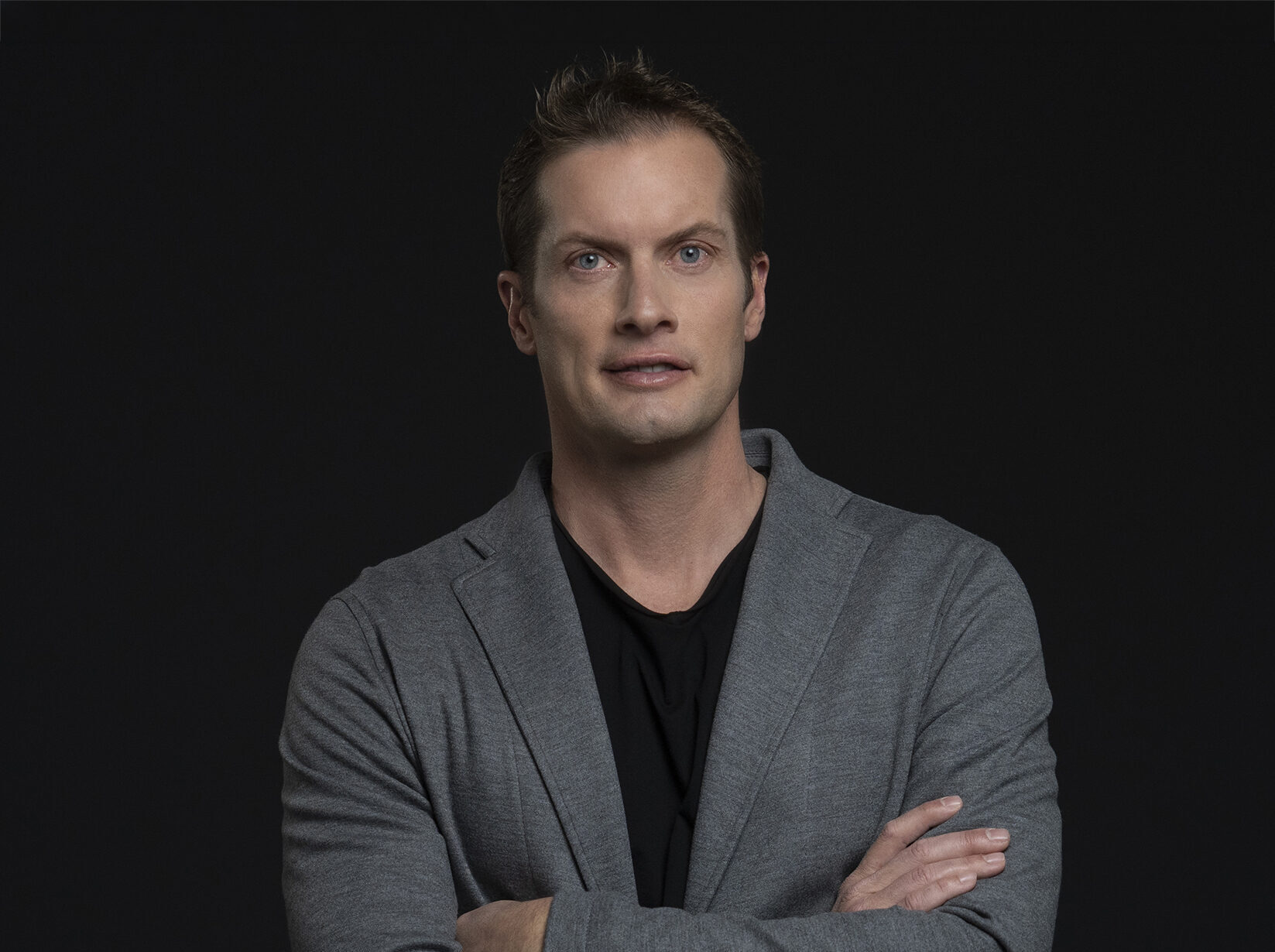

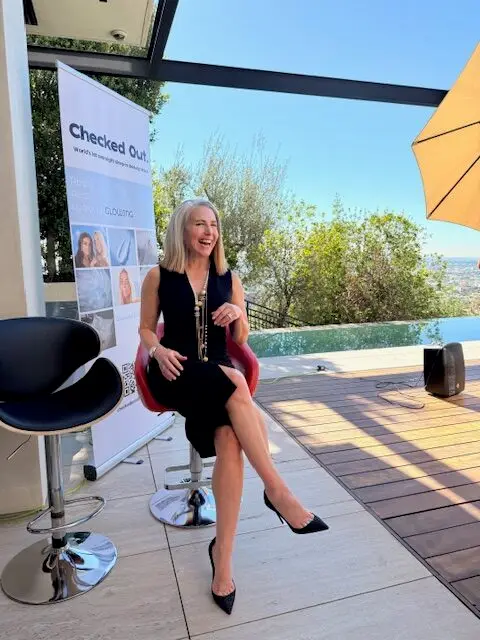
I recently went one-on-one with Chelsea Grayson, former CEO of American Apparel, True Religion, and Spark Networks.
Adam: You worked in big law before pivoting into business. What compelled you to pursue a career in law and what were the best lessons you learned from that chapter in your career?
Chelsea: I always call myself a recovering lawyer, which I think was originally meant kind of derogatorily, like lawyers are miserable, and if you’re out, you must be in recovery. But I really loved being a lawyer. And honestly, I hadn’t thought about leaving until I got pulled out. I got an offer I couldn’t refuse.
I genuinely thought I was going to retire in big law and collect the gold watch and the fully vested pension and all that. My grandparents told people from the time I was four or five, she’s going to be a Philadelphia lawyer. I don’t even know if that phrase gets used anymore, but it’s basically someone who zealously advocates. Someone who’s an orator, a stand-up and speak-up person.
That usually refers to a trial lawyer. I didn’t end up doing that. I did mergers and acquisitions, which is totally different. But the head of the firm where I was a partner, Jones Day, used to say, you would’ve made a great trial lawyer. You really missed your calling. Even though you’re great at what you do.
I wasn’t totally sure how I was going to end up where I wanted to be, but I knew I wanted to lead something. In my senior yearbook, the prompt was, where do you see yourself in 10 years? And my quote was, I see myself on the 50th floor of a high-rise in downtown Los Angeles, running something. I didn’t know exactly what. Business school didn’t feel like the obvious path for me, and I didn’t really see myself as an investment banker or any of the typical MBA tracks. I just knew I wanted to be in a leadership position one way or another.
Coming out of UCLA, I knew I could write. I was an English department alum, so writing was always a strength. And I wasn’t scared to stand up and defend what I wrote. I loved questions. I loved critique. I respond really well to that. That’s when I’m comfortable. So law school actually became a very natural choice.
After law school, I did a federal judicial clerkship, and you always say yes when you get that offer. The first one I got happened to be with a federal bankruptcy judge. Bankruptcy is a hybrid practice. It’s this blend of litigation and deal work because you’re negotiating outside the courtroom, but then you have to go into court and get the judge to bless what you negotiated. That final step doesn’t exist in traditional transactional work. It was a really great way to see the intersection of business and law.
It also forced me to learn how to read financial statements, which they don’t teach you in law school. I learned how to look at the components, break them apart, put them back together, and understand how businesses actually work.
From there, it was a natural transition into being a corporate transactional lawyer at Jones Day. I started in corporate finance. Then, after 9/11, the economy shifted, and I moved into distressed M&A because of my bankruptcy background. Eventually, I became a full-fledged M&A lawyer, worked my way up, and became a partner. And again, I thought I was going to be there forever.
Then the chair of American Apparel called me one day and said, someone gave me your name. We’re looking for a new general counsel. We’re cleaning house. Would you be interested in coming in to help save this company? I went in-house, and about a year later, I was asked to be the CEO. That’s the short version, but that’s how I moved to the business side.
I really was going to be a lawyer forever. Until you get offered the chance to be CEO of a big public company like American Apparel. You don’t say no to that.
Adam: One of the skills you mentioned that was really important to your early success, and I’d imagine to your success as a leader, is the ability to write and communicate. In the age of AI, we tend to rely on technology to shore up areas of weakness, and writing is an area where people often look to AI for help. But that doesn’t mean you can completely outsource the ability to write. When you understand how to communicate – verbally and on paper – it makes a significant.
Chelsea: It makes a huge difference. I’m 54, so I’m a 1993 grad. I came up in a golden age before all of this. I really don’t think I would’ve been as successful as I’ve been if I’d had a device in my hand all the time, or ChatGPT, or any of the other tools people have now.
Even before AI, you had the internet, where you could look up answers. We didn’t have that. We had books. We didn’t really even have computers the way people think about them now. We had word processors for most of that time.
You had to develop a trench-level understanding of how to string words together in a way that was uniquely you, from your own perspective, with your own voice. And you had to defend those words live when people asked about them. If ChatGPT writes something for you, it’s not authentic to your voice, and people can tell. And you’ll never be able to defend it the same way because you didn’t create it.
I understand most college students today are using ChatGPT at least as a starting point. There’s no stopping it. You can’t police it effectively. They’re all going to do it because they know everyone else is doing it, and they feel like they can’t compete if they don’t. It’s a real shame, and it only hurts the student.
I wish there were a way to change it. I don’t have the answer today, but I wish there were a way to stop it, at least at the university level. We’re producing people who aren’t comfortable putting their own words on a page, even if those words get critiqued. It’s a lost art, for sure.
Adam: You mentioned that you were hired by American Apparel as general counsel, and then the next thing you know, you’re CEO. How did that happen? And what were the best lessons you learned along the way?
Chelsea: There’s a lot there. I’ll give you the basics first, and then the learnings are the more important part.
I came in and, as people can read about, we parted ways with the founder in a way that was fraught with disaster. And on day one, the board charged me, as general counsel, to go do that. I was directed to fire him, and that launched a year of intense fallout. There was litigation from him and people connected to him, an SEC inquiry targeting him that we were involved in, a DOJ investigation, and a union attempt that we had to deal with at the NLRB. We also ran our own internal investigation because we needed to understand what went wrong, what protocols we needed, and how to fix the toxicity.
All of that flowed into the general counsel’s office because it involved litigation, government investigations, compliance, and noncompliance. So I was absorbing a lot of it, and in that process, I got to know the business leaders really well. I had to ask questions. They had concerns. They were asking me questions. Eventually, they started inviting me into business meetings because they wanted a lawyer in the room to make sure they didn’t get it wrong again. Everyone wanted a fresh start.
At the same time, the board sent me to negotiate with Goldman Sachs and the other bondholders about our debt payments. We were in a massive liquidity crisis and couldn’t make the payments. I spent the year negotiating a restructuring, and we ultimately did a debt-for-equity swap, which you’d typically do in a Chapter 11 context.
By the end of that year, we filed to execute that plan, and during the bankruptcy process, Goldman Sachs came to me and said, we’ve gotten to know you. We’re about to own this company. We like the CEO who’s been in place, but you’ve built relationships with us and with the business leaders. Would you consider stepping into the CEO role if we made a change? And you don’t hesitate when you get offered something like that. If you’re trying to make the jump from law to business, you say yes. It’s hard to make that leap. So I said yes.
Now, the learnings. Once you’re running a company like that, the number one thing you have to prioritize is communication. If people don’t understand what you’re thinking and where you’re trying to take the business, they’ll never feel like they’re on the inside. They’ll feel like billing units or cogs. Taking people with you requires being out in the field, talking to people, getting consensus, being present.
We had about 7,500 manufacturing employees. Many were immigrants. They were cutters, dyers, sewers. We made everything ourselves. People wanted to know they were part of something and not just there at someone else’s whim. That’s true in the factory, and it’s true in the executive ranks.
It also mattered externally. We were a public company, so we had to communicate clearly with the market, shareholders, and potential shareholders. We had to deal with the media, which was intensely interested because the story was salacious. It was basically #MeToo before that was a term. People didn’t have a name for it, but they knew it was wild, and they were fascinated.
We also had to communicate with vendors and suppliers, and with customers. We needed them to understand there was a new sheriff in town. Yes, the shenanigans happened. We’re cleaning up. Stores are still open. DTC is still operating. Please stick with us.
So internal and external communication was the biggest lesson. The second big lesson was building consensus and reaching across the aisle. As a legal leader, you can’t be the department of no. You can’t have business leaders come to you for a solution, and you say, no, you can’t do that, the law doesn’t like it. You need to be the department of yes, but. Yes, but we need to structure it this way. Yes, and we need to implement these controls. That approach built trust with the business leaders, and I think it’s part of why there was groundswell support for me to run the company. They trusted that I was trying to facilitate the business, not block it.
Adam: How can leaders cultivate trust?
Chelsea: Tell the truth. Please be honest. It sounds trite, but the minute you make a mistake, or you realize you should’ve made a different decision, and you’re not heading the right way, just fess up. And come with a solution if you have one. If you don’t have a solution yet, apologize and move forward.
People will catch you in a lie. It’s never worth the damage. What you do in a company reverberates. People leave and end up elsewhere. They end up being the person someone calls for a reference. Your reputation depends on the trust you build.
Also, manage expectations. If you commit to something, don’t overcommit. Don’t promise a timeline you can’t meet. Be clear about who’s involved in helping you get something done. Don’t pretend you’re a one-woman show. Nobody believes it, and nobody wants to see it anyway.
And one more thing. When you gain leadership positions, don’t create a false relationship between you and your team. The minute you manage people, whether it’s one person or fifty, you’re not friends anymore. You’re their boss. You might have a boss, but you are their boss.
You’re not there for therapy sessions. You’re not there to be their friend. You can hear a brief explanation of what happened, but then you move on to the work. Their colleagues or their therapist are where they should take the rest.
I also don’t believe flat organizations work. I think there needs to be some hierarchy, not dictatorship, not royalty, but structure. People want to know who to follow, and leaders are aspirational. If you don’t believe the person you report to is superior in some combination of skill, talent, seasoning, connections, or judgment, you won’t want to grow into that structure. You’ll leave. It matters for engagement, and it matters for trust in the mission.
Adam: What do you believe are the most important qualities of a successful leader?
Chelsea: The ability to make a decision and go with it.
You get input from the people who matter for that decision. You show that you sought input. Then you make your own decision, and you live and die by it. If you need to pivot, you pivot, and you own it quickly.
People want a leader. Nobody wants to be rudderless. So you have to step into that role and be decisive.
Adam: What were pivotal decisions you made as a leader and what did you learn from them?
Chelsea: I’ll start with a good one. At American Apparel, the whole identity was that we were made here. We weren’t Bangladesh apparel or China apparel. We were American Apparel. We were vertically integrated. We made everything ourselves. We had seven manufacturing facilities in and around downtown Los Angeles. We even stone-washed our own jeans. It was a beautiful concept, but the cost structure was brutal. The barriers to entry were so high that if that company went away, nobody else was going to fill that void.
At the same time, we had to explore offshoring and third-party manufacturing to save the company. And that raised a huge issue: our labels said Made in the U.S.A. Labeling laws are very specific, and mislabeling can lead to expensive lawsuits and government action.
So we worked with counsel, engaged with government entities, got feedback, and found a compliant path. We changed labels to things like Made in the U.S.A. with foreign components, or designed in the U.S.A. but manufactured elsewhere.
We’d done a brand study where consumers said the most important thing was that the product was made in the U.S.A. and that we made everything ourselves. But we hadn’t asked the next question. We went back and asked: if there’s a $10 T-shirt with all of that, and an $8 T-shirt with the same quality but not all of those claims are perfectly true, which one do you buy? And of course, everyone said the $8 T-shirt.
It turned out the most important thing was price. Maybe they didn’t even fully realize it themselves. Once we had that, we knew we could move. Offshoring and third-party manufacturing reduced costs, made us profitable, and that’s how we turned the company around. We sold the company successfully to Gildan a few years after we took it private with Goldman Sachs and the other bondholders.
That sale also led to my next CEO role. Goldman Sachs had ownership in True Religion, too, and after the American Apparel sale, they came back and said, you did a good job. Come help turn True Religion around.
At the time, everyone told me not to offshore. They said it was inconsistent with the DNA of the company and the founder’s intent. And it was. But it was necessary to save the company. And we had thousands of employees, including thousands of textile manufacturing workers, who were here for that job. It was risky and could’ve failed, but it worked.
Another example, from True Religion, is marketing. This was early in what we now call digital or performance marketing. Back then, content marketing and influencer marketing were the edgy thing. You’d send product to a celebrity, they’d wear it, paparazzi would get photos, and you’d try to use the images. Or they might post on Facebook or early Instagram. But you couldn’t really track what was driving purchases. There wasn’t a scientific link between those activations and revenue.
I got convinced that digital and performance marketing was the future because you could track spend and conversion much more directly. I had our agencies present to the board in quarterly meetings, which was unusual. I wanted the board to understand, from the horse’s mouth, that you could spend $5 here and track the dollars that came back, whether through promo codes, clicks, conversions, the whole funnel. It wasn’t perfect then, but it was light-years ahead of traditional brand marketing. So I asked the board to shift a much larger share of our marketing budget to digital. They agreed, and it paid off.
And then there are hard decisions. Not necessarily bad decisions, but heartbreaking ones. At American Apparel, we did layoffs. It was brutal. But we needed manufacturing layoffs to create room for outside manufacturing, so we could save the rest of the company and the remaining jobs.
At Spark Networks, which owned dating apps like JDate, EliteSingles, SilverSingles, and Zoosk, we had to make hard calls too. We divested certain assets, cut what wasn’t core, and laid people off. It was necessary to move the company into a healthier profitability structure so the mission could continue. And that mission was beautiful. It was about bringing people together in love. Sometimes you have to make really hard decisions to keep the whole thing going.
Adam: What were the best lessons you learned from leading Spark Networks?
Chelsea: One granular lesson, especially for marketing people, is that affiliate marketing can be really successful for product companies, but it doesn’t work the same way for a service like dating apps.
Affiliate marketing is like when you Google the best vacuum cleaner, and you see a list of the top 10 or top 25. Those lists are affiliate marketing. Product companies pay to be there. If someone clicks through and buys, you can track it. You spend $1 and you make $3. It’s straightforward.
But with dating apps, you might get the click, and the affiliate gets paid, but that person may never subscribe, may never stay subscribed, and may never become an active user. That’s where we make money. We want long-term subscribers who actually engage. So we dramatically reduced affiliate spend and shifted to better marketing methods. It was scary for the board and scary for the lender, but it was necessary. The lesson is that what works in one category doesn’t necessarily work in another.
Another lesson was stepping back and asking, what’s the long-term goal of the company? Is it to own lots of separate apps across distinct platforms, or is it to consolidate? Apps don’t work well when you have 20,000 users here and 40,000 users there. You need real scale and critical mass. So merging tech platforms, cutting underperforming apps, and consolidating users was scary, but it was necessary, even though it was very different from the company’s earlier strategy.
And Spark was truly global. Yes, American Apparel was global in terms of stores, but Spark had major operations and consumer behavior differences across regions. The company was founded here and publicly traded on NASDAQ, but headquartered in Berlin, with a big European and Asian presence. Understanding localized consumer behavior and localized compliance really matters. You need local boots on the ground to truly understand the culture.
Adam: What are the keys to becoming a board member and being a great board member?
Chelsea: Being a great board member requires remembering a few key things.
First, you are there as a fiduciary to maximize value for the stakeholders. Usually, that’s the shareholders, but if a company is distressed and in the zone of insolvency, it can become the lenders. You have to know who you’re working for as a fiduciary. There’s personal liability on the line, backed by a D&O policy, but it’s still personal liability. You’re scanning the horizon constantly.
Second, your main job as a board member is to hire and fire the CEO. Period. As long as you remember that, you’ll stay focused. You’re always evaluating: do we need a different CEO, or do we need to retain and support this one? Succession planning is part of that. If the CEO leaves, do we have five potential successors lined up? Are we developing talent?
Third, the mantra is head in, fingers out. You’re there for big-picture thinking, but you’re not running the day-to-day. That’s hard, especially if you’re an operator and a control freak. You want to touch the dirt. But it’s a big no-no. It can get you into trouble in all sorts of ways.
As for becoming a board member, here’s my view. Skip nonprofit boards if your goal is for-profit boards. Do them if you want to, but they’re not going to get you real board seats. Skip early startup boards, too, because it’s the Wild West and it doesn’t teach strong governance.
Focus on real board seats that pay cash fees, not just equity. Those boards are typically structured with real governance and have advisors who know how it should work.
Most boards want to see that you’ve been an operator. You ran something. You don’t have to have been CEO, but you were in the C-suite, you managed people, and you ran a meaningful P&L. That’s basic. And then it goes from there.
Yes, there are recruiters and search firms. You should know them. But for me, most of my board roles came from the next one, and the next one, and the next one. I was on the board at American Apparel as CEO. Board members got to know me. They had vacancies on other boards. I filled one. At True Religion, the same pattern. People you work with, people who know your reputation, lawyers, bankers, financial advisors, board members, they hear about openings, and they recommend you.
The most critical thing is building a network of people who sit on boards or represent boards, and building a reputation as someone who’s effective in the boardroom. That’s what gets you the next seat.