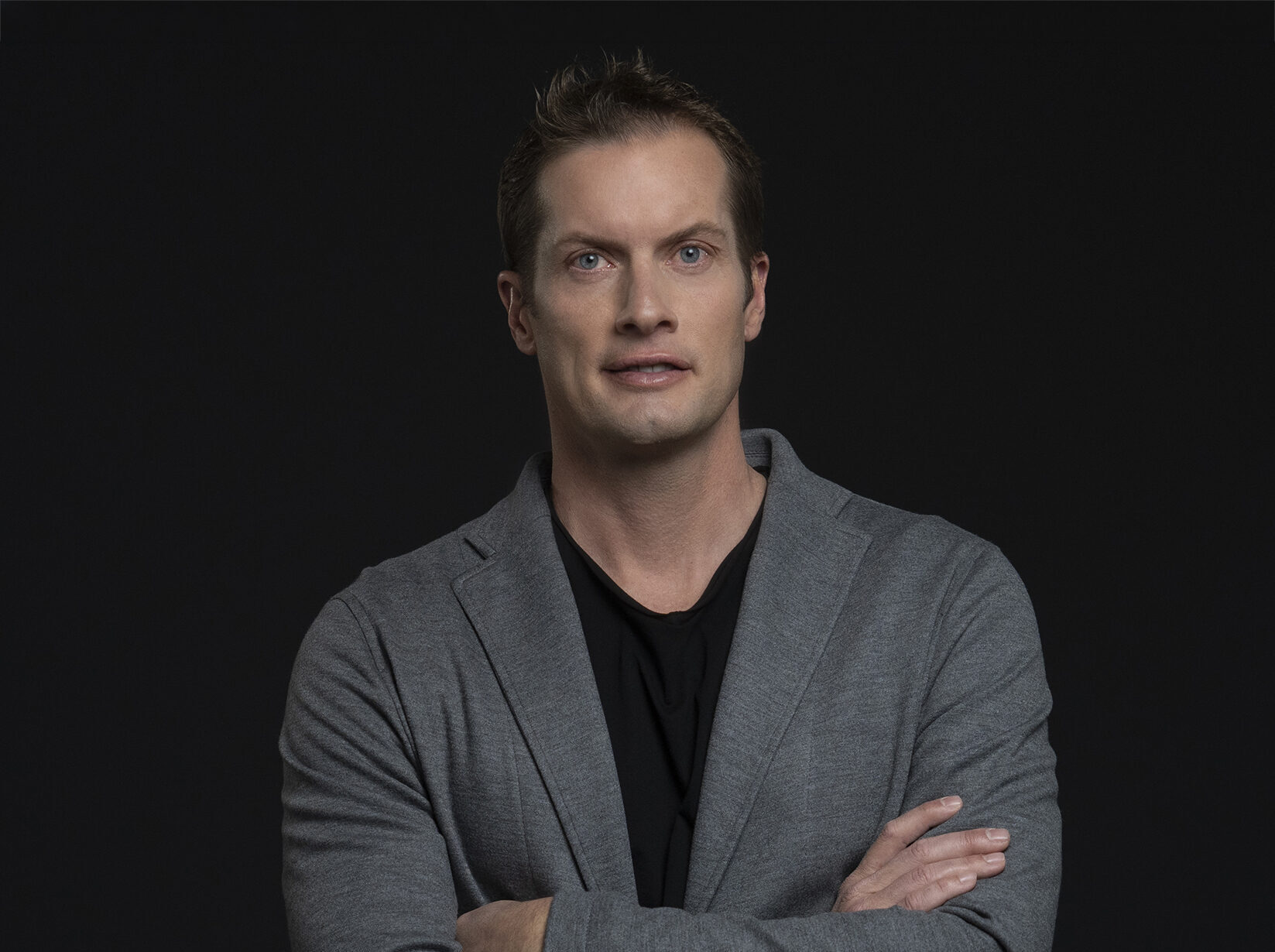

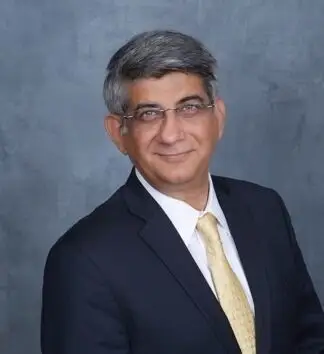
I recently went one-on-one with Viren Popli, CEO of Mahindra Automotive North America and Mahindra Ag North America.
Adam: What were the keys to rising in your career?
Viren: That’s a really good question, Adam, and it takes a bit of thinking through. One of the things I realized very quickly is that you should never say no. One of the big opportunities I had was my first job. I’m a mechanical engineer by training, but straight out of business school, I got a job with a pharmaceutical company. That was the first step. Then I got sent off to Myanmar, and I never said no. I ended up working for a television company, STAR, which was part of News Corp and Fox in those days, and I just took the leap and did that. Somewhere along the line, that became a recurring theme. I never said no. I always decided, let’s try this out. Let’s try something new. Let’s try something different.
I think that’s really important. At the same time, you need to know when to pull the plug as well, so you don’t keep going at something that isn’t doing well. But you should definitely try something new and try something different. If you look at it as a recurring theme, that’s really what allowed me to get here. Even coming to the US started with a call from the person I reported to at the time, who said, we need help in the US. Would you be willing to go? And I said, sure, let’s give it a shot. What was supposed to be a one or two-year assignment ended up becoming a new home for us, and we’ve been here now for almost nine years.
I think one of the keys is never saying no. At the same time, as you try new things, you have to be willing to learn a lot and always stay open to learning. If you take on a new challenge but don’t decide to learn anything about it, that becomes a problem. For example, when I came to the US, I had traveled here many times, but generally, I was what I call a visitor to the US. In those days, I was working for a television company, so I would come to New York, go to LA, and then go back home. For me, that was the US. New York and LA.
Then I came here to work for an ag company, which has nothing to do with New York and LA, and suddenly I was only in the flyover states, as people call them. For me, it was really important to learn America all over again. Whether it was reading the history of America, reading the Constitution, talking to a lot of my dealer partners all over the country, engaging them in conversation, and being humble enough to say, I don’t know enough about the US, and I’m here to learn. Would you be open to talking to me? I’m not interested in taking a position. I’d just like to hear from you. That allowed me to really understand the country, understand how it works, and understand that a lot of the biases people have internationally when they come in are simply wrong. You suddenly realize it’s very different.
So I think trying something new, being willing to learn, and then giving it your best shot once you’re in it, those have been recurring themes in my life. As you get into something and become more passionate about it, that drives everything else. That’s really what’s gotten me here.
For a very long time, when you go through business school and the early part of your career, you believe that you’re supposed to know everything. That’s what the training is about. You have to know, you have to have an answer, and you have to be quick on response. But as you go through life, you realize that you don’t know. And if you try to bluster your way through, it’s going to catch up with you and make things worse. So many times, you have to be able to say, I don’t know, but I’m willing to find out and learn. If you complete that loop, I think it helps you move forward in life.
Adam: As a leader, there’s a really good chance the answer is somewhere in the room. Someone on your team likely has it. If you lack humility, you’re not going to get to that answer. You’re going to bluster with the wrong one. I think back to my time in business school. Whenever a professor asked a question, there were always the same three or four people who were eager to speak up. I was one of them, and a lot of our classmates probably thought we were the smartest people in the room because we were the most comfortable talking. But I was never the smartest person in the room. When no one else was willing to say the right answer, one guy would raise his hand and speak. That was the only time he ever spoke. He never spoke unless no one else had the answer. He ended up being by far the most successful person in our class. He was the smartest guy in the room. And you realize that the smartest people in the room are very rarely the loudest.
Viren: Oh, absolutely. We’ve all made these mistakes. We’ve all been through these journeys. You’re absolutely right. You open your mouth because you want to say something, and then you quickly realize that by the end of it, you can’t even join the dots in what you’re saying. Humility and the ability to hold your peace is such an important thing. In the beginning, when I became CEO of the company, there was this temptation to speak right to a problem. Effectively, the moment I said something, it shut down all conversation in the room, because that became the truth everyone had to execute.
I remember once being in a meeting and saying something, and then asking everyone, what do you think, what do you think, what do you think? Everyone said, yes, we agree, we agree, we agree. Two months later, we realized it was completely the wrong thing to do. I asked, why didn’t anyone speak up? And they said, because you said it, so we did it. I realized very quickly that from then on, I needed to first go around the room and ask everyone for their opinions before I said anything. Sometimes you feel you have the right answer and you’re itching to give it, so you literally have to sit on your hands and not say anything, keep a plain face, and keep going around the room. But that was a lesson I learned very quickly. Don’t be in a rush to speak. Let everyone have their say, and then, once you’ve heard everyone, voice an opinion or make a decision. It’s absolutely essential.
Adam: What a great lesson. Your job as a leader is to empower the people around you. You do that by surrounding yourself with the right people and giving them the space to contribute. You’re not going to empower them by being the first to speak. You’re going to stifle them. When you’re in a meeting and you’re the boss, the moment you speak, the conversation ends. And you also mentioned how you’ve invested time in learning about the Constitution and what makes America America. It reminds me of something I studied in college. I took classes on the United States Supreme Court, and one of the interesting takeaways is that the Chief Justice is always the last person to weigh in. There’s a lot we can learn from that as leaders.
Viren: Absolutely. It’s really interesting how many things you experience earlier in life, or read, or see, or hear, come back as you get older. Suddenly, you join a dot from something you never fully understood at the time. You read something and don’t think much of it, and then 20 or 30 years later, a dot suddenly connects. From childhood to school to college to your career, it all keeps adding up at some level and helps make you who you are as a leader when you really become one.
Adam: What drew you to engineering, and what role has your engineering background played in your success?
Viren: Engineering was something I was always drawn to. I still remember my parents got me a really nice remote-controlled car when I was a child. I played with it for a day, and then I decided I wanted to make it go faster. So I took this little brand new car into a shed we had, sat down with my dad’s toolkit, unscrewed the whole thing, and tried to figure out how it worked. That’s my earliest memory of taking a screwdriver and ripping something apart. Somehow, engineering and technology always attracted me. It kept showing up as a recurring theme. So when the time came to ask, what do you want to study, it was a no-brainer. I was going to do engineering. Also, in India, there’s a cultural reality that if you’re a smart kid, you either become a doctor or an engineer. So that definitely plays into it too.
But if I really look at engineering and ask what it did for me, I think it taught me to be logical. It forces you to think in terms of input and output. What we learned in engineering and what the world is today are completely different. Some principles are still there, but things like 3D printing, AI, and so many other technologies didn’t exist for us in the same way. We didn’t have computers when I studied engineering. The language we learned was Fortran, which I don’t think anyone even knows anymore. But the fundamentals still matter. If this is the output and this is the input, what happened in the process? Engineering forces you to think logically about any problem. That’s probably been the biggest benefit of my engineering background. If there’s a problem, I break it down into parts, try to find what caused it, identify the starting point, and then address the pieces in between. That’s what I took away from engineering, and that’s what still helps me today.
Adam: How did you pivot from engineer to leader? And what advice do you have for anyone in a technical role who wants to become a leader?
Viren: When I step back and look at it, one of the things that happened over the years is that a lot of the people I worked for, a lot of my bosses, were also great teachers and mentors. When you observe people and you’re managed by different leaders, you learn. You see some things you appreciate and some things you don’t appreciate. You absorb lessons from each of them. As you go through life, each boss and each person you work with teaches you something. One of my bosses once told me that any person you meet will always teach you three things. So meet people, because every time you do, you learn something.
To me, leadership is also about recognizing that you can’t be a leader until you have followers. So if you step back and ask, who do I like to follow, you start to see what matters. You like to follow someone who allows you to be the best version of yourself, someone who creates an environment where you can succeed. In a sense, when you become a leader, you need to do the same for your team. You want somebody who has a plan. In the current environment, especially over the last 10 years, the rate of external challenges has only gone up. You’re dealing with a new challenge almost every day. People will follow people who have a plan. If you have a plan, you need to be able to communicate it. Trust is also really important. I want to trust the person I follow. I want to know that person has my back and will be with me when I get into trouble.
So for people trying to move from a technical role to a leadership role, it’s not the technical skills that will get you there. It’s a lot of the softer skills, the softer elements of what it takes to lead, that make the difference. Anand Mahindra, who heads the Mahindra Group, has a classic statement. Somebody once asked him how he would define the company he wants to build, and he said, I want to create a company where people can be the best versions of themselves. To me, that was a really telling statement. It’s one of the reasons I’m with the group. And in a sense, that’s what happened for me.
Now, as a leader, I’m trying to do the same for my people. How do I create the space for them to be the best versions of themselves? At the same time, how do I have their back if things go wrong? Smart people will want to try new things, and they will make mistakes. If you don’t allow them the space to make mistakes, they won’t get better. As engineers, we’re often caught up in right and wrong, true and false. We’re very precise and logical in our way of thinking. Leadership requires a very different kind of space, and I think that’s the transition many technical people struggle with. I did too at one point. That’s the shift people need to make.
You can try to operate in black and white at work, but life is not black and white at all. Just think about how we take care of our kids. I have two boys, and if I operated with them in pure black and white terms, I’d be a horrible dad. You need all the shades in between. To develop that side of yourself, I think observation matters. Reading matters. I do a lot of reading. I enjoy reading. There are some great books out there.
My wife is an executive coach, so in that sense, I’m the sample in the house. I’m a perpetual case in development. She had me do a couple of assessments to understand what kind of manager I am. We both did the Myers-Briggs test, and we were opposites. Apparently, that works well. I’m the guy who stuffs the fridge and puts things in random places, and she comes in and reorganizes the whole fridge and puts everything where it belongs. So I think self-awareness is really important. The more time you spend learning about yourself and taking the time to understand your own makeup, the more it helps you develop these skill sets.
A lot of times, as leaders, we get so caught up in delivery. If you take any human being, and I’ll use myself as a CEO, one part of me is the operational side, driven by task, delivery, P and L, cash flow, product delivery, service, and so on. That’s the measurable side. But there’s another side of me, which is the empathy side, the softer side, and that also needs attention. We don’t spend enough time looking at or developing that side. We get so caught up with delivery that we don’t take time to build and evaluate the other side of ourselves. One of the things I do is give myself a little time every day to step back from the delivery side and reconnect with that other side of me. That allows me to develop my softer side and bring it back into work, because it’s also critical for building the organization and for my own growth.
Adam: What is your daily routine, and how do you optimize your day?
Viren: I learned a lot about time management from someone I work with who is very rigid about how he manages his calendar. He’s one of the most disciplined people I know. Rajesh, who is an executive director at the Mahindra Group, will walk into work at 9:30 and leave at 6:00, and he is ruthless about how he manages his time. He categorizes meetings very clearly. There are standing meetings, sit-down meetings, lunch meetings, and longer meetings. I learned from him to think about where I want to allocate my time in big blocks.
So I start my mornings with the critical meetings I need to get done. After lunch, I always take an hour for myself. I don’t meet anyone during that time. I spend it getting through my own action items, catching up on what I need to catch up on, and doing whatever thinking I need to do. Then I spend another couple of hours on team meetings or whatever other meetings there are. I also have a very strong process for deciding what is critical, what is urgent, what I must involve myself in, and what I should let waterfall down to my team. I’m very good at saying what I will not involve myself in.
In fact, my team jokes with me because sometimes when somebody copies me on an email, I’ll reply and ask, why am I being copied on this email? Do I need to react to it, or am I just being copied for the sake of being copied? In the beginning, I used to get a lot of CCs. Over time, that came down because I started asking that question. Your time is the most precious thing you have. You can lose it very quickly. So protecting your time becomes really important. Protecting your attention also matters, because where you get involved sends a message to the whole organization about what is and isn’t a priority.
At the end of the day, leadership is a lot about messaging in addition to execution. So my cadence is pretty straightforward. Start in the morning, do the heavy meetings then, take some time for yourself in the afternoon, and use the second half of the day for planning and longer-term thinking.
Adam: What are the keys to leading across different countries and cultures?
Viren: Great question, Adam. From outside the US, you think the US is one country with one culture, and then very quickly you realize that the US is as different as the barbecue sauces in this country. That’s my favorite way of describing it. It changes dramatically. I think the biggest thing about leading globally is having cultural humility. Humility in general matters, but cultural humility may matter even more. It goes back to the same point: I don’t know. What you think you know about a country and what it feels like when you’re actually in it are very different. You have to stay open to that.
You also can’t carry your cultural baggage from one place into another. And you need to know when to speak and when not to speak. The tendency to speak and share is very high, but if you enter with your own mindset and worldview and impose that on others, the conversation dies. A wall goes up, and everything stops. When I came to the US, my audience was completely rural. I sell tractors, so most of my dealers and many of the people I work with are in rural parts of America. They have a very different lifestyle, mindset, experience set, and worldview. If you go in there carrying only your own worldview, the conversation dies. So you need to be open to listening, open to learning, and open to understanding how they see the world. Then you absorb that, process it, and respond appropriately.
So cultural humility is really important. You’re right that within India, moving from Mumbai to Chandigarh, and then to the US, and even earlier when I worked in Myanmar, every country’s cultural context is different. People grow up in very different environments, often completely unlike anything you’ve experienced. At the same time, one of the things I’ve realized is that people are fundamentally the same. That’s another really interesting truth. We all want to do well. We all want to leave a legacy that outlives us. We all want to take care of our families, our kids, our spouses or partners. We all want to make more money and live a better life than we did before. Fundamentally, our drivers are very similar.
Everything else gets layered on top of that. If you can cut through all of it and connect at the human level, it makes all the difference. If you and I connect at the level of wanting to do well, wanting to care for our families, wanting to leave something meaningful behind, then once that bond is there, we’re much more willing to talk about the cultural differences. But if you don’t connect at that level, it doesn’t work. That’s the piece I’ve really learned over the years.
Adam: I love that. I travel a lot for work, and I’ve spent time in places across the country and around the world that are very different from where I grew up and where I live now. And I agree with you. There are real cultural differences. You feel that when you’re in Houston, or in small towns across the country, or in Sofia, Bulgaria, where I was recently giving a keynote. But what unites us is so much greater than what divides us. Too often, we focus on what makes us different. We think someone talks funny or has a weird hobby, without realizing we might seem just as different to them. Someone in India might look at me and think, who is this guy who loves baseball? And I might look at someone who loves cricket and think the same thing. But at the end of the day, we both just love sports.
Viren: Absolutely. I love that analogy. You love sports, and that’s what makes it interesting. And if you think about it, it’s also how we’re trained, especially in business school. We’re taught to segment and target. So we’re always looking to divide people into categories and target them with different products. But if you look at the biggest brands in the world, they tend to operate at this common human level. Those are often the ones that do really well. Segmenting and targeting will keep changing and shifting, but products and ideas that connect at a human level tend to last.
It’s interesting. If you have a team of really smart people, they usually also have strong personalities. And when you have a team full of people who are very good at what they do, with strong ideas and strong personalities, one of the biggest challenges is managing all of that. Any leader who has a team of very smart people will tell you the same thing. The biggest challenge is managing the personalities. They all have good ideas. They all want to deliver and execute. There will be some amount of head-butting. As a leader, you’re the person trying to create an environment where everyone can process, contribute, and deliver.
That’s one of the real challenges of leadership. How do you manage a high-performing team full of people who are all very good at what they do and all have good ideas, when ultimately you have to decide which ideas move forward and which ones don’t? For me, one thing that’s been indispensable is the whiteboard. In every meeting room I use, I have a big whiteboard. My team jokes that in any meeting of any length, we will eventually end up around the whiteboard. We put the problem on the board, and then everyone starts putting up their solution. By doing that, we usually work out what the best path forward is. That has worked really well for us.
Bringing the right core team into the room, putting the problem on the table, discussing it openly, and solving it together on the whiteboard helps a lot. At a broader organizational level, engineers also tend to be exactly as you described: input, output, black and white, logical. So you have to communicate a lot of logic down the line. You have to explain why you’re doing what you’re doing, how you’re doing it, and what the expected outcome is. If you don’t provide clarity and direction, things don’t work very well. So we put a lot of emphasis on communication and on sharing context throughout the organization.
Adam: Communication is the central thread running through everything you’ve shared. It starts with being open, being transparent, and inviting people in. A key theme in our conversation has been the importance of listening. There may be no more important skill for a leader than the ability to listen.
Viren: Absolutely agree, Adam. Listening and humility are all part of the same package. I think another big area that’s really important for leaders is being a source of positive energy. When my team goes out into the marketplace, or wherever they need to go, and they meet customers or dealers, that takes energy away from them. They’ll have tough days, tough situations, tough environments. When they come back to me, I need to be able to re-energize them. I need to recharge their batteries so they can go back out and do it again.
So how do you maintain a sense of positive energy, and how do you become a source of positive energy for the organization so people are willing to do this day after day after day? If people walk into my room and leave with slumped shoulders, feeling drained and not positive, there’s no way they’re going to go out there and win for me.
I think the first and most important thing is finding your own purpose. What is my purpose? Because that’s where your own energy comes from. Why am I doing this? What is it that drives me every day? If you can find that well of energy, so to speak, because purpose is a really important part of what keeps you going in this role, then you have something to draw from.
I’ve been CEO of two, now three, companies, and I’ve been doing this for 11 years. For me, finding the purpose that made me excited and positive, and then being able to cascade that through the organization, has been really important. Yes, there is a company purpose. There’s the purpose of the organization and the brand, and you buy into that and make it your own. But you also need your own purpose, whether it’s something you want to achieve, something you want to do for your family, or something else entirely. You need to find that purpose because it’s your personal well of energy. When you have a down moment, you go back to that well and recharge yourself, because you will have down moments. For me, having the right sense of purpose has been central.
Adam: Once you’re in a place where you’re motivated, how do you motivate the people around you?
Viren: Motivation comes from how you engage with people. For me, meeting and talking to people throughout the organization is really important. I have a cadence of walking the shop floor, meeting workers, managers, people in the field, and others across the business. Going out there, putting yourself out there, shaking hands, talking to people, and asking them questions beyond work makes a difference. You have to be visible. You have to be out there. I think that matters a lot. The body language you carry and the energy you bring also matter. For me, I genuinely enjoy it.
We started a process where we decided we wanted to meet our customers once a year. So through January and February, for the past two years, my leadership team and I have traveled to 15 cities across the country. We invite all our dealers to these conferences and meet every one of them during that period. It’s not easy. For example, we were up in Quebec City in minus 25 degrees Celsius. But it was important. When they saw us there, it made a big difference. And the second effect is that if I can go out in minus 25 and meet my customers, then my sales team will do the same. My service team will do the same.
So the whole exercise creates a message. My leadership team sees me do it. Their teams see them do it. You create these rituals, in a sense, that send the right signals, create the right energy, and shape the environment. I don’t think we spend enough time talking about corporate rituals. There are some rituals that are really good and really important. A lot of people talk about things like coffee with the CEO. Yes, it’s a ritual, but it has real impact and real benefits because you hear from people you otherwise would never spend time with. Walking the shop floor is a ritual too, but it makes a big difference when people can show you what they’re doing in their space instead of coming into a boardroom to present to you.
All of those things add up to how you charge and motivate an organization. Lead by example is an oft-quoted phrase, but for me, it means something a little deeper. Don’t just lead by example. Be the example.
Adam: Are there any other rituals that you’ve found especially effective and would recommend?
Viren: I think celebrating with the team is really important. And it’s not just about celebrating wins. It’s about celebrating moments and functions in meaningful ways. For example, on International Women’s Day, we celebrate it, but not just with a party. I actually spent time with a committee of women in the organization to understand how we wanted to mark the day and why we should do something more meaningful. We created a panel where women spoke to the women in our organization about building a career, growing a career, managing challenges, and balancing work and life. That mattered, because we want to encourage more women to do that.
I come from India, where women’s participation in the workforce has historically been extremely low. It was as low as 10 percent and is now around 17 percent. So having more women in the workforce has always felt important to me. We’re also already thinking about the 250th anniversary of America and how we’ll celebrate that as an organization. I do a cookout once a year where I actually cook hot dogs for the whole team. I put on the grill master apron and make hot dogs for everyone. That’s something I enjoy. So yes, there are a lot of things we do, or I do personally, to be with the team rather than just operate top down.
Adam: How are your grilling skills?
Viren: I’m told they’re not bad, but I don’t know. That actually brings up something else I believe in strongly, which is having a few truth-tellers in your organization. It’s really important to identify and enable a small group of people who can walk into your room and tell you the truth. And I don’t think those people should be direct reports. That’s important too.
I’ve always tried to have a group of three, four, or five people who, over time, as trust builds, feel comfortable coming into my room and saying, I don’t think this is going right, or I don’t think what you did was right, or I don’t think what’s happening in the organization is right. It’s not about sneaking around. It’s about creating the ability for someone to have an honest conversation and being willing to listen and give them the time to do that.
That has been invaluable for me. When I came from India to the US, there were lots of cultural differences I had to learn quickly. For example, in India, if you’re conducting an interview and you don’t ask what someone does, what their parents do, what their spouse does, and so on, it can almost feel like you didn’t really interview them or respect their context. In the US, all of that is illegal territory. So here I was, the CEO, conducting interviews, and I needed to have my HR head, Stephanie, sitting next to me, kicking me under the table whenever I was about to ask the wrong thing. If I didn’t have somebody who had the ability to do that for me, I’d probably be dealing with a pile of court cases.
More broadly, you’re always defining policies, direction, and communications, and what you do at the top doesn’t always translate the way you think it will all the way down. So how do you get real feedback? How do you learn what’s actually going on? Yes, you go out and spend time with people, but even then, you need someone who can tell you the truth. That’s been hugely useful to me.
Adam: What do you look for in the people you hire, and what are your tips on the topic of hiring?
Viren: Hiring the right team is probably one of the most difficult things we do. You’re almost a recruiter-in-chief all the time. You’re always looking for smart people who can add value to the organization, because no matter what, there is a talent shortage. Everyone is looking for somebody better, somebody good, to do one role or another. When I’m hiring, the first thing is that the person needs the technical skills required for the role. That’s a given.
But beyond that, one of the big things I’m looking for is whether the person can fit into the team I’ve already assembled. Cultural fit matters a lot because I’m adding one more person into an existing team. If they don’t fit culturally, they can upset the whole apple cart. I don’t mind strong personalities. I don’t mind people with sharp points of view. But I do look for humility. I look for listening skills. Those are two very important things for me, in addition to the technical capability. Then I look at whether they fit into the broader cultural context of the organization. Those are the broad themes I look for.
Adam: When you’re assessing a candidate, how do you figure out whether they’re truly a cultural fit?
Viren: One of the things I do is talk to people about their background, their experiences, and difficult situations they’ve dealt with. I want to hear how they’ve handled those situations. We also have them meet two or three people in the organization. Not only peers, but sometimes even one of the more junior people who may end up reporting to them. That helps us understand how the interaction goes. The candidate knows this person may report to them, and that person knows this may be their future manager. So how that meeting goes, and what that relationship feels like, becomes a very important feedback mechanism.
Adam: What are the keys to leading through change, and what are the keys to leading change?
Viren: That’s a great question. I think all of us have been dealing with this now for almost 10 years. From the pandemic onward, every year has brought a new challenge. This is when your team becomes most important. Having a great team around you is a huge advantage in times of stress, difficulty, and rapid change. You need to be able to pull your team together quickly and have everyone bring their expertise.
I’ll give you an example. In the last year, we’ve gone through significant tariff changes. Forget whether they were right or wrong. We went from 10 percent to 15 percent to 25 percent to 50 percent to 15 percent to 10 percent in something like six months. In a situation like that, you need to be able to pull the team together quickly. Supply chain, finance, sales, everyone needs to sit together and determine very quickly what needs to be done. In moments like that, delegation of authority becomes important. People need to be able to make decisions quickly, with trust. Team members need to be able to talk to each other and solve problems without waiting for everything to move slowly through the hierarchy.
So I think there are two big things. First, having a really good team that can execute and come together quickly. Second, as a leader, spending significant time understanding what’s happening in the environment. If your people are running the operation, then you need to spend your time becoming fully aware of what is changing around you. Only then can you take rapid decisions and execute quickly. So for me, it really comes down to a great team, plus staying deeply aware of the environment.
Adam: Is there anything else you would like to share?
Viren: It’s been really interesting. Broadly, I would say leadership is a journey. It’s very difficult to tell somebody, now you’re a leader. The one other thing I would add is that there’s a really famous line from Shakespeare about how all the world’s a stage, and we are merely players who come, play our parts, and go away. I think that’s true for leaders as well. At some point, you have to recognize that you’re playing a role, and that role is not you. It’s a role.
Many times we get caught up in the role and let the role define us. But it’s us who define the role, not the role that defines us. A lot of people get caught up in, I’m the CEO, so I must be the biggest, brightest, best person in the room. Very quickly, you need to realize that’s just a role. You’re the individual. That’s something that has helped me enormously.