
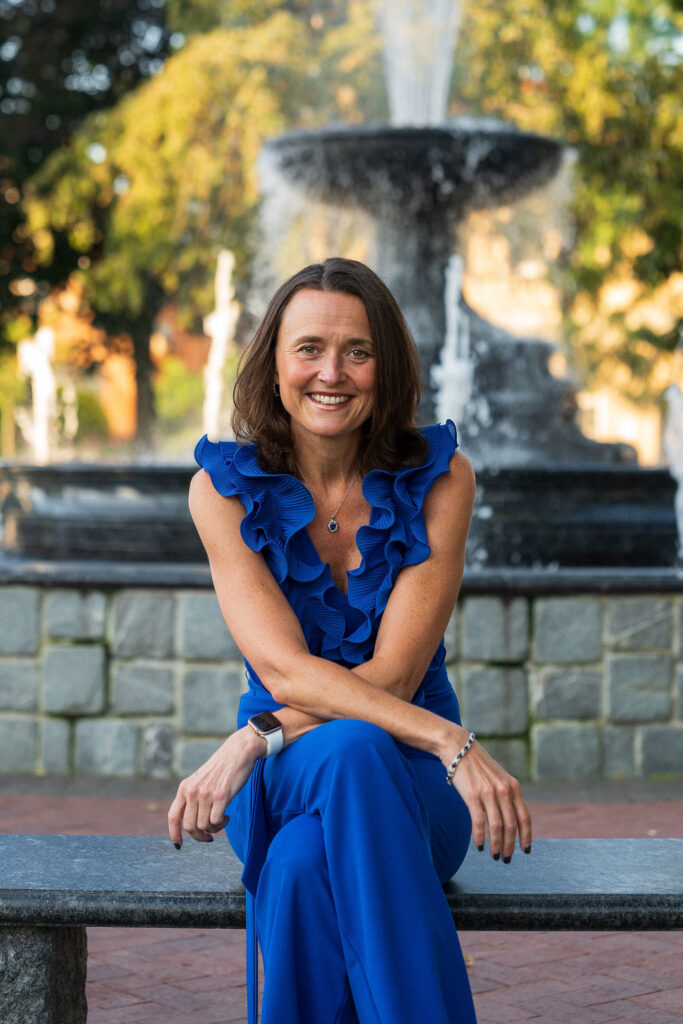
I recently went one-on-one with Tansley Stearns, CEO of orsa credit union.
Adam: Thanks again for taking the time to share your advice. First things first, though, I am sure readers would love to learn more about you. How did you get here? What experiences, failures, setbacks, or challenges have been most instrumental to your growth?
Tansley: I didn’t take a straight line to get here. I took meaningful detours, and each one gave me a wider lens. Early in my career, someone I trusted told me I’d need to build a multi-disciplinary set of experiences before any board would trust me to lead a financial institution. So, I moved across the country, took roles where I had no idea what I was doing, and led with curiosity when I didn’t have the answers. That pattern has stayed with me. Curiosity and a thirst for positive change drive me daily.
I’ve worked across cooperative finance, strategy, research, lending, marketing, advocacy, human potential, and community impact. I double-majored in Psychology and English at Michigan. That combination shaped how I see this work: it’s a human business. Financial institutions exist to enable dreams and cushion the dark moments.
My years at the Filene Research Institute grounded me in something I’ve carried ever since: ask better questions before you reach for solutions. Canvas Credit Union in Colorado taught me that culture isn’t something you declare. It’s something you build, choice by choice, every day.
The challenge that shaped me most was not one setback. It was an accumulation. I traveled close to 90 percent of the time during my Filene years. I was proud of that work. And nearly every time I finished presenting, someone would pull me aside and say something like: “How do you do this? Your daughter must be suffering.” I felt the weight of that. I still do sometimes.
Over time, I’ve come to understand that my commitment to MacKenzie isn’t in conflict with my career. It is part of it. What I owe her, and every young woman watching, is to show that women can chase what matters to them. That women belong at the front of rooms, at the head of tables, in the hardest jobs. That sits underneath everything I do. My mentors gave me what I now call cushions and wings. A safe place to fall. And someone willing to push me to rise. Growth requires both.
Adam: In your experience, what are the key steps to growing and scaling your business?
Tansley: [In my business], the word “member” matters. Credit unions are cooperatives. People join, they own a piece of the institution, and it exists to serve them. That’s not marketing language. That’s the actual structure. And when people feel that difference, they don’t just stay. They become advocates.
Growth comes from solving real problems. And it requires enough discipline to admit that relevance is not inherited. Credit unions have a beautiful history, yet our history alone does not create the next generation of members. We have to earn that relationship through products, experiences, technology, advocacy, and human care that feel unmistakably useful in people’s actual lives.
Younger generations, especially, are drawn to institutions that align with their values and show up when things get hard. Credit unions have eliminated banking deserts in communities where commercial banks closed branches and walked away. We show up in life’s darkest moments – death, domestic abuse, divorce, government shutdowns, and natural disasters. That presence builds the kind of trust that doesn’t come from a rate sheet.
People don’t tell their friends about the institution that processed their transaction. They tell their friends about the one who helped them buy their first home. The one that was there when everything fell apart. When your reason for existing is real, growth is a byproduct.
Adam: What are your best tips on the topics of marketing and branding?
Tansley: A brand is not a logo or a set of colors or a tagline. Brand is a promise kept. It’s the story you retell over a drink with a friend. I encourage us to stop asking “what should we say?” or “how should it look?” and start asking, “what do we actually believe, how are we living it, and how are we inviting others to share it?”
The brand must be operationalized. If the promise shows up in our storytelling and disappears in the experience, people will distrust the brand. The real work is making sure the story, the strategy, the products, the technology, the people, and the member experience are all telling the same truth.
The most powerful storytelling I’ve been part of hasn’t been a campaign. It’s been a movement. When we launched Choose the Bear, we weren’t running an awareness campaign. We were asking a harder question: what does it mean to walk alongside people during their darkest moments? Economic abuse keeps women trapped because financial fear is one of the most powerful forms of control. A financial institution has both the tools and the moral responsibility to face that. So, we do. This summer, adventurer and author Laura Killingbeck is riding over a thousand miles across Michigan on a bicycle, from the Upper Peninsula to Detroit, bearing witness to what economic abuse looks like in real communities. That’s not marketing. That’s what it looks like when your brand stops being something you communicate and starts being something you do.
Great brands are felt, not just seen. It lives in how your team answers the phone, how your spaces make people feel, and what you choose to stand for when standing for something costs you something. You know your brand is real when not everyone loves it. Haters signal something epic.
Adam: What are the defining qualities of an effective leader?
Tansley: The framework I keep coming back to is cushions and wings. The best leaders do both. They create genuine psychological safety, ensuring people have a place where they can fall, make mistakes, and try things that don’t work. And they also push people to stand up and strive for bold dreams. You need both. A cushion without wings creates comfort, not growth. Wings without a cushion create pressure, not trust.
I also think about how much people are carrying. Not just professionally. People walk into work while navigating a parent’s health decline, a child’s diagnosis, or a furnace that just broke. Those things don’t stay at the door. Effective leaders understand that financial well-being, mental health, caregiving, and career sustainability aren’t separate categories. They’re the same person’s life. Design your organization for some idealized worker who doesn’t have any of that going on, and you will lose the best people. You’ll never understand why.
Listening is a superpower. Not listening to respond. Listening to understand what’s needed. Doing something with what you heard. And sharing what you did. That is a virtuous circle that grows trust and stronger results.
Adam: How can leaders and aspiring leaders take their leadership skills to the next level?
Tansley: Stay restless. If you’re too comfortable for too long, you’re probably not growing. The best leaders I’ve worked with have a wide enough lens to hold strategy and humanity at the same time. That comes from having been in enough different roles to understand how the pieces connect. Lift your hand for the function you don’t fully understand yet. That stretch adds more tools than any training program.
Find mentors. Then become one. People like Mike Neill, John Normandeau, Randy Harrington, and Mark Meyer challenged me to stretch, held a mirror when I needed a hard truth, and believed in me before I believed in myself. I know how much that mattered. I’m committed to giving that away, as generously as I can, for as long as I lead.
Build curiosity into your practice, not just your personality. Ask yourself regularly what’s missing from your strategy. Seek out perspectives that challenge your assumptions from outside your industry, outside your function, and outside your usual circle.
And protect your sustainability. My passion for work shines, and I drive hard. I’ve also had to learn to build in time for rest and, more importantly, sacred time with people I love. A dear friend once told me that as much as I love work, it doesn’t love you back. Traditions and a commitment to personal joy matter deeply and allow for even more energy for your career.
Adam: What are your three best tips for entrepreneurs, executives, and civic leaders?
Tansley: Strategy is iterative, not fixed. The point is to hold your purpose tightly and your tactics lightly. The organizations that thrive are the ones that evaluate constantly, move fast on mistakes, and compete against the problem, not against their peers. Perfection is the enemy of progress. Build a culture that tests, learns, and adjusts without shame.
Your brand is your promise, and storytelling is how you keep it. A bold, emotionally resonant brand rooted in community is your most durable competitive advantage. It has to be felt, not just communicated. When people start telling your story for you, without being asked, you’ll know it’s working.
Lead with impact at the center. The organizations making the most lasting difference are the ones willing to see the whole person and the whole community, not just the transaction at hand. Financial well-being, mental health, housing, and community resilience. These aren’t separate programs. They’re the same human life. Lead like that’s true.
Adam: What is your best advice on building, leading, and managing teams?
Tansley: Build a culture where curiosity is genuinely protected, not just celebrated in a values statement. Fund culture with real budget and time. Create space to test things that might not work. Attract people who want to grow, then get out of their way while also giving them a cushion to land. Brilliant people who can’t treat others well aren’t high performers. They’re culture destroyers. Culture fit isn’t secondary to performance. It is performance.
I think a lot about how the future of work needs to be built for how people live. Most workplace systems were designed for a version of people that doesn’t really exist anymore (and maybe it never did). People are caring for aging parents, raising children, managing health challenges, and carrying financial stress. Design around that reality instead of pretending it isn’t there, and you build a place people genuinely want to come back to. Co-location matters. People need people. Shaping a future-of-work strategy is complicated. Extremes are the enemy of the answer.
Adam: What is the single best piece of advice you have ever received?
Tansley: Listen. Listening has shaped everything about how I lead. It’s how you find out what people actually need versus what you assumed they did. It’s how you catch the thing that’s wrong before it becomes a crisis. It’s how you build the kind of trust that makes people willing to bring you their hardest problems. And if you’re truly listening, you never stop learning.