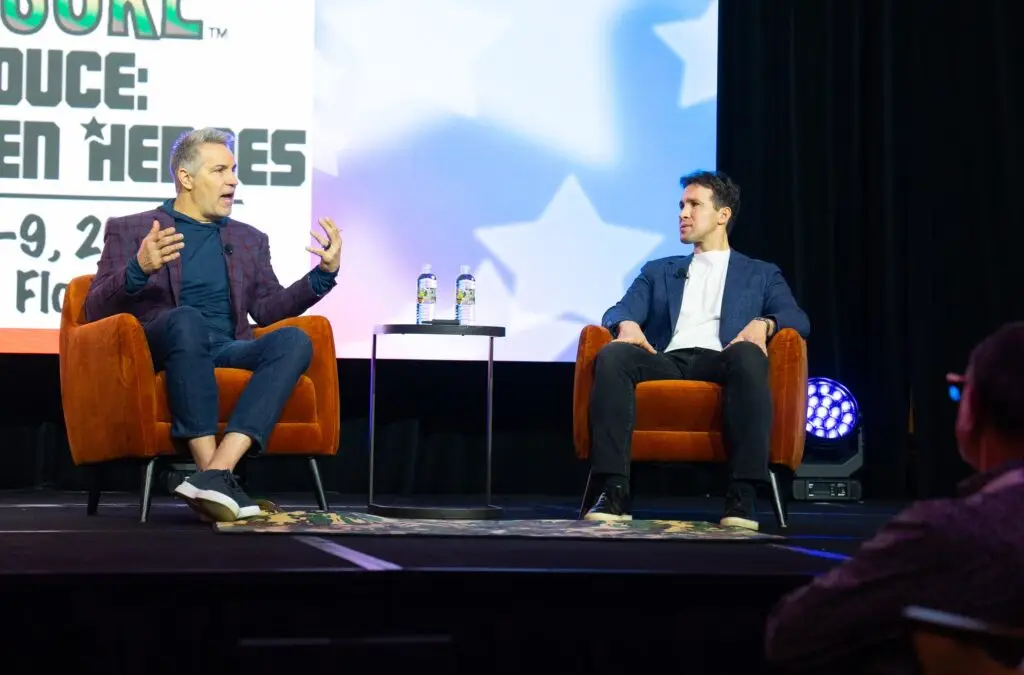

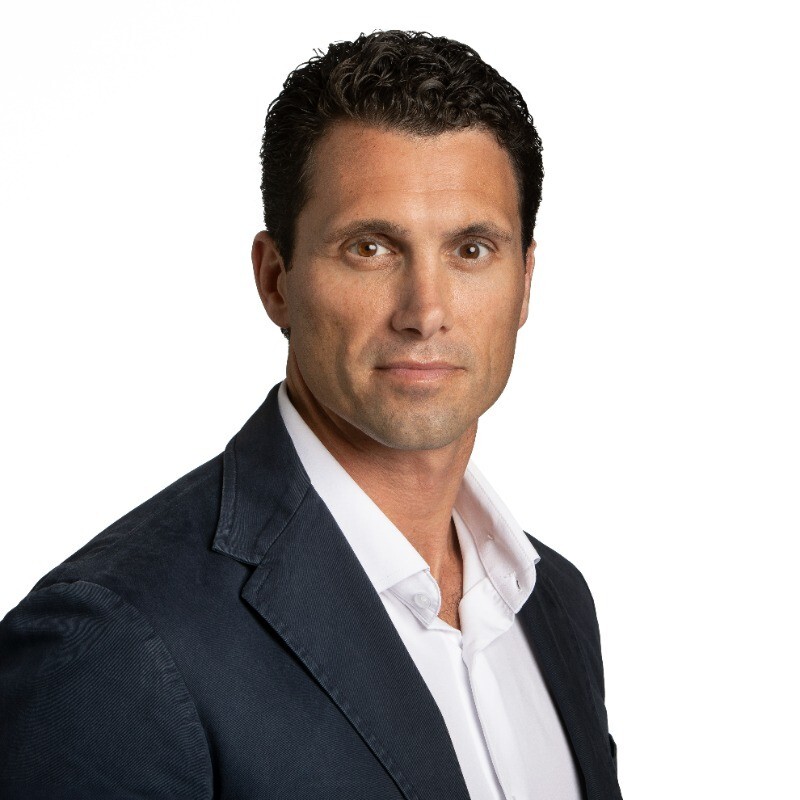
I went one-on-one with George Esposito, CEO of Zinnia, at the 2026 Milken Institute Global Conference.
Adam: You grew up in Staten Island, in a small, tight-knit community where you still live today. What were the key influences that shaped your style as a leader?
George: So we talked about this [offline], but I did grow up in Staten Island. I have two amazing parents and an amazing brother, and their ethic was always to work hard and do the right thing. They did everything they could to educate my brother and me and give us every opportunity that we could. That work ethic, that drive to be better and to be better than the next generation, which is the dream they lived and tried to give to us, I try to bring to work every day.
I’m a very humble leader. I call myself the servant leader of Zinnia. I have 2,600 folks that I’m working for and driving for every day. They don’t work for me. I consider myself somebody who works for them. That servant leadership that I saw my parents embody as I grew up is something that I very much try to bring to Zinnia every day.
Adam: You mentioned your parents as early influences. Were there other influences that helped you develop and evolve as a leader?
George: I’m looking at the title on your lanyard right now that says Thirty Minute Mentors, and that word mentor means quite a bit to me. I’ve been very fortunate and lucky to have many mentors in my career. I’ve worked with some amazing individuals. But I’ll tell you a little bit of a story, if you’ll let me take you on a journey back to 1998. Mentorship doesn’t necessarily have to be a long relationship. It can be a moment in time.
In 1998, my good friend and I and our dads drove out to St. Louis to see the Mets play a four-game set against the Cardinals. It was the summer that Mark McGwire was off to break the record. My friend and I were lucky enough to get on the field one afternoon and watch the Mets take batting practice. Bobby Valentine was the coach at the time, and he was throwing batting practice to a couple of players. He’s chewing on either a peach pit or a plum pit, which he was known to do. He’s got the bucket of balls on the mound.
My friend Joe and I are behind third base, watching him, listening to him, smelling the field, hearing the crack of the bat, the way the ball hit the net. At the end of the round, Bobby Valentine looks over to Joe and me and says, “You guys ballplayers?” We say, “Yeah, we’re ballplayers from New York.” He threw us a couple of balls, and most importantly, he spent 10 minutes with us talking about the lost art of bunting in high school baseball. He had a game at 7:10. He had players in the tunnel. But there he is, talking to two 16-year-olds, absorbing every single word, and spending some time with us.
Over the past nearly 30 years, I’ve told that story a lot because the few moments he spent with us made a huge impact on my young life as an athlete and as a person. On Saturday night here at the conference, I was at a dinner, and at the table across from me was Bobby Valentine. He caught my eye, and I smiled on the inside. I didn’t want to interrupt him because he was with some folks at the dinner table, but I said, “I’m not going to get this opportunity to go up to him again.” So I went up to him and said, “Coach, can I interrupt you for a moment?” I sat there and told him about that summer of 1998 and the 10-minute conversation he had with me and the impact it had on me.
I’m sure he had many conversations with folks along the way, and I said to him, “Coach, if it wasn’t 12:30 in the morning in New York, I’d call my dad and tell him I’m talking to you right now. But I just want you to know that the 10 minutes you spent with me made a world of impact, and I try to do that with people in my journey as well.” As I said to you before the podcast, when you look at somebody to be seen, I felt like he did that. It was a great interaction with him. I shook his hand and sat down.
At the end of the night, he flagged me over and took a picture of my lanyard to remember who I was. He said, “I got to tell you, George, this conversation made my night.” I said, “Well, you made my life 30 years ago.” You can have mentors who are your bosses, your teachers, your coaches, but every individual moment, every interaction, can be a mentorship moment. For me, that’s the definition of mentorship.
Bobby Valentine, who I met once, had a major impact on how I approach things. I just wanted to take you on that journey with me and tell you that story about the Milken conference and what that did. The next morning, I immediately called my dad and said, “Pop, you’re never going to believe this.”
Adam: I love that, and not only because Bobby Valentine happens to do television work now for the Angels and he’s very good on TV as a commentator, but it aligns with so much of what I talk about when it comes to mentorship. We all know what a mentor is. A mentor, by definition, is someone who is in your life. You can call them, text them, email them, see them, whatever you want. They’re a constant presence. I coined the term “mini mentor.” What is a mini mentor? A mini mentor is someone who might only talk to you once a year, once every five years, or once in your life, but that one interaction, like your interaction and your buddy Joe’s interaction with Bobby Valentine, can change the trajectory of your career and can change the trajectory of your life. We need as many people as possible to help us become better. We need as many perspectives as possible to help us become the best versions of ourselves. And then, turning the tables, what kind of impact can you make? It’s great if there’s someone in your life who you’re a constant presence for and you can constantly be there for them, but think about all the people out there where you can do one small thing for them and completely change the trajectory of their lives and careers.
George: That’s right. I think that’s our obligation as human beings, to recognize where we can have an impact on somebody’s life and try to make that difference. I’m very fortunate to run a great insurance technology firm and work with 2,600 folks who have 2,600 perspectives. You used a word that has been a big word in my vernacular for a while, perspective.
What I like to do when we’re in a meeting or we have an idea or a project, is bring and listen to the perspectives around the table. As a CEO, ultimately, I have to make the decision, but my job is to get the best set of facts I can get and the best set of viewpoints. When you promote and create an environment where that diversity of thought can flourish, and people feel like they have the opportunity to speak to the work that they’ve done, that’s very important to me.
We run very interesting meetings in that we have a monthly business review where many members of the organization come and present, and we look at all the facts. But what I try to promote ahead of the meeting is that you’re supposed to read this material. The facts are there for us to talk about, not for us to read on the screen. When we get to that room, I want you, as the leaders of the firm, to come with a point of view because I don’t want to necessarily discuss the facts that you’ve uncovered. I’ve read them already.
But what do you think about them? How do you think that impacts our clients and the next step that we take and the products that we build? Then let’s listen to that diversity of thought and perspective, and let that inform our decision. I very much react to that word perspective, Adam, and I think you nailed it. What we have to do as an organization is promote folks coming to the forefront with that perspective.
Adam: What do you look for in the people who you hire? What are your best tips on the topic of hiring?
George: I think there’s a lot of talk at this conference right now about artificial intelligence and what that can do. I think what would be beyond any intelligence is the combination of intellectual curiosity and brilliance. Intellectual curiosity means somebody who’s asking a lot of questions. When you think about the next thing you’re going to build as a product and technology firm, or the next product you’re going to invest in, how do you approach that and say, “Let me look at this bottle of water and say, okay, it’s a bottle of water, but what else could it be?”
That intellectual curiosity is something that I think we have to promote in today’s day and age, and of course, somebody who understands their field very well and is a subject matter expert. When you get that curiosity and brilliance together, you can really have some amazing outcomes from your employees.
Adam: You mentioned AI, the two letters that are top of mind for everyone right now. How do you utilize AI as a leader and how can you build a culture of AI?
George: I’ll start with our organization. Zinnia, as a platform, is a system of record for insurance. The way I like to think about our business is you drive on the roads outside, the bridges outside, that’s the infrastructure of transportation. Zinnia is the infrastructure of insurance modernization and delivery.
What do I mean by that? Fifty-five percent of the annuity products sold in the United States, that’s a version of an insurance product, runs through our technology pipes. We have many carriers that we support to launch products like term life insurance or whole life insurance or annuities, and we help launch those products on those carriers’ brands with our technology.
Artificial intelligence is going to make the data that we have more accessible. It’ll result in better experiences for the agents that service those customers and the policyholders themselves, and of course, the carriers that launch the products. But when I think about stepping back outside of Zinnia, and I think about artificial intelligence in the context of the workforce and humanity, I like folks who use artificial intelligence to answer the incremental questions. How can it make you better at your workflow? How can it make you better prepared for meetings? How can it help you reduce processing times?
But also, how can it help those intellectually curious and brilliant folks ask and answer the transformational questions? That’s a lot of what I’ve reflected on over the past couple of days. It certainly is a word that’s talked about a lot in these halls and across America right now, but how can that technology be harnessed to help us get to the next generation of transformational answers?
I think we’ll get there in insurance. Zinnia is at the forefront of that. We’re investing heavily in it. We’ve got probably the best product and technology people who understand annuities and life insurance better than anybody in the country. When you combine that knowledge with the technical capabilities coming with AI and how we responsibly use it, I think that’ll be the next step for growth for us, which I’m very excited about. At a macro level, when you put it in the hands of the transformers, how can that exponentially compound what would have otherwise been done before the advent of this technology?
Adam: How do you approach resistance to AI adoption within your organization?
George: The first thing we do when we launch any technology is ensure that there’s the right governance around it. People understand how it’s supposed to be used. We ensure that it’s done in compliance with the regulatory environment. Insurance is a heavily regulated industry, so we ensure that everything we build is compliant, not only with the regulatory requirements of the governing bodies but also within the confines of our contracts.
What I want to do is put AI in the hands of folks who can use it as a massive productivity tool. How can we deliver a better outcome using the tool? We see two and a half million pieces of paper every year in our business. How are we using agentic tooling to read that paper, process that paper, and turn it into digital results?
What we want to do is build that next layer of AI enablement. We’ve been using AI for years. It’s just a big word now, but it’s been part of the fabric of everything we’ve built. For us, it’s not an existential moment. It’s an execution opportunity, and that’s how we see it.
Adam: What are the keys to leading change and leading transformation?
George: I think change is a constant. We hear that a lot, that there’s the AI revolution, and then somebody said yesterday there was the printing press, and then there was the industrial revolution. Change is a constant. What I want to do, as I said to you earlier, is promote the right diversity of thought. I think folks need to look at this as an opportunity to grow their careers. I think there’s going to be a tremendous amount of upskilling and reskilling with the advent of AI tooling.
My job as a leader of the firm is to ensure that folks have the right ability to be internally mobile. We’ve done a great job of promoting folks from one part of the organization to another. I’m an example of that. I’ve worked in every part of the business. I started my career as an M&A lawyer. I went from M&A lawyer to insurance operator and then from insurance operator to insurance technologist.
The reason I was able to do that is because, one, I found the right opportunities to do that. I had the right mentors and sponsors along the way, but I also was curious. I think you need to have the right level of curiosity and drive in a moment of great change to take advantage of the moment.
Adam: What were the key skills that you developed that allowed you to become the CEO of Zinnia, and what are the most important skills that you utilize today as the CEO of Zinnia?
George: I learned quite a bit in my foundational years as an M&A lawyer at a large law firm in New York, but I think it may go back even beyond that. When I was a teenager, I worked for a local elected official who is now a great mentor of mine, another amazing individual, Jimmy Oddo. He had a sign behind his desk that I looked at every summer for six summers and some fall internships. It said, “Never let them outwork you.”
That idea of being prepared and showing up to a meeting having done everything you possibly can to not be outworked is a mindset that I’ve always had my whole career. Every opportunity that was afforded to me, I wanted to make sure that I earned the right to be there and didn’t waste the moment.At Milbank, growing up in M&A, there are many associates doing a ton of work on a lot of deals. You have to differentiate yourself on that transaction. I think you do that by recognizing that much of what you do is not black and white. Transactions are made and progress is made within that gray area where commercially minded folks need to surface. You try to get on great deals, meet clients, understand the needs of the client, and understand how your skill set can apply. Along the way, I started working with insurance clients, folks that had been buying and building insurance businesses. As a lawyer, I saw that from the outside.
When I had the opportunity to go into an insurance business and help the founders of that business build the book, create the asset management strategy, develop distribution, develop reinsurance, and then ultimately technology, you learn everything you can. One of my first jobs was to map the different systems of record that they had. I’m a lawyer by background. I had done some insurance M&A, so I felt like I knew a little bit. Then you get thrown into the deep end of the technology systems that are running around these 100 year old insurance companies, and you quickly realize there’s a massive need for modernization.
One of my first projects at the business I was at after the legal field was how are you going to modernize this technology stack? What firm are you going to choose to do that? How are you going to create a better outcome for the agents that sell the policies and the policyholders that use it? That’s when I started to realize that technology was going to be the next wave to transform life and annuities. Property and casualty businesses have had tech enablement farther along than life and annuities. I think this is one of the last bastions where technology and AI enablement will make a massive difference. At Zinnia, we’re at the forefront of that. We’ve built technology way ahead of where I think the industry was, and our technology is all coming to market right now.
What we built organically, we’ve also had the opportunity to acquire incredible companies that add to our story. At Zinnia, we’re able to service a policy from the moment of inception to paying the claim. We touch every part of that policy, and that technology is something that I learned very much from the outside as the insurance company operator and then getting into the technology and really appreciating how this is going to make a massive difference in the next 10 years in insurance.
Adam: What do you look for when you’re considering an acquisition?
George: Zinnia, for quite some time, had serviced the carriers on the system of record and the administration side. What does that mean? When a carrier launches a product, it’s launched on a system or technology chassis or platform. Our system is called Zahara. It’s a best-in-class system built on digital ledger and blockchain technology. We’ve built that technology over the past few years.
A couple of years ago, we interacted with a business called Ebix that had a huge technology infrastructure around distribution. Their primary clients were those who distribute the insurance products. They also had a number of insurance carrier clients, but they had the rails for distributing annuities. That was an M&A transaction that was a fantastic addition to Zinnia. We were able to take our carrier knowledge base and our carrier products that service that market and also bring to market differentiated, incredibly important technology for the distribution side. When I think about M&A, I think about how it fits into the overall story and thesis of the business.
Folks can get distracted with M&A. I think it’s hard sometimes to pass on deals. I’m an M&A lawyer by background, so there’s always a deal to be done mentality with M&A lawyers. My job as CEO of the business, or frankly anybody’s job when they’re growing a business, is to ask how can this acquisition be accretive to our story? How can it be additive to our client delivery? How can the team that we’re acquiring become part of the larger team? How does it make us more whole and complete?
That’s what I look at when I think about M&A. I think after the deal closes, the real work begins. You have to integrate the businesses. One of the things that we did quite well on every acquisition we’ve done is integrate the technology and the people so that it feels like one Zinnia.
Adam: How do you do that?
George: I think you do that with culture, number one. I think you have to look for the right leaders of the businesses that you acquire and ensure they’re trying to adopt your culture. We have principles at Zinnia that we try to live by. One is serve the customer. That service orientation, I mentioned at the top of the meeting here, is this servant leadership and service mindset.
I also think it’s about being very intentional in how you tie the products that you’ve acquired into the products that you’ve built so that the customer feels one experience. It’s about planning. “Never let them outwork you,” right? You have to have a plan, and you have to be able to execute on that plan. You do that through servant leadership and leading by example. I think the leaders of the business have to be at the forefront of the integration, which is very important.
Adam: What are your best tips on the topic of negotiations?
George: I think it’s not just about deals. It’s about interactions with people. When you’re interacting with somebody, I think you have to listen to hear. What is somebody’s motivation to enter into a transaction? What is somebody’s motivation to come work for you? What is somebody’s motivation to have a podcast interview in the middle of a conference? I think you have to ask questions and understand the why. If you’re negotiating with somebody to sell a home, why does that person want to sell a home? If you’re negotiating with somebody to do a large M&A deal, why does this company want to buy or sell? What’s the motivating factor? How can we think about meeting their needs in the negotiation so that both parties come away with a commercial win for what they needed?
I think it’s all about asking questions. I try to understand that the data tells you one thing, which is great, but you have to ask questions to understand the motivation. Again, that’s not an M&A point. That’s just an interaction point. I do that with our employees and our customers. I’m constantly asking our customers to tell us, “What is your strategy? What are you thinking?” You have to listen as opposed to immediately going to the solution you think they need. I think you have to listen, and you have to encourage and solicit the feedback from folks.
Adam: It really speaks to the importance of curiosity, which is one of the most important qualities among the very best leaders. What do you believe are the key characteristics of the very best leaders, and what can anyone do to become a better leader?
George: It’s a great question. I think having the humility to know you don’t know it all is important. As I’ve said a few times here, I think it’s asking questions. I think you also have to trust your gut to a certain extent. You have to know your industry, and you’ve seen a lot of cycles, and there’s a reason you’re in the role as the leader.
Part of that role is to combine the facts that you’re getting from your team, the perspective that you’re getting from your team, and the instinct that you have about where the business is going to make the right decision. You have a tremendous amount of responsibility as a leader of a business or a coach of a team. You can even be a leader of one. You have a tremendous amount of responsibility to get every input you can to make the right decision. I think the trait of a good leader is being intellectually curious enough to say, “Do I have enough information to make this decision?”
Adam: How do you ensure that you have enough information? How do you ensure that you have the right information?
George: You have to ask a lot of questions. You have to understand and make sure you have the right people around you. As I said, I feel like we’ve got the best technologists and product folks in insurance technology. We’ve got the best data scientists. You have to trust that you have the right people on your team to bring you the right information.
You also have to ensure that you’ve given them enough guidance to understand what you’re looking for and what outcome you’re looking for. Then you have to encourage them to come with a point of view. I said to you earlier, the best meetings I see at work are the ones where people come with a point of view.
My job as CEO, as I said, is to assess the facts and make the decision, but I need to do that with people’s points of view. When folks come and say, “This is what I think,” that’s what I want to hear. Then we’re going to have a challenging conversation. I’m going to ask questions. I’m going to take a counter view. We’re going to put all the facts and ideas on the table, and we’ll make the right call.
People have to feel comfortable enough to come to their leader and say, “George, this is what you asked me to go look at. I know Jane is excited about this opportunity, and I know Joe has this point of view, but this is my point of view.” Then your job is to look at all the points of view together and make the right call.
Adam: How, as a leader, can you create a culture where people are comfortable showing up as their authentic selves around the senior-most leaders?
George: We talk a lot about Extreme Ownership, which is a book I read about 15 years ago by Jocko Willink. There’s a lot of amazing traits in that book that I try to live by, taking accountability, decentralized command, recognizing that he’s got a quote in the book that you have to trust that the people behind you are looking around and making the right decision.
You have to have a high level of trust in the organization to encourage that, and that trust needs to be promoted by people. People need to have the latitude to make mistakes. You have to recognize that if people are given the opportunity to lead and make decisions, not every decision is going to be right. Of course, you have to look back and do a bit of an after-action review and understand why something went a certain way. Why did we miss this deliverable? Why did we have this outcome we weren’t expecting?
But people also have to feel like they have the opportunity to learn through the failure and drive forward. I think that’s very important. I think if you’re not making mistakes, you’re not doing your job. We have to make the right level of mistake, but one of my greatest experiences as a lawyer, and this is probably when I was a fifth or sixth year lawyer, was being on a transaction for the first time without a partner overlooking everything. It’s very liberating to know that you’re running this deal. This is yours.
Of course, in the background, the partner is calibrating to make sure everything is going as it should for our client, but you have total autonomy and control over the process and the outcome. You’re negotiating the provision, and you’re talking to the client about what he or she should be thinking about. You’re giving a point of view on risk assessment. These are risks I think you can take within reason, and these are risks I don’t think you should take. This is how we should go back to the other side on this transaction. That partner recognized in me at that point, okay, he’s ready to run with this. Whatever mistake he may make during the process, I can calibrate that level of empowerment. I remember that particular moment in my career where it all started to click.
Then you go to a new field, and maybe you take a step back or two, and you don’t have that same level of autonomy and confidence because you’ve made a change. But you’re taking the five or six years before when you were learning how to be a leader and applying that to the next field. Then you’ll more quickly hit that threshold where you say, “I’ve got this.” As you progress in your career, you get more and more comfortable leading and taking action. I think that’s what I want to promote in my team. We’ve got great senior leaders around, and I say to them all the time, “This is your job. Go get that done.” It’s empowering. It’s exciting.
Adam: What’s the best piece of advice you’ve ever received?
George: I’ve had so many great mentors. I want to nail this.
Adam: It could be from Bobby Valentine.
George: It could be the art of the lost bunt. The lost art of bunting in high school baseball.
Adam: Which is very controversial. Analytics tell you not to bunt.
George: Analytics tell you not to bunt. That’s pretty good. I’m going to tell you another great baseball story in a moment, but I will answer your question. As a lawyer, you focus on action and execution. Oftentimes, that’s what you’re calibrated to. As a CEO, you have to focus on progress, and they’re not the same thing.
One of the best pieces of advice I received very recently was focus on progress over action because not all action is progress. You have to really think about that comment. As the leader of a business or the leader of a family or the leader of a unit, there are 60 glass eggs on the table. There may be five that can’t break. You have to trust that the other 55 your team are going to catch, but there are five that you have to control and own and help ensure success on as the CEO of a business.
First, you have to recognize those five, and then you have to ensure you’re driving enough progress to ensure that those stay stable. I think that progress over action is a great piece of advice. I’ve gotten so many other great pieces of advice. One of my other strong mentors, Gus Cheliotis from Nassau, a tremendous operator and tremendous leader, always talked about feeding relationships. Your whole career is about relationships. There are going to be times where you need to make a call to somebody and you need help or you have a question, but there are also times where you should call them just to check in and just say hello.
You have to constantly be feeding your relationships, and it’s important. I do that now in my personal life as well. There are folks that I check in on in my personal life. There are folks that I check in on in my business life. I’ve had the great opportunity to meet a lot of amazing people, Bobby Valentine now one of them again, and you have to feed those relationships and ensure that you’re contributing your end to it because at some point you may need them. I may need Bobby Valentine to teach me how to bunt if I’m ever called up to the majors. I’m still waiting for that call. It’s just not coming.
I’ll tell you a great baseball story that tells you what baseball can do. When I was probably 18 or 19, working for Jimmy, who was the city council minority leader, he was trying to get Major League Baseball to invest in an RBI community in New York City. RBI was youth baseball at the time, I believe. I wrote a letter on his behalf to Major League Baseball. I remember painstakingly thinking about how do I write three or four really good sentences at the top of the letter to capture the attention of whoever reads it. I toiled over it. I remember a phrase along the lines of hearing the crack of the bat, smelling the fresh-cut grass. I don’t think anybody forgets the first time they smell the leather of a baseball glove. I wrote this letter, left it on Jimmy’s desk, and went home. I came in the next day, and he wrote “A plus” on the letter.
We sent the letter to Major League Baseball, and they accepted the meeting. At the time, it was co-signed by Jimmy and another councilperson who was on the complete opposite side of the political spectrum. These were two completely different individuals, but at the core of it, they were human beings and friendly with each other. I had the great opportunity to go to that meeting at Major League Baseball’s office on Park Avenue.
We left from City Hall, and it was my mentor and another councilperson who were from vastly different sides of the aisle, but during that entire car ride they talked about baseball, what it meant for them, the unifying factor, and how the outcome they were looking for when they got to that meeting was to put baseball and opportunity in the hands of some underprivileged youth in New York.
I’m sitting in the back of that car as a very formative young man saying that if my letter was able to find common ground between two people who on the outside you would think would never be able to share a car ride up to Major League Baseball, that is the power that you can have through the written word, through artful persuasion, and honestly just by being human. I remember that letter like it was yesterday. I’m telling you, Adam, however many years later, I remember the feeling of how do I convey the right emotion to ensure that somebody reads this letter and takes this meeting. That was a powerful moment for me, and it’s all because of the humanity that from my mind went through my pen and into that letter.
That’s how I try to lead Zinnia, and that’s how I try to represent our clients, is the human side of this. Insurance is deeply, deeply human. The insurance carriers that we service have to be there when their clients need them the most, whether it’s a death and annuitization because they need the funds, or withdrawing from an account because they’re throwing a wedding for their child. Those are deeply personal moments, and the technology has to be there to meet those moments.
That’s where Zinnia comes in. I believe we have built the best technology to allow those carriers to meet those moments. My job as the CEO of the firm is to be an evangelist of that, put the right product and tech people on the field to build the next generation of products, think ahead of where we need to be building next, but at all times not lose that sense of humanity and empathy because that’s who we all are.
Adam: Is there anything else you would like to share?
George: I appreciate the time, Adam. This has been fantastic. It’s been great spending time with you. I hope your readers enjoy this, and I hope they think about how life and annuity insurance can give them some security, protection, and accumulation. I hope the products they buy are built on Zinnia’s tech.