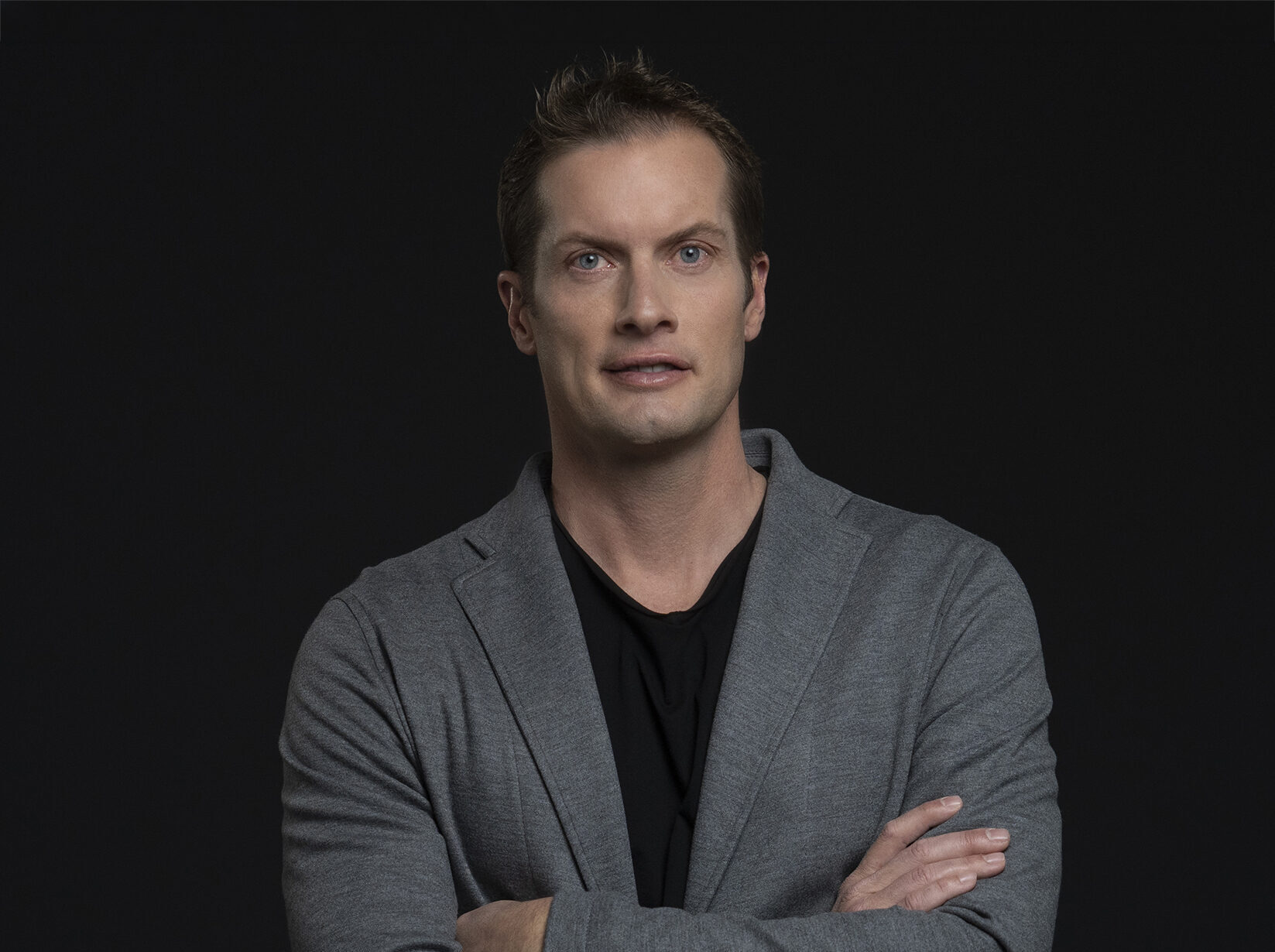


I recently went one-on-one with Kathleen Barrett. Kathleen is the CEO of Backlight, the parent company of Iconik, Wildmoka, and ftrack.
Adam: How did you get here? What experiences, failures, setbacks, or challenges have been most instrumental to your growth?
Kathleen: I got here in the most roundabout way possible. I was born in Brooklyn and grew up in New York. My mom immigrated from Poland, so as a first-generation college student, there was a lot of pressure to do something safe. I went to NYU thinking I’d be a doctor, switched to economics because I was always a math person, then ended up at Goldman Sachs because people I met along the way coached me in that direction. I clearly had no idea what I wanted and wasn’t even fully aware of the options out there. Goldman was a genuinely great place to start. The organization really invests in young people, but I always knew I’d cap it at five years. I wanted to feel the impact of my work day-to-day, and corporate life wasn’t scratching that itch. So I left, took a year off, had a lot of coffee chats, and stayed curious. That space led me to VHX, a video startup founded by someone I’d met at NYU. I knew nothing about media or tech at the time. They took a chance on me, and I took a chance on them. Eventually, VHX was acquired by Vimeo in 2016, and that really accelerated my trajectory.I became general manager of that business, and, with some success, was given the opportunity to run all of our enterprise efforts, which were nascent at the time.
Because enterprise wasn’t Vimeo’s focus, we had space to experiment, make mistakes, and figure things out with a lot of grit. That’s something Vimeo believed in: throwing strong operators into the deep end and giving them more responsibility than they’ve ever handled before. We grew that business substantially. Now it’s a core part of Vimeo’s strategy. I don’t think we could have built it the way we did without the space and time to make mistakes until it reached scale. From Vimeo, I became CEO of Mosaic Group at IAC and then Backlight in 2024. The through-line isn’t a clean arc. It’s saying yes before feeling ready, and being lucky enough to have people around me who were generous and honest. Both have mattered more than any credential.
Adam: What are the key steps to growing and scaling your business?
Kathleen: Get really honest about what you’re actually good at, not what you want to be good at. Ask yourself what your organization does distinctly and reliably well. That sounds obvious, but it’s surprisingly hard to sit with. After that, a lot of scaling is operational discipline, and I think people misunderstand what that actually means. It’s not process for process’s sake. It’s being specific: specific about which metrics you’re trying to move, the initiatives that are going to get you there, and relentless about clear ownership and tracking. The point isn’t always to be right; It’s to be intentional enough that you know when you’re wrong and can change course fast enough to matter. Vagueness is what kills you. If you’re not specific, you can’t tell what’s working, which means you can’t move quickly enough when it isn’t.
Lastly, invest in the right people earlier than feels comfortable. Right is the operative word. Don’t compromise on fit, and don’t wait too long to make a change when something isn’t working. The best person at another company is not automatically the right person for yours because environment matters. The skills that work in one context don’t always transfer. Being clear-eyed about that, both in hiring and in how long you hold on, is one of the hardest things to get right and one of the most important.
Adam: What is your best advice on building, leading, and managing teams?
Kathleen: High standards and psychological safety aren’t opposites because you need both. If people don’t feel safe to be honest, to flag problems early, to say “I don’t know,” you end up with a team that’s performing for you rather than actually working with you. That’s a slow leak. It’s hard to see in the moment and expensive by the time it’s obvious.
Clarity is also one of the most underrated leadership skills. Being specific about expectations, about where things stand, about what good looks like. That’s genuinely kind, even when it’s uncomfortable. The leaders I’ve learned the most from were the ones who didn’t make me guess.
Adam: What are the most important trends in technology that leaders should be aware of?
Kathleen: I’d push back a little on AI being the trend to understand. The more important question is whether your organization is actually ready to get value from it. We see this through Iconik. Our customers ran over 11 million AI-powered jobs in 2025. The teams benefiting aren’t the ones who turned on a feature. They’re the ones who had their assets organized and trusted before AI entered the picture. AI amplifies what’s already working. It doesn’t fix what isn’t. The shift that matters most is from “how do we create more?” to “how do we actually use what we have?” Volume is no longer a differentiator. The edge is in findability, reuse, and governance. What people consider the less glamorous stuff.
Adam: What do you believe are the defining qualities of an effective leader?
Kathleen: Clarity, courage, curiosity, and humility. Without these, you start believing your own narrative and stop being honest about what’s actually working. The best leaders I know hold high standards and genuine empathy at the same time. They’re direct because they care, not despite it. And they’re honest about uncertainty rather than projecting confidence they don’t have. The leaders I’ve trusted most were the ones navigating openly and bringing the team with them.
Adam: How can leaders and aspiring leaders take their leadership skills to the next level?
Kathleen: Do harder things than what feels comfortable. That’s the most direct path I know. But the other thing I’d say, and this has mattered as much as anything in my career, is be intentional about who you surround yourself with. Not just your team, but the broader network of people you learn from and get challenged by. I think of it as a personal board of directors. People who are better than you in specific ways, more experienced in areas where you have gaps, and honest enough to push back. If everyone around you is agreeing with you, that’s a problem.
The best development happens in the doing, not the planning. Don’t over-architect your path. Stay open to things that sound interesting, even if they don’t fit neatly into a plan. Some of my best opportunities came from saying yes before I felt ready. The gaps you have are real, but you close them faster by being in the room than by waiting until you’re ready to be there.
Adam: What are your three best tips for entrepreneurs, executives, and civic leaders?
Kathleen: Know the difference between urgent and important. Urgent things fill every hour if you let them. The important things like strategy, culture and relationships rarely come with a deadline, which means they get deferred unless you protect time for them.
Build feedback loops early and keep them honest. Information gets filtered on the way up; that’s just how organizations work. Talk directly to customers and to whoever is closest to the actual work. The further you get from the source, the more you’re managing a story rather than reality.
Adam: What are your best tips on sales, marketing, and branding?
Kathleen: On sales: understand before you persuade. The instinct to pitch fast, especially when you believe in what you’re selling, is almost always wrong. The best salespeople I’ve worked with ask better questions than anyone else in the room. That’s not a soft skill. That’s the skill.
On marketing: again, be specific. Vague promises don’t earn trust and they don’t differentiate you. At Backlight, we invest in our annual Iconik Media Stats Report because it gives us something genuinely useful to say and its grounded in how our customers actually work. That kind of credibility is worth building slowly.
On branding: brand isn’t the tagline. It’s what it actually feels like to work with you: How you show up when things are hard, how your team treats people, whether what you say matches what you do. No positioning fixes a gap between what you say and what you do.
Adam: What is the single best piece of advice you have ever received?
Kathleen: “There’s no secret room with somebody with all of the answers.” I’ve said it enough times that it feels like my own now, but it’s really just a truth I had to learn. Early on, I operated with a lot of deference, assuming people ahead of me had figured something out that I hadn’t yet, except they hadn’t either. Everyone is navigating uncertainty. The leaders I respect most are the ones who are honest about that and keep going anyway. Knowing that is both humbling and, honestly, a relief.
Adam: Is there anything else you would like to share?
Kathleen: The one thing I’d add is about showing up as yourself. That means showing up genuinely, not as a performance of what you think a leader is supposed to look like. There’s a lot of pressure in tech and media, especially as a woman, to fit a mold or to modulate yourself. You’re expected to lead in a way that feels safe or familiar to the room. I did that for longer than I should have. What I found when I finally gave myself permission to just show up as me (i.e. be direct, curious, a little unconventional) was that people leaned in. They followed more readily, not less. Authenticity isn’t a vulnerability; it turns out it’s one of the most powerful things you can lead with. I wish someone had told me that earlier. It would have saved a lot of energy I spent trying to be something I wasn’t.