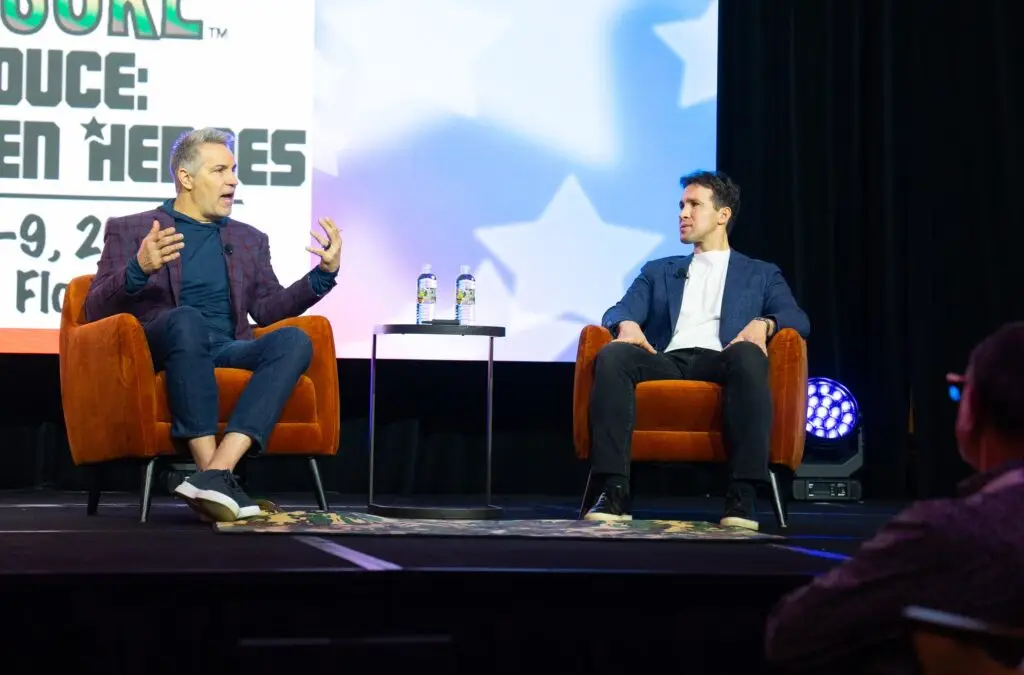

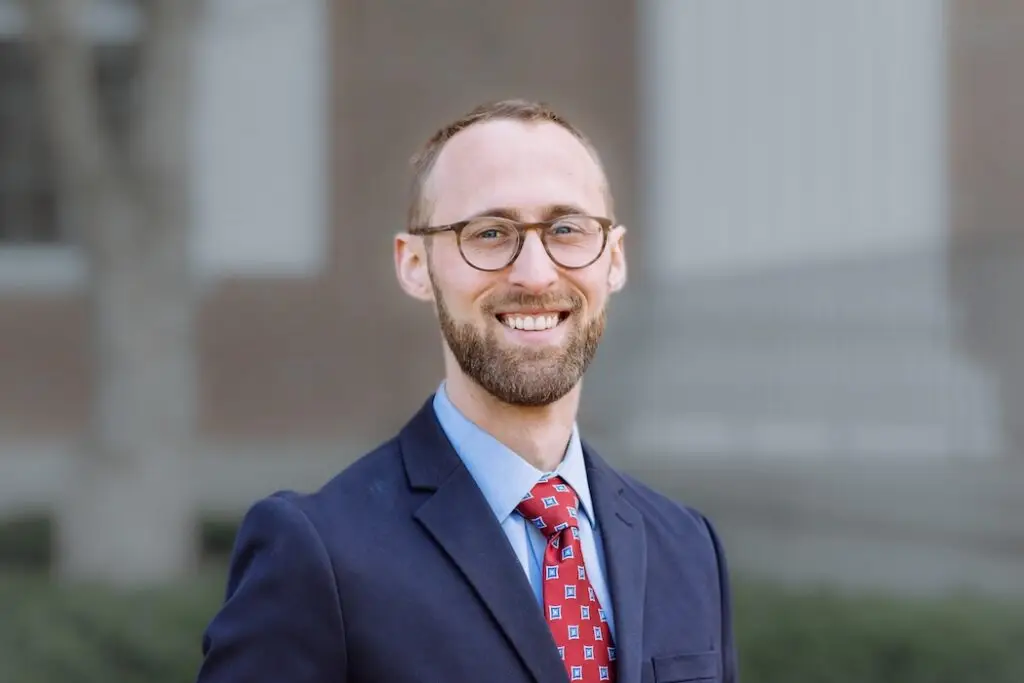
I recently went one-on-one with Dr. Alexander Jones, Vice President of Philanthropy & Engagement at Hope College.
Adam: Thanks again for taking the time to share your advice. First things first, though, I am sure readers would love to learn more about you. How did you get here? What experiences, failures, setbacks, or challenges have been most instrumental to your growth?
Alexander: I grew up in Texas in one of the most diverse high schools and communities in America. It was a really formative experience, especially playing football. Friday Night Lights in Dallas-Fort Worth was my childhood experience. I learned incredible lessons as an athlete at a prominent, state-championship-winning program. I learned about grit and toughness, goal setting, envisioning success, positive self-talk, and a championship attitude. I think back to those days, playing in front of 50,000 fans and on ESPN at one of the first high schools sponsored by Gatorade and Nike…it’s wild to think about the pressure to perform then, but that era of my life taught me so much about humility, hard work, teamwork, and leadership.
When I got to College, I hung up the cleats and focused on academics. My parents went to College, so I wasn’t a first-generation college student, but I attended an elite Christian liberal arts institution where I felt at first like an imposter. I didn’t belong, in my 18-year-old mind, to such an esteemed, intellectual, and powerful learning environment. But my work ethic and drive from high school football helped me become successful as I learned to read, write, and research like a scholar. And more important than any work that I did, I was surrounded by incredible faculty who encouraged me, challenged me, and took me under their wing. They invested in me, brought the best out in me, and gave me opportunities to learn, lead, and grow. In my four years at Wheaton College, my life changed and put me on the path I am today; I owe so much to my days at Wheaton.
I met and married my wife from Wheaton. We both worked at the College for many years in various departments. In fact, I first served at Wheaton in the cafeteria, making 500 hamburger patties from raw meat three times per week! Eventually, I was a teaching assistant. I served in residence life. Then, I worked in a co-curricular program forming undergraduate students in service-learning, and then in an academic research center where I built strategic research and internship partnerships with global organizations in 70+ countries. I became a fundraiser in due time and led Wheaton’s Midwest fundraising region. Having worked in every major division of a university, where I have an understanding of the whole’s parts, is crucial to my leadership.
Along the way, I earned my PhD, researching student success: How do students in colleges and universities succeed? And I earned my MBA. I began consulting at dozens of universities and colleges around the world, and eventually had a hunger for more senior leadership responsibility. I left Wheaton, my beloved alma mater, to serve under a president in New York. I was asked to come in, build the team, finish their campaign, and get them ready for the next one. We met those goals, and I then shifted to serving in the same capacity at another institution in the Midwest, where I am today.
Adam: What are the biggest challenges you face as a leader in higher education today? How are you navigating them?
Alexander: At a macro level, the industry has become notorious for and synonymous with a lack of financial sustainability, partisan politics, declining public confidence, challenges to the value proposition, and mental health challenges among students. Each of these challenges takes shape differently at different institutions. Some colleges and universities are more exposed to certain challenges, and others are less exposed.
When I think about navigating these challenges, among many others that have and will come our way, three thoughts come to mind.
First, as leaders, we like to think catastrophically about our current economic, social, and political moment, but it’s helpful to remember that every generation before us has faced challenges, too. In other words, there really is nothing new under the sun. It feels hard to have such low public confidence in our industry right now, but scholars of higher education will remind us of the politicization and ideological uniformity of the 1960s, the closing of the American mind in the 1980s, and the Great Recession in the 2000s. If you’re in the field long enough, you learn that every era is hard. That’s leadership. I once read through Forged in Crisis: The Power of Courageous Leadership in Turbulent Times by Nancy Koehn, which are brief biographies of historical figures who led during challenging moments. What you learn is that there are tried and true models of leadership that help you navigate any challenges, regardless of the era. The point is: I am navigating the present challenges by surrounding myself with coaches and mentors who have gone before me.
Second, with the myriad challenges facing our industry, solutions have to be built with our constituents. Here, I think of faculty at our university. We have in-house experts on politics, on education, on mental health. Colleges and universities can lean on their expertise and know-how to shape direction, decision, and navigation of challenges. Leadership in higher education tends to mandate that decision-making must include those being impacted by decisions.
Third is about being decisive. Complex, multi-stakeholder challenges at some point need direction and decisiveness. A leader needs to have the ability to build trust and confidence in their leadership so that when they make a judgment call, the organization is on board. Being decisive and making the call is another exercise that is challenging in higher education, which typically is very egalitarian, but it’s also, I’ve learned, respected and appreciated when done well. People outside of higher education might laugh at the idea that decisiveness is difficult in colleges and universities, but in the industry, it’s hard to pull off!
Adam: In your experience, what are the keys to managing change and leading through uncertainty?
Alexander: My thinking on change and innovation has been deeply shaped by Frances Frei. Rule number one in change management is honor the past. This is especially true in an industry like higher education, filled with legacy, tradition, and historical pride in one’s alma mater. Because of the challenges facing our industry today, change, transformation, and innovation may very well be needed, but they have to be done in ways that honor the particular pasts of the institution we serve and steward.
Rule number two in change management is to articulate a cohesive and compelling change mandate. In higher education, we have so many constituents with different interests and desires; it’s very different from a publicly traded company that has one primary goal: value creation for shareholders. In our industry, we are simultaneously recruiting students and cultivating their parents, educating students directly, attracting and retaining world-class faculty, employing staff, engaging our alumni, securing resources from donors and investors, and investing in local and global governments and communities. Convincing each of these parties–students, parents, faculty, staff, alumni, donors, investors, and local and global governments and communities–that change is needed is a tall task! And, that’s not to mention that each of these parties in and of themselves is incredibly diverse–politically, economically, socially, etc. Because higher education is a compact between these groups, we have to work to build buy-in and momentum in a cohesive and compelling way where everyone understands and can say, “We need to change.”
Rule number three: A rigorous and defensible plan. If the past is honored and key stakeholders believe in the need to change, leaders must then build a rigorous way forward. As leaders, we operate at 100,000 feet when in large organizations, the daily experience is far removed from our thinking. Leaders, myself included, have to continuously challenge ourselves to land the plane: Make the vision of change accessible and rigorous for anyone in the organization, which means we have to intuitively understand the ins and outs of every facet of the place we serve.
Adam: What do you believe are the defining qualities of an effective leader?
Alexander: In senior leadership, I have had the opportunity to serve and steward the incredible resources entrusted to Fortune 100 CEOs, serial entrepreneurs, government officials, and other ultra-high-net-worth families. Working with and for elite, wildly successful leaders has taught me a lot about being an effective leader. And, if I could summarize the defining quality of effective leadership, it would be one word: Stewardship. As leaders, when we establish businesses or step into executive leadership in a mature organization, we are there to steward the mission, the vision, the values, the resources, and the people entrusted to us. The best leaders I know recognize our time on earth is short, and have a clear and selfless sense of “why” we exist.
Let me give an example. One Fortune 100 CEO I knew was notorious for regularly walking around the plant as well as administrative units. He knew employees’ names, kids’ birthdays, and favorite desserts. He recognized that he was there not just to create value in people’s bank accounts, but to steward their lives, their families, their children’s futures. He showed that he cared, which, I believe, set a tone for the entire organization. In the decade he provided senior leadership, revenue grew from $14B to $28B, and the stock price grew from $20/share to $90/share.
Adam: How can leaders and aspiring leaders take their leadership skills to the next level?
Alexander: For me, I like to read and network outside of my industry. It’s sort of like lateral thinking and problem-solving. At some point, you surround yourself with experts, or you may even become the expert in the field, and everyone says the same thing again and again and again. When you come across a problem or a challenge, if you’re isolated in your network or aren’t surrounding yourself with diverse perspectives, you will plateau. For leaders to get out of that rut, the solution is to get out of your comfort zone. It’s the idea of “what got you here isn’t going to get you there.”
This year, I’ve been reading Unreasonable Hospitality, a book about hospitality in the restaurant industry. It has been a blast to put myself in the shoes of a restaurateur and to then translate the incredible warmth and intentionality of hospitality in that industry to higher education. That kind of dogged hunger for learning and lateral thinking can take leadership skills to the next level.
Adam: What do you believe are the most important skills needed to succeed in today’s and tomorrow’s workforce?
Alexander: In higher education, which again is driven by relationships, I look for one quality in hiring, especially from our frontline team: Can you pitch a $5M investment in an elevator in 30 seconds in downtown Chicago, and can you sit down with a recently widowed individual, drinking flavorless tea, and crying together while discussing a much smaller investment? In other words, I want people on our team who can build a genuine relationship in a private jet and in a low-key retirement home.
The skill–whether in higher education or business–that I think is most important today and tomorrow is dexterity. It’s more than just emotional intelligence to read a room, but a kind of human, authentic, trust-generating connection with anyone.
In a world driven by machines, there is much more talk about some people returning to physical trades. That’s a big challenge shaping higher education right now. But, even as I think about the trends and direction of technology, I believe that our graduates who have dexterity in relationship building will be the most successful in the future.
Adam: What are your three best tips applicable to leaders in business, government, and education?
Alexander:
- Never stop learning and listening.
- Trust is the bedrock of success.
- People won’t remember what you said, but they will remember how you made them feel.
Adam: What is the single best piece of advice you have ever received?
Alexander: “Live an interesting life,” an executive coach once told me. If my job is to connect with people of all kinds of backgrounds and build genuine relationships across differences, I have to be able to relate to them on their level with the things they care about. Whether it’s basketball or ballet, piano or put options, or Ferraris in the 1960s and Nintendo’s Zelda, I want to be able to have lived such a life that I can know about and have experienced all kinds of opportunities so as to build a relationship with anyone.
Adam: Is there anything else you would like to share?
Alexander: Have you ever heard the phrase, “It’s lonely at the top”? I heard this early on in my leadership journey, but I wanted to say that it’s never been true for me. I’ve never felt alone, and I think the best leaders surround themselves with mentors, peers, and direct reports that they enjoy being around. Yes, leadership can be a grind, but if you’re in the right place at the right time with the right people, it doesn’t have to be lonely.