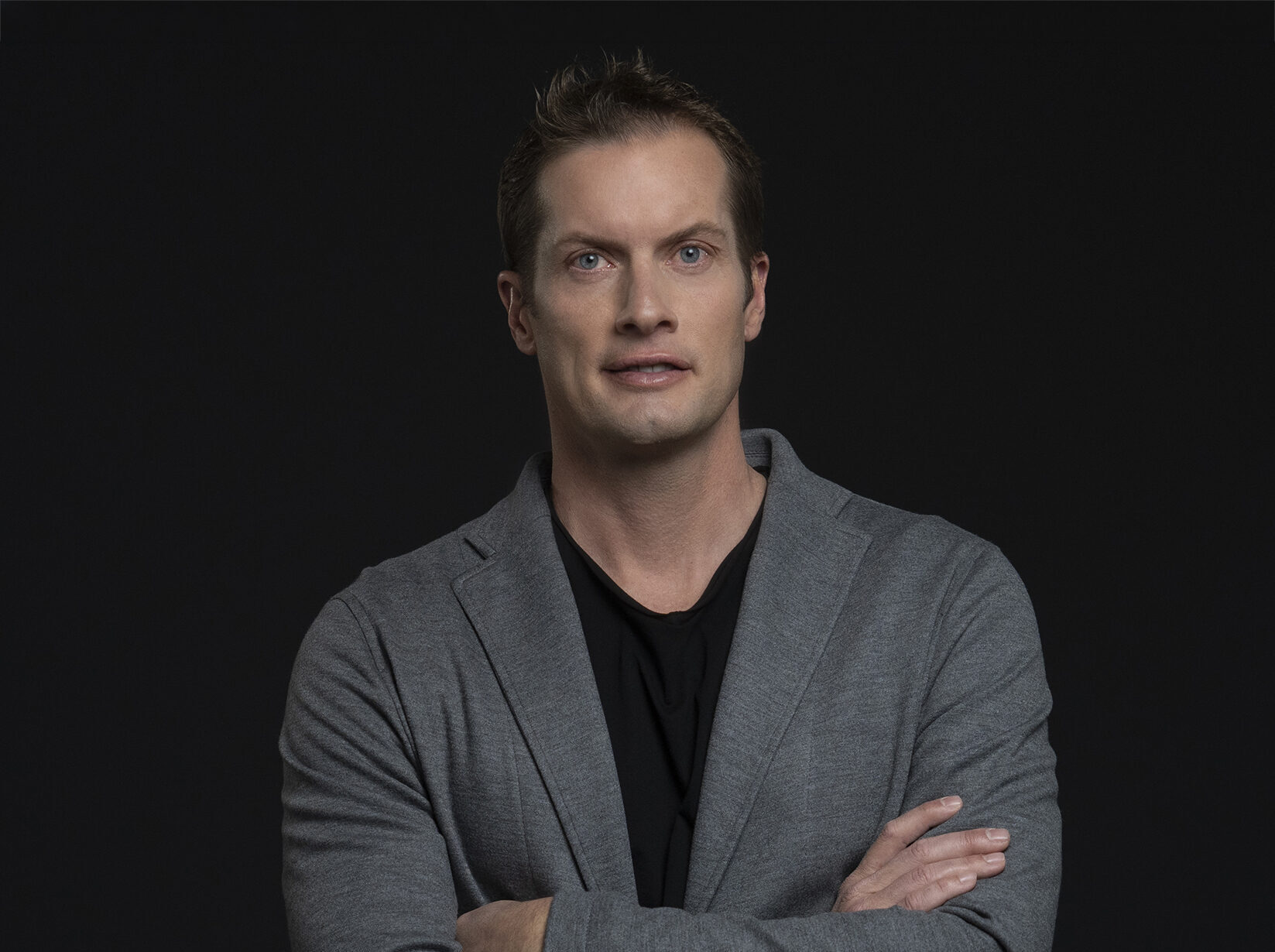

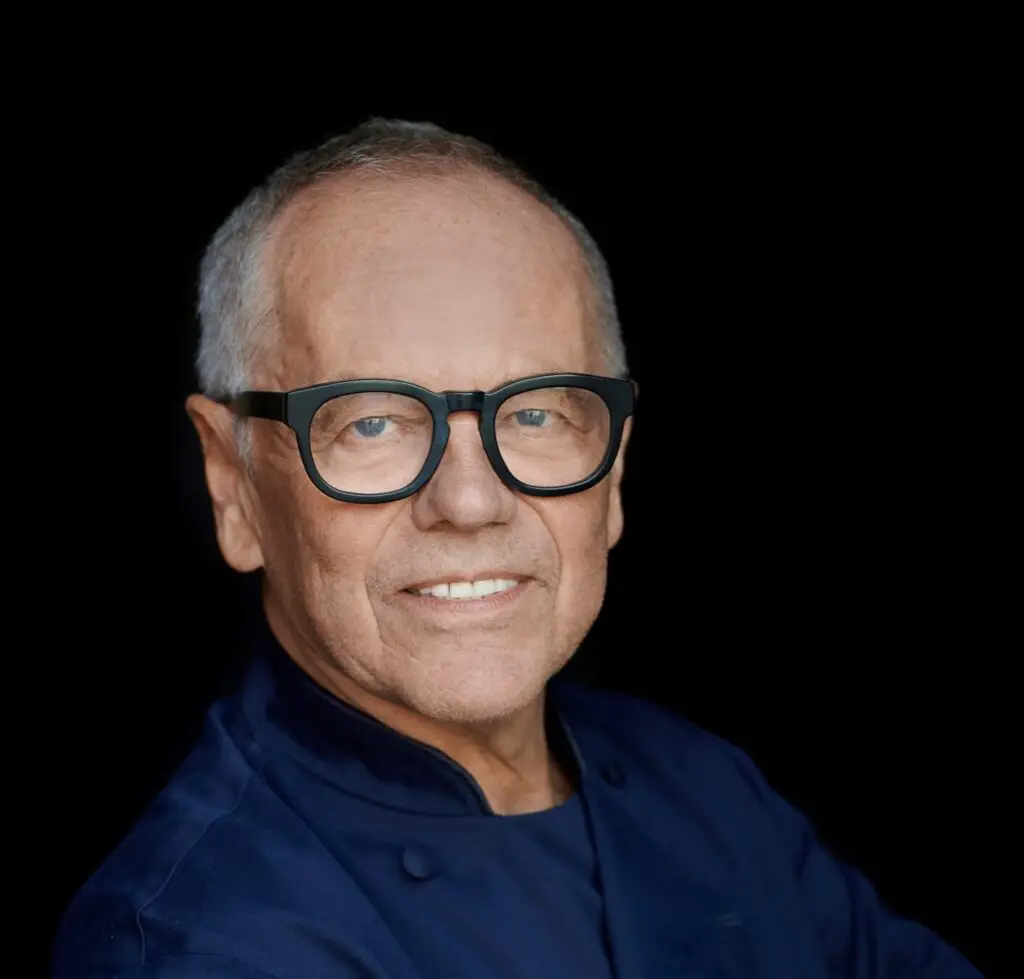
I recently interviewed culinary legend Wolfgang Puck on my podcast, Thirty Minute Mentors. Here is a transcript of our interview:
Adam: Our guest today reshaped the world of modern dining. Wolfgang Puck is the founder of Wolfgang Puck Fine Dining Group, Wolfgang Puck Catering, and Wolfgang Puck Worldwide Incorporated, and his name has become synonymous with the best of restaurant hospitality. Wolfgang, thank you for joining us.
Wolfgang: Thank you. My pleasure to be with you.
Adam: Pleasure is mine. You grew up in Austria, and your mom was a professional chef. Back then, the profession was far from glamorous, but from an early age, it was an integral part of your life. Can you take listeners back to your early days? What early experiences and lessons shaped your worldview and shaped the trajectory of your success?
Wolfgang: So I was born in Austria, in the southern part, close to Italy and Slovenia, in a tiny little village with two farmers and five houses, maybe. So we used to get the milk from the farmer next door. We used to have chickens and get the eggs from the chickens, and in the springtime, my mother cooked all the roosters because she didn’t need them around. She made fried chicken on Sundays, and we had a beautiful vegetable garden, but my mother was also a chef during the summertime, from April to October. She worked in one of the nicest resort hotels on the Wörthersee, which is a beautiful lake, and was really popular in the ’60s, before everybody could fly to Spain or Greece or whatever. So we had all these rich Germans who used to come to the lake, or they had houses there, or spent their vacations there, and every summer, then I went to help my mother. So that’s really how I started in the kitchen with my mother. There were probably 10 or 12 other chefs in the kitchen, but I helped the pastry chef and sometimes my mother.
Wolfgang: And then I had a really difficult childhood. My stepfather was terrible, and he always told me I was good for nothing. So when I was 14, I couldn’t wait to move out of the house, and maybe I wasn’t smart enough at first. I wanted to become an architect, but to become an architect, you have to have really good grades, and the school is in Vienna. For me, it was too far away, and my parents didn’t have the money to make me go to Vienna and pay for studios or things like that. So I started. My mother found me a job as a cook apprentice in Villach, in a small hotel and restaurant, and I remember I started. I was 14 years old. I moved out of my house with my little suitcase, found a little room in some old lady’s apartment. She rented me one room, and then started to work peeling potatoes and everything. And then one Sunday, like two months into my apprenticeship, we ran out of potatoes. We ran out of mashed potatoes, and the chef was yelling at me, and I didn’t even know what was going on, how much they needed. Then he said, “Oh, you’re good for nothing. Go back home to your mother.” And I said, “I cannot go back home,” because my stepfather said already the same thing. “You’re gonna be home in a month or two. You’re good for nothing.”
Wolfgang: So that was probably one of my worst nights, because I said, instead of going home, I’m gonna just jump into the river and finish it and kill myself. But I stood for like an hour over the bridge and said, “When am I gonna jump, or what will happen then?” And after a while, I finally said, “You know, I’m just gonna go back tomorrow and see what happens.” So I go back the next morning, couldn’t sleep all night, and went in there early at seven, and the apprentice who was ahead of me was all happy to see me, because if not, he would have to peel potatoes and onions and do all that job for another six months. So I went down. He hid me in the vegetable cellar, and I was peeling the potatoes and doing all that stuff down there. Ten days later, the chef comes down in the cellar and sees me sitting there and starts screaming at me, grabbing me, and says, “Get the hell out of here.” And I said, “I’m not leaving. I’m not leaving.” And he yelled even more and grabbed me on the back, but I just held on to the bag of potatoes, and then he didn’t know what to do.
Wolfgang: He called the owner of the hotel, who was also the manager of the hotel, and says, “I don’t know what to do with this little guy here, this little piece of shit,” he used to call me. “He is yelling at me. He doesn’t want to leave. He’s not good enough. He’s good for nothing.” And the owner had a little bit more empathy and says, “You know what? If he doesn’t really want to leave, send him to the other hotel we have in town, and maybe it’s gonna be better.” I went there. They had a lady chef there, and she was nicer because she had kids about my age, too, and she said, “You know, you just be quiet, do your job, make your french fries, make your onions, or whatever you have to do, and do what they tell you to do, and it will be fine.” And sure enough, that’s how it happened. So I did my apprenticeship for three years, got pretty good grades in the cooking school and everything. And when I was 17, I finished school and went to France. So that was my story about Austria. I can’t tell the whole story. It’s gonna be up for two hours.
Adam: Wow, I love it. There’s a lot to unpack there in that abridged version of the two-hour story, starting off with the fact that your start in the culinary industry wasn’t by virtue of being deeply passionate.
Wolfgang: Not at all at that time. I didn’t even know if I was going to be a cook when I was 17. So when I was 17, I moved to France. We had a restaurant from Dijon called Trois Faisans do a week of French cooking in the hotel where I worked, and I was so fascinated by them because they were making escargot bourguignon, they were making coq au vin, and pâtés and things like that. I never saw that, and they cooked and marinated the beef in red wine. I still remember, and I said, “You know, our old chefs used to drink the wine. They never cooked with the wine.” So then I applied for a job there. They accepted me as a chef. About a year into my work in Dijon, the owner threw a little party for the employees. They had this red book called the Guide Michelin, and the party was really because we got one star in the Guide Michelin, but the way he talked was like they had the best restaurant in France. So I believed it. I said, “You know, they must be the best.” I never tried another one, really. And so then I looked in the Guide Michelin. I found out there are two-star and three-star restaurants, so I wrote to all the famous restaurants like Bocuse and Troisgros and La Tour d’Argent in Paris. And the first one to answer me with a yes was Raymond Thuilier at Baumanière in Provence, in Les Baux. So I moved there, a little town of 500 people, but it was an amazing three-star restaurant, and it’s really there where I found my passion, because the owner, Raymond Thuilier, was so passionate about hospitality and about food that I said, “I want to be like him.”
Wolfgang: And I still remember he brought Picasso in the kitchen. He brought Elizabeth Taylor in the kitchen, and I said, “Wow, I want to be like him.” But the most important part was really the cooking style. It was so different, even then what we had in Dijon. Everything was cooked to order, and he had like six gardeners bringing us the smallest peas, or green beans, or great fraises des bois strawberries or melons, you name them, and everything was cooked just perfectly at the last moment. So that’s where I really found my passion, and I said I want to cook like that. I want to be like Mr. Thuilier. So he became my mentor, and the rest is history. I continued in France, worked at Maxim’s in Paris, at Hôtel de Paris in Monaco, and then I moved from Paris to America. Came here, and first I was supposed to be the chef at La Goulue in New York. I didn’t like it because it was like a bistro, and then a guy who I knew from Chicago offered me a job in Indianapolis. And I knew Indianapolis because of the 500 Miles, the famous auto race. I was all excited. I said, “I want to go to Indianapolis for sure,” because I used to live in Monaco, and they have the famous race there too. And I said, “It’s going to be like Monaco.” So I arrived there in Indianapolis with the Greyhound bus after being 36 hours on the bus, and finally I said, “This is Indianapolis? It’s nothing like what I expected.” But I had no more money. I checked into a motel, started to work, and then after three, four months, I finally had enough money to put a down payment for an apartment, the first month’s and last month’s rent, and then I stayed there, got my green card there, and then moved to LA.
Adam: You moved to LA. You have some experience working in the US, but you don’t have the built-in network. You don’t yet have the brand. You have a heavy accent. How did you go from being an unknown to being a household name?
Wolfgang: It’s a long story, but so I came to Los Angeles, and then I worked in a restaurant called Ma Maison, and the owner was the nephew of the owner from La Tour d’Argent, Patrick Terrail. His nephew, Patrick, talked like a big game, but the restaurant here, the French chef, it was terrible. They cooked everything in advance, and what they cooked was not a French restaurant I was accustomed to. You know, I remember they made mashed potatoes and used this potato powder out of a can and mixed it in with some milk and water, and that was the mashed potatoes. I said, “No, this is really bad.” So I replaced the chef there after like two or three months, because they saw what I cooked when the chef was off was so much better. And then I became the chef and partner at Ma Maison, and after five years I said, “It’s time to spread out on my own,” because Patrick really did not trust me, and it was always him. And so I offered him a new partnership. I found this space up on Sunset Boulevard. I said, “Patrick, we have to create a management company, and we are 50-50,” and he looked at me and pointed his finger at me and says, “I always own 51%.” And I said, “Yes, and me too.” And so I said, “Okay, then I leave. I give you three months’ notice,” and I left.
Wolfgang: And then in ’82, in January, we opened Spago in West Hollywood, and we became a huge hit. Already at that time, I got some really good press in the LA Times and Gourmet magazine and things like that, but television was not something where chefs went on. So from Ma Maison to Spago, Spago became this huge success overnight, because it was the first restaurant with an open kitchen where it was fun to go to. The only thing serious was what was on the plate, and all the famous people from Hollywood, old and young, used to come every week. I remember Arnold Schwarzenegger and Michael Douglas, the older ones like Gene Kelly and Fred Astaire and Sidney Poitier, and then you had the young ones like Sean Penn and Madonna and Michael Jackson and Prince, and you name them. All these famous people used to come all the time, and so we became this huge hit. And then people from Japan came, and they said we should open a Spago in Tokyo, and I said, “No, I barely can run one restaurant.” And they came back a few months later with the design, exactly the same kitchen as I had at Spago, and they said, “Okay, we’re going to open Spago with you or without you.” So I said, “Okay, let’s open it with me.” So we embarked to Japan, to Tokyo, which was super exciting for me.
Wolfgang: And then after Spago in Tokyo, I said, “Okay, I have enough Spago. I will now do something different.” And somebody had a space down in Santa Monica, and he said they wanted me to put a Spago there, and I said, “No, I’m not doing that food anymore. I’m doing Asian Chinese food now.” So the guy just said, “Okay, I’m sure it must be good if you’re gonna make it.” So we opened Chinois, again the first fusion restaurant, and with an open kitchen, just like Spago. Spago, the kitchen was really the center of the restaurant, and it became another huge success. So I think we had Spago in Hollywood, Chinois in Santa Monica, and Spago in Tokyo after 18 months, I think. So we had three restaurants, and then we just continued to expand, opened in San Francisco, and in ’89 and ’90 we opened in Malibu, and then after that we opened in Las Vegas. We were the first restaurant opened in Las Vegas as a chef. There were hotel restaurants, but no chef was there. And a year later, I asked Emeril if he wanted to join us in the MGM. We were at Caesars Palace with Spago, but the MGM was just opening at that time, and he was interested, and Mark Miller came there with his Tex-Mex modern cuisine. So it started really in Vegas, but it started with us having the first Spago as a chef in Las Vegas, and today you go to Vegas, you have so many chefs from all over the world who have restaurants there.
Adam: And Wolfgang, a lot of what I’m hearing from you is someone has to be the first, and you’re only going to be the first if you’re eager and excited to be different, to take a chance, take a risk, innovate. When you’re willing to buck conventional wisdom, when you’re willing to go your own way, when you’re willing to take chances, take risks, you’re going to be a lot more likely to make great things happen.
Wolfgang: Totally. Somehow, because I left so young, I always thought there’s opportunities out there, but I always said, you know, my intuition really helped me to do things. When I saw Los Angeles at that time when I arrived, all these French restaurants, they had the Italian restaurant, they had all these different nationalities and French chefs, Italian chefs, and everything, but nobody was really representing what California is. And I really thought at that time we should do something that really reflects the city of Los Angeles or Southern California, with all these different cultures here. But we also are lucky because we have the ocean, we have some of the best vegetables, fruits, and all that stuff. So I said I want to cook with influences from these different cultures. So I remember we opened Spago in ’82, in January, and we put a tuna sashimi on the menu. At that time, there was no restaurant except Japanese restaurants who actually had raw fish on the menu. I remember I put a grilled tuna on the menu and I cooked it only on one side, and some people just sent it back and said he forgot to cook it on the other side. I didn’t want to cook it well done, so I was hiding it in my tomato basil vinaigrette, basically. And I made spring rolls, and then when I opened Chinois, I made a Peking-style duck, but I didn’t do it like a Chinese restaurant. I made it with a fresh plum sauce, and plum, and mint, and ginger, and everything, and people loved it. So I think we had a lot of different influences. We made a tempura sashimi, we made a lobster which tasted a little bit like Indian or Thai, with different spices. So Chinois again became the talk of the town because it was so different.
Adam: Wolfgang, as you describe your success, you use the word we a lot, and you describe your background and how you developed the skill set to become a great chef. You obviously have this extraordinary vision and willingness and desire to take risks, but how were you able to figure out who to surround yourself with that ultimately allowed you to get to that next level of success?
Wolfgang: Well, when I started, for example, at Spago, I had Mark Peel, may he rest in peace, and his girlfriend then, Nancy Silverton. So I hired Mark to be my chef, even though he didn’t have a lot of experience, but I said, “You know, I will teach him what I want. I don’t want somebody to do something different.” I had the vision for the restaurant, what it should be. And then Nancy Silverton was the pastry chef, so we started out with two really young people, but they were talented, and they were excited to do something a little different. So I think that was really an important part, and also that helped me to expand, because all of a sudden, I couldn’t control exactly what happened at Spago. I had to go to Chinois, I had to go to Tokyo, and everything, so I had to rely on people. And then I had Bernard, who was the maître d’. He was really good with the customers, to sell wine. He knew everybody. They all called him up. He was probably the most important person in Los Angeles at that time, because to get a table at Spago was very difficult. So looking back, it was so successful, and I was so surprised how successful it had become.
Adam: What would you say were the key elements to that success? If you had to really break down what allowed you to attain excellence, what allowed your businesses to attain excellence, what were those variables?
Wolfgang: Well, I think if you just do the same thing you always do, if you’re a singer and you just sing Elton John’s song, you’re never going to be Elton John, so you have to play your own music, your own songs, and your own lyrics, and whatever. So the same thing I was thinking about the restaurant. I have to do my own style, not duplicate what other people are doing. So at the end of the day, it was a great risk to have the kitchen in the middle of the dining room, to have things on the menu, like we had smoked salmon pizza, or a pizza with Santa Barbara prawns, or instead of making pepperoni, I didn’t want to make anything Italian, so I said, “I love pizza, but I want to make it my way.” So we made this pizza with duck sausage. I stuffed the duck legs, roasted them slowly, cut them thinly. So it was my duck sausage pizza, and I remember Linda Evans used to come twice a week and have a glass of red wine and my duck sausage pizza, so it was really interesting because at that time it was so new. The same thing happened at Chinois. It was so new, people never saw it.
Wolfgang: So today I think the repertoire of a lot of chefs is so much bigger than it used to be, because now you can know exactly what this restaurant is doing, what that restaurant is doing, so everything is more fused together now. You can eat the same thing in London, in New York, or in Sydney, or in Tokyo. In the old time, there were clear differences. Now, because of the internet, every young chef can know what’s going on in every place in the world, but there still are some chefs who are more original than others, and I still think there is still room out there to do something great. It has always shown that way. And if you take the risk, if you’re not worried about failure, this is not brain surgery. You’re not going to kill anybody if you’re not successful. So if you’re taking the risk and you’re passionate, one of the important things, especially for young people out there, is they have to learn a craft. We all talk these days about AI. If you have a good craft, like if you’re a good chef and you really know how to cook, if you’re a good winemaker and make great wine, there’s no AI that’s going to replace that. So I think for young people, I know they worry. What are the jobs going to be in 10 years from now? I mean, when we think AI 10 years ago didn’t even exist, and I think today, if we have young people who are going to college, it’s great to have a good education, but it’s more important to learn a craft now. It could be a great doctor, a great writer, whatever it is, but you learn a craft. Just to say, okay, I can do this or that, that’s not enough. So we are lucky in the restaurant world. I don’t think AI is going to replace us that easily, because people need connections. People still want to feel good. People want to enjoy great hospitality and great food. So I think we are lucky we’re going to be here for a while.
Adam: And to your point, the question then becomes, how do you incorporate AI into your craft so that you can become even better at it? But it starts with developing a great craft.
Wolfgang: My son Byron, who works with me, went to college. He went to Cornell. He also worked in some of the greatest restaurants in Europe, like Guy Savoy in Paris, or the Roca brothers in Girona, or Steirereck in Vienna. He worked 50 years after me at Baumanière or so, so I think for me, he really knows technology really well, and I think it’s an important part to actually do that. With AI and everything, you can actually figure out who is the best waiter in our restaurant in Singapore, who got complaints, what was the complaint. So now we are really set up. Or to make spreadsheets, you have AI and explain what you need. AI makes you a plan. So that’s for the back of the house, but that’s not really touching the guests. The guest is still the human touch, the hospitality, I think, which is really important. But I must say, Byron is really good in technology and really good, actually, with people too. So I’m very happy. I’m bad in technology, and I’m not really that interested in it. I’m interested in it, but I’m not passionate about it. I’m passionate about running the restaurants. I’m passionate about getting the best ingredients and then cooking them the right way, being really precise, and then having great hospitality to go with it.
Adam: How do you deliver great hospitality? What are the keys to delivering an exceptional customer experience?
Wolfgang: Yeah, so for the guests, really, it’s all about getting a great experience, and you know what a great experience is. When you have something that is much better than what you expected, you have to go beyond that. A lot of people walk into a restaurant, they say hello, they sit them down, but if the customer comes already two, three times, it’s great to recognize their name. It’s great to know where they like to sit. It’s great that the waiters are friendly, that people are really hospitable, and I think that’s really an important part, how you make the guests feel at the end of the day. If you spend $20 or $200, if at $20 you don’t feel good at the end of the day, the people were rude or not polite or not hospitable, you don’t want to go back. If you spend $200 and they are not nice, you’re not going to go back. But if the people are really hospitable, they make you feel really good at the end of the day, you will say, “Oh my god, this is a great place. I can’t wait to come back. It’s expensive. I might not come once a week, but I can go every month or every two months,” because everybody in our business really looks out to stay in business. You have to get regular customers. You have to have people who come back all the time.
Wolfgang: And you see so many young chefs today who are maybe very good cooks or cook something differently. Often they think if it’s different, that’s what people want. Yes, you want sometimes something different, but if it’s not really delicious, the people will come maybe twice, and then will say, “Okay, I’m going back to my place, because I know I can get a great piece of fish, or a great Wiener schnitzel, or whatever it is in this restaurant, and then I know people treat me really well.” And that, I think, is so important that a lot of young chefs forget about it. It’s all about the guests. It’s not about the chef. The chef, yes, is important, but just like in football, yes, the quarterback is important, but it’s all about the team. If you don’t have a great team, you can be the best quarterback. They will sack you 20 times in one game, and then they break your legs or your shoulder or whatever. You’re never gonna perform well. So we have to train people right. We need a great team to really make people feel really good, so that way they come back. I think repeat customers are the most important thing.
Adam: It’s a great analogy, and when you talk about a quarterback and the rest of the team and how it relates to running a kitchen, I’m thinking back to the early stories you shared growing up in the kitchen. You spoke about your first boss, who was not exactly the best leader, leading through yelling and screaming and fear and intimidation.
Wolfgang: Yeah, hitting, everything. Yeah.
Adam: Oh my god. And then you spoke about your mentor, who had the exact opposite approach, leading through inspiration, who taught you the joy of what this profession is all about. What do you believe are the keys to successful leadership? What can anyone do to become a better leader?
Wolfgang: Well, passion is an important part. If you can really translate and transfer the passion to other people to enjoy what they do, to enjoy really the possibilities. And I think I always tell people, when I was an apprentice, the chef, if I did something bad, he slapped me and then said, “You are an asshole. Get out of the kitchen.” I do the opposite. I always look at how can we do that better? So if I don’t like something, I say, “Okay, let’s try it this way. Maybe it’s better.” And often a collaboration, or for me, just like editing a little bit, will help a new chef to do something great. So it’s really an important part on how you treat the people. You want them to come to work in the kitchen and in the dining room to feel like they are part of a family, to feel appreciated, and to feel like they also can grow in a company. And that’s one of the reasons we open restaurants, so that people who are talented can come and stay with us, maybe go open a restaurant in Singapore or in London or somewhere, and work there for a while. And you know, when you’re young, it’s exciting too. You go to a different place, learn new things, and cook a little bit differently. Opportunities are always important. So if we show young people there’s opportunity, and if they do a good job, if they enjoy what they do, I think we will have a lot of people stay with us. And that’s one of our successes, is we have so many young people who are with us for so many years now, their kids are working with us. They’re not young anymore, their kids are young, so it’s really amazing to see a whole family working at the restaurant, and one reason is you have to treat the people right, make them feel like they’re part of something.
Adam: I love that. How do you get to a place where you are at your most creative, and how can anyone unlock their creativity?
Wolfgang: Well, if it would be so easy to say you can unlock your creativity, then we just have a key and turn the key, and then all of a sudden you’re creative. It doesn’t happen that way. You have to associate or work with different people too, so everybody puts a little salt in the dish, and then something new might come up. And sometimes it’s like when, by necessity. You know, when I opened Spago, we used to make smoked salmon, and we used to serve it traditional with brioche and dill cream and everything. And one day we ran out of bread and brioche and everything. And then I said, I’m just gonna bake the pizza dough as bread, just with a little olive oil and a little onion on top, and send that out. And then, as I was doing that, I said, “Okay, I’m just gonna put it all together like a lox and bagel almost.” So I baked a pizza dough with onions and olive oil until it was crispy, then put a dill cream on top of that, and then put the smoked salmon slices on top of that, and then a little caviar and some chives, and I tasted it and said, “Oh, all I need is a glass of champagne.” But it was out of necessity.
Adam: Out of necessity, but also out of experience, because the average person on the street couldn’t do that. It was your years and years and years of training, your years and years and years of experience combined with the fact that you were in that position that allowed you to get to that place.
Wolfgang: Definitely. People say, “Oh, why pay so much for a painting?” You look at a Miró painting and say, “Oh my god, $5 million, not that I have any. How come it’s so expensive?” But years and years of experience go, and all of a sudden come again. I just had a long chat with Ellsworth Kelly’s husband. Ellsworth died years ago, and he used to be great in drawing and everything. And then at the end, he made just his geometric forms and painted them in blue and green and black, or whatever color, and you would say, I can do that too. You just mix the right color and paint it. It’s what it is, but to get there, to do it like that, took time and took a lot of work and took a lot of innovation.
Wolfgang: And to innovate, to do something different, is really what sets you apart. Like when you look at Picasso, he always changed the way he was painting. He had the blue period, so he had all these different periods he went through, and I think a lot of artists are like that. They go through all these different periods to become who they are, and I think in cooking it’s a little bit the same. If you just cook the same thing as the restaurant next door, yes, you might become well known in the place, but you’re not gonna be that well known. And I think for me it’s not really that that is important for me. What is important is my own happiness, my family’s happiness, and what I do. I’m doing it for 60 years now, and I still have the same passion as I had 30 years ago.
Adam: I love that, and you brought up something really important, which is that you’ve been doing this for 60 years, and one of the reasons why you’ve been able to do it at such a high level for 60 years is because you’ve been adapting for 60 years. How do you know when to tweak, when to adapt, when to change?
Wolfgang: A little bit is, guess, doing the right thing. It’s like you ask a quarterback, how do you know you’re going to give the ball to the running back, or you’re going to throw it to this receiver, to that one? For me, it was really simple. I got the gut feeling when I opened Spago up in West Hollywood. So after 15 years, I said I would like to move, get a better kitchen, get something more. And then people thought I was crazy, changing the restaurant. Spago was super successful. So I know also that if you want to change, you cannot wait until the business goes down. You have to change when it’s on top. Then you really have a good chance to get enough people still coming, and you will be successful with it. But I’m never worried about change. Change is good. Change makes you think, and you always have to see, okay, what can I do next? How can I do something a little bit different? But the principle is still the same. You start with the best ingredients and don’t mess them up. So if you add Asian spices or Italian flavors, or whatever it is, if you start with great ingredients, you will end up pretty good.
Adam: You started off as a 14-year-old kid about to get fired from peeling potatoes, and today you’re synonymous with the best of an industry. What are the keys to building a brand? What are your best tips on the topic of branding?
Wolfgang: The most important part, I feel, is learning your craft really well when you’re young. A lot of people think today, I want to be on television. I want to be on Top Chef. I want to be on this one, on that show. That’s what they aim for. They forget, instead of going to Europe, to Spain, or France, or Italy, or Asia, to really learn your craft really well. Once you get really, really good, then you have a good chance of being more successful or doing something different, because you learn every day. And there’s still another thing, which is important in the long run. You have to be adventurous a little bit, but you have to be willing to learn, and you don’t have to be scared of failure. A lot of people are so worried that they’re going to fail, they get paralyzed and cannot do anything. You know what? Failure happens. And if you have the analogy about baseball, if you hit .330, you’re one of the top players in America, in the world. So, which means every three balls, you hit one and twice you strike out. And I think in the restaurant business too, when I opened Spago with the open kitchen, with this stage, I even designed the menu myself because I didn’t like what institutions were doing. So I always took chances, and I always liked to be a little different.
Adam: Wolfgang, what can anyone listening to this conversation do to become more successful, personally and professionally?
Wolfgang: I think personally is really an important part too, and we don’t talk enough about it, because in our industry, to have a great personal life, if you’re married, you have children, if you spend every day in the restaurant and not spend any time with your children or with your wife or your husband, it’s going to be not an easy life for them, and they don’t want to think you care about them. So to really organize your life. For example, when you work, you are at work, you do what you love to do, but when you’re at home, you have to put the phone away and just interact with the children, with the wife, or with the husband. So I think the personal life is really important for the well-being in the long run, so I think that’s an important part.
Wolfgang: In the restaurant, it is important to be able to change, be able to grow, keep your eyes and ears open, and keep your mouth shut. One shouldn’t shut the mouth totally, because you have to taste the food still. You want to be learning all the time. You want to be interested in it. Then you have a good chance to get better and better, and we learn a lot of things from the young people today. So don’t be worried about somebody young does something well. Don’t dismiss them. Say, oh my god, this is really interesting. I would add a little this and that, a little that. Then it would be something I love. So I think it’s always an important part to really be always on the lookout for getting better. The more you do it, the better you get. Practice makes better.
Adam: Be able to change, be able to grow, learn all the time, learn from everyone. That’s applicable whether you’re working in a restaurant or whether you’re working anywhere.
Wolfgang: Yeah, totally. If you’re a shoemaker or if you’re a clothes designer, or whatever you do, if you keep your eyes open and you look out for things and you are still excited, what you do. If you are bored at what you do, you don’t want to go to the restaurant anymore, you don’t want to go to your store anymore. Then maybe it’s time to give it up and not do it. But as long as you keep your passion, and to keep the passion, you have to be interested. You have to keep your interest up and really look out always for things to do, new things to do. Like I have a little free time now. Byron is working with me. I hired an art professor to start painting, so I never did that before, but I thought it would be an interesting thing, because instead of mixing different spices or different flavors, we mix different colors and apply them on a piece of paper or linen or whatever it is.
Adam: And it comes down to always being engaged, always having a purpose.
Wolfgang: Yeah, always have purpose, always be interested. What’s going on? For me, that’s an important sign, and always being willing to learn. I think when people stop learning, that’s when you go back.
Adam: Wolfgang, thank you for all the great advice, and thank you for being a part of Thirty Minute Mentors.
Wolfgang: Thank you. Good to talk to you. I’ll see you at the restaurant.