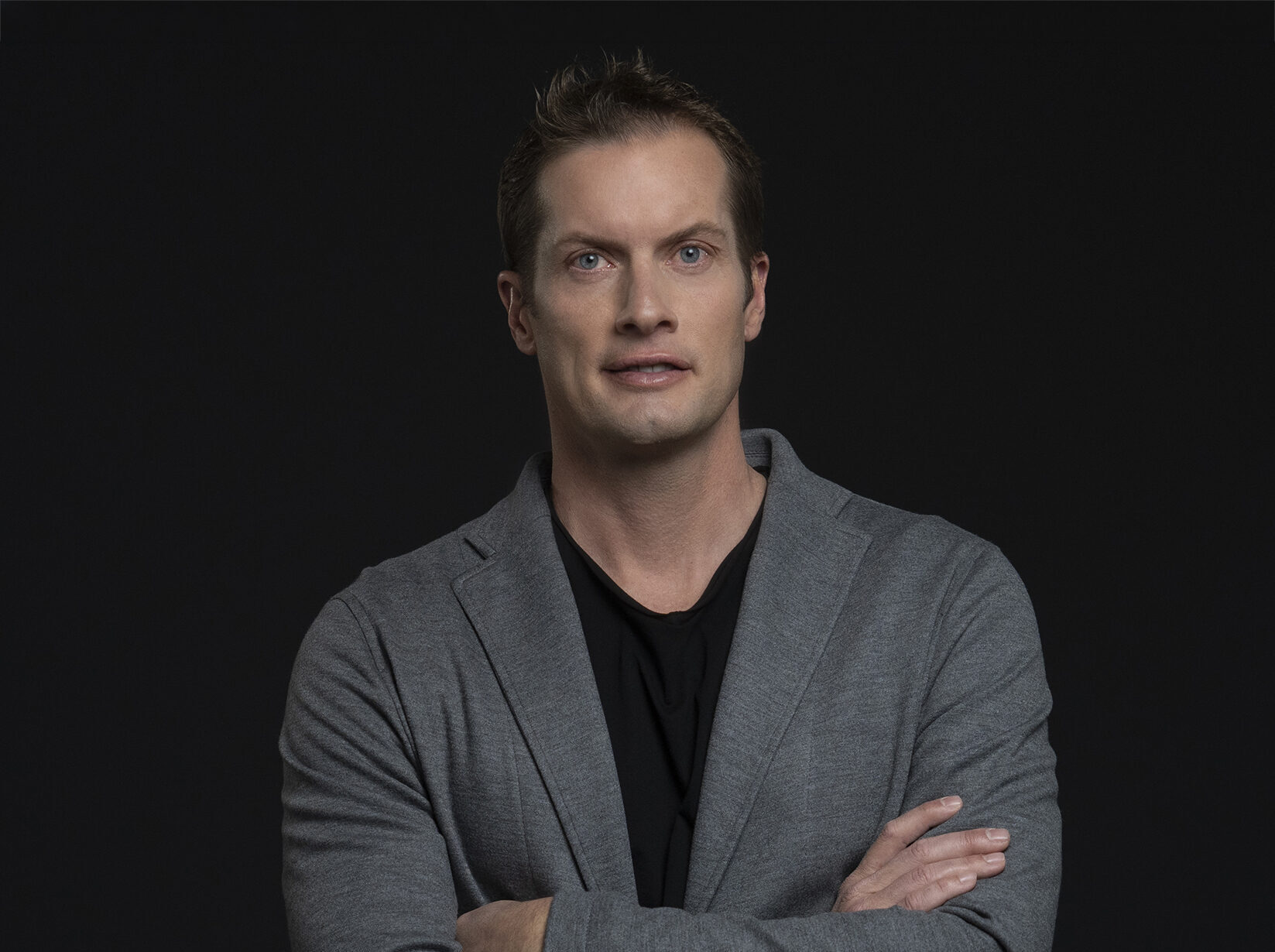


I recently went one-on-one with Jeff Ostermann, Chief People & Culture Officer of Sweetwater.
Adam: What is your approach to conflict management?
Jeff: First and foremost, there has to be an appreciation that conflict isn’t always bad. In fact, many times it’s good. I believe that in many of the organizations where I’ve seen it be more difficult or not handled quite as well, it’s because conflict is something to be ushered aside or removed. Whereas once you have a framing of it where conflict can actually be incredibly productive, if navigated well, it can actually be the source of a lot of innovation and a lot of creativity that flips the mindset and the approach to navigating it.
I believe you have to start with that. Then the other big aspect is understanding how you navigate conflict in any organization has to tie back to a deeper understanding and definition of your culture. What is the framework or the foundation on which you want to utilize conflict and steward it well? If you have the right mindset and understand the clarity and foundation of your culture, then I believe moving through conflict can be very productive. Not always easy, but oftentimes a lot more effective.
Adam: What are the most common sources of conflict?
Jeff: I believe in many cases the sources are actually structural. I think oftentimes when you get into conflict, especially if you’re helping two other parties navigate it, it can present itself as personal. I may feel like I have a problem with a colleague, or they don’t respect me, or they’re not listening to my ideas, all of which may be very accurate in perception. But once you begin to peel back the layers of that, oftentimes you find out that there’s a structural component to it. There’s a lack of clarity in many cases that was brought about by a poor definition of who had decision rights in a particular area. Then you end up having two parties operating off different assumptions and presumptions, which ends up feeling like an interpersonal dynamic. They may experience it as that, but in order to navigate it, we have to go back to the structural issue, work through the interpersonal feelings, and get back to how we create a layer of structure around the situation to move forward in a more productive way.
I share with my team all the time, it’s almost a mantra that we use, especially in the HR function and navigating these types of issues, that the thing is not the thing. There’s always a presenting situation that you have to enter into at that place, but the real thing that’s going on is always a layer deeper. Not always the same thing, but there’s always a thing that’s different than the thing that’s showing up and coming into your office or place of work. Part of our work, especially as HR professionals, but really as anybody in a leadership role, or even helping two friends navigate conflict, is understanding that there is a thing that’s different than the thing presenting itself. Then how can you artfully discern what that is, tease it out, and figure out the way forward in light of that?
Adam: Do you have an example that you can share where you have seen this play out?
Jeff: Oh yeah, many examples, more than I could count, but I’ll give you one. We had an individual come to us several weeks ago, who I think many listeners would resonate with, just not feeling respected by their boss and supervisor. They walk in the door and say, “This person doesn’t listen to my ideas. This person doesn’t do this. This person doesn’t do that. I feel like they cut me off in meetings. I feel like they’re short.” We begin to sit down, explore, and have a conversation. It always begins with listening and empathy. You can’t move too quickly to resolution because it’s important that people really feel heard, but also that they genuinely are heard. I think the more experienced you get at helping navigate conflict, one of the dangers is that you may think, “I’ve heard this before. Let me jump into the solution.” But none of the situations are exactly the same, so it has to be a discipline to always bring yourself back to, let me pause and settle myself, and really approach this situation with genuine curiosity and empathy.
As we began to unpack it, what we found was that the manager did have some behavioral opportunities to communicate things differently, but this individual also had a long interpersonal history outside of work of feeling disrespected and cut off. We circled back to a solution that created some clarity around how you bring ideas to your manager, what the time, manner, and place. There was some coaching to help them understand that part of the reason you’re getting cut off or don’t feel respected is that you’re introducing things in a time, manner, and place that isn’t very effective or conducive to a helpful conversation. We unpacked that and worked through it. Then we also went back to the manager and tackled their behavioral opportunities. But there was also a deeper layer conversation with that individual because they had self-disclosed that they had some personal history undergirding this whole dynamic and set of feelings. We got them back in touch with some of the resources we have in our company, counseling resources and mental health resources, to say, “Hey, if you want to take advantage of these, this could be a really healthy path for you.”
Now we’ve addressed both the functional day-to-day work experience and also put them in touch with some things that hopefully can have an even more transformative impact in their life. That’s really important to me in these situations. You can solve and resolve the current thing and maybe make somebody feel good for the moment or the day or the week or the month, but oftentimes conflict is a peek into those deeper things. As you have the opportunity, it’s actually a gateway to potentially bring about some really transformational change in somebody’s life if they’re open to receiving that and want to go down that road. I think when things are going well, and we’re not experiencing any conflict, and we’re just on top of the world, sometimes in those moments it can be very hard to believe that we need to do anything different or be any better because everything is going well. We’re winning. This feels really good.
But when those moments of conflict or disruption happen, that can be the place where somebody might be a little more receptive to asking what needs to happen here, both for this situation to solve itself and to understand how do I not find myself in this place again and again. That also starts in a team atmosphere by identifying the type of individuals and bringing them into your organization who hopefully can receive that, who are humble enough to walk through those types of conversations. That comes back to that deeper cultural layer, building an organization that is conducive and well-equipped to navigate these conversations when they come up. If you have that, then when you enter these moments, some really cool things can happen.
Adam: How can and does conflict impact engagement, turnover, and other variables leaders care about?
Jeff: Yeah, I believe there are several ways it impacts it. Again, if we go back to this idea of what kind of culture have I established, for example, at Sweetwater, we have five imperatives that govern the behavior and values expectations of the organization, and one of those is to drive continuous improvement. From day one, when somebody comes into our organization, we create an expectation that part of your role here, no matter your level in the organization, is to figure out how to make things better. We invite that. We celebrate it. It’s layered throughout every step of an employee’s journey with us. If I find myself in a situation where a team member went to another team member and said, “Hey, I think we have an opportunity to do something better here,” and that team member who receives the feedback is offended by it or upset by it or has a “How dare you” mentality, I’ve got the opportunity to come back and say, “Wait a minute. What this person is initiating here is entirely consistent with the behaviors and values of our organization.” Honoring and celebrating that actually propels engagement forward in a really meaningful way because really strong team members want to work in that type of environment where they can bring ideas forward. A healthy level of conflict is something that is really powerful.
I think understanding where conflict fits in the organization, if it’s structured well, and the approach to it is meaningful, is part of establishing a pathway to high levels of engagement. But then, when conflict does break and maybe somebody engages in conflict in an unhealthy way, the ability to rapidly resolve that, whether it’s a manager or a leader or the HR team stepping into it, is also a way to celebrate the culture. Of course, we hope bad conflict never happens, but we’re all human beings. That’s not going to happen. That’s the reality of life. Things get messy, and things are hard, especially when you’re pushing forward a big organization.
On the customer side, if we have team members who are external-facing and we mess something up for a customer, the ability to resolve that with compassion and speed and care can be one of the most powerful things in creating customer loyalty. When a customer sees that you handled something in a really powerful way that made their life better, that creates loyalty. It’s no different with employees. It’s no different with engagement. If you encounter a situation at work where the level of conflict has spiked into unhealthy territory, but the whole team wraps around you and gets that to a really good place, that can skyrocket loyalty, appreciation, thankfulness, and gratitude, all things that are key factors in the overall engagement of the organization.
Adam: What can the keys to managing conflict in hybrid and virtual settings?
Jeff: It’s a much bigger challenge in a lot of ways. One of the foundational challenges is that you don’t necessarily have the surface area in those virtual settings to have the same frequency and level of interpersonal interaction to build trust and relationships that can help prevent unhealthy conflict from happening. If I don’t know you well enough because we’re not bumping into each other in the hallway and talking about what we did on the weekend, all those little touches that build trust and credibility within team members are missing. Now, when something gets sideways, it can spiral a little quicker or spiral in different directions.
First and foremost, I believe there has to be a high level of intentionality, especially with virtual or remote team members, around doing those things that create frequency of more personal interaction. How do we engage you? How do we make sure you’re engaging well with your team? How do we make sure you feel part of the overall organization and not like you’re sitting out there on an island? All of that is the right thing to do to create an atmosphere that people want to work in, but it also pays dividends later when something does get sideways in a conflict situation because you’ve got a level of trust established that helps you navigate through it.
Then, when the thing happens, and you have to work through it, just the reality of navigating something virtually versus sitting in a room with somebody means I can’t necessarily pick up on nonverbal signals quite the same way. There’s a drop-off in some of that. Especially as the intermediary in that situation, your focus level, your intentionality level, and your discernment level just has to go up a level and be much more mindful in order to work through those situations with people.
Adam: Jeff, what I’m hearing from you is that the best practices for managing and diffusing conflict don’t really change in a virtual or hybrid setting. What changes is the level of intentionality. In person, you can at times rely on instinct or subtle face-to-face cues and still get by. In a remote or hybrid environment, you don’t have that margin for error. You have to be more deliberate, more focused, and more disciplined about consistently applying the fundamentals.
Jeff: That’s exactly right. One example of that would be if I’m with somebody in the office environment day in and day out, we have a reasonable level of regular surface area. We’ve caught up. We interact with each other. Over time you begin to feel like we have some level of collegiality and trust that’s been built among us. Now I enter into conflict, and in that moment, a best practice would be, hey, I ought to take the time to listen to you. I ought to be paying attention to your facial expressions, your nonverbals, what you’re saying, how you’re saying it, to establish trust in that room and in that moment.
But if I don’t do that because you’re virtual and I don’t have that frequency of interaction, now whether I’m dealing with it with you one on one or I’m the person in the middle trying to help two people navigate their conflict, I may have to quite literally create more time at the beginning of that meeting to do certain kinds of things, to offer affirmative statements, to listen, to pause, and to let people unpack their emotions a little more. Same practice, higher level of intentionality and focus. It’s an acknowledgment of the reality that we haven’t been able to build that in quite the same way because we haven’t been in person with each other.
Adam: How can one most effectively listen? How can one most effectively build trust?
Jeff: One of the frameworks I’ve always liked, and it goes back a little while, and I imagine you’re very familiar with it, is the Harvard Negotiation Project and their work. One of the things they determined was that in order to be an effective negotiator and deal with the interpersonal side of things, there are really five things that everybody is looking for and wants to be engaged on. What I found over time is that this is just true in interpersonal relationships. We can use it as a negotiation tactic, but I believe it’s absolutely true in dealing with conflict as well, and oftentimes negotiation and conflict go hand in hand. They talked about appreciation. Everybody wants to feel a sense of appreciation. Affiliation, everybody wants at some level to feel like they belong. There’s nuance between that and appreciation.
Autonomy, people want to have agency to make their own decisions and not feel like they’re being forced into things. Status, if they have standing in terms of title or level in the organization, that needs to be respected and acknowledged. Then, the role, if they have some specialty level of expertise or functional knowledge, how is that acknowledged and appreciated in the midst of our interactions? That’s not to say that in a conflict situation you’re necessarily indexing on all five of those, but I do keep that framework in the back of my mind. I think about it and say, okay, right now I’m sitting in a room with somebody, and we’re dealing with a conflict situation. What am I doing, and how are they conveying the degree to which they feel appreciated right now? Do they feel affiliated? Do they feel like they belong? Do they feel like they’re being othered or ostracized for the concerns they have?
Do they feel like they have some choice and autonomy in where we’re heading and what the resolution needs to be to this situation? Or if I’m doing it poorly, am I forcing decisions on them, which isn’t necessarily good? Then, from a status and role perspective, is there a sense of appreciation and acknowledgment of the uniqueness they bring to the organization? I believe that when conflict is managed well, much like a great negotiation is managed well, all of those dynamics are being addressed, either explicitly or implicitly.
Adam: When you talk about the Harvard study and the five variables in the context of feeling appreciated at work, I’m wondering if when Mike Judge made Office Space, he looked at that study and said, “We’re going to violate all five.”
Jeff: You’re right on the money there.
Adam: In my keynotes, I talk about the difference between the Golden Rule and the Platinum Rule. The Golden Rule – treat people the way you want to be treated – is a great way to live life. It’s central to many religious teachings and moral frameworks. But as a leadership principle, it can fall short because the people you lead might not want to be treated the way you want to be treated. I believe in the Platinum Rule: treat people the way they want to be treated. How do you do that? By listening and by respecting the five variables you shared.
Jeff: Yeah, very well said. I think at a deep level, it’s also worthwhile to reflect in your own leadership on what you’re doing this for. What is your purpose? What is your vision? Why do you come into work every day? Why are you part of whatever organization or effort you’re a part of? If at the end of the day my goal is to hit a certain revenue number or profitability number and that really governs everything, then when interpersonal conflict enters in, that’s a distraction. That’s an annoyance. That’s an interruption that I need to get through as quickly as I can so I can get back to the real goal of executing my task or driving my numbers. But if you come back to some version of serving something bigger than that, then your whole perspective changes. At Sweetwater, we talk all the time about how what we’re really doing is helping musicians make their music dreams come true. Even more broadly than that, we’re doing good in the world through all the relationships that we build.
If I go, actually, what I’m doing today is helping make musical dreams come true and helping good happen in the world through all the relationships that I build. Suddenly, this person sitting in my office, introducing conflict to me, is not a distraction to the work. It is the work. This is what I’m supposed to be here doing as a leader. It’s not, let me get this person out of my office so I can get on to the real thing. It’s bringing some measure of healing and understanding and resolution to their world and their life is maybe one of the most powerful things I can do in that moment. If we have profit expectations in our organization, I still have to be focused on that. But the beauty of that is if I stack enough of those human wins up, it actually does generate all the other things that I want. It’s back to that broader culture conversation.
I don’t do it because I think navigating conflict effectively is going to generate X dollars to the bottom line. I do it because it’s the right thing to do to care for people, because, for me personally, that matches up with my vision and my purpose and why I come into work every day. But for those concerned with how we’re doing as an organization on our business goals and KPIs and metrics, it all adds up. It all works. It’s all synergistic because people are what drive the bottom line at the end of the day. All of those initiatives can work together. Again, all that goes back to understanding foundationally why each of us is part of the organization or part of the work that we’re doing. If that’s clear, I can bring the best version of myself to those conflict situations.
Adam: How do you delineate healthy conflict from unhealthy conflict?
Jeff: Yeah, great question. I would say unhealthy conflict is any set of practices or behaviors or interactions that either begin to degrade the other individual across the table from me interpersonally, or become a distraction from us accomplishing the mission that we need to be on. There’s some subjectivity in that. It’s not always a perfectly black and white definition. But it’s one thing, for example, for somebody to come and say, “I’ve got a great new idea. I don’t think we’re doing this right. I think we need to do it better. I think we need to do it differently.” Maybe the person across the table feels offended by that or upset, and now we’ve got conflict. I don’t believe that’s unhealthy. It may not feel comfortable. It may not emotionally feel entirely safe, but I don’t believe there’s anything inherently bad or wrong about that.
But if that person shows up and says, “We should do it better. We should do it differently, but you’re an idiot. You’re stupid. Why are we doing it this way? I can’t believe you’re so incapable and incompetent.” Well, wait a minute. We’ve just transcended from healthy conflict. We’ve identified an issue or opportunity in front of us, and now we’ve made it interpersonal and begun to degrade the other person sitting across the table. I believe that’s one of the clearest ways to say this is now a different type of issue that we need to begin to deal with and navigate through with a certain set of steps.
Adam: What is the line between disagreement and dysfunction, and how can you, as a leader, ensure that that line doesn’t get crossed?
Jeff: Another way to say it is I’ve often used the word picture of having two people who have a problem, and we’re trying to navigate the problem or opportunity. If I see that problem as being between us, I think of it as if I’m sitting on opposite sides of the table and there’s a giant rock sitting between us. The problem is between us, and I can’t see you clearly. That’s unhealthy. That’s a problem. One or both people may believe that’s the issue, that we’ve got a problem between you and me. It’s a different thing entirely if I take that rock and shift it off to the side of the table, and I can see you clearly and say, “You know what? We together have a problem over here with this giant rock. We’ve got to move it.”
That may seem like a small thing, but I believe it’s actually everything in navigating the issue because I shift from we’ve got a problem between you and me and it’s personal to there is a problem. We may disagree. We may not have a great understanding. Maybe some things have happened or been said that are uncomfortable or inappropriate, but I’m willing to see you and work with you clearly hand in hand to navigate this thing over there. It isn’t an interruption between us. It’s actually an opportunity for you and me to partner to solve the issue. The more you can begin to nudge that rock to the side and help people see each other in the process, and not let it become an obstruction, that’s where it really begins to shift in a more positive way.
Adam: What can HR leaders do to create a culture where people proactively diffuse and resolve conflict themselves?
Jeff: Great question. We say often that if we’re doing our work well as HR, it’s not necessarily that fewer conflicts are occurring, but that fewer escalations are occurring. It’s exactly what you said. We’ve trained and equipped individuals and managers and other leaders in the organization to navigate those things and resolve them well. It’s not that we’re afraid to help or unwilling to help, but not every issue should be coming into HR to solve. Maybe some of the messiest and trickiest ones need to escalate to us, but a lot of it at every level in our organization, from entry level to managers to leaders, is helping people understand and be equipped with these skills and insights that we’re talking about right now.
At the team member level, it’s helping people understand that conflict is not necessarily a problem in and of itself. If you have an issue with a coworker, here’s how you go talk to them about that and have that conversation. Sometimes I’ll have somebody end up in my office complaining about a coworker somewhere else in the organization. If the situation is right for it, and I’ve done this more than once and other leaders in our organization have done this as well, they’re implicitly saying, “I want you to step in and solve this.” I’ll pick up the phone and call the person they’re complaining about and say, “Hey, I’ve got John in my office right now. He has some concerns about this situation. Why don’t we talk it out?”
What I’m doing in that moment is demonstrating that they actually have the ability to talk about this. I’m happy to make the connection, but they don’t necessarily need me to play intermediary. What we often find is that some people just need encouragement and some training and equipping that they are empowered to resolve these issues. Sometimes we have people come to us who in other organizations experienced a high level of conflict aversion in the culture, and the way things were handled was if you had a problem with somebody, you went and complained to HR, and they took care of it for you. In some cases, we have to retrain that and say, “No, that’s not how we operate.”
We have an expectation that as you move into management and leadership, especially, you’re going to be able to solve those things. That’s actually going to be part of how we evaluate you as a manager and leader. It’s not just can you accomplish your KPI, but can you navigate and lead through these situations effectively? Again, it goes back to setting the expectation and then also training with practical skills around how to do conflict management.
Adam: How do you know when the right time is to step in?
Jeff: Wow. That’s probably a book in and of itself. A lot of discernment, a lot of judgment, a lot of experience, a lot of learning by failing and misstepping at the wrong time when it should have been the right time. I do believe there’s an indexing on the severity and nature of the situation. If I’ve got a building that’s quite literally about to burn down, the time is now. You’re indexing on the severity of the situation and how significant it’s going to be.
Then the other part is indexing on the individuals involved and asking when is going to be the best time where they’re receptive to navigating through the situation. It’s a blend of both those things because the reality may be maybe they’ll never be receptive. Maybe they’re not ready to hear this. But depending on the severity of the situation, I don’t have the luxury of waiting. I’ve got to address this now. Maybe there’s spillover into the team and disruption and chaos being created because of the conflict. I’m still going to try and find the best possible time to talk to them, but I can’t wait very long on it. If it’s a lower-level severity issue, maybe I don’t have to race into their office right now and say, “Hey, we’ve got a problem we’ve got to solve.” Maybe it’s something I can wait three or four or five days to revisit, and that’s okay. It’s about evaluating the interplay of those dynamics.
Adam: How do you personally prepare for an emotionally charged moment? How do you prepare other people to step into these emotionally charged moments?
Jeff: For me personally, sometimes it’s a little bit of quiet time and prayer and centeredness and pausing and reflecting and gathering myself. Some of these conflicts can be fairly run-of-the-mill. Maybe they’re not high-stakes situations, but some of them can be very high stakes. Again, the higher you go in leadership, the more true that becomes because all the easier conflicts get handled at the lower level. By the time you get higher in leadership, it’s the hardest of the hard things that you’ve got to solve that weren’t solvable at other levels.
I’ve found that if I’m not taking those moments beforehand to really center myself through the things that are important to me, I don’t have the right level of focus in the moment. I don’t have the patience. I don’t have the discernment that I need. As I’m working with others on it, in a way that’s appropriate to them, I’ll often encourage something similar. If I know that a team member is going to go into a difficult situation, I might say, “Before you go do that, why don’t you carve out at least 20 minutes beforehand to sit and pause and think about it and gather a little patience and resolve so you can go into that as the best version of yourself?”
If you’re walking into one of those situations hurried, frantic, stressed, all those things, you’re not going to navigate it as well as you possibly can. Sometimes it’s unavoidable, and despite all your best intentions, that’s what precedes the situation, but as much as you can control, creating that space to gather yourself beforehand is pretty critical. We were talking about sports earlier, and think about any sports analogy. There’s a reason most people warming up for a game at any level, whether collegiate or pro, are often sitting there with their headphones on in their own space gathering themselves and focusing and rehearsing what they’re going to need to do. I don’t believe it’s all that much different here. It looks different for every individual as to how they center themselves in those moments, but the need and benefit of doing that is critical.
Adam: You’ve talked about the strategic side of conflict resolution. Are there any specific de-escalation tactics or techniques you’ve found especially effective over the years?
Jeff: Yeah, all of these can show up in different ways depending on the circumstances, so it’s not one size fits all. One of the things I will lean into, especially if you have people with very heightened emotions, is to ask for a strategic pause. This is an interesting one to wield because it can feel very awkward when you deliver it in the room. There have been times where people are sharing their emotions at a really heightened level, and I will actually say, “Okay, I’ve heard you both. You’ve both had a chance to state your case. What I’m going to ask us to do now is just pause and not say anything for the next 30 seconds.”
It feels like an eternity when you do it. Nobody wants to do it. But what it actually allows is the temperature of the room to come down a little bit. It’s amazing how often that actually works versus if I had said, “Hey, everybody, tone it down. Tone it down.” More often than not, people don’t respond to that because if you go back to that idea of autonomy, I’m telling you what to do, and that isn’t always received well. But if I say, “Hey, can we just pause for a second?” oftentimes I don’t have to say anything else. People actually begin to self-reflect. From a biochemistry standpoint, you actually have brain chemistry that begins to reset itself. You have chemicals reducing themselves in that moment when emotions have become heightened. So there’s a deeper layer going on there as well.
The other technique I’ll often go to is redirecting back to facts. Oftentimes, in a conflict situation, people are taking facts and inferring motives, and that’s what creates a lot of the friction happening in the conflict. “I saw you do this, so it means you feel this way about me,” or, “You don’t respect me.” The reality is you don’t actually know that. You don’t know the thought that’s in the person’s head. You have observed the behavior, which is valid, but you don’t actually know the thought. Sometimes I’ll redirect people and say, “Hey, I understand your perspective. I hear that. I absolutely see how you could infer that from the situation. But before we go down that road, what I’d like for us right now is to make sure we’re focused on the facts of exactly what happened and how it happened. Let’s dig back into that.” That can be very helpful because you’re helping encourage somebody to go back into their logical, factual side, versus operating entirely from the emotional side, where a lot of the frustration and conflict is emanating from.
Adam: How do you account for subconscious bias that you might bring to the table?
Jeff: It’s a great question. I believe part of it, and this is outside of just conflict management, is just sage leadership advice in and of itself. You have to always be questioning your own motivations and biases and beliefs. A phrase I’ve used for a long time is, “I’m always wrong. My perspective is always incomplete. It’s just a matter of the degree.” Even if I’m 99 percent right, which I rarely am, I’m still 1 percent wrong. So let me unpack the 1 percent wrong that I am or the gap that I have in knowledge or understanding.
When I bring myself to a conflict situation, maybe working between two parties, I may walk in with some thinking or history or backstory where maybe one party I’ve had better experiences with, and I think they’re generally more trustworthy than the other party. But if I walk into that meeting and say, “You know what? Even if I’m bringing that bias or backstory, I’m wrong. The only question is the degree to which I’m wrong and how I’m wrong.” If I open myself up to that possibility, I’m not necessarily as captured by the bias or beholden to it because I can more clearly receive what’s actually happening in the room versus thinking I’ve already got this figured out and I know how it’s going to go.
It absolutely is a significant leadership discipline that we constantly have to remind and check ourselves on because we’re always drifting back into those things if we’re not careful, especially when dealing with conflict, because conflict is hard. Our natural human tendency is to look for the shortcut. Even if we believe conflict can be productive and beneficial and a source of creativity and innovation, some days are hard. We’re tired. We’re worn out. We’ve got to get home and be with family. You’re always battling against the idea of taking a mental or emotional shortcut through the situation. Bias or preconceived notions may feel like the shortcut, but that’s where you have to challenge yourself and check it.
Adam: Is there anything from a legal or confidentiality perspective that you think anyone in a position managing conflict needs to keep top of mind?
Jeff: Yes, absolutely. Especially coming through the HR lens, we deal in that all day every day. A lot of it for us centers back on this modified Golden Rule: do unto the other person what they would want done to them. What a team member certainly does not want done to them is for you to go talk to somebody else about the problem they just sat in your office or on a Zoom call and discussed with you. They don’t want that. Oh, by the way, that would also be very bad from a legal standpoint for a leader in any organization, whether they’re in HR or not, to create that kind of culture and risk.
First and foremost, I believe it’s about doing the right thing for that individual, which often happens to be great legal advice as well. But in our world, there are very technical aspects of that too. We’re dealing sometimes with emotions and decisions and conflict around things like FMLA and federally protected leave status and how those things are navigated and what’s said in the moment and what is shared with whom.
There’s a particular level of sensitivity around those things in the HR world that we need to be very mindful of. We make sure our team members who are most likely to engage with those aspects of our work understand the regulations and legalities so they can navigate them appropriately. Even more broadly than that is this modified golden rule. Don’t share something with somebody else if you don’t think the original person would want you to. What’s the minimum necessary to move through the situation and resolve it? If there’s no benefit to talking about these things more broadly, then don’t do it because no good is going to come out of that.
Adam: When is mediation the right tool, and how can leaders use it effectively?
Jeff: If we’re talking about a formal mediator, truly external and third party to the conflict and not sitting within the organization as we do, for us it’s usually when things have escalated to such a degree that we can’t solve it internally. We’re very fortunate in our organization because of the quality of people we have throughout the team, the culture we’ve created, and the intentionality with which we tackle some of these issues. It’s almost never that we’ve had to turn to this.
Candidly, over the course of our 40-plus-year history, there have been a small number of situations with an ex-employee where there was some perceived conflict between them and their history with us and our perspective, and we had to go to outside mediation to solve those things. Again, that goes back to the idea that we genuinely tried to do everything we could to solve it through our own efforts and conversations and dialogue with that individual. It needed to be resolved at some level because neither party could figure it out on their own, and now we truly needed to bring somebody in from an external perspective to help us walk through it.
Very fortunately, it’s been a very small number of situations for us. But the principle there is if you really believe you’ve made a good faith effort with the right people engaged in solving the situation, there can come a point where it’s still not at the appropriate level of resolution, and now it’s time to bring another set of eyes and another perspective to help navigate a way through it that you haven’t been able to achieve yourself.
Adam: How can leaders ensure that both parties walk away from a conflict with a strong, healthy relationship moving forward?
Jeff: Yeah, wonderful question. I believe a key part of it is in the conflict resolution itself; there’s got to be clarity created on what is the roadmap that we’re going to pursue after this. If it’s something that can truly be solved in the room and be done, and everybody walks away genuinely happy, that’s great. Sometimes that’s the case. Oftentimes it’s not. It’s, hey, we have an agreement that we’re going to now do these things that we believe will set us on a better path, and now there has to be follow-up and accountability on those things. So part of it is not breathing a sigh of relief because you got through the moment and thinking we’re done and going hands off with it, but realizing that the moment of the key conversation or the critical conversation is just the beginning of the journey. It’s not the end. It’s an important part of the journey, but not the end.
Really, now what your responsibility becomes is what does follow-up and follow-through look like? If a good roadmap has been established, it’s checking in on the roadmap. But then, as a complement to that, and I believe every bit as critical, it’s also checking in on the individual because you’ve just gone through a situation that has a heightened level of emotion attached to it. Being able to go back to that individual, both sets of individuals, and just say, “Hey, how are you doing? That was some stuff that we walked through, wasn’t it? How are you doing with that?” and doing it with a genuine level of care and concern, not just for the situation and the conflict, but for the person and creating the space and the moment to do that, I believe that’s what really brings about a deeper level of healing and restoration more than just the resolution of the particular issue.
If that’s not done well, I believe there’s a real risk not just to that individual but to the organization because you may have put this particular issue to bed, but if that person walks away not feeling heard, not feeling followed up with, there can be a level of resentment, bitterness, frustration that sets in that can grow roots and sprout later on down the road in a way that was not good for anyone. So it’s both executing on the game plan to make sure we’re heading down a good road, but continuing to check in and care for that person beyond the moment itself, so that they know that you really are concerned about them, not just getting through the issue.
Adam: Is there anything else you would like to share?
Jeff: Again, I think I would just reiterate some of the things we’ve hit here that I really believe on this whole subject of conflict resolution. It really has to be rooted in the foundation of what do I want my culture to be? What kind of environment do I want to create? If an individual or organization hasn’t done that, I believe that’s the critical framework that has to undergird all of this.
Then on top of that, you need to begin to stack that conflict is not something to be avoided. It’s something to be stewarded. It’s something to be shaped. It’s something to be cultivated in a healthy way, not something to be avoided. When the culture is strong, and there’s healthy cultivation of the conflict going on, then I believe it can be an incredible asset to an organization or an effort or an initiative in a way that’s much more profound than many of us realize.