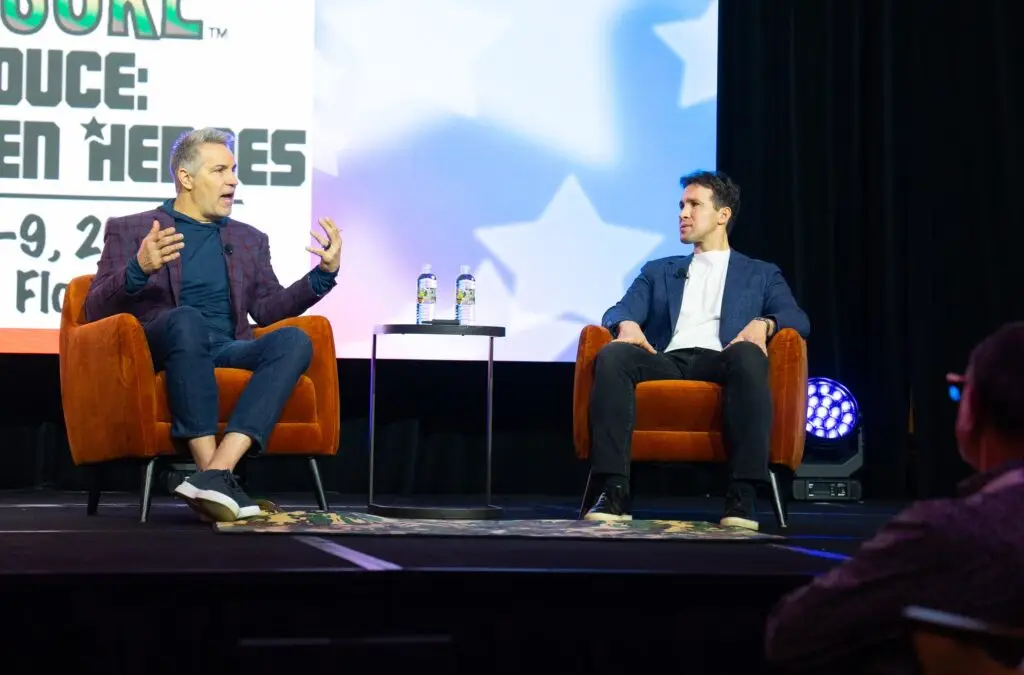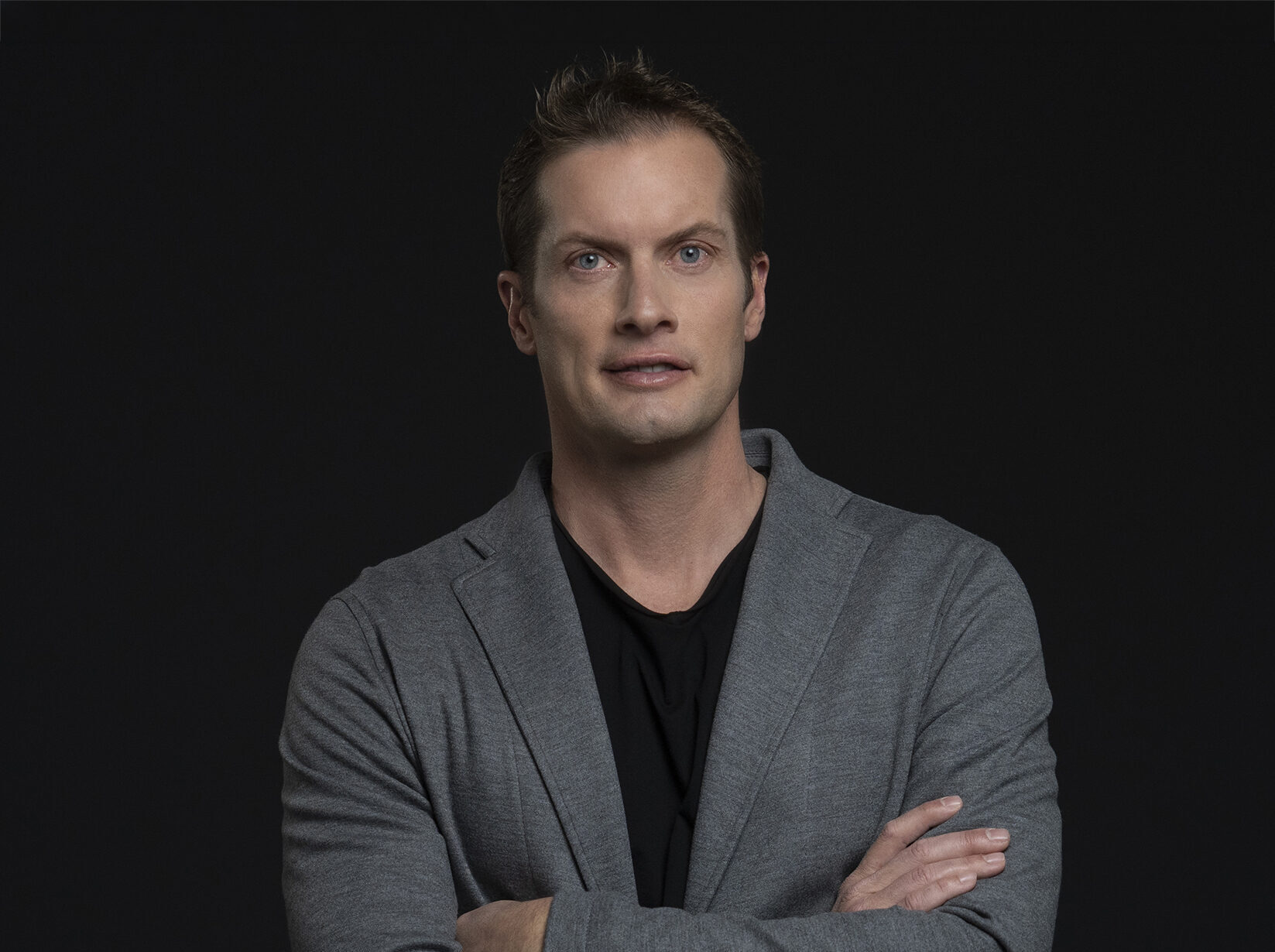


I recently went one-on-one with Patsy Doerr. Patsy is the Chief People and Culture Officer of LRN and was previously the Global Head of Inclusion at Thomson Reuters and the Global Head of Diversity and Inclusion at Credit Suisse.
Adam: Issues in the workplace rarely begin as legal issues. They usually start as people issues, leadership issues, or culture issues. Where do companies typically go wrong from the get-go, and how can that be rectified?
Patsy: Yeah, it’s a great question. As of three months ago, I’m the Chief People and Culture Officer at LRN, which is an ethics and compliance firm, so this topic is very near and dear to my heart and the organization’s heart as well.
But I think where companies can go wrong is in a variety of different ways. I think the main issue is having that balance between policy and culture. And I tend to lead with culture. I think it’s important to create that environment. In creating a culture where you won’t go wrong, per se, as many companies do, it’s about having more transparency around communication. Being open in communication, keeping employees engaged and informed, and providing education.
Honestly, where companies often go wrong is a lack of education, or not enough education, around where or why or how the company is headed in a specific direction. The why in particular, and the how, are most critical in my view. I think companies can also go wrong when they don’t have clear policies or clear processes around how to manage complaints or employee issues as they come through the system. And making sure people understand what those policies and resources actually look like.
I also think there’s a heavy link to inclusion as part of the culture. Building that environment, or not building that environment to your question about where companies go wrong, where people feel they can speak up, use their voice, and do so without fear of retaliation. I think those are some of the main issues that I see.
Adam: Leaders often observe issues, brush them off, underestimate them, and then watch them escalate into much bigger problems. What are some examples you’ve seen of that happening in the workplace?
Patsy: Absolutely. And to underscore that point, I think a lot of organizations do underestimate that. In particular, they underestimate well-being and engagement in my experience.
I’ve seen a couple of different examples, and I won’t name the companies specifically, but in organizations where I’ve either worked in a consulting capacity or worked in-house, I’ve seen people burn out. Burnout leads to absolute disengagement. It leads to something, as I’m sure you’re well aware of, called quiet quitting, where people remain in role but have already made the decision that they’re not committed to the role or the company. I’ve seen that happen in a couple of different organizations, particularly when the leader doesn’t have the empathy or take the time to understand their people.
What’s going on? What’s happening with this person? Why are they being less productive? Is it a personal issue? Is it a professional issue? Going back to their skill level versus their will level. Looking at all of those elements, I’ve seen it really lead to burnout, quiet quitting, and a lack of engagement.
Ultimately, it has a huge impact on the individuals themselves and their commitment to the organization, their role, and their leader or manager, but also overall to the company. There’s a huge downside to the company when you have people who are disengaged or not feeling that their voices are being heard in terms of what’s happening in their lives and how it might be impacting their work on a daily basis. I’ve seen multiple examples of companies underestimating the importance of well-being, empathy, and really understanding your people before making assumptions.
Adam: Quiet quitting has existed in the workplace for a very long time, long before we had a label for it, but now we have terminology for it. With that said, it’s even more prevalent today because people are less likely to leave their jobs amid economic uncertainty and concerns about the future of work. Someone may not like their role, but instead of leaving, they mentally check out. That’s as significant an issue as any.
Patsy: Absolutely. And I think it’s interesting what you said because it’s always been there. But now we have the terminology, and I actually think that’s a good thing because now we can talk about it. We can look to address it. We can look to find ways to engage employees and have them be more part of the process and decision-making.
And again, it gets back to people feeling valued, but also really understanding what’s happening. It’s such an important point, particularly now in today’s environment, economically and geopolitically. We’re dealing with a lot of different challenges, and people are less likely, in my observation, to make changes they might have made in the past.
Adam: What can leaders actually do on a tactical level beyond saying, “I’m going to be nicer, more compassionate, or more engaging”?
Patsy: Well, I think on a very tactical level, leaders need to, and this sounds very basic, spend more time with their people individually to really understand what’s going on. I think that is absolutely critical.
I think it’s also about role-modeling behaviors that you want to be part of your team and the organization as a whole. If I think about psychological safety, for example, which is a big topic today, what does that look like in practical, actionable terms? It means open conversations. It means asking questions. It means seeking feedback. It means admitting mistakes as a leader when you make them, so other people realize that it’s okay to do that.
No one’s perfect. There will be mistakes. But addressing them and having a plan to correct them as a leader enables people to do the same. So I think those are some of the very critical behaviors in creating that environment on a more tactical level. And then in addition to that, regular communication, check-ins, gathering feedback on a consistent basis both qualitatively and quantitatively, I think, is really, really important. And then having open conversations about those topics.
Adam: These are things anyone can do. You don’t need to be the greatest leader in the world to spend more time with your people. But when you spend time with people, you actually have to be present. People know when you’re physically there but mentally checked out. They know whether you’re truly listening or just checking the box.
Patsy: Yeah, absolutely, I fully agree. And you’re right, so many of these concepts and tactics sound basic, and most people have the ability to do them. The issue is, do people actually do them, and do they do them consistently? And to your point, do they actually show up and listen, or are they waiting for the person to stop talking so they can say what they were going to say anyway?
So it’s really about being engaged and present in the conversation, but also practicing these behaviors consistently and working these types of behaviors into the system of the organization so leaders are clear on what they’re being held accountable for. And very specific about what they’re being held accountable for outside of business results, because these behaviors lead to more productivity, which does lead to business results.
But there also needs to be clarity around how leaders are recognized, rewarded, or otherwise evaluated based on whether they’re actually practicing these behaviors in a positive and productive way.
Adam: We’ve talked a lot about breakdowns around work performance, quiet quitting, and leaders approaching issues strictly from a policy-and-procedure perspective. Where do you see breakdowns happening around compliance and following organizational policies?
Patsy: It’s a very interesting topic, and it’s certainly germane to the organization that I currently represent and work at when we are all about ethics and compliance. I would say that the most important thing gets back to my original comment, which is finding that balance between the policies and the guidelines and then the behaviors, which is the culture.
I think the important thing is to have that balance, but also to make sure that if you do have policies in place, a code of conduct, for example, ethics guidelines for employees, things of that nature, you’re actually enforcing them. Again, holding people accountable for them, and then helping people understand the behaviors that enable the organization and the individual to follow the code of conduct or follow the ethics guidelines and things of that nature.
So again, it’s finding that balance, but also giving people the tools and resources to practice the behaviors that enable those elements to be achieved.
Adam: Wage-and-hour issues remain one of the biggest sources of employer exposure. What mistakes are employers making around classification, overtime, and off-the-clock work?
Patsy: Yeah, that’s also a very, very interesting question. I think some of the mistakes companies are making at both a macro and tactical level is not doing their level-setting, if you will. So, looking across the organization as a whole and level-setting different roles and different titles. What’s the corporate title? Does it align to the roles and responsibilities of the individual? Does it align to the compensation they receive, whether they’re salaried or hourly employees?
And then at the same time, doing their homework around benchmarking across other similar organizations to see where they fall within the market. Are they at the top, bottom, or middle? And also looking at that with a global lens. So, being very conscious about where we are in the world. We’re a very global company. We’re in multiple countries in every region.
Every time we’re looking to hire someone or promote someone, we aim to, and it doesn’t always happen perfectly anywhere, but we aim to really level-set across the organization and then within that particular market and industry. By doing that, you have much more clarity and much more backing behind the decisions that you make around compensation, around hours, around how you treat people when they’re out of the office, and how you set boundaries for people as well.
There are all sorts of elements that go into that, and it all starts with level-setting and competency modeling as well. What are those skills and attributes that we’re looking for in any of these roles, no matter how senior or junior, hourly or salaried? What are the most important skills and competencies, and how does that align with where they are in terms of title, responsibilities, and compensation?
Adam: What are the most important and the most underrated skills people need to develop today?
Patsy: First of all, this is a really interesting conversation. After many years in talent development and human capital and inclusion, years ago, relationship skills, or professional skills as I would refer to them, were referred to as soft skills. And that bugs the heck out of me, to be honest, because there’s nothing soft about people, and there’s nothing soft about people skills. Because guess what makes up a company? It’s people.
I think what’s happened over the years, and I know you know this, is that organizations are taking those traditionally called soft skills, now more professional and relationship skills, much more seriously and understanding that those skills really lead to effective performance. Historically, companies have underrated or undervalued skills like relationship skills, communication skills, performance management, and things of that nature.
And now it’s even more critical to think about these skills, particularly with the rise of AI. With the rise of AI, one of the most underrated skills up to this point has been critical thinking. The importance of critical thinking. We all have to adjust now to a new world of AI where AI is no longer just a tool, but in many cases also a stakeholder.
So what’s going to be important for humans to deliver in the workforce going forward? Insights. Insights from data that’s gathered, and then having the ability to utilize critical-thinking skills in order to turn those insights into action. So I think that’s one of the most important skills that’s been underrated to date and is now being reinforced more importantly than ever.
Adam: I keep hearing the same thing from leaders across industries, even leaders running highly technical companies in highly technical industries. Hard skills used to be much harder to develop and therefore incredibly valuable, but today, many of those skills are far more accessible because of AI and everything at our fingertips. Soft skills are much harder to automate and much harder to outsource, and ultimately, they allow anyone to fully leverage whatever technical skills they’ve developed or now have access to.
Patsy: Yeah, absolutely. It’s so true. And although I’ve operated in the world of professional skills, or what used to be called soft skills, I’m also a strong believer that whatever your core competence is, you’re still a business leader, whether you’re in human capital or technology.
That’s why I’m not surprised, and I know you’re not either, when I hear similar answers to this question. Because at the end of the day, when you’re a leader, you’re a leader. Whatever you’re driving, whatever the topic or content may be, leadership still requires many of the same capabilities.
And I think that translates into similarities around what people view as important, particularly now in this ever-changing world. There’s much more focus on the importance of those core competencies and skills that need to be developed.
I always tell people it’s important to know what your core competence is. In my case, it’s human capital, inclusion, and ESG. But it’s equally important to know those competencies outside of your technical skill set. Know what you’re best at. For example, I know that I’m best at getting people excited about things, building new initiatives, and going out and speaking about them.
So when I’m mentoring, advising, or coaching people, I always tell them to identify those few things outside of their technical area of expertise that they naturally do exceptionally well. And I think more leaders are starting to see the value in that because those skills that were devalued for many years are becoming much more important precisely because they can’t easily be automated or digitized.
Adam: Even with AI making information more accessible than ever, you still can’t replace true domain expertise.
Patsy: Right, absolutely. And again, I think in today’s changing environment, and with the rapid, rapid, rapid rise of AI, that’s only going to become stronger and more important as long as we get that message out to people and address it head-on.
We all know that so many people are fearful of their jobs because of AI. And that is a reality for some jobs, it actually is. Having said that, the only way to really address it is to embrace AI in any way, shape, or form that you can no matter what level a person is at.
Because in that capacity, you can then start focusing on, okay, with this particular tool and/or stakeholder, how can I add more value in a different way than I may have ever thought about before? I think it’s a critical question that all of us, regardless of what stage we are in our career, need to keep asking ourselves in this environment.
Adam: Where do organizations most often mishandle FMLA and ADA situations?
Patsy: Yeah, also a very interesting question. I think when companies are too rigid, Adam, in terms of how they apply those standards. Now obviously we need to, from a legal perspective, abide by FMLA requirements and ADA requirements. But some companies, I think, are too quick to make decisions along those lines.
If somebody is asking for medical leave, they automatically go through some formalized process of gathering all this medical data and making decisions without the organization actually considering other options. When it gets to ADA, for example, where you’re making accommodations for people to work in a different way, it’s important to look at it holistically as you look at FMLA, ADA, and then again getting back to the culture itself.
Why are we getting to the point where people are at risk of being in situations where FMLA or ADA even applies? I think it also involves not only how you think about it at the time when somebody comes forward, but before that even happens, making sure there’s transparency around what the process and policies are.
And then making sure real conversations are being had about different alternatives that might be considered in addition to what’s actually on paper or within the policy or requirements. Different ways to accommodate people at work, looking at paid time off, considering all those aspects, and really looking at it holistically for both the individual and the organization as well.
Adam: When an employee raises a harassment or discrimination concern, what separates an effective organizational response from one that creates greater risk?
Patsy: I think what really distinguishes a company when it comes to actual complaints around harassment, for example, gets back to clarity around policies and resources available to people. I’ve worked in organizations that, in addition to employee relations, HR, and legal, also had an ombudsman. Someone who might be in another part of the business, but who is completely objective, and someone an employee can go to without necessarily feeling like they’re making a formal complaint.
I think that’s really important because a lot of people are afraid to make formal complaints for a variety of reasons. This gets back to psychological safety and fear of retaliation. There should be policies and resources in place to allow people to share their concerns and have that initial discussion before it immediately moves into a formal complaint.
And part of that discussion, and I’ve had many of these conversations over the course of my career, particularly in the inclusion space but certainly in human capital more broadly, is understanding that sometimes people don’t actually want to formally report something. They just want to be heard.
So I think the balance is understanding what truly happened, what the impact was on the individual, and what they’re actually comfortable doing. Not discouraging them or pushing them in any way, but understanding what they’re comfortable with.
I’ve had people say immediately, “I’m putting in a formal complaint. This behavior was drastic.” There’s no debate or discussion about it. And then I’ve had other people come to me and, after talking through it, say, “No, I don’t necessarily want to formally report it. I just want to make sure this person understands their behavior is impacting me in a certain way.”
So it really gets back to my overall philosophy on human capital, HR, and people and culture: it’s all a balance between policy and culture. And when you get into harassment situations, it becomes even riskier depending on how you address it.
If you avoid it, that creates significant risk. So you need to address it head-on. It’s really about determining the appropriate action to take based on what the employee themselves is most comfortable with, while still making sure the person involved understands that their behavior had an impact, and then determining as a leader how far to take the process forward.
Adam: HR often requires balancing policy, procedure, rules, and culture without a perfectly clear playbook. Leaders in these roles constantly have to operate in gray areas and exercise judgment in ambiguous situations. What advice do you have for navigating that balance effectively?
Patsy: That’s a great point. It is basically everybody in this function. And you have people who naturally gravitate toward one direction or another. I tend to gravitate more toward the direction of culture because I think it’s a more proactive way to address issues before you actually have to enforce a policy.
But I do believe it’s a balance. There’s a gray area, and it’s somewhere between an art and a science. I think it’s about being conscious of that and really taking the time to think things through instead of immediately saying, “Okay, this is situation X, so we’re going to follow policy Y.”
It’s about utilizing critical-thinking skills to consider different options. I also think innovation is a critical skill, particularly in these changing times. We have to be as innovative as possible because we’re constantly dealing with situations that we’ve never dealt with before in our lives.
So you have to be open to innovation and open to change. Everybody has a certain level of openness to change and risk, and it often depends on the situation. But typically, we’re all wired in different ways. Some people are naturally more open to change and risk, and some are not.
I think it’s important for people who are less open to risk and change to really explore why. This gets back to the concept, which I’m sure you’re familiar with, of fixed mindset versus growth mindset. Even people who are generally growth-mindset-oriented can fall into fixed-mindset thinking sometimes.
So it’s about being aware when you’re in that mode and asking yourself, “How do I get myself out of it? How do I look at what’s happening right now as an opportunity, and how do I seize that opportunity?” It’s easier said than done, no doubt, but helping people understand the difference between fixed mindset and growth mindset, the importance of managing through change effectively, and assessing the level of risk associated with decisions is really important.
Adam: How can leaders develop the judgment to make the right call when there isn’t an easy answer?
Patsy: Great question. Well, a lot of it frankly comes from experience, right? Because you’ve been through a variety of different experiences in different organizations and, in my case, in different countries around the world. Having exposure to so many different situations helps you build that judgment over time.
But I also think whether you’ve had the length of experience that I’ve had at this stage in my career, although hopefully I still have many more years to go, or whether you’re earlier in your career, it’s about being aware of the importance of judgment and taking ownership of the decisions you make.
And then trying to build out those critical-thinking skills, which I know I’ve mentioned a few times already, because they really do lead to better judgment. That takes time and commitment, and it’s much harder than simply adhering to policy A or policy B because it’s more art than science.
That’s why so much of it comes from experience. But it also comes from curiosity. I think curiosity, linked back to your earlier question, is such a critical skill in today’s environment.
In fact, over many years, learning agility has consistently been cited as one of the top predictors of success in leadership. Leaders who demonstrate learning agility have the ability to learn from experience, take feedback, adjust their behavior, and continue evolving.
A lot of that also comes from self-awareness and taking the time to really get to know yourself better. Understanding where you are, how you respond to situations, and what mindset you’re operating from in a given moment is incredibly important.
Adam: What does good documentation actually look like in real workplace situations?
Patsy: Wow, that’s an interesting question. I think good documentation is taking down as much detail as possible in any heated conversation or any conversation that may involve an allegation, a code-of-conduct issue, or a performance-management discussion.
It’s really documenting everything that’s said, including the sentiment and the manner in which the person expresses their view. Being very clear about that is important. And then, of course, I operate in my notebook very heavily, but it’s also about putting that information into the formal system if the company has one.
If there’s a formalized system for performance-management feedback or issues related to claims or code-of-conduct concerns, it’s important that everything is properly entered so the organization and the individuals responsible can follow up appropriately.
And beyond that, you also want to maintain a record of the organization’s overall health around these kinds of issues. Having that documented appropriately and consistently within the system is really important.
Adam: How have employee expectations and workplace standards changed over the last few years?
Patsy: Oh gosh, yeah, I think they’ve changed dramatically, honestly, both before COVID and now post-COVID. Even before COVID, we had already started seeing how high employee expectations were becoming, particularly among younger generations entering the workforce, although really every generation to some degree.
People increasingly wanted to come into organizations where they felt valued, heard, respected, and where managers and colleagues genuinely wanted their feedback. Ultimately, everybody wants to feel valued. And I think that’s become much more important in recent years.
If you look across surveys and research reports, and even work I’ve personally done myself, things like inclusion, governance, social-impact issues, and culture are significantly more important to employees entering the workforce today.
Post-COVID, I think those issues became even more important. And then on top of that, organizations began grappling with return-to-work questions. Some companies have been dealing with this for several years now, while others are still trying to determine what their policy or long-term plan should be.
How do you do this in a way that keeps people engaged while also respecting their lives and individual situations? That’s one of the major challenges organizations are facing right now.
And then the other topic that keeps coming up, in addition to AI, of course, is well-being. Years ago, we used to talk about work-life balance, but I think we’ve learned that work-life balance isn’t necessarily the most meaningful term anymore. It’s more about work-life integration.
A lot of that ties directly into wellness. You’re seeing more companies support employees in finding ways to disconnect, reflect, and recharge because work has become much more complicated in this constantly changing world. Everybody has their own thing. Somebody goes for a walk, somebody does yoga, somebody reads for a few minutes. I go for a run. But companies are increasingly recognizing the importance of supporting those kinds of wellness activities because employees expect it, need it, and frankly perform better because of it.
Adam: The line between work and life has never been more blurred. People are always accessible, always connected, and always on. Remote work only accelerated that dynamic. Add in uncertainty around return-to-office policies, and leaders now have employees navigating a tremendous amount of ambiguity. How organizations respond to those realities has a huge impact on engagement, retention, and whether employees stay fully invested or quietly check out.
Patsy: Absolutely, I agree. And a lot of companies are grappling with this right now. We’re talking about it ourselves in certain parts of the organization. I have a strong belief that most people desire optionality. Some form of optionality in their lives.
If you force people to come back into the office five days a week after they’ve been working remotely for five years, that’s probably not going to work unless there’s some sort of staged process or compelling reason for people to actually want to be there. Obviously, there are different personality types. Some people prefer to work independently, while others genuinely love being around people.
So we also have to account for personality types, but we also have to account for work situations. As you mentioned, many people have moved away from their home city. So how do we manage that? I think in many cases it becomes a case-by-case scenario.
But I also think there needs to be an element of optionality so we’re not simply enforcing policy, but actually creating a workplace people want to come into. It’s almost that concept of “build it and they will come.” How do we create events, social opportunities, collaboration opportunities, or experiences that make people genuinely want to be there?
And then at the same time, allowing some flexibility around what that looks like. Optionality might mean employees don’t have fixed days where they have to be in the office, but instead have flexibility around a certain number of days per month or per week. Things along those lines are really important.
Again, it goes back to the fact that being a human-capital leader, and honestly being any type of leader today, has never been purely a science. It’s always been both an art and a science.
Adam: Leaders today are trying to create cultures that accommodate very different working styles, preferences, and expectations. How do you balance consistency with flexibility?
Patsy: Well, I think again, it’s a balance. It’s a balance between having a firm policy in place while also creating a sense of optionality at the same time. And then the third piece, as I mentioned earlier, is creating a real reason why people should want to come into the office.
Because we live in such a global world now, and there are hybrid, remote, and fully in-person situations all happening simultaneously, we have to be very conscious about why someone should physically be in the office. If I’m sitting in New York and my manager is in Chicago and I’m spending the entire day on Zoom calls anyway, then does it really make sense?
So I think there has to be a balance between optionality, policy, the actual reason for being in the office, and the individual circumstances of employees involved in these decisions. It’s really a combination of factors.
Adam: What do you think organizations are still underestimating about the future of work?
Patsy: I think organizations are still underestimating the impact of AI. We talk about AI constantly now in terms of value propositions, consulting, advisory services, and service offerings. But the reality is none of us have truly been down this path before.
It’s still relatively new over the past few years, and I think many companies are underestimating the long-term impact. At the same time, some organizations are overestimating it because they’re becoming overly fearful. And as I said earlier, I think we should be embracing it.
As a result, many of the skills we talked about earlier, critical thinking, relationship skills, communication, those skills are still being underestimated in many organizations. Not all, but many. I also think inclusion, culture, and psychological safety are often underestimated.
And when those things are underestimated, it can create misunderstandings, policy breakdowns, and environments where people don’t feel comfortable speaking up. Again, it all comes back to balancing policy and culture.
Adam: You’ve led globally throughout your career. What advice do you have for leaders operating across cultures and geographies?
Patsy: Well, first of all, I think in today’s world having some form of global experience or exposure is critical. I’ve personally had the good fortune, because I enjoy adventure and taking risks, to live in four different countries. Not everybody wants to do that, but for me, it has had a huge impact on who I am professionally, personally, and even as a parent.
I’m from New York City, and I live in New York City now, but I really do consider myself a global citizen without sounding corny because I genuinely believe that perspective matters. And my children are very much the same way.
I think understanding different cultural differences, different ways of working, and different regional nuances across the world is incredibly important if you want to be an effective leader today regardless of where you’re based or what kind of company you work in. You really have to understand the interconnectivity of the world today, both from a business perspective and from a geopolitical perspective as well.
I was just going to say that while I’ve been fortunate enough to live and work overseas, I also think people can gain global exposure simply through travel, through engaging with colleagues from different countries, and through taking the time, going back to curiosity and learning agility, to genuinely learn and understand more.
Adam: Can you share an example that highlights the importance of understanding the cultural norms of the environment you’re operating in?
Patsy: Absolutely. I lived in Asia for almost six years, based in Hong Kong, and I was responsible for the entire region for Credit Suisse within the human-capital function, specifically focusing on talent. We operated across fourteen different countries, and we had to develop a unified human-capital and talent strategy for the region.
So this was an example where you were looking at highly developed markets like Australia and Hong Kong all the way through to much more developing markets like Thailand and Indonesia, and trying to figure out the balance between what needed to remain consistent and what needed to align with local cultural nuances.
I tend to operate with roughly a seventy-five to eighty percent consistency mindset globally, with twenty to twenty-five percent variation based on cultural differences. I remember when I first moved to Hong Kong and was on conference calls where I realized there were certain cultures that were naturally less inclined to speak up publicly in meetings.
I understood that intellectually before moving there, but experiencing it directly was very different. So then the question becomes, how do you create opportunities for those individuals to engage and contribute in ways that feel comfortable to them?
And while I don’t love speaking in stereotypes, it is true that some cultures are more naturally vocal than others. So as a leader, you have to consciously create space for different communication styles and different approaches to participation.
That’s just one example, but more broadly, it’s really about being aware of and curious about the cultural norms within the countries and environments where you operate. For example, in Asia, Japan is an incredibly unique culture compared to somewhere like Hong Kong. Japan is very formalized and highly structured in ways that take time to truly understand.
So for me, it’s always about taking the time to understand, respect, and genuinely appreciate those cultural differences.
Adam: Is there anything else leaders and organizations should be thinking about moving forward?
Patsy: Well, I think we’ve covered most of what I would share, but I would say moving forward, as both a leader and as an organization, it’s incredibly important to remain positive, remain curious, and continue learning because there’s so much changing every single day in terms of what’s happening economically and geopolitically around the world.
I think organizations really need to think carefully about how they’re going to respond to the growing complexity of the world we’re operating in today. And many organizations have gone in very different directions over the last several years, particularly in the United States but also globally, for a variety of reasons.
So I think it’s important for organizations to be very clear about their role in the world, their purpose, their values, and the reason they exist in the first place. Being grounded in that purpose and understanding the “why” behind the organization is going to become increasingly important moving forward.