
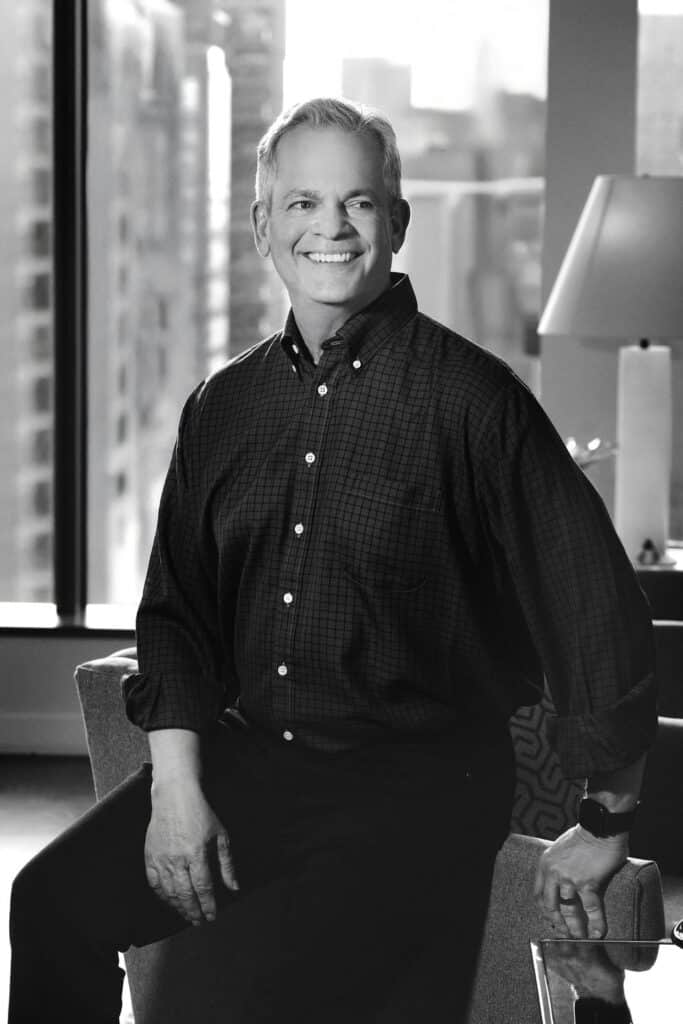
I recently went one-on-one with Steve Adler. Steve is the former mayor of Austin, Texas, and the author of the new book Hot Seat—Hot City: The Austin Mayor’s Story.
Adam: Long before your career in politics, you enjoyed a successful career as a lawyer, a career that you’ve partially returned to since retiring somewhat from the world of politics. What compelled you to pursue a career as a lawyer? What are the best lessons that you learned from your time practicing law before pursuing politics?
Steve: I think my first interest in being a lawyer probably dates back to watching Perry Mason growing up. You watch that TV show. Who wouldn’t want to be him? It always looked like something that was exciting. As I got older and I really wasn’t sure what I wanted to do when I grew up, getting a law degree looked like something that would provide a tool to do lots of different things.
Certainly, I grew up socially interested and active. I was born in Washington, DC. When you grow up there, your local news is the international and national news. And I grew up in the sixties in DC, and that was a turbulent time in the midst of the civil rights movement. Lawyers and law seemed to be one of the most important tools to achieving a greater quality of life for everybody. So when I got to college, I kind of fell that way. I ended up down in Austin, Texas, because the University of Texas was the cheapest law school in the country, and I could afford it. Once I got to Austin, I fell in love with the music and the breakfast tacos and ended up staying in a way that I never thought I would.
Adam: How did you go from a stranger to Austin, Texas, to mayor of Austin, Texas?
Steve: Well, I got to Austin in 1978, and it was more of a small college town. By the time I became mayor some 37 years later, the city had almost tripled in population. It was an entirely different place. It also meant that I was a native compared to almost everybody I ran into in the city because I had a longer tenure than most everybody else.
But the city changed and it grew. There were some things, I think, that were always the same and continue to be the same in Austin. It’s a city that I think has a greater tolerance for taking risks than any city I’ve been to in the world. And that means it leans forward into new technologies, it leans forward into new ideas, and all different kinds of people. I really do think that it’s kind of a magical place.
So as an attorney, I started out as a civil rights lawyer doing a lot of employment discrimination law, ended up in the courtroom doing more kinds of litigation, focused on real estate litigation to pay the bills, and got involved in a lot of civic activities in the community, a lot of nonprofit boards. Running for mayor just seemed to be an extension for me and Diane, my wife, of our board involvement. It was a little bit bigger nonprofit, still trying to do right by people and provide access and opportunity and justice.
I didn’t intend to run for mayor. It wasn’t anything that Diane and I had talked about. We changed the form of government back in 2014. We went from an at-large council to a district council, which meant everybody was getting changed out. There was a group of us who thought we needed a mayor who would be new as well, rather than electing any of the incumbents into that position. So we went out to recruit somebody to run for mayor, and there were people in town who would’ve made great mayors, and all those people said no. So eventually we locked ourselves in a room and said, “Okay, one of us has to stop what we’re doing and run for mayor.” And two weeks later, I was running for mayor, much to everybody’s surprise, including mine.
Adam: It really speaks to the fact that if you are the kind of person who cares about other people, cares about the mission, cares about goals, cares about service, you’re a lot more likely to be a great leader, a successful leader, than the kind of person who cares about self, cares about ego, and cares about doing this in service of those reasons rather than altruistic reasons.
Steve: I think that’s true, in part. I entered politics late. My interest in doing it might’ve been different if I was elected mayor when I was 28 and aspired to higher office. That might’ve been part of the calculation in how you serve. That was something that was not part of what I did.
I ran to be mayor, knew I’d be mayor, hopefully for eight years if the people would have me back for a second term. And I pretty much knew that was going to be it for me in politics. So it gives you a greater opportunity, I think, to be really single-minded, focused on why you’re there and doing right by the position and the opportunity. It’s a real gift to be in that position. To be able to have an impact at scale is a wonderful gift and opportunity, especially for folks who are really focused on what it is they’re trying to do.
Adam: When you’re entrusted with that kind of responsibility and authority, how do you, as a leader, ensure that you’re utilizing it as effectively as possible?
Steve: You’re most effective as a leader if you surround yourself with really good people, really smart people, people in your inner circle who will hold you accountable, people close to you who will test the assumptions, and people who feel really comfortable telling you when they think you’re wrong.
These jobs are not something that any single person can do, and I was just mayor. Certainly, I guess that gets even more intense as you move up the political ladder. So it really does require a team. Making sure that you have really good people doing really good work, I think, is one of the real keys to success.
Adam: What did you look for in the people you surrounded yourself with?
Steve: I looked for people who were smart, people who were always asking questions and looking for answers, people who were ready to learn and wanted to learn, but people who were all motivated by values and beliefs that meshed with mine. People who were mission-driven as opposed to resume-building. People who were driven by what they could accomplish, not by what they aspired to be someday. So I guess just really good, really smart, independent people.
Adam: A key theme has been the importance of mission: mission as a driver of success as a leader, mission as a driver of success as an organization, and mission as a key filter in what you look for in the people you try to surround yourself with. You want people who are mission-oriented. You want people who aren’t just in this for a paycheck, aren’t just in this for a resume boost, aren’t just in this for whatever their own narrow personal interest is, but for the greater good and for the reason you’re in it, which is in service of, whether you’re running a city, the interests of the city, whether you’re running a state, the interests of the state, or whether you’re running a company, the interests of the company. Serving that broader mission is essential to success.
Steve: At all levels, and the real test of whether it’s genuine comes in the hard moments, not the easy ones. Anyone can be mission-driven when things are going well. What I looked for, and tried to practice, was mission holding up when the politically easy move and the mission-right move point in opposite directions. On homelessness, the resume-building instinct was to stay quiet, because it was a fight that could cost you an election. The mission instinct was to name the problem out loud and spend the political capital. When you’ve surrounded yourself with people who are there for the mission rather than the title, they push you toward the harder, right call instead of the safer one, and they’ll tell you when you’re rationalizing. That’s when shared mission stops being a slogan and starts earning its keep. It matters most precisely when it costs you something, and that’s as true in a company as it is in a city.
Adam: How do you ensure that your mission is ultimately actualized? You show up with a vision. You show up with a mission. It’s one thing to have it in your mind. It’s another thing to have it on a piece of paper or on a website. And then it’s another thing for it to become actualized. How do you do that?
Steve: You have to understand that you’re not always going to be successful in doing that as you try to be mission-oriented and focused. Not everything’s going to work out the way you would like it to, want it to, or envision that it could. I think it’s maintaining focus, and it’s learning. It’s constantly evaluating what you’re doing because the conditions around you change. You’ll find obstacles and challenges that crop up. You’ll find assistance and help appearing in places you didn’t anticipate. I think it’s a question of being flexible and being persistent.
Adam: You mentioned obstacles. You mentioned challenges. And your time as mayor was met with your fair share of obstacles and challenges. There was a serial bomber who terrorized your city. There was a pandemic that we all know about all too well that shut down not only your city but the economy, among many others that we can dive into. Can you walk us through some of those crises and, number one, how you led through those crises, and number two, what advice you have for leaders on how to lead through crisis?
Steve: When I got elected, I didn’t anticipate the number of crises that would happen in the eight years I was mayor. And you’re right, we had an anonymous bomber who was setting bombs off on people’s porches, and people were dying. We had three 100-year storms. These are storms that aren’t supposed to happen but once every 100 years, and we had three of them. We had three water boils in a city of a million people where you couldn’t drink the tap water, and we were having our entire community boil water. That doesn’t happen in modern cities.
We had COVID. We had a winter storm that the city was just not equipped to deal with, with sub-zero temperatures and ice for several weeks. We had the power go out. We lived through the George Floyd summer, and the racial reckoning and unrest happened in that period of time. I used to joke with my staff that the locusts were coming next and that we had to be prepared for those, too.
And again, you do the best you can, and you try to learn so that in any situation, you’re better the next time. In each of those instances, my appreciation and respect for the people in the community, neighbors helping neighbors, people stepping forward in situations where the government really didn’t have the bandwidth or the ability to help, showed the strength of a community.
COVID was hard. The mortality rate in the city of Austin ended up being less than half the mortality rate in the state of Texas generally, less than half the mortality rate in the country. And while I would like to take credit for that, really all I did was be really honest and straightforward and quick about getting as much information and data to the community as I could because I just knew that the community would react in a way that protected one another. And it did, given that freedom and flexibility and responsibility and agency to be responsible for the outcomes.
But in each of those instances, again, it’s having a really good team. It’s being really honest and transparent and straightforward with the community, and trusting the community to be able to deal with good news and bad news, easy things and difficult things, and then empowering people and involving people.
Adam: What was the most difficult of all those crises, and what did you learn from leading through that moment?
Steve: The hardest crisis that we had to deal with in Austin, which, as you pointed out at the beginning, was the fastest-growing city in the United States, was homelessness. I go through this in some detail in the book. It was the fastest-growing city for each of the eight years I was mayor. We had 150 people a day moving into the city, and that meant we had a real housing shortage and housing prices escalating quickly.
And the corollary for cities that are growing that way and having that kind of housing challenge is an increase in homelessness. And homelessness, I think, became the most difficult challenge that we dealt with because it’s just a hard challenge. And the solution, the way you deal with that, requires so many different things to be happening on so many different levels. And some of them are really expensive things.
The homeless, those folks who are without homes in a community, represent a really small percentage of the people. But their impact is great, and battle lines are drawn really quickly between people who want to lead with compassion and want to help anybody who seems like they need help, and other people who are trying to preserve a certain quality of life for them and their families. The presence of people without homes, many of whom are coming with challenges like mental health challenges or chemical dependency challenges, really creates a dividing line in that community.
And to the degree that the government does not do well with that challenge, that failure to address it quickly morphs into other things. It morphs into public safety issues and people questioning the ability of their government and their institutions to be successful at anything.
So it was a hard challenge. It was starting to grow in our city as the housing crisis grew, and we were not prepared for it. We were a city that, like so many other cities, kept sweeping the challenge under the rug for as long as we could, and we criminalized homelessness and would get people to move and behave by threatening them with an arrest or a ticket. Of course, wherever they moved to, they were still violating the law.
So you have people who hide. You have a civic challenge that’s hidden. It’s never going to have priority for funds in the community because people don’t see it. It’s not really relevant until you reach the point where the numbers are so big and the challenge is so great that it bursts at the seams. And at that point, it’s too big and costs too much to really do something with.
You live in LA, and it’s interesting that there’s over a billion dollars every year in the LA budget being spent just to maintain the homeless community where it is. I mean, not even getting it better. I mean, a huge sum of money. It’s still a relatively small part of the community, but it’s one of the, if not the, top issues in the mayor’s race in LA. And that’s true also of San Francisco and Seattle and Portland.
And I could see that challenge just on the horizon in Austin. I went out and visited with the mayors and the staffs and the folks in LA and Seattle and Portland, not to recommend to them what they should do or even to find out what they were doing at that point, because I don’t know what you do in those cities when the challenge is as great as it had gotten, but to ask them what they wished they had done five or 10 years earlier to avoid being where they were.
And what I heard was, don’t hide the challenge. If you have people who are on the street, there’s got to be a better answer than giving them a ticket or putting them in jail. That doesn’t help anybody with that kind of challenge. But if you’re going to decriminalize homelessness, how do you manage shared public spaces? And I’m not sure there was anybody who was doing that really well as an example for us.
So as we moved to try to deal with that challenge, we did some things that were right. We increased tenfold the amount of permanent supportive housing that was being built. But we made a lot of mistakes in finding that balance and being able to manage shared public spaces while, at the same time, still working really hard to help people get off the street, stay off the street, and get the services they need.
So that was the hardest challenge, and it was one that I spent a lot of political capital on in my last couple of years. We advanced the ball but certainly did not solve the challenge. Hopefully, we pointed ourselves in the right direction. But that was a tough challenge.
Adam: What did you learn from that experience?
Steve: Well, that is a really tough challenge. You learn to listen. I saw the division growing in the community over that issue. I probably was not as sensitive to that aspect of this challenge. I was trying to solve it and probably could have been more attentive to all of the angst people were feeling in different ways and conflicting ways in the community.
I learned a lot about the political use of fear and disinformation because that’s where I really saw that rearing its head. You see that now being directed at cities generally. There’s a large part of our country that thinks cities right now are hellholes, even though crime rates are at historic lows in our city.
We dealt with that in Austin. Austin is one of the safest big cities in the country. But it’s so easy to raise funds for political races. It’s so easy to organize teams, political teams and sides, us and them, by using fear that I think a lot of the time I spent on homelessness was dealing with those kinds of political things, and I really wasn’t ready for them yet.
I’m not sure our country is really ready for what’s happening in that regard now. Hopefully, we will get a handle on that. We need to get a handle on that. And I really do think that it’s going to be cities where the best way to move forward in the face of political polarization and the use of fear in politics and the misinformation and disinformation, the difficulty in getting really good media and journalism to the community, and a lot of those things are going to be solved locally. I believe in cities.
Adam: You led a city of enormous growth known for innovation. What are the keys to driving innovation? What are the keys to creating an environment that fosters innovation?
Steve: We are an innovative place in Austin, where we have more startups per capita than they even have in Silicon Valley and in New York and Boston and Seattle, and a growing tech community, and it has been growing over the last decade and more in the city. And I think that drive to innovation that you see not only in tech, but you see it in music.
Austin was the city that Willie Nelson went to in the mid-seventies to reinvent not only country music but who listened to country music. Twitter was effectively launched in Austin, Texas. Culturally, in this city, there’s just a real willingness to take chances. In a lot of cities, if you try something and you fail, you don’t have access to that same capital base again. You don’t get invited back into the same rooms. This is a city that really lives that old adage about failing quickly and learning and then trying again.
And I saw that as mayor, not only traveling among cities in this country, but especially traveling in cities across the world. There’s an acceptance here. This is the city where all the hippies congregated who didn’t go to Dallas or Houston to make their fortunes. This was a city full of artists and creatives and makers of so many different kinds.
The population growth has been pretty extreme in the metropolitan area, doubling in population every 20 to 25 years. I mean, that sounds like an Asian city. The interesting thing is that if you look at the population growth in the Austin metropolitan area, the rate of growth over time has been consistently constant since the 1850s. It’s been doubling in population at that rate since that time. So maybe there’s something in the water here, too, that contributes to it.
Adam: Something that you alluded to a little bit is that as a mayor, you’re not exactly leading with full control. You have a lot of different stakeholders who you’re accountable to. You have a lot of different parties who you have to answer to. And you don’t necessarily have the authority to do exactly what you want to do. How are you able to lead with limited authority, and how are you able to bring those different parties together in a way where you’re able to drive the kind of outcomes that you ultimately want to drive?
Steve: You described the challenge accurately. I think being mayor of Austin is different from being CEO of a corporation in two really significant ways. There are two different kinds of mayoral positions around the country.
There are some cities that have really strong mayors who are able to make a lot of executive decisions because they are the chief executive officer. All of the staff reports to the mayor. The mayor can hire and fire executive staff leadership. Cities like that would be New York or Houston.
There are other cities where the mayoral function is different, where the mayor is really not the CEO of the city. The mayor and the council are more like the board of directors of the city, and the mayor’s more like the chairman of the board. And it’s the city manager who is really the chief operating officer. Those cities are difficult because sometimes there’s really not a CEO. You have a COO and you have a board chair, and really nobody who actually has the combined authority and responsibility and accountability in those positions. But in Austin, like in LA, the mayor’s position is really more of the board chair than the chief executive officer.
The other aspect, which is a limitation on power and ability, is the difference between public entities and agencies and private corporations. I was in private practice in the private market for the first 30 years of my work experience. I ran my own shop, and as the CEO, together with my founding partner, we identified where we wanted to go, where we thought it was the right place to go, and that’s where we went. And we brought the firm along with us as we moved in that direction. That’s a really efficient way to operate.
And there are a lot of people who run for public office saying that they’ll make government more like business, that they’re successful businesspeople, and they believe in efficiency. They’re going to make government more efficient. But what I didn’t know until I actually got into government was the fact that while I valued efficiency in the private sector, what is valued even more than efficiency in the public sector is transparency and engagement.
People want to trust their government, which means they want to see how it works. And if government’s going to go there, they want to know why government decided to go there. And not only do they want to be able to see how that decision was made and why that decision was made, they want to be able to participate in that decision. They want to be able to be engaged in that decision-making. Those are really important values, I think, in government because they build trust, and it’s really important for a community at any level to trust its government.
But engagement and transparency are not efficient. They are the opposite of efficient. I used to joke early in my term that it used to be that if I was here and I knew I needed to go there, it was pretty straightforward. I just went from here to there. But in government, if I want to go from here to there, sometimes I have to go over here first, and then I can go here, and only then can I end up going there. And if I try to cheat, if I try to go from here to there without taking those other steps that are promoting transparency or engagement, I get punished for that, and it ends up being more difficult to get from one place to another.
So leading in a government public place is different. I find now that when I listen to politicians who begin by saying they’re going to make government more like business because they know how to run an efficient shop, that’s the last thing I hear them say. I tune out at that point. I don’t need to know what they say next.
So one, it’s learning the system. It’s recognizing that power in a public setting is oftentimes more diffuse. There are checks and balances set up at different stages in the process. And it’s recognizing that and understanding how the power structure works, how communication patterns work. It’s understanding the people. It’s building relationships. It’s building trust. And it’s trying to use the system rather than fighting the system as the best way to be able to move forward.
And then it’s doing all the things, very honestly, that actually build trust. It’s being honest. It’s being transparent. It’s being straightforward. And I found that in politics, there were a lot of people who were willing to go with me on things that they might not necessarily believe were the right way to go if they felt that I truly and honestly believed that was where or how we needed to go and that I would be really open and communicative about what was happening along the way. And I think effective public leaders build that measure of trust.
Adam: The problem that you’ve been discussing is a problem that you’ve been discussing within the context of being mayor, but it really is the same problem that anyone who isn’t a CEO of a company faces. And it ultimately comes down to this issue of how do you lead without authority? And I would love for you to share, for anyone who is in that position, what do you do? How do you lead without authority?
Steve: Well, there were two really significant tools that I had as mayor, even though the staff didn’t report to me and reported to the city manager, and even though I had but one vote on the city council, and my vote didn’t count any more than any other city council member’s.
Even with all the institutional limitations, I had two really significant powers that no one else in the city had. The first is I had a bully pulpit. I was still mayor. And whether I had authority to do anything or not, my whole city believed I did because I was mayor. And that meant that I was able to command media coverage in ways that my colleagues on the city council were not able to do. It meant I could talk to people in the community. I could reach them. I could develop a more direct relationship. I could make more direct appeals or solicitations for involvement and the like.
So that tool, that bully pulpit, becomes an incredibly valuable and powerful tool. The other tool that I had in that situation was the ability to convene. I could get people together. The mayor calls up and asks if you’ll join him or her for a meeting, most people are going to say okay because it’s the mayor who’s calling.
Then I could get people in the room who ordinarily or otherwise would not have gotten in the room with one another. And to that end, I was able to help facilitate fashioning solutions and projects and able to accomplish and get things done that might not otherwise have happened. Not because I could make them happen, but I could get together the people who could and keep them there just long enough to have everybody pointing in the same direction.
I think that in most situations, or in many situations, people who don’t have the authority just to be able to come into the office and issue an edict and have everybody immediately fall in line have those same kinds of superpower potential and possibilities in whatever environment they’re in. And they just need to find them and then wield them well. And I tried to do that as mayor with the powers that were available to me. And again, and I’ll go back to this maybe one last time, your effectiveness in doing both those things was dependent upon the degree to which people trusted me.
Adam: And a big part of what you’re talking about is your ability to create consensus, bringing parties into the room and ultimately walking out of the room with a plan to move forward together. One person might have this view. The other person might have that view. But at the end of the day, to get something done, it requires alignment between the various parties, and your job is to find that alignment. What are the keys to creating alignment? What are the keys to building consensus?
Steve: The ability to listen. The ability to really put yourself in somebody else’s shoes. The ability to not just hear someone’s view, as you say, but to get to the place where you can understand that view or why that view exists. I think that measure of empathy and being able to listen become critically important.
Part of it is developing a culture where people are okay risking appearing like they’re willing to compromise, even though in many situations, many people would say that is a display of weakness. So in a lot of situations, people won’t compromise for fear that if they ever started compromising, they would compromise beyond where they would be expected to compromise, beyond where they would be otherwise willing to go. So they just don’t try. So creating a culture that is protective of people, I think, is really important.
I talk about these things a lot. You coalesce them from eight years in office. I can think of lots of times over the course of my eight years where I did not do well on any of the things that we’re talking about, and I always tried to do better. But when you don’t do something, when you try to move forward having not established the measure of trust with the people to move forward, you pay a price for that, and you learn from that. And you say, “I should have maybe spent a few more moments developing that infrastructure to move forward, operational infrastructure, interpersonal infrastructure, to move forward before I did.”
And I think that being willing to learn is also a key ingredient. But I think what you find overall is that most people are really good people. It’s easy for us in today’s world to dismiss large swaths of the community if they don’t agree with how we think or feel. And certainly, a lot of the political divisions we have have been ramped up in a way that you learn not only to disagree with people but to question their motives.
But when you are in a position of leadership and you’re around so many different people from so many different places, it’s really hard to come away without the realization that most people are good. Most people are trying hard. Most people want what’s best for them and their families. And then you build off that. That’s the common ground. And it’s convincing people that you hear what they’re saying and you understand why they’re coming from where they’re coming from, and you’re willing to spend the time to address that.
Adam: What do you believe are the key characteristics of the very best leaders, and what can anyone do to become a better leader?
Steve: Leadership is something that comes more instinctively to some people than to others. But I also believe, from watching a lot of people put in leadership positions who did not think they were leaders or feel they had those traits, that they can also excel, because I think it is something that can be learned and practiced.
I would say not being afraid would be really important for people who want to lead. And I would say most important for a good leader is to be focused on the mission, which is where we started. You’re going to be able to lead better if you’re leading to a value than you are if you’re just trying to be a leader and you’re not linked to, supported by, or guided by a more basic foundational value or goal.
Adam: What do you consider to be your greatest failure as a leader, and what did you learn from it?
Steve: My greatest failures as a leader were those situations where I didn’t really listen to what was happening around me. Sometimes, in order to get things done, you kind of lower your head and want to barrel through, especially if you’re feeling a time constraint or pressure.
And most times when I did that, again, I paid a price for that. It meant that I was operating and making decisions or following actions that were not optimal because I had failed to properly assess the environment that I was working in. So I think that probably not listening as well as I should have goes along with those instances where I was less successful.
Adam: So much of your role as a mayor is bringing people together and building consensus, but you ultimately do have to make decisions. There are those moments where, as the leader, the buck stops with you. You have to, number one, make tough decisions, and number two, communicate tough decisions. You’re the face. You’re the messenger. You have to say things that some people might like and other people are not going to like. What are the keys to making effective decisions? What are the keys to communicating difficult decisions?
Steve: Certainly, as mayor, I had my share of those kinds of difficult decisions. I shut down South by Southwest in Austin at the very earliest stage of COVID, and that was the first event of its kind nationally that was shut down. It felt like half the country thought that was a bad decision when I made it, and I think I heard from every one of them. Within two weeks, everybody was making the same decision. But that first one was really hard.
The decision to overrule my police chief and the Secret Service and the FBI, who had come to me at the beginning of the George Floyd demonstrations to urge me to set a city curfew, which I did not do, turned out to be the right thing for us to do. But it was hard because most often, I relied on the professionals and their assessment to tell me what to do. That one just felt wrong for our city. But I knew that if it had gone the other way, that probably would be the last decision I would’ve made as mayor because I would never have been able to explain not taking the advice of the public safety professionals in that instance.
I think that as a leader, you’re either appointed, selected, or elected to that job to make decisions, and you do the best job you can. You try to get the best available information you can get to answer, as best you can, the questions that are able to be answered. You get advice from really smart people, and you make sure that you’re hearing from people who don’t agree with you just because they think you want to hear agreement. You surround yourself with people who will challenge you on hard decisions.
And then you make the best decision you can, and then you deal with whatever it is that happens next. And there’s a certain peace that you have to somehow or another achieve internally with the fact that you might be making good decisions or wrong decisions, and only history will tell in many instances. Really, all you can do is make the best decision you can and be conscientious and honest with yourself about the decisions you’re making.
And then certainly, in a public context, once you’ve made a decision, be as transparent as you can be about the decisions you’re making and why you’re making those decisions. A community that is brought along in those decisions and understands how and why you made those decisions is going to be much more forgiving if those decisions don’t work out well, to the degree that they felt like they were part of the process to make that ultimate decision.
Adam: What can anyone listening do to become more successful personally and professionally?
Steve: Try to be happy. Try to do things that bring you joy. Surround yourself with people who make you happy. My experience has been that the most successful people are the people who are also the happiest. And I’m not sure which one necessarily drives the other, but I know that people who are in careers doing things they like doing seem to be more successful than people who are in careers where they’re doing something they really don’t like doing, but they make a lot of money from it or get other kinds of things.
I think your energy’s higher, and you’re happy when you’re feeling good about who you are and what you’re doing. I think the people you surround yourself with have an impact on how you feel. And then one of the keys to happiness, I think, is really realizing that ultimately, you are responsible for what you do and how you react.
There’s a lot that happens around us that’s outside of our control. How you react to what happens is entirely within your control. And I think that measure of taking responsibility for what you do leads people to a sense of agency over their own lives that contributes, at a really fundamental level, to the ability to be happy.