
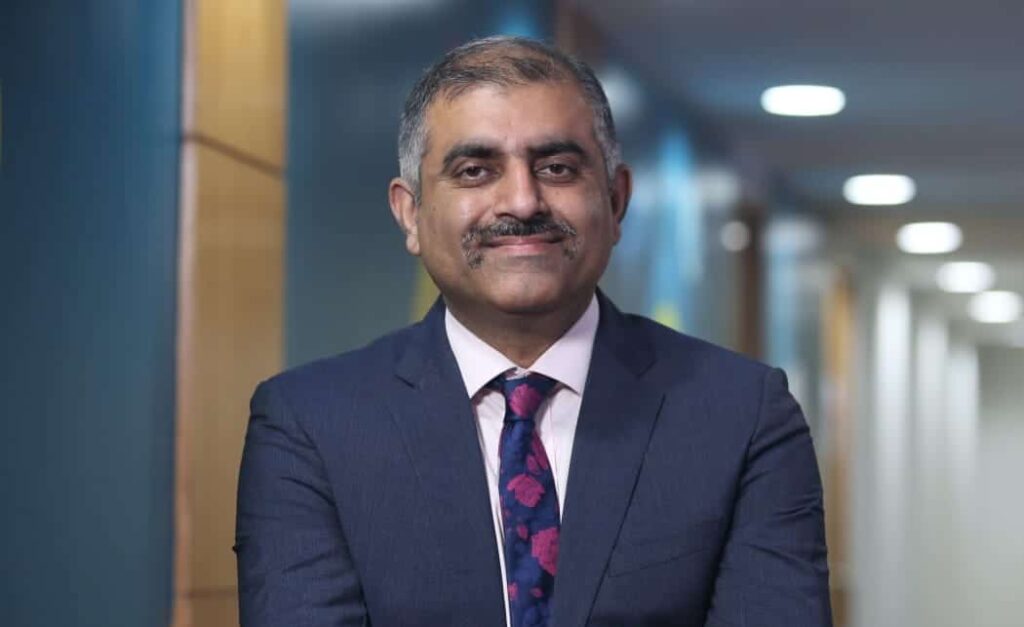
I recently went one-on-one with Nitin Seth, co-founder and CEO of Incedo.
Adam: Thanks again for taking the time to share your advice. First things first, though, I am sure readers would love to learn more about you. How did you get here? What experiences, failures, setbacks, or challenges have been most instrumental to your growth?
Nitin: I began my career at McKinsey & Company in 1996, where I learned the discipline of first-principles problem solving and had the opportunity to help build the McKinsey Global Knowledge Centre in India. What started as a research support unit evolved into a world-class innovation hub, teaching me that breakthrough innovation can come from anywhere when talent is empowered with the right vision and culture.
Then at Fidelity International, I led strategy and transformation during a period of significant technological change, from an investment-management-led model to a technology-driven one. That experience reinforced a lesson that business and technology are inseparable. It also exposed me to the realities of transforming large global organizations, where legacy mindsets and organizational inertia often become bigger barriers than technology itself.
My next chapter was at Flipkart as Chief Operating Officer. The pace was relentless, ambiguity was constant, and many traditional management playbooks simply did not work. It taught me the importance of experimentation, adaptability, and learning faster than the market.
These experiences ultimately led to the founding of Incedo. We built the company around a simple conviction: organizations invest enormous amounts in technology, yet too few succeed in translating those investments into meaningful business outcomes. Our mission has been to bridge that gap.
Looking back, the greatest challenges were rarely technical. They were about changing mindsets, overcoming inertia, and helping organizations navigate periods of profound change. Those lessons have also shaped my three books on digital, data, and AI. At its core, my journey has been about one theme: turning disruption into opportunity.
Adam: In your experience, what are the key steps to growing and scaling your business?
Nitin: In my experience, scaling a business comes down to five fundamentals.
First, develop an obsessive understanding of your customers. Sustainable growth begins with deeply understanding customer needs, pain points, and unmet opportunities. The organizations that scale best are those that anchor every major decision, investment, and innovation around creating greater customer value.
Second, stay ahead of macro trends. Growth is not about simply adding more people or capacity. It starts with understanding where your industry is headed and anticipating where the next wave of value creation will emerge. Businesses that consistently look around the corner are far better positioned to adapt and lead.
Third, have the courage to think big and disrupt. Scaling rarely comes from incremental improvement. It requires the conviction to challenge conventional wisdom, reimagine your business, and pursue bold ideas that create transformational value. The most successful companies are willing to reinvent themselves before the market forces them to.
Fourth, execute relentlessly. Great strategies are common; exceptional execution is rare. The ability to translate ideas into measurable outcomes with speed, discipline, and agility is what separates companies that scale from those that stagnate. I often say, strategy without execution is hallucination.
Finally, build a great team bound by trust and shared purpose. Scaling is ultimately a people challenge. It requires leaders who can inspire change, empower others, and build strong personal connections across the organization. When people believe in the mission and trust one another, they become the force: the change agents that enable an organization to navigate change and sustain growth.
Adam: What is your best advice on building, leading, and managing teams?
Nitin: There is no set playbook for building great teams. It is a fine balancing act: knowing when to challenge, when to support, how far to stretch people, and how to unlock their best work. No preset formula can teach this. Great teams are built by leaders who can read people, test boundaries without breaking trust, and inspire individuals to achieve more than they thought possible. While every leader brings a unique style, the foundations remain the same: a shared sense of purpose, clarity of expectations, real ownership, continuous inspiration, and a genuine commitment to helping every team member succeed.
First, start with a compelling, unifying purpose. Great teams are built around a mission that people genuinely believe in. When people understand why their work matters and how it contributes to a larger goal, they bring far greater energy, ownership, and commitment.
Hire for complementary strengths. High-performing teams are not made up of people who think alike. Diversity of skills, perspectives, and experiences drives better decisions and innovation. What must be common, however, are the values. Shared values create trust, while complementary strengths create performance.
Ensure absolute clarity on roles and expectations. Especially in the AI age, where roles and ways of working are constantly evolving, leaders must provide clarity on priorities, roles, expectations, and outcomes. Ambiguity slows down execution; clarity enables alignment and accountability.
Lead by example. Teams take their cues from their leaders. Integrity, resilience, curiosity, passion, and a willingness to embrace change are far more powerful when demonstrated consistently than when simply communicated.
Challenge people to discover their potential. One of a leader’s greatest opportunities is to spot potential before it becomes obvious. The best leaders stretch people beyond what they believe they are capable of, creating opportunities that accelerate learning and growth.
Create a safe environment to learn and fail. Innovation requires experimentation, and experimentation inevitably involves setbacks. People perform at their best when they know they have the support to take intelligent risks, learn quickly, and keep improving.
In essence, leadership to me is about helping people unlock their own potential. Technologies, industries, and business models will continue to evolve, but organizations will rarely succeed if people do not grow, adapt, and continuously reinvent themselves with it. When that happens, extraordinary outcomes often follow.
Adam: What are the most important trends in technology that leaders should be aware of and understand? What should they understand about them?
Nitin: I believe leaders often focus too much on individual technologies and not enough on the structural shifts those technologies are creating. The most important trend today is not AI itself, but the emergence of AI-native enterprises and business models.
AI is fundamentally reshaping how organizations create value. It is enabling hyper-personalized experiences, automating increasingly complex workflows, accelerating innovation cycles, and giving rise to entirely new business models built around intelligence rather than traditional assets.
What leaders must understand is that this is not another technology upgrade. It is a redesign of how businesses operate, compete, and grow. However, most organizations are still using AI to improve existing processes, missing out on the larger opportunity that lies in reimagining customer experiences, redesigning workflows, and creating entirely new sources of value.
At the same time, leaders must pay close attention to the human implications. We are entering an era of large-scale cognitive disruption, where hundreds of millions of knowledge-worker roles could be impacted by AI. Yet this does not diminish the importance of humans; it redefines it. In the near term, humans will remain ‘in the loop’ providing context, judgment, domain expertise, and accountability. In the long run, however, as AI matures, the greatest value will come from moving ‘above the loop’ to imagining new possibilities, challenging assumptions, and creating entirely new forms of value.
Leaders who succeed will be those who help their organizations move from execution to orchestration, and from efficiency to impact. As AI scales what we already know, the enduring human advantage will lie in imagining what does not yet exist.
Adam: What do you believe are the defining qualities of an effective leader?
Nitin: I believe leadership in the AI age demands much more than traditional management. As AI is reshaping industries, business models, and even the nature of work itself, the role of a leader is not simply to manage complexity, but to help people navigate uncertainty and create confidence amidst change.
In my experience, there are a few defining qualities of an effective leader that can be distilled into five 5 C’s of leadership: cause, care, courage, communication, and character. In the AI age, these become even more critical. To begin with, effective leaders always start with the why – identifying and championing a cause or vision that makes a real difference. Because, as I mentioned before as well, a compelling purpose unites diverse individuals, creates alignment, and inspires people to achieve more than they thought possible.
Next, they care, taking a genuine interest in people. They understand their aspirations, invest in their growth, and mentor them. Trust is built when people know you care about their success. Third, effective leaders lead from the front with courage. They walk the talk, stand by their convictions, persevere through challenges, and create stretch opportunities that push people beyond their comfort zones and help them grow.
Fourth, they communicate in an authentic, direct, and transparent way. And they do it with intent. Further, they listen with sincerity and patience. Teams perform best when they feel heard, valued, and respected. And lastly, they strive to do the right thing, especially when it is difficult. Their character embodies humility and integrity, creating a culture where people hold themselves and each other to high standards.
Adam: How can leaders and aspiring leaders take their leadership skills to the next level?
Nitin: The first step to taking your leadership to the next level is recognizing that leadership is not just about what you achieve, but also about who you become. Leadership is not a title; it is a lifelong journey of discovering and unlocking your best self.
That journey begins within. The best leaders intentionally create space for reflection, meditation, learning, and teaching. They make time to think, not just to do. These practices allow them to step back from the noise of daily demands, reconnect with their purpose and values, reduce stress, and cultivate the clarity needed to make better decisions. Over time, they deepen their self-awareness, strengthen their emotional resilience, and develop the wisdom to lead with intention rather than simply react to circumstances.
As leaders grow inwardly, they become more present, more compassionate, and more authentic. These qualities enable them to build deeper trust, communicate with greater empathy, inspire people more effectively, and lead through uncertainty with confidence and calm. Leadership is ultimately a human endeavour, and the quality of our leadership is inseparable from the quality of our inner life.
Adam: What are your three best tips applicable to entrepreneurs, executives, and civic leaders?
Nitin: If I had to offer three pieces of advice to entrepreneurs, executives, and civic leaders navigating the AI age, they would be these.
First, think like an entrepreneur. Dream big, create boldly, and don’t be afraid to take intelligent risks. Entrepreneurship is not just about starting companies; it is a mindset. It is about taking ownership, challenging conventional thinking, learning from failure, and continuously reinventing yourself. In an era of rapid disruption, those who build the future will outperform those who simply react to it.
Second, give before you get. Replace the question “What’s in it for me?” with “How can I create value for others?” We are born to make a difference and to leave the world better than we found it. Progress has always depended on people who choose to contribute before they expect to receive. Whether through knowledge, mentorship, kindness, compassion, or service, every act of giving strengthens the people and communities around us. The remarkable thing is that generosity has a way of returning manifold, creating trust, goodwill, opportunity, and abundance. In the AI age, where success will increasingly depend on connected ecosystems rather than individual achievement, the leaders who give first will ultimately create the greatest impact.
Finally, invest in people and long-term relationships. Throughout my career, I have found that the most valuable asset we build is not financial capital or even intellectual capital, but social and human capital. The trust, goodwill, and credibility accumulated over years often become the foundation for future opportunities, partnerships, and impact. Technology may change rapidly, but trust compounds slowly. Those who invest consistently in people and relationships create a reservoir of support and opportunity that endures through periods of change and uncertainty.
Adam: What are your best tips on the topics of sales, marketing, and branding?
Nitin: My biggest advice on sales, marketing, and branding is simple: be relentlessly customer-centric. Everything begins with understanding your customer deeply.
Spend time with your customers. Listen more than you speak. Step out of your own shoes and into theirs. Understand not just what they buy, but why they buy, what frustrates them, what they aspire to, and what success looks like from their perspective. The organizations that consistently put customer interests ahead of their own are the ones that earn lasting loyalty.
Sales, marketing, and branding are all different expressions of the same objective: creating and communicating customer value. Sales is about solving customer problems. Marketing is about understanding customer needs and clearly articulating why your solution is the right one. Branding is the trust you earn by consistently delivering on that promise. When you genuinely focus on creating value for customers, sales become easier, marketing becomes more authentic, and your brand becomes stronger.
Adam: What is the single best piece of advice you have ever received?
Nitin: The single best piece of advice I have ever received was to make meditation a daily practice.
I received that advice when I was fourteen from my maternal uncle, who became one of my greatest role models. He was an exceptionally successful technocrat and senior business leader, yet deeply grounded in spirituality. He showed me that professional excellence and inner growth are not opposing pursuits; they reinforce one another.
He encouraged me to meditate every day and, more importantly, to begin asking deeper questions: Who am I? Why am I here? At that age, I didn’t have the answers, but those questions sparked a lifelong journey of self-discovery. Over the past four decades, meditation has remained a constant companion. It has helped me develop greater self-awareness, clarity, emotional resilience, and the ability to stay calm amidst uncertainty. It has enabled me to make better decisions, lead with greater empathy and purpose, and remain grounded through both successes and setbacks.
If there is one habit that has shaped both my leadership and my life more than any other, it is the simple practice of sitting quietly with myself every day.
Adam: Is there anything else you would like to share? (Optional)
Nitin: I believe we are living through one of the most consequential periods in human history, synonymous with the wheel or the steam engine. Rarely do we encounter a moment when rules across industries, economies, and societies are being rewritten.
What makes this moment unique is that the choices we make over the next decade will determine whether AI becomes a force that expands human potential or one that amplifies existing inequalities and challenges. The future is not predetermined. It will be shaped by the decisions we make today.
My hope is that we approach this moment with both ambition and responsibility. Ambition to reimagine what is possible, solve problems that once seemed intractable, and create opportunities at a scale never seen before. Responsibility to ensure that technology remains anchored in human values, purpose, and societal good.
If there is one message I would leave readers with, it is this: the future should not be feared; it should be created. The AI age will undoubtedly reward technological capability, but it will reward human qualities such as curiosity, courage, creativity, leadership, and entrepreneurship even more. Those qualities have helped humanity navigate every major transformation in history, and they will help us navigate this one as well.
The opportunity before us is extraordinary. The question is not whether the future will change. It is whether we will have the courage and imagination to help shape it.