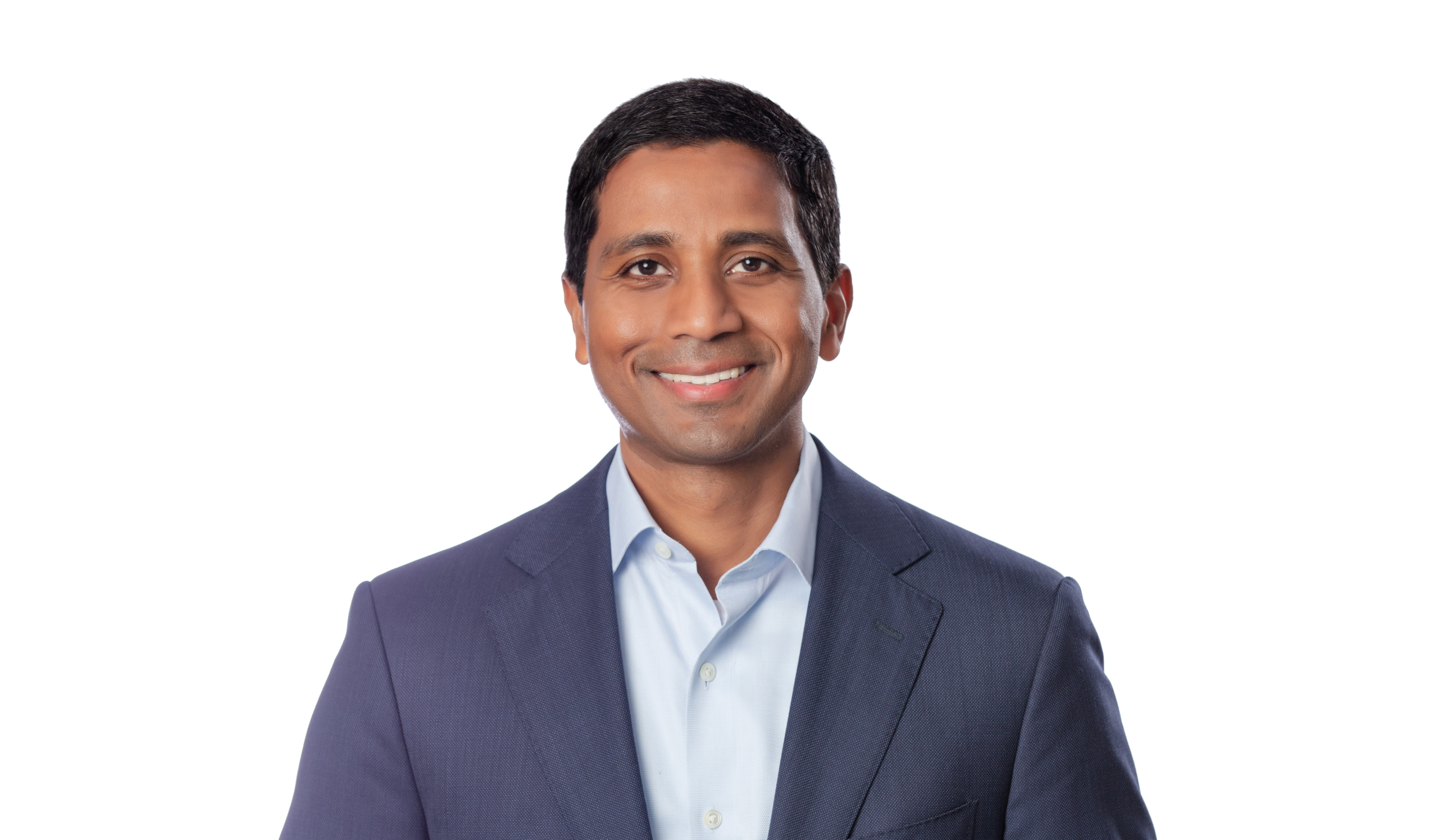


I recently went one-on-one with John Shufeldt, founder of NextCare Urgent Care.
Adam: First things first, I’m sure readers would love to learn more about you. How did you get here? What experiences, failures, setbacks, or challenges have been most instrumental to your growth?
John: I got here by failing often enough that eventually I became comfortable with risk. Failure stopped bothering me. I was not one of those kids whose teachers said, “That young man is destined for greatness.” I have old report cards that suggest I was destined to repeat the year. My first “startup” was an elevator I built as a five-year-old using a coffee can, a bushel basket, a rope, and a rock. The rock won. It hit me in the head, I got five sutures, and that was my first encounter with emergency medicine. So, in a strange way, my career in healthcare began with poor engineering and a head wound.
Professionally, I’ve lived at the intersection of emergency medicine, entrepreneurship, aviation, law, and a deathly allergy to boredom. I practiced emergency medicine, earned an MBA and JD, became a pilot, built and sold businesses, folded a few, invested in others, and kept going. NextCare, the first national urgent care, grew from one clinic to nearly 60 clinics; MeMD, an early telehealth company, was acquired by Walmart; and StatRead, an early teleradiology player, was acquired by a large radiology group. I just sold most of Tribal Health to a fantastic PE group called Pharos. I started Xcellerant Ventures to help fund early-stage startups and co-founded VivaMed to accelerate drug discovery.
The most instrumental moments were the uncomfortable ones. When NextCare was young, our bank transferred our loan to the “workout” division. I thought that sounded great because I like to work out. Then I learned it meant “your loan is in trouble and we might take everything you own.” We triple-mortgaged our home. Later, I asked the banker why he didn’t call the note, and he said he never heard defeat in my voice. That was a gift. It taught me that at the end of the day, grit wins. My personal mission has stayed fairly constant: leave the world better than I found it and live life in the service of others.
Adam: How did you come up with your business ideas and know they were worth pursuing? What advice do you have for others on how to come up with and test business ideas?
John: I don’t really “come up with” business ideas. I tend to trip over problems and start looking to see if someone else has come up with a solution. The best ideas are usually hiding in plain sight, annoying people every day. I look for problems that are urgent, expensive, and frequent. If a problem is urgent but rare, it may be important but not a business. If it’s frequent but cheap, it may be annoying but not valuable. If it is urgent, expensive, and frequent, then you should at least lean in and ask whether you can solve it better than the current alternatives. These are some questions that need to be answered before plunging into a new business. Is this a breakthrough or an incremental improvement that is at least 10x better than what is already out there? Is this the right time? I have started a number of businesses too far ahead of their time. Can you secure a large percentage of a small market? Do you have the right team already in place? Who are you missing? Can you actually deliver the product or service you created? Will it still be needed or defensible in 10 years? In other words, how big is your moat?
The concept that “ideas are easy; startups are hard” is often missed. A lot of people are in love with their idea. The market does not care about your idea. The market cares about its pain. Entrepreneurship malpractice is building a beautiful solution to a problem no one has. NextCare came from seeing emergency departments overcrowded with patients who needed care but not necessarily an ED. MeMD came from the obvious idea that healthcare should not always require a waiting room, a clipboard, and the unnecessary transfer of germs. Tribal Health came from witnessing vast healthcare disparities on Indigenous lands and deciding that admiring the problem was not enough.
Testing an idea is not complicated, but it is uncomfortable. Leave the conference room. Talk to actual customers. Ask what they do now, what it costs them, why it bothers them, what happens if they don’t fix it, and whether they would pay for your solution. The best validation is not praise. Praise is cheap. The best validation is behavior: a signed pilot, data access, a letter of intent, a check, a referral, or a customer who says, “Can we start Monday?” My advice: don’t ask people whether they “like” your idea. Your friends will always say yes. Ask them what they would stop doing, start doing, or pay for as a result.
Adam: What are the key steps you have taken to grow your businesses? What advice do you have for others on how to take their businesses to the next level?
John: First, build the machine before you pour gasoline on it. Many entrepreneurs confuse growth with motion. Hiring more people is not growth. Opening more locations is not growth. Raising capital is not growth. Growth is the ability to reliably keep promises at scale. Gather that big part of a small market. The first step is getting the unit economics right. If the core model doesn’t work small, it will not magically work large. Scaling a broken business just allows you to lose money in more ZIP codes.
The second step is culture. I would rather hire someone with values and train for skill than hire a brilliant jerk and spend the next two years apologizing for him. You can train motivated people. You cannot fix values. One toxic high performer can do more damage than three mediocre employees because everyone watches what you tolerate. Your culture is not what is written on the wall. Your culture is what you allow when things are hard.
The third step is planning for the exit at inception. That does not mean you are trying to sell the company on day one. It means you build the company as if a smart stranger with lawyers, accountants, and a flashlight is going to look under every rock someday. Choose the right structure. Keep the cap table clean. Build the data room as you go. Don’t create a corporate junk drawer and call it “growth.”
Fourth, choose investors and board members wisely. Everyone’s money is green, but not everyone’s money is equal. The wrong investor can become a full-time job. The right investor gives you capital, judgment, courage, and occasionally a much-needed kick in the rear.
And finally: don’t retain poor performers. It sounds harsh, but it is often the kindest thing for the person and the team. A person who is failing at your company may flourish elsewhere. Keeping them in the wrong seat because you dislike hard conversations is not compassion; it is cowardice dressed up as kindness.
Adam: What are your best sales and marketing tips?
John: Stop selling. Start diagnosing. My medical training helped me enormously in sales. A good physician does not walk into the room and say, “Great news, I have a medication I’d like to sell you.” A good physician asks questions, listens, examines, diagnoses, explains, and then treats. Sales should work the same way. The best salespeople are not carnival barkers. They are diagnosticians. They understand the customer’s pain better than the customer does. They can say, “Here is what you are dealing with, here is why it keeps happening, here is what it is costing you, here are your options, and here is why we can help.”
Marketing is just clarity at scale. It is making the truth easy to understand. If your grandmother cannot understand what you do, your messaging is probably too clever. Clever is overrated. Clear wins. Early in a business, founder-led sales are essential. If the founder cannot sell the product, one of three things is true: the problem is not real, the solution is not compelling, or the founder cannot explain why it matters. All three are fixable, but only if you face them honestly.
In healthcare especially, trust is the brand. People don’t want sparkle; they want access, quality, reliability, safety, and a fair price. So, my best marketing advice is boring but undefeated: do what you said you were going to do, follow up, tell the truth, and make your customers look smart for choosing you.
Also, never underestimate humor. In the emergency department, I’ve used humor to diffuse anxiety, reset a room, and remind people that we are all human. But humor has to be warm, never cruel. I am generally the punchline; it usually works. I have done enough dumb things and survived enough crazy experiences that making fun of myself is really easy.
Adam: What are the most important trends in technology that leaders should be aware of and understand? What should they understand about them?
John: The biggest trend is obviously artificial intelligence, but the provocative point is this: AI is not a strategy. It is a tool. A chainsaw is also a tool. In the right hands, it clears the forest. In the wrong hands, someone loses a limb. By the way, I once treated a guy who was standing on a tree limb after he cut off the limb of the tree he was standing on.
In healthcare, AI is already showing up in clinical tools, imaging, documentation, operations, and patient access. The FDA now maintains a list of AI-enabled medical devices authorized for marketing in the United States, which is important because it signals that AI is moving into regulated clinical reality, not just back-office experimentation. At Xcellerant, we have invested in several AI-centric companies and use an AI tool called Pitch Deck Analysis to perform an initial review of the hundreds of pitch decks we receive. At VivaMed, we built an LLM to scale drug discovery and improve shots-on-goal.
The second major trend is cybersecurity and trust. The Change Healthcare cyberattack showed how one critical third-party failure can disrupt healthcare nationally, endanger patient access, and threaten provider solvency.
The third trend is authenticity. Deepfakes, synthetic identities, voice cloning, and AI-generated misinformation mean leaders will have to prove what is real. In the near future, “I saw the video” or “I heard the voice” will not be enough. Trust will become a technical problem,
The leaders who win will be the ones who ask better questions: What problem are we solving? What data trained this? Who could be harmed? How do we audit it? What happens when it is wrong? Who is accountable? AI will not replace leaders. AI simply democratizes intelligence. The leaders who will win are those who communicate best, build the best team, and foster the best culture.
Adam: In your experience, what are the defining qualities of an effective leader? How can leaders and aspiring leaders take their leadership skills to the next level?
John: Leadership starts with self-leadership. If you cannot lead yourself, you have no business trying to lead anyone else. To me, leadership is the ability to influence others toward a worthy goal. Self-leadership is harder because it requires influencing yourself: your habits, your thinking, your discipline, your ego, your fears. I’ve always believed leaders should lead from the front. That means you are the last person to get paid, the last person to eat, and the first one charging the machine-gun nest.
My three pillars are humility, resilience, and imperturbability. Humility is not weakness. Humility is confidence without the need for adulation. Resilience is the ability to get knocked down and get back up without making failure your identity. It is the Churchill quote about going from failure to failure with no loss of enthusiasm. Imperturbability is staying calm when everyone else is losing their mind.
The best leaders are truth-seekers. They create environments where bad news travels fast, because slow bad news is expensive. They don’t punish people for telling the truth. They punish dishonesty, avoidance, and excuse-making.
Leaders take their skills to the next level by doing three things. First, ask for feedback from people. Second, put yourself in uncomfortable situations on purpose. Third, keep learning. The world is moving too quickly, and thus all leaders have to be readers.
Adam: What is your best advice on building, leading, and managing teams?
John: Hire for values. Train for skill. Remove toxicity quickly and then figure out why you hired them in the first place. I’ve made plenty of hiring mistakes, and most of them came from being seduced by competence. Competence is wonderful, but competence without character is a loaded weapon. I would rather have a highly motivated learner who shares the mission than a superstar who treats people poorly. A good team needs clarity, accountability, and trust. Clarity means everyone knows the mission, the scoreboard, the priorities, and who owns what. Accountability means promises matter. Trust means people can tell the truth without fear of repercussions.
I also believe in diversity of backgrounds, experiences, and ways of thinking. If two people think exactly alike, one of them is unnecessary. The best teams have constructive friction. Not drama. Not politics. Constructive friction. You want people who see different angles and are willing to argue honestly in pursuit of the right answer. You also want people who embody the phrase, “Strong convictions, loosely held.” You want people who can have their mind changed by facts.
My wife René taught me something that changed how I lead and practice medicine: everyone has their own reality. Once you understand that, you stop trying to impose your worldview on people and start meeting them where they are. That does not mean you lower standards. It means you lead humans, not job descriptions.
Managing teams also requires hard conversations. Never make people guess where they stand. Be honest, direct, and kind. Kindness without honesty is sentimentality. Honesty without kindness is brutality. The best leaders practice both.
Adam: What are your three best tips applicable to entrepreneurs, executives, and civic leaders?
John: First, solve real problems. Not fashionable problems. Real ones. The best opportunities are usually urgent, expensive, and frequent. Whether you are building a company, running a hospital, or leading a city, your job is to reduce suffering, remove friction, and create value.
Second, play the long game. Prepare for the worst, protect the downside, and don’t get intoxicated by short-term applause. I love the line, “If it was easy, everyone would do it.” That’s not a complaint; it’s a filter. Hard is often where the opportunity lives. You want hard.
Third, commit to lifelong learning. I’ve gone back to school repeatedly because each new discipline has given me a new lens. Medicine taught me urgency. Business taught me scale. Law taught me risk. Aviation taught me preparation. Emergency medicine taught me humility and gratitude. The moment you think you’re done learning, you are probably done leading.
Adam: What is the single best piece of advice you have ever received?
John: Long ago I saw this quote: “The definition of hell: On your deathbed you will meet the person you could have become.” I had just had an experience with a patient who was dying who had what I started to call the “If only” look on his face. I swore that I would not have that look on my face when I died. That was a throat punch for me. It forced me to ask: Am I playing offense or defense? Am I taking the hill or sitting on my ass? Am I using my gifts or merely protecting my comfort? I don’t want to meet the person I could have become and have him look disappointed.
That idea has pushed me to keep practicing medicine, building companies, mentoring, learning, taking risks, and trying to be useful. Like Hunter S. Thompson, my idea of life is not to arrive at the grave in a well-preserved body, but rather to skid in broadside in a cloud of dust, thoroughly used up, totally worn out, laughing, yelling, “holy shit, what a ride!”