

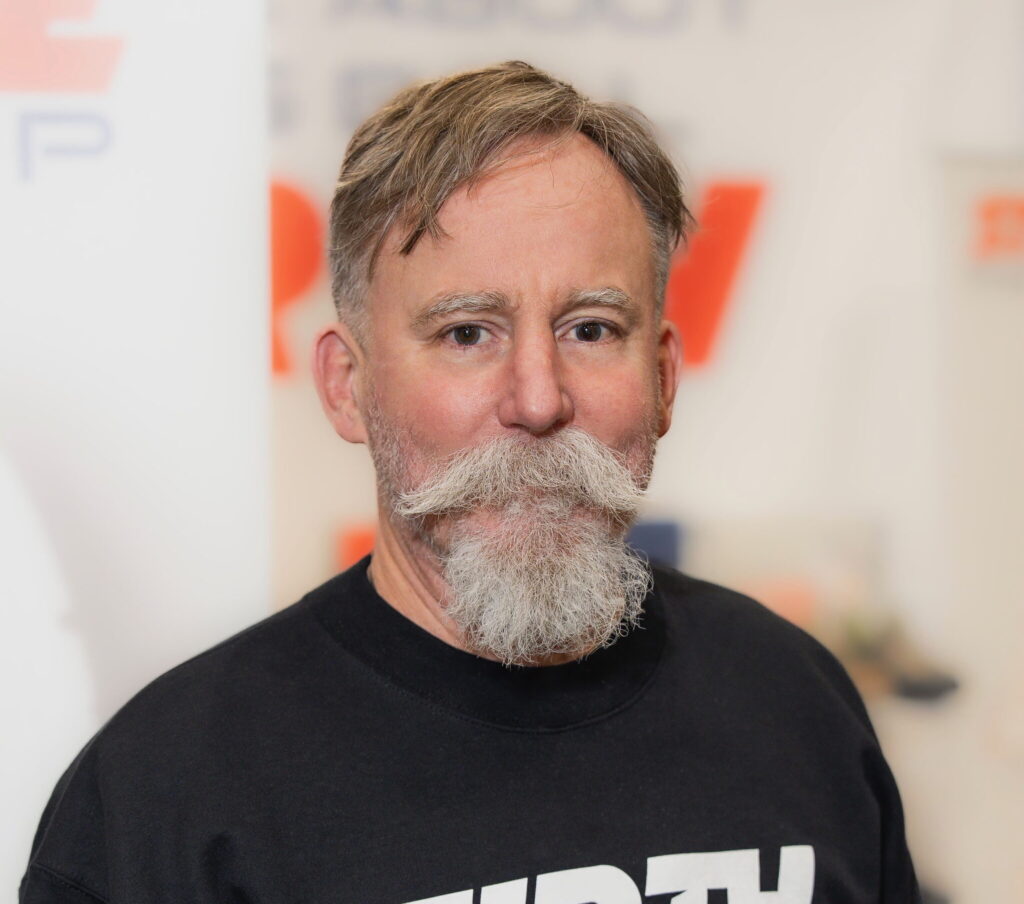
I recently went one-on-one with Rick Blackshaw, co-founder of STOKE Shoes. Rick was previously President of HEYDUDE and Keds.
Adam: Thanks again for taking the time to share your advice. First things first, though, I am sure readers would love to learn more about you. How did you get here? What experiences, failures, setbacks, or challenges have been most instrumental to your growth?
Rick: Thanks for having me, Adam. My path here actually starts with geography, and I think it’s worth explaining first, because it’s the same reason so many footwear careers, including mine, end up rooted in New England.
If you’re a consumer products person and you’re not paying attention to New England, you’re missing something big. A crazy share of American footwear was born here. Converse, Keds, New Balance, Sperry, Reebok, Timberland, Rockport, Saucony, and now STOKE. That’s not some coincidence; it’s really three things stacking on top of each other.
First, a historical fluke, really. Two of them stacked on top of each other. Lynn, Massachusetts, has been making shoes since 1635, and when European immigrants brought hand-sewing techniques over in the 1700s, that skill base took root and never left. Then, starting in the 1870s, a second wave hit Maine: roughly 720,000 French-Canadians crossed the border from Quebec into New England mill towns over the following sixty years, and Lewiston-Auburn alone had something like 10,000 sewers at its peak, most of them French-Canadian. That’s the same lineage behind the hand-sewn moccasin, a construction you can still find being made by hand in Lewiston today (and was the basis of the Sperry topsider boat shoe). Between those two waves, New England ended up with a depth of hand-sewing talent no other region could match, and it became the seed for everything that followed, with towns like Brockton, Haverhill, and Auburn building their own shoe economies right alongside Lynn’s.
Second, geography. New England’s rivers drop fast from the hills to the coast, and that kind of fall gave the region cheap water power for the mills and tanneries that turned raw hides into leather, which is why places like Woburn had 20-plus tanneries running along a single stream by the 1870s. Add a major port in Boston to move leather in and finished shoes out, and you had the whole supply chain sitting in one place.
Third, and honestly the most durable one, is the network effect, and it cuts both ways: it’s not just cooperation, it’s competition born out of the same talent pool. Having run both Keds and Chuck Taylor / Converse, I have done some deep research on this stuff. Keds is what happened when U.S. Rubber, a trust that swallowed up nine or ten regional rubber shoe makers back in 1892, consolidated its footwear brands under one name in 1916. Converse exists because its founder, Marquis Mills Converse, worked inside that same trust, at Beacon Falls Rubber Shoe Co., before breaking off in 1908 to start an independent company free of the trust’s grip on pricing and distribution. In my early days at Converse, we talked about this independent spirit, which created a foundation for the idea of the brand as a creative catalyst. Two of the biggest names in American sneakers came out of the exact same regional rubber industry: one as the trust’s own brand, one as the guy who walked away from it. Once you’ve got that kind of critical mass of footwear companies in one region, you get a critical mass of people who know how to design, source, market, and sell shoes, so every new brand has a reason to plant its flag there, too. That density of talent and relationships just doesn’t exist anywhere else the same way.
I’ve spent basically my whole career inside that ecosystem. Timberland, Converse/Chuck Taylor, Keds, Sperry, CCM (actually not shoes, but you wear skates on the feet and was headquartered in Montreal, so some connective tissue with the rest of the story), HEYDUDE. Throw in New Balance, Oofos, parts of Kizik, nobull (I’m probably forgetting 10 others).
But the bigger lesson for me actually came from the pattern in the jobs I picked. I never took the easy growth stories. I kept raising my hand for the broken ones. The early days of Chuck Taylor were pretty stagnant; it was a brand that was doing 10-20 million pairs per year for 50 years. But we as a team broke it out of that band and ended up doing 75 million pairs. Keds was in a 20-year sales decline when I took it over. Sperry was fighting a category shrinking 15% a year. CCM hadn’t produced a dollar of cumulative EBITDA in a decade. Each one was a bet that I could see something the business itself couldn’t, and each one forced me to relearn, from scratch, how to make a brand relevant again instead of just riding its momentum.
That pattern of figuring out what the consumer believes, how they think about the category and competition, determining what’s actually broken with the business, rebuilding the platform, and proving it with numbers is what eventually gave me the confidence (and the itch) to walk away from a president’s title running a billion-dollar brand and start STOKE Shoes from scratch. I’d spent 25 years watching the industry ignore the fact that three out of four American guys have wide feet, and once I really saw it, I couldn’t unsee it. Or that 80% of people who buy athletic footwear don’t use it in an athletic context. Or that the average guy in America is 5’9”, 200 lb. That’s honestly the confluence of thoughts that shaped me. Not one big failure, but the discomfort of sitting on an obvious, fixable problem for years. I really started thinking deeply about it in 2017 before I finally did something about it.
Adam: In your experience, what are the key steps to growing and scaling your business?
Rick: A few things show up in every brand I’ve helped scale, whether it was a $500 million division or a startup:
1. Find the real gap, and size it honestly. STOKE Shoes started with a number. Seventy-five percent of American men have wide feet, but only a quarter of them are actually buying wide shoes. That’s a 65-million-man gap nobody was pricing for. Figure out the total market, then find the slice that’s underserved for a structural reason, not just a marketing reason. Structural gaps tend to stick around longer than marketing-driven ones do. I would also say I came about it from observation. Take a walk through any airport, and you see a ton of 25- to 54-year-old guys that probably don’t want to spend $160 on running shoes that are likely too skinny for their big dogs.
2. Consumer obsession. Understand what is in the consumer’s heart, mind, and wallet better than anyone else. This is a Nike maxim and an important one, a real source of durable competitive advantage.
3. Build a platform, then let iteration do the work. We grew Chuck Taylor from $340 million to $1.8 billion in global wholesale revenue without launching some brand-new franchise. We just kept iterating on one iconic silhouette, which had incredible visual DNA. Pick a platform that’s strong enough to extend for a decade and put your energy into extending it, not reinventing it. Sometimes it is a marketing platform. At Keds, faced with irrelevance but in the surging vulc footwear category owned by Chuck Taylor and Vans with male-centric platforms built on rock n roll, skate and surf, we decided we were going to build a brave girl movement with the number one brave girl. Taylor Swift.
4. Protect gross margin like it’s oxygen. Almost every turnaround I’ve run from Sperry, Keds, and CCM, we moved 500 to 1,000-plus basis points of margin before it moved revenue. Margin is what buys you the room to reinvest in product and marketing. Chase top-line growth without it and you’ll scale yourself right into a cash crisis.
Adam: What are your best tips on the topics of sales, marketing, and branding?
Rick: On branding, give the brand a mission people can actually stand behind, not just a look. At Keds, we didn’t just refresh a logo; we repositioned the entire brand around the Brave Girl Movement and a partnership with Taylor Swift, and it turned two decades of decline into two years of doubled revenue. At STOKE Shoes, the mission is just as blunt: real shoes for real guys with real feet, for under $100. If you can say your brand’s reason for existing in one sentence, your marketing gets way easier, because everything either supports that sentence or it doesn’t.
On marketing, talk to the customer the big brands are ignoring, and talk to them directly. Footwear is fixated on 13- to 24-year-olds that drive culture. STOKE’s customer base, roughly 65 million men, has never had a footwear brand speak to them like adults about a problem they’ve been quietly living with: shoes that don’t fit, foot pain, feeling invisible to “athletic” marketing built for someone else. That white space is worth more than a bigger media budget aimed at a crowded, already-fought-over customer. Creative leverage of message also helps a ton, and at STOKE Shoes we are trying to corner the market on male-centric humor (which stands out in our trademarked benefits, including the big ball girth, mansplay midsole, powerstack, slip on and STOKE out) in our communications.
On sales, don’t choose between DTC and wholesale. Sequence them. They both feed into each other; DTC is a channel in my mind, not a strategy. We launched STOKE e-commerce first, in a single test market, to prove the product and build a real repeat-purchase story with actual data. Then we used that proof to open 400 wholesale doors. Wholesale partners want evidence, not enthusiasm, so build the evidence first.
Adam: What do you believe are the defining qualities of an effective leader?
Rick: There are a couple of things, but I think wanting to be a team player is important. To this day, I play on an over-55 men’s soccer team, and my focus is always on how I can work my butt off and be a good teammate. One of the biggest tells for me is whether people choose to work with you twice (or three times), or even be on multiple soccer teams with you. My core team at STOKE Shoes- marketing, finance, sales leadership, product development- are people I’ve now rebuilt brands with across four different companies and two decades: Converse, Keds, Sperry, HEYDUDE, and now STOKE. Nobody signs up for a second turnaround with someone who didn’t lead well the first time.
Beyond that, I’d point to three things: conviction under ambiguity (committing to a strategy, for example, we called ours “Five Bold Moves” at Sperry, before the market has validated it for you); a bias toward the unglamorous work of fixing fundamentals like margin, product fit, and operations before spending a dollar on the exciting stuff; and honesty about what’s actually broken. Every brand I’ve turned around required admitting, often publicly and uncomfortably, that the thing everyone used to love about it wasn’t working anymore.
Adam: How can leaders and aspiring leaders take their leadership skills to the next level?
Rick: Go run something that’s broken. There’s really no substitute for it. Managing growth teaches you operational discipline, but leading a turnaround teaches you how to diagnose a problem nobody else can see, build a plan with incomplete information, and rally a team around a strategy before you have the proof points to back it up. CCM hadn’t produced a dollar of EBITDA in a decade when I took it over, and getting comfortable making decisions in that kind of fog of war is a skill you can only build by actually doing it.
Also, get close to the end consumer yourself, at the working level, not just through a slide deck. Every brand-defining insight I’ve had, including the one that led to founding STOKE, came from noticing something in the raw data or the raw customer feedback that the org chart had shielded everyone else from seeing.
Adam: What are your three best tips applicable to entrepreneurs, executives, and civic leaders?
Rick: 1. Size the gap before you size the ambition. Whether you’re building a company, running a division, or leading a civic initiative, get precise about who’s underserved and why before you get excited about the solution. STOKE exists because we could point to a specific number, 65 million men, not because “comfortable shoes” sounded like a nice idea.
2. Fix the foundation before you chase the headline. It’s easy to want to skip straight to the exciting, shiny parts, but usually, the ones that won did the boring part first. Margin before growth, trust before scale, operations before marketing.
3. Bring your people with you, literally. The team that built STOKE has rebuilt four other brands together. Loyalty compounds. It’s cheaper, faster, and lower-risk to build with people who already trust you, and who you already trust, than to assemble a brand-new team for every new challenge.
Adam: What is your best advice on building, leading, and managing teams?
Rick: First and foremost, care about and take an interest in your team. Next, hire for the next fight, not the last one, and then keep your best people close across multiple fights. I’ve built teams inside a Fortune 500 division (Converse), a licensed business (Timberland Packs & Travel), two turnarounds (Keds, Sperry), a private-equity-owned brand (CCM), an integration inside a public company (HEYDUDE/Crocs), and now a startup (STOKE). The throughline isn’t the org chart; it’s that I’ve brought the same handful of operators with me over and over because they’ve proven they can adapt to a totally different context and still deliver.
My other piece of advice: run lean on purpose. At STOKE we’re deliberately letting the business scale ahead of headcount and using contractors for anything variable or specialized, because every hire should be justified by a specific revenue or margin lever, not just “we’re growing so we should probably add someone.” That discipline keeps a team sharp instead of bloated.
Adam: What is the single best piece of advice you have ever received?
Rick: Early in my career, a boss told me: “Don’t fall in love with the business as it is, fall in love with the consumer, and let the business change as many times as it needs to.” I’ve thought about that in every turnaround since. Brands like Keds and Sperry got into trouble because the business had calcified around a version of itself that used to work. The fix was never to defend that old version; it was to go find what the customer actually needed now and rebuild around it. STOKE only exists because I applied that same advice to an entire industry: the customer needed a real wide shoe for under $100, and nobody had built a business around that yet.
Adam: Is there anything else you would like to share?
Rick: If you are going to do something, it takes a ton of time away from your family and incredible effort, so you might as well have fun doing it. And I would add an invitation… if you’re one of the millions of guys who’ve been quietly wearing shoes that don’t fit, that’s exactly who we built STOKE Shoes for. Real shoes, real width, real price, at stokeshoes.com. And to anyone building a brand right now, the best opportunities are usually hiding in a fact everyone in your industry already knows, but nobody’s acted on. Go find yours.