

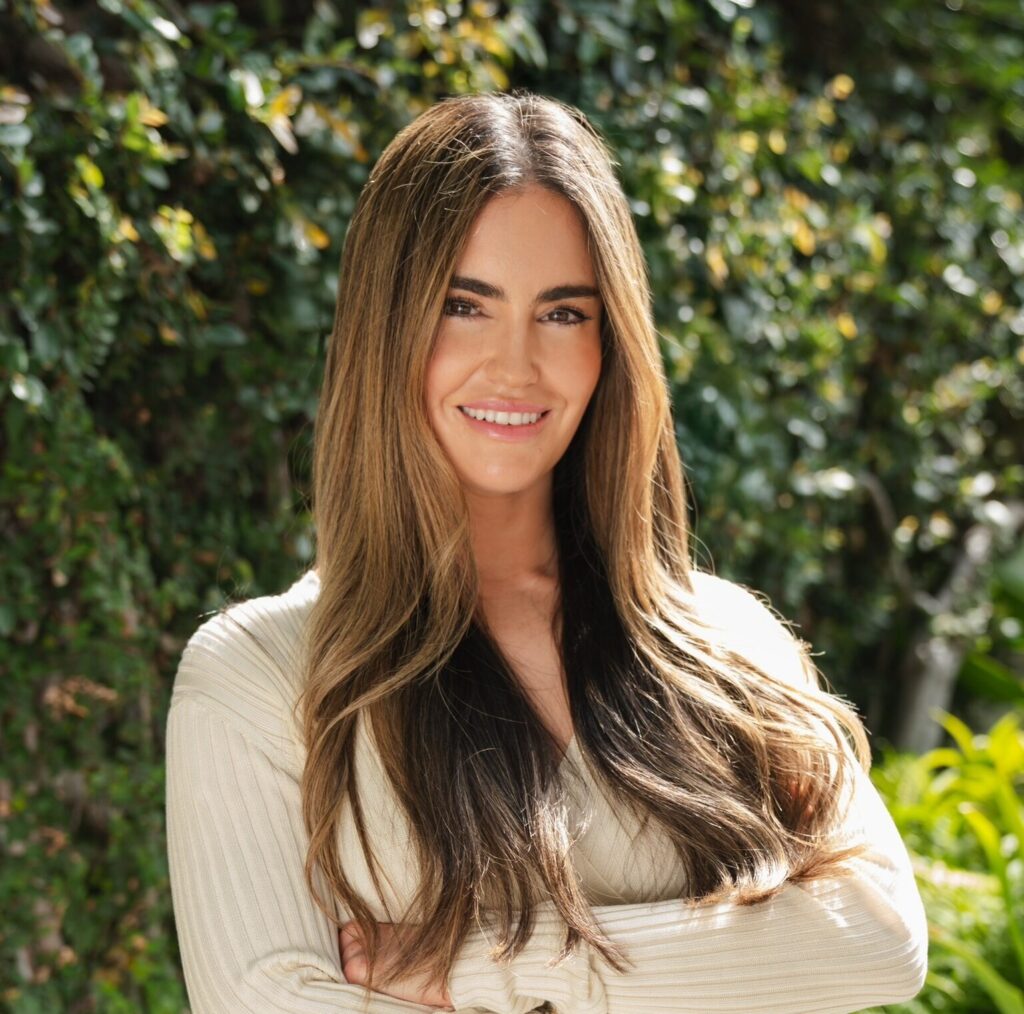
I recently went one-on-one with Carly Kremer, founder of Beekeeper’s Naturals
Adam: Thanks again for taking the time to share your advice. First things first, though, I am sure readers would love to learn more about you. How did you get here? What experiences, failures, setbacks, or challenges have been most instrumental to your growth?
Carly: Thanks for inviting me! I’m always happy to talk about my journey with Beekeeper’s Naturals. In 2015, I was working on the trading floor at Goldman Sachs. I was putting in long hours at a job I hated. I was burnt out and barely had a life outside of work. Everything looked good on paper. I was getting promotions and plenty of validation at work, but internally, I felt completely lost.
The wake-up call for me came when I started looking at the people around me, particularly those above me. So many of them seemed miserable, too. They knew they were underutilizing their potential, but they were afraid of taking risks or really betting on themselves. I didn’t know exactly what I wanted to do, but I knew I didn’t want to end up like that.
The one thing that gave me solace was beekeeping, a hobby I had picked up in college after discovering propolis, which is an ingredient bees make to protect their hive from viruses and bacteria. Propolis helped resolve what had been years of chronic health issues for me. Through beekeeping, I also discovered other ingredients like royal jelly, pollen, and raw honey that, at the time, most Americans knew very little about. I wanted to bring them to more people.
At first, I started small. I sold at farmers’ markets on the weekends, cold-emailed retail buyers on my lunch breaks, and packed boxes of products at night. Eventually, I gained enough momentum, including finding an amazing co-founder, that I felt confident enough to quit my job. Don’t get me wrong, it was still early, and it was a very risky decision. But I had laid enough groundwork that I wasn’t starting from square one.
One of the early setbacks that taught me the most was raising money. When I went out to fundraise, I had a real business. I had more than an idea. I assumed raising money would be easy. But even when I got investors to the point of believing we had a strong business, I would tell them I wanted to test our products against EU contaminant standards, and they would laugh me out of the room.
I stuck to that and held my ground because I felt it was the right thing to do. Now, testing in the supplement industry has become trendy, and I receive calls from people asking how to build contaminant testing into their supply chains. That taught me that your instincts and values are important. You shouldn’t be obstinate for the sake of it, but you should listen to the one or two guiding principles that are important to you and not compromise on them just because other people are telling you to.
Adam: How did you come up with your business idea? What advice do you have for others on how to come up with great ideas?
Carly: Honestly, I didn’t set out to build a business. I first discovered propolis, an ingredient made by bees, when an Italian pharmacist introduced me to it. It was at a time when my health was completely cratering, and it cured something that years of doctors, naturopaths, and thousands of dollars in remedies couldn’t touch. I found a local apiary and started making my own propolis in college, giving it to friends and family, and watching it work for them, too. I wasn’t thinking about building a business. I was just sharing something that had changed my life.
The more time I spent at the apiary, the more I started wondering if I could make this my full-time profession. What if, instead of sitting at a desk making rich people more money, I could bring a natural ingredient that had changed my life to more people? That felt much more meaningful to me.
My advice is to look at your own life and your own values. What is something that you care about deeply? Once you find that thing, you can start thinking creatively and innovatively about it. Founding a company is incredibly hard. In the early years, you’re going to face rejection, embarrassment, and failure before you ever gain traction. And it doesn’t stop there. Every stage of a company brings its own challenges. You need something driving you other than the desire to make a lot of money.
Adam: How did you know your business idea was worth pursuing? What advice do you have on how to best test a business idea?
Carly: I knew it was worth pursuing when I couldn’t keep up with demand. I was selling my propolis at farmers’ markets on weekends, and I kept selling out. The first sign was the response I got from interacting with people face-to-face. They were curious enough to try it, and they kept coming back.
No matter what stage you’re at, pay attention to how people respond in the early days. Put in the work to actually test your idea. So many people have an idea and want it to take off immediately. They’re waiting for someone to write them a massive check to make it a reality. But you have to get it out into the world in a scrappy way, even if that feels embarrassing. It’s important never to feel like you’re too good for the hard and uncomfortable parts. Get out there. Talk to real people. See what they say. If you receive a positive response even at a small scale, that’s a sign to keep going.
Adam: What are the key steps you have taken to grow your business? What advice do you have for others on how to take their businesses to the next level?
Carly: In the early days, we were very deliberate about growth. We bootstrapped for the first two years, talked directly with customers, and learned what they cared about. We figured out what was working and what wasn’t. By the time we could afford the minimum order quantities required to work with retailers, we had already spent two years learning the market firsthand.
Getting into retail took a lot of persistence and a lot of cold messaging on LinkedIn. I finally connected with a Whole Foods buyer who cared about the plight of bees. I sent fruit baskets and handwritten letters and even showed up at his office. Eventually, he gave us a regional rollout. Even after that, it was my co-founder, another early employee named Jake, and me going from store to store with backpacks full of products.
In this age of AI, every entrepreneur I talk to is worried about speed and scale. But I don’t think the slowness of real human connection is going anywhere. I actually think it’s going to become even more important. Spend time convincing people to come on your journey with you. It will pay off in the long run.
Adam: What are your best sales and marketing tips?
Carly: You’re selling yourself at the same time you’re selling your product. That’s true from the earliest stages of a company to when you have a major brand. These days, the line between the Beekeeper’s Naturals brand and my personal brand is pretty thin. I’m out there creating a brand on social media and Substack, and I’m trying to get people to connect with me and what I’m building. At the end of the day, everyone just wants to feel connected to another human doing something cool.
I really think that, in this AI world, the only thing that’s going to set you apart from everything else and attract people’s attention is your ability to connect with them in person and across every media channel.
Adam: In your experience, what are the defining qualities of an effective leader? How can leaders and aspiring leaders take their leadership skills to the next level?
Carly: You have to be able to bring other people along on your journey. This means sitting in rooms with investors, buyers, customers, and job candidates who will outright reject your vision. But you can’t let that discourage you. If you can push through that discomfort, you will find the right people to join you. That will be doubly true if you have a vision that is true to your values and authentic to your point of view. But a big part of being a good leader is being secure in the knowledge that you can’t do anything alone.
One of the major ways I took my leadership skills to the next level was by understanding my superpower and my kryptonite. Once I identified those things, I learned everything there was to learn about my kryptonite, which was operations. I spent about 15% of my time doing the tasks I hated and was bad at.
That way, when it came time to build an operations team, I understood exactly what made a good operations person and what made an ineffective operations person. I didn’t need to become an operations expert. I just needed to understand it well enough to build a great team that could neutralize my kryptonite.
Adam: What is your best advice on building, leading, and managing teams?
Carly: Change is inevitable, so don’t fight it. The company grows, hopefully, and you have to grow with it. Your team shifts, and you have to shift with it. The kinds of team members you need change at every stage of the company. You need scrappy players at first who are comfortable operating in chaos. But eventually, you’ll need to bring in people to build structures. And you’ll have to shift yourself from someone who thrives in chaos to someone who can work within structures.
As a leader, you have to constantly evolve to meet the needs of the team and the company. And you have to be the one identifying those needs before anyone else does. But you can’t just be a total shapeshifter. You have to maintain the north star, or two, that is true to you and your values. Whatever your superpower is, make sure it’s never stifled. And whatever your values are, make sure you never lose them amid the constant change.
Adam: What are your three best tips applicable to entrepreneurs, executives, and civic leaders?
Carly:
- Find your superpower and your kryptonite. Build a team that supercharges your superpower and neutralizes your kryptonite.
- It takes longer than you think it will. Train for the marathon, not the sprint.
- Leadership isn’t about ego. It’s actually the opposite. A good leader leads because they understand how much they need to rely on the people around them. The best leaders know they can’t do it alone.
Adam: What is the single best piece of advice you have ever received?
Carly: Very early on, somebody very successful told me that nobody actually knows what they’re doing. Everyone’s just faking it. That gave me a lot of confidence to try things in the early days. Now, with the experience I have, I wholeheartedly believe that if you fake it, try things, and just keep moving forward, you will become an expert as long as you don’t give up.
Adam: Is there anything else you would like to share?
Carly: Resilience is the number one predictor of success for an entrepreneur.