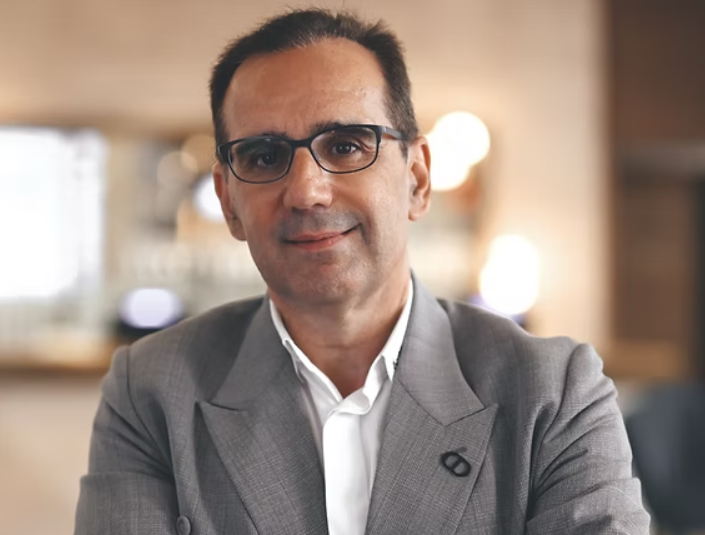

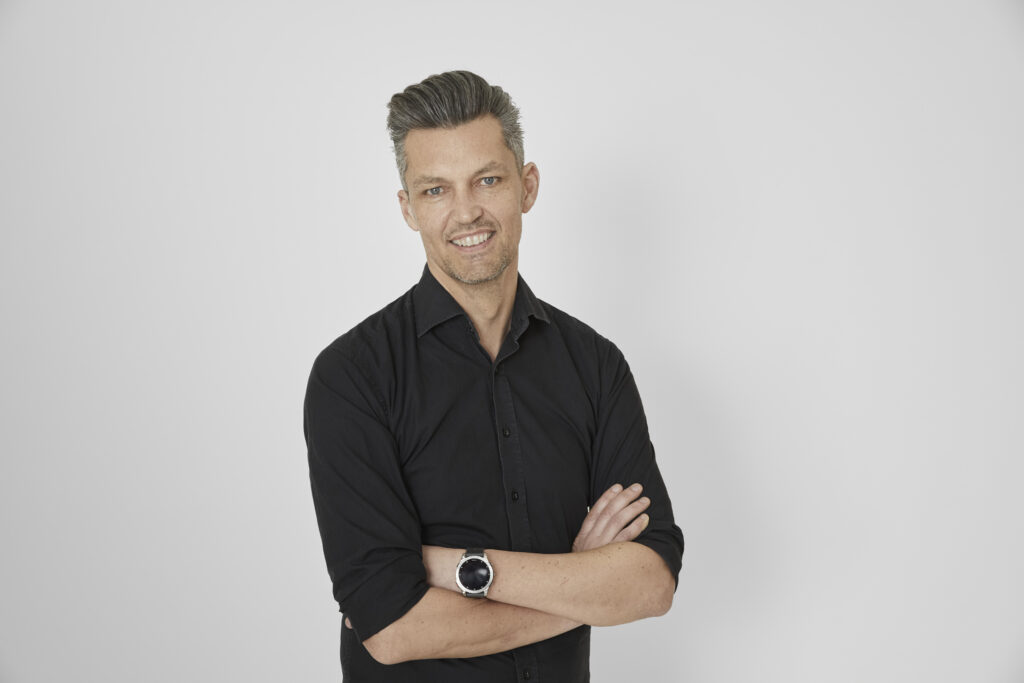
I recently went one-on-one with Rasmus Holst, CEO of Zensai. Rasmus is the co-author of The Human Success Playbook: A Leadership Tale for the Age of AI.
Adam: Thanks again for taking the time to share your advice. First things first, though, I am sure readers would love to learn more about you. How did you get here? What experiences, failures, setbacks, or challenges have been most instrumental to your growth?
Rasmus: The honest answer is: not through a straight line. I started as an engineer in Denmark, moved into telecoms, and then kept taking roles that forced me to understand a different part of the business: product, sales, operations, restructuring, and leadership. My career has taken me from larger companies such as Oracle to scale-ups, including Huddle, Wire, and now Zensai, and from Denmark to Luxembourg and Silicon Valley.
The difficult moments taught me more than the titles. I have watched an IPO run off a cliff when the market crashed in 2000. I have slept on the floor waiting for a major acquisition to complete. I have manually kept a demonstration alive during a country launch. Those experiences removed any illusion that strategy happens in a clean room. Leadership is often about staying useful when the plan is breaking.
One of my earliest lessons came before my first job. My car failed, so I ran six kilometres to the interview. My future manager told me he could read that as either terrible preparation or very good problem-solving. He chose the second interpretation. I have carried that with me: look at how people respond when something goes wrong. That often tells you more than what happens when everything works.
Adam: What are the key steps to growing and scaling your business?
Rasmus: The first step is focus. A scale-up rarely loses because it had too few ideas. It loses because it tried to execute too many at once.
Secondly, decide how you will distribute before you simply add more salespeople. Our product Zensai lived inside Microsoft 365 and Microsoft Teams, so we built around where customers were already working. We used local distributors to enter markets with existing relationships and market knowledge, rather than automatically hiring a country manager and building every region from zero. That model eventually included acquiring distributors in North America, Germany, and Australia. The principle was simple: meet customers where they are, de-risk expansion, and treat partners as part of the operating model, not as a side channel.
Thirdly, make the economics visible. Know the customer profile, the retention logic, the cost of growth, and what good looks like at each stage. Growth without operational truth is just optimism with a spreadsheet.
Finally, keep changing the play when the evidence says it is losing. I am motivated by progress and deeply frustrated by inertia, especially when a team continues hammering on something that is clearly not working. Scaling requires consistency, but it also requires the courage to stop, learn, and reallocate.
Adam: What is your best advice on building, leading, and managing teams?
Rasmus: Build a team that can tell you the truth quickly. I value direct, face-to-face feedback because talking is often the shortest distance between two people. You can hear whether difficult feedback is well-meant, ask questions, and decide what to do next. The alternative, polite ambiguity, is comfortable in the moment and expensive over time.
My first manager gave me another model I still value: put seasoned people together with ambitious people who are hungry to learn. I was the young engineer surrounded by veterans, and I learned tremendously from that mix. Experience creates judgment. Fresh energy challenges habits. The team becomes stronger when both groups respect what the other brings.
I also believe sustainable performance needs more than targets. People need a mission worth fighting for, clear measures, recognition from peers, and technology that removes friction rather than making them feel replaceable. At Zensai, that belief became Human Success: learning, engagement, and performance should reinforce one another rather than sit in separate HR processes.
Set a high bar, starting with yourself. Give people context and autonomy. Recognize the work, not just the final number. And when performance needs to improve, focus the conversation on the next action—not on turning one result into a judgment about the person.
Adam: What are the most important trends in technology that leaders should be aware of and understand, and what should they understand about them?
Rasmus: AI is the obvious answer, but “AI” is too broad to be useful. Leaders need to understand three shifts inside it. First, AI is moving from a tool to an operating model. It will not sit neatly inside IT. It will change how products are built, how customers buy, how marketing works, how managers coach, and how decisions are made. I have said publicly that I do not know exactly what sales and marketing will look like in two years. That uncertainty is not an excuse to wait; it is the reason to start learning now.
Secondly, context and trusted data will separate useful AI from impressive demos. An agent without the right company context can produce a fluent answer and still be wrong. Leaders, therefore, need to care about data ownership, governance, security, and the quality of the signals behind the recommendation. Our own work to unify departmental data rather than leave it scattered across separate reports reinforced how much of an AI transformation is really a data and operating-model transformation.
Thirdly, the human question is becoming more important, not less. If AI is introduced only as a cost program, trust will fall, and adoption will follow it. The better question is: how do we use AI to increase value per person, remove repetitive work, and help people build skills faster? I learned at Zensai that privacy and cybersecurity cannot be bolted on later. The same is true for AI. Trust, security, and human adoption are architecture decisions, not communications work after deployment.
Adam: What are the defining qualities of an effective leader?
Rasmus: Clarity, accountability, adaptability, and humanity. Clarity means people know what good looks like and why the work matters. I have very little patience for inertia caused by an unclear standard. A leader does not need to have every answer, but the team needs to understand the direction, the trade-offs, and the next decision.
Accountability means saying, “That is on me,” when it is. Teams notice immediately when leaders hide behind process or passive language. Ownership creates trust, and trust gives the organization permission to surface problems early.
Adaptability means being willing to change a losing play. I have worked through market crashes, restructurings, acquisitions, fundraising cycles, and major technology shifts. The leaders who struggle most are not always the least intelligent. Often, they are the most attached to the plan that made them successful yesterday.
Humanity means understanding that performance is delivered by people, not by a chart. Effective leaders combine ambition with recognition, direct feedback with respect, and urgency with enough calm for the team to think. I want to win, and I can get massively frustrated. Self-awareness matters because your energy becomes part of the operating environment. The job is not to become less ambitious. It is to make that ambition useful to others.
Adam: How can leaders and aspiring leaders take their leadership skills to the next level?
Rasmus: Take responsibility outside the function you already understand. I began as an engineer, but the experiences that developed me most pushed me into commercial, operational, and leadership questions. Being placed in unfamiliar roles taught me respect for what other functions contribute. It is easy to have a confident opinion about sales, product, finance, or customer success from the outside. It is different when you own the outcome.
Secondly, build a small group of people who will tell you the unfiltered truth. My preference is direct feedback, no filter, but with good intent. Leaders often become less coachable as their authority grows because the organization starts editing what reaches them. You have to actively reverse that.
Thirdly, review your own operating patterns. Where do you create clarity? Where do you create noise? Are you rewarding action, thoughtfulness, and teamwork, or merely the person closest to the final number? Are you changing the play when the evidence changes?
Finally, mentor and be mentored. I am still learning at every new stage of leadership. The goal is not to collect advice. It is to expose your assumptions to people with different experiences, make a decision, and then do the work. Leadership develops through reflection, but it is proven in action.
Adam: What are your three best tips applicable to entrepreneurs, executives, and civic leaders?
Rasmus: First, know what good looks like. Ambition without a clear standard produces activity, not progress. Define the outcome, the evidence, and the next milestone so people can make decisions without waiting for you.
Second, build leverage before you build cost. Our international expansion Zensai used the Microsoft ecosystem and local distributors rather than recreating the same company country by country. The application is broader than software: find the communities, institutions, platforms, and partners that already have trust, and create mutual value with them.
Third, never separate the system from the people who must use it. Whether you are introducing AI, changing a public service or restructuring a company, the strategy is incomplete until people understand it, trust it and can act within it. Technology can create efficiency, but only people turn efficiency into a better outcome.
Across all three, the operating principle is the same: be ambitious, stay close to reality and move. I have more patience for a thoughtful decision that needs adjustment than for endless discussion that avoids responsibility.
Adam: What are your best tips on sales, marketing, and branding?
Rasmus: Start with distribution, not promotion. The best product does not automatically win; the product that reaches the right customer in the right context often does. Zensai, being native to Microsoft 365 and Teams, was not just a technical choice. It shaped the route to market, the partner model and the customer experience. That Microsoft-first strategy gave us focus and leverage.
For sales, meet the buyer where the problem already lives. Do not begin with a feature tour. Understand the workflow, the friction, and the outcome the customer is trying to create. Then make the next step easy.
For marketing, have a point of view strong enough to exclude something. Generic relevance is another word for forgettable. When we evolved into Zensai, the important work was not the new name. It was the decision to move from a learning-software story to a broader belief in Human Success—connecting how people learn, perform, and engage in the age of AI.
For branding, make sure the promise survives contact with the company. If the external story says people matter, but the internal operating model says only the number matters, the brand is decoration. A strong brand is a choice repeated through product, culture, sales and customer experience.
Adam: What is the single best piece of advice you have ever received?
Rasmus: It came from my first manager, Svend Lauszus, although it was delivered more as a perspective than a slogan. My car would not start before the interview, so I ran six kilometres to get there. He looked at me and said: “I can take this one of two ways: either you are super unprepared, or you are really amazing at solving a tough situation.”
That stayed with me because leadership is full of moments that can be read in two ways. A missed target can be evidence that someone failed, or information that helps you improve the system. A difficult personality can be a problem, or a person whose energy has not yet been directed well. A market setback can be the end of the plan, or the beginning of a better one.
This does not mean lowering standards or explaining away poor execution. It means looking at the full response before forming the judgment. What did the person do when the car would not start? That is often where character, ingenuity, and potential become visible.
Adam: Is there anything else you would like to share?
Rasmus: The more AI we bring into work, the more deliberate we need to be about what remains human.