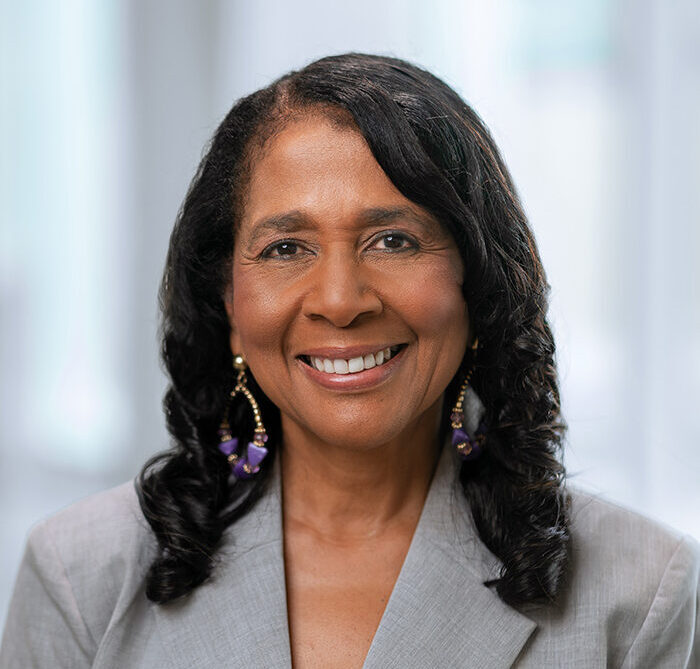


I recently went one-on-one with Sarah Chavarria, CEO of Delta Dental of California.
Adam: You spent much of your career in human resources before becoming CEO. What lessons from your background in HR have been most valuable to you as a CEO?
Sarah: My experiences in leading people taught me that there is a human dimension at the core of every business challenge. Early in my career, I helped leaders think through the people implications of a business decision. I learned that even the best strategies can fail if people don’t understand or believe in them, or if they don’t see where they fit into the organization’s vision. This taught me to see organizations as systems, not simply as functions, where strategy, technology, operations, sales, culture, and talent are interconnected. This gave me a front-row seat to see how organizations change, how trust is built, and how culture influences performance. Ultimately, my experience in human resources and seeing how people fit in every step of the way showed me why leadership is so important.
As CEO, when I look across our enterprise and think about what we need to do to get to where we want to go, the lesson remains the same: It starts with our people. My role now is to create clarity and align teams: to make sure employees feel connected to the purpose we’re trying to achieve together. Our purpose, to improve health by providing access to quality care, is part of our business strategy. During my eight years at Delta Dental of California and affiliates, we’ve built a purpose-driven enterprise that listens to and cares about its employees and stakeholders, leading to more than 90% talent retention and earning recognition as one of Forbes’ America’s Best Employers and Newsweek’s Greatest Workplaces. To me, that’s proof that investing in people and culture isn’t separate from business performance. Those are drivers of it.
Adam: What is the biggest difference between advising a CEO and being the CEO? Which part of the CEO role is most misunderstood?
Sarah: When you’re advising a CEO, your job is to provide expertise and recommendations. On the flip side, when you’re the CEO, your responsibility is to understand varying perspectives and make decisions on behalf of the entire company. That’s a very different challenge. I think the most misunderstood part of the role is that people assume CEOs are in charge of giving directions. In reality, I’ve found that much of the job involves asking questions, bringing the right perspectives into the room, understanding competing priorities, and helping people navigate ambiguity with confidence and clarity of purpose. This is where listening becomes an incredibly important leadership skill. As CEO, you must understand what’s on people’s minds and what information is unclear to them, so you can bring them along on the journey.
Adam: Since becoming CEO, what have you learned about leadership that you didn’t understand before?
Sarah: One thing I’ve always known, but appreciate even more as CEO, is how much energy people draw from purpose. I see this firsthand as our organization’s transformation journey is unfolding, from a traditional dental benefits organization into a health care company focused on oral health. Whether we’re launching the first menopause-specific dental benefits in the industry, working to integrate oral and overall health, or addressing the senior oral health crisis, our teams are most engaged when they can connect their daily work and contributions to something meaningful and larger than themselves. The ability to communicate that purpose to a team is at the heart of what leadership means to me.
Adam: What have been the biggest challenges you have had to navigate and what did you learn?
Sarah: Much of my career has involved helping organizations navigate change and one of the biggest lessons I’ve learned is that leaders often underestimate the human side of transformation. It’s easy to focus on the business case, the timeline, or the technology implementation. What’s harder is remembering that every change creates uncertainty for people. That mindset has become especially important as we’ve worked to evolve a 70-year-old organization to meet the needs of today’s health care landscape. Patients increasingly expect more connected and personalized health care, providers are navigating growing complexity, and the need to connect oral health and overall health is becoming clearer than ever. Adapting to those realities requires more than new strategies or capabilities. It requires helping people understand why change matters and how they can help shape it.
Early in my career, I was asked to communicate significant organizational changes to a group of employees. I quickly learned that people didn’t just want information. They wanted transparency and a chance to be heard. That lesson has stayed with me. Successful transformation is about how people experience change just as much as it is about what changes. I’ve also learned that progress is rarely linear. There are setbacks, resistance, and moments when things take longer than expected. The key is to remain focused on the long-term vision while staying flexible about the path you take to get there.
Adam: How can leaders drive change within large, established organizations? How can leaders keep employees engaged during periods of transformation?
Sarah: First, leaders must create a compelling reason for change. People need to understand not only what is changing, but why it’s necessary for the organization’s future success. Otherwise, it’s difficult to build momentum.
Second, transformation cannot be driven only by the executive team. The most successful change efforts distribute ownership across the organization and actively involve employees in shaping the future. Most of the time, the best ideas don’t come from the executive suite; they come from the people closest to customers, operations, and the day-to-day realities of the business. I firmly believe that all the answers exist and sit in the organization. That’s why we created six small, agile Tiger Teams focused on some of the strategic priorities that required timely, in-depth attention and insights. Team members dedicated approximately 90% of their time to the effort for several months. It sent a clear message that transformation wasn’t something happening to employees. It was something employees were leading.
Third, leaders have to remember that every transformation is experienced at an individual level. Behind every organizational chart, strategy document, and transformation plan are people asking themselves: What does this mean for me? What does success look like? What is my place in the future we’re building? One of the biggest characteristics of an effective leader is acknowledging employee concerns directly and creating space for honest conversations rather than assuming everyone will move at the same pace. As part of this, communication during periods of change must be a dialogue, not a series of announcements. This means creating opportunities for employees to ask questions and share ideas. When people feel heard and included, they become participants in transformation rather than recipients of it.
Adam: What are the most important trends in technology that leaders should be aware of and understand? What should they understand about them?
Sarah: Artificial intelligence is clearly one of the most important technologies leaders need to understand, but I think many organizations are asking the wrong question. The question isn’t, “How do we use AI?” The question is, “How do we leverage technology to help solve meaningful problems for the people we serve?” In health care, one of the most exciting opportunities involves creating stronger connections across fragmented systems. For example, nearly 30 million Americans visit their dentist each year but do not see a primary care physician. That’s a tremendous opportunity to advance dental-medical integration by leveraging technology, data, and integration to identify health risks earlier between providers, improve care coordination, and create a more complete picture of a patient’s health.
At the same time, leaders need to avoid confusing experimentation with transformation. Adopting a new tool is not the same as fundamentally improving outcomes. Particularly in health care, innovation must be balanced with accountability. Technology should strengthen human judgment, not replace it. The organizations that create lasting value will be those that use technology responsibly while keeping trust and human connection at the center.
Adam: What are your three best tips for emerging leaders?
Sarah: 1. Stay curious. The best leaders are continuous learners. Ask questions, seek new experiences, and don’t limit yourself to your functional area of expertise. Curiosity helps you spot opportunities, understand different perspectives, and continue growing throughout your career.
2. Build relationships early. Leadership is built on trust. Invest in relationships early and take time to understand different perspectives. Strong relationships create the foundation for collaboration, especially when you’re navigating challenges or leading through change.
3. Stay flexible. Some of the best opportunities and solutions are the ones we don’t see coming. Early in my career, I thought success meant having all the answers and sticking to a carefully defined plan. Over time, I’ve learned that effective leaders remain open to new ideas, challenge their own assumptions, and adapt when circumstances change.
Adam: What are your three best tips for senior leaders?
Sarah: 1. Make listening a competitive advantage. As leaders become more senior, it’s easy to become separated from frontline realities. Create opportunities to hear directly from employees, customers, and partners.
2. Think beyond today’s performance. Strong leaders deliver results in the present while preparing their organizations for the future. Make time to understand emerging trends and long-term shifts.
3. Build up your leaders. One of the most important responsibilities of senior leadership is fostering leadership development throughout the organization. Your impact multiplies when you help others succeed.
Adam: Is there anything else you would like to share?
Sarah: The last thought I’ll leave with is that leadership is ultimately an act of possibility. Throughout my career, the most meaningful progress I’ve seen has come from people who were willing to challenge long-held assumptions and ask a simple question: What if there’s a better way? What if we stopped treating oral health as separate from overall health? Nearly 30 million Americans visit a dentist each year but don’t see a primary care physician. At the same time, conditions like cardiovascular disease, diabetes, and oral cancer often leave early clues in the mouth. Yet our health care system still treats these interactions as largely separate. What if payers, providers, and community organizations worked together more intentionally to improve outcomes? What if we saw every dental appointment as an opportunity for preventive health care?
What if we treated menopause as the whole-body health issue it is? Today, 84% of women over age 50 are unaware that oral health symptoms they experience may be related to menopause. That’s not just an awareness gap. It’s a health care gap. Those are the kinds of questions that drive me every day. The future belongs to leaders who are willing to think beyond the systems they inherited. My job is to help create an environment where people feel empowered to question the status quo, pursue bold ideas, and make a meaningful impact on the lives of others. That’s what leadership means to me.