
Choosing a workplace culture speaker starts with identifying what your organization needs to improve. You may want managers to address problems sooner, colleagues to work more effectively across departments, or employees to take greater ownership of the customer experience. The speaker’s expertise should connect to those needs and give your audience practical ways to respond. I’ve conducted thousands of interviews, including with more than 500 of America’s most successful leaders, exploring how their decisions shape their organizations. Those conversations inform my approach to speaking and my perspective on what an organizational culture speaker can bring to an event.
The top workplace culture speakers to book in 2027 are Adam Mendler, Hubert Joly, Indra Nooyi, Alan Mulally, Doug Conant, Horst Schulze, Cheryl Bachelder, and Garry Ridge. Below, I explain what each one is known for and how to choose the right fit for your event.
What a Workplace Culture Speaker Does and Why It Matters
A workplace culture speaker helps leaders examine how their decisions and practices affect employees and the way work gets done. Through a keynote, workshop, or facilitated discussion, the speaker can help an audience recognize problems, consider different approaches, and identify changes to make within their own teams.
Culture also shows up in business results. Gallup’s State of the Global Workplace: 2026 report found that only 20% of employees worldwide are engaged, the lowest level since 2020, and that engagement among managers fell from 27% to 22% in a single year. Separately, research published in MIT Sloan Management Review during the Great Resignation found that a toxic corporate culture was the strongest predictor of attrition among the companies studied, roughly ten times more powerful than compensation. The findings give leaders reasons to examine employees’ experience of the workplace, including how they’re managed, supported, and treated.
The Top Workplace Culture Speakers for 2027
These eight workplace culture speakers bring different perspectives on leadership, from lessons drawn across industries to experience leading major companies. Their expertise spans trust, accountability, service, engagement, and purpose. They sit alongside the wider field of top motivational speakers worth considering.
Adam Mendler
Adam Mendler is a leadership keynote speaker and the creator and host of the podcast Thirty Minute Mentors. He has conducted thousands of interviews, including with more than 500 of America’s most successful leaders, and he teaches graduate-level leadership courses at UCLA. His keynotes connect lessons from those conversations to how leaders build trust, accountability, and a healthy culture, and he tailors each talk to the organization he’s working with. You can book Adam to speak or listen to Thirty Minute Mentors to hear the source material firsthand.
Hubert Joly
Hubert Joly is the former chairman and CEO of Best Buy, where he led one of the most studied turnarounds in retail, and he’s the author of The Heart of Business. His keynotes center on purpose-driven leadership and what he calls human magic, the idea that strong results follow when people are energized and connected to meaningful work. When I interviewed him on Thirty Minute Mentors, he made the point that you change a culture by changing behavior, starting with your own: if you say people matter, you prove it by spending your time with the front line. His perspective is particularly relevant to leadership teams working to improve performance while rebuilding employees’ confidence in the organization.
Indra Nooyi
Indra Nooyi is the former chairman and CEO of PepsiCo and the author of My Life in Full. She’s best known for Performance with Purpose, her framework for tying financial results to the long-term interests of employees, customers, and communities. She has also spoken and written about concrete ways to recognize employees and acknowledge their families’ contributions, including her practice of writing to the parents of her senior executives. Her perspective is relevant to leaders balancing business demands with the responsibilities employees have outside work.
Alan Mulally
Alan Mulally is the former president and CEO of Ford, where he led a major turnaround, and he previously served as president and CEO of Boeing Commercial Airplanes. His signature contribution is the Working Together management system, built around a weekly review where leaders surface real problems in the open instead of hiding them. He speaks on creating a culture of transparency, teamwork, and accountability, which makes him especially relevant to leaders trying to make it safe to tell the truth at work.
Doug Conant
Doug Conant is the former president and CEO of Campbell Soup, where he led a turnaround of both the company’s performance and its culture, lifting employee engagement from among the worst in the Fortune 500 to among the best. He’s the author of TouchPoints and the founder of ConantLeadership. When I interviewed him on Thirty Minute Mentors, he summed up his philosophy simply: you can’t win in the marketplace until you win in the workplace. His practice of writing more than 30,000 handwritten notes to employees illustrates how leaders can make recognition a consistent part of their work.
Horst Schulze
Horst Schulze is a co-founder and the former president and COO of The Ritz-Carlton Hotel Company, and the author of Excellence Wins. He built the service standards that helped make Ritz-Carlton the only hotel company to win the Malcolm Baldrige National Quality Award twice. His keynotes focus on creating a culture of uncompromising service by selecting people carefully, giving every employee real responsibility, and treating them as professionals. His approach is particularly relevant to organizations where frontline employees make decisions that directly affect customers.
Cheryl Bachelder
Cheryl Bachelder is the former CEO of Popeyes Louisiana Kitchen, where she led a turnaround built on servant leadership, and she’s the author of Dare to Serve. Her approach centers on serving the people who do the work, in her case the franchisees and restaurant teams, while holding everyone to high standards. Her keynotes examine how leaders can support the people responsible for results while setting clear expectations for performance.
Garry Ridge
Garry Ridge spent more than two decades as president and CEO of WD-40 Company, where he built what he calls a tribal culture with unusually high employee engagement, and he now teaches those lessons through The Learning Moment. He’s known for treating mistakes as learning opportunities rather than failures. His keynotes explore how leaders can encourage employees to raise concerns, share ideas, and learn from mistakes.
Thinking about who would fit your audience best? Book Adam to Speak.
How to Choose the Right Workplace Culture Speaker for Your Event
A demo reel and an available date are starting points. You also need to understand how the speaker’s expertise fits your audience.
- Match the speaker to your specific culture problem. Horst Schulze’s emphasis on service culture and Doug Conant’s emphasis on employee engagement offer different starting points. Name what you want to improve before you build a shortlist, so you’re matching expertise to need.
- Look for relevant experience and practical application. Ask how the speaker has developed their expertise and how they would apply it to your audience’s challenges. Examples should help participants understand a decision or practice they can examine in their own organization.
- Ask how the talk will be prepared. Discuss the audience’s responsibilities, the challenges prompting the event, and what you want participants to take away. Ask how that information will shape the session.
- Look for culture tied to business outcomes. The strongest culture speakers connect their message to engagement, retention, and performance, and can explain how culture affects those results.
- Plan for what happens after the keynote. Culture changes through reinforcement over time. Decide who will lead the follow-up discussion and how participants will apply the ideas to current work.
The table below maps common culture challenges to what you should look for, which makes it easier to narrow the list above to the right person for your room.
| Your culture challenge | What to look for in a speaker | Best fit for |
| Turning around a struggling culture | Relevant turnaround experience and practical lessons on changing leadership behavior. | Senior leadership |
| Building a service or customer-experience culture | Expertise in service standards, frontline decisions, and employee development. | Organizations with large frontline teams |
| Rebuilding trust and transparency | Practical approaches to encouraging candor and responding constructively to problems. | Executive and management teams |
| Lifting employee engagement and recognition | Specific practices for recognition, listening, and employee involvement. | HR and people leaders |
| Leading with purpose and values | Examples connecting organizational purpose to priorities and decisions. | Executives, all-company meetings |
| Putting people first through servant leadership | Practical lessons on supporting employees while maintaining accountability. | Mission-driven teams |
For more on what actually builds a strong culture, I wrote about how great leaders build cultures people love in a separate piece.
Why Booking a Culture Speaker Is a Leadership Decision
When a keynote is part of leadership development, its purpose should be clear to the people attending. Identify which responsibilities the session will address and what participants should be better prepared to do afterward. Managers may need help discussing performance, responding to concerns, or setting expectations across teams. Defining those needs gives you a stronger basis for choosing a speaker and evaluating the session’s usefulness.
Speakers can develop valuable expertise through leading organizations, researching workplace behavior, or drawing lessons from leaders across industries. For an event planner, the question is how well the speaker can connect that knowledge to the audience’s responsibilities. Ask for examples of the decisions and practices the session will help participants examine.
In my keynotes and workshops, I help leaders apply lessons from my interviews to the challenges their teams face. As Juliana Balich, a Threat Intelligence Analysis Lead at Google, put it after one of my sessions: “Adam did a wonderful job guiding our team through leadership training. He was personable, knowledgeable, and easily facilitated discussion among our group. Adam has built valuable insights and expertise through interviewing top leaders across several industries. Would definitely recommend him to other teams!” A facilitated discussion gives participants time to examine how the ideas apply to situations they’re handling.
Ready to bring a culture-focused leadership session to your team? Book Adam to Speak.
Frequently Asked Questions
Who are the top workplace culture speakers for 2027?
The top workplace culture speakers for 2027 include Adam Mendler, Hubert Joly, Indra Nooyi, Alan Mulally, Doug Conant, Horst Schulze, Cheryl Bachelder, and Garry Ridge. Their expertise covers leadership behavior, service, engagement, transparency, purpose, and servant leadership.
How much does it cost to book a workplace culture speaker?
Fees vary widely and depend on the speaker’s profile, the format, the length of the engagement, and travel. Because there’s no standard rate, the best approach is to describe your event and request a quote from the speaker or their representation.
What is the difference between a workplace culture speaker and a motivational speaker?
There’s real overlap. Many workplace culture speakers are motivating, and many motivational speakers touch on culture. The main difference is one of focus. A workplace culture speaker focuses on the leadership habits, values, and daily practices that shape how people work together. The session should give leaders specific changes to consider within their teams. If your main goal is improving how your people work together, a culture speaker is the more targeted choice.
Should you book a keynote or a workshop for culture change?
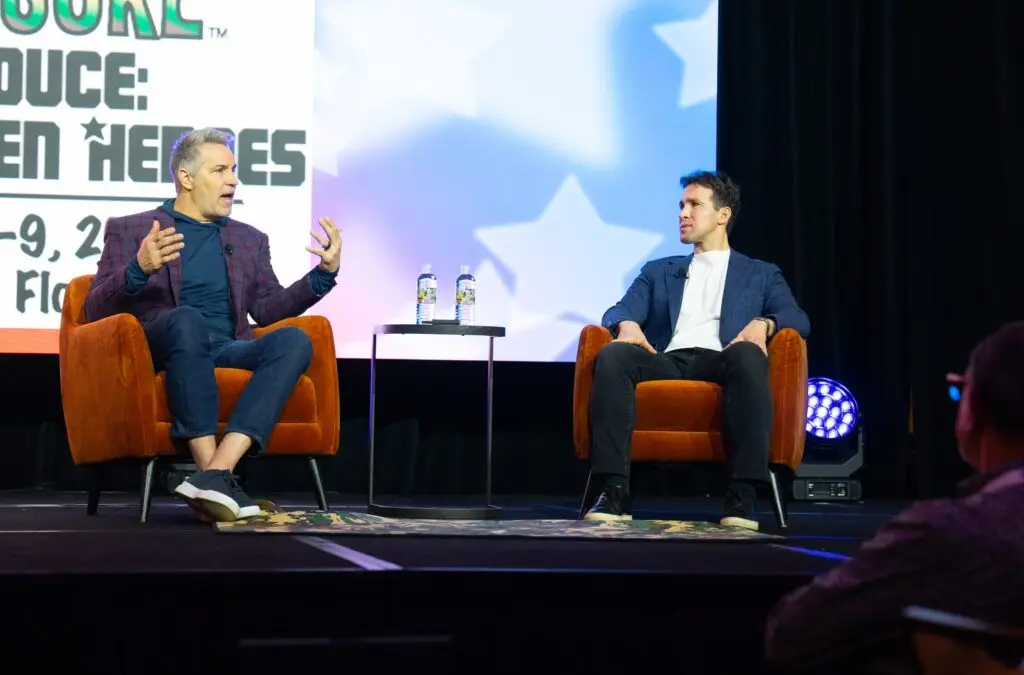
A keynote can introduce ideas and establish shared priorities across a large audience. A workshop gives participants more time to examine situations, practice skills, and discuss how they’ll apply what they learn. A fireside chat can explore a leader’s experience through focused questions. Choose the format based on the audience size, the time available, and what participants need to do during the session. Plan how the organization will reinforce the learning afterward.
How far in advance should you book a workplace culture speaker?
In-demand speakers often fill their calendars months ahead, so it’s worth reaching out early, especially for popular dates in the spring and fall conference seasons. Booking early also gives the speaker time to prepare for your audience and event.
Before booking a workplace culture speaker, agree on what you want the session to help your leaders do. Discuss those needs with the speaker, ask how they would approach them, and plan time afterward for participants to apply the ideas to their teams. Those decisions connect the event to the work your organization needs to improve.