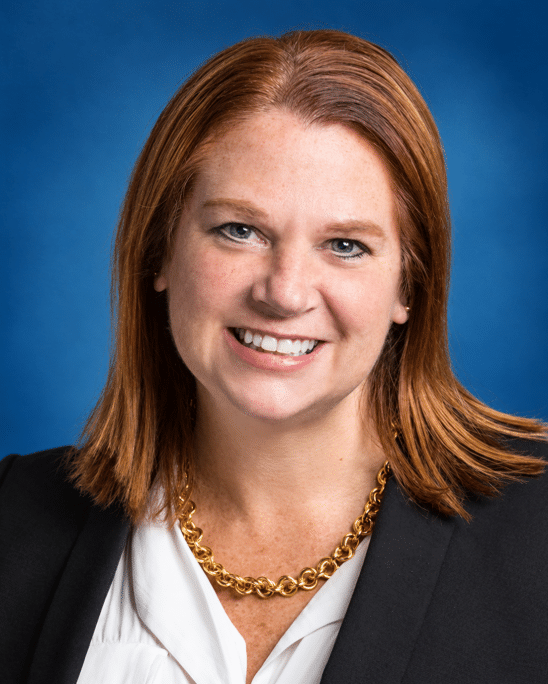

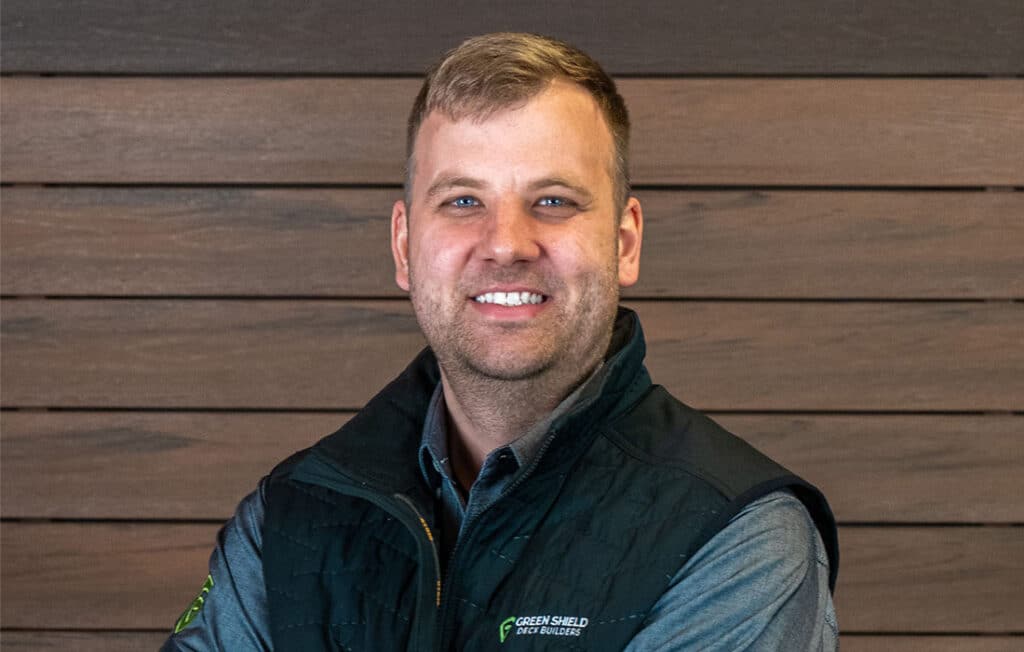
I recently went one-on-one with Adam Rought, founder and CEO of Green Shield Deck Builders.
Adam Mendler: Thanks again for taking the time to share your advice. First things first, though, I am sure readers would love to learn more about you. How did you get here? What experiences, failures, setbacks, or challenges have been most instrumental to your growth?
Adam Rought: I am a fourth-generation builder from Greenville, Michigan, so you could say construction is in my blood. I actually still live in a house my dad helped me build. My journey really took a turn during my time working as an insurance adjuster and real estate inspector. Day in and day out, I saw failing outdoor structures, rotting wood, sagging frames, and warped materials. It was incredibly frustrating to watch homeowners pay the price for poor workmanship and material choices.
I came to believe that taking shortcuts was an industry-wide failure. I noticed a trend where contractors tried to do it all: quoting a roof on Monday, laying tile on Wednesday, and framing a wood deck on Friday. That lack of focus led to outsourced labor, missed deadlines, and ultimately, failing structures. In 2017, while building my own home, I realized that I loved the challenge of finding the best materials for outdoor spaces. I became obsessed with finding the best materials for my home and it pushed me to start my own business in 2018.
Early in the business, I hit a setback that nearly broke our company. We discovered a critical manufacturing flaw in the first generation of our wood-free composite deck boards. The defect came straight from the supplier, not our craftsmanship, but the liability was on our shoulders. We had backed every project with a lifetime warranty.
Most folks in the trades advised me to wait and see. Their advice was only deal with complaints as they trickle in, blame the supplier, or hide behind warranty loopholes. I refused. Homeowners had trusted us with their outdoor spaces; we could not just sit back and wait for structural failure to happen.
Instead, I made the painful and expensive call to take the financial hit. We proactively contacted every single homeowner from the initial batch of projects. Before widespread problems could surface, our crews went back and replaced all those deck boards with our upgraded, next-generation product, completely free of charge. Taking that financial beating early on was a serious challenge, but it forged our entire company culture. The experience proved to our team that accountability means taking total ownership, setting the standard, and thinking differently than anyone else in your industry.
Adam Mendler: How did you come up with your business idea? What advice do you have for others on how to come up with great ideas?
Adam Rought: The idea for Green Shield Deck Builders was born out of a refusal to accept the shortcuts I kept seeing in the trades. I realized that if you just focused on one specific niche, you could actually master the building science and deliver something permanent that wouldn’t rot or fail. You could even build projects that last a lifetime.
My advice for coming up with great ideas is to look for the things people just accept as “normal” inconveniences and refuse to accept them. When I talked with people, they thought it was completely normal to spend their summers power-washing, staining, and replacing warped deck boards. I thought that doing all that work every year was crazy! So my advice is, find a problem that everyone has resigned themselves to living with, and figure out how to eliminate it entirely. Ask yourself, “What can you do to make people’s lives better in a way they didn’t expect?”
Adam Mendler: How did you know your business idea was worth pursuing? What advice do you have on how to best test a business idea?
Adam Rought: I knew deck building was worth pursuing because demand was staring me in the face at every inspection call. I was constantly seeing the financial and emotional toll that failing construction took on families. When I built my own deck surrounding my pool, I saw firsthand that building it right required a level of focus most generalists just wouldn’t commit to.
If you want to test a business idea, test it by narrowing your focus until it hurts. Put all your chips on one specific offering. If the market responds because you are the absolute best at that one thing, you have a viable business. Don’t dilute your testing by offering a dozen different variations of a product or service.
Adam Mendler: What are the key steps you have taken to grow your business? What advice do you have for others on how to take their businesses to the next level?
Adam Rought: The most pivotal step I took was choosing to niche down to scale up. We literally turned away all other types of work. It sounds counterintuitive to turn down paying jobs, but it allowed us to become hyper-focused.
Another massive step was ditching the subcontractor model. So many subcontractors end up ghosting homeowners because they don’t have full control of their process from start to finish. We moved to a completely in-house, W2 employee model. This gave us total control over the process, logistics, and innovation.
To anyone looking for advice on leveling up, stop relying on third parties who don’t share your core values. Take ownership of your labor and your supply chain. We even launched a distribution center in my hometown just to streamline our logistics and bring jobs back to the local community.
Adam Mendler: What are your best sales and marketing tips?
Adam Rought: Lead with education and community value, not a hard pitch. For us, that meant offering free safety checks to every homeowner. Each year, thousands of people are injured on decks in the United States. We took that belief and joined forces with the North America Deck and Railing Association (NADRA) to help raise awareness. This kind of marketing builds incredible trust because you are providing real value before you ever ask for a dime.
Stand behind your work no matter what. We tell homeowners that if something goes wrong, we’ll make it right. When your messaging boils down to, “we take total ownership,” homeowners become your best salespeople. After buying from us, people confidently promote our business because they know the work will be done right and last a lifetime.
Adam Mendler: In your experience, what are the defining qualities of an effective leader? How can leaders and aspiring leaders take their leadership skills to the next level?
Adam Rought: Refuse to accept the status quo. In my experience, leadership is about making a real-world impact, just as much as it is about scaling up. True leaders elevate the standards of everyone around them. From the clients you work with to the communities you work in, every day is an opportunity to make an impact.
Be driven by curiosity. Even as your business grows and demands more from you, don’t forget to keep innovating. Innovation is what sets good leaders apart from those who are only participating.
Bring jobs back to your hometown. To take your skills to the next level, you need to connect your vision to your community. Your business growth should benefit the people around you. Make decisions that don’t just improve your bottom line, but actually create career opportunities and better the local economy.
Adam Mendler: What is your best advice on building, leading, and managing teams?
Adam Rought: Figure out how to smooth out the seasonal or cyclical dips in your industry. By keeping my crews working year-round, their skills stay sharp, they can provide for their families, and they feel like an important part of the business. In the trades, it’s common for crews to take a long break over the harsh winter months. Many competitors lay off teams and never hire them back. We decided to flip that on its head. Our construction schedule is planned ahead geographically with specific projects that can be built right through Michigan’s freezing winters.
Adam Mendler: What are your three best tips applicable to entrepreneurs, executives, and civic leaders?
Adam Rought: First, don’t try to do everything. Specialization improves outcomes. When you try to be everything to everyone, you end up doing nothing well.
Second, reject the shortcuts. Whether it’s the materials you use or the way you treat your staff, cutting corners always catches up to you.
Third, build your business with your community in mind. As you scale, look for ways to create local jobs. Your hometown is where you come from and should benefit from your success.
Adam Mendler: What is the single best piece of advice you have ever received?
Adam Rought: If you build it, you own it, plain and simple. Growing up around builders, the most valuable lesson I absorbed was that you have to take absolute ownership of your work. It’s easy to point the finger when something goes wrong, but peace of mind only comes when you take responsibility for the entire process.
Adam Mendler: Is there anything else you would like to share?
Adam Rought: Keep dreaming bigger. Never lose the sense of play that got you started in the first place. Even with the business growing, I still love being hands-on. In my spare time, I’m usually out in my own backyard repurposing leftover materials. And honestly, if you ask me what my five-year goal is, I’ll probably laugh and tell you it’s to build the largest deck in the world right in my own backyard.