
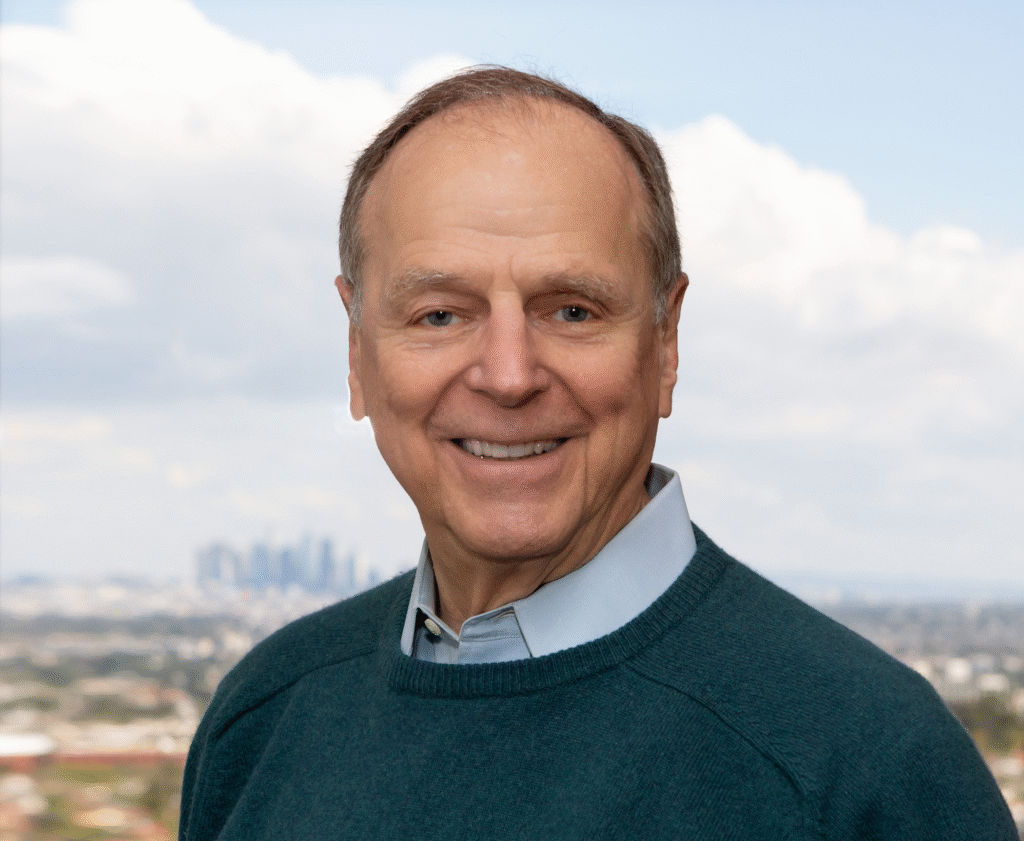
I recently interviewed Major League Soccer Founder Alan Rothenberg on my podcast, Thirty Minute Mentors. Here is a transcript of our interview:
Adam: Our guest today led the growth of soccer in the United States. Alan Rothenberg was president of U.S. Soccer, the governing body of American soccer, where he oversaw the 1994 FIFA World Cup and the 1999 Women’s World Cup in the United States, and founded Major League Soccer. Alan is a member of the National Soccer Hall of Fame and is the author of The Big Bounce: The Surge That Shaped the Future of U.S. Soccer. Alan, thank you for joining us.
Alan: My pleasure.
Adam: You grew up in Detroit as a big sports fan, and you stayed in Michigan to go to college and to go to law school at the University of Michigan before moving to Los Angeles to practice law. Can you take listeners back to your early days? What early experiences and lessons shaped your worldview and shaped the trajectory of your success?
Alan: Well, I grew up in a typically liberal, Democratic, middle-class Jewish family, so I started out inheriting all the values that are subsumed within that description. Met my wife, Georgina, who had a similar background. We got married before I started law school. Unheard of these days, but in those days I was barely 21, and she was 20 by a week, and we had a great experience living together while going to law school, and she going out to teach to support me going to law school. And then we were fortunate enough to be able to come to Los Angeles, where we’ve never left, and join O’Melveny & Myers, which was then the leading law firm and oldest, most prestigious law firm in Southern California. And so I had all those things blended together that gave me the internal soul, if you will, and knowledge that really has helped launch me into the multiple careers that I’ve enjoyed.
Adam: I love it. Definitely a different era, and sounds very similar to the journey that my parents had. They got married extremely young, right before my dad went to law school, and they both moved to Los Angeles, and my mom supported them as a teacher. So a familiar story.
Alan: Yeah, I like to say that we experienced life in the sweet spot in time. Growing up in Detroit in the post-World War II era was unbelievable. The country was booming. Detroit, because of the production following the war, was a phenomenal city. There were worldwide crises, and obviously there was the beginning of old civil rights issues. But at the same time, it was an idyllic situation to grow up in. We didn’t feel the burden of any of that, and so it was just joyful. There weren’t drug issues. There weren’t obvious crime issues. There were homeless, but they called them bums, and they lived by the railroad tracks, so they weren’t spread out throughout the community. So it was, as they say, a sweet spot in time.
Adam: You moved to Los Angeles. You’re practicing law. You’re a big sports fan, and as it turns out, you wind up working on legal matters for different clients in the world of sports, including Jack Kent Cooke, who was the owner of the Lakers before selling the team to Jerry Buss. Can you take us back to that point in time? What did you learn from that experience? What did you take away?
Alan: Well, to start out with, the experience is the decision to join him in the first place, to leave the law firm and go to work full-time for Mr. Cooke because I had that opportunity. He had a well-deserved reputation as being a very difficult person to work for, and so it was: Do I leave the law practice, go to work for him, and probably inevitably, in a reasonably short period of time, he’ll chew me up and spit me out, and I’ve got to start all over again? On the other hand, I said to him, “If I don’t do this, I’ll look back over my shoulder for the rest of my life and say, ‘What if?'” And so it was, you know, I’m going to do it. In a way, that was the first; I didn’t think of it that way, but later on, looking back, my first sort of entrepreneurial decision, that I was willing to take the risk, which I think any entrepreneur has to. Looking at the upside, looking at the downside, and ultimately decide: Take the risk.
I learned so many lessons from him, including your whole education in law school and your early law practice is whatever decision or position you want to take, you have to have a rational reason to pursue it. You’ve got to back up your argument. What I learned from him was the business part of it. If you’ve got the leverage, forget about reasoning. You can try to smooth-talk somebody and let him off easy, if you will. But if you’ve got the leverage and he wants something, you use the leverage.
Over the years, I certainly learned a lot from him. But from a style standpoint, I’m a more gentle person. So when I am asserting leverage, I don’t think I make it hurt the other person, whereas a guy like Cooke was, you were either a winner or a loser and nothing in between. So I learned an awful lot from him, and I learned a business side. I never grew up with a business background at all. My father was a pharmacist and had a corner drugstore, so I guess I understood small business. But in terms of major financial issues and big corporate-type business issues, those were foreign to me, and I learned a lot from Cooke.
I also learned one of the great things that he did in the sports world because it wasn’t just the Lakers. They also had the Kings, and I was there when they started the Kings. He built the Forum. He owned a minority piece of the Washington Redskins, but ultimately became the 100% owner of the Washington Redskins. But the one thing that he always did is he understood the value of a superstar, and that if you really want to be both a winner and also popular, you can congregate the other pieces. But you need that superstar, and he kept always repopulating his teams with superstars.
Adam: Alan, you shared so much there that I would love to unpack. You started off by talking about the decision to leave what very well could have been a very lucrative career as a lawyer working for a highly prestigious law firm on the partner track, and you can enjoy success in your career without taking any kind of major risks. But that level of success is going to be capped, and taking risk isn’t always going to pay off. In fact, there are many times that I’m sure in your career, maybe we could talk about them in my career, where taking risks have led to setbacks, but without being willing to take risk, you’re never going to achieve real, meaningful success.
You spoke about the importance of leverage, learning business from a different perspective. So much of learning takes place on the job. You can go to law school. I went to business school, but learning takes place in the school of hard knocks. Having a mentor like Jack Kent Cooke, who taught you, who showed you the way, helps accelerate that process in a substantial way. Last thing I want to touch on: you mentioned Jack Kent Cooke’s style in contrast to your style, and you were able to learn so much from him, so much from being around him. But that didn’t necessarily mean that your best move was trying to copy him. You understood that you had your own unique style, and the only way you were going to be successful, the only way any of us are going to be successful, is by being our authentic selves.
Alan: Absolutely. The early years of law practice, and I was a litigator, you’ve got to be the toughest guy in town. And then with Mr. Cooke, who had this incomparable attitude in business, I was trending in that direction. But when I left Mr. Cooke and went back into the law practice, it just intuitively dawned on me. It wasn’t like a bell rang, that I wasn’t really comfortable doing that. That wasn’t me. And as you point out, the authentic me is I’m a nice guy. And I also realized that, you know what, you could probably accomplish more dealing with the other side by being polite to them rather than swearing at them and calling every name in the book, so you can have an open and rational discussion.
Let me just backtrack a second because I also learned two other risk issues with Mr. Cooke. One, kind of the hard way. At one point, I tried to put together an NBA expansion team in Houston, Texas, and on the eve of what I thought was going to be the closing, it all fell apart. That was the first time I knowingly took a business risk. I was devastated. I came back. It was a Friday night, and I was ready to just get in bed, put a pillow over my head, and stay that way forever.
I always used to go to the Laker games with Mr. Cooke at that time and sit down on the floor with him, and I called and told him I couldn’t do it. He said, “You get down here. You didn’t do anything wrong. You did your best. You have nothing to be ashamed of. You come sit here.” And so I did, and I realized nobody threw rotten tomatoes at me. Nobody was calling me names. I did my best. I tried. Unfortunately, it didn’t work out. But life goes on.
And the other thing he said, it was a very simplistic way of putting it. He said that most people make three decisions in their life, and that is getting married, getting a house, and getting a car. You know, these are simpler times, obviously. And he said if you make a mistake on one of those, particularly your spouse and the house, it could be fatal to your personal well-being, so people have to be careful about what risks they do take. And if you take the right risks, you can be very successful.
One more kudos to that too. He did talk, and it was interesting. He was talking about lawyers and other people. He said that the more educated you are, and partly this is coming from a bias because he never passed high school because he had to go to work during the Depression, but he said the more educated you are, the less likely it is you’re going to take a serious risk because, first of all, you’re putting at risk all those years of schooling and practicing your career, and secondly, you’re too smart for your own good. You start detailing every risk that’s possible, and it scares you off. So a lot of interesting lessons.
Adam: And to add a little bit more context, after your days of leading soccer in the United States, you joined the banking business as an entrepreneur. You built two banks. You sold two banks. What advice would you give to anyone listening to this conversation on how to assess risk, when to take risk, when not to take risk?
Alan: Well, one is to assess what the opportunity is. So, in the case of the banks, let me just talk about the most recent one, when we started First Century Bank 22 years ago. At that point, banking had become so commoditized, if you will, that old-fashioned relationship banking was disappearing. And I had enough colleagues, enough clients, and I guess personally, to realize that there are so many people that aren’t big major corporations. They’re entrepreneurs themselves. They’re professionals. They’re small businessmen. They really want to have an old-fashioned relationship with a bank, and so I saw that.
I heard it from, I would talk to clients as I was thinking about starting a bank. I’d say, “Who’s your banker?” And they’d say, “You know, I had this nice guy. He’s really good. And then I got a letter that he was being transferred, and my new banker, I don’t even know who he is.” That was sort of the attitude, and so it seemed to me like there was an opportunity and a need.
And then it’s very interesting because we raised the money for that bank. We did not use any investment bankers. Basically, I raised the money through friends and family, and it’s a great lesson that I try to dictate to young people as they’re going through their life, and that is the issue of reputation. I call it building a mosaic. You put in a tile at a time until you have a full picture, and you can have a few tiles on the perimeter fall out, and it’s okay. But if a tile from the middle falls out, it all disappears.
And fortunately, I had by that time built a career where I had the kind of reputation that had people being confident that if they invested with me, they felt comfortable. In fact, I had one person that I went to solicit who was a very, very smart, very savvy investor. I started to give him the whole pitch on what was involved with banking, and he said, “Stop, Alan.” He said, “I’m buying preferred stock in Alan Rothenberg. I don’t need to know the deal at all.”
And I think that that’s a real good lesson for people, regardless of what you’re going to do. The earlier thing that we talked about, authenticity, and then over a lifetime, building that good reputation so that whatever it is that you want to go out and do, especially something entrepreneurial, people have confidence and trust, and you can be successful. And by the way, they’ll also forgive a mistake because they know it came from an honest and thoughtful background. It wasn’t some crazy thing, and it wasn’t something that was questionable ethically or legally. So unfortunately, not every business decision is successful.
Adam: How do you build that reputation?
Alan: Boy, it’s day in and day out, just how you operate. I tell young people when they ask me for advice, I say, work as hard as you can, do it honestly, do it with integrity, and you’ll go far. Whether it means moving up the ladder in the company that you’re in, or people start to know you, learn you, and in the best way you are recruited to go elsewhere, or you go off on your own. But at that point, you’ve been exposed to enough people who do understand that they can trust you.
Adam: Was there a moment in your career when you faced an ethical challenge where you were staring at a situation and had to decide: Do I do this? Do I do that? And your integrity is on the line, depending on whether you go left or you go right, and you went right and it worked out, or you went left and it didn’t work out?
Alan: There must have been, but honestly, as you ask me that, I can’t think of one that was like a seminal decision. And again, part of it is back to your original question. It’s what’s built inside you. You almost know intuitively, instinctively, that this is right and this is wrong. So it isn’t one where you have to debate anything. You just know this is the right, in a sense, ethical way to go.
Adam: Well, you’ve worked for some interesting characters. We talked a little bit about Jack Kent Cooke. You were an executive and the general counsel for the Lakers, and then you went crosstown to the Clippers to work for Donald Sterling. What did you learn from that experience?
Alan: I’m not sure there’s much I can say. What happened was after Mr. Cooke sold everything to Jerry Buss, I kind of freelanced as a lawyer, represented a couple other teams on isolated issues, and Sterling had bought the San Diego Clippers, and he proceeded to do everything and anything imaginably wrong, with the ultimate sin, he was stiffing players on deferred compensation. And so the league actually was looking into starting to revoke his franchise.
David Stern, who was a colleague when I was representing the Lakers, he was a young lawyer representing the league, and so we had a wonderful professional as well as personal relationship through the years, basically called Sterling and said, “Go hire Alan Rothenberg to straighten out your team.” So that’s how it came about.
Now Sterling had previously tried to move the team from San Diego to Los Angeles without the league’s permission. The league got an injunction, sent them back to San Diego. When I came in to help straighten out Mr. Sterling’s ownership, the NFL lost the lawsuit to the Raiders, in which they were trying to stop them from coming to L.A., to the Coliseum, and the court had said, the Ninth Circuit said, that the league bylaw violated the antitrust laws.
Well, the NBA bylaws were identical on that subject to the NFL’s. So I told Sterling, you’ve got a quick moment in time if you want to move without the league’s permission because as soon as the league reads that decision, they’re going to go about changing their bylaws, obviously. And so I guess I wouldn’t call it ethical because, to me, I had a client and I was doing what was in the best interest of the client. On the other hand, obviously, it didn’t please my good friend David Stern, who had placed me in that position, so I guess maybe that was an ethical decision.
But understandably, Stern, as a fellow lawyer, he appreciated it because we successfully moved to Los Angeles. The NBA brought an antitrust suit. I don’t know how many years it was, five or seven years, until it was finally resolved. But through it all, David and I maintained a really good relationship. And indeed, when they had a small internal retirement dinner for David, I and my old partner Steve Beamer were the only two non-current NBA people that were invited to that dinner. So I guess that’s again an example of making the right ethical decision, having it appreciated by someone who was an adversary in that sense, and also building off of a long-term relationship and reputation. But anyway, dealing with Mr. Sterling was an adventure, to say the least. Very unique human being.
Adam: How were you able to navigate that adventure? What advice do you have for anyone on how to deal with difficult personalities that they have to deal with in their lives and their careers?
Alan: Again, you have to somehow make sure that you don’t get entrapped by their persona, if you will. You be yourself. If it didn’t really matter, it was more a question of style; I just let it roll off my back when he did things that were bizarre. I also understood he was my client and my employer, so he had the final word. He never asked me to do anything illegal. He did ask me to do a lot of things that were probably stupid, but it was his call. It was his call, not mine. I gave him my best advice, and he didn’t take it. But that’s the relationship. It’s not a one-way relationship.
Adam: You moved out of the business of working for interesting, colorful NBA owners and into the business of soccer. When you took over as president of U.S. Soccer, the sport was not particularly popular in the United States, to say the least. You were not a soccer fan, yet you wound up leading the enormous growth of soccer in the United States in the years since. How did that happen?
Alan: Well, let’s go way back to when I first started working for Jack Kent Cooke. Growing up in Detroit as a great sports fan, you know, it was baseball, football, basketball, and hockey, particularly hockey because of Hockeytown. I knew there was something called soccer being played over there, but that’s about it. In 1967, Cooke was among a number of sports entrepreneurs who decided that the time was right for professional soccer in the United States. So he brought over a team from England for that first season, and that’s the first time I ever saw a soccer game in my life. I saw three soccer matches that year.
The next year, ’68, he basically turned it over to me and said, “Run the soccer.” So I’m 28 years old. I’d seen all of three soccer matches in my life, and I’m the general manager of a professional soccer team. He got out of the business after that year. I don’t think it was my fault, but anyway, that was my exposure to soccer.
I kind of watched as it was growing, and as the Cosmos, particularly in the NASL, when they brought in Pelé and Beckenbauer and Carlos Alberto, Chinaglia, and all these big-name stars, it looked like the sport was taking off. And so a few of us got together and bought the team in Los Angeles, the Aztecs, and we spent a few years trying to keep up. But at that time, the Cosmos were owned by Warner Communications, so they had this big public corporation covering whatever the losses and expenses were. We were a bunch of lawyers, doctors, accountants, small business owners, and the capital calls were getting to be too much. So we sold the team. That was my soccer exposure. So I was no longer unknowledgeable about soccer, but it certainly wasn’t that big a deal in my life.
The really big turning point was when the ’84 Olympics were being organized. Peter Ueberroth decided that he wanted to have a commissioner for every sport and every venue. He basically wanted to get unpaid volunteers, if you will, and then he would staff. And he asked me to be the commissioner for soccer in ’84. That was the turning point because we ended up having enormous success with the soccer tournament, selling out matches in the Rose Bowl, Stanford, with places back east. The final was over 100,000 people at the Rose Bowl, which is when FIFA decided, you know, maybe we could take the risk and bring the World Cup to the United States and not be embarrassed.
Now, I had never been part of the soccer establishment, and so when they awarded the World Cup to the United States, they did it to the U.S. Soccer Federation. But after a year, they were really concerned that there hadn’t been enough progress, and so they reached out to me through a colleague and asked me if I’d be interested in taking over running the World Cup. Hey, that’s fun. Yeah, that’ll be great. I knew how big a deal the World Cup was. I said, “How do we do that?” He said, “Well, you have to be president of the U.S. Soccer Federation.” I said, “Well, I’m not even a member.”
Anyway, it turned out, I read the bylaws. You have to be a member. I put together a blitzkrieg political campaign, got elected president of the Soccer Federation, and that’s really what led to everything that you described before. And that’s in my book, The Big Bounce, all the things we did to build up the team, to build up U.S. Soccer into a professionally run organization, to put on a successful World Cup, to start Major League Soccer, to put together the ’99 Women’s World Cup, and to create the U.S. Soccer Foundation with the proceeds, the net proceeds, of the ’94 World Cup. So that’s the whole career, and that was the left or right turn of my life, if you will, starting in 1990.
Adam: What were the best lessons that you learned from leading the World Cup in ’94 and then leading the Women’s World Cup in ’99?
Alan: Well, in ’94, I took a quick look and concluded that it would never succeed based on just selling soccer. There was a hardcore group of soccer fans, primarily ethnics, who understood and loved it, but that wasn’t going to be enough. But I did know that Americans love a big event, and so we did so many new things that had never before been done in the World Cup.
We had more entertainment events. A couple of the highlights: for the opening match in Chicago, Diana Ross performed, and then one of the historic things, we had this gimmick where she was going to give a penalty kick, and when the ball went across the goal line, the net would collapse. Well, she’s a great singer, but wasn’t really a very good soccer player. Her shot was way wide, but it still went over the goal line, and so the net collapsed anyway.
Anyway, it was Oprah Winfrey who was the MC. When we did the final draw, which up until that time was strictly a technical thing where soccer officials got together and created the groups that would be competing, we made it a huge entertainment weekend. The night before, we had James Brown and Smokey Robinson perform. We had a bunch of celebrities at the draw, and the MC was Robin Williams, who was on fire. His performance that day is still picked up on YouTube with some regularity to this date.
We didn’t have, like the Olympics has the torch. They have a torch relay. We didn’t have a torch relay. We got FIFA to give us a second World Cup trophy, and we did a trophy tour to go through all the cities in America, and on and on. We did a fan festival, a SoccerFest that was bigger than the NFL Experience. And up until the 2026 Fanatics Fan Festival in New York, it was the biggest one ever.
We took over the Hollywood Bowl for a week, and every night had a different ethnic-oriented performance, from Van Cliburn to the Red Hot Chili Peppers to Linda Ronstadt to Garth Brooks to Itzhak Perlman, just the whole mixture. And then the night before, we had the Three Tenors concert, and again, star-packed audience, from Tom Cruise to Frank Sinatra, Bob Hope, and President Bush, and on and on. So we just made it a huge event. So the secret there was make it a big event to make it successful.
After that was more strategic, if you will, in creating Major League Soccer. It had been part of the promise by the U.S. Soccer Federation to FIFA that if they allowed them to have the World Cup, they would start a new professional league, so we did it. And the interesting part was that it was clear to us that to have a major league presence, we had to do something about the stadiums.
We weren’t expecting more than high teens in attendance, and it would look and be terrible in 70,000- or 80,000-seat football stadiums. On the other hand, if we had to go to junior colleges or high schools, it certainly wouldn’t look major league. And so we put into our initial offering documents for investors that you had to build a soccer-specific stadium.
Originally, the investors were worried that maybe that would be too risky. That, okay, they take a chance on starting a new league, but if it wasn’t working out, they could just close the doors, and it wouldn’t cost them anything. But if they also had to build a stadium, and it wasn’t working out, they didn’t want to be stuck with a stadium. But Lamar Hunt, who had been deeply involved with soccer his whole life, who was the first person I showed the draft of the business plan to, totally agreed. And as soon as the league started up, he built a stadium in Columbus, and that was the prototype then. And from then on, one of the secrets to the success of the league has been the fact that they built soccer-specific stadiums.
The other thing, and that’s been crucial to the success of the league, is our initial core investors. There were a few others, but the core ones were the Kraft family, the Hunt family, and Phil Anschutz and AEG. Three really strong, committed people who are still in there 20, 30 years later. And ever since, the league has been careful to make sure that ownership is really financially powerful because they’re building something, and obviously it’s not going to be instant success.
So I think those are really core principles in leadership. The ownership group made a mistake in hiring the first commissioner that they did. He really wasn’t cut out for the job, but then hired Don Garber, who is now concluding, I think it’s 27 years at the helm, and he was a young NFL executive, and he has turned out to be a real key to the success of the league.
And by the way, when the league started up, there was discussion of whether I would stay on and become the commissioner. Now, I had concluded, and I think everybody pretty much agreed, that if we really were going to be major league, we had to be in New York, and so I would have to move to New York.
Obviously, my assessment was that there’s a 5 to 10% chance that we’d catch lightning in a bottle, and the league would just be instantly successful. In which case, if I turned the job down, I’d probably regret the fact that I’d given up an opportunity like that. On the other hand, I also assessed that there was an equal 5 to 10% chance that we’d trip and fall, to use a different sports metaphor, that we’d trip out of the gate and never recover. And then there was that 80 to 90% likelihood that it would be a struggle for a number of early years before it would take off.
And if I was there, first of all, if I gave up my life in Los Angeles and my career in Los Angeles and moved to New York, and then within a year or two the league failed, it would be horrible. And if it struggled for a few years before it got its feet under it, I’m sure the owners would fire me, or I’d get so disgusted that I’d leave. In either case, I was at a point where it was, to me, an 80 to 90% likelihood that if I moved to New York and did this, I would regret it, and so I passed and took a consulting role with the league, but decided not to be its commissioner.
And actually, that was not only a good risk-reward decision, but also freed me up to do so many of the things that I’ve done in Los Angeles since then, both in business and community activity. But as I say, it was a great example of analyzing risk.
Adam: Alan, you shared so much there. A few things that jumped out at me: the importance of knowing your audience. Americans might not care about soccer, but they care a lot about entertainment. And understanding that if we’re going to deliver an experience that is centered around soccer to an audience that doesn’t care about soccer, we’re probably not going to perform very well. But if we build the ultimate entertainment experience to an audience that loves entertainment, we’re going to thrive, and that’s what happened. And then when you started Major League Soccer, recognizing that we’re now catering to a slightly different audience, which is soccer fans. And if you’re a soccer fan and you’re watching soccer on television or in person, and you’re at a 100,000-person stadium or a 70,000-person stadium, and there are 10,000 people in it, the product is bad. If you’re in a high school stadium or a junior college stadium, the product is bad. Understanding your audience, understanding what you need to deliver so that your product takes off with your audience.
Alan: Yes, and it’s interesting. There was a movement, I would say, when we started the league to innovate. So for the first few years, instead of the penalty kicks, we did the shootout, and then after a couple years, the league sat there and said, “You know what? You’re offending the core fan trying to reach out to the non-core fan, and you’ve got to look at the base because it’s all going to depend on expanding the core fan. And the last thing you can do, basically, is insult them or turn them off.”
And so, after a couple years, the league dropped those experimental programs, and there were some that we talked about that never made it even off the drawing board. But focusing, as you mentioned, on the core fan and build out from there, and then obviously use entertainment and other exciting ideas to at least lure some other people in, but without detracting from the main core.
And the other thing the league learned, and it learned it the hard way, there was the feeling that the growth of the sport would be through all the recreational players, and so some of the early stadiums were built out in the suburbs. And the realization came that soccer worldwide is an urban sport, and that recreational soccer is phenomenal, but basically it’s recreational. They’re not necessarily people that are that interested or care that much about the professional game.
So the stadiums since then have almost every one of them been built in the urban core. So again, another example of knowing your audience and being mobile enough that you realize you made a mistake and, okay, retreat and do it right rather than hanging in there and trying to prove a point that at that point is probably unprovable.
Also, let me backtrack because I missed out on one really important thing that I’m incredibly proud of, in some ways more than the men’s side, and that’s the women. Because when I took over, I didn’t even know there’d been a women’s national team. Found out quickly there was, allocated some money to them, barely scratching the surface of what they needed, but it’s all we had, and funded the first Women’s World Cup, which the U.S. won in ’91.
We kind of smelled the ascendancy of women’s sport before the ’96 Olympics in Atlanta. Up until that time, there had never been a gold medal competition for women’s soccer. We prevailed upon the IOC to make it a medal sport. Our women won it. We had already been granted the right to put on the ’99 World Cup.
We really sensed that our world was ready for women’s soccer, women’s sport, and we’d asked FIFA to let us host the World Cup in ’99. They initially said, “Okay, but you have to do it in small stadiums and only in the Northeast,” because they wanted to keep costs down, and they had no expectation of big crowds. When the ’96 Olympics were over, and they saw huge crowds and saw how much our team excited people, they finally relented and said, “Okay, you can do it in big stadiums.” I mean, their body language was, “If you crazy Americans think you can do it, Godspeed, go ahead and do it.”
Well, we showed them. And in fact, the ’99 Women’s World Cup is really a seminal sporting event, not just for soccer, but for women’s team sports for all. And really, you could look at how women’s sport, the WNBA, had been languishing. It’s finally taken off after about 30 years. Obviously, now we have softball, we have hockey, we have women’s lacrosse, and women’s sport is really a high-ticket item, if you will. And so I feel very proud, talking about being really at the forefront of promoting that.
Adam: Alan, a key theme, even though we haven’t discussed it explicitly over the course of this conversation, is the importance of great leadership. You touched on it when you were talking about the founding of Major League Soccer: how they had the wrong commissioner, replaced him with the right commissioner. That made a world of difference. Having the right leaders in place as owners of franchises, invaluable. What do you believe are the key characteristics of the very best leaders? What can anyone do to become a better leader?
Alan: There’s a lot of things. First of all, recognition that you only have 24 hours of time for seven days a week, for 365 days a year yourself, and so you’ve got to surround yourself with good people, and you have to give them the opportunity to have some autonomy. Because if you want to have total control over everything, you’re going to stifle creativity, and you’re not going to allow other people to maximize their talent.
And I think you have to have a healthy ambition. We had in the lobby of the ’94 World Cup offices the Robert Browning quote: “A man’s reach should exceed his grasp, or what’s a heaven for?” And so the whole idea is, God, go for the best. If you get it, that’s great. But even if you fall short, you’ll have accomplished an awful lot.
You know, when I started a bank, when I started actually putting together the pieces of Major League Soccer, I would gather my good people around me and say, “All right, I’m the richest man in the world. Create the perfect business plan.” So they’d go to work on it, come back, and I’d say, “Okay, you know what? I’m not the richest man in the world. Let’s be practical, but at least know what perfection would be and know where to trim around the edges without totally destroying the product.”
So I guess part of it is understand your own strengths and weaknesses. Surround yourself with good people and give them room. I mean, I would tell, especially when I was practicing law, I’d give the young lawyers some assignment and I’d give them a lot of authority. And I said, “Look, I don’t want you running into my office every time there’s a question that has to be answered. Answer it yourself. Now, you’ll know when you’re on an issue that’s so important that if you make a mistake, it could be really damaging. But you also know when there’s a lot of smaller issues, it’s not going to be the end of the world if you make a mistake, and you’ll learn from those mistakes.”
And so I would really encourage that, and I am proud of the fact that really in the banking, in the sports area, and with Premier Partnerships, I’ve created opportunities for jobs for a lot of people who have gone on to be incredibly successful in law, in business, in sports, in banking. And part of that is giving them the room to grow.
The other, and I mentioned Premier Partnerships. Boy, picking the right people. For years, people had encouraged me to start a sports marketing firm, and various companies that were in it had approached me. I never felt comfortable either on their ability or, frankly, their integrity. And so I passed.
Randy Bernstein was a young man who actually was with the Clippers when I first went into San Diego, and he and I had done things off and on for years together. And he came to me with the idea of creating Premier Partnerships, which was a company that started out to sell naming rights and sponsorships, grew into consulting and kind of a broad-based sports agency, which we later finally sold to Playfly.
But in any event, that time I said yes. Why? I knew Randy. I knew how smart he was. I knew how good he was, and most importantly, I knew how honest he was because I was starting the bank at the same time. So I would not be able to have my full-time attention, or even half-time attention, frankly, on the sports business. But I knew I could absolutely trust Randy, and he intuitively knew when it was he should call me because he needed help. So the lesson to me is pick your right people.
The bank, for example, we started out with a CEO because the regulators foolishly required us to have somebody that had CEO experience. I wanted to have a bunch of young, new go-getters, but they hadn’t yet been at that level. So once that initial contract was through, we had a young man, Jason DiNapoli, who was a young banker, and we elevated him to president and ultimately the CEO of the bank because, again, he was a really young guy. I think by that time, late 30s, kind of unheard of to put someone of that age in the role of CEO, president of a bank. And so I guess part of the secret to success in answering your question is surround yourself with good people and give them room to grow.
Adam: Alan, what can anyone listening to this conversation do to become more successful personally and professionally?
Alan: Authenticity, risk evaluation, and selecting good partners or good work colleagues are really important. And in the higher echelons of a public corporation, if you will, really understand the difference between the role of the board of directors, the CEO, and senior management. To me, the board of directors obviously sets big policy, but their most important job is selecting the right CEO, the right manager. And then, in turn, the right manager has to do what I described before in terms of other colleagues.
But you want an active board, but you don’t want them interfering with day-to-day operations, and that undercuts your CEO. And the same way, the relationship between the CEO and senior management is what I discussed before, that if you really want to be successful, I think the CEO has to let those managers have regulated autonomy, let me put it that way.
Besides all the things we’ve talked about before, maybe it’s my bias because of my own success. I look for young, bright, ambitious people. Like when we started the bank, it would have been tempting to hire a bunch of people with a book of business, and they’re – I hate to say it, but I don’t want to be accused of age discrimination – who had been around a while. But you knew all they were concerned about is taking care of that book of business that they had. The fire in their belly had been put out, and they weren’t going to go killing to bring in new business.
Whereas if you get a young person on the upswing, if they have that drive, that ambition, and a healthy one, it’s successful and it’s fun. It’s a lot more fun, and I think that’s important too when you’re building a business. If you build an environment that’s enjoyable for your people, people move around, and sometimes they do it supposedly for the money. But I don’t know that anybody that I’ve experienced has done it if they were happy where they were. So, to me, having a good environment, a healthy, happy, as much as you can in a big organization, a familial environment is really important.
Adam: Alan, thank you for all the great advice, and thank you for being a part of Thirty Minute Mentors.
Alan: Enjoyed doing it.