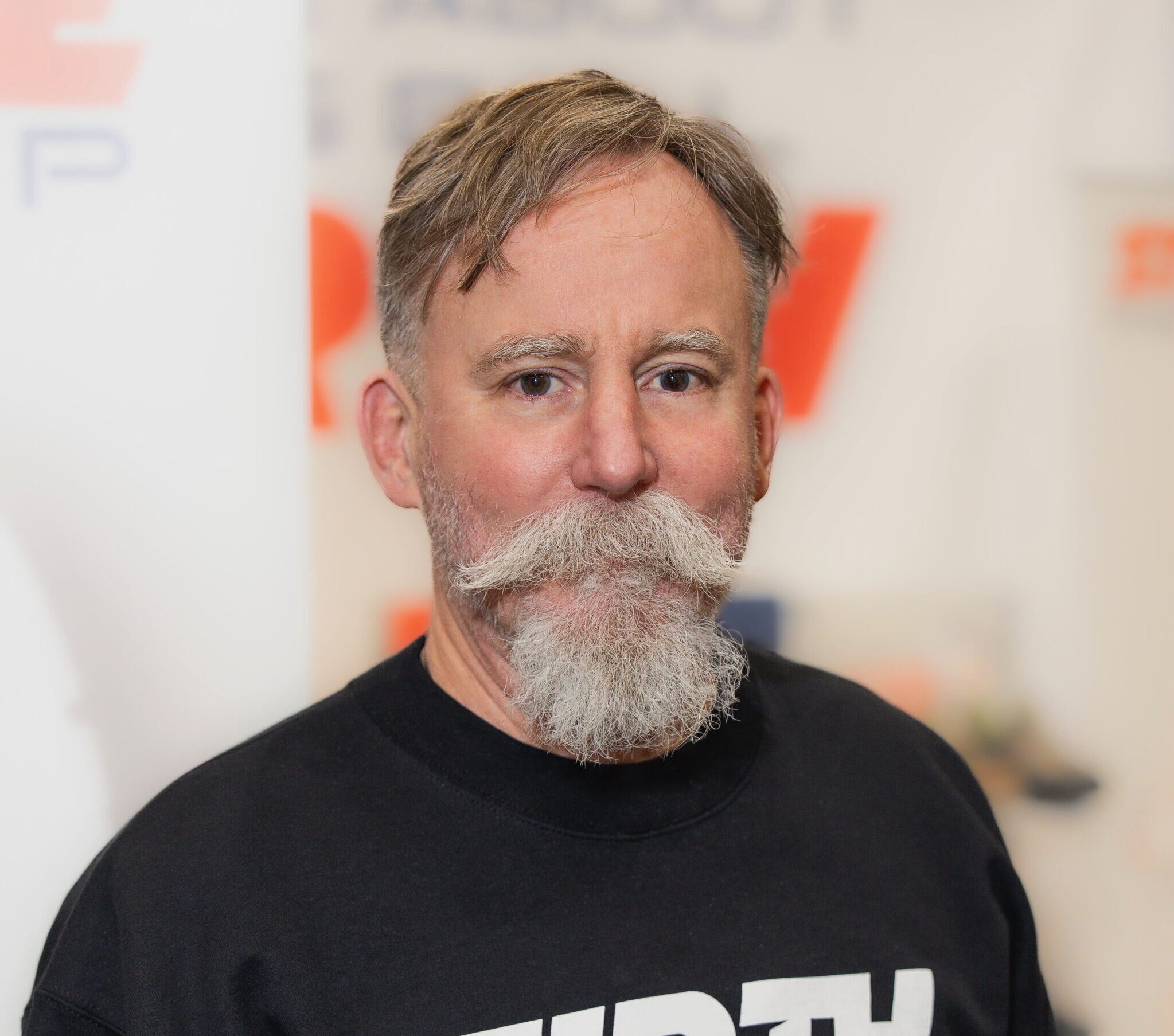


I recently went one-on-one with David Goldhill, founder and CEO of Sesame and author of Catastrophic Care: Why Everything We Think We Know About Health Care Is Wrong. David previously served as president of TV at Universal Studios, CEO of the Game Show Network, CEO of TV3Russia, and CFO of Act III Communications.
Adam: What prompted you to pursue a career in the field of entertainment, and what were the keys to enjoying such a successful career in the field of entertainment?
David: Like a lot of really good things that happen in life, it was a bit of an accident. I started my career in the banking industry and spent about six years as an investment banker. My firm moved me to Los Angeles, and I realized I loved living there. I also knew I didn’t want to be an investment banker anymore, but I wasn’t quite sure what I did want to do. I took a few years to do some of the things that, if I were older, I would have called a bucket list, whatever that list is when you’re 29 or 30. When I came back, it was a difficult time to find a job. I wanted to stay in Los Angeles, and the only jobs I could find were in the entertainment industry. That’s how I got in. A lot of people move to Los Angeles to go into the entertainment industry. I went into the entertainment industry because I loved living in Los Angeles.
My experience had been not just as a banker, but as a banker to banks. My expertise was financial institutions, mortgage-backed securities, savings and loans, and mergers between financial companies, so I was pretty far away from entertainment as a domain. In a way, the jobs I got hired for were people saying, I don’t want someone who knows too much. It’s an industry that is extraordinarily complex, with a lot of moving parts, different types of jobs, and different functions, and at least at the time, it was very much an insular community. So my calling card was that I knew something about finance, but I didn’t know much about entertainment, and I sort of lucked my way into a job because, as you said, I needed a job.
Adam: Once you lucked your way into a job, what were the keys to rising?
David: Like many situations where you come into something without having worked your way into it, you’re coming in from the outside, and you’re either going to be good at asking questions and taking in information and learning, or you’re going to struggle. I’ve always been comfortable not knowing something and being wrong. It’s not humiliating to be the person in the meeting who doesn’t know what others are talking about, and that’s helped me later in my career when talking to engineers and technical teams. It’s okay not to know everything. It’s okay to let what you do understand form the questions you need to ask, even if no one else in the room feels the need to ask them. Up to a point, you do have to learn, and you have to learn quickly, but what’s always been important is not pretending to know things you don’t know and being willing to ask questions. Sometimes you realize you’re asking the question everyone else wished they had asked but didn’t because they thought they were supposed to know the answer. Coming into the industry as an outsider and later into the online world as an outsider required being self-aware about the limits of your knowledge and being willing to learn from the people around you, and letting them see that you need to learn from them.
You don’t have much of a choice when you walk into an industry you don’t know very much about. You can pretend, but only up to a point. I’ve been running a business since my early 30s, and one of the things you learn is that there’s a benefit to being able to come into a room where your job is to make the final decision without pretending you were the best at everyone else’s job before they had it. You’re not the CEO because you were the best marketer, the best CFO, or the best creative person. The people in the room are the best at what they do. When your leadership style isn’t about knowing more than everyone else, but instead about relying on the expertise in the room, people are more open to sharing ideas, taking chances, and putting things out there. Even if you don’t say it explicitly, if people feel like you think you know more than they do, it changes the culture. If they know you don’t, and that’s why you’ve brought them together, it changes your relationships, the way you build a team, and the type of people who want to work with you, some positive and some negative, like anything else.
Adam: It’s a really important point, because if you’re a CEO, or even a senior leader, working with a CTO, there isn’t an assumption that you know more about the technical inner workings than they do. It’s understood that your CTO is the expert, and you’re relying on them to guide you in an area where you don’t have that expertise. Why don’t we apply that same mindset to everyone in the organization, not just the CTO or the chief marketing officer, but every single person around us?
David: That’s true, and you’ve studied this across far more examples than I have, so you probably have a broader perspective. One thing I’ve observed in other companies is that there are leadership styles that worry about looking weak, uncertain, or like they’re changing their mind. We see this in politics all the time. Politicians get accused of changing their mind or flip-flopping, but what thoughtful person doesn’t change their mind when the facts change or when they learn something new? What we treat as a weakness in politics, we recognize as a strength in most other areas of life. Some of that carries into business cultures, where saying you’re not sure, that you might be wrong, or that you want to change a decision can feel like weakness depending on the environment. But I agree with your fundamental point, which is that strong organizations recognize the expertise of everyone, and the people making the final decisions respect that expertise in how they understand challenges and opportunities and how they respond to them.
We’re all wrong. Just be honest about it. I think it’s probably above my emotional pay grade to fully understand the tradeoff between posturing and honesty, but one of the most important things in leadership is to be who you are, not pretend to be someone else. There are people who are never wrong in their own view, some of them quite famous, and we’ve gotten used to that, even when they are obviously wrong. If they suddenly admitted they were wrong, it would probably be more unsettling than reassuring. That’s not my style. I prefer to be transparent, and I prefer to run organizations where it’s understood that the team has the expertise. My role is to make the final decision, but not the first decision, and not because I know more than everyone else. My job is to take all the available information and perspectives, put them into a decision framework, and try to move forward as clearly and quickly as possible. That approach has worked for me, but I don’t think it’s the only approach that works.
Adam: You bring up something really important, which is that it’s natural to look at leaders who defy best practices and wonder how they succeed. Does that mean there are no rules? I often point to Steve Jobs as an example. If you try to emulate him, you’re setting yourself up for failure because he succeeded despite breaking the rules, not because of it.
David: That’s a very good point. I’d add a corollary to it. When we talk about leaders who break the rules, a lot of those rules are really about how we relate to each other as people, whether professionally or personally. Some individuals get away with breaking those rules because they have extraordinary genius in a specific area. You see that in Hollywood all the time. There are people with unique creative talent who are obsessive and often indifferent to colleagues, structure, or process. Great companies and great societies figure out how to make it work with those people. One of the challenges is making sure those individuals can succeed without limiting their careers too early because they don’t fit traditional norms. At the same time, you have to manage the impact they have on others. Many highly creative people can also be difficult, and as a leader, you have to decide how to get the most out of them while limiting the downside. That might mean structuring roles differently or building teams that can accommodate their strengths and weaknesses. In a lot of modern businesses, not just Hollywood, creativity is a major competitive advantage, so the question becomes how to build a culture that is flexible enough to support that kind of talent while still functioning effectively as an organization.
Adam: How do you create a culture and an environment that empowers people who are different to perform at a high level without blowing up the organization?
David: You have to think carefully about the rest of the team around that person. If you have someone who is exceptionally talented but also difficult, you need to be thoughtful about who else is in the room and how the team is constructed. There are tradeoffs. Some rule-breaking is manageable, some isn’t, and you have to decide where that line is. It’s one of the hardest things to manage, and I don’t think there’s a single rule that applies everywhere. The size of the organization matters a lot. When I was running television at Universal, we had a few thousand employees around the world. At Sesame, we have about 25 people. Managing those two environments is completely different. In a smaller organization, you can be more flexible and more tailored in how you work with individuals. In a larger organization, you need more structure, more consistency, and more process. One thing I’ve always believed in is making decisions as openly as possible. Decisions should happen in the room, not after the meeting, based on who happens to get to you last. We tried to build a culture where criticism happens in the room as well. You don’t get to criticize someone’s idea behind their back. You do it openly, constructively, and as part of the process. That actually makes people more willing to share ideas and less likely to take feedback personally. It reduces the kind of politics that can derail teams, especially when you’re dealing with strong personalities.
There are a lot of examples, and at every level of the creative process, I’ve worked with people who are more talented than they are mature or collaborative. You have to make a judgment about what role they should play. Not everyone needs to manage people. Some people are better in roles where they can focus on creating without overseeing teams. More broadly, I’ve come to believe that almost all talented people have at least one major flaw. I don’t spend time trying to change those flaws anymore. Instead, I think about how to build a team that understands those weaknesses and works around them. Businesses are made up of human beings, not perfect systems, and you have to account for that. One example that stands out is when I was asked to look at a struggling Russian television investment. I wasn’t going to run it day to day, so I needed someone to do that. I found a candidate who, on paper, was completely wrong for the role. He had been out of the business for years, had no international experience, didn’t have a passport, and didn’t speak the language. Every traditional box said no. But when I spent time with him, it was clear he had built something remarkable earlier in his career, and he had a very different way of thinking. We went to Russia together, and he immediately rejected the conventional approach everyone else was taking. Instead of relying on international advertising, he focused on local advertising that no one else was selling. That insight turned out to be exactly right. We hired him, and over several years, he built a very successful business that we ultimately sold at a strong return while others in the market failed. He checked none of the boxes, but he had the right idea and the ability to execute.
Adam: That’s a great example of focusing on outcomes over perception. As a leader, do you care more about protecting yourself or achieving results?
David: The natural instinct is to follow the rules and check the boxes, because that feels safer. But you have to step back and ask what you’re actually trying to accomplish. Job descriptions often become a list of credentials and experiences that don’t really get to the heart of what you need. I’ve seen job specs that list dozens of requirements, and then at the end include something like a college degree as a requirement, without anyone really thinking about whether it matters. It becomes a checklist exercise instead of a thoughtful evaluation. In the case of that Russian business, what we really needed was someone who could think differently and build something from scratch. He had done that before. That mattered more than any of the traditional qualifications. Sometimes you have to ignore the boxes and focus on the substance of what the role actually requires.
He had built something very successfully the first time around, and more importantly, he had a way of thinking that was clearly different. When I asked him to come to Russia with me to look at the business and tell me what he would do, he immediately saw something that no one else was seeing. At the time, the Russian advertising market was almost entirely driven by international brands buying through a couple of large agencies. His view was that no one was making money that way and that we should focus on building a business around local advertising that no one else was selling. That would effectively give us a monopoly in that segment, and it wouldn’t matter how large our audience was because we would be the only place those advertisers could go. That turned out to be exactly right. We became profitable with about a one percent audience share, while competitors with much larger audiences were losing significant amounts of money. It was a completely different approach, and it worked because he saw the market differently and had the ability to execute on that vision.
Adam: In my keynotes, I share that flexibility is one of the most important characteristics of the best leaders, and everything you’re describing speaks to the importance of flexibility in leadership.
David: Flexibility is critical, but it depends on context. It’s not a single rule that applies in every situation. The stage of the business matters a lot. In earlier stages, you’re often looking for inspiration, creativity, and unique thinking. You don’t have many people, and you’re not yet a fully formed institution, so you can be more flexible in how you structure roles and how people operate. As organizations grow, structure becomes more important. When you’re managing thousands of employees and a large revenue base, your first priority is often to avoid doing harm to what already exists. That doesn’t mean you stop innovating, but you have to balance that with consistency and execution. So flexibility isn’t about always being flexible. It’s about understanding what your organization needs at a given moment and adjusting your approach accordingly.
Adam: Where is the line? How should leaders think about when to be flexible and when not to be?
David: It’s something I think about a lot, especially at Sesame. It’s a startup, and it has been a long and difficult journey to get to profitability. We’re trying to do something that is both important and complex, and that creates a lot of pressure to adapt and evolve. At earlier stages, you lean more toward finding unique talent and allowing for more flexibility because you’re still building the foundation. You’re not managing a large institution yet. But as the company grows, you have to think more about consistency, repeatability, and culture. The tradeoff shifts. In a larger organization, you can’t tailor everything to individuals in the same way. You need systems that work at scale. So the line isn’t fixed. It moves depending on where you are as a business and what you’re trying to achieve.
Adam: What are the biggest differences between leading a large organization and leading a smaller one?
David: The differences are significant. In a smaller organization, you can be much more hands-on, and you can tailor your approach to individuals. You’re working closely with everyone, and you have a lot of visibility into what’s happening. In a larger organization, you’re operating at a different level. You’re setting direction, building systems, and relying on layers of leadership to execute. You also have to think more about process, consistency, and communication, because small misalignments can have much bigger consequences. The nature of decision-making changes as well. In a smaller company, decisions can be made quickly and informally. In a larger one, you need more structure to ensure alignment and accountability. Both environments have their advantages and challenges, and they require different leadership approaches.
Adam: What have you learned about leading in different industries, specifically entertainment versus healthcare?
David: They are very different industries structurally. In entertainment, no one expects you to create something that everyone loves. By definition, you’re trying to find an audience and serve that audience well, knowing that taste is subjective. In healthcare, there’s a very different standard. You’re expected to deliver a consistent level of care to everyone. There’s much less tolerance for variation in outcomes, and the stakes are obviously much higher. That fundamentally changes how you think about the product and the customer experience. Organizationally, entertainment has traditionally been more insular, with a strong emphasis on relationships and reputation within a relatively tight community. One of the interesting differences is how people are motivated. In entertainment, recognition and visibility are significant drivers. Being associated with a successful show or project matters a lot. There’s a level of public acknowledgment that doesn’t exist in many other industries. As a leader, one of the ways you can motivate people is by giving them credit and allowing them to be recognized for their work. That’s less relevant in healthcare, where the focus is more on outcomes and service quality. The motivations are different, and you have to adapt your leadership approach accordingly.
Adam: When leaders take credit for everything, it’s a clear sign of poor leadership.
David: I agree. I’ve been a bit surprised by how much the tech and venture world emphasizes the individual leader or founder. There’s almost a mythology around the CEO. In reality, companies succeed because of the people within them. The role of the CEO is to build and support that organization, not to take credit for its success. In a company like Sesame, where delivering high-quality care consistently is critical, that outcome depends entirely on the people doing the work. It’s not something I can personally deliver. Leaders who take credit for success or fail to take responsibility for mistakes make it much harder to build strong teams. Ultimately, it’s the team that determines whether a company succeeds or fails.
Great leaders understand that they don’t control everything, and in fact, their direct control is quite limited. You can’t control how every individual behaves or performs, especially in a large organization. What you can control is how you show up, the example you set, the people you hire, and the environment you create. You can influence culture, but you can’t dictate it completely. You can set direction and priorities, but execution happens through others. Understanding those limits is important. At the same time, there are areas where leaders should take full ownership, and one of those is mistakes. When things go wrong, the leader should own it. That sets the tone for the organization and makes it easier to focus on solving problems rather than assigning blame. It creates a culture where people are more willing to take risks and learn from errors.
When I was at Universal, we significantly improved earnings without any major breakthrough or single big success. A lot of it came from what I would call “couch cushion money.” Small improvements in how deals were negotiated, asking for slightly better terms, adding incremental value in agreements. When you have thousands of people all making small improvements, it adds up quickly. Another example is Game Show Network. When I arrived, it had never been profitable, which didn’t make sense given the strength of the cable business model at the time. One of the most important changes we made was simply setting the expectation that the company should be profitable. That may sound obvious, but it hadn’t been the mindset before. Once that expectation was clear, people started making decisions differently. Over time, that shift in mindset translated into significant financial results.
There were other strategic and operational improvements, but the most important shift was that everyone in the organization understood that we were in the cable television business and that meant we should be making money. It sounds simple, but expectations matter. When people believe profitability is the goal, they make different decisions. They push a little harder, they look for incremental improvements, and they don’t accept things that don’t make sense financially. That mindset, spread across the entire organization, made a huge difference.
Adam: It really comes down to clarity of vision and clear communication. If you go around a company and ask five different people what the number one priority is and you get five different answers, or four, or three, that’s not a strategy problem. It’s a leadership problem, specifically a communication problem in how leaders are aligning everyone in the organization.
David: That’s exactly right. If you ask five people in an organization what the top priority is and you get five different answers, that’s a leadership and communication problem. When everyone understands the priority, whether it’s profitability or something else, you get alignment, and that dramatically increases the chances of success. I’ll say that’s something I haven’t always done as well as I would have liked. At Sesame, we’ve had to pivot multiple times because of the nature of the business and the need to raise capital. I don’t think I’ve always been as clear as I should have been in communicating those changes. When you’re making frequent adjustments, it can feel like whiplash to the team, and that requires even more communication, not less. Looking back, I think I could have done a better job being explicit about why we were changing direction and what it meant for everyone.
Adam: How do you navigate change as a leader?
David: One of the most important things is to be fundamentally optimistic. Change can be unsettling, especially when people feel like they don’t have control over it, but most of the major changes we’ve seen over time have made people better off in meaningful ways. Having that mindset helps you approach change as an opportunity rather than something to fear. Beyond that, it’s about gathering input from thoughtful people, understanding what’s changing, and being willing to act without having perfect information. In larger organizations, especially, there can be a tendency to overanalyze in search of the perfect decision, which can lead to paralysis. In reality, it’s often better to make a reasonable decision quickly, learn from it, and adjust. You have to be comfortable with uncertainty and willing to move forward without having every answer.
Early in my career, I worked at a company that owned a group of television stations, and we were trying to decide whether to acquire more. The business was improving quickly, but we spent too much time analyzing the opportunity. By the time we were ready to act, valuations had increased, and we missed the window. In another situation, a partner and I owned a television station in Las Vegas. He recognized that the business was underpriced because it was consistently sold out, which indicated pricing power. We improved the economics, and when the market shifted in our favor, he made the decision to sell quickly. I would have been inclined to hold and explore other options, but he sold at exactly the right time. That experience reinforced the value of acting decisively when the opportunity is clear.
Adam: What do you believe are the key characteristics of the very best leaders, and what can anyone do to become a better leader?
David: When I first became interested in business, I used to read a lot of profiles about successful companies and their leaders. What struck me was that you could read one story about a leader who came in, centralized everything, made all the decisions, and drove success, and then read another story about someone in a similar situation who did the exact opposite, decentralized everything, empowered teams, and also succeeded. What those stories really showed is that it’s not about a single style. It’s about having a clear approach and consistency around it. People need to understand how decisions are made, how accountability works, and what kind of organization they’re in. For me, the most important thing is authenticity. You have to understand who you are as a leader and operate in a way that is consistent with that. If you try to be something you’re not, it comes across as inauthentic, and people respond to that. You also have to recognize your own strengths and weaknesses and hire people who complement you. No leader is great at everything, and trying to be is a mistake. The best leaders build teams that fill in their gaps and are open about the fact that they rely on others for expertise.
Adam: It really starts with authenticity. It is important to learn from others, but you have to be yourself.
David: I agree with that, and I’d add that it also helps if you genuinely care about what you’re doing. At Sesame, this is the most meaningful work I’ve done in my career. It’s also the hardest from a business standpoint, but it’s something I believe in deeply. That matters. People can tell whether you care about the mission and the organization. You can’t really fake that. If you’re not genuinely invested, it’s much harder to motivate people and build a strong team. Being proud of the work and the people you’re working with is an important part of leadership, and it helps sustain you through the challenges that inevitably come with building something difficult.