
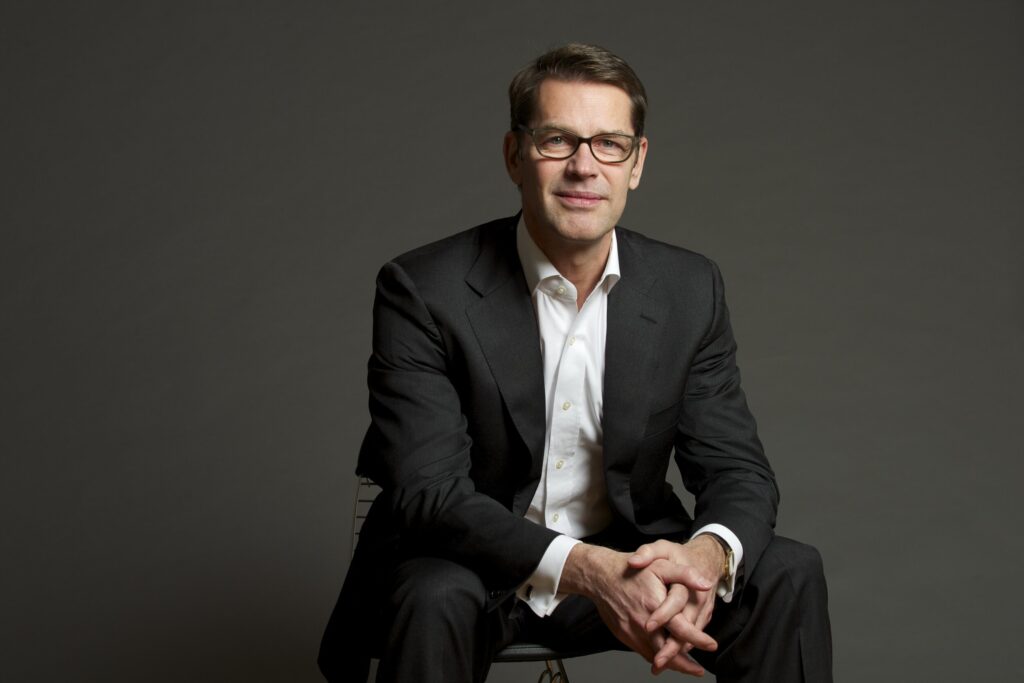
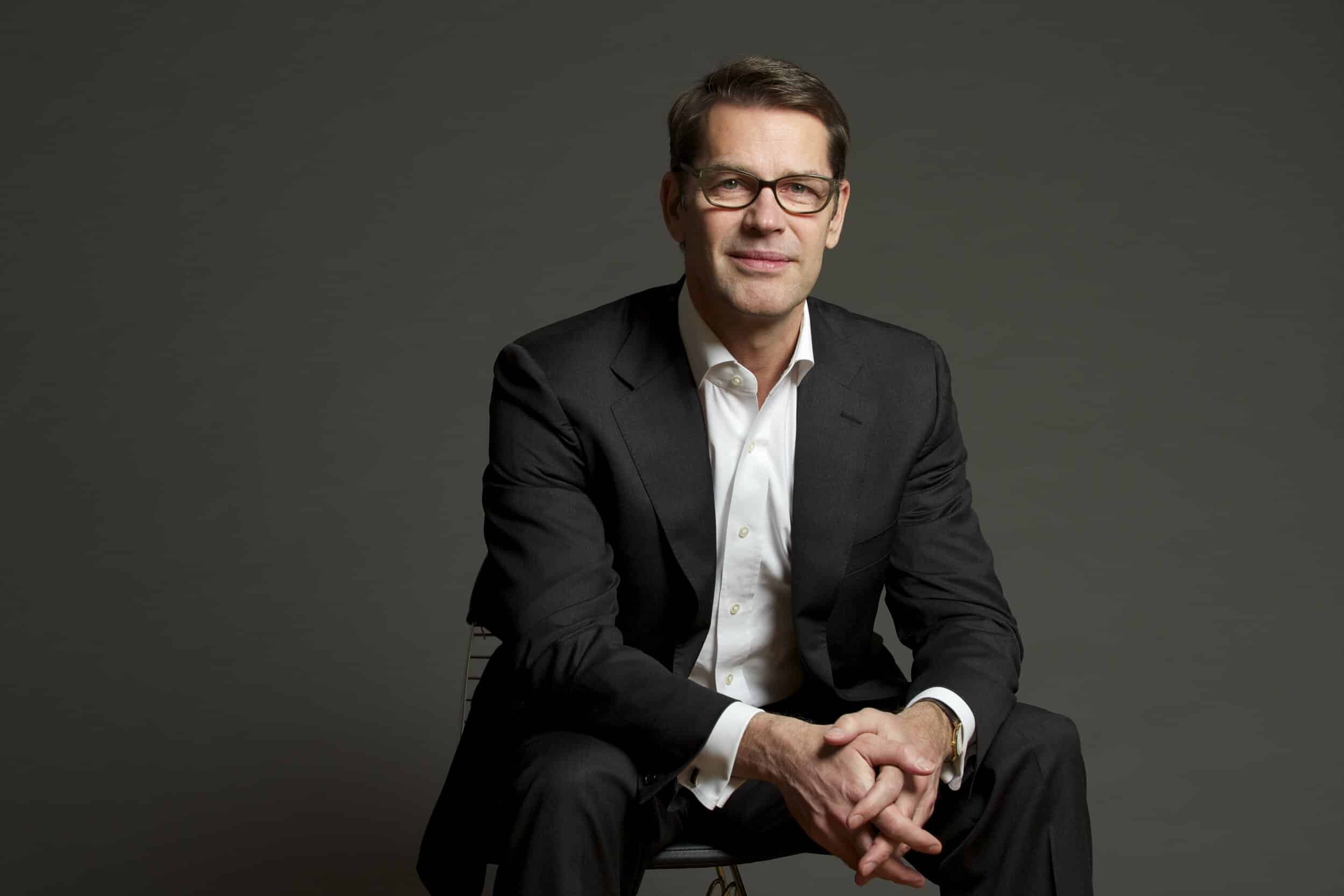
I recently went one on one with Harco van den Oever. Harco is the CEO and Founder of Overstone, a risk analytics provider servicing fine art transactions across the US, Europe and Asia.
Adam: Thanks again for taking the time to share your advice. First things first, though, I am sure readers would love to learn more about you. How did you get here? What experiences, failures, setbacks or challenges have been most instrumental to your growth?
Harco: My parents moved us to France from the Netherlands when I was six – I ended up studying in the Netherlands, France and the US before starting a career in capital markets where I spent 12 years working for Paribas, Bankers Trust and Credit Suisse, running structured debt distribution for Latin America. I left banking and co-founded the first online mortgage platform, FredFinds, in the UK in the late ‘90s. After selling FredFinds, I followed my passion for art – my mother was a painter, my grandparents were collectors – and I’d thought it would be fun to do an internship at Christie’s at the tender age of 34. I spent another 12 years there, ending up as a senior VP and Global Managing Director of Impressionist and Modern Art.
I think adaptability and flexibility have been important. When we moved to the France countryside, nobody spoke the same language as me, I didn’t speak French or English, I had no friends and I had to figure out how to communicate and adapt to a new environment very quickly. When I moved to Brazil later on, it was also a completely different market and people to what I had known before. The important thing about flexibility is to have this belief that you can make the best of your situation, that you will prevail. Flexibility is a result of understanding that there are different views of the world, and none are right or wrong. When you go into a new situation, the first thing is to be totally open to it, to listen very carefully, have all of your senses alert and always be very aware of your surroundings.
My career has been the result of events – a friend came to me and we wanted to do FredFinds together, then came another friend with the opportunity at Christie’s. When I was at Christie’s, a new CEO had just been put in, so as head of the biggest department, that was probably the furthest I could go. That prompted me to think I should maybe do something else. I think that 12-year cycles, or multiple careers, will become the norm. That’s where adaptability and perseverance come in. And once you transition careers, you have to be utterly committed, there’s no turning back. All your energy goes into what you are doing at the moment. Do your absolute best, or it’s a waste. I’m reminded of when I was 13 or so, I had a little motorboat in France, trying to visit my friend across the lake. It took me 2 hours with my tiny little engine to get there, and when I was ready to come home, my engine broke and I spent 3 hours just trying to get it to start. It did in the end, but there was never a doubt in my mind it wasn’t going to work.
Adam: How did you come up with your business idea? What advice do you have for others on how to come up with great ideas?
Harco: Coming up with Overstone’s risk scoring was a dynamic process – many trials and errors, conversations with potential clients – it was clear to me that there had to be a better way to look at art as an asset, and help borrowers use their art as collateral to create liquidity. While working with a collector, we discovered there were few institutional lenders, and from my debt capital market experience, I knew that was necessary to create liquidity. Then we began working with a major private bank to help them understand and measure the risk profile of artworks – this sparked the importance of data analysis for us.
Now with FredFinds, that really came out of a dark room, brainstorming, and then it was pure execution. It was much quicker – we raised a first round, invested everything into building the platform – whereas with Overstone it’s been much more gradual. In a B2B market, you can afford to take more time and fine-tune to the institutional clients, whereas a B2C demands quicker implementation. You see young people who build vastly successful B2C companies, whereas a B2B environment requires more in-depth industry knowledge, you see that founders tend to be older and have a lot of experience in their fields.
Adam: How did you know your business idea was worth pursuing? What advice do you have on how to best test a business idea?
Harco: For Overstone, it became clear early on that what we had built for our first institutional client was not just relevant to them, it was useful for many other institutions, banks or otherwise. We were constantly bumping into new use cases. Our biggest challenge to stay focused on controlling our niche, and only expanding when that was achieved. Last year, we launched our risk analytics and have focused solely on providing services related to that. As the business grows, it becomes easier to explore other opportunities, but at the beginning, when resources are scarce, focus is key.
For FredFinds, we wanted to get in on the dot com boom, I think it was ahead of its time and we were a bit early – it was hard to expect people to close their biggest financial obligation online on a new medium that was just nascent. We were just hoping for the best – when we launched, our business was purely online, and we ran a big marketing campaign. We realized after a few months that people weren’t converting so we adapted our model to have a call center to bridge the gap between an old market and a new environment.
Ultimately, the key is to understand and test potential clients’ willingness to pay for your products and services. Without that even the best ideas will eventually fail. It’s much harder in a B2B environment to come up with a completely revolutionary product. There are more barriers to entry – you need a product with bridges from the old ways to the new ways of doing things.
Adam: What are the key steps you have taken to grow your business? What advice do you have for others on how to take their businesses to the next level?
Harco: For me, the most important thing is to never compromise on the quality of the people you surround yourself with, even if it takes much longer to build the team. This is true for team members but also the wider circle including advisors and investors. I look for smart, passionate, interested and curious people – when you get all that curious, excited energy and intellect together, that’s when you start building something extraordinary. It’s great to have diverse personalities on the team, and you wouldn’t want someone who is always just clocking time.
Again, you need to be adaptable with a clear sense of direction. Like a North Star, you have a destination and purpose that guides everything you are doing, but how you get there has to be adaptable to changing circumstance.
At Christie’s I had 300 people in my team, and I had to learn to manage them remotely because they were in different locations all over Europe, and set up an infrastructure that allowed you to have a feedback loop with people who weren’t sitting next to you. There’s a fine balance of listening to other people’s ideas and actually making decisions – that’s the hardest part. You hire and work with very smart people, they will very often have idea and their ideas might be better thought through than your own, but eventually you need to make a decision and follow your instincts. Ultimately, it’s your experiences and instincts that help you make slightly more right decisions than wrong (hopefully).
Adam: What are your best sales and marketing tips?
Harco: In a B2B environment, my aim is to always exceed our clients’ expectations and really listen. This is what drives word of mouth and brings in new revenue. I really believe in the Trusted Advisor approach. In B2C, you have much less direct feedback because you launch a campaign and wait and see how it’s taken up by market. That’s the difference – you have a smaller set of important clients versus a large market of anonymous customers.
In B2B, you spend time with your clients, understanding their needs and see how your products can help them. You need to ensure that you convey the importance of what you do, and the strength of what you do. In other words, don’t be needy. You are convinced about your product and are seeing if the client is a good match for you, rather than the other way. Describing the product isn’t an intellectual process, it’s an emotional one, and I think you need to experience the effectiveness of the product to sell it. Many times in my career I’ve experienced exceptional salespeople with no alignment to the product and it just doesn’t convert.
Adam: What should leaders understand about the arts? And what are the biggest lessons you believe leaders should learn from the arts?
Harco: I think the arts bring an openness to all perspectives and to seeing them all as equal. I personally enjoy the emotional response to experiencing something completely unexpected. In music, when you listen to contemporary classical music, that’s so different to the structured view of Baroque music, and yet, baroque composers have elements in their music that are surprising and baffling. I think every good work of art has that within itself, and a painting by a contemporary artist can be just as interesting as an Old Master work. But there’s lots of ways to be exposed to that element of surprise that keeps you on your toes – through food, travel, for instance.
The plastic arts though, they’re a unique asset class. The emotional response to fine art is something that collectors often have, and you can deeply connect with your clients over that. On top of that, it’s got limited price volatility. Key takeaway: the most important thing to considering art as an asset is to understand its liquidity. Auction sale outcomes are usually binary – it either sells or it doesn’t, and there are tools to measure that. Use them.
Adam: In your experience, what are the defining qualities of an effective leader? How can leaders and aspiring leaders take their leadership skills to the next level?
Harco: Leaders should have a clear sense of direction, empathy, integrity, decisiveness, and team building. They should always be learning. Leadership is a facilitating role, not a command-control. The role is to enable everyone to move towards that common goal. When you understand what makes people tick, you can get the best out of them, and an enjoyable work environment is the byproduct of that – you want your team to feel they are contributing their fullest.
My leadership is a result of who I am and what I’ve learned, my skills are going to be different to someone else’s. And before you can guide others, you have to understand more about yourself, your personality and your limits. I believe in working on your weaknesses. Use a feedback loop to figure out the impact of the changes you are making. If you’re weak at listening to others, you work on it, and if you get feedback like, “you’re not listening to me”, you know you have to keep going.
Read as much as possible and learn about different techniques. Neurolinguistic programming is something I’ve done and found really helpful. And just practice making decisions quickly, even if they’re wrong.
Adam: What are your three best tips applicable to entrepreneurs, executives and civic leaders?
Harco: Always keep an open mind, learn and stay true to yourself.
Adam: What is your best advice on building, leading and managing teams?
Harco: Hire people who are smarter than you.
Adam: What is the single best piece of advice you have ever received?
Harco: When doing something, do it to the best of your ability.
Adam: Is there anything else you would like to share?
Harco: Having lived in the Netherlands, France, US, UK, Hong Kong, Singapore, Brazil and the UK, I have to say it was really fun and I highly recommend it to everyone.