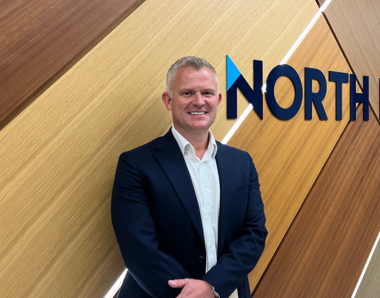


I recently went one-on-one with Jad Shimaly, EY Global Managing Partner – Client Service.
Adam: Thanks again for taking the time to share your advice. First things first, though, I am sure readers would love to learn more about you. How did you get here? What experiences, failures, setbacks, or challenges have been most instrumental to your growth?
Jad: I’ve been with EY for 25 years, and it’s been one fulfilling chapter after another: a journey defined by transformation, resilience, and purpose. In my early career, after graduate school, I worked in finance and supply chain roles. I joined EY in Cleveland in 2000 before moving to Toronto the following year, where I worked closely with clients from different sectors, helped build our Canadian Consulting practice, and served as Chair and CEO of EY Canada.
Leading EY Canada’s Consulting service line was particularly formative. We faced significant challenges in a competitive market while developing capabilities in risk and IT consulting. As Chair and CEO of the Canadian firm for 6 years, inclusive of the COVID years, I learned firsthand the importance of human connection with our people, our clients, and our communities. These experiences taught me the importance of perseverance, listening, and building diverse teams that challenge the status quo.
Now, as EY’s Global Managing Partner – Client Service, I carry these lessons with me. I truly believe that leadership is about creating long-term value for people and society.
Ultimately, I see every interaction as an opportunity to make a lasting difference. This is a perspective that guides me through change and continues to shape my leadership today.
Adam: In your experience, what are the key steps to growing and scaling your business?
Jad: Success is no longer defined by size, but by relevance and resilience. The organizations that thrive in today’s climate are those that can adapt quickly, empower their people, and stay true to their purpose. Leaders – while remaining focused on their business’s overall strategic vision, or ‘north star’ – must act decisively and stay focused on the ‘what’s next’. They should harness the power of the ever-evolving technology landscape and tools that are available to them – including real-time data and insights – to embrace change, refine and adapt their services, and continue to innovate.
It’s impossible to talk about advanced technology without referencing AI, which is already transforming industries and redefining roles. Leaders need to strike a balance between harnessing its potential and empowering their employees. This means building leadership pipelines, investing in continuous learning, and promoting collaboration across teams.
Adam: What are your best tips on the topics of marketing and branding?
Jad: Even as technology continues to become more sophisticated than ever, human-to-human marketing and purpose-driven storytelling have never been more important. The world’s leading organizations now see their brand as a builder of trust, connecting what a company says with what it does and, ultimately, with what it stands for. Leading with purpose, not product, helps clients, customers, and employees see what a brand believes, not just what it sells. Organizations that connect purpose to their messages and actions build credibility that advertising alone can’t buy.
To that end, I think there’s huge value to be found in looking beyond the usual marketing tactics and mechanics of reaching your audience and doubling down on creative campaigns that evoke emotion to stand out from traditional feature- or service-led marketing.
New technology and data-driven insights can support these efforts, helping companies to truly connect to clients and design experiences that are tailored to them. EY recently launched Studio+ that is using AI to help our clients transform the front office operations of marketing, sales, and services to enable efficiency and effectiveness.
In summary:
- Embed creativity and emotion into brand storytelling
- Humanize your brand to help it stand out from competitors
- Align brand strategy directly with business outcomes
- Harness the power of data and technology
Adam: What do you believe are the defining qualities of an effective leader?
Jad: The most important quality for any leader in today’s business environment is “agility”. This can be broken down into five key components:
- Strategic adaptability: Ability to re-prioritize based on changing client needs or market shifts.
- Iterative decision-making: Test, learn, and refine rather than wait for perfect data.
- Empowered teams: Create environments where people can experiment and act without layers of bureaucracy.
- Communication clarity: Explaining direction quickly and inspiring confidence even when outcomes aren’t fully certain.
- Personal resilience: Managing energy, mindset, and curiosity under pressure.
Demonstrating agility is no longer a nice-to-have; it is a necessity for leaders looking to help their businesses to grow, scale, and navigate the future. However, it’s critical not to force these practices. These skills aren’t learned or acquired overnight but can take years of trial and error to hone. Different organizations or teams require their own touch.
Adam: How can leaders and aspiring leaders take their leadership skills to the next level?
Jad: Being an effective leader requires adaptability, empathy, and purpose to build trust with their organizations and employees. To take leadership to the next level, there are three key elements to focus on:
1. Embrace change and build resilience
As I’ve already discussed, in my opinion, the best leaders are also the most agile. They stay grounded amid uncertainty, anticipate disruption, and turn change into opportunity. Developing resilience, both for themselves and their teams, means fostering agility, maintaining optimism, and viewing challenges as opportunities for reinvention. Geopolitical, macroeconomic, and trade uncertainty are weighing on the minds of all leaders, but the most effective are the ones reacting quickly, whether it be delaying or cancelling a planned investment or relocating operational assets. Saying no at the right time is as valuable as knowing when to say yes.
2. Lead with purpose and authenticity
Clear communication is paramount to success – both within the C-suite and throughout the enterprise. Every leader has a vision, but it’s their duty to properly articulate it to people around them and lead by example to prove their vision has merit. Authentic leadership builds trust; people follow leaders who are genuine, transparent, and value-driven. In the same vein, leaders must reflect on their goals and ensure they’re steering the ship in the right direction. Changing course can be a good thing when it leads to better outcomes for everyone involved.
3. Foster a culture of empowerment and curiosity
Strong leaders create environments where others can thrive. They are constantly motivating their teams to challenge, innovate, and make decisions, not just execute. In turn, everyone feels like they are a contributor to the organization and can be heard by the senior team. When each member of an enterprise is empowered to speak up, leaders will hear diverse perspectives and continuously learn. From there, both the leader and organization will grow.
Adam: What are your three best tips applicable to entrepreneurs, executives, and civic leaders?
Jad: My three practical, high-leverage principles for leaders are:
1. Lean into disruption: there’s no point in waiting for a return to ‘normal’. Uncertainty is the new normal, so learn to see volatility as opportunity, not threat. The most effective leaders lean in and use disruption as a lens to reimagine business models, redirect capital, and unlock new growth.
2. Embed localization into your operating model: 70% of those surveyed for the recent EY CEO Outlook survey said they see localization of a long-term strategic shift. Leaders should build distinct yet interconnected markets for the long-term, making them better adapted to changing market dynamics, customer expectations, and able to mitigate short- and medium-term risks.
3. Build a generations strategy: to ensure you’re attracting and retaining talent in the long term, prioritize learning and upskilling, embrace flexible working methods, and view tech and AI as part of the solution, rather than part of a problem.
Adam: What is your best advice on building, leading, and managing teams?
Jad: Learn to listen. Being a leader is tough, but it’s not a solitary assignment. Each person you meet, whether inside your organization or not, can have a positive impact on how you lead and manage the people around you.
I meet a lot of people each week, and I don’t always remember the specifics of each interaction. But, at the end of the week, when I reflect on what I’ve done and who I’ve met, I try to pick an “ah-ha” moment. This is something that resonates with me, but could come from an unlikely source; sometimes it’s a CEO who I met, and sometimes it’s the taxi driver who I spent 25 minutes with and won’t see again. Everyone has a story and experience to share. When we listen, we pick up on lessons, tips, and tricks that make us more well-rounded human beings. It’s up to us how we want to employ these moments in our teambuilding, leadership, and management.
Adam: What is the single best piece of advice you have ever received?
Jad: Always listen more than you speak. This principle has been instrumental in my leadership journey. By actively listening to others, whether they are team members, clients, or mentors, I gain valuable insights and perspectives that can shape my decisions and strategies.
Adam: Is there anything else you would like to share?
Jad: I’d like to emphasize the importance of continuous learning and adaptability in leadership. The business landscape is constantly evolving, and while the core principles of effective leadership remain rooted in empathy, purpose, and resilience, we must be willing to adapt our approaches.
Fostering a culture that encourages innovation and open communication is crucial. When every team member feels valued and empowered to contribute, it enhances team dynamics and drives organizational success, especially in a rapidly changing environment.