
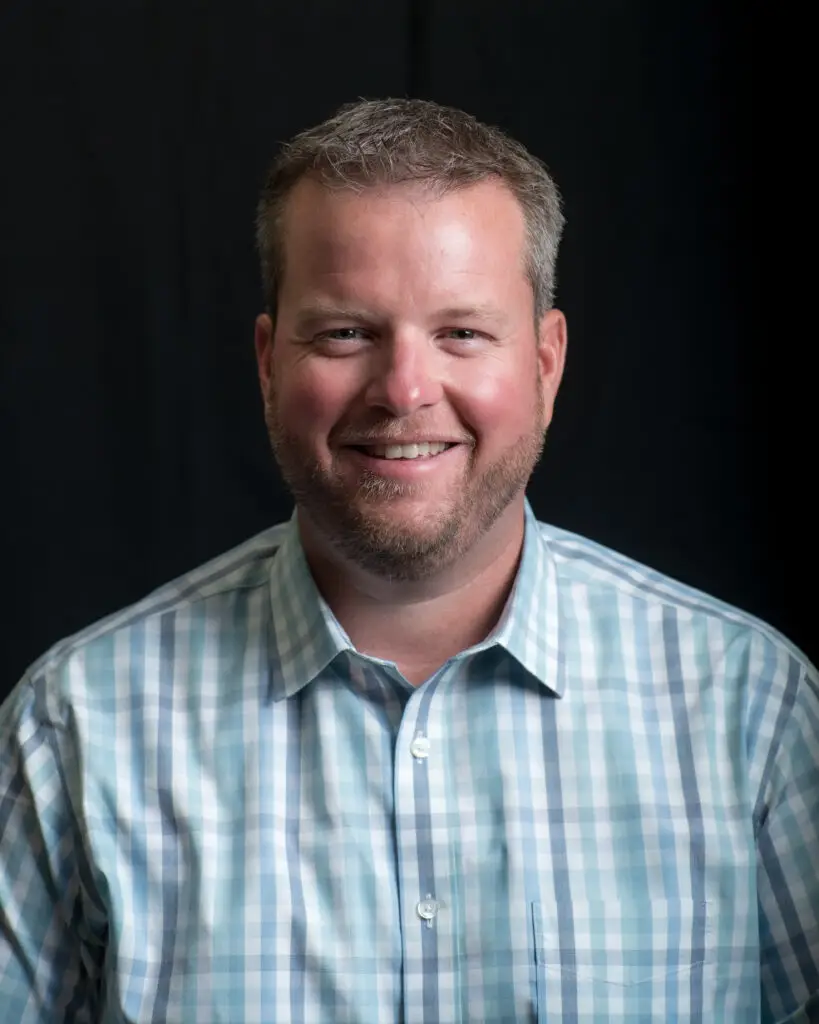
I recently went one-on-one with Kevin Turpin, founder and CEO of Weavix.
Adam: Thanks again for taking the time to share your advice. First things first, though, I am sure readers would love to learn more about you. How did you get here? What experiences, failures, setbacks, or challenges have been most instrumental to your growth?
Kevin: Born and raised in Wichita, Kansas, I was a sophomore in high school when a terrible flood came through our small hometown of Augusta, which is referred to today as the Halloween Flood of 1998. An old oil refinery contaminated the floodwater, leaving crude oil residue everywhere. For cleanup, people tried using normal pressure washers, but it wasn’t working very well. So, my simple idea was to apply heat, which, as you can imagine, was more expensive. Long story short, we ended up cleaning up the neighborhood, then started servicing local gas stations and convenience stores to remove oil and gas stains. Fast forward to my senior year in high school, and many other twists and turns, I already had 250 employees and $5 million in annual revenue. That eventually became PK Companies, which became my story for the next 20 years. My brothers joined, and we grew it into a multinational industrial services operation with 4,000 employees across 40 states and 5 countries, with about $200 million in revenue.
All this broke me several times, as it does with so many growing businesses. Managing people in one city is one skill set, but managing across the Gulf Coast and the Midwest is a whole different beast. I learned that cultures vary, and you can’t clone yourself. You’ve got to build systems and develop people who eventually don’t need you. Every time something broke, I got better information about what the real problem was.
Adam: How did you come up with your business idea and know it was worth pursuing? What advice do you have for others on how to come up with and test business ideas?
Kevin: My biggest breakthroughs have all come the same way: I saw a problem nobody around me no one was solving, and I asked whether I could fix it. The flood is just an early example. What really shaped my thinking came later inside PK, when we were doing fireproofing work on structural steel. At that time, the standard approach was encasing steel in concrete. It worked fine, but it was maintenance-heavy and inconsistent. I started researching whether there was a better way and found a spray-on fireproofing product for offshore applications. I wondered why isn’t this being used onshore? I went to work getting it adopted, and eventually it was. International Paint even white-labeled it for vessel coatings, and it eventually became standard practice across refineries and petrochemical plants. That experience taught me something I’ve carried ever since, which is the biggest opportunities aren’t where everyone is already looking. They’re in the gap between what exists and what’s actually possible.
My third breakthrough came from watching my son race motocross. I was trying to coach him without making him tune me out, which any parent of a 9-year-old knows is pretty much impossible. I found a European training tool that mapped his lap times onto a color-coded heat map, green for fast and red for slow, and he got it instantly, adjusting based on the data without me opening my mouth. That experience rewired my brain, and I wondered if I could do this with my 4,000 employees. What if frontline workers could see their own performance, communicate more effectively, and be safer through a device built specifically for them? That question became my current smart radio startup, weavix. In our case, the two-way radio market is a $23 billion industry serving only about 10% of the frontline workforce. The other 90% had nothing built for them, and that asymmetry was all the validation we needed.
Adam: What are the key steps you have taken to grow your business? What advice do you have for others on how to take their businesses to the next level?
Kevin: Every business I’ve built has started with finding a problem nobody’s solving, going all the way to the bottom of it, and letting the customer relationships take you to the next opportunity. With PK, we didn’t start in pressure washing and randomly expand. We delivered value and followed the next opportunity with our customers. Industrial cleaning led us into coatings, and coatings led us into sandblasting tanks and vessels. Once you’re inside a facility doing that kind of work, you realize the client always needs a safety team present. We noticed they were using their own people, so one day we brought our own safety team, and that became an entirely new line of business. From there, we moved into fire protection, then inspection. Before you coat or insulate piping and steel, someone must inspect it. Back then, the entire inspection process was paper-based. An inspector would fill out a form, go back to the office, and manually type everything into the computer. We built a tablet-based system called IntelliSPEC. What it did is feed inspection data into the system instantly. Work orders moved faster, and risks got addressed sooner. The product eventually went global, with international paint companies using it white-labeled on vessel coatings, and it became standard practice for safety turnarounds in fertilizer plants and refineries worldwide.
We weren’t jumping randomly, but we didn’t stay in our lane either. We were listening carefully to the same client base and asking, ‘What else do they need that nobody is providing well?’ With my current company, weavix, the key growth lever was going all-in before asking anyone else to invest. I put $20 million of my own capital in before approaching outside investors. For our product, we didn’t just grab a white-label device and rebrand it. We built this rugged device, which we called Walt, from the chip up with its own OS, ambient noise cancellation, supporting 40 languages with real-time AI translation. When we raised our Series A with Koch Disruptive Technologies in 2022 and our $23.6 million Series B led by Insight Partners in 2024, investors could already see I was all in. Customers loved it.
Adam: What are your best sales and marketing tips?
Kevin: Basically, tell the story from the customer’s perspective, not yours. I used to lead with what our technology does, orchestrating communication, data infrastructure, and network architecture. It was technically accurate, but not what buyers feel every day. Their problem is that 90% of their workforce isn’t connected. Their frontline workers don’t have a great way to communicate with each other or with corporate. Near misses aren’t reported, and safety incidents happen because nothing was shared. What people don’t think about enough is that with old tools like two-way radios, everything that’s said through a standard-issue walkie-talkie vanishes the second it’s said. It’s lost forever, and when you’re dealing with a multilingual workforce, the gap gets even wider.
Adam: What are the most important trends in technology that leaders should be aware of?
Kevin: The most underestimated trend right now is the application of AI to physical-world operations. We all see how AI is best at summarizing documents, writing emails, analyzing spreadsheets, and automating with agents. People don’t realize there are also two billion frontline workers out there, and everything is global. Real-time translation across 40 languages, geofencing that routes the right person to a problem in seconds, and pattern recognition across billions of tasks. We’re doing all this today, but we’re just getting started.
There’s new competitive pressure on our customers to connect every employee, not just supervisors and higher. Companies that give their frontline workforce tech that makes their jobs easier, safer, and even more valued will go a long way. The leaders who understand this will have an enormous advantage that will compound over time.
Adam: What are the defining qualities of an effective leader?
Kevin: The best leaders I’ve known are relentlessly curious about people. Not in a vague way, but in a very practical sense. What is this person good at that they may not know yet? What’s stopping them? What would make them feel highly valued today? I learned early on that most people who seem disengaged aren’t permanently disengaged; they’re just waiting for someone to notice them. Entry-level workers who don’t even know what they’re capable of yet will outperform seasoned professionals if you take the time to find their talents and give them room to use them. That insight made PK what it became.
Maintaining a positive mindset, especially when things get hard, matters more than most leaders acknowledge. You’ve got to cultivate the morale of the people around you, even when the numbers are down. Or the vision isn’t clear. The leader is under a microscope as well during tough times, but if you take time to show your people there’s light at the end of the tunnel before you can prove there is, good things happen from every direction. I noticed that leaders who struggle are barking orders. The good ones know it’s more about removing obstacles fast and creating better conditions where talented people are given oxygen to do good work.
Adam: What is your best advice on building, leading, and managing teams?
Kevin: I’m a builder and an inventor. I already mentioned I find problems that everybody’s accepted and get things moving. What kills fast-growth companies isn’t a lack of ideas but a lack of people who can execute consistently at scale. My brothers are exceptional operators, which is exactly why, when I brought them into PK, the company went from something I was holding together personally to something that could grow on its own. When building a team, be honest about what type of person you are and fill the gaps deliberately. This means knowing your own weaknesses. If you’re an idea person, hire operators, and if you’re an operator, hire someone with the vision.
The culture piece comes down to whether people feel seen. Your highest performers are probably the quietest folks in the room. If you only notice the loudest voices, you’re probably losing your best people without knowing it.
Adam: What are your three best tips for entrepreneurs, executives, and civic leaders?
Kevin: Look where others aren’t looking. In my case, the frontline workforce represents roughly 80% of all workers globally, and the tech industry continues to ignore them. When building a business, ask yourself who’s nobody building for because that’s where the white space is.
Beyond that, be all-in before you ask anyone else to believe. That $20 million was about more than money. If you’re going to ask investors to get behind your vision, they need to be 100% bought in.
Finally, the hardest thing for technical founders is simplicity. Basically, we know too much and can go too deep. We assume that complexity is what makes us valuable, so we lead with it, but it doesn’t land. The more clearly you can explain a complicated problem in one or two sentences, the more people you can actually bring together.
Adam: What is the single best piece of advice you have ever received?
Kevin: I love this question! The best advice I’ve ever absorbed came through a story, not directly to me. Paul O’Neill, the CEO of Alcoa, stood up on his first day in front of Wall Street and said he didn’t care about profit, but he cared about the safety of the worker. Investors were mortified, but over the next decade, Alcoa became one of the highest-performing companies in its sector. O’Neill understood that if you want to know how well a company is really performing, look at the safety record. Safety is a direct measure of how much a company values its people, and when that value is real, it shows up everywhere in how people work. Give people your trust before they’ve earned it, and most of them will spend their whole career trying to prove they deserve it. That idea has guided how I’ve built every company I’ve been part of.
Adam: Is there anything else you would like to share?
Kevin: In every business, the frontline workforce is the backbone of the global economy. Every product on every shelf, every building that gets built, and any operation that runs happens with people working with their actual hands. For too long, technology has treated these people as an afterthought, and that’s a problem. We’ve got to see them as rock stars.