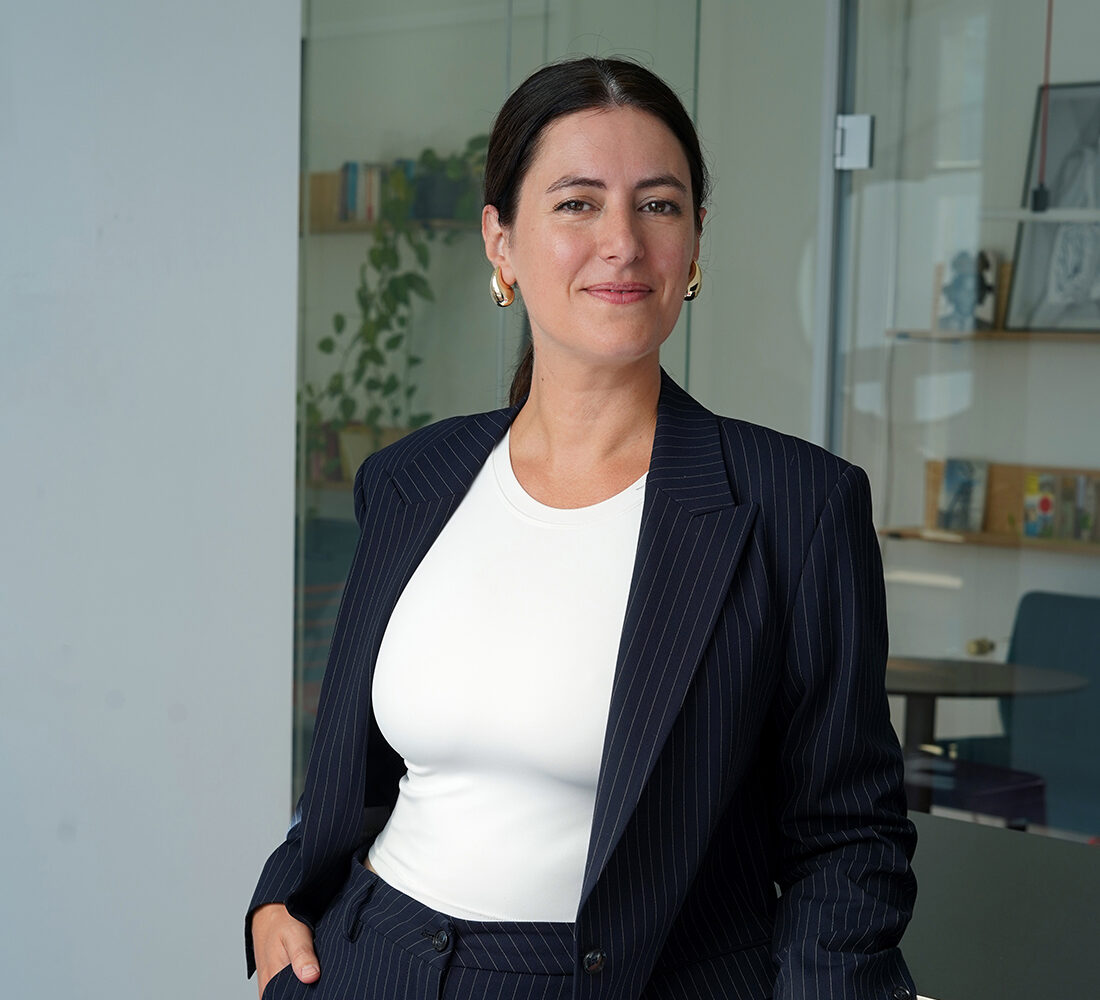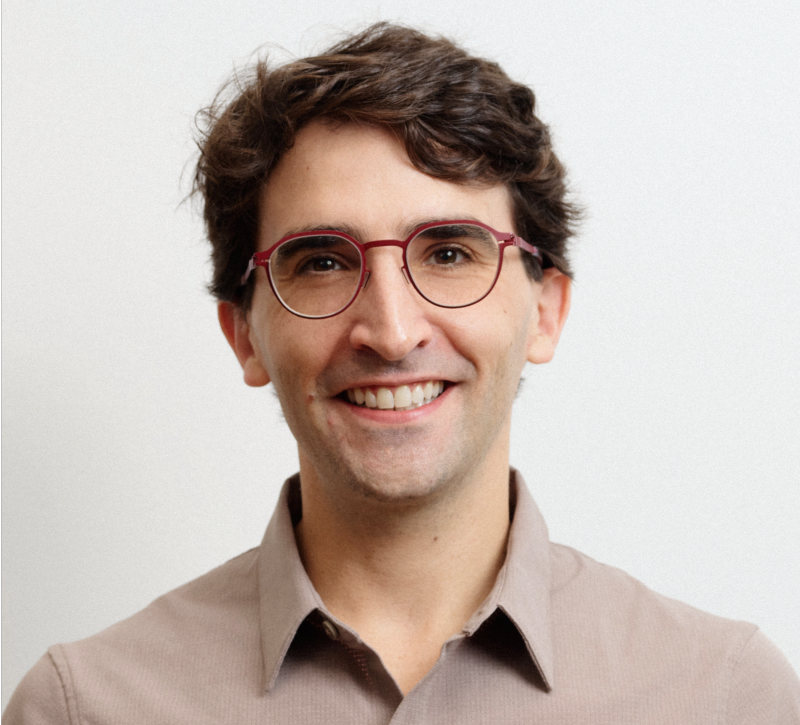

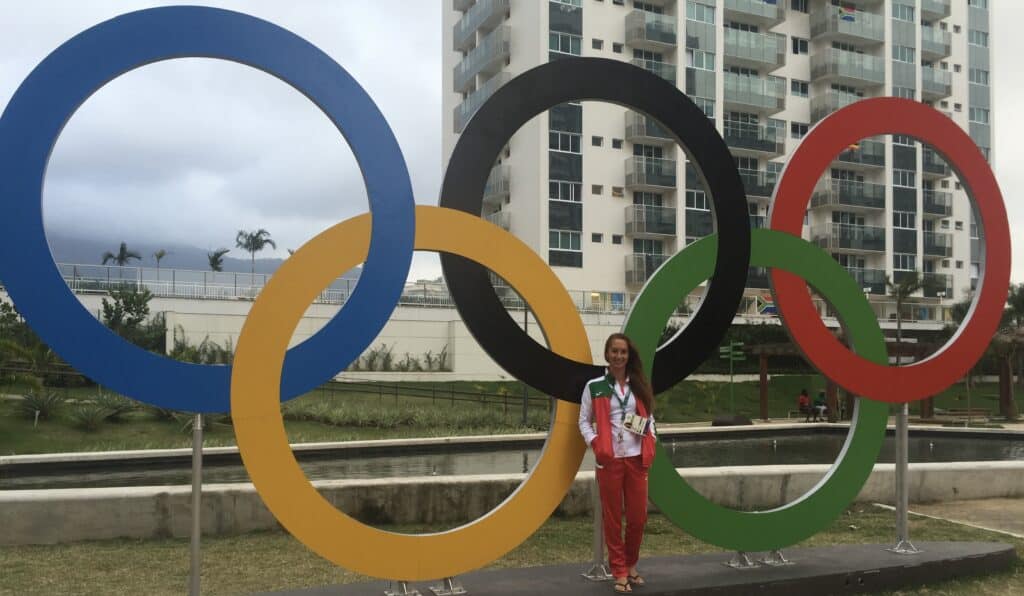
I recently went one-on-one with Nina Sadauskas. Nina is a three-time Olympian, former NCAA Division I All-American, and founder and CEO of Delfina Athletics.
Adam: Thanks again for taking the time to share your advice. First things first, though, I am sure readers would love to learn more about you. What is something about you that would surprise people?
Nina: One thing that surprises people is that when I came to the United States at 19, I spoke very little English. Even more surprising, I jumped straight into college at SMU, where every class, every assignment, and every conversation was in a language I barely knew (I was given 13 books to read for my classes the first semester…). Looking back, I’m not sure I appreciated how intimidating that should have been. I just dove in. I asked questions, made plenty of mistakes, and talked to anyone who would talk to me. I think that’s why my English improved so quickly. I enjoy connecting with people, and every conversation became practice.
People sometimes tell me they’re surprised when they learn English isn’t my first language because they’ve lived in the U.S. much longer and still feel self-conscious about their accent. I always tell them I don’t think there was any secret. I simply kept talking, even when I knew I wasn’t saying everything perfectly. That experience shaped me in ways I didn’t realize at the time. It taught me that growth usually starts before you feel ready, and that waiting until you’re comfortable often means waiting far too long.
Adam: What is something that would surprise people about the life of an Olympian?
Nina: I think people assume that once you’ve competed in the Olympics, doors automatically open for you. The reality is that for many athletes, retirement means starting from scratch. I retired from swimming in 2016 when I was 26 years old. My husband is also an Olympian, and when we applied for a mortgage on our first house, we were denied. Not because we had bad credit or had managed our finances poorly, but because we didn’t have two years of W-2 income. We’d spent our early adult lives training and competing instead of building traditional careers, and the bank’s system didn’t know what to do with that.
It was one of those moments that reminded me the Olympic rings don’t exempt you from life’s ordinary challenges. You still have to build a career, earn people’s trust, and figure out who you are outside of sport. I’m grateful for that experience. Swimming taught me how to start at the bottom, how to keep showing up when progress is slow, and how to stay patient when the outcome isn’t immediate. Those lessons turned out to be just as valuable after the Olympics as they were before them.
Adam: How did you get here? What failures, setbacks, or challenges have been most instrumental to your growth?
Nina: Looking back, the setback that changed me the most wasn’t something that happened in the pool. It happened after my swimming career ended. During COVID, I was laid off from a company that meant a great deal to me. My family lives on the other side of the world, and the people I worked with had become my community. They were the people I celebrated with, leaned on, and spent most of my time around, so losing my job felt much more personal than I expected.
With time, I came to understand that businesses sometimes have to make difficult decisions. I don’t hold that against anyone. What stayed with me was how those decisions are made and how people are treated while they’re happening. That experience shaped the kind of leader I wanted to become. I don’t believe in the phrase, “It’s just business,” because every business decision affects a person, a family, or a future that you may never fully see. You can make difficult decisions and still lead with empathy, honesty, and respect. Those things are not mutually exclusive, and I’ve tried to carry that with me every day since.
Adam: What is your most notable memory from your Olympic experience?
Nina: My most memorable Olympic experience came during my first Games in Beijing in 2008. I was only 17 years old, and just eight months earlier I had competed at my first European Championships. Everything still felt new. Arriving in Beijing was unlike anything I had ever experienced. I grew up in Eastern Europe, where I wasn’t exposed to a great deal of cultural diversity, and suddenly I found myself living in the Olympic Village alongside athletes from every corner of the world. You could walk through the dining hall and see competitors from countries you had only read about, then look over and see athletes like Michael Phelps or Serena Williams eating breakfast just a few tables away. In that environment, everyone was equal. We all wore different uniforms, spoke different languages, and had completely different stories, but we were there for the same reason.
I was also amazed by the way the Games were organized. Every detail inside the Olympic Village had been carefully planned, and you could feel the magnitude of what it takes to bring the world together in one place. People often ask whether the Olympic spirit is a real thing or just something we talk about. I can say without hesitation that it’s real. You feel it the moment you walk through the Village. It’s the feeling of being part of something much bigger than yourself, where differences in nationality, language, and culture fade into the background because everyone has dedicated years of their life to pursuing the same dream. That’s the part of the Olympics that has stayed with me the longest.
Adam: What are the best lessons you learned from the achievement of becoming an Olympian and from your experience competing in the Olympics?
Nina: The biggest lesson I learned is that confidence isn’t something you find. It’s something you earn. I think we’ve created an entire industry around teaching people how to feel more confident, but confidence doesn’t come from positive thinking. It comes from keeping promises to yourself. Every early morning workout, every practice you didn’t skip, every uncomfortable conversation, every small commitment you followed through on becomes evidence that you can handle what’s in front of you. That’s also why I love Billie Jean King’s quote, “Pressure is a privilege.” Pressure stops feeling intimidating when you’ve done the work. You’re not relying on hope anymore. You’re relying on preparation.
I carried that lesson far beyond swimming. Whether I was learning English, building a business, or stepping into a room where I felt completely out of place, I never waited until I felt confident. I focused on preparing as well as I could, because confidence has always been the byproduct, never the starting point. If there’s one thing I’d tell my younger self, it’s this: don’t chase confidence. Chase competence. Confidence has a way of catching up.
Adam: In your experience, what are the defining qualities of an effective leader? How can leaders and aspiring leaders take their leadership skills to the next level?
Nina: One of the biggest misconceptions about leadership is that leaders are supposed to have all the answers. I’ve found the opposite to be true. The best leaders ask thoughtful questions, stay curious, and are willing to admit when they don’t know something. I also believe one of the hardest parts of leadership is making difficult decisions without making people feel disposable. Every leader will eventually have to deliver disappointing news, make changes, or have uncomfortable conversations. What people remember isn’t always the decision itself. They remember how they were treated while it was happening.
I learned that lesson through my own experience. You can be direct without being cold. You can be honest while still showing empathy. Those things are signs of respect. If I had one piece of advice for aspiring leaders, it would be this: stay curious longer than you stay certain. Leadership isn’t about proving you’re the smartest person in the room. It’s about creating an environment where everyone can do their best work.
Adam: What are your three best tips applicable to entrepreneurs, executives, and civic leaders?
Nina: First, play the long game. We live in a world that celebrates overnight success, but I’ve never seen anything meaningful happen overnight. It took me years to become an Olympian, and building a business has been no different. Progress compounds when you’re willing to stay committed long after the excitement wears off.
Second, don’t be afraid of failure. Learn from it. Some of my greatest lessons came after races where I didn’t swim a personal best. During my swimming career, I set 73 Bulgarian national records, but I probably learned more from the races where I missed my goal than the ones where I achieved them. After every disappointing race, I’d ask, “What can I do differently so I don’t make that mistake again?” Business works the same way. Mistakes are inevitable. The people who continue to improve aren’t the ones who avoid failure. They’re the ones who stay curious enough to learn from it.
Third, leave people better than you found them. Titles, awards, and accomplishments fade with time, but people remember how you made them feel. Every interaction is an opportunity to encourage someone, share something you’ve learned, or simply treat another person with respect.
Adam: What is the single best piece of advice you have ever received?
Nina: One of the most valuable pieces of advice I’ve received came from spending time around people who were much further ahead of me. More than one mentor shared a version of the same idea: the people ahead of you are rarely the ones judging you. They’re usually the ones encouraging you because they remember exactly what it felt like to be where you are. Whenever I’d tell them I wasn’t ready or felt like I didn’t belong yet, I always heard, “We’ve all been there. Just keep going.”
It changed the way I think about judgment. Many of the judgments we fear aren’t even happening in real life. They’re conversations we keep replaying in our own heads. Once I recognized that, it became much easier to show up, share my work, and stop waiting until everything felt perfect. Don’t let the fear of being judged keep you from contributing something that could help someone else. The people whose opinions matter are usually the ones cheering you on.
Adam: What can anyone do to pay it forward?
Nina: I think one of the simplest ways to pay it forward is to remember what it felt like to be new. Every one of us has been the beginner at some point. We’ve all walked into a room where we didn’t know anyone, started a new job, asked what felt like a silly question, or wondered if we truly belonged. When I moved to the United States at 19, I barely spoke English. There were countless people who showed me patience, answered my questions, included me in conversations, and gave me the confidence to keep trying. Later, mentors who were years ahead of me reminded me they had once stood exactly where I was.
Paying it forward doesn’t always require a grand gesture. Sometimes it’s introducing two people who should know each other. Sometimes it’s answering a question you’ve already answered a hundred times. Sometimes it’s taking five extra minutes to encourage someone who’s just getting started.
Adam: Is there anything else you would like to share?
Nina: If there’s one thing I hope people take away from my story, it’s that you don’t have to know exactly how everything is going to unfold before you take the first step. Throughout my life, I’ve stepped into a lot of situations filled with uncertainty. I moved to the United States without speaking much English. I walked into my first Olympic Village at 17 with no idea what to expect. I retired from swimming and suddenly found myself starting over. While many of my college classmates were already moving into management roles, I was trying to figure out how to land an internship or an entry-level position. None of those chapters came with a roadmap.
Over time, I’ve learned that uncertainty isn’t something to fear. It’s often a sign that you’re growing. Some of the best opportunities in my life came from saying yes before I had every answer, then trusting myself to figure things out along the way. I still don’t know exactly what’s around every corner, and I don’t think anyone does. The difference now is that I’m much more comfortable with that uncertainty. Progress rarely comes from having complete certainty. It comes from taking the next step anyway. If my story encourages someone to take that first step, even when they don’t have everything figured out yet, then sharing it has been worth it.