
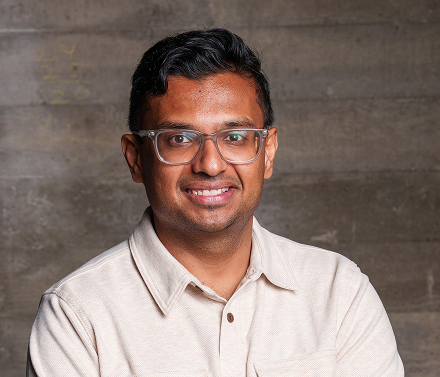
I recently went one-on-one with Venkat Mocherla. Venkat is a former partner at Andreessen Horowitz and the co-founder and President of Midstream Health.
Adam: Thanks again for taking the time to share your advice. First things first, though, I am sure readers would love to learn more about you. How did you get here? What experiences, failures, setbacks, or challenges have been most instrumental to your growth?
Venkat: I grew up inside a clinic. My grandfather ran a single-practice clinic in India, and from a young age, it was part of my world. I understood how it functioned, what it demanded, and what it meant to the people who walked through the door. What struck me most was how my grandfather practiced medicine. He was completely untethered from the economics of running the clinic, remaining solely focused on providing each patient with what they needed to get well. If patients couldn’t afford care, he wouldn’t ask for payment, and if patients needed more time with him, he would give it willingly. A standard appointment was 30 minutes; he would often spend an hour or more with patients, ensuring that they each had the support and answers they needed. More than anything, he was joyful and genuinely energized by his work. I always say, in the wise words of Warren Buffett, that my grandfather was so excited about his job that he “tap danced to work” every morning, eager to spend time with his patients and care for his community. Medicine wasn’t just his profession; it was his purpose.
When I came to the U.S. as a young student, I was struck by how different healthcare delivery is. My wife, who is a specialist, and my brother-in-law, who is a hospitalist, are exceptional clinicians. Still, so much of their days and worries are consumed by administrative work and stress, pulling them away from their patients. That contrast gave me a deeper understanding of the operational challenges providers face and inspired me to create ways to simplify healthcare workers’ tasks. The challenge wasn’t a lack of dedicated clinicians; it was the administrative burden surrounding care. My grandfather never worried about the paperwork. That model feels nearly impossible in American healthcare today. Midstream exists to change that by handling the financial and operational complexities, so providers can get back to what drew them to medicine in the first place.
Adam: What were the best lessons you learned from your time at Andreessen Horowitz?
Venkat: The biggest lesson I took away is that wanting to change healthcare and understanding how to actually change it in a way that’s meaningful to patients and providers are two very different things. What I came to understand is that real change happens at the intersection of new ideas and existing systems. For a long time, I was fascinated by the idea of pure disruption – the company that would come in, tear everything down, and build something entirely new. What I learned is that without finding ways to work alongside the system that already exists, change can take decades to happen, or never happen at all.
The other lesson was learning what it really takes to bring new ideas into established healthcare organizations. How do you help a health system, medical groups, payers, or even the government adopt a different way of thinking when they’re operating within processes, incentives, and infrastructure that was built over decades? I came to realize that this isn’t primarily a technology challenge – it’s a challenge of trust, relationships, and change management. The best founders I observed weren’t necessarily the ones who built the most sophisticated technology, but rather the ones who understood what it took to distribute that innovation at scale. The founders who understood why change happens slowly in a sector like healthcare and could recognize how to bring the tech+process+people together to transform those realities rather than ignore them.
Adam: What did you look for in companies you invested in? What are your best tips for investors?
Venkat: Sometimes in Silicon Valley, there is a temptation to consider capital first, then the team, and finally the market. A company raises a significant round, attracts impressive talent, and that momentum can become a proxy for its potential. But I’ve found that the strongest founders often work in the opposite direction. They start with a deep understanding of the market: a problem that truly needs to be solved, the people who feel that problem most acutely, and the realities of how a solution will actually be bought and adopted. Capital and talent can help a company scale, but they can’t create a market or a path into one. Especially in regulated industries, investors should ask: Does this founder understand what it will take to turn early interest into a real business?
One idea I heard repeatedly during my four years at a16z came from Marc Andreessen himself: “The battle between every startup and incumbent is a race between the incumbent’s ability to innovate and the innovator’s ability to distribute.” In healthcare, distribution is often the harder challenge, so my advice is to focus on understanding the path to adoption. Even great products can struggle if there’s no clear buyer or purchasing process. Ask who will buy the solution and how decisions are made. The answers to those questions often tell you more about a company’s potential than the product demo itself.
Adam: How did you come up with your business idea and know it was worth pursuing?
Venkat: More than a decade ago, before joining a16z, I was at Qventus working closely with health systems as they first began adopting AI. In those early days, it was clear that clinical decisions went through rigorous review processes, as they should, but financial decisions often weren’t given the same level of scrutiny. In addition, most of the capital allocated to using AI to improve financial decision-making was concentrated in the revenue cycle. Years later, as AI continued transforming more areas of healthcare, that story remained largely the same. But healthcare fundamentally has a cost crisis, and I believed the path to long-term financial sustainability wouldn’t come from another niche revenue cycle play. The far bigger opportunity was to help health systems optimize costs and then connect those decisions back to revenue. That opportunity was largely untapped.
As I started diving deeper into the problem, the CEO of one of the country’s premier health systems shared a terrifying statistic with me: more hospitals had closed in the last decade than in the previous hundred years combined. I’d seen this play out in real life, too. My co-founder Sumit Kadakia’s father is a practicing physician, and every rural hospital he’s worked in throughout his decades-long career has closed. In many parts of the country, health systems are the largest employers, and when hospitals close, the consequences extend beyond access to care to the economic health of entire communities. I knew we needed to reverse this trend.
All of that time spent in the weeds informed the product we ultimately created with Midstream: learning how health systems operate at a granular level, understanding where dollars were leaking out unnoticed, and seeing the real-world impact on patients and communities. The clearest signal that we were onto something was how immediately the idea resonated with health systems. We weren’t building a tool that just looked good in a demo. We were solving a problem they deeply understood because they were living it every day.
Adam: What advice do you have for others on how to come up with and test business ideas?
Venkat: My advice to aspiring founders comes directly from building Midstream. Everyone goes to a prospective customer and asks the same old question: “What keeps you up at night?” And while you might get a nugget or two from that, I think the more important question is: “Can you walk me through exactly how you do X today?” Seeing their challenges firsthand can teach you more than a hundred prospective customer calls.
Adam: What are the key steps you have taken to grow your business? What advice do you have for others on how to take their businesses to the next level?
Venkat: The most important early decision was staying focused. Health system finances touch nearly every aspect of running a hospital, from labor and supply chain costs to capital planning. It was tempting to tackle everything at once. Instead, we chose to start with the biggest problem, prove measurable value, and build from there. Today, we’re helping health systems uncover and act on cost-saving opportunities, with plans to expand into a broader platform for financial decision-making across the enterprise.
The second thing I learned is that finance teams inside health systems are highly capable and committed. What they often lack is the infrastructure to act on what they already know. Midstream’s platform is designed to give 10x teammates the 10x tech stack they deserve to do their jobs most efficiently and impactfully. That focus on delivering real value also informed our approach to growth. We prioritized customer outcomes over rapid expansion, knowing that in healthcare, a CFO recommending you to a peer is far more powerful than any sales strategy.
Adam: What are the most important trends in technology that leaders should be aware of and understand? What should they understand about them?
Venkat: The rapid adoption of AI tools by hospital systems is already reshaping how work gets done. Administrators and finance teams are using large language models to work more efficiently, often moving faster than their organization’s formal AI strategy.
What leaders need to understand is that this is as much a workforce shift as it is a technological one. Employees are actively looking for better ways to solve problems and reduce administrative work. Organizations that view AI only through the lens of compliance and risk may miss the larger opportunity. The leaders who benefit most will be those who focus on how AI can help their teams operate more effectively.
Adam: In your experience, what are the defining qualities of an effective leader? How can leaders and aspiring leaders take their leadership skills to the next level?
Venkat: The best leaders I’ve worked with never fully accepted that the current way of doing something was the only way. They asked hard questions, made decisions, and acted on them. They also had a clear view of what was actually broken. In healthcare, it’s easy to dismiss problems as unavoidable because the system is complex. The leaders who make the most progress are the ones who recognize that many challenges persist simply because they’ve become accepted as normal.
For aspiring leaders, my advice is to pay attention to the assumptions no one questions anymore. Every large or matrixed organization has processes that exist simply because they’ve always existed. If you’re willing to ask why and open to new approaches, you’ll often uncover opportunities for meaningful impact.
Adam: What are your three best tips applicable to entrepreneurs, executives, and civic leaders?
Venkat: Stay close to the problem. As organizations grow, it’s easy to become removed from the day-to-day challenges people face. The best leaders maintain a direct understanding of the problems they’re trying to solve and regularly seek input from those experiencing them firsthand.
Build for adoption, not just innovation. A great idea only creates value if people actually use it. Focus as much on implementation as you do on the innovation itself.
Never lose sight of the people affected by the problem you’re solving. It’s easy to discuss challenges in terms of efficiency metrics, but behind those metrics are real people whose lives and experiences are impacted by the decisions we make.
Adam: What is the single best piece of advice you have ever received?
Venkat: The best advice I’ve ever received is that having a good idea and having a path to adoption are two different things. Healthcare doesn’t change because someone invents a better solution; it changes when that solution is embraced by the institutions and people who make the system work. Throughout my career, from watching my grandfather run a clinic, to investing in healthtech, and eventually co-founding a healthtech company, I’ve learned that real impact comes from building bridges between what’s possible and what’s practical. Innovation matters, but distribution, trust, and execution are what ultimately change healthcare.
Adam: Is there anything else you would like to share?
Venkat: We’re still at the beginning of what is possible. Healthcare organizations are under immense financial pressure, yet many still cannot act fast enough on what their own financial data already tells them. Closing that gap is what our work comes down to. Dollars a health system has already earned but never collected can go back into staffing, services, and the community it serves. Success for us is measured in the clinicians, patients, and communities that benefit when healthcare organizations have the resources they need to fulfill their mission.