

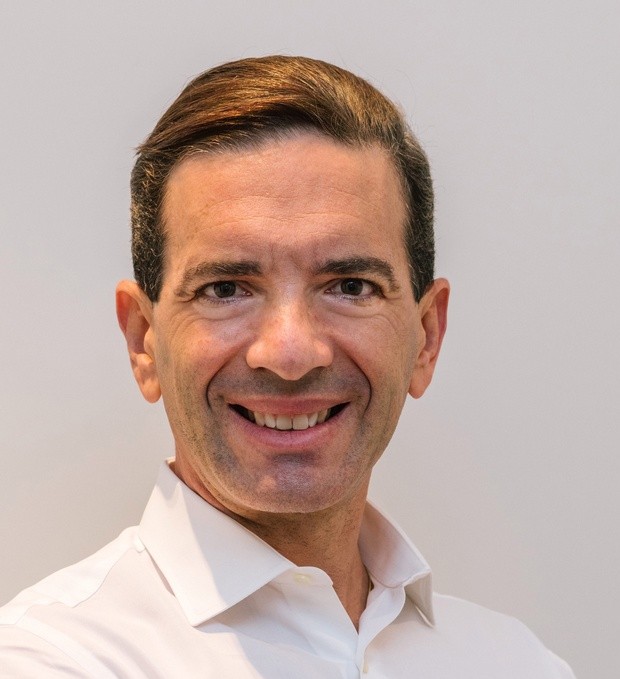
I recently went one-on-one with Luis R. Baptista, professor at IE Business School and co-author of Pivot-Quest: Find Your Way Forward When the Career You Built No Longer Fits.
Adam: Thanks again for taking the time to share your advice. First things first, though, I am sure readers would love to learn more about you. How did you get here? What experiences, failures, setbacks, or challenges have been most instrumental to your growth?
Luis: I am a civil engineer whose first formal job after graduation was in marketing at Procter & Gamble. That already tells you something about my curiosity. I was educated between Venezuela and the US and spent most of my early career in corporate. I later found myself in Europe as an entrepreneur. The experience that shaped me most was a failure. I arrived in Madrid in 2003, having left Venezuela, where I was running a $300 million cosmetics and clothing operation. I decided to pivot and open the first Cinnabon franchise in continental Europe. I tested the product, raised the money, trained a team, and opened shop. The early success turned into a flop. It was my first professional failure, in a new country, funded by friends and family who until then had considered me smart and hardworking. The money ran out more slowly than my confidence did. It took me years to recover, both financially and emotionally.
What I learned is that a big career move is four decisions at once: a career decision, a financial decision, a family decision, and an identity decision. I had planned only the first. But the failure led to something unexpected, as failures often do. Months later, a friend asked me to speak to a group of French entrepreneurs who were moving to Madrid. I went in feeling like I would have nothing meaningful to share with them. To my surprise, I answered questions for more than two hours. It turned out every mistake I had made was incredibly useful to this group. That evening opened the door to teaching at IE Business School, where I have been for more than 15 years. Nobody teaches us how to manage failure. It should be a subject in primary school.
Adam: What are the most important trends in technology that leaders should be aware of and understand? What should they understand about them?
Luis: AI is here to stay. What people are still unsure about is how deeply it will be embedded in the future of work. The companies developing AI have little interest in saying it openly, but AI will take over many jobs, and that shift is already underway. They can see it coming because they work with models far more advanced than those available to the average company or consumer. Nobody seems to have figured out who will pay the bill, or what the real impact will be on the economy and society. If there are far fewer employees, where does the money come from to buy products and services? An economy is a circle. The person you replace is also somebody’s customer. I have seen it up close. An engineer I interviewed for my book was told to absorb the work of his company’s whole data analytics department. Five people, about a million dollars a year in salaries. He did it with an AI subscription that costs less than a streaming service. Three months later, his own job was gone too.
That is where organizations are heading. They will be run by hybrid teams of people and agents, and leaders must understand that dynamic. Today’s agent is like a dishwasher: it does one particular chore. Tomorrow’s will be more like a new hire who takes on a whole role. So here is an exercise for leaders. Picture your company with 10%, 25%, 50% or 75% of the employees you have today. What will be automated? What stays human? And where will the demand for your products and services come from? Most leaders have only done the cost side of that math.
I do not want to sound pessimistic. I believe AI is an opportunity to embrace. I do not have the numbers, but I am sure many new entrepreneurs and solopreneurs emerging today, and people exploring their hobbies and passions in completely new ways. AI is also already advancing science, medicine, and many other fields at a speed we have never witnessed in history. The second trend is robotics. It is moving much faster than we want to believe, even if mainstream adoption is still further away, maybe five years. Think of AI as the brain and robotics as the body. Once the two work together, they can take over much of what humans do today, and that goes well beyond desk work.
Adam: What do you believe are the defining qualities of an effective leader?
Luis: For me, effective leadership starts with listening. Then come strategic vision and a real understanding of the nuances of the operation. A leader also needs to identify, cultivate, and manage a team of people who are, ideally, more knowledgeable and smarter than they are in their respective fields than the leader is. Add humility, communication, storytelling skills, and gravitas. Lastly, a leader must know how to manage the different stakeholders they interact with.
Think of a football coach. The coach does not need to run faster than the striker or save more shots than the goalkeeper. The job is to see the whole pitch, put each person where they play best, and make them believe in the plan. If you are the best player in every position, you have picked the wrong team. A leader and the team must also share common values. We have lost that today. You see people drop their values when the first complication arises. Values that only hold in good weather are not values. Above all, I believe an effective leader treats everyone with respect and doesn’t let ego get in the way of these qualities. Ego stops you from listening, and it stops you from hiring people better than you.
Adam: How can leaders and aspiring leaders take their leadership skills to the next level?
Luis: It starts with acknowledging that you do not know it all. From there, it means being a constant learner and cultivating your curiosity. The practical part is putting yourself in uncomfortable situations and learning from them. Every career change I have made began with a stretch of being the least knowledgeable person in the room and deciding that was acceptable. Being a beginner in public is embarrassing, especially at an age when people expect you to have the answers. It is also the fastest classroom I know. Leadership works like a muscle. It grows only when you lift something a little heavier than last time. So my suggestion is to pick one thing each year where you are a true beginner: a new function, a new industry, a new technology. The discomfort tells you the learning is happening.
Adam: What do you hope readers take away from your new book?
Luis: I have read more than 16 books on career reinvention. They are great at supporting people through key steps of the journey, but my co-author Juliana and I wanted to write a book that was both inspirational and practical. So it includes stories from real people about their struggles, along with easy-to-understand exercises to overcome them. I am a fan of behavioral science and neuroscience. Atomic Habits by James Clear and The DOSE Effect by TJ Power inspired the way the chapters are written: short, requiring commitment from the reader and allowing time to practice. A good gym gives you the machines, and it also gives you a routine. We tried to do the same. I want readers to leave with a sense of empowerment: I know exactly what I need to do, and I can do it, because I have the knowledge and tools to make it happen. Almost everyone we interviewed arrived thinking they were the problem. They were not. The system changed, and nobody gave them the new instructions.
Adam: What are the keys to reinvention and successfully pivoting?
Luis: There are four. First, understand that it is a journey, not merely a job change. A job change takes a few weeks and touches your CV. A pivot touches your finances, your family, and your identity. If you pack for a weekend and the trip takes a year, you will suffer.
Second, do the work on yourself. I learned this the hard way. At one point I was sitting in a temporary apartment in Spain with a spreadsheet of 67 assessments I had taken about myself. Each one told me something true, and I was more lost than when I started. The assessments were the map. A map is useless if you never leave the house, and you also cannot travel without one.
Third, account for the six readiness factors for success, or at least acknowledge how you will manage them. They are a financial buffer, a support system, emotional readiness, a growth mindset, networking, and personal brand clarity. Think of them as the six gauges on a dashboard. You don’t need all six at full, but you need to know which ones are low before you start driving. When we surveyed professionals who felt stuck, more than half named a financial worry among their top three barriers. The two factors people plan for least, money and emotions, are the two that decide whether they make it.
Fourth, adopt an entrepreneurial mindset. Always prototype, test, and iterate. You cannot think your way into knowing whether a new path is right for you. Volunteer, take a small project, shadow someone for a day. A pivot is an experiment you can learn from.
Adam: What are your three best tips applicable to entrepreneurs, executives, and civic leaders?
Luis: First, define your personal vision and mission. Companies write theirs down. Most people never do. Without them, every opportunity looks interesting, and you end up being steered by other people’s plans. With them, you have a filter for what to say yes and no to.
Second, create the story and the proof points to communicate it. A vision nobody understands does not travel. Saying “I am a fast learner” asks people to believe you. Showing what you built, or the analysis nobody asked for, means they don’t have to. One piece of real work outweighs a page of adjectives.
Third, always have a sounding board to help you on your journey. One of the first people I interviewed was certain she was in the wrong career, and she had told nobody. Not her spouse, not one friend. Most of the people we interviewed had done the same. Keeping the journey private can work, but it is slower and far lonelier than it needs to be. Three or four people who will tell you the truth are worth more than a thousand contacts.
Adam: What is the single best piece of advice you have ever received?
Luis: I will stretch it to two lessons, and I apologize in advance if they sound obvious. The first came from my uncle, Ricardo Zuloaga, whose father founded Venezuela’s largest power company. Wherever you go, he told me, create environments where people want to stay and flourish. It is easier, and more efficient, to retain and develop your talent or your customers than to go fishing every time. Think of two restaurants. One is full of regulars who come back every week and bring their friends. The other needs a street full of new tourists every night. The first owner sleeps much better.
The second came from one of my interviews for the book: things happen to you for a reason. There is always a lesson in every failure and every success. Take the time to analyze it and apply it. My failed business in Madrid looked like the end of something. Because a friend made me talk about it to people about to try the same thing, it became the start of my teaching career. Most of us rush past our failures because they hurt, and we rush past our successes because we are busy. In both cases, we leave the lesson on the table.
Adam: Is there anything else you would like to share?
Luis: Yes. I have been working with Allard de Ranitz, a Dutch expert who has studied consciousness for 30 years. Here is what I have taken from that work. Consciousness is the lens through which you experience everything: your thoughts, your emotions, and the world around you. Without awareness of that lens, you are like a fish that does not know it is in water. You react to life instead of shaping it. It is also like driving without realizing you are the one steering. You repeat the same crashes and wonder why nothing changes. The world is changing at breakneck speed. If we do not change with it, we answer new questions with old thinking. That is why so many transformations fail, personal or global: we change our actions but not our awareness.
There are two kinds of growth. Horizontal growth helps you master the game: better skills, healthier habits, stronger relationships. Vertical growth changes the game itself, from “I am my thoughts” to “I am the awareness behind my thoughts.” Without it, even the boldest pivot is like rearranging deck chairs on the Titanic. You change the job and keep the same old story.