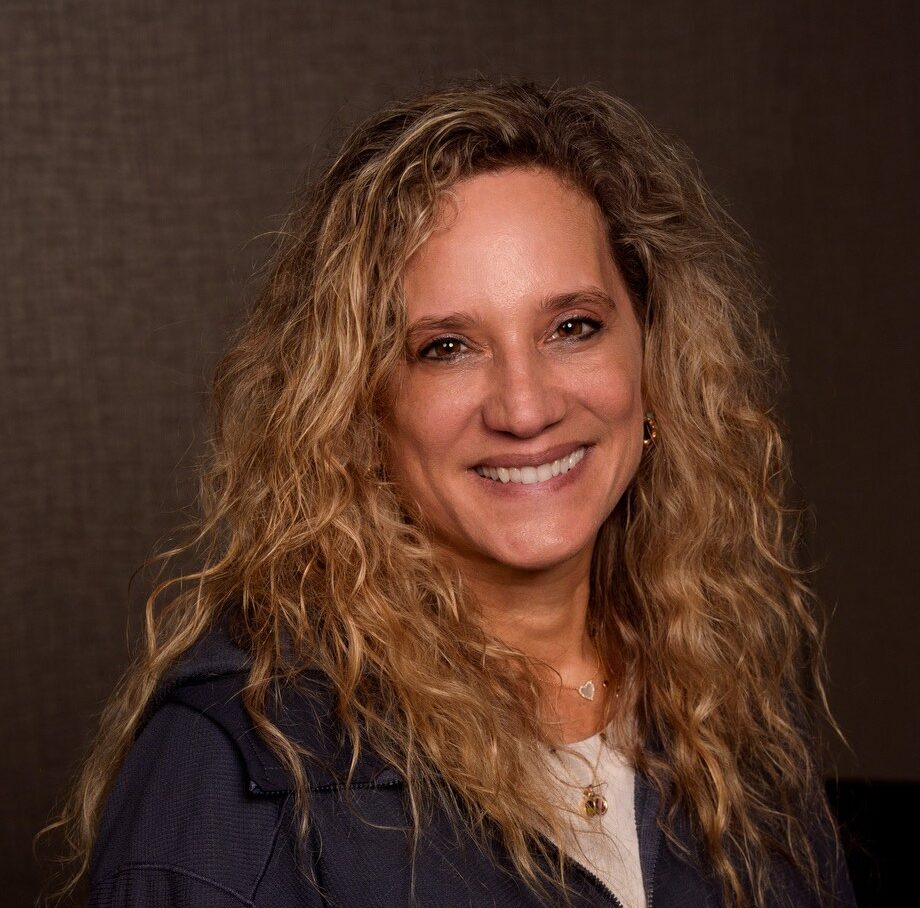


Adam: Thanks again for taking the time to share your advice. First things first, though, I am sure readers would love to learn more about you. How did you get here? What experiences, failures, setbacks, or challenges have been most instrumental to your growth?
Sarah: I would first acknowledge that much of where I am in my career is owed to good fortune: the serendipitous timing of stepping into certain roles or being exposed to certain opportunities, the privilege of having access to an excellent education, and perhaps most of all, the invaluable learnings from years of getting to collaborate with people far wiser than me.
In terms of my own growth trajectory, I think my work has always been driven by the same personality traits: I have a strong entrepreneurial bent, intense curiosity, a predilection for action, and an abiding love for storytelling that moves people. I started my career as an independent film producer. In that role, you’re responsible for a vast array of challenging business, creative, legal, talent, and financial responsibilities, all while ensuring a great film gets made and running a marketing campaign that gets it seen by audiences.
I learned early on that you have to be the engine of progress, but you can’t get it done without gifted collaborators, and they have to trust you and believe in you enough to devote their energy and currency to making your project real. This was acutely evident as I’d stepped into the role at a young age without the proven record of many of my colleagues. I had to carefully calibrate a balance of trusting my instincts and the boldness that had gotten me to where I was, with the humility of how much I had left to learn from the hard-won acumen of the people around me.
The experience of bringing feature films into fruition was formative for the rest of my career and taught me core lessons I’ve carried forward for 20+ years. Learning how to galvanize people with diverse expertise and synthesize an array of specialized inputs to make quick but informed decisions; learning how to balance audacity and humility (plus curiosity); learning the tenacity to work incredibly hard, for incredibly long, and weather the temporary setbacks without giving up on the big-picture goal: all have been instrumental in my work leading and growing diversely specialized global teams, building expertise in emerging tech, stepping into new environments and new disciplines, and reimagining creative marketing production systems at global scale.
Adam: In your experience, what are the key steps to growing and scaling your business?
Sarah: I’ve engaged in launching and growing businesses, or expanding teams and capabilities, at both small independents and huge global companies, and a few core truths hold:
If you’re building something new or aiming to meaningfully scale your operation, it’s crucial to foster an ownership mindset among the entire team. Everyone needs to feel invested in the goal and the outcome, and everyone needs to be clear on what success looks like. That vision is not something you can outsource or postpone; it’s the starting point around which you galvanize your team and your operational plans.
Growth starts with that clarity around the mission, but it also quickly requires building the systems and processes to support the vision of where you’ll end up. Some companies seem to find early success through a kind of cult of personality, which depends on individual leaders or founders, but to effectively scale, we need to design systems that actually work so successfully they can withstand the vagaries of talent and market changes.
Finally, companies are not monoliths; they’re collections of human beings, and engaging people in your plan for the company’s or team’s growth is best achieved through fostering trusting relationships with the collaborators who will help make that real. I believe radical transformation away from entrenched ways of working or archaic systems is often necessary, especially in the course of reorganizing corporate structures to better meet the moment of business needs, but I don’t think we have to employ a “move fast and break things” ethos to achieve this. Making genuine effort to win hearts and minds and engage team members in a collective future enables us to be fiercely ambitious with a dedicated workforce powering the progress.
Adam: What is your best advice on building, leading, and managing teams?
Sarah: These are the precepts of team building and leadership that I believe in most, and continually strive to achieve:
Focus intensely on your recruitment and talent development processes. Hiring and elevating the right people changes the game for team retention and growth.
Look for people who are relentlessly curious, who can learn and synthesize new information quickly, and who are excited by transformation. Those qualities are all more important than the sum of what someone knows today.
Know what your team/department stands for, and protect your culture.
Give people slightly more responsibility than feels comfortable for either of you.
Engender organic ways for team members to inspire each other, whether through sharing personal work or showcasing capabilities they don’t get to use in their daily work. Giving people room to stretch is crucial in a creative field.
Create a working environment where failure is not a blame game but an accepted part of growth. Destigmatizing failure and fostering shared accountability across managers & teams liberates people to take bigger swings, which leads to more impactful results.
Everyone from Socrates to Conan O’Brien has a quote that essentially says, at the end of the day, none of us really know anything. It’s good for everyone on the team when we acknowledge we’re all just human and doing our best.
Adam: What are the most important trends in technology that leaders should be aware of and understand? What should they understand about them?
Sarah: AI obviously continues to cause a seismic shift across industries. But I think treating the tech itself as the strategic insight is a common and fundamental misconception. At this point, everyone knows generative AI can make content creation faster, cheaper, and more scalable, and in that sense it’s a force multiplier. But the trap that’s easy to fall into is scaling outputs without redesigning the system that creates them.
In marketing, brands aren’t just in need of assets to fulfill media; they’re in need of fluid systems capable of continuously creating, adapting, optimizing, and governing content across global, omnichannel environments. Highly curated and algorithmically driven entertainment and social platforms have trained media consumers to expect responsive, hyper-personalized content experiences. Generative AI pipelines make it exponentially easier and faster to produce a high volume of permutations tailored to audiences, fandoms, and occasions, but that leap doesn’t mean the content will be memorable or culturally resonant.
As gen AI models continue to rapidly accelerate and enable a vast spectrum of content creation, that ineffable quality of human taste, injecting humor or pathos or just coherence into the work, should become even more discernible. Emerging technologies in general are incredible for opening up new storytelling and new modes of engagement with audiences, led by artists. Creative excellence in a final piece of media content comes from a litany of seemingly small decisions, and the ability to immediately identify what good looks like will get even more valuable as the field overcrowds with average work.
Adam: What do you believe are the defining qualities of an effective leader?
Sarah: There are many effective leadership styles out there. What I’m sharing here is personal to me.
An open mind. I embrace the mindset of “strong convictions, loosely held.” Advocate for your ideas with passion and conviction, but stay genuinely open to contradictory thinking. Avoid the pernicious trap of needing to be right. I’ve heard this approach described as “Debate like you’re right and listen like you’re wrong,” and I can’t say it better than that.
Curiosity. Particularly as the pace of change increases exponentially, we have to stay curious and be willing to evolve. It pays dividends in collaboration, too; the people I’m always most excited to work with are those who find joy in discovery.
Courage. I try to lead from behind, except when we’re running into live fire; then it’s incumbent on a leader to go out in front. I’ve always respected courageous leaders who stand out for willingness to have hard conversations, put progress above politics, and stay in the “messy middle” of working to advance their agenda while treating everyone around them with respect and humanity.
Humility. This is an interesting balance. You need the confidence, sometimes even audacity, to assert big ambitions, take on daunting challenges, and galvanize others around a unified goal. But you also need humility, both personally and organizationally, to recognize what it takes to turn those ambitions into reality.
Adam: How can leaders and aspiring leaders take their leadership skills to the next level?
Sarah: Study your own leaders. I have gained incalculable insight over the years from watching my bosses and C-suite leaders negotiate a deal, manage an upset client, launch a new arm of the business, or even handle layoffs. I’ve been extremely lucky to have had amazing managers and mentors throughout my career. Today I am so grateful to report to two brilliant leaders, highly accomplished and visionary experts who are generous in sharing time and acumen and give me valuable opportunities to cultivate my growth.
Embrace discomfort. It’s easy to fall into the trap of staying in your safe comfort zone, especially as you get more senior and it feels like there’s more at stake. I am a big fan of taking the less obvious path and trying the thing you’re not quite sure you can succeed at. For me, those decisions have been wildly gratifying and led me to more interesting places.
Recognize your fear response. This will probably give me away as the child of a psychologist, but I think most of how we react to problems or curveballs at work is a fear response: fear of a poor outcome, of our own personal failure, of someone being angry with us. I wouldn’t suggest anyone can or should just get rid of fear, but it’s helpful to recognize when our behavior is influenced by it and try to open up possibilities to respond differently.
Start working on replacing yourself. That might sound provocative, but it isn’t necessarily literal. It’s a mindset shift that prioritizes two things: one, training and elevating the people on your team so that by the time your role is open, the right person is ready to leap into it; and two, alongside the everyday demands of your role, keeping a bit of space in your brain for the ambition of how you want to keep building on what you’re doing, and hopefully find new ways to drive success for your team and company.
Adam: What is the single best piece of advice you have ever received?
Sarah: My dear friend Tina Perry, the incisive President of Oprah Winfrey Network (part of Skydance), gave me some resonant leadership advice many years ago when I first started managing teams. She told me to never forget that people are giving you more of their time and presence, spending more hours of their day with you, than they are with their partners, children, friends, and part of being a good leader is to treat their presence and contributions as sacred. That is time, energy, and trust that you’re fortunate to harness, and you have a responsibility to do something meaningful and impactful with it. I have always kept this advice close as part of my commitment to fostering a team environment where people feel supported and able to grow.
And a bonus answer: my daughter gave me some advice, actually while I was in the midst of writing this: “Close your computer and play with me.” That’s guidance I heeded immediately, and hope to always.