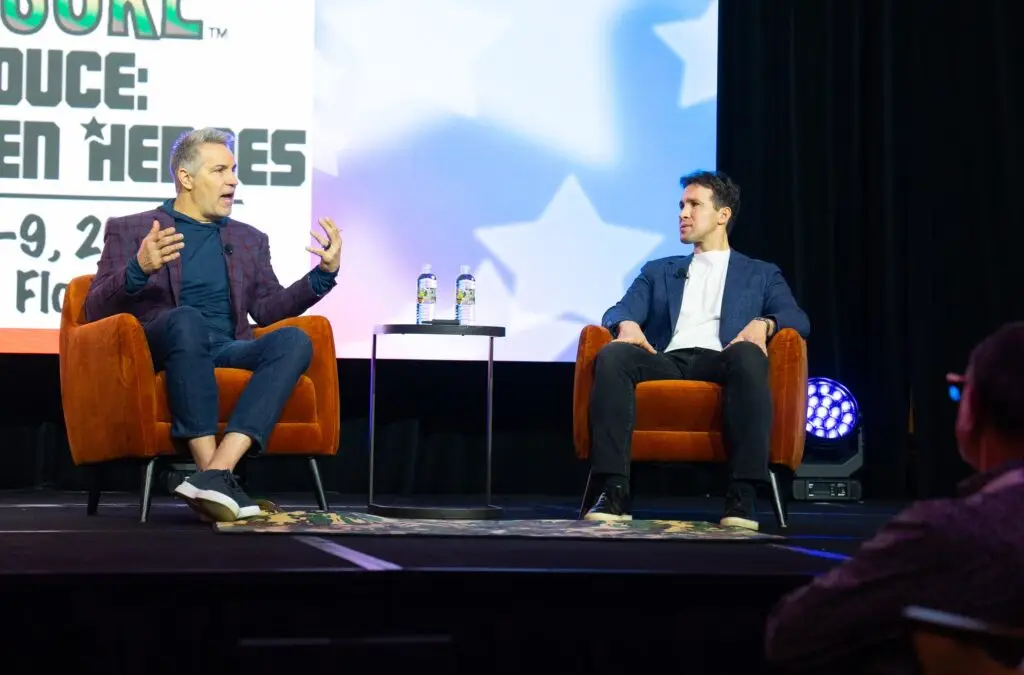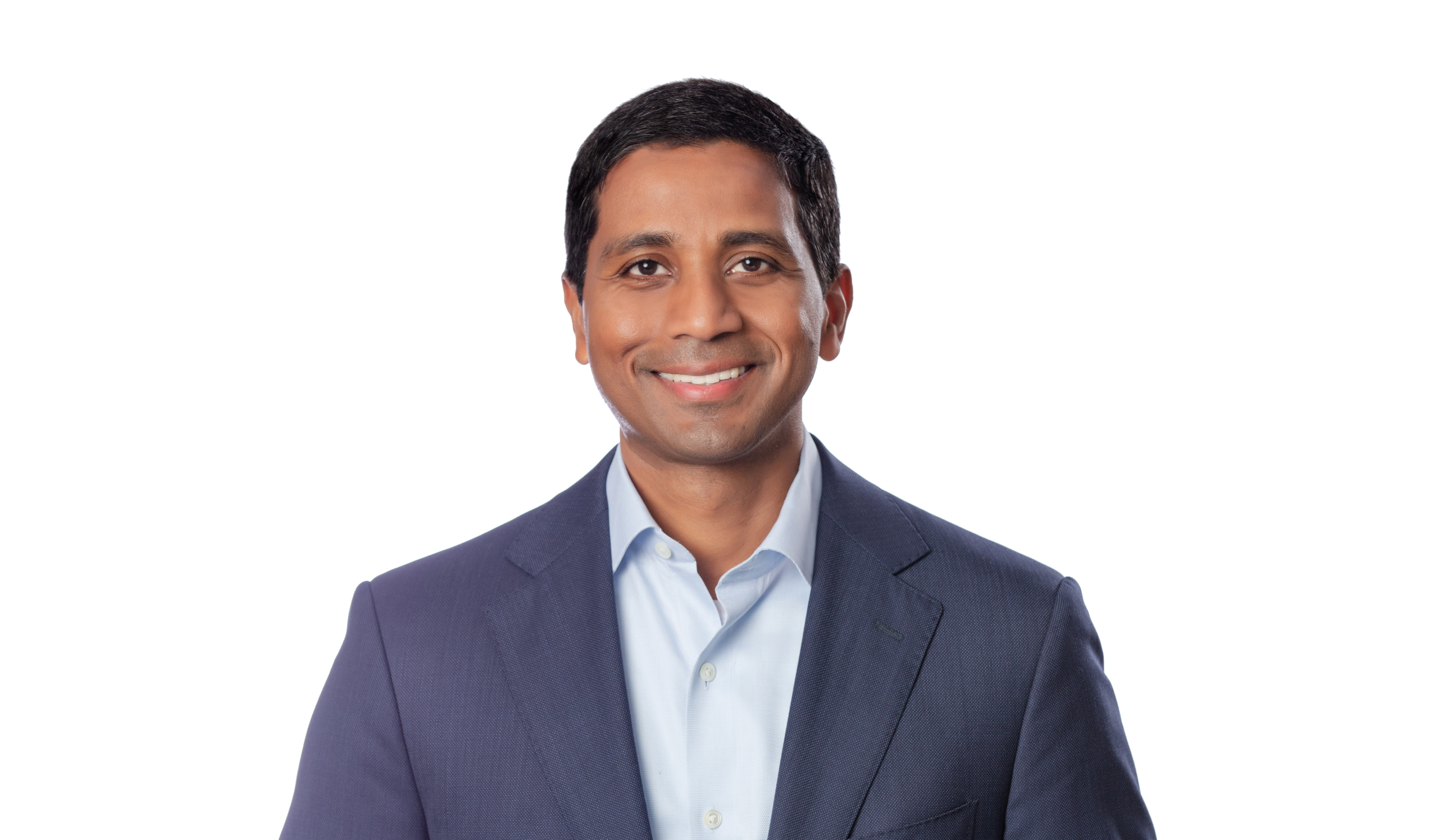

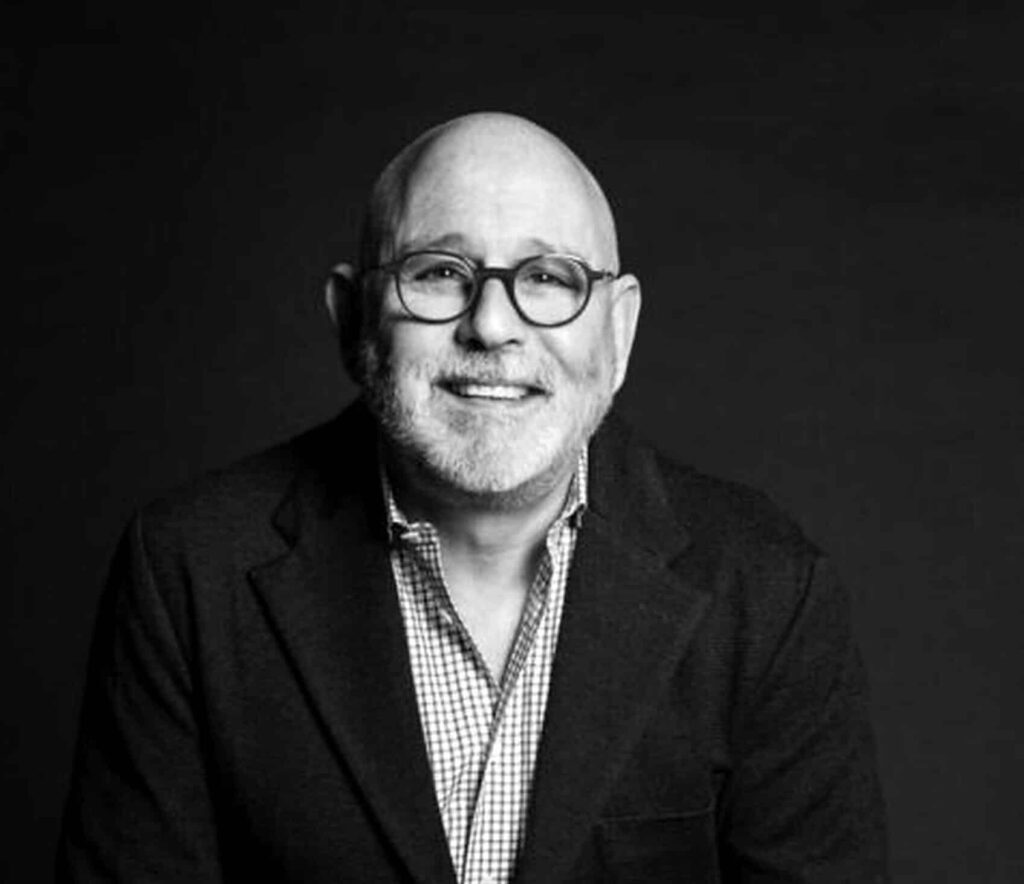
I recently interviewed Former E*TRADE CEO Mitch Caplan on my podcast, Thirty Minute Mentors. Here is a transcript of our interview:
Adam: Our guest today led one of the largest brands in the world of finance. Mitch Caplan was the CEO of E-Trade and is currently the CEO of Willow Wealth. Mitch, thank you for joining us.
Mitch: Pleasure. Glad to be here.
Adam: You grew up in Portsmouth, Virginia, and you stayed on the East Coast for college and for grad school. You studied history at Brandeis and went to business school and law school at Emory. Can you take listeners back to your early days? What early experiences and lessons shaped your worldview and shaped the trajectory of your success?
Mitch: Yeah, it’s a great question. I was a very traditional kid growing up in the South. Portsmouth, Virginia, was part of the Portsmouth, Norfolk, Virginia Beach area. It was definitely very Southern, and in my family, education was paramount. I was an only child, and for my mom, who grew up in New York, met and married my dad, and moved to Virginia, the biggest hurdle for her was getting over the concern that I wouldn’t be properly educated. My dad also was totally self-made and ultimately never really had the educational experience that he wanted, so he wanted to make sure I had it. I went to a college prep school for the vast preponderance of my 12 years, and it was good. It taught me the importance of education. It taught me the importance of discipline and hard work. It also taught me that I wanted to leave the South and move to the North. As I was applying to schools, Brandeis was at the top of my list. It was in Boston. I wanted to be in the Northeast, and particularly likely in the Boston area. It was interesting growing up in the South in a school that was very academically forward but was very restrictive. It felt very hard as a young Jewish kid to be able to find other people that you could identify with, and I think that also led me to really find something compelling about Brandeis. It was probably one of the best decisions I’ve made. I think, for my parents, my dad was born and raised in Virginia, so he probably would have been thrilled if I went to the University of Virginia. My mom, of course, thought I was going to go to Yale, and for both of them, I probably shocked them by going to Brandeis. But it truly was one of the most important decisions I made in my life because it let me really come into myself in a way in which I gained a sense of confidence, a sense of purpose, a sense of belonging. Ultimately, I think you’ve probably experienced this with all the amazing people you’ve interviewed. One of the keys to success in business is really learning how to communicate, and in order to communicate well, I think you have to have a level of comfort with yourself and who you are. Ultimately, I think Brandeis was instrumental in letting that happen. Then I went on from there to graduate school. I didn’t even do it concurrently. I did it sequentially. I did business school first, recognizing that I had gotten a great liberal arts education but didn’t know anything about finance. I didn’t know a debit from a credit and thought it probably was good for me to get a good, strong, solid finance background, which was business school. Then, while I was at business school, it became clear that I also wanted to get a law degree, so I stayed at Emory for the whole time to do both an MBA and a JD. From there, I knew I wanted to go back to the Northeast. I wanted to practice law for long enough that I felt like I could really run a deal and understand what was involved in it. I interviewed around, got an offer, and accepted at a large firm in New York, Shearman & Sterling. Again, it was a great experience for five years. I learned a lot, but ultimately I think I always knew that I had a very strong entrepreneurial bent, and while it could seem quite appealing to become a partner at a big New York law firm, ultimately that really wasn’t where I wanted to go. I wanted to build a business, and so after five years, at the very end of ’89 and the beginning of ’90, I started on this journey of really building our first business. From there, it’s been a 30- or 40-year experience of building and running companies.
Adam: I love it, and you shared so much that I would love to dive into. You spoke about the importance of getting comfortable in your own skin, essential to being able to communicate effectively, essential to being able to lead effectively. How can anyone become comfortable in their own skin?
Mitch: Yeah, I mean, I think it takes work. You have to surround yourself with a coterie of people. So, for me, this was obviously all of my friends in college who really leaned into you and who you are, all your quirks. I met my wife in college. I met her freshman year in calculus class, and we’ve been happily married for 40-some years, and it’s been incredible. But we have many of the same group of our core friends, or people who we’re friendly with from college, and starting with that network really allows you to lean into who you are and what you want to be because there are people who are understanding and supportive. I had an amazing family as well, which always encouraged me and always told me that I could do and achieve whatever I wanted in my life. So the combination of all of that, plus just maturing, leads you to a place where you really begin to feel comfortable in your own skin, and you learn not only to embrace that comfort but to use it as a base for things like the ability to communicate. What’s the best way to try to tell a story? How do you get people engaged and interested? Who you’re speaking to and the way in which you’re speaking to them matter immensely for all forms of leadership. I think that was a big learning for me, starting, I guess, in college, but I’d say I’m still on that same journey.
Adam: What were the most important skills that you developed that allowed you to rise in your career, and what are the most important skills that you utilized and continue to utilize as a leader?
Mitch: Ultimately, in time, you learn to trust your instincts, and I say this all the time to people at Willow. It’s quite remarkable because, when you’re young, you would never think of giving the answer, “I don’t know.” You just wouldn’t. You would feel that was a sign of weakness. So if you were talking to a friend, if you were talking to a colleague, if you were talking to somebody who worked for you, if you were talking to somebody for whom you were working, you would never give that answer. Now, at 68, almost 69 years of age, I’m actually quite comfortable with that answer. Part of that comes with age and experience, but you eventually start to realize what you can control and what you can’t control, where you can add value, and where your resources are best put in a way in which you can drive something to completion in a way in which you feel really satisfied.
Adam: Mitch, you bring up something so important, which is the three magic words essential to successful leadership: “I don’t know.” Two of the most essential characteristics among the very best leaders, humility and self-awareness, connect directly to having not only the ability but the comfort and desire to step up and say, “I don’t know.” Saying, “I don’t know,” isn’t a weakness. It’s a strength. If you say, “I don’t know,” that means that you know enough to know that you need to surround yourself with people who can help you get to the right answer. You need to surround yourself with people who are better than you, who are smarter than you. You’re acknowledging that you’re not the smartest person in the room.
Mitch: And you rarely are. You’re rarely the smartest person in the room. The other point I made, I think I got more and more comfortable with, which is, if you believe that you can read people in time and understand, you look for the talent you’re describing. You want to surround yourself. You want to be challenged, but you also have to trust your gut, where you realize that somebody can be a wonderful human being and a great friend, but they may not be the ideal business partner, or they may not be the best chief, whatever it is, in the C-suite. So you have to recognize and learn to trust your gut and what it’s telling you. It doesn’t mean you don’t spend a lot of time mentoring and trying to help people grow, including yourself, but others as well. But you also have to trust your instinct.
Adam: Who are those people? Who are the people that you want to surround yourself with? Who are the people that you want on your team?
Mitch: I’ve always operated best in almost every business I’ve been in with a partnership model. I tend not to operate through a pure autocratic style. It just isn’t really, for me, what works best. So in almost every business that I built, whether it was the early days of building Telebank as a very non-traditional banking model, then taking it public, merging it into E-Trade, running E-Trade, or the last company I built and ran before I started our family office, the truth was, in all of those situations, I really had somebody who worked with me hand in hand. I may have had the title of CEO, and they may have had a different title, but I do believe I very much ran the business in a way in which people understood that the other person was an integral part of who we were as a team and what made us successful. Then I looked for people who believed what I believed, which is you’re going to get the best out of everybody if you challenge them and you’re willing to be challenged yourself. It is true that eventually, when you’re the CEO of a company, whether you’re doing it by yourself or you’re doing it in partnership, the buck stops there. If you can’t build consensus, you are the one responsible for making the decision. If you do make that decision, you’re also responsible for contextualizing and communicating it in a way that people understand why you made that decision if you couldn’t build consensus. But there’s nothing quite as rewarding as seeing a fulsome debate and everybody coming to a conclusion that feels pretty unanimous, in a way in which everyone’s fully aligned on the mission and where you’re moving.
Adam: Mitch, what you’re describing is collaborative leadership, a stark contrast from authoritative leadership, and right at the heart of collaborative leadership is the ability to build consensus, an essential skill for any leader to possess. What are the keys to building consensus?
Mitch: The single most important skill is not only being willing to embrace challenge, but embracing it. You don’t want everyone to say, “Yes, it’s the best idea.” You want people to say, “I hear what you’re saying, but I don’t see it that way,” or, “I don’t agree,” or, “I feel if we did X, then Y.” You need to build an environment where people feel comfortable. The most important skill in your most immediate leadership team is to make people feel comfortable challenging. That doesn’t mean they can’t be respectful. Everybody owes everybody else on the team respect, but you can always challenge in a respectful and constructive way. Then I think the other thing you have to do is teach people who work with you most immediately, but even in the broader organization, that it’s perfectly fine to fail. The failure is not accepting the fact that you failed, course correcting, and moving quickly. As I say, try not to make the same mistake twice. Just make different ones. Failing is a sign of really trying, and if you’re not failing, sometimes you’re really not pushing the envelope, and you’re not being as innovative and creative as you need to be. So I think trying to embrace the acceptance of challenge and challenging positions, and also really make people feel comfortable with that and the fact that they can make wrong decisions and fail, but you want them to fail fast. Those are the things that have worked, at least for me, over all these years.
Adam: We’re going to talk a lot about failure over the course of this conversation. In the course of your career, you’ve led through highs. You’ve led through lows. You’ve had your ups. You’ve had your downs. I want to start with the ups. You led E-Trade to enormous heights. What were the keys to growing E-Trade? What are the keys to growing a business?
Mitch: One of the things that was compelling was even before E-Trade. In 1990, my partner and I wanted to buy a bank. Why did we want to buy a bank? Because we really didn’t think about the liability side of the balance sheet, which is really customer care and customer relationships. We thought entirely about the asset side, and ultimately, at that time, there were a lot of banks that had failed in the savings and loan crisis, and an entity called the Resolution Trust Corporation had been created, which set about selling all the failed assets of the savings and loans that had failed. We thought, okay, we’re capable, we’re smart, we’re relatively analytical, we know how to buy right, and this can be a terrific outcome for shareholders who invest behind us as we’re about to buy this bank. Quite quickly, early on, I woke up and recognized that we were lucky enough to convince the regulators to allow us to buy the bank, but now we were running a highly regulated business. While they cared a great deal about the safety and soundness of our assets, they also cared a great deal about us having a deposit strategy where we were building deep relationships with customers, and it’s something we really hadn’t thought about. The bank was based in the DC area, and so it was a tremendous learning experience because it was almost impossible to make a subscale retail bank work in the Washington, DC area. Real estate is very expensive, so the cost of branches is high, and you have a very transient population where you traditionally pay higher interest rates, so the math doesn’t work. I recognized that we were small and subscale, so we had two choices. One was to pivot and become a traditional branch bank in rural Virginia or rural Maryland. It didn’t seem very interesting. The other was to approach it from a truly non-traditional lens. So we pitched the regulators, we built a business plan, and we followed a very successful bank in the UK. Nothing like it existed in the US. It was called First Direct, which was an operating subsidiary of Hongkong and Shanghai Banking Corporation. Nobody knew of it. Nobody could go into Hongkong and Shanghai Bank branches and interact as a First Direct customer because it was truly the first branchless bank in the UK. I was like, this is compelling. I think this can really work in the United States. I remember we were under a lot of pressure with the regulators to come back with a strategy for deposit gathering, and I had to pitch the regulators on being the first branchless bank in the US. At the time, and it’s funny because the regulator who was in charge ended up becoming a friend and a mentor over time, but when we first pitched him, he was like, “Listen, you have the capital, you have a board. It’s your board’s decision, with you as management, to set strategy. By the way, I think you will fail. I don’t think the United States is ready for branchless banking.” I was like, “I hear you. I understand that we don’t know, but my intuition tells me that there is a pathway where you can market to a group of consumers across the US who will understand that they are trading access to real estate in the form of branches for a much higher rate.” It was really a precursor to much of E-Trade, which was the idea of wanting to be self-directed and in control of your money, and take control in making investing decisions and savings decisions, which gave you a better outcome. So we worked quite hard for the better part of 10 years, and listen, you always experience hardship. It’s just the reality of building a business. But we were very lucky. We were at the right place at the right time with the right idea.
Adam: You grew the business from a tiny startup into a public company, then ultimately into E-Trade. What did you learn through that experience?
Mitch: We grew the business from, I don’t know, 50 million in assets and 30 million in deposits to probably seven or eight billion over the course of 10 years. After eight years we took the business public, and then two years later I was of the view that, while we had a currency that was very valuable as a public company, as hard as it was to fathom, the better outcome was not for us to buy other businesses and embed them in a bank, but rather to make the bank an integral part of an investing or savings business. That led to a decision around speaking to most of the online brokers about how they were thinking about their strategy, and ultimately what started as partnership discussions ended up in a discussion for a merger, or an acquisition by E-Trade of Telebank. I got there, and the question I think you were asking is, I had learned the bank from the ground up. It was a tiny business. We started with 11 or 12 people, and so it was imperative that you wear all hats and understand all parts of the business. I really leaned in and embraced that in a way that, even as we grew the business, I wanted to truly understand all the plumbing, how it all fit together, why the decisions we were making worked. Ultimately, when we merged the bank, or really got acquired by E-Trade, I did the same thing. I really wanted to learn the online brokerage business, and then eventually the online investing business. I spent time going from location to location, really trying to understand how all the pieces fit together. First of all, I think you gain the respect of your colleagues, and second of all, it’s quite hard for people to pull the wool over your eyes when you actually live in the mire of the details. So that was crucial to really building credibility by becoming the banking guy and moving into the brokerage world, and really getting our team to understand that we needed to be so much more. We really needed to be leading the charge at morphing from online banking or online brokerage to online investing.
Adam: You can’t fake expertise.
Mitch: Very hard. Very hard. People see it. They smell it. Honestly, you get taken advantage of as a result of it, but it’s your job to lean in and do the hard work. I remember right after we sold the business and we were merging the closing on the integration of the bank into the broker, I picked up and stayed at a Marriott hotel for four or six weeks in Sacramento, where a lot of the plumbing of operations of our brokerage business was, and I really wanted to learn, from soup to nuts, what was each step of the journey for somebody taking a customer from the first call or the first online experience all the way through managing their account.
Adam: As you reflect on that experience, what did you learn about growing and scaling a business that is applicable to anyone listening, regardless of the business that they’re in?
Mitch: Two things I remember in the early days debating with my partner when we thought about things. Was it a platform or was it a product? Ultimately, for me, I always would bet on a platform over a product. The world morphed in a way in which you eventually started asking the question, is it a platform, is it a product, or is it an app? It doesn’t mean that there aren’t apps or products that are scalable, but ultimately, if you really want to truly know you have the ability to scale a business, you have to be in a platform, and you have to be an integral platform to what customers need and want. You have to meet them where they are, not where you want to be. So I think learning that experience early on, and learning, first of all, that you’re in a business with a model and a plan that’s capable of truly being scaled. In the early days, I remember when we started the bank, I thought, “My God, if we can get from 50 million to 100 million in assets, and then 200 million.” I remember the day we crossed 100,000 customers, and it was a huge celebration. Then at E-Trade, we were working with millions of customers, and we probably had a quarter of a trillion dollars in assets in our customer network. But if you don’t really think big, with the ability to understand that over time it’s a journey, you have to work hard, you have to be grateful for the steps along the way, but you have to really have the belief that you can do it.
Adam: Another key theme, right at the heart of everything that you’ve been sharing, is innovation. You innovated from day one. You innovated every step along the way. What are the keys to building a culture of innovation?
Mitch: When I interview a lot, one of my first questions is, “Do you perceive you’re somebody who works better in structure or chaos, and why?” “Give me an example of how you’ve worked in structure and why it’s worked for you, or give me an example of how you’ve worked in chaos and how you’ve succeeded.” I rarely lean into somebody who has not at least embraced chaos in some way because with innovation comes chaos, or with chaos comes innovation. Ultimately, you can be a very successful linear thinker, and you can have people in your organization who are linear thinkers. If everybody thinks in three dimensions, it’s probably a bit of a mess, but if you have key people who are really helping drive the change and the innovation by thinking in a nonlinear way, I think it’s quite helpful. Innovation comes from, again, risk-taking, being willing to fail, understanding that it’s okay, recognizing that, as I say to people all the time at Willow Wealth now, just because you’re not succeeding doesn’t mean you’re failing. You really have to reframe how you think about stuff.
Adam: You mentioned that at some point you’re going to have to learn how to work within chaos because chaos is inevitable, and there’s no better example of that than the 2008 market crash. You were CEO of E-Trade. Things were going great up until that point. When you took over E-Trade, it was trading at $4 a share. By 2008 it was trading at $25 a share. You went from 1.3 billion in revenue to 3 billion in revenue. Things are going great. Then all of a sudden, there’s this moment of chaos, and significant chaos. Take us back to that moment. Take us back to that experience. What did you learn?
Mitch: Happy to. So a couple of things. The most interesting thing I learned is, if you had asked me on our core leadership team to name the people who I thought could lead through crisis and the people who I believed were certain of their ability to lead through crisis, I was at best 50% right. There were people who I just thought would really collapse under the weight of crisis, and they didn’t. They really stepped up and delivered. There were others who I think had just a much harder time with it and were much more frozen. Today I’ve gotten to Willow Wealth by really having our family office lead the Series C five years ago in what was then Yieldstreet, and so I came at it really from the lens of an investor, from the experience I’d had building both Telebank and E-Trade, and even Jefferson National. Notwithstanding that, I think you’re of the view that whatever team you have is the right team, because you’re really working hard, but you also have to think through whether people have been through crisis. Today, when I interview to invest in companies, I’m much more likely to invest in someone who’s experienced real hardship and real challenges than someone who’s experienced just up and to the right, because it gives you mettle. I was at an offsite very recently, and people were asking me, “You’ve been at this for a long time. You’re just flat out old. So tell me, what do you think leadership means?” I said, “To put it in plain English, leadership is being relentlessly optimistic in the face of endless shit.” It’s really true. At almost any point in any career, if you’re at it long enough, you will go through challenges. I’d say the financial crisis was an outsized challenge. I don’t think any of us realized, at least when it was beginning, just how deep it was. Unless you were at a financial services company that did almost everything; lending, banking, credit cards, everything you probably didn’t have a wholesome picture of what was happening to the consumer. Everything that you believed in became challenged, even something as basic and simple as buying mortgage securities that were highly rated that turned out not really to be deserving of those ratings, or lending in a way in which you thought you were quite certain of where your baseline was, only to discover that you were fundamentally flawed. It was hard because at both Telebank and E-Trade, on the bank’s balance sheet, we had stayed focused on mortgages and mortgage securities. I would say for the better part of the time from when we started the bank in 1990 until the financial crisis in 2007, we had never experienced more than literally a tenth of a basis point of charge-offs because we stayed true to our philosophy. That philosophy was unwound during the great financial crisis, and it almost felt like we were reliving the Depression. Everything you thought was true became very untrue and uncertain, but you had a responsibility to figure out that that was the reality of what you were dealing with. What did we need to do? My job became getting our board to understand why this was a crisis, what it meant for us, and what the implications were. As difficult as it was to go out and raise capital, we should 100% do it. We should do it before the end of the year because you never knew exactly where things would price on December 31. So I spent a lot of time working with our board and then finding the right partner for us to raise capital to make sure the business was in good hands, but it wasn’t without a lot of difficult introspection, candidly for me in particular, because E-Trade was an extension of Telebank, and Telebank, in many ways, was my fourth child. You’re in a place where you don’t quite know where you begin and end and the business begins and ends. I think that was a good learning experience for me as well.
And so you end up taking a lot of the hard decisions quite personally, and I did, but I learned a lot from it, and I think I became a better investor and a better leader as a result of it. What did I learn? The first thing I learned was that even though you have lived with an operating model that has been wildly successful for all those years, you can’t draw the illogical conclusion that there couldn’t be a flaw in it, and there was. By being heavily concentrated in mortgages, notwithstanding that we thought they were very high value from a loan-to-value perspective and a FICO score perspective, I allowed myself to believe that was a fundamental operating principle instead of trying to think through in what world order that would be different. I do think about things differently today. Whether I am running Willow Wealth or using our family office platform to invest in businesses, I definitely challenge what would have been believed to be the status quo, even though it existed for decades. So I think that’s one thing I learned. The other thing I learned very much was that you really needed to embrace the difficulty of something that was truly challenging in a way in which you could have easily given in to the fear and the chaos, but that wasn’t the answer. The answer was to embrace the reality of what you were facing and go head-on into it. For me, it was convincing our board. It was raising the capital. I felt like when I left, I left on my own terms. I felt like I had done everything I needed to do to put the company in the best possible position to continue to go forward and grow and survive, and yet I also knew my time had come. I had worked at it for a very long time. I had gotten through the worst of the crisis. I felt like it took a lot out of me, and I needed to give myself time to repair, regroup, and think about what I wanted to do next.
Adam: You mentioned that through that moment you learned that there are people who are well equipped to lead in crisis and people who are ill equipped to lead in crisis. What are the keys to leading through crisis?
Mitch: Two things. One is contextualizing in perspective, and the other is, as I said, optimism through endless crap. We were in a world where, I think you were asking about this intuitively in an earlier comment, everything was uncertain. Every day you thought you had the answers, and the next day you discovered another set of facts that challenged the basis for your belief that you were right. So I think it meant that you had to question everything and be realistic about where you were and what the implications were as a result of the harsh reality, and then make decisions based on that. You really couldn’t live through rose-colored glasses. You had to live through the realism, as frustrating and difficult as it may be, of what you were facing, and that’s hard for some people. Between certainly 2000, when I sold Telebank to E-Trade, and 2003, when I took over as CEO, there had always been challenges. You’re in a regulated business. There are lots of business challenges along the way. But we had experienced a lot of joy. We had really grown the business immensely. We believed we were at the right place and at the forefront of integrating banking and brokerage. There were so many things that came to pass that proved what we thought was right turned out to be right, and we were rewarded for it with an ever-increasing stock price. But notwithstanding that, I think you have to understand that there are things that can go wrong and think through how you will deal with them when they happen beyond ordinary challenges. Leading through crisis isn’t just going through day-to-day challenges. It’s really leading through true crisis and understanding that you need to get to the other side in the way that is in the best interest of the business and your shareholders, and in the best interest of your customers and your employees. Sometimes those things are at odds with each other, and you have to really come to grips with that and make the decisions that you believe are the right ones.
Adam: After that moment, you have to figure out how to get to a place that’s in the best interest of yourself, and as you were describing, that can be a challenge, especially after going through such a grueling experience.
Mitch: Yeah, I was very lucky because I had been blessed with an incredibly supportive wife all these years who has really embraced my desire to do what I wanted to do with my life, even today. I mean, she’s really quite extraordinary, and I have amazing kids. They were understanding and supportive of some of the compromises that had to be made in order to allow me to build successful businesses, and my success is due in large part to them and their support. But when we were going through the financial crisis, they were the ones who stepped in and said, “We’re there for you. You’ve got to get to the other side. We hear it. We understand it. But when you get to the other side, you have to promise us that you’re going to create some distance. If you want to stay on the board, that’s your decision, but you need to let somebody else run with the business in this next iteration. You need to take some time for yourself and rebuild in a way that you can feel reenergized and go on to do whatever that next thing is that you want to do.” So I was held accountable by my family when I went through that to really lean in, make the hard change, and leave what felt like leaving a child behind.
Adam: What advice do you have for anyone on how to bounce back from the low moments? How do you rebuild successfully?
Mitch: I really very much believe that when one door closes, another opens. I’ve always believed that, and it can be a new chapter. It can be what Telebank was and what we made it, and then what it became when it was part of E-Trade. It can be leaving E-Trade and eventually starting another business with, candidly, most of the friends who built Telebank with me. They had joined me to build Telebank. I rejoined them in the last company, and mercifully we kept it private. That was a good learning experience, having run two public companies. I’m not sure I was up for a third. But we were able to really grow the business and make all the right decisions as a private company. We built it over seven or eight years and successfully exited and sold it to Nationwide. It was a proof point that you have the ability to think creatively, that you can disrupt and innovate again, that you can do things that are really interesting and compelling, create value for consumers, and if you had a skill set at doing that before, there’s no reason to believe you wouldn’t have the same skill set again. So I worked hard at that, and it really did allow me to succeed and go on to build Jefferson National. When the right time came to sell it, it was the right time to sell it to Nationwide.
Adam: Your journey really is a reflection of your definition of leadership, which I’ll summarize without using any profanity for listeners who may be sensitive to it. Relentless optimism in the face of all of the inevitable negativity.
Mitch: And hardship. That’s right.
Adam: I like it.
Mitch: It’s true. It’s really true because it doesn’t matter whether things are up and to the right, stagnating, or going back to the left. At the end of the day, as you’re building a business, as I’m seeing with all the people you’ve interviewed, it’s never easy. It’s hard work. There’s a reason why it’s work. You may love it. You may be passionate. You may enjoy every moment, but it doesn’t mean that there isn’t hardship along the way, and sometimes you’re just faced with very difficult challenges. The financial crisis you’re describing was the most extreme version, but there are always challenges along the way. I was building businesses in financial services that were highly regulated. You have lots of regulators to contend with. I was fortunate that some of them, as I said, became friends and mentors. But the truth is, it’s never easy. People who tell you it’s always up and to the right and easy haven’t really been honest with themselves, or they’ve experienced it in too short a time frame. So recognizing that you can find the good and that you can remain optimistic regardless of what’s being thrown at you is just an important skill set.
Adam: Mitch, what can anyone listening to this conversation do to become more successful personally and professionally?
Mitch: The single most important thing for me personally, I can’t really talk about others, is to feel a sense of passion. I do it with my family. I do it with my friends. I’ve done it with my businesses. I’ve loved every journey I’ve been on. I’ve gotten something from every single one of them in different ways, when times were good and when times were bad. Part of it is because I have always believed in a North Star and been passionate about that North Star, whether it’s personal or professional. For me, it’s held me in good stead in ways in which I can use that North Star to feel excited and passionate, and that ultimately is the thing that makes you, as a close friend of mine and a colleague who works with me in our family office says, “Pop up like toast every morning,” and it’s really quite true.
Adam: Mitch, thank you for all the great advice, and thank you for being a part of Thirty Minute Mentors.
Mitch: A pleasure to be here, and thank you for the time.