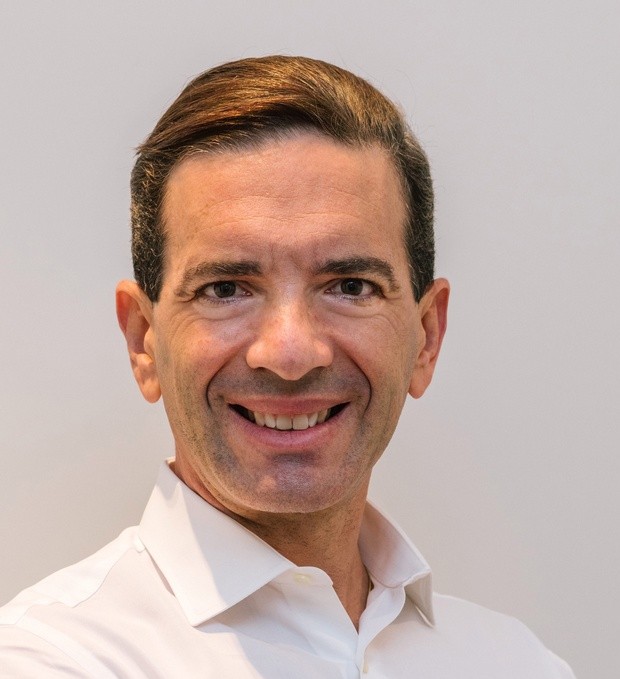

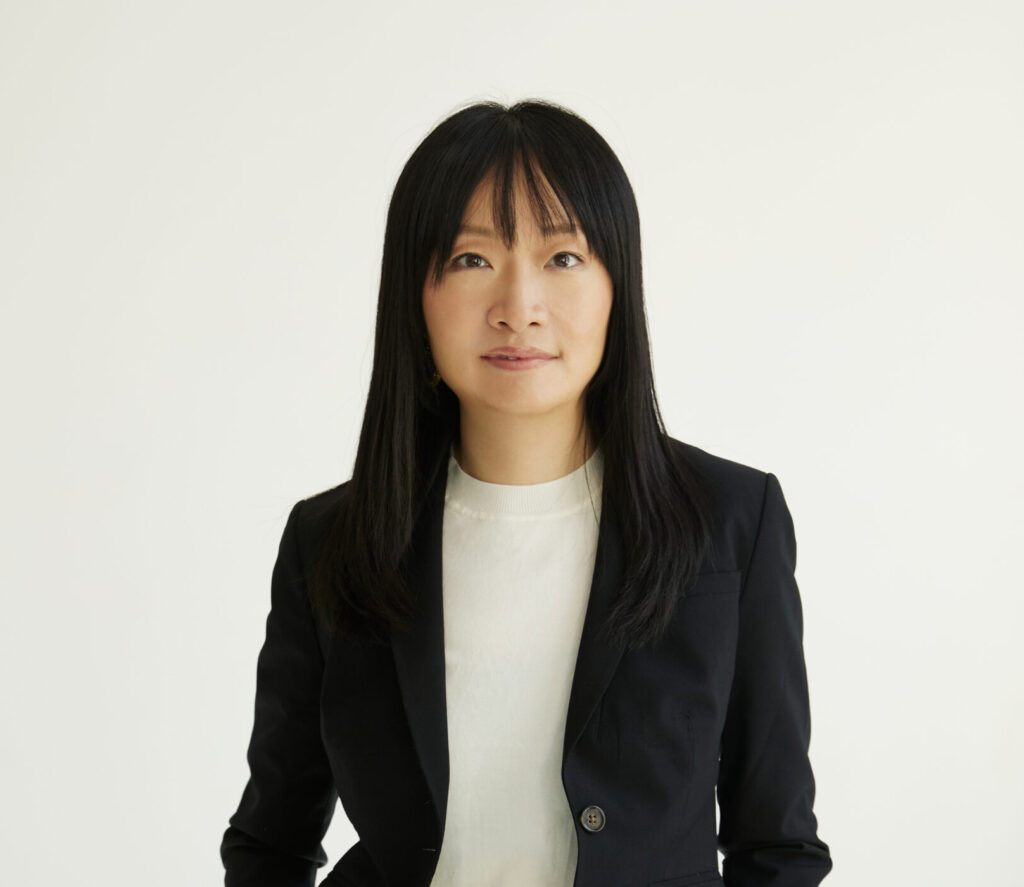
I recently went one-on-one with Sylvia Kang, co-founder and CEO of Mira.
Adam: Thanks again for taking the time to share your advice. First things first, though, I am sure readers would love to learn more about you. How did you get here? What experiences, failures, setbacks, or challenges have been most instrumental to your growth?
Sylvia: I grew up in China training to be a concert pianist. I started at four and competed internationally, but my heart was somewhere else. I kept reading my grandfather’s old physics and chemistry books. He was one of the first biomedical engineers in China, and he quietly encouraged me to become a scientist instead of a performer. Around 18, I started teaching myself physics. I came to the US with two suitcases and limited English. I earned a master’s in biomedical engineering at Columbia, then an MBA at Cornell, and later became a business director at Corning, managing people in a Fortune 500 company.
Looking back, I always underestimated what I could do. I could not imagine running a company, and I definitely could not imagine starting one in women’s health, a category that barely existed when I began. What pushed me was watching friends struggle to get pregnant while I was trying to start my family too. They were squinting at ovulation sticks, guessing between one line and two, or going straight to IVF, which is expensive and exhausting. I left Corning to start Mira.
The failures came early. Our first idea was a male fertility testing company. Once we started doing interviews, we learned men don’t convert well for a product like that, so we pivoted to women’s health, which turned out to be a much bigger and more underserved need. Fundraising was hard too. Investors didn’t have a box for what we were building, and some pitch meetings turned into basic lessons on women’s physiology before we could talk about the business. One doctor told me flatly that she would hate a product like ours. The biggest thing I learned is that setbacks are information. Almost nothing I assumed at the beginning turned out to be true, and the real path usually opened up after the first plan failed.
Adam: How did you come up with your business idea and know it was worth pursuing? What advice do you have for others on how to come up with and test business ideas?
Sylvia: I watched the women around me. Friends were finding it difficult to get pregnant, and the tools they had were confusing or very expensive. There was so little research and understanding behind it. I felt we had to empower women with real information. I knew it was worth pursuing because it affects about half of the world’s population, and the gap was obvious. Information was missing and good options were limited, for things like infertility and menopause. When women are doing well, families do well, and everyone around them benefits. That is a problem worth spending years on.
My advice has three parts. First, pick something that really means something to you. The startup journey is very hard, and if you are not passionate, it is difficult to keep going after the setbacks. You have to believe in it. Second, stay open-minded. What we assume at an early stage almost never becomes the truth. Usually one way does not work and another way starts to work. Many people only see the one tunnel they planned, so test different ideas and slightly different messages, and collect feedback from every resource you have, including friends and online tests. Third, be analytical. I have seen early-stage founders treat one person’s reaction as statistics. A friend says, “I love your solution,” and suddenly the idea can scale to a million people. It doesn’t work like that. You need to know which segment you are hearing from and why they are reacting that way, so you can tell what the market is really telling you.
Adam: What are the key steps you have taken to grow your business? What advice do you have for others on how to take their businesses to the next level?
Sylvia: I think the path is similar for most companies. First comes ideation, and it can take a while because your first idea may not work. You have to match what you can actually build with what the market wants, and finding that fit is very difficult. For us, it meant about three years of hardware, lab chemistry, and software work happening at the same time. Once you find that fit, you have to find a way to scale and grow revenue. After that, you broaden the product offering, which also reduces risk. At the same time, you work on unit economics so the business becomes sustainable and can reach profitability and strong growth.
My advice depends on which stage you are at, but in general, be mentally prepared. It is a long journey. Expect a lot of iteration. Stay open-minded, build your analytical and logical skills, and be resourceful. Try to understand why other people do things the way they do, and learn from everyone around you. Be creative, too. The biggest suggestion is to learn how to build a team. You can be the smartest person in the world, but if you can’t turn how you work into a team, you will never have a significant business. You can have a small family business or a restaurant, but you will not be able to scale.
Adam: What are your best sales and marketing tips?
Sylvia: I would keep it simple. Do a lot of testing and a lot of iteration, and go with what the customer wants. Stay close to your customers even after the company reaches a certain size, because demand changes and the market is always moving. Build a real mechanism for staying close to them, not just an occasional survey. Some of our best messaging has come straight from the questions our customers keep asking us.
Adam: What are the most important trends in technology that leaders should be aware of and understand? What should they understand about them?
Sylvia: It depends on your industry, but right now AI is affecting everyone. It is a great tool, and we have built it into our own product. But I don’t think of it as one technology to adopt. It is more a mindset that there are always new technologies emerging, and the entire world is like a resource pool. So start with your goal. You have a business objective and people you want to serve. Then ask how you can take from that pool to make it happen in a reasonable, affordable way that delivers what people actually want. Innovation is a continuous process, and leaders need to keep asking that question.
Adam: In your experience, what are the defining qualities of an effective leader? How can leaders and aspiring leaders take their leadership skills to the next level?
Sylvia: I keep coming back to building and empowering a team. At a certain stage, a leader has to do the job of a leader. That means having a vision, understanding the market, and knowing where you want to push the company, the business model, and the problem you are solving. Below that level, you build a very good team that focuses on execution, and you build a good process so the team can execute well and the whole company is efficient.
We are also working with people, so we have to give them room to grow. People need to feel they are developing, delivering real value, and fulfilling their own goals. Not everyone should stay at a junior level. Our team is encouraged to think strategically and to take on the responsibility of a role before they officially have it. I think that thinking matters as much as execution, because you can always find people who can execute.
The harder question is whether you are going in the right direction and how you know what the right thing to do is. That is what a leader should carry. And the leader should not be only me. There are many leaders in the company, and we keep growing more of them. I am passionate about that, because I think it is the key to continuous success. For aspiring leaders, start thinking and acting at the next level before you are given the title.
Adam: What is your best advice on building, leading, and managing teams?
Sylvia: Build a clear structure, and then give people freedom. We are a remote company, so we set very clear goals. Everyone knows why they are doing the work and what they are working toward. At the beginning, we give people some help to get started, but we soon let them be autonomous. Autonomy is very important. People have to feel good about themselves before they can deliver really good work.
The team also needs a coherent structure. The leader’s vision has to be strong, and everyone should do their own job. The leader should not do the team’s job, and the team should not have to do the leader’s job. The vision needs to be clear, the structure needs to be good, the resources need to be available, and the strategy needs to be clear. After that, you encourage the team to execute and deliver. For me, my team is my best friend and support. No one can do everything alone.
Adam: What are your three best tips applicable to entrepreneurs, executives, and civic leaders?
Sylvia: Manage yourself. I have seen many people who don’t manage themselves well, and they carry that into their companies. I think a company is an amplified version of its founder. If a founder lacks self-awareness and keeps falling into the same blind spots, the team will do the same, and eventually it may not be sustainable. You pay a very high cost to fix that later.
Treat setbacks as information. Nothing ever runs exactly as we plan. There are always surprises. After many setbacks, I try to look at them without emotion. I don’t see it as something coming down on me or proof that I am not successful. I see it as another piece of information. It might mean my earlier assumption was wrong, or it might mean a new window has opened, a direction I never considered. Usually that direction turns out to be even better.
Be open-minded, but selective. It is not enough to be open to everything. You also have to be strategic about which information to take, so you can filter and know what is actually helpful. I think that is the real shortcut to steering the team in the right direction and building a great business quickly.
Adam: What is the single best piece of advice you have ever received?
Sylvia: The best thing I can say is to trust yourself. I would not call it advice, exactly. It is more something I had to learn. As a woman, and as an immigrant and Asian woman, most of the messages around me were that I should not trust myself too much. I could be wrong. I should be polite, and I shouldn’t ask. I should be seen in a moderate way and follow a traditional path. Risk is scary, so don’t take it. I received that impression from when I was young until I was probably 25 or 30. Then I went to Cornell and became a business director, and the people around me were almost all white men. It made me think maybe I should just follow that path.
If I look back honestly, I always underestimated my capability. I could not imagine running a company like this. I could not even imagine starting one, especially in women’s health, which was against the market trend and against what VCs understood at the time. Before that, I could not imagine becoming a business director at Corning and managing people. That kind of limit shapes what you do, because as a leader, if you can’t see it, it won’t happen.
It still limits me today. I feel my potential is higher than what we are doing now, and I try to correct for it every time I make a decision. It is a little sad, because I think this applies to a lot of women, especially minority women. I would like more women to trust themselves and explore what they really want. Don’t hold back, don’t ask for permission, and don’t stay silent. Take the risk and give it a try.
Adam: Is there anything else you would like to share?
Sylvia: Women’s health and wellness are closely connected, and wellness is a huge market where women are still underserved. Women’s health is not only about the cycle or hormones. It is tied to how women feel and live every day. I expect a lot of the next wave of innovation to come from that connection.